Hyundai i30 Review (2012-2017)
Hyundai i30 cars for sale
4.0
Expert review
Pros
Roomy and practical, especially the estate
Long list of standard kit on most models
Economical diesel engines
Cons
Not as much fun to drive as a Ford Focus
Entry-level diesel is a bit weedy
No hot hatch version
The CarGurus verdict
The i30 is a very solid choice as a family hatchback or estate. It might not be the most exciting option, or the best to drive, but it ticks lots of sensible boxes when it comes to features, price and practicality, and while there are a few reliability questions, newer cars will still be covered by Hyundai’s excellent warranty. For more driving fun, look at the Ford Focus, and if you want an even more impressive seven-year warranty then check out the Kia Ceed, but for a really capable all-rounder then make sure you check out what the i30 can offer.
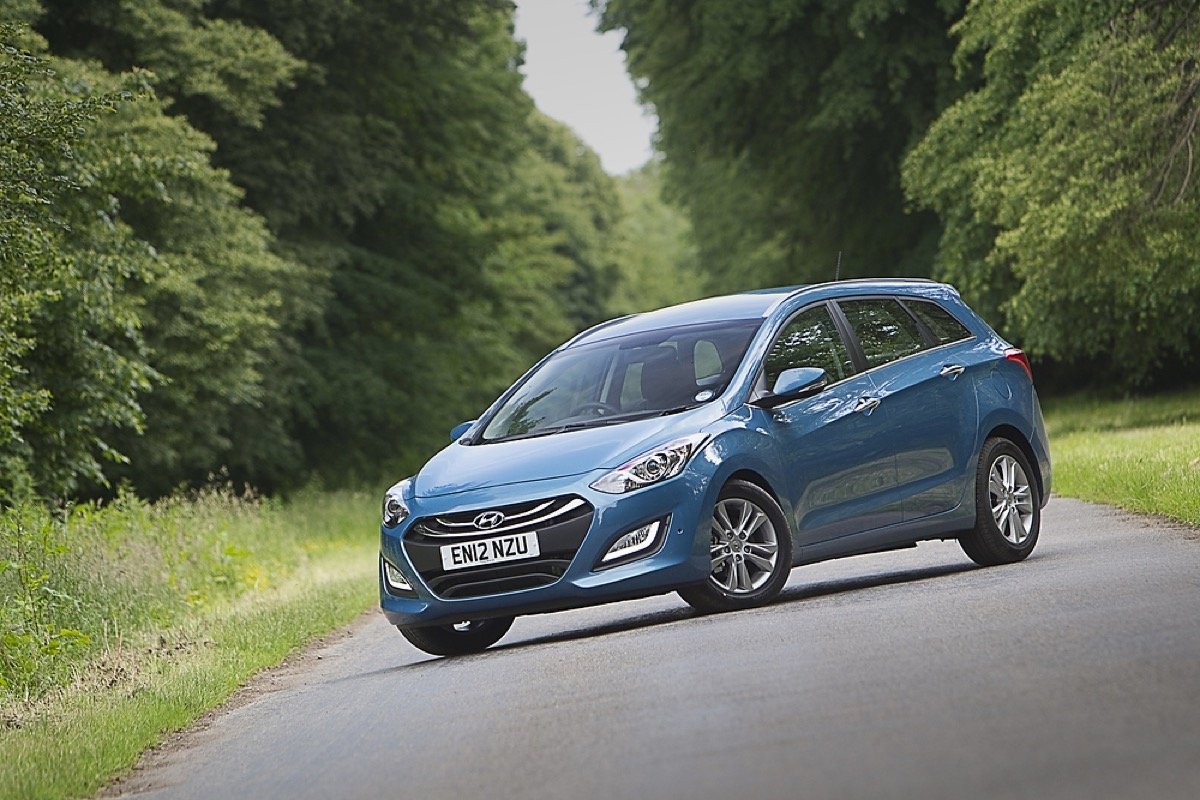
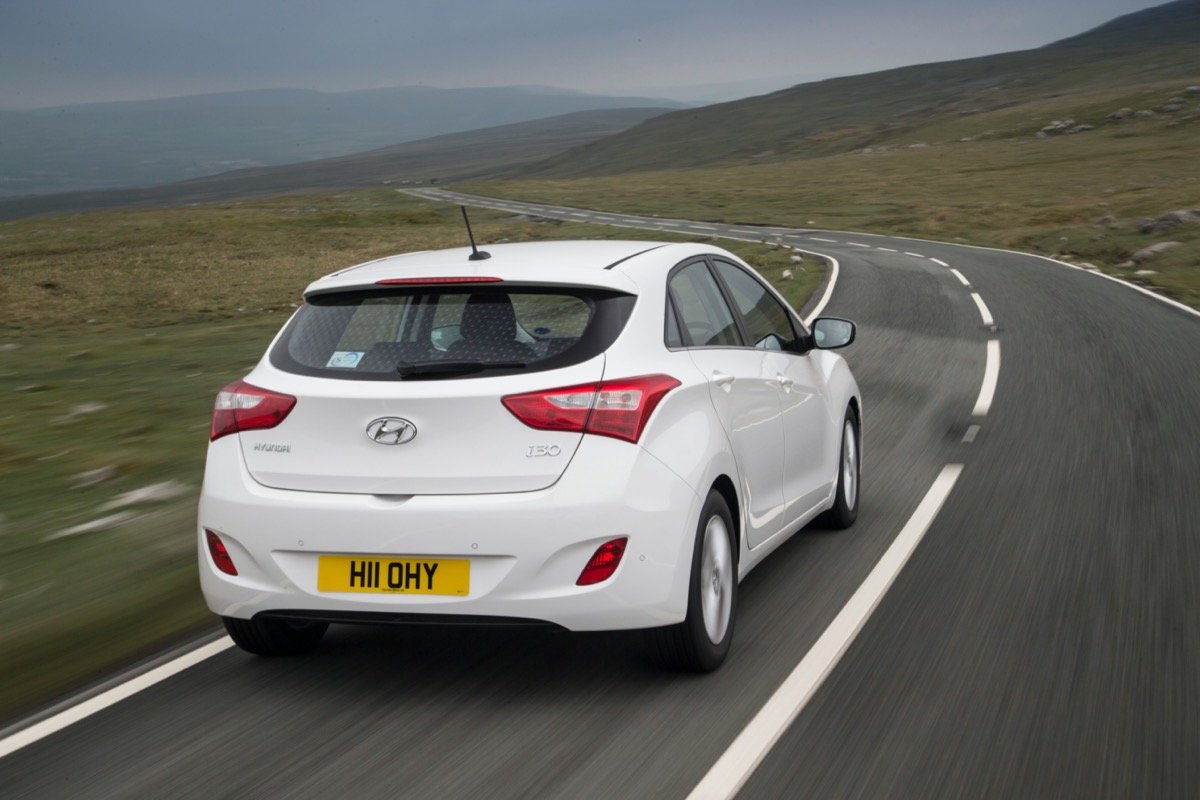
The i30 is Hyundai’s mid-sized hatchback, and a rival to very established family cars like the Ford Focus, Vauxhall Astra and Kia Ceed. This is the second generation of i30, revealed at the end of 2011 and introduced to the UK in early 2012 as a five-door hatchback.
An estate model, called the i30 Tourer, was added shortly afterwards, and a three-door hatchback arrived at the end of 2012. It sold well, particularly in five-door hatchback form, which means there are plenty on the used car market. A much more eye-catching car than its predecessor, this second generation i30 represented a push upmarket for the brand, although it still trailed premium rivals for perceived quality and image. It was also more grown-up to drive, with assured handing and decent refinement, even if models like the Ford Focus were more fun. Yet the i30’s biggest strengths were its practicality, value for money and long warranty.
Over the course of its life the i30 remained largely unchanged, with only a subtle facelift in 2015 that delivered mildly tweaked looks, some equipment upgrades and revised engines. The car was replaced by an all-new, third generation i30 in 2017.
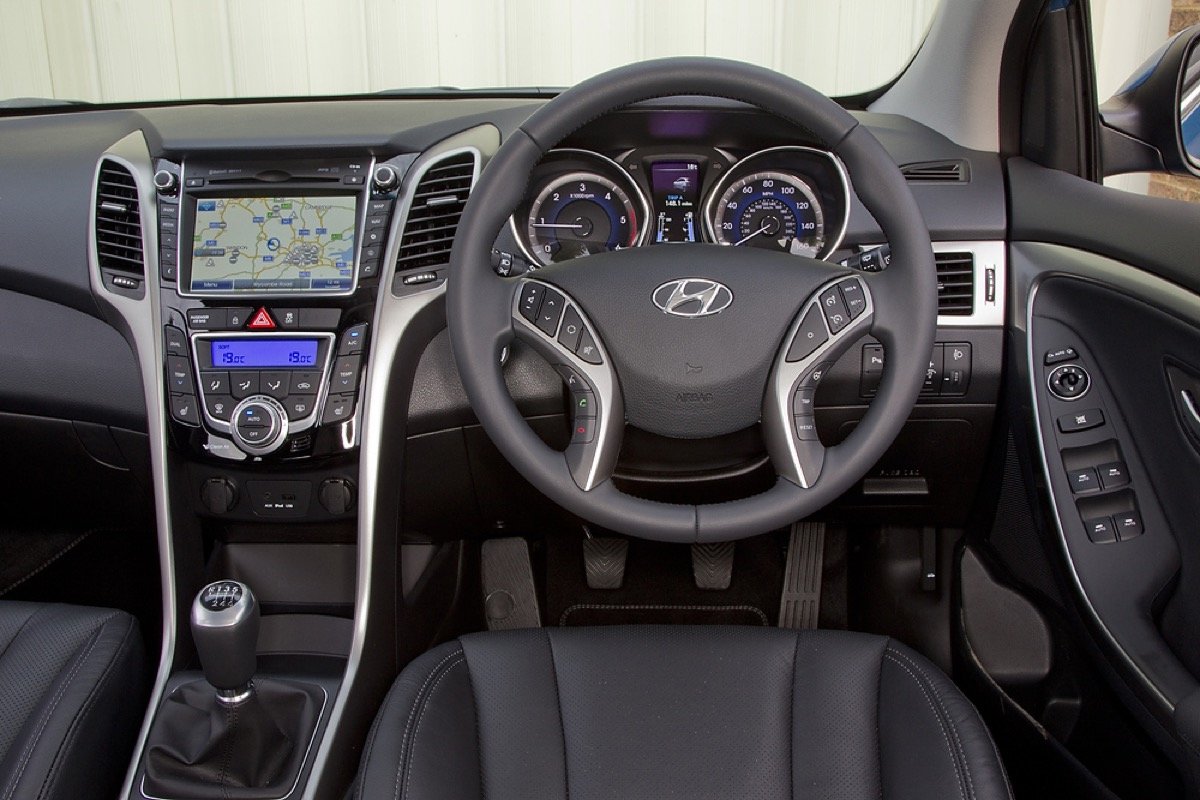
Inside you’ll find a well-built cabin that’s nicely designed and feels like it’ll last for years, even if the materials used don’t feel particularly premium. There’s plenty of seat and wheel adjustment, so finding a comfortable driving position is the work of a moment.
However, there are some niggles, such as the volume knob for the infotainment being placed more than an arm stretch away (although you can always use the wheel-mounted controls), while on three door models, the rising window line means over the shoulder visibility is restricted.
Speaking of this model, it’s a bit of a squeeze for adults to get in and out of the back, even with front seats that slide and tilt forward to aid access. That said, like the five-door and Tourer estate there’s plenty of space once they’re in, with ample legroom and headroom. Better still, the floor is almost completely flat, meaning those who sit in the middle seat don’t have to straddle a transmission tunnel with their legs.
Elsewhere, there’s all the usual family-friendly storage you could need, including large door bins and a big glovebox, plus the must-have phone storage tray complete with USB sockets ahead of the gear lever.
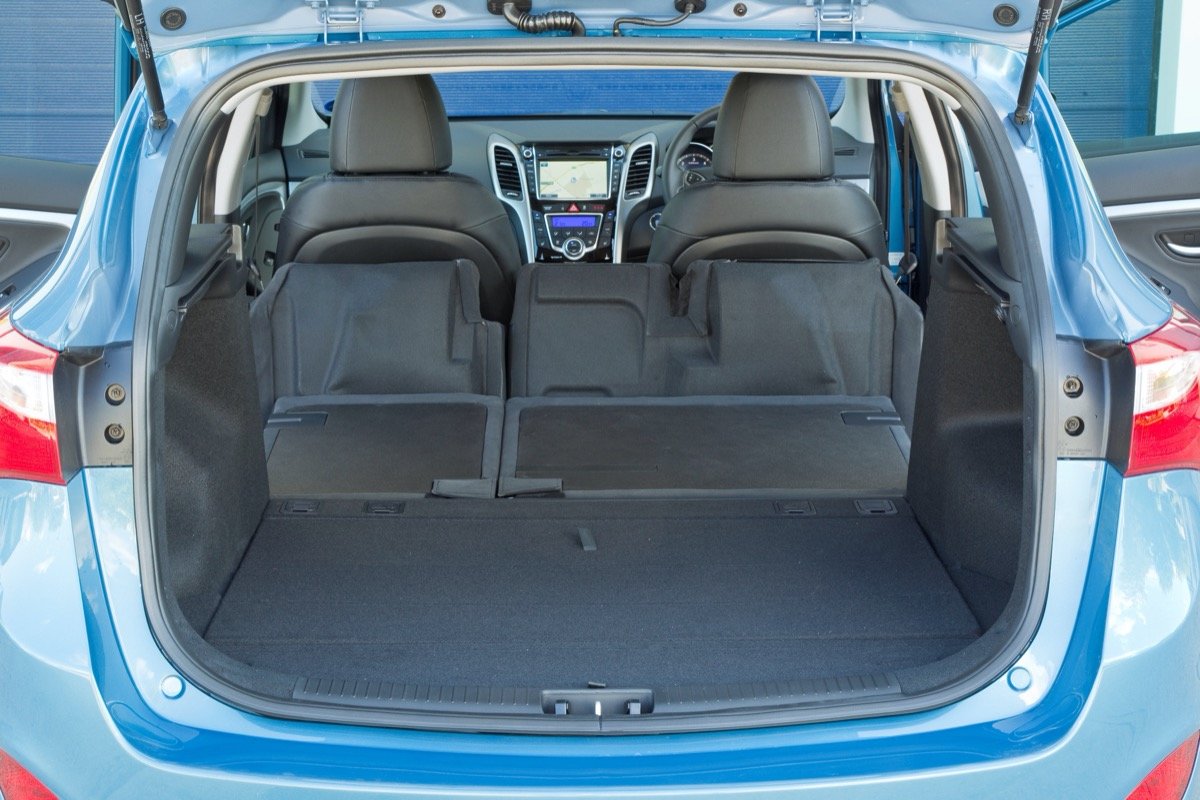
Both Hyundai i30 hatchbacks have a generous 378-litre boot, which extends to 1,316 when you lower the split/fold rear seats down. If you need more space, then the Tourer estate model boasts 528 litres of boot space, which can be increased to 1,642 litres by dropping the rear bench.
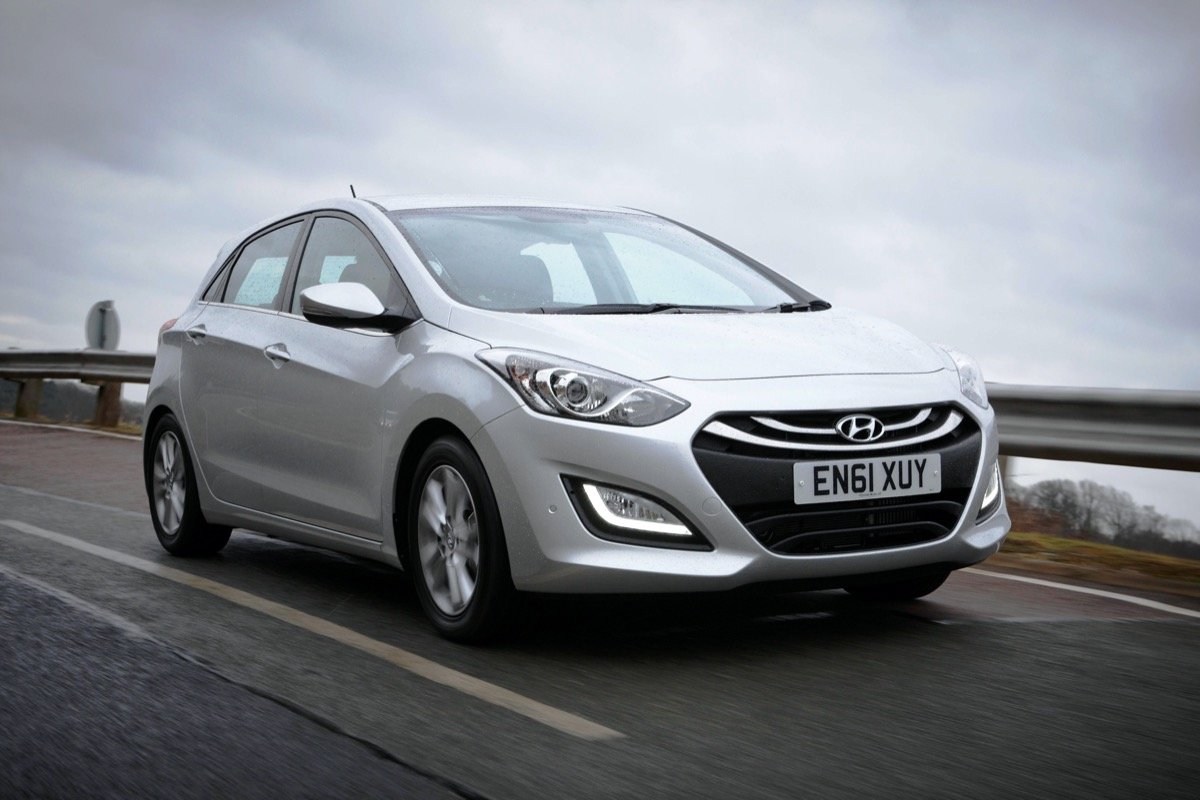
To drive, the i30 is perfectly competent. It doesn’t have the zing or fun-to-drive feel of the Ford Focus behind the steering wheel, but it’s composed through the bends and the ride is more than comfortable enough for family use, although it’s a little firm at low speed. This is a car that’s pleasant and predictable to drive, but not one that’ll get your pulse racing or encourage you to grab the keys and go for a drive just for the hell of it.
The i30’s main strength is its ease-of-use, which makes it a stress-free choice for daily duties. Light control weights mean you won’t be breaking out into a sweat when slotting it into a tight parking space, while on the open road it responds accurately and easily to your inputs. It’s also reasonably refined, with low wind and road noise taking the sting out of longer journeys.
The entry level petrol engine is a 1.4-litre, 99bhp unit, which is ok around town but feels underpowered when you get out on the motorway. Better to go for the 1.6-litre, 118bhp engine, which is more punchy. You can opt for this with an automatic gearbox, but unless you really don’t want to change gears yourself, then we’d avoid it, as it will ruin your fuel economy and is pretty ponderous in operation. If you really need an automatic, look for a later model. More on that in a moment.
If diesel is your thing, then the entry-level 1.4 CRDi engine with 89bhp is also a bit weedy for most uses, so we’d opt for the 1.6-litre CRDi, which was much more popular anyway and so easier to find. This has either 108bhp or 126bhpp and carries Hyundai’s Blue Drive badge, signifying that it’s got extra features to reduce fuel consumption, including low rolling resistance tyres (when new, at least) and an engine start-stop feature. It’s got decent performance and low CO2 emissions, which means you’ll pay less in Vehicle Excise Duty. Again, you can get this with an automatic gearbox, but it’ll damage the fuel economy.
In 2015 the engine line-up was also revamped in line with the car’s facelift, with a new 134bhp version of the 1.6-litre diesel engine replacing the 126bhp unit. The 1.4-litre petrol engine was replaced by a new one of the same size and power, but with considerably improved fuel economy and reduced CO2 emissions, which means lower Vehicle Excise Duty. In addition, a new seven-speed dual-clutch automatic gearbox was introduced, with much better fuel economy than the previous automatic.
Finally, if you want a little more excitement from your Hyundai, then there’s the rare Turbo model that arrived with the 2015 facelift. Available in three and five-door guises, this is a more of a warm hatch than a truly hot one, but its turbocharged 1.6-litre petrol delivered a decent 183bhp and 0-62mph in 8.0 seconds. Bigger 18-inch alloys and twin exhausts give it a sporty look, while stiffer suspension and wider tyres means it grips hard in the corners and body roll is kept to a minimum. However, it’s just not that engaging to drive - if you want fun, a Ford Focus ST is a far better bet.
Trim levels started with the entry-level Classic model, which comes well specified for this type of car, with Bluetooth to connect your phone, LED daytime running lights, electric door mirror and various safety systems. The next-step Active model got 15-inch alloy wheels and cruise control, as well as rear parking sensors.
Style models add dual-zone climate control air-conditioning, automatic headlights and wipers and a defogging system for the front windscreen, while the Style Nav model – as the name suggests – adds sat nav as well as a rear parking camera. The three-door model had a sportier image, and accordingly replaced the Style and Style Nav with Sport and Sport Nav. The former rides on 17-inch alloys and has tinted windows and LED rear taillights, as well as part-leather upholstery and dual-zone aircon. Sport Nav adds satnav and a rear-view camera.
At the end of 2012, Hyundai introduced the range-topping Premium trim to the five-door hatch and Tourer, with 17-inch alloys, leather upholstery and an electrically-adjusted, heated driver’s seat.
In 2015 the trim levels were also given an overhaul, with a new S model replacing the Classic. It had keyless entry, USB sockets and Bluetooth and aircon. The SE added 16-inch alloy wheels, cruise control and rear parking sensors, while the SE Nav added satnav and a rear-view camera. The Premium model remained at the top of the range, Turbo aside.
Also included in the update was the availability of a more advanced and crisper looking touchscreen infotainment system on the Nav models. However, bear in mind that while you can connect your phone through USB or Bluetooth, there’s no Apple CarPlay or Android Auto function.
The i30 received an five-star EuroNCAP rating when it was launched in 2012, and it gets six airbags (seven on the Premium, which also got a driver’s knee bag), electronic stability control and tyre pressure monitoring as standard. However, the design is too old to have featured the latest advanced driver aids, such as autonomous emergency braking or adaptive cruise control. You’ll have to trade-up to the third generation i30 that made its debut in 2017 for this kit.
The diesels will get you the best fuel economy, even though they may cost slightly more to buy, and if you do decent mileage then they’re the ones to look at. The 108bhp 1.6 CRDi diesel will get you the best economy at 74.3mpg (officially), but anything with a Blue Drive badge on it won’t be too far behind. Petrol models have official MPG figures of between 41 and 48mpg. If you need an automatic, go for a later dual-clutch (DCT) model, as the earlier models will hammer the fuel consumption.
When it comes to VED, almost all second-generation i30s will have been registered before the tax rules changed on 1 April 2017, which means they’re taxed by emissions. The lower-powered 1.6 CRDi Blue Drive models emit 100g/km of CO2 or less, which means you won’t need to pay anything, while others will cost you between £20 and £205 a year.
Insurance groups range from 6 to 13 of 50, which means premiums should be very reasonable.
Servicing in theory is due every two years or 20,000 miles, but many dealers recommend getting them looked at every year. A full service will cost around £230 at a Hyundai dealer, and an interim service around £170. For older cars that are out of warranty, it may work out cheaper to get a service from an independent mechanic.
All i30s had a five-year, unlimited mileage warranty, which is impressive from the Korean manufacturer when compared to rivals. Later models therefore may still be covered if anything goes wrong. Hopefully that won’t be the case, though, as Hyundais from this period have a pretty good reputation for reliability. That said, a 135th place for the i30 in the 2016 Drive Power survey isn’t great, so make sure you go for a car with full service history, and take a decent test drive.
Common problems to watch out for include a juddering under acceleration on diesel models, which owners report can be cured with a software update. The i30 was particularly popular as a company car and a hire car, and this can sometimes mean that it’s had a relatively hard life, even if properly maintained.
Only one recall was issued for this generation of i30, affecting cars made at the start of 2012. Corrosion in the parking brake could result in it not releasing properly, and affected cars needed a new seal and cable lever kit fitting, and possibly new rear brake calipers. This work should have been done by now, but it’s worth checking with a Hyundai dealer to make sure.
- The i30 is built on the brand’s J5 platform, which it shares with the second generation Kia Cee’d. Like the Hyundai, this car is available in three and five-door hatchback guises, plus as an estate (called the SW in the Kia’s case). It also shares the same engine line-up and technology. The only real difference, styling aside, is that the Kia came with a seven-year warranty, meaning you’re more likely to find used examples still covered by the manufacturer’s guarantee.
- Football fans might be interested in a couple of special edition i30s introduced to mark the 2014 Fifa World Cup. Hyundai was an official partner for the event, and launched the i30 Go! SE and Go! SE Panorama models to commemorate the competition. The five-door hatchbacks had extra features including special Go! badging, alloy wheels, gloss black mirrors and tinted windows, and the Panorama model had a panoramic sunroof and larger 17-inch alloys.
- Active models and upwards have a Flex Steer steering system, which lets you choose between different modes – Comfort, Normal and Sport – and adjusts the amount of power assistance and feedback. It’s a nice idea, but it doesn’t have a huge effect on the i30 and we suspect most people won’t fiddle with it much.
- If you want the best fuel economy: The 108bhp 1.6-litre CRDi Blue Drive model is set up to extract the most miles per gallon possible from an i30. It has an official MPG figure of 74.3 and while you might struggle to hit that in the real world, you should be able to get to the mid-60s at least. Make sure it has the proper low rolling resistance tyres fitted for the best results.
- If you want the most space: The i30 Tourer has a big boot that’s easy to load things into, and being able to fold the rear seats down gives you more room for larger items than in a Ford Focus Estate.
- If you want the sportiest model: None of the second-generation i30s are particularly engaging or fast, but the i30 Turbo gets the closest, and has more oomph from its engine than the other models. If you really want a sporty Hyundai i30 though, save up some extra cash for the third-generation i30 N, which is right up with the best hot hatches you can buy, such as the Volkswagen Golf GTI.
- If you want the best all-rounder: We’d go for the second-tier Active model, which came with most of the kit that you’ll need for this type of car. If you’ve got the budget, then the post-facelift SE model does the same job. We’d avoid the 1.4-engines as they can feel a bit weedy, so go for a 1.6 petrol if you mostly do around-town, short journeys, or a 1.6 diesel if you do more miles.

