Hyundai i30 N Review (2018-2024)
Hyundai i30 N cars for sale
4.0
Expert review
Pros
Very rapid, both in a straight line and around bends
Keenly priced for a performance hatch
Lots of standard kit
Cons
Not the best hot hatch in any one area
High-performance Michelin tyres will be expensive to replace
Can't quite match the super-talented Honda Civic Type-R
The CarGurus verdict
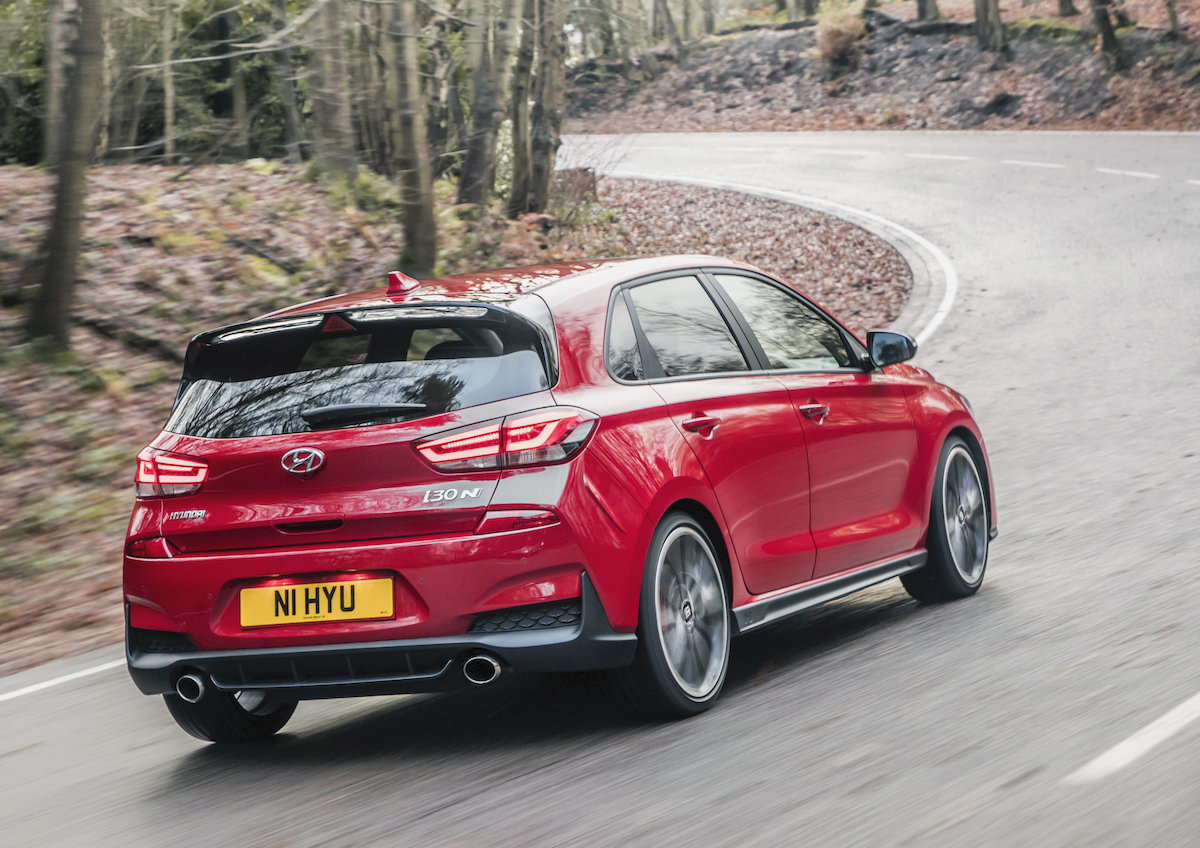
The Hyundai i30N doesn’t stand out in the hot hatch category in any particular area. Unlike the Honda Civic Type R it isn’t the most powerful car of its type. Nor is it the most prestigious, a title reserved only for the Volkswagen Golf GTI. It doesn’t have the most engaging handling, either, the Ford Focus ST being more exciting to drive hard. But don’t think for a minute the i30N falls a long way short.
Quite the opposite, in fact. It mightn’t lead the way in any one regard, but it performs very strongly right across the board and has no glaring weaknesses. The i30N has the feel of a hot hatch that’s been engineered and built by a company with decades of experience in the field, not only a handful of years. If you’re in the market for a front-wheel-drive hot hatch with around 300bhp, the Hyundai must be on your shortlist.
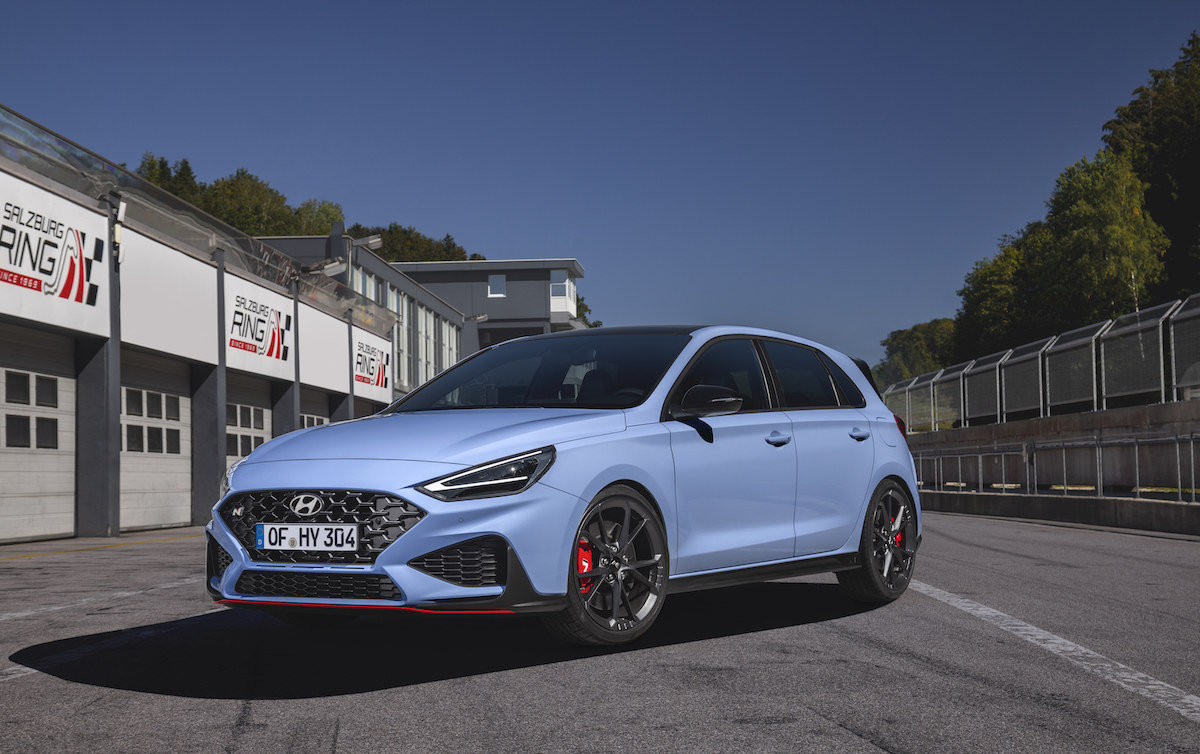
For its first proper attempt at a hot hatch, Hyundai had two very clear goals. Firstly, the i30N should be a genuinely first-rate hot hatch capable of mixing it with the very best in the category. Secondly, it should democratise hot hatch performance, the car itself being as affordable as possible rather than priced right at the top of the segment.
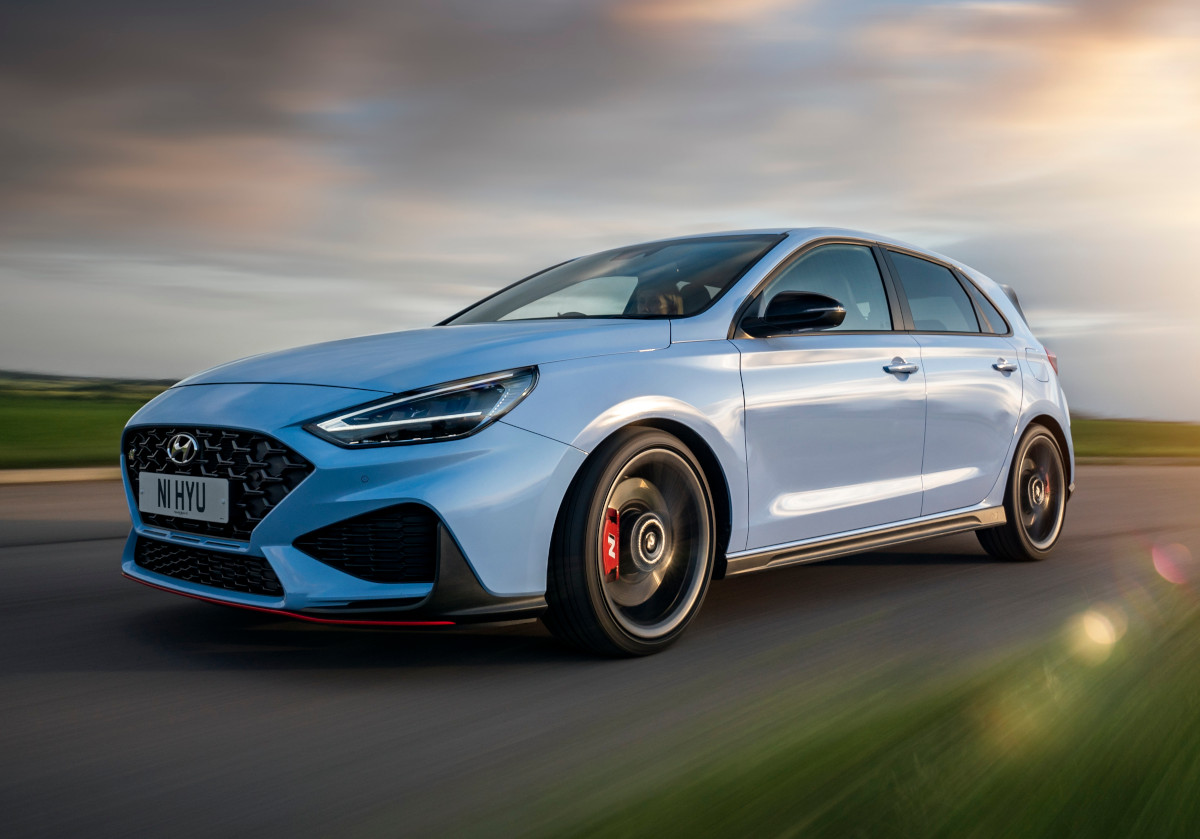
In both regards the Korean firm judged the i30N just right. The original version arrived in 2018 and had all the performance, grip, handling precision and everyday usability it needed to trouble competitors from established hot hatchback builders like Renault Sport, Ford and Honda. The i30N, recently facelifted for the 2021 model year, remains one of the more affordable cars of its type, too. In fact, at a shade under £30,000, it undercuts the similarly-powerful Ford Focus ST by more than £2000.
The facelift was a relatively minor one. It introduced a sharper new look, some refinements to the cabin, very subtly tweaked suspension and a shade more power (up to 276bhp from 271bhp). There is also now the option of a dual-clutch transmission to go with the six-speed manual gearbox, which is likely to remain the first choice among purists.
Yet perhaps the biggest change was the introduction of a sleekly styled Fastback bodystyle. With a lower roofline, and longer rear overhang, the coupe-inspired model swapped some of the hatch’s hardcore driver appeal for a bit more kerbside sparkle.
Unfortunately for fans of petrol hot hatches, Hyundai axed the i30 N in early 2024 to make way for electric performance models, such as the Ioniq 5N.
Any hot hatch worth its red stripes and tailgate spoiler needs to be as comfortable hauling around a family as it is being hurled down your favourite back roads. In fact, it’s this ability as an all-rounder that’s arguably the very definition of what makes a hot hatch.
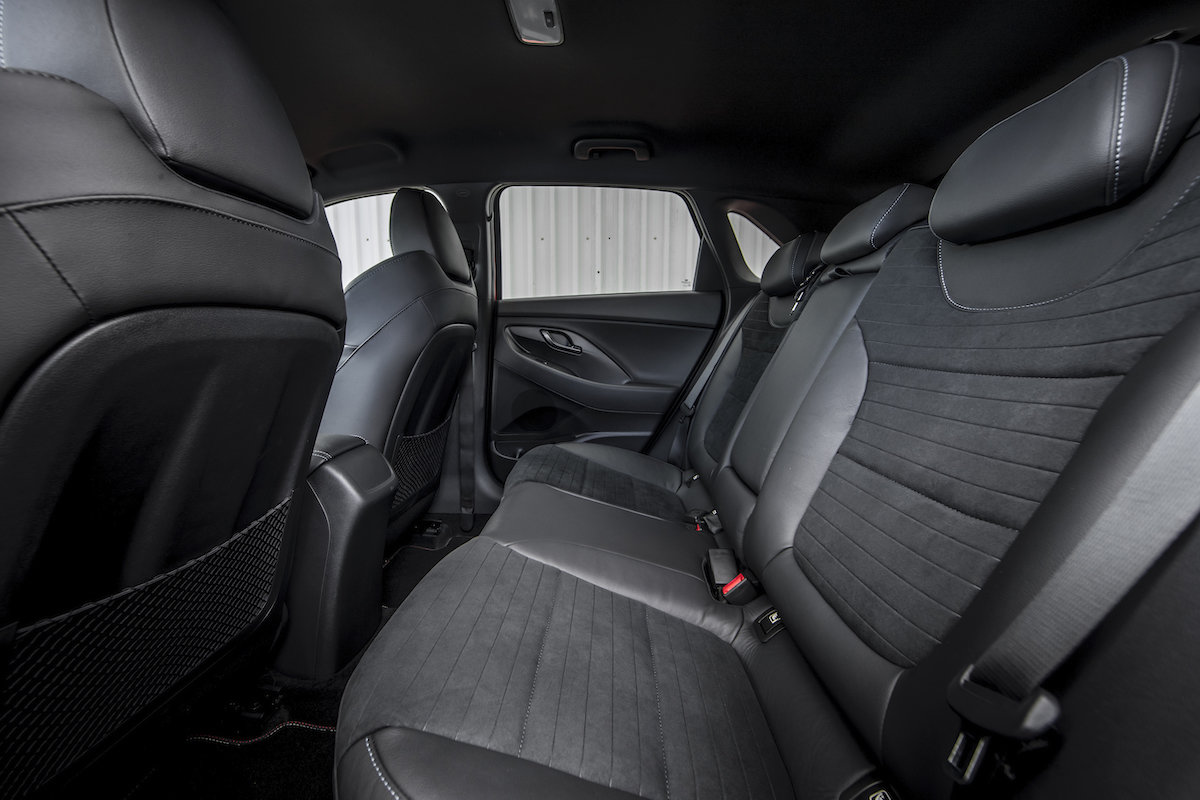
Happily, the standard i30 is a fairly versatile machine, and much of that everyday utility is carried over into the N. For instance, the interior is reasonably roomy, with decent space in the rear for two six-foot adults (or three at a push, if they don’t mind getting friendly). The Fastback has a little less headroom due to the low roofline, but it’s only a matter of millimetres.
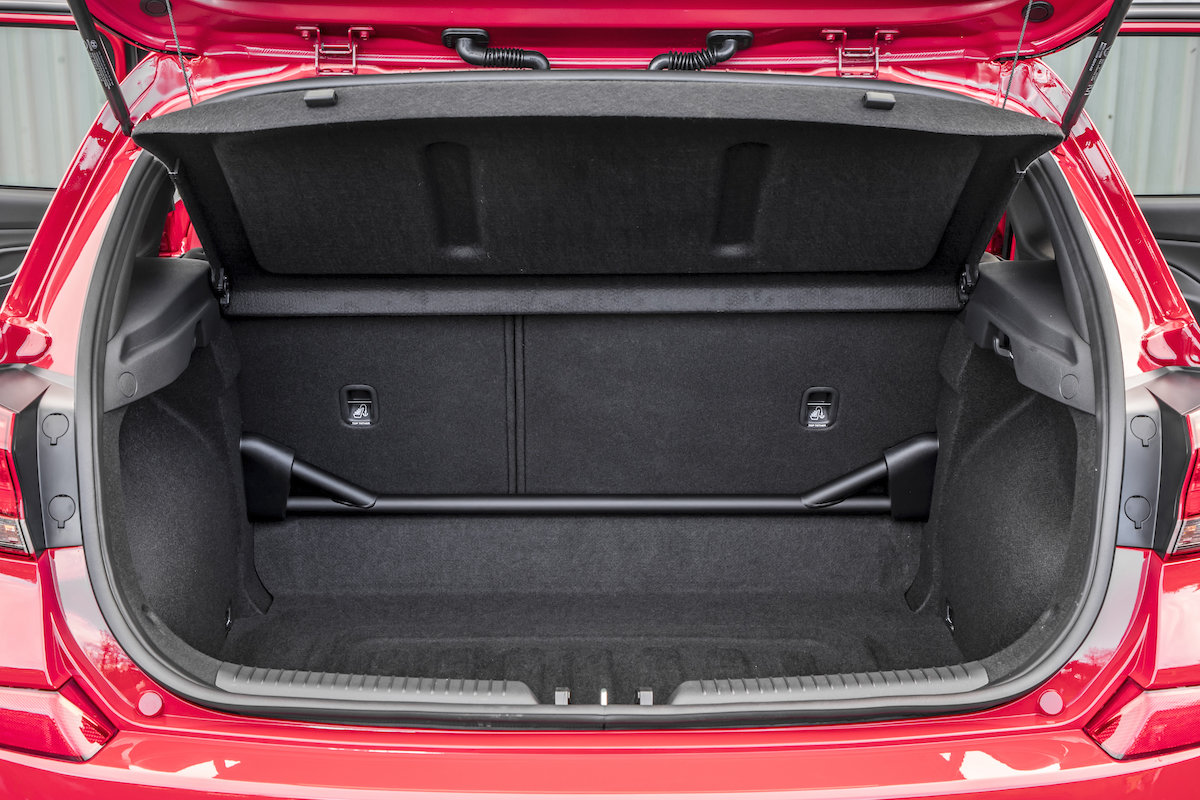
There’s a decent-sized boot as well, with the hatchback serving up 381 litres of carrying capacity and the Fastback an even more generous 436 litres. Fold the split/fold rear seats of each down and the available space increases to 1,287- and 1,337 litres, respectively. Mind you, this extra versatility is somewhat undermined by the large, tubular strut brace that fits just behind the rear seat. This piece of scaffolding improves the strength of the body for more accurate handling, but it is also a little obstructive when loading larger items.
Elsewhere, dashboard design is a little sombre, but it’s logically laid out, while the driving position is also excellent, with loads of adjustment and figure-hugging and hugely supportive sports seats. There’s also loads of useful storage dotted around the cabin, plus the usual USB sockets for charging your phone.

The Hyundai is fun to drive both on road and track, although at the very limit, the most enthusiastic hot hatch drivers will find they have more fun still in the edgier and livelier Honda, or the more uncompromising, four-wheel steered Renault Megane RS 300 Trophy.
The N in the Hyundai’s model name refers to the Namyang test and development facility in Korea where all sporty Hyundais are engineered, but also the 13-mile Nurburgring race track in Germany where they’re finely honed.
Much of the credit for the i30N’s impressive capability – although he’d insist his engineering team deserved far more praise than did he himself – goes to Albert Biermann. He oversees the development of these performance-oriented Hyundais having previously been engineering boss at BMW’s illustrious M Division. Recruiting Biermann and establishing a permanent R&D facility at the Nurburgring were two very clear signs that Hyundai really meant business. See also its world-beating campaign in the World Rally Championship.
Either way, with meaty steering, limpet-like grip and acrobatic agility, the i30N is seriously good fun when you decide to take the long way home. It’s perhaps not as expressive as some rivals, the car not changing its attitude much if you suddenly lift the throttle or brush the brakes mid-corner, but this greater stability and security will appeal to as many as it puts off. Moreover, when it's wet, dark and you don’t know which way the road goes next, the Hyundai is likely to give fewer heart-in-mouth moments than more wayward machines, such as the Ford Focus ST.
Of course, the price you pay for such cast-iron composure in the corners is a firm ride, particularly at low speed. It’s not uncomfortable as such, but over particularly broken urban tarmac the jiggling and jostling can become draining. Fortunately, the Hyundai is much more relaxing on smoother roads and at higher speeds, so long motorway hauls are no hassle.
Finally, while that 2.0-litre engine delivers strong performance, pulling hard all the way through the rev range, it’s not the most charismatic unit. The sports exhaust gives it a nice burble at idle, but worked hard it can get a bit droney.
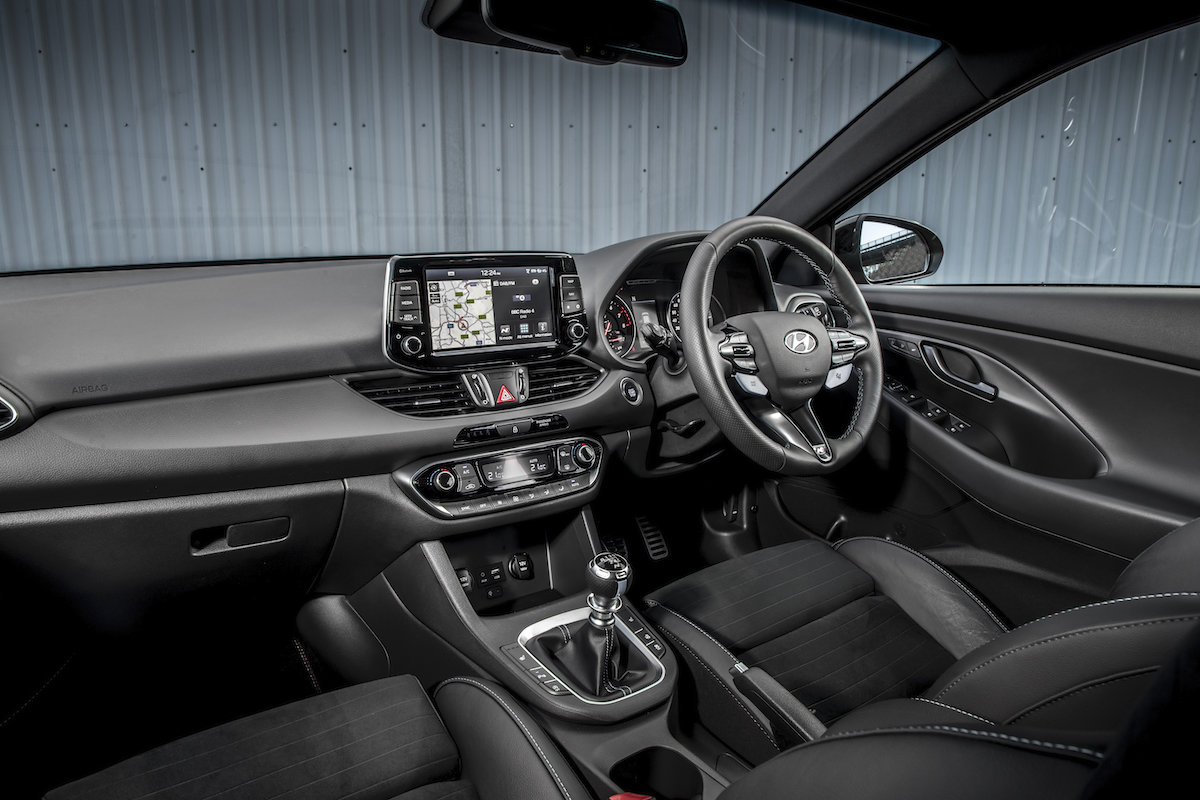
Despite being far from the most expensive car of its type, the i30N comes well-equipped as standard. Conveniences like keyless go, a reversing camera, dual-zone climate control, satnav, Android Auto and Apple CarPlay are all thrown in. Other luxuries include heating for the seats and steering wheel, keyless entry, front- and rear parking sensors, LED headlamps and a reversing camera. You’ll pay extra for several of those features on rival cars. The only options you can add on top of the Hyundai, in fact, are paint colours.
All cars also get the brand’s easy-to-use 10.25-inch infotainment screen, which is packed with features. Included are Apple CarPlay, Android Auto and satnav, plus the usual Bluetooth and DAB radio.
There are effectively two trim levels to choose from - N Performance and newly launched N-Line. The latter is available only in hatchback guise and with the DCT gearbox, but adds high-backed bucket front seats, some natty body decals and bronze-finished alloy wheels, plus a couple of extra driver aids.
Speaking of which, all i30N’s get a decent haul of safety kit anyway, with autonomous emergency braking, lane keep assist, intelligent speed limit warning and e-call, which automatically dials the emergency services if the car’s airbags are deployed in a collision.
With hot hatch performance comes hot hatch running costs. Fuel, insurance, tax and tyres will all cost more on an i30N than a regular i30, although probably not prohibitively more. One of the key points of a hot hatch is that it remains easy to live with, an important part of which means not being inordinately expensive to run.
Hyundai says you’ll get 34mpg on the combined cycle, although the real-world mpg figure in mixed driving is likely to be closer to 30mpg. Meanwhile, Vehicle Excise Duty will cost £870 in the first year and £150 each year after that. The i30N sits in insurance group 28 (out of 50).
It comes fitted as standard with ultra-high performance Michelin tyres. The car has been engineered specifically for these tyres and owners should resist the temptation to seek out a less costly alternative when replacing them, or otherwise risk compromising the handling of their i30N. A replacement set of Michelin rubber will cost around £600.
Hyundai recommends servicing every 20,000 miles with more regular oil changes. The company does offer service plans to help owners spread the cost. One such plan covers all servicing expenses over three years and costs £500.
Despite being a mass-market manufacturer with nothing like the heritage of more established Japanese marques like Toyota, or European companies such as Volkswagen, Hyundai fares very well in owner satisfaction surveys. In fact, it regularly finishes ahead of the likes of BMW and Mercedes-Benz in such studies. The very generous five-year, unlimited-mileage warranty almost certainly helps in this regard.
By and large, the i30N is proving to be a durable and dependable machine, with only a handful of commonly occurring issues beginning to emerge. Some owners have reported difficulty shifting gear from fifth to sixth; a Hyundai dealer will be familiar with the fix and it shouldn’t be expensive. Meanwhile, a handful of very early cars suffered fuel pump issues, the symptoms being an engine misfire and loss of power. A new fuel pump will rectify the problem.
There are also reports of issues with infotainment systems – again, a dealer will be able to put these right – as well as rattles from head linings and creaks from the windscreen surround. As yet, no really serious or very costly problems have arisen on a regular basis.
- The i30N has always been powered by a 2.0-litre, four-cylinder turbo engine, although since the facelift it’s produced fractionally more power with peak output available over a wider rev band. Capable of reaching 62mph in 5.9 seconds (5.4 seconds with the DCT automatic gearbox) and topping out at 155mph, the Hyundai’s performance is not quite class-leading, but it’s certainly respectable. The earlier version of the i30N was available in two guises – 250 and 275 Performance, with corresponding power outputs; but the facelifted version is only offered in the UK in 280 Performance Pack trim.
- The i30N offers various driving modes to choose from (Hyundai, keen not to take itself too seriously, labels this function N Grin Control System). The modes are Normal, Sport, N, Custom and Eco. They’re mostly self-explanatory; N mode is the most hardcore setting there is, ramping up the car’s adaptive dampers, steering weight, soundtrack, throttle response and the programming for the electronically-controlled limited slip differential, while also loosening off the stability control. In Custom mode, drivers can choose their own parameters. Meanwhile, the rev-matching function can be switched on or off separately.
- When the i30N made its debut in 2018, there was a choice of two models - the N Performance model and a lower powered 247bhp version known as the 250. With most buyers purchasing their cars on PCP finance deals, the small extra monthly cost of the Performance model meant the 250 was usually overlooked and as a result it’s rare today. It’s a shame, because with its slightly smaller wheels and less frantic power delivery, it was actually a more approachable and engaging machine that was easier to live with as a daily driver thanks to its improved ride comfort.
- For the purists: the i30N is at its most athletic in conventional hatchback guise with the standard-fit six-speed manual gearbox. Specified that way, the i30N is as light as it comes and its bodyshell is as rigid as possible. Those two factors are fundamentally important to the way the car drives. Less excitingly but no less importantly, the hatchback also does a great job on practicality.
- For the style conscious: with its swooping roofline, the i30 Fastback N is billed as a kind of five-door coupe. It certainly looks more striking than the regular hatchback model, although its bodyshell is less torsionally stiff. Pair the Fastback body with the dual-clutch gearbox and the Hyundai becomes a more laidback sort of machine.
- The nearest rival: on paper and out on the road, the Ford Focus ST is the i30N’s closest competitor. The two have the same power, similarly clever limited slip differentials and trick adaptive dampers. The Hyundai has sweeter and more detailed steering, but the Ford’s chassis balance is sublime.
- The best in class: recently updated, the Honda Civic Type R remains the best hot hatch in the circa 300bhp, front-wheel drive segment. It’s not only the most exciting car of its type to drive; remarkably, it’s also one of the easiest to live with and the most comfortable in normal driving.

