Isuzu D-Max Review (2021-present)
Isuzu D-Max cars for sale
4.0
Expert review
Pros
A truly capable workhorse
Plenty of creature comforts for lifestyle customers
Excellent safety rating
Cons
The single-cab Utility model has a lower towing limit than the rest of the range
Expect high fuel bills compared with an SUV's
Expensive to insure
The CarGurus verdict
A dwindling choice in the pickup market looks set to be to Isuzu’s advantage, as it’s made a very decent machine to fill the gap left by Nissan, Mitsubishi et al. The new D-Max builds on the key attractions of the old model, offering even more space and capability for a very reasonable price, and now with even more creature comforts available for those that want them.
A wide choice of trims and body styles means there’s a D-Max for most needs. It’s a very worthy choice with plenty to recommend about it.
The pickup truck has been transitioning in recent years, from a purely utilitarian tool of the trade to a genuine alternative to a car, helped in part by favourable tax rates. That’s meant that plenty of long-term truck manufacturers have been making their vehicles more luxurious and car-like, while at the same time, new entrants to the marketplace have sought to take a piece of the new lifestyle pie.
Isuzu’s D-Max pickup has long been a solid competitor in the working truck field and has been one of the biggest sellers in the UK alongside Toyota’s Hilux and the Ford Ranger. This generation was launched in 2021, when quite a lot of its competitors were leaving the UK market. The Volkswagen Amarok has been discontinued and, at the time of writing, Volkswagen said a successor was on the way, but it certainly wasn’t on sale. Mercedes-Benz discontinued the X-Class and Mitsubishi, which makes the L200, began withdrawing from the UK market in 2020. There are also no plans to bring the latest Nissan Navara or Mazda BT-50 to our shores.
All that immediately gives the third-generation D-Max an advantage when it comes to wooing customers, but that’s further boosted by the fact that it’s really rather good.
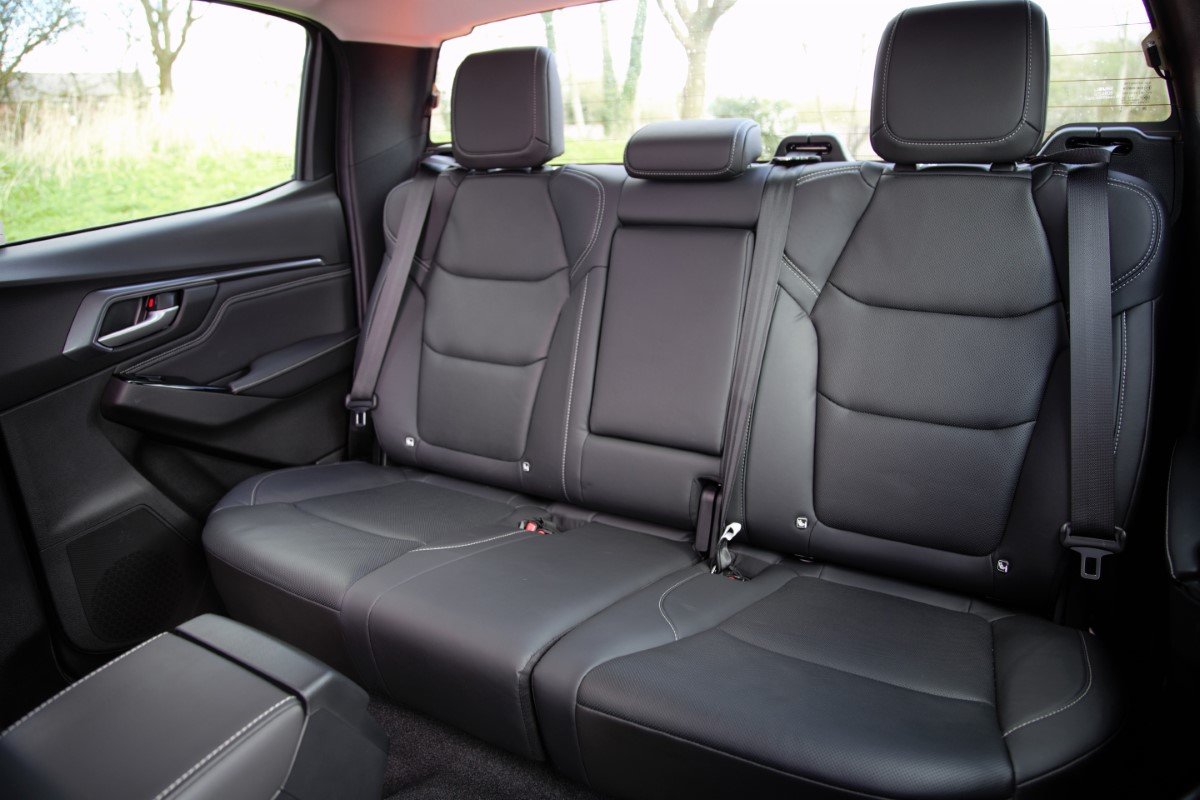
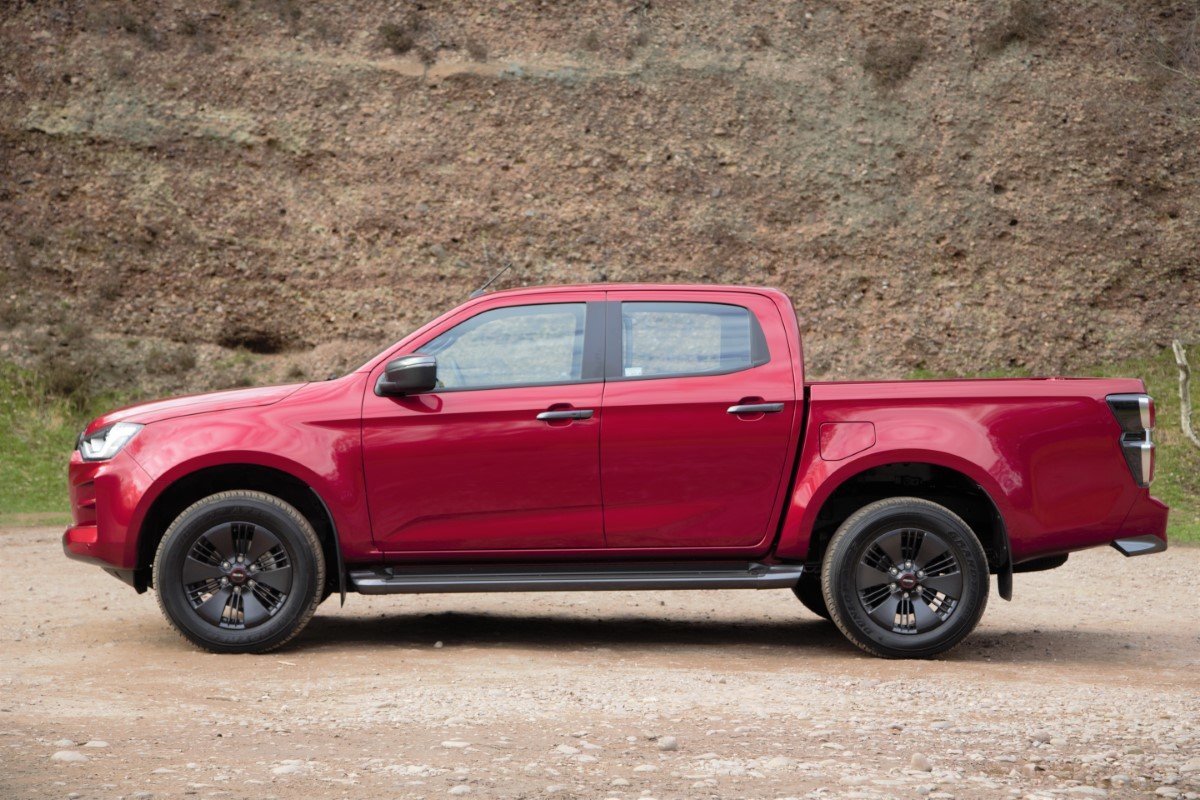
Three body styles are available. Single cab seats two and has the largest load bed at 2,315mm by 1,530mm. Extended cab has a slightly shorter bed at 1,805mm, and jump seats in the back, designed for occasional passengers during short journeys. Double cab has a full-size rear bench for up to three rear-seat passengers, with two Isofix child seat mounting points on the outer rear seats, but a shorter load bed at 1,495mm long. All beds are 490mm deep, apart from the single cab model, which is 465mm deep. Higher-spec versions have damped tailgates to stop them crashing down, and every model has built-in steps under the rear number plate for easier access to the bed.
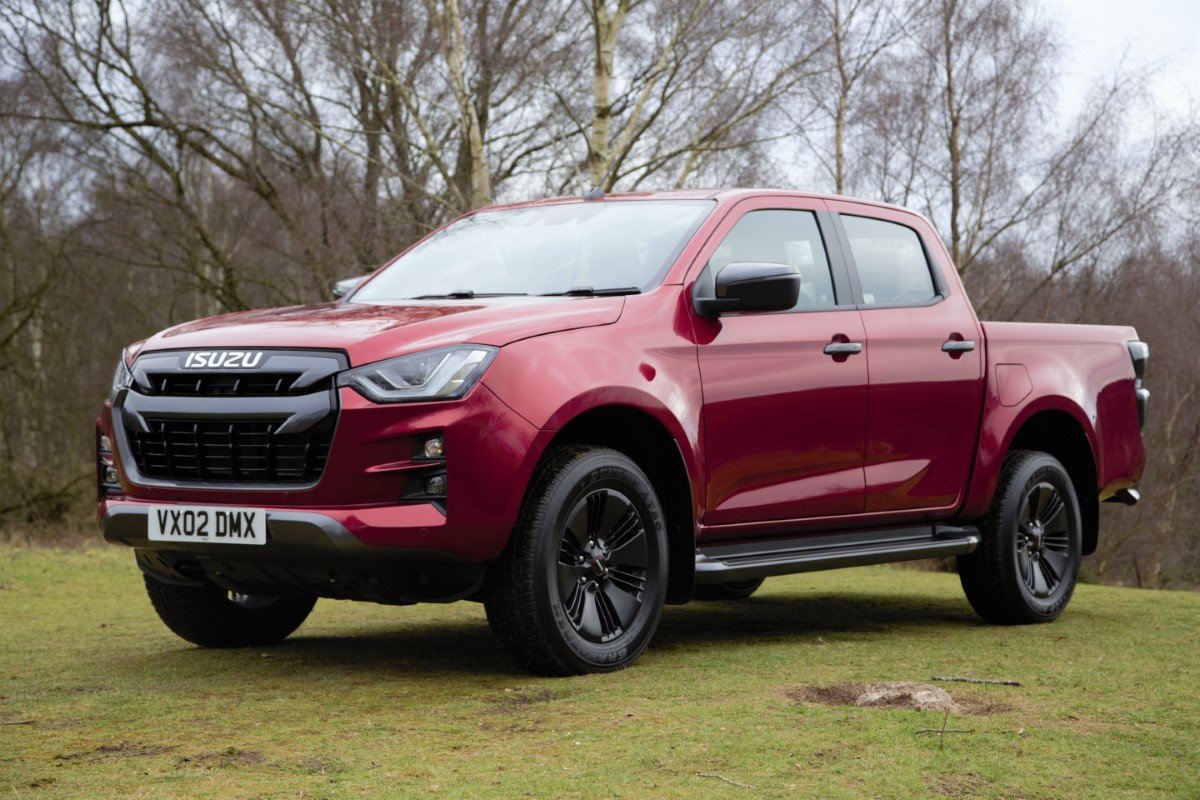
The styling continues the theme of the previous generation D-Max, but ups the visual aggression, chiefly by way of the big teeth-like grille. Subtle it ain’t, but plenty of customers like it.
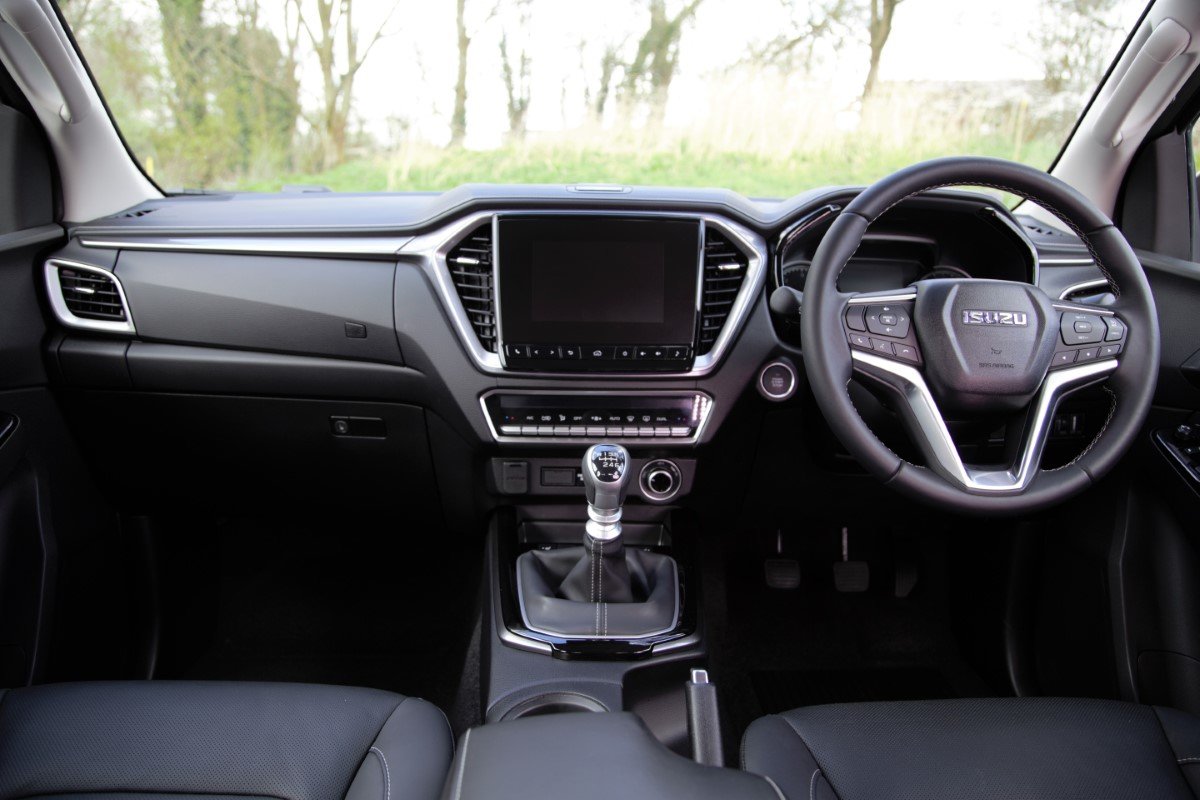
The cabin is more car-like than that of any previous D-Max, with increased focus on improving driver and passenger comfort. The seats on most models have big, snug side bolsters, there’s plenty of adjustment for the driver and the steering column adjusts for both reach and rake. There’s far more soft-touch plastic around the cabin than you might expect. Sure, many of the surfaces are still hard and scratchy, but if you don’t look too closely, you could kid yourself that you’re in an SUV.
They’re not as plush as a SsangYong Musso, but DL40 and V-Cross models get touchscreen infotainment systems, which are fairly basic but easy to use, and include wireless Apple CarPlay and Android Auto for smartphone connectivity. There’s no satnav system but, with so many apps available on smartphones plus the aforementioned connectivity, that’s not really a problem.
There are four cupholders up front – two in the centre and two that pop out of the dashboard – and large door pockets for bottles and odds and ends. There’s a small storage cubby under the centre armrest on higher-spec models, and two gloveboxes on the passenger side of the dashboard, although they’re not particularly large.
The rear seats in double cab models can flip up to give extra space for storage in the back, if you want to put larger items on the floor. The seatbacks can also flip down to create a raised, flat surface, and there’s even more storage space underneath the rear seats in extended- and double cab models.

All D-Maxes use a four-cylinder, 1.9-litre diesel engine with 162bhp, attached to either a six-speed manual gearbox or a six-speed automatic gearbox. If you’re moving into trucks from SUVs or cars, you’ll find the engine coarse, gruff, and noisy, but remember that it’s built for utility over refinement and, as pickups go, it’s not bad. There’s a decent level of low-down grunt and, while the automatic can be a bit slow to pick a gear, it gets there eventually. There are rivals with more oomph than the D-Max, but bigger engines mean more weight, which impacts agility and handling.
Speaking of which, the D-Max drives well for a truck. Again, if you’re moving into a truck from a car then that’s an important qualifier because it’s designed as a workhorse to haul loads and has more durable but also less sophisticated suspension than a car. The ride can be a bit wobbly when there’s nothing in the back, but not to the point of discomfort. As trucks go, its low weight means impressive agility and far less of the wallow you get from some rivals in corners. The steering wheel feels well weighted too: light enough for easy low-speed manoeuvrability, but with enough heft for confidence on faster roads.
All D-Maxes except the entry-level Utility model are fitted with a four-wheel drive system and have some serious off-road ability. You can switch between rear-wheel drive and four-wheel drive on the move, and there’s also a low-range setting for crawling over challenging ground. Hill descent control is included to help with steep surfaces, and the D-Max will cope with wading depths up to 800mm.
Most versions have a 3.5-tonne towing capacity, with the exception of the entry-level, two-wheel drive single cab Utility model, which can pull 2,500kg. All 4x4 models have a trailer sway control system to keep things safe when towing.
There is a range of official Isuzu accessories in terms of covers and protection, and there’s a large aftermarket choice, too.
Trim levels are split into three families. Utility trucks are intended as purely working machines and come on steel wheels with hard-wearing black plastic bumpers and vinyl flooring rather than carpet. You can get Utility models in single, extended, or double cab form, and all have at least a smattering of features, including air-conditioning, automatic headlights, Bluetooth, a DAB radio, and a CD player.
The middle tier is the all-purpose range, aimed at customers that want to use the trucks for work in the week and as a family car at weekends. There are two models, the DL20, in extended or double cab form, and the DL40, which is double cab only. These come with a few more niceties, including 18-inch alloy wheels and LED headlights, and daytime running lights on the DL40. All have a rear differential lock for better low-speed traction off-road.
Adaptive cruise control is included on automatic models, and you also get rear parking sensors and heated front seats, as well as carpet rather than vinyl on the floor. The DL40 gets side steps, a chrome grille and exterior trim, front parking sensors and a reversing camera, as well as leather upholstery and keyless entry and engine start. There’s no CD player in the DL40, but does anyone use CDs these days…? The top-spec lifestyle model is the double cab-only V-Cross, and it gets a gunmetal finish on the grills, mirrors, alloy wheels, and door handles. Inside is an upgraded sound system with eight speakers and a 9.0-inch version of the touchscreen infotainment system, rather than the 7.0-inch version on the DL40.
When it comes to purchase price when new, there’s not much in it between the D-Max and Ford Ranger, but the range starts at considerably less than the Toyota Hilux. A top-spec D-Max will cost you far less than the equivalent Toyota.
This version of the D-Max had only just launched at the time of writing, so it’s too early to say with certainty what used prices will be like. Industry predictions suggest that the improved quality and features of this model will keep secondhand prices higher than the previous D-Max. That’s bolstered by a recent growth in demand for used trucks, and looks likely to be comparable to the Hilux in terms of percentage of value retained.
Fuel costs won’t be great when compared to an SUV, with official combined MPG figures ranging between 30.7 and 33.6, depending on model. We spent some time in a V-Cross and found that high 20s was an easily achievable MPG in the real world.
Vehicle Excise Duty (VED) is fixed at £265 a year. If your D-Max is provided by your employer, you can take advantage of attractive benefit-in-kind company car tax rates, compared to cars. You’ll pay either £700 or £1,400 a year, depending on your salary.
You’ll need to service your D-Max every two years or 12,000 miles, with services alternating between minor and major. Isuzu doesn’t have a fixed price service package at the time of writing, but it’s something the firm is considering for the future.
The slight fly in the ointment could be insurance, as all models sit in the maximum group 50D.
Isuzu sells vehicles in relatively small numbers in the UK, and so doesn’t often appear on customer satisfaction surveys. When it does, it tends to fare well; Isuzu came top in a 2017 Pickup Reliability Survey by Professional Pickup and 4x4.
However, the brand does have a general reputation for very good reliability, with customers citing it as one of the key attractions. It backs that up with a very decent five-year, 125,000-mile warranty, although that’s still short of the seven-year, 150,000-mile guarantee offered on the SsangYong Musso.
It's too early to know about any particular issues with the latest generation of D-Max, but the signs are positive for relatively trouble-free ownership.
– This latest D-Max is shorter than the one it replaces, but has a longer wheelbase and more space inside, as well as larger load beds across the range with payloads of up to 1,205kg. It also boasts some very advanced safety features for this type of vehicle (see below). – Many truck owners overlook the fact that they’re often legally speed-restricted on the road. If a truck weighs more than 2,040kg, then it counts as a commercial vehicle, and is subject to different speed limits, which is 10mph lower than cars on single and dual carriageways. Both the Toyota Hilux and some Ford Rangers fall into this category. All versions of the D-Max weigh in at less than 2,040kg, which means it avoids those restrictions. That could be very useful for avoiding speeding tickets. – Historically, pickup trucks haven’t been subject to the same safety scrutiny as cars. But with companies increasingly under duty of care pressures when it comes to employee welfare, that’s meant more demand for safety equipment, and the D-Max has obliged. It’s the first pickup to be awarded the maximum five stars in tests by independent safety organisation Euro NCAP, and every model comes with an extensive suite of safety systems, of the type more often found on cars. These include automatic emergency braking and lane departure warning and prevention systems. Higher-spec models also include blind-spot monitoring features. All D-Maxes feature front-, side-, curtain- and driver’s knee airbags, and the double cab models have a centre front airbag, too.
- If you want the best all-rounder: The DL40 model treads the line between cost, function and comfort, with plenty of niceties for everyday use, but at a lower price than the top-spec V-Cross.
- If you’re on a budget: The entry-level model is the rear-wheel drive only, single-cab utility model. While this is aimed firmly at workers, it still has enough features to keep most people happy, with air-conditioning and Bluetooth included. You won’t be able to carry more than one passenger or tackle any serious off-road terrain, but you’ll have loads of space in the rear bed, and the lack of a four-wheel drive system is good for fuel economy.
- If you want all the toys: The top-spec D-Max is the V-Cross, and with more and more people embracing the lifestyle pickup, you can expect to see plenty of these on the road from new, and therefore on the used market, too. You’ll get plenty of features and a bit of extra style, too, although we suspect most people will be happy enough with the DL40 model.
- If you only need passengers every now and again: The extended cab models come in Utility and DL20 form, and are useful for those that might need to carry colleagues around town every now and again. They offer that extra flexibility, but the seats are very small and tight, and only suitable for the shortest of journeys. There are no Isofix points, either, so don’t expect to be able to get the kids in there.
- If you want to reduce your emissions: Although we’re not likely to see it for a couple of years (as of 2021), Isuzu have developed an all-electric version of the D-Max, which could come to the UK in the future. For now, though, the turbodiesel is your only choice.


