Jeep Grand Cherokee Review (2011-2020)
Jeep Grand Cherokee cars for sale
3.0
Expert review
Pros
Very capable off road
The cabin is spacious for five
Plenty of equipment
Cons
Very high running costs
No seven-seat version
Doesn't drive as well on the road as an Audi Q7 or a BMW X5
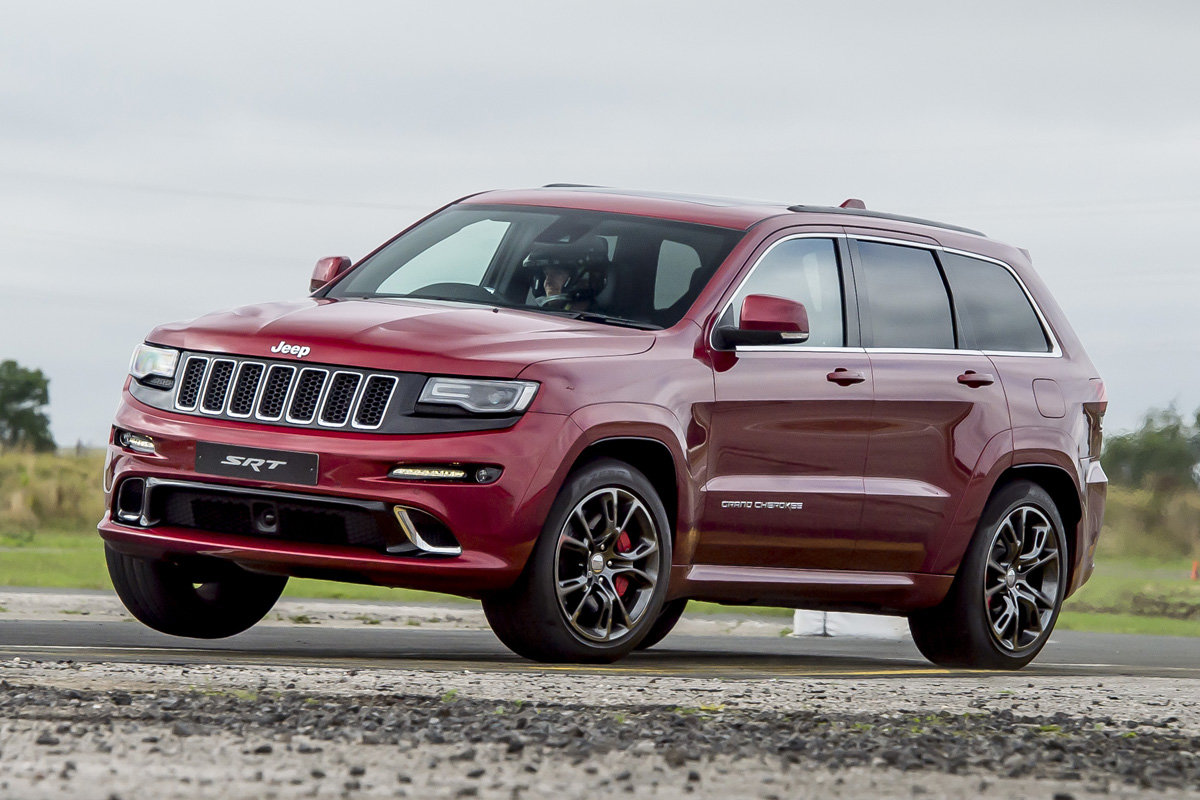
The CarGurus verdict
There’s a lot about the Jeep Grand Cherokee that appeals. It’s well equipped, capable in the rough, comfortable, easy to drive and spacious.
The Jeep brand also has its appeal, while the niche V8 models provide a suitably brash and entertaining alternative to staid European rivals. However, the average on-road performance and efficiency of the conventional diesel Jeeps, and their unremarkable interior, often leaves them trailing mainstream offerings.
Furthermore, despite the Jeep’s size, it’s only offered as a five-seat model, with no option to add a second row of rear seats. This, in conjunction with its high running costs and other foibles, makes it hard to recommend. On the flip side, if off-roading, towing and equipment levels are essential, a Grand Cherokee can be a good option, especially if you’re looking at less costly used examples.
Jeep has a long history of making capable off-road vehicles and this, the fourth-generation Grand Cherokee, is no exception to that rule.
It was launched in the UK in 2011 and, compared to its predecessor, it featured far more modern mechanical underpinnings, and a new 3.0-litre V6 diesel engine. These helped improve the Jeep’s refinement and on-road manners, which made it a far more compelling rival to alternatives such as the BMW X5 and Volkswagen Touareg.
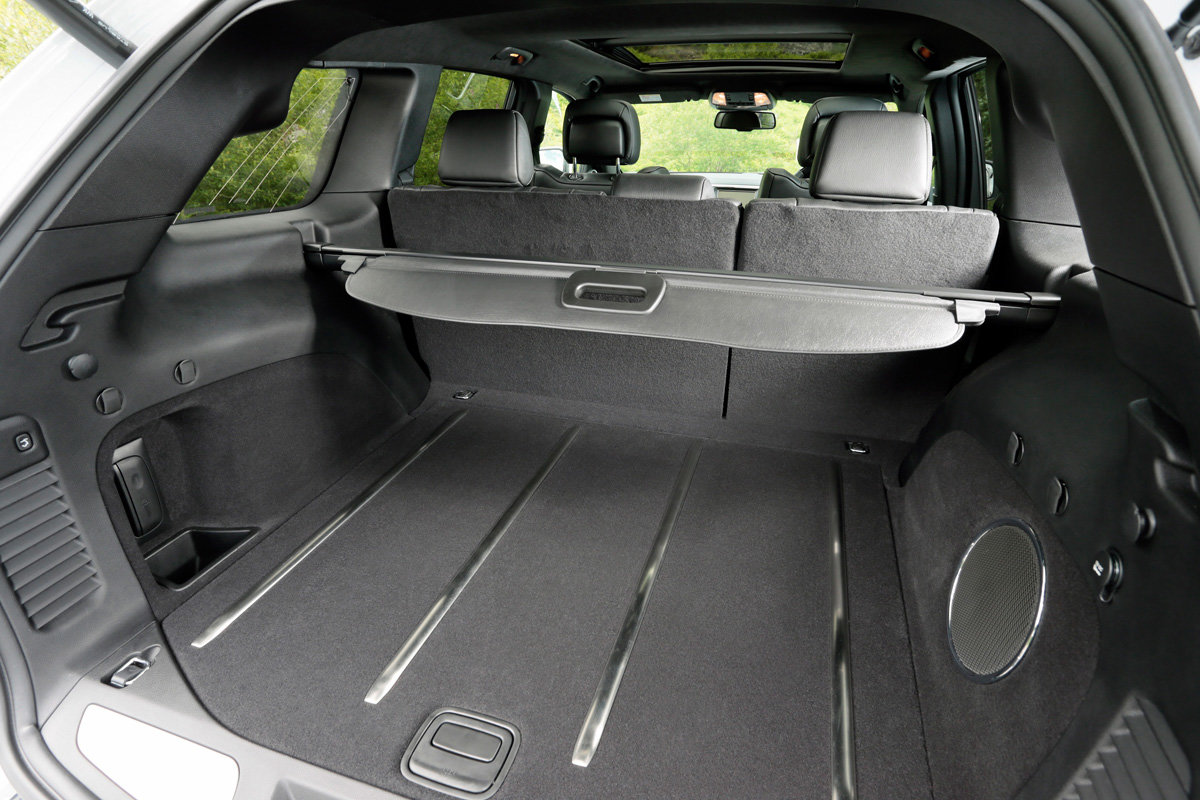

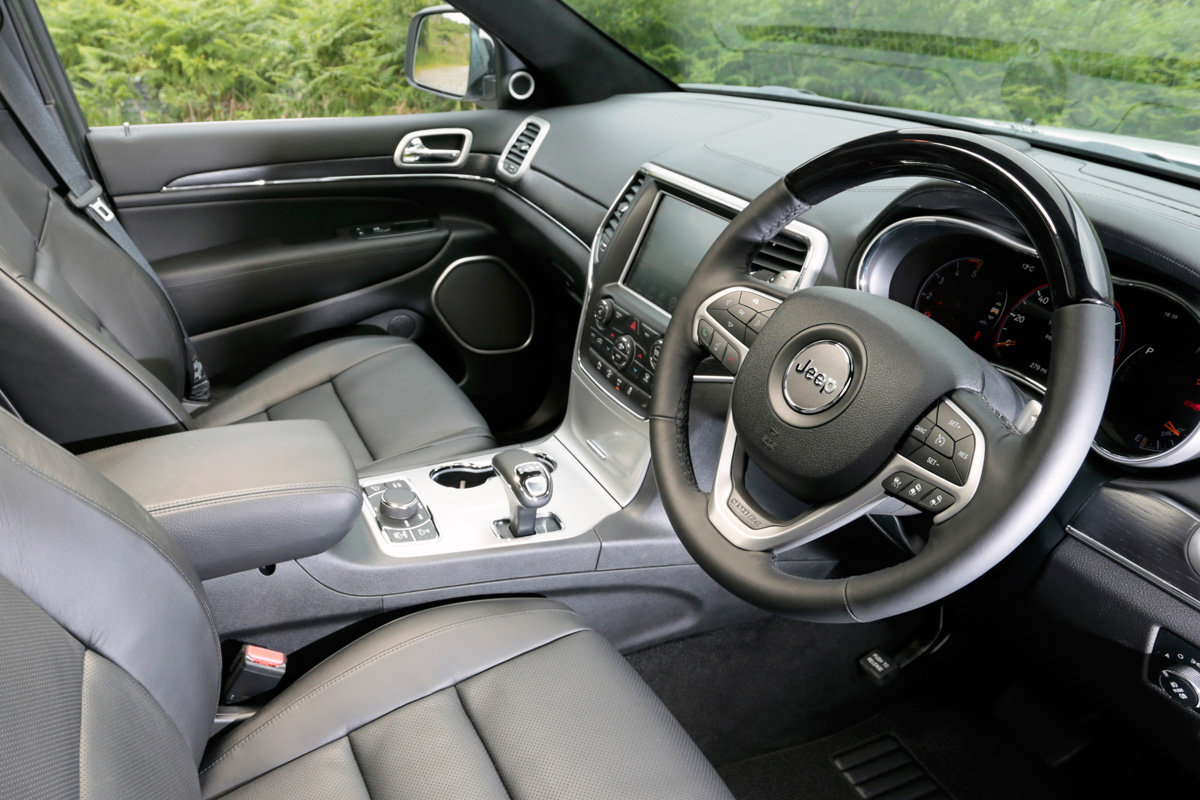
The Grand Cherokee retained Jeep’s hallmark off-road edge however, thanks to options such as the capable four-wheel-drive system, called Quadra-Drive II, and the air suspension, called Quadra-Lift. Many variants also offered a 3,500kg braked towing capacity, making them ideal for those with heavy-duty towing applications in mind.
Unlike some rivals, standard equipment was also impressive. Even the initial base model, the Grand Cherokee Limited, came with dual-zone climate control, bi-xenon lights, cruise control, heated front and rear leather seats and Bluetooth connectivity. Overland models were even better equipped, featuring equipment such as adaptive cruise control and air suspension.
Other trim levels and special editions were subsequently introduced, including the stonking 6.4-litre SRT version and the frankly unhinged limited-edition 700bhp Trackhawk. If you’re shopping for a conventional new Grand Cherokee today, you can pick between the Overland and the flagship Summit model, which comes with a 19-speaker Harman/Kardon sound system, lane departure warning, parking assistance and adaptive cruise control.
If quality and aesthetics aren’t at the top of your list, and off-road ability and towing are, then the Grand Cherokee could be worth checking out. If you’re just looking for a large luxury SUV that’s going to spend most of its life on Tarmac, however, we’d recommend sticking to the rivals such as the BMW X5, Audi Q7 or Mercedes-Benz GLE.
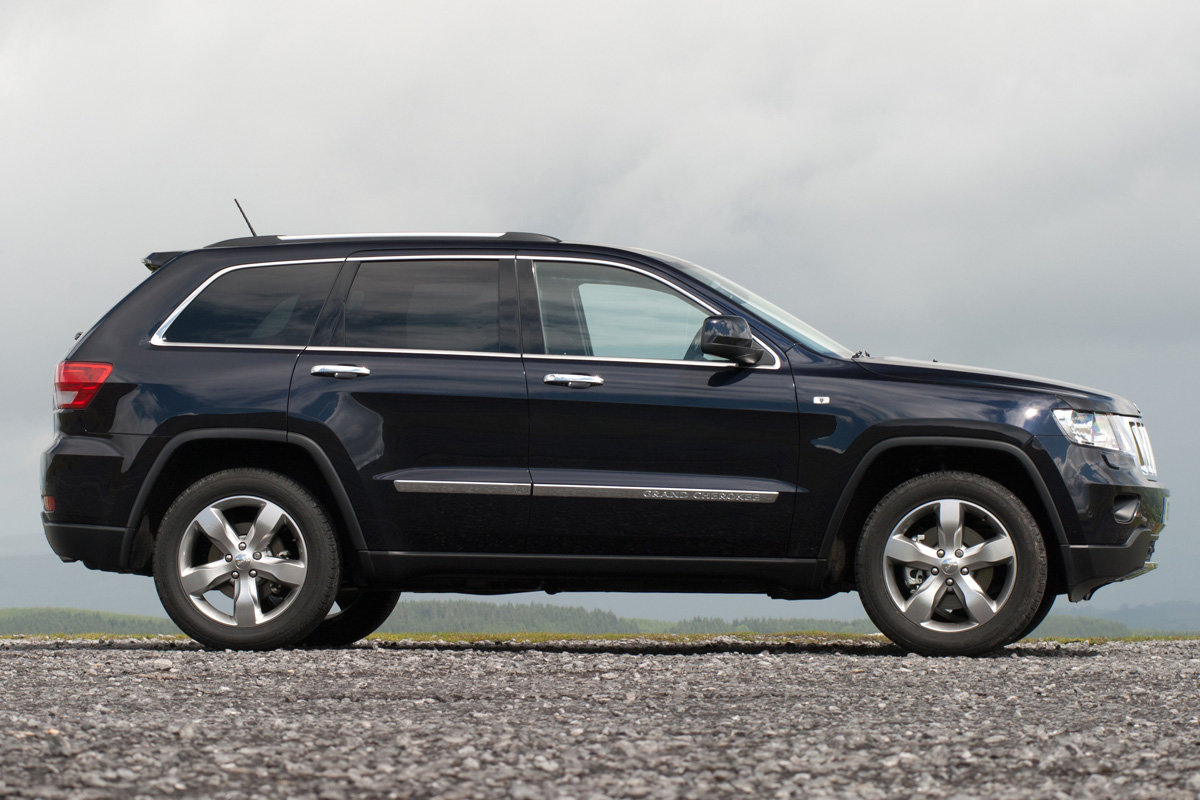
A big diesel SUV is always going to struggle on the running costs front but, in some respects, the Jeep does remarkably well. Initially, the 3.0-litre diesel was reputed to average 34mpg and emit 218g/km of CO2, measured using the old NEDC tests. Facelifted versions bettered those figures with an average fuel consumption of 37.7mpg and CO2 emissions of 198g/km, which were competitive numbers. Pleasingly, many owners also report an mpg figure of 30 being realistic when driven sensibly.
Versions tested under the more realistic and recent WLTP testing rules are now claimed to average 28.8mpg and emit 254g/km of CO2, meaning a hefty first-year tax payment under the new Vehicle Excise Duty (VED) scheme. Newer rivals, such as the BMW X5 in xDrive30d xLine specification, cost a little more, but are cleaner, more efficient, more powerful and quicker.
Because the Jeep’s list price exceeds £40,000, as is the case with many an alternative, owners will also have to pay an additional £325 on top of the standard £150 tax payment for the first five years. Fortunately, servicing is only required every 12 months or 12,500 miles, and the five-year warranty on new Jeeps should further help keep costs controllable.
You might want to bear resale values in mind if you’re buying a new or nearly new Grand Cherokee, as Jeeps usually depreciate at a quicker rate than better-regarded European alternatives. Any saving you make initially, through a deal or by buying a Jeep that’s a year or two old, could be negated by depreciation. It’s important to crunch the numbers to avoid any downfall.
As is the case with all SUVs, it’s also worth inspecting any used example for signs of off-road damage, or any indication of heavy-duty towing use. Carefully inspect the condition of the tyres of any used example too; a good brand-name tyre will cost in the region of £150, so if four are required then you’ll immediately be hit with a £600 bill for tyres alone.
Initially, each new Jeep Grand Cherokee came with a conventional three-year, 60,000-mile warranty as well as three years’ roadside assistance and a seven-year anti-corrosion warranty. In 2018, however, Jeep launched a new five-year warranty that was valid until 75,000 miles and also included five years’ worth of roadside assistance.
However, while that means major gripes and unexpected expenditure should be rare, it’s worth bearing in mind that Jeep doesn’t have a particularly good reputation in the UK, with it often turning up near the bottom of the results tables when it comes to reliability.
That all said, the Grand Cherokee shares many parts with the Mercedes-Benz M-Class, which was subsequently rebranded the GLE. Major problems are seemingly quite uncommon but, as the vehicles get older, more issues may arise.
Regardless, if you do subsequently settle on a Grand Cherokee, it’s probably best to get one with a decent warranty. Or, at the very least, find a decent 4x4 specialist local to you who will be able to care for it and repair it as and when required.
Jeep also offers used approved Grand Cherokees that are up to five years old. Each is comprehensively inspected before being sold and comes with 12 months’ warranty and breakdown cover, which should help alleviate any reliability-related fears.
If you are looking at a used Jeep, it’s worth checking the government website for checking vehicle recalls – as there have been ten recalls for this generation of Jeep, which is dubbed WK2, and you’ll want to ensure that they have been taken care of where appropriate.
- An updated version of the Jeep Grand Cherokee was introduced in 2013. It benefitted from a wide range of updates, including improved equipment levels and – most importantly – an eight-speed automatic transmission. This replaced the five-speed unit originally in the vehicle and offered improved shift quality and efficiency. Jeep also revised the exterior and interior styling of the Grand Cherokee and added new options such as adaptive cruise control. Another update followed in 2016, which added cosmetic tweaks and upgrades including electronic power steering and a start/stop function.
- The diesel V6 in the Grand Cherokee initially produced a decent 237bhp and 406lb ft. As part of the updates carried out in 2013, the engine’s output rose to 247bhp and 420lb ft. Efficiency was also improved. A lower-output version of the engine, which produced 188bhp and 325lb ft, was also offered in the then-new base-grade Laredo trim. It was a good two seconds slower to 60mph, not much more efficient and the Laredo trim wasn’t particularly well equipped, so it’s worth steering clear of unless you simply must have the least expensive version.
- A high-performance version of the Grand Cherokee, called the SRT, was offered from 2011-2017. It featured a 6.4-litre V8 that produced a mighty 461bhp, which granted a storming 0-62mph time of just five seconds and a top speed of 160mph. It even came with dedicated performance features like launch control and a track mode. But it was heavy, thirsty and expensive, making it a very niche choice. Jeep followed it up with the Trackhawk, introduced in 2018, which packed a monstrous 700bhp V8 and could sprint from 0-62mph in just 3.7 seconds.
- If you want the best all-rounder: Go for a later facelifted diesel Grand Cherokee, with the better eight-speed gearbox and media system. We’d generally steer clear of the lowest trims in any case, too, and instead opt for an Overland or above, as those versions and beyond benefit from a more upmarket-looking interior and more creature comforts. Overland models also got air suspension from the outset, which provides a better ride and increased clearance for off-roading.
- If you're an off-roader: You’ll want a Grand Cherokee with air suspension, as that provides an additional 6cm of ground clearance for a total of 28cm. A variant with the Quadra-Drive II four-wheel-drive system is also recommended, due to its traction-boosting electronic limited-slip rear differential. Keep an eye out for Trailhawk variants if you want the ultimate off-road Jeep Grand Cherokee.
- If you're a performance fan: For a big and boisterous SUV, we’d recommend going for a used Grand Cherokee SRT. If its 461bhp isn’t enough, however, you could go for the flagship Trackhawk. Aside from a whole range of performance-focused upgrades, it packs an outrageous supercharged 6.2-litre V8 that produces a staggering 700bhp. Just be ready to learn the name of every fuel station attendant in your county, as fuel economy is woeful.
- If you need to tow a trailer: If you’re looking for a diesel SUV for towing duties, there’s only really one version of the conventional Grand Cherokee you might need to avoid – the Summit. It has a 2,949kg braked trailer rating, whereas every other diesel version of the Grand Cherokee has a 3,500kg towing rating. Every version also comes with a trailer sway control, which automatically helps stabilise the Jeep and whatever it is towing.

