Jeep Renegade Review (2014-present)
Jeep Renegade cars for sale
3.0
Expert review
Pros
Capable of proper off-roading
Roomy cabin
Eye-catching appearance
Cons
Uninspired to drive on Tarmac
Reliability concerns
Disappointing score in Euro NCAP safety tests
The CarGurus verdict
There’s plenty to like about the Jeep Renegade, not least its distinctive looks and the potential for great off-road performance; even if you never use it, it’s nice to know it can tackle the rough stuff if you want to. There are some serious reliability concerns, though, and safety tests suggest there are safer cars on the market. If you do buy one, make sure you test drive it thoroughly and consider getting it inspected by a mechanic, especially if it’s out of warranty. If you do manage to get a good one, however, you’ll have an eye-catching car that’s got a decent amount of space and drives reasonably well, too. For a select group of people, it’ll be exactly what they’re looking for.
Jeep is one of those brands that you probably don’t need an introduction to, even if you don’t know anything about cars. Its name has almost become the generic term for an off-roader, and that’s despite selling cars in relatively small numbers in the UK. The word Jeep says rugged, off-road ability and American iconography.
So some might look at the Renegade in person and think that it’s rather dinky. And it is, for a Jeep. It’s the smallest car that they sell here and much more diminutive than other Jeeps, such as the Jeep Wrangler or Compass. It's a compact SUV that competes with myriad similar cars, including the Fiat 500X (with which it shares its mechanical underpinnings), Renault’s Captur, the Nissan Juke, Mazda CX-3, the Mini Countryman, Honda HR-V, Hyundai Kona and many more. It’s a popular type of car, which means anything competing in the market needs to be good.
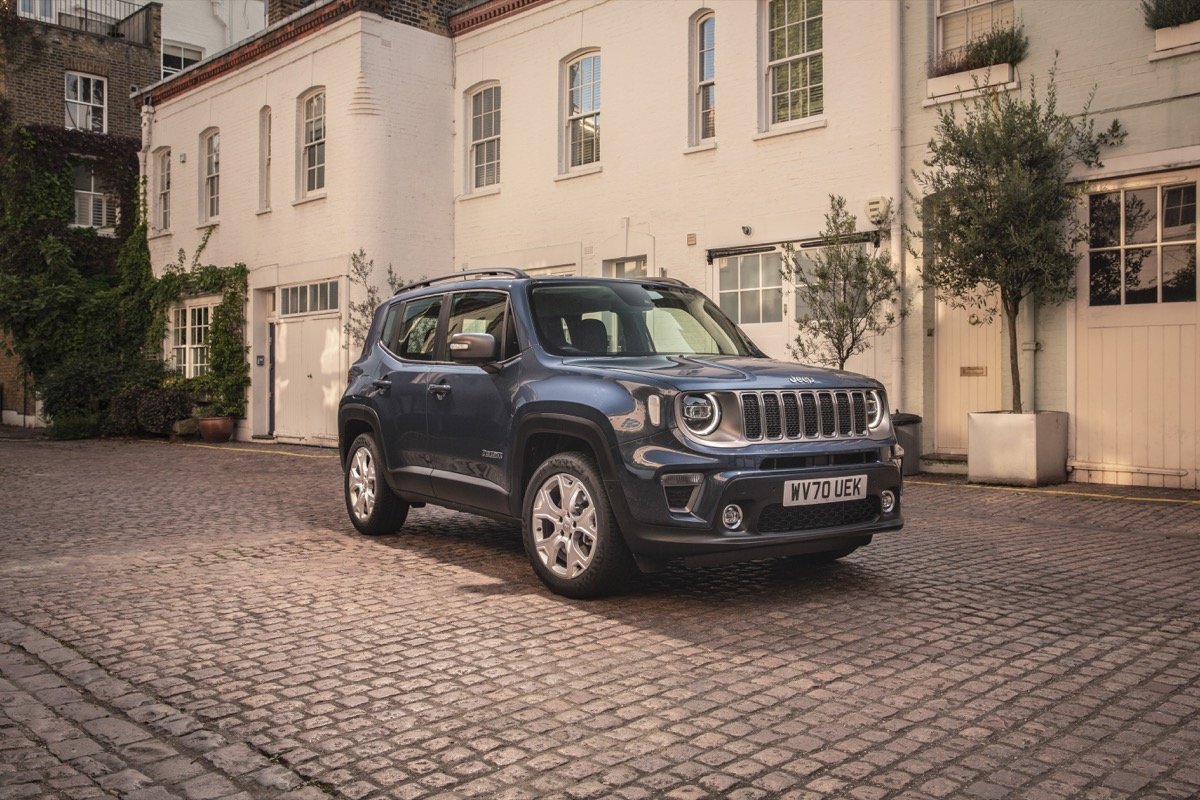
So what’s the Renegade got going for it? Well, its appearance to start with. It’s a chunky-looking thing, immediately channeling the Jeeps of yore with its seven-slot grille and beefy stance. It looks like it could cross the Mojave desert or traverse the Rubicon trail, even though it’s more likely to tackle the M25 and the Asda car park. It looks unapologetically American, even though it’s actually the only Jeep made only outside the USA.
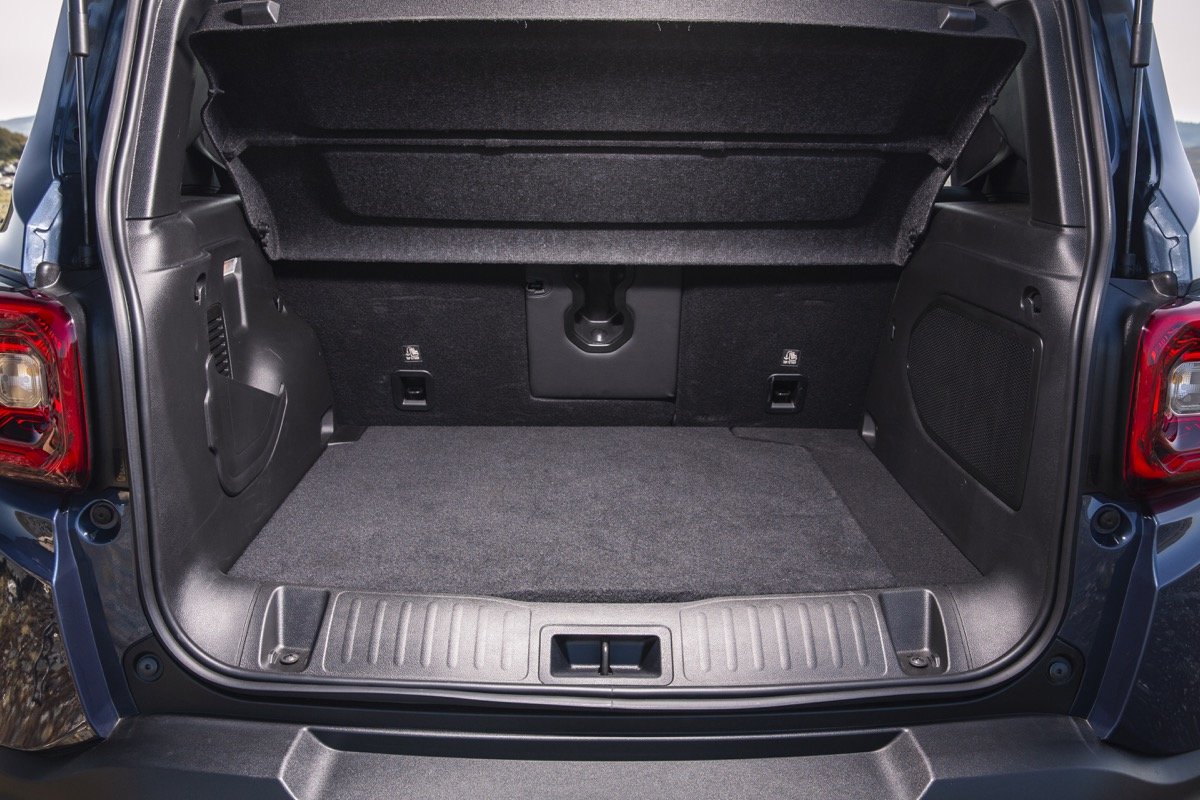
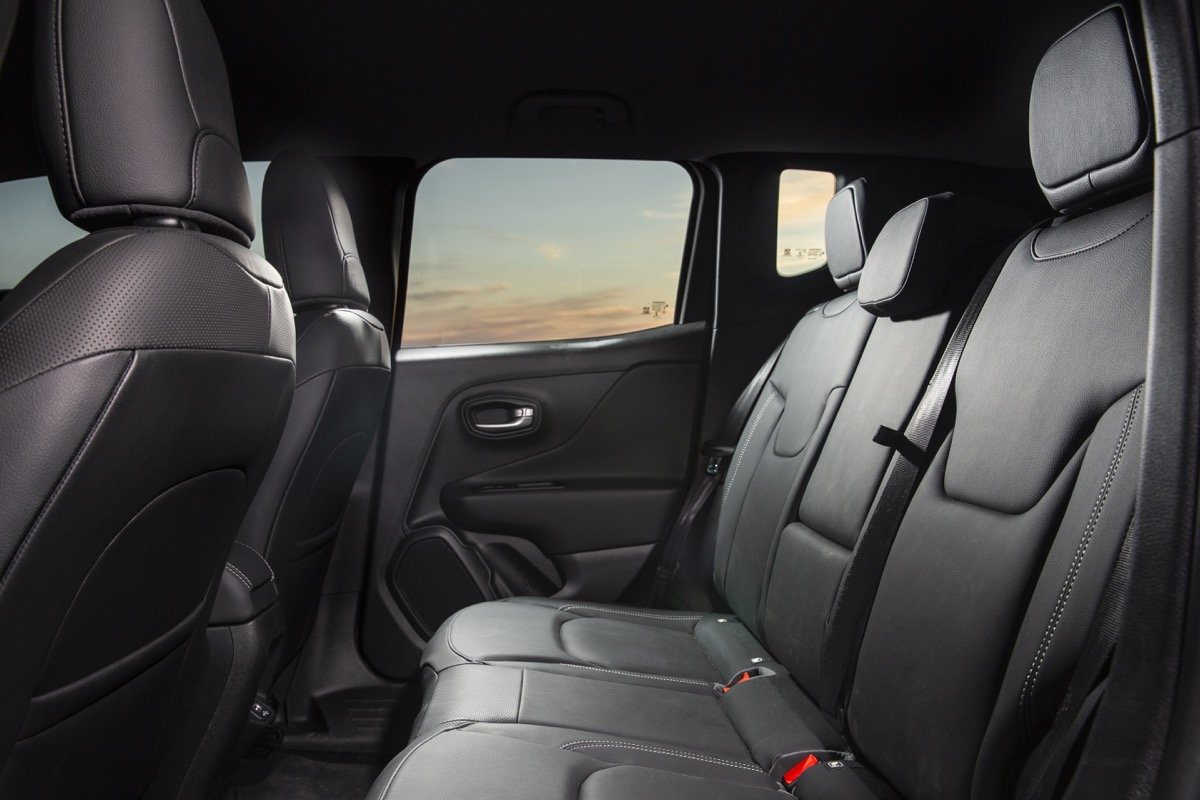
Inside you’ll find quite a bit of space for the size, with plenty of headroom, even for taller adults. Legroom is a bit cramped in the back, though, and boot space is acceptable, rather than remarkable. Some models could be specced with a 40/20/40 split folding rear seat, rather than the regular 60/40, as well as a folding front passenger seat, which could be worth watching out for if you need maximum practicality. Some of the interior plastics feel a bit cheap, but there are some nice design touches that use the Jeep grille as inspiration.

On the road, the Renegade is best described as “reasonable”. There’s nothing about it that’s particularly bad, but there are plenty of rivals that offer a more rounded driving experience. The steering feels quite artificial and distant from the front wheels, but the car is solid and composed enough through the corners. While the ride can be slightly firmer and bumpier than you might want, it’s never annoyingly so. Road noise and wind noise could both be better contained at motorway speeds, though.
The petrol engine line-up at launch consisted of a 109bhp 1.6-litre or a 1.4-litre MultiAir engine with 138bhp or 168bhp. The a choice of diesels included a 1.6-litre with 118bhp and a 2.0-litre Multijet with 138bhp. The latter had four-wheel drive while the others were front-wheel drive. Of these, we’d avoid the 1.6-litre petrol engine as it’s lacking grunt. It might just be acceptable if you mostly drive around town on your own, but if you’re carrying passengers and trying to get up to motorway speeds, you’ll miss the extra oomph.
All four-wheel drive Renegade models get a nine-speed automatic gearbox, while the 1.6-litre diesel is available with a six-speed, dual-clutch automatic. Otherwise, you'll get a six-speed manual gearbox.
There was a facelift for the Renegade towards the end of September 2018, which as well as some revised looks and upgraded LED headlights, brought in a new turbocharged three-cylinder, 1.0-litre petrol engine with 118bhp, and two 1.3-litre four-cylinder petrol engines, with 148bhp or 178bhp. The old petrol engines were discontinued. A 168bhp version of the 2.0-litre diesel was also brought in later on. The facelifted new car also added some extra safety systems, including a lane departure warning system, and the option of adding automatic emergency braking and a blind spot monitoring system.
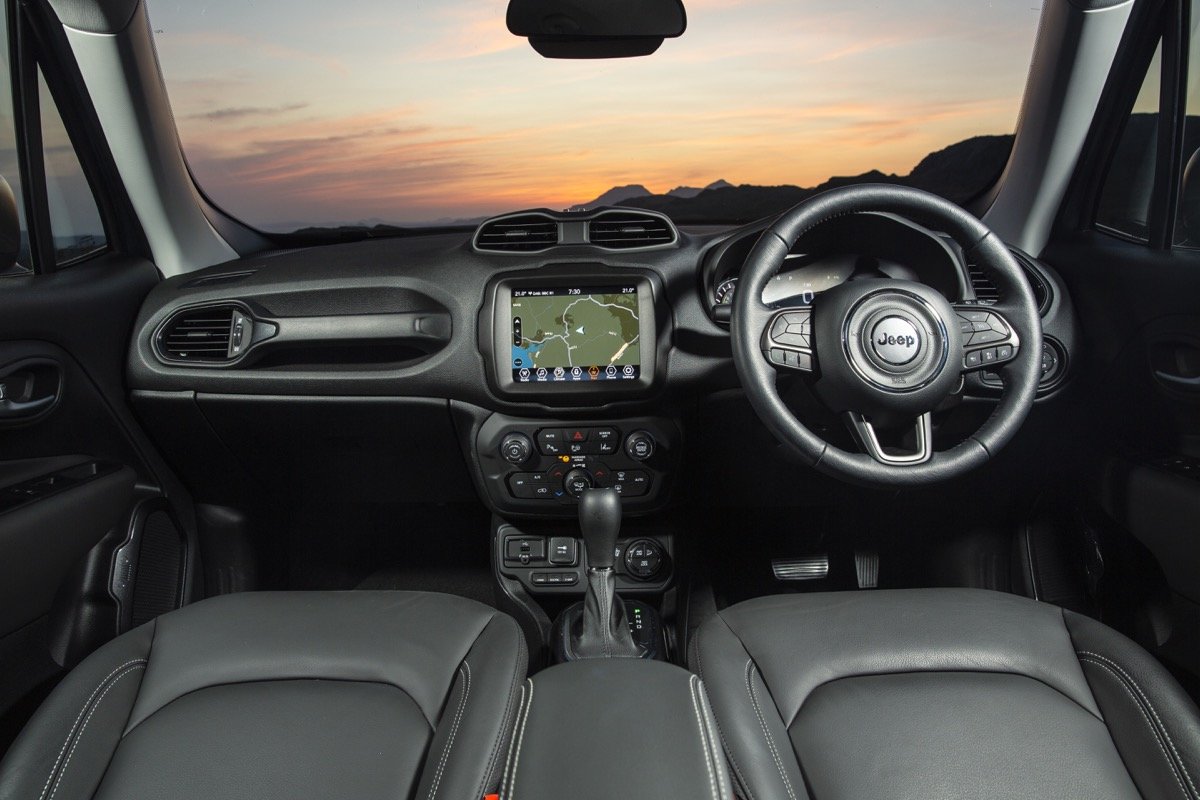
Cars made after the 2018 facelift have a larger 8.4-inch touchscreen infotainment system with Apple CarPlay and Android Auto for smartphone connectivity, except for the Sport model (although that does still have Bluetooth). A top-spec S model, which is loaded with features as standard, was added in 2019, and there’s also a special edition Night Eagle model, which is based on the Longitude model and comes with metallic paint as standard, as well as gloss black alloy wheels and grille. Other special edition models include such understated names as Dawn of Justice, Tough Mudder and Desert Hawk.
One note of concern is around safety. Originally the Renegade scored the maximum five stars in tests by safety organisation Euro NCAP, but it was retested in 2019 and scored just three, with poor scores in several areas, largely due to a lack of more modern, active safety systems. It was the only car tested in 2019 to score less than four stars, and the secretary general of Euro NCAP accused Jeep of prioritising looks over substance.
The Renegade holds its value reasonably well, which could mean it’s not the cheapest thing to buy whether new or used, but it should repay some of that when you sell it on.
If you opt for a four-wheel drive model you’ll spend more on fuel, so make sure you need it. Front-wheel drive will be fine for most people.
The plug-in hybrid model, if you use it correctly, will be the cheapest to run when it comes to fuel costs, although it’ll cost you more to buy in the first place, so some sums may be needed to work out if the extra initial outlay will be recouped in fuel savings. And the same goes for the diesels, to a slightly lesser extent. If you’re covering lots of miles, the diesels are likely to be a better bet. The 1.6 has an official fuel consumption figure of between 47.1mpg and 50.4mpg, depending on spec. The 2.0 litre in 168bhp form will give you 37.7mpg, due to its four-wheel drive.
In the petrol range, the later engines are more efficient. The 1.0-litre, 118bhp engine has an official MPG of between 40.4 and 42.2 depending on spec, but then so does the 148bhp 1.3-litre, which has more power.
Service intervals are fairly close, with checks needed every year, or every 9,000 miles for petrol engines and 15,000 miles for diesels. A major service always follows a minor; expect to pay around £400 for the former and £170 for the latter at a main dealer. Cambelts on all engines except the 1.6 petrol need changing every six years, which will cost around £600.
Insurance groups range between 9 and 25 of 50, depending on the model.
Jeep doesn’t have a brilliant reputation for reliability. In-depth information is difficult to come by, as the brand sells relatively small numbers of cars in the UK and so doesn’t feature on some independent studies. For example, it doesn’t appear on the 2019 JD Power UK Vehicle Dependability Study, but Fiat – with whom Jeep shares a parent company and lots of mechanical parts – placed last-but-one of all the major manufacturers. The Warranty Direct Reliability Index also puts Jeep in the lower half of the manufacturer rankings.
A What Car? Reliability Survey of owners put the Renegade 13th of 14 cars in its class. The only car that fared worse was the Fiat 500X, upon which the Renegade is based.
Early Renegades came with a three-year warranty, although Renegades sold after July 2018 had an improved warranty of five years or 75,000 miles, as well as five years of roadside assistance.
Common problems reported by owners include issues with engines losing power and the traction control kicking in unnecessarily, often when making a turn. Some owners have reported that a software update at a dealer fixed the problem. Other owners of four-wheel drive models have reported a rumbling noise from the rear at around 30mph. Solving the issue has proved difficult and in some cases has required a full gearbox replacement, which you’ll want to avoid if the car is out of warranty.
There have been a few recalls on the Renegade. Early models had a faulty wiring harness that could mean the car shifted to neutral, while a handful of cars had faulty side airbags. In 2019, there were concerns that a software update could inadvertently disable some safety features, and also worries about incorrect machining on an engine mount. These should have been all sorted by now, but it’s worth checking with a Jeep dealer to make sure.
- In late 2020, a new Jeep Renegade was introduced; a plug-in hybrid version called the 4xe, which could be of interest to those that like the thought of zero-emission motoring. It’ll do up to 26 miles on electric power only, and then use a 1.3-litre petrol engine after that. So if you do lots of smaller journeys, and have somewhere to plug it in, you should be able to get fantastic fuel economy. If you drain the battery, though, you’re just using the petrol engine to lug heavy electric tech around, and the fuel economy will be pretty terrible. So before you buy, make sure your use will suit PHEV motoring.
- Unless you’re actually planning on taking your Renegade off-roading, you plan to tow things, or you live in an area with inclement road conditions, we’d stick with front-wheel drive. That said, it is a Jeep, and better on rougher terrain than you might expect. In fact, probably better than anything else of this size, save for the Suzuki Jimny.
- Trim levels for pre-facelift Renegades start with the Sport, which features 16-inch alloys, air-con and DAB digital radio. Up next is the Longitude, sporting larger 17-inch wheels, cruise control and an electric driver’s seat, as well as satnav and an improved stereo. The Limited model has heated front seats and steering wheel, leather upholstery, rear parking sensors and a larger 6.5-inch screen, while the off-road focused Trailhawk has hill descent control, underbody protection by way of some skid plates, and a tow bar.
- If you want to tow stuff: There are probably better cars to choose if towing will be a major part of your motoring life, but within the Renegade range, the diesels are the ones to go for. The 1.6-litre diesel with a manual gearbox can tow up to 1,500kg (but only 1,200 with the automatic transmission), while the 2.0-litre diesel engines can tow the same.
- If you want the best fuel economy: On paper at least, the plug-in hybrid model is the one to go for here with an official combined fuel economy of up to 134mpg. But again, that will very much depend on how you use it. Maximising the use of the electric motor through regular charging and shorter journeys will see brilliant fuel economy, while regularly relying on the petrol engine will drain fuel pretty quickly.
- If you want to go off-road: The Renegade Trailhawk model is the one to go for if you’re venturing away from the tarmac, as it has extra protection underneath it as well as the all-important four-wheel drive. It also includes a low range system, which is very useful for more rugged terrain, and hill descent control to keep things tidy on steep slopes.
- If you want the best all-rounder: We reckon the Longitude trim is the best balance of spec versus price, and the diesels are better performers than the petrols. We’d stick with the 138bhp 2.0-litre version unless you need the extra grunt.

