Jeep Wrangler Review (2007-2017)
Jeep Wrangler cars for sale
2.0
Expert review
Pros
A proper go-anywhere 4x4
Characterful to look at and to drive
Reliable 2.8-litre diesel
Cons
Crude and outdated on the road
Surprisingly small inside
Hugely expensive to fuel
The CarGurus verdict
If you like your SUVs refined and composed, quiet and comfortable, practical and convenient, step away from that used Jeep Wrangler immediately: it is not the car for you.
It performs, steers, rides and stops like a car from a distant era, which isn’t far from the truth. It doesn’t have much space inside and the plastics used in the cabin are utilitarian, to be polite. It’s also quite expensive to run. And yet…
While objective tests in the motoring media typically give the Wrangler a sound drubbing, owners who are of the Jeep mindset refute that it’s a bad car. They see it as an iconic machine and regard its foibles as the character that has been bred out of modern SUVs. They happily trade refinement and on-road driving dynamism for the potential – real or perceived – to carry on motoring when the road runs out and the wilderness beckons.
So go for a test drive to make sure that you ‘get’ the Wrangler in the same way that other owners do.

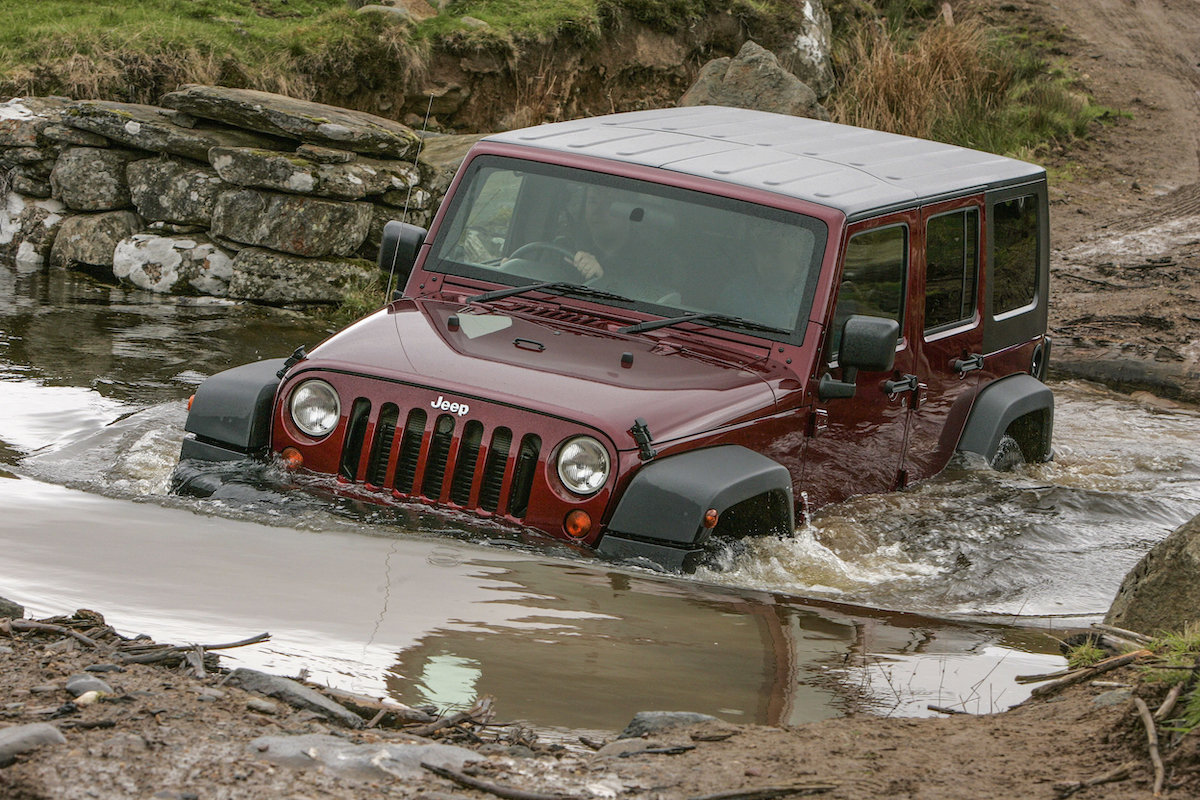
And just like with the Defender, the Wrangler’s inherent charm and boundless enthusiasm for conquering off-road obstacles are the veils that disguise how generally poor it is compared with its contemporaries. The fact that you’re hooked on the looks – a mixture of Tonka toy meets army runaround – is not enough for you to overlook its manifold inadequacies.For example, the Wrangler may be a big vehicle but it’s a comparatively tight squeeze inside: boot space in the three-door is laughably small.
Fancy hi-fi and leather upholstery in some versions can’t avert your attention away from the hard, utilitarian plastics used for the facia and door trims. If you’re coming to the Wrangler from just about any car other than a Land Rover Defender, its cabin may appear to be from another, earlier age.

The ride quality, especially of the short wheelbase three-door version, is best described as bouncy. And not in a good way. Its steering is as vague as a politician’s promise and its turning circle lousy. The Wrangler’s automatic gearbox responds sluggishly, while its manual is notchy and imprecise.
Its 2.8-litre diesel engine is robust and muscular, but also unrefined and loud: despite boasting a capacity of 3.8 litres, the Wrangler’s pre-2011 V6 petrol engine is flaccid and thirsty, and while the later 3.6-litre version is more powerful and efficient, its fuel consumption and emissions lag woefully behind those of potential rivals.
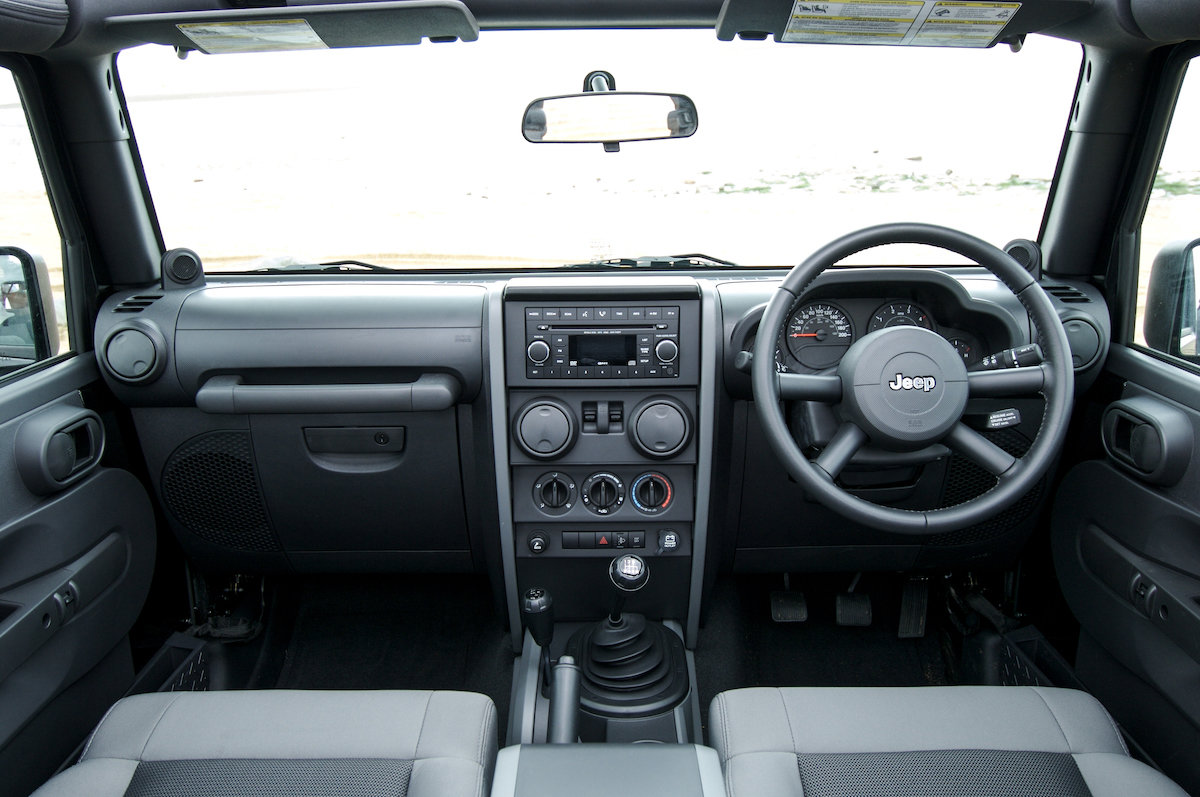
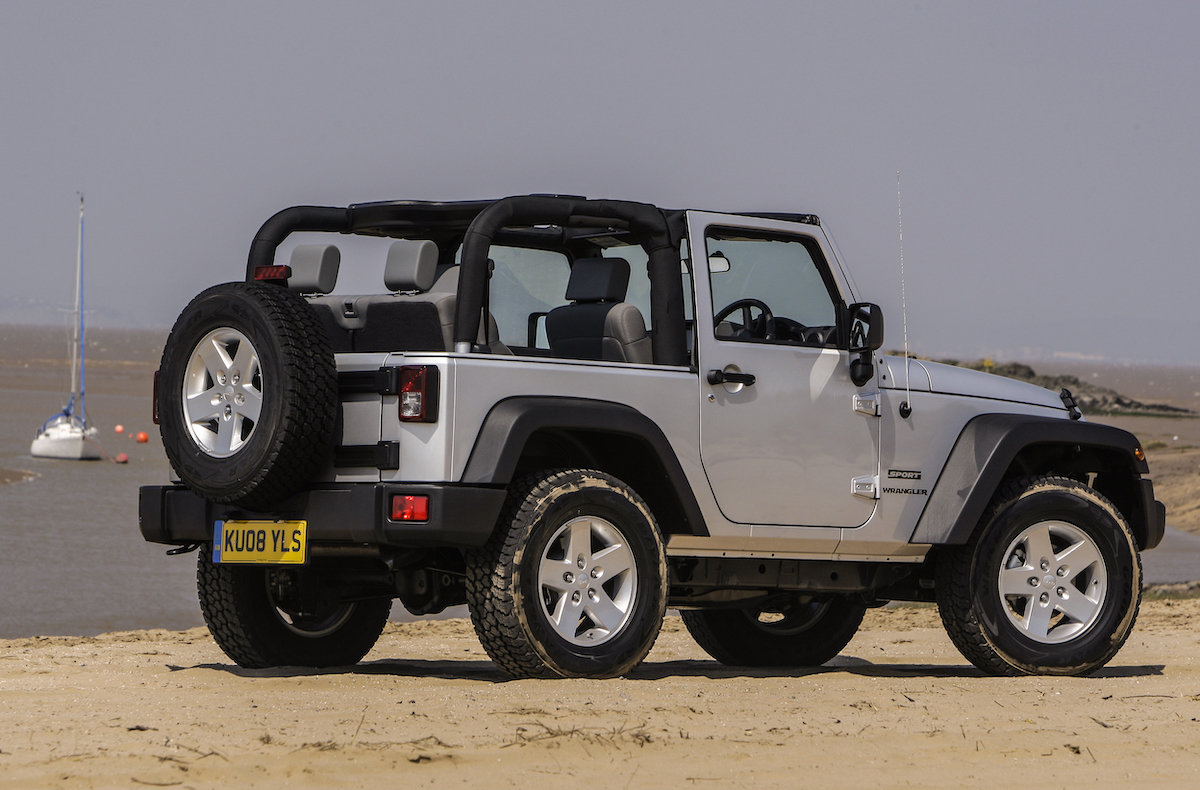
When the Wrangler range was launched in the UK in 2007 the entry-level model was the Sport. It rolled on steel wheels but featured aircon, cruise control, electric windows and heated mirrors. Despite being the cheapest of the line-up it was dropped during the 2011 refresh of the range, British buyers proving they’d pay extra for more toys. Prior to the refresh the line-up comprised Sport, Sahara and Rubicon, and post-refresh Sahara was the entry-level model followed by Overland and Rubicon. The short wheelbase Sport is considered a good base for modifying to extreme off-road spec.
As standard the three-door has a folding vinyl roof (a hard-top is optional), while the five-door – called the Unlimited – has removable roof panels, so that both can be driven as convertibles. Furthermore, their windscreens can be folded flat onto the bonnet and the doors are designed to be removed, although this facility probably has more relevance to California than, say, Cleethorpes.
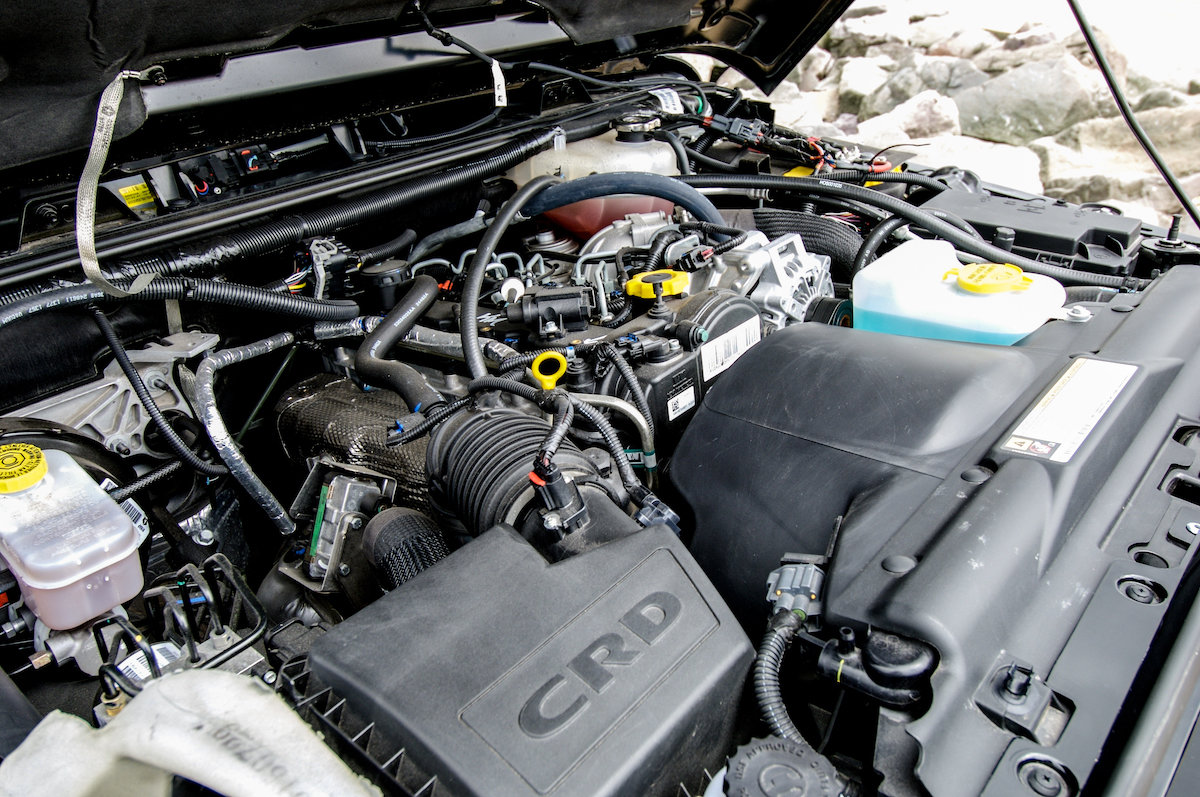
The Jeep Wrangler hails from the country of cheap gasoline, as is evidenced by the 3.6-litre V6 engine’s performance at the pumps. It averages 24mpg officially, although to its credit some owners claim that figure to be overly pessimistic. The pre-2011 3.8-litre V6 gave worse fuel consumption despite being less powerful. Claimed fuel consumption of up to 35mpg for the 2.8-litre CRD diesel is a considerable improvement, although some owners report getting about 24mpg around town and 28mpg on a longer run.
High fuel consumption means high CO2 emissions, which also means high road tax. The Wrangler diesels range between £150 and £580 annually depending upon the model, and the same is true of the V6 petrol-engined versions. Insurance groups range from 18 to 34.
Petrol-engined Wranglers require a service every 12 months or 7,500 miles and there are four sequential servicing levels that will cost you around £165, £270, £215 and £380. Servicing intervals for the diesel engine are a more generous 12,000 miles, and they alternate between a minor service for around £200, and a major costing in the region of £430. Both engines have a cambelt that may require changing during your ownership. The cambelt on the petrol engine needs replacement every 10 years or 125,000 miles, that of the diesel every 120,000 miles or 92 months (7.7 years): budget on around £500 or more to get the work done.
Tyres biased towards on-road driving will set you back between £130 and £200 per corner depending on what model you own, while decent quality off-road rubber can be as much as £185. Given that circular headlights aren’t anything special these days it comes as a bit of shock that they can cost as much as £280 apiece on the Wrangler, while a full exhaust system is £700.
A major benefit of the Wrangler being unencumbered with the very latest hi-tech gizmos is that on the whole it’s a pretty reliable car. It certainly helps that its 2.8-litre CRD diesel engine is the same VM Motori RA428 unit that also powers some London taxis, and as we all know, they go on forever…
The Wrangler isn’t faultless, however. The (best avoided) 3.8-litre V6 petrol engine from the pre-2011 cars has a voracious thirst for oil; if it has ever run too low then you may hear knocks or rattles emanating from under the bonnet and white smoke coming from the exhaust. And talking of oil, the 2.8 CRD’s oil filter is in a very hard to get to position, and some mechanics simply don’t bother changing it at service time. Old filters eventually get clogged up, reducing the flow of oil to the engine, so it’s important that they do get changed regularly.
There are no commonly reported problems with either the manual or automatic gearboxes, but on Wranglers that have never been used off-road, check that the low ratio transfer case still works. Talking of off-roading, those cars that have been used extensively off-road can take a battering underneath, and you may discover that the dampers are shot and there’s excessive wear on the suspension’s ball joints and track rod ends, as well as the steering bolts.
The Wrangler’s rubber door seals are known to fail and allow water ingress. Similarly, if not properly re-seated after it has been removed, the car’s hard-top can also let in water. In both cases the carpets in the front footwells will be sodden.
Over the years the Wrangler has been subject to 11 recalls, three of them pertaining to airbag faults. There was also an issue with possible brake failure, the stability control system going on the blink, and a chance that the optional towbar could become detached.
- Because the Wrangler is very much an old school off-roader, it’s down to the driver to work out the right time to select four-wheel drive. Until you do, the Jeep is rear-wheel drive. You select four-wheel drive using a substantial lever to the left of the main gearlever, and it is also the means by which you call up the services of the low-ratio transfer box that can help you out of tricky situations off-road. The Rubicon model adds to the off-road armoury with a Tru-lock locking differential and an electrically disconnecting front anti-roll bar, that allows the wheels a greater range of movement on severely uneven terrain.
- Being able to take off the roof and doors and fold the windscreen flat down onto the bonnet sounds adventurous and can be fun. But even on baking hot days the wind chill and buffeting in the exposed cabin can quickly diminish the entertainment factor; accessory half-doors are available to make it more bearable for road driving. Also, the folding fabric roof of the short-wheelbase Wrangler – and some Unlimiteds, too – is a swine to put down and back up again, so some owners invest in a temporary hood, known as a bikini top, that affords a degree of protection.
- For some owners, the Wrangler’s ability to scramble over rocks, plough through deep mud and bound up and down steep mountain tracks, renders its other drawbacks as of little consequence. And there are many accessories and upgrades available, from both Jeep and in the aftermarket, to make the Wrangler even more agile in the rough stuff, at further cost to its on-road manners. Those people who ‘get’ the Wrangler find it imperfectly appealing, but just make sure you’re really one of them before taking the plunge.
- If you just want some fun: Provided you don’t use it for commuting, long trips, or need to haul your family around in it, the short wheelbase Sahara with the 2.8 CRD diesel engine gives you the full Wrangler experience. It’s decently equipped, performs adequately if noisily, and you can fold down the fabric roof on days when the weather is being kind. And should the opportunity arise, you can take it off-road and feel like an adventurer.
- If you have off-roading ambitions: Jeep created the petrol-engined Rubicon model specially for heading off into the wilds. It features different gearbox ratios to the rest of the range, tougher axles, a special differential, anti-roll bars you can disconnect with the press of a button, off-road rubber and underbody impact protection for close encounters with rocks and logs. The model is named after a famous, boulder-strewn path called the Rubicon Trail, which hosts an annual pilgrimage of Jeepers.
- If you have family responsibilities: Even if you could cram a child’s car seat into the back of a short wheelbase Wrangler, you wouldn’t be able to transport the rest of an infant’s paraphernalia. So the long-wheelbase – and slightly wider – Wrangler Unlimited is your Jeep of choice, preferably with the 2.8 CRD diesel engine. Aim for the post-2011 Overland trim package that gives you tinted glass, a body-coloured hard-top, 18-inch alloy wheels, leather upholstery and heated front seats, and a touchscreen multimedia system.
- If you really must have a petrol engine: You’ll be doing yourself a favour if you can avoid the 3.8-litre V6 that the Wrangler was launched with. Despite having 196bhp its performance is lacklustre and its efficiency poor. Much better is the 3.6-litre Pentastar V6 introduced at the time of the car’s 2011 refresh. It’s more refined and thanks to 280bhp offers much more spirited performance; 0-62mph in 8.9 seconds. It’s more efficient, too, although 24mpg isn’t anything to get excited about…

