Kia Ceed 2019-2025 review | Solid, sensible and quite stylish, too

Pros and cons
What we like
Long warranty
Broad choice of power options
Should prove a reliable buy
What to consider
Not as good to drive as a Ford Focus
Some rivals are roomier
No true hot hatch in the range
The CarGurus verdict
The Ceed is a car that gives you peace of mind. It comes with the balance of a stonking seven-year warranty and an excellent reliability record, and between the various versions available, it’s a car that will do everything that most people will need it to do.
OK, it might not do much more than that – there are cars out there that are better to drive and more spacious – but at this price, with this much equipment included across the range, the Ceed will be a solid choice for the head to make. We wouldn’t blame you for eventually picking something else, but we’d caution you to at least include the Ceed on your long list.
out of 5 expert review
What is the Kia Ceed?
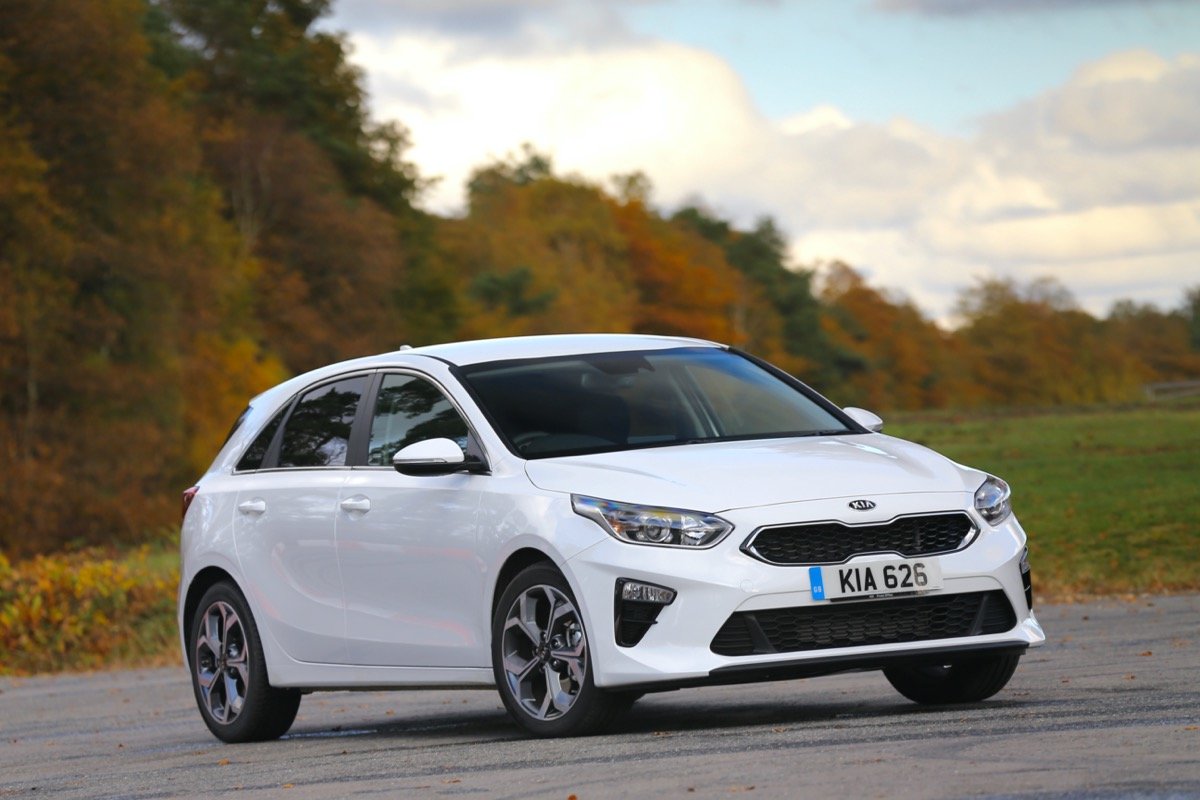
The Ceed has been produced by Kia since 2006, and it has improved enormously over the years. This is the third-generation model, introduced in 2018, and it’s an alternative to established family hatchbacks such as the Ford Focus, the Vauxhall Astra and the Volkswagen Golf, with attractive pricing, lots of standard features and a very generous warranty. It’s available as a five-door family hatchback or as an estate, called the Ceed Sportwagon. As if that wasn’t enough, you can also get a more stylish ‘shooting brake’-style estate called the ProCeed, but we’ll cover that in a separate review.
Inside, you’ll find a relatively conservative but not unattractive design, with quality materials that feel well put together. Don’t expect the same kind of premium touch you’d get in a Volkswagen Golf, but it’s a step above the Ford Focus and the Vauxhall Astra.
Practicality
How practical is it?
Taller adults shouldn’t have many headroom issues in either the front or the back of either body style, although the top-spec GT-Line S model has electrically operated seats that don’t lower quite as much as the manual seats in other models. Legroom in the back is reasonable, but you’ll get more space in quite a few rivals, most notably the cavernous Skoda Octavia.
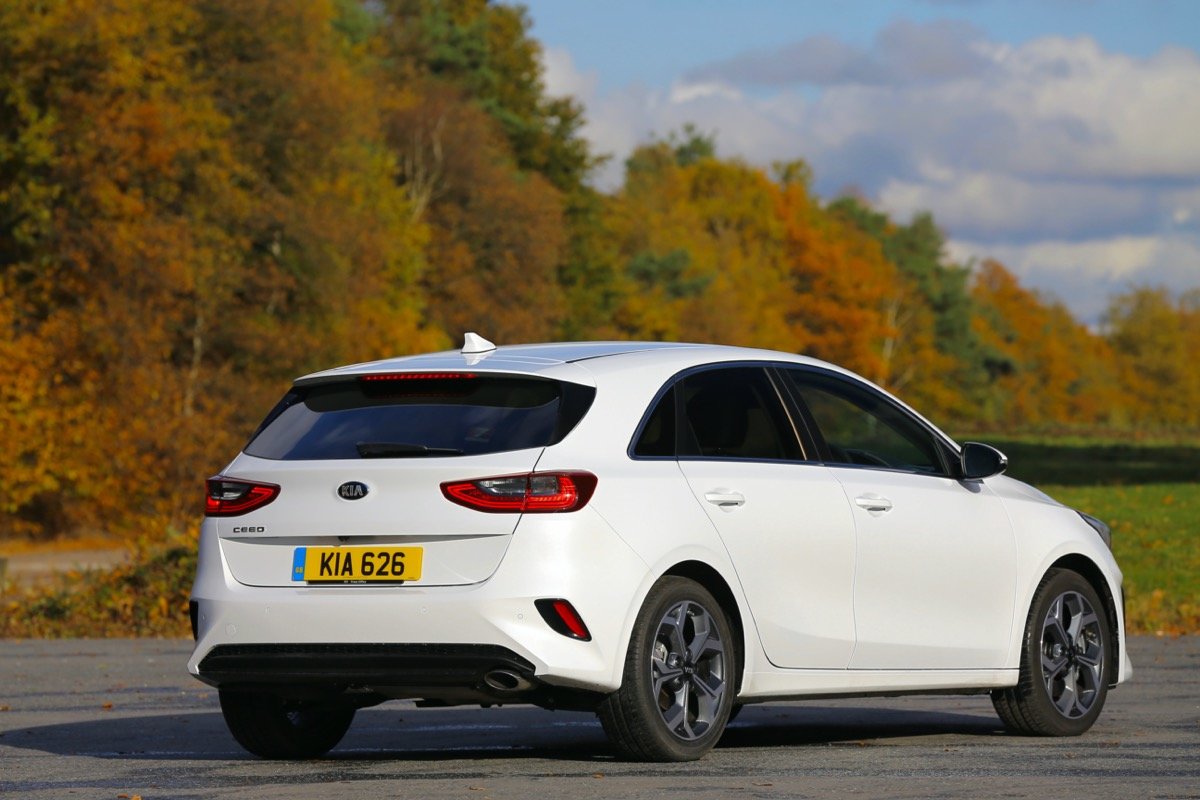
Boot space is good, at 395 litres – larger than the Focus and the Golf – but nowhere near the Octavia, which is the benchmark for interior space in this size of car.
If you need more, there’s always the Sportwagon, which has a huge, 625-litre boot and a large aperture through which to put larger items. If you need to use all that space, though, you’ll want to steer clear of the plug-in hybrid version, because the battery takes up extra space at the back, reducing the overall space on offer to just 437 litres.

Driving
What's it like to drive?
The Ceed doesn’t excel in any one area, and there are rivals that handle better, but it certainly doesn’t disgrace itself. The ride quality is largely good, although it’s not as comfortable as a Volkswagen Golf. Quick steering and a general feeling of solidity through the corners mean the handling is fine, too, but not a patch on the excellent Ford Focus, even in the theoretically-more-driver-orientated Kia Ceed GT, which has lowered and stiffened suspension for a sportier experience.
Road- and tyre noise are louder than in the Golf, and worse in the Sportswagon than the hatchback, but they’re still acceptable on long motorway journeys. In short, this isn’t a car for the driving enthusiast, but those that just want to get from A to B shouldn’t have any major complaints.
At launch, the engine line-up consisted of three petrol choices (labelled T-GDi) and two diesels (called CRDi), and all are decent. For those prioritising efficiency over performance, the 120hp 1.0-litre petrol engine will do very nicely, as it’s punchy enough for most unhurried circumstances, although you do need to rev it quite hard. If you do want some extra grunt, there’s a capable 1.4-litre petrol with 140bhp, and a 204bhp 1.6-litre engine that comes with the GT model. This is as close as the Ceed gets to a hot hatch, and it’s peppy if you work it hard.
The diesel options started with a 115bhp 1.6, and there was a 136bhp version, too, albeit only available with the GT-Line model. The former gives very similar performance to the entry-level petrol but with better fuel economy, so if you’re doing more miles then it might be worth the extra purchase price. The 136bhp version of the 1.6-litre diesel is similar, but with extra oomph, so could be useful if you often travel with passengers and/or luggage. You can choose between a six-speed manual gearbox or a seven-speed automatic geabox, although not all engines give you the choice.
A plug-in hybrid version of the Sportswagon was introduced at the start of 2020, and about a year later came some changes to the original engine range. The 1.4-litre engine was replaced by a new 1.5-litre powerplant, with power boosted to 158bhp as a consequence.
Meanwhile, the slow-selling 115bhp diesel engine was axed. In its place, the 136bhp diesel gained 48-volt mild hybrid electrification, and rather than being restricted only to the top-of-the-range models, it was made available across the range.
This new version of the diesel came with what Kia described as its ‘intelligent manual transmission’, or iMT. What this meant was that the clutch was operated electronically, rather than via a cable, and it meant that the hybrid system could shut off the engine earlier and start it up later when waiting at traffic lights.
As an alternative to a manual, you could also spec Kia’s swift, snappy seven-speed dual-clutch automatic gearbox. This could be specified on the 1.4-litre petrol turbo (later 1.5-litre) as well as the more powerful diesel.
Oddly, these engine tweaks came six months before the whole Ceed range was facelifted – so cars built in early 2021 will feature the newer engines, but pre-facelift styling.

Tech and equipment
Technology, equipment & infotainment
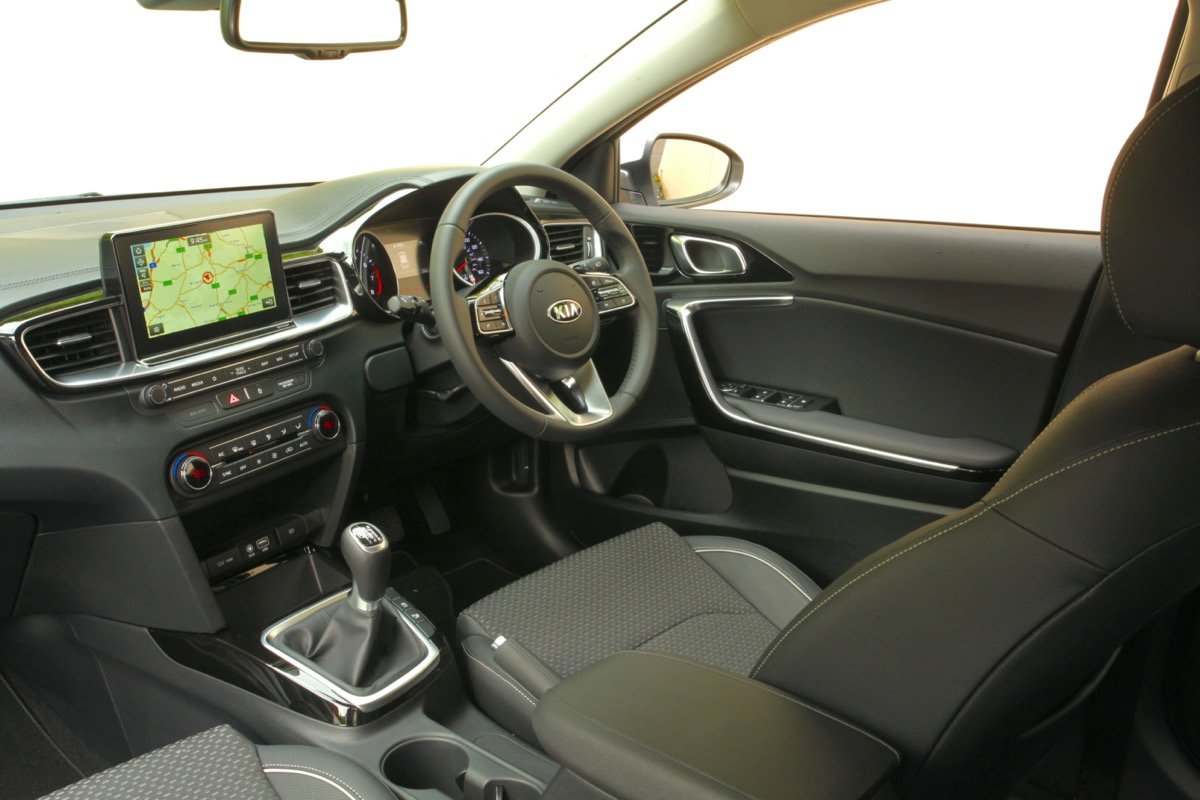
All third-generation Ceeds get a touchscreen infotainment system with Apple CarPlay and Android Auto for smartphone connectivity, as well as a DAB radio. It’s not the slickest looking system on the market but it’s quick to react and easy to use, which we think is more important.
The rest of the interior is pretty user-friendly, too, with high-quality materials, slick switchgear and well-placed buttons throughout. The dashboard design is somewhat conservative, especially compared to more rakish rivals like the Skoda Octavia, but it all works brilliantly and feels well put together.
The Ceed range has always kicked off (confusingly) with the well-equipped 2 trim, which initially rode on 16-inch alloy wheels and came with air conditioning, a rear-view camera, and an eight-inch touchscreen. Next up came the 3, which had 17-inch wheels, a 10.25-inch screen and rear parking sensors.
The GT-Line model added a sportier vibe, with black and chrome elements on the exterior and cloth and faux leather upholstery. You also got cruise control and keyless entry and start.
The GT-Line S, meanwhile, got 18-inch wheels, a sunroof, and LED headlights, as well as leather upholstery, heated outer rear seats, and adaptive cruise control. The warm-hatch GT model had a similar spec, but with extra power and some red styling bits to make it look sportier.
In 2020, a 2 Nav model was introduced that gave you satnav and the larger infotainment screen without having to upgrade fully to the 3.
The 2021 facelift brought tweaks to the specification of every model; most notably, the largest touchscreen on offer grew to 12.3 inches, while higher-spec models gained a 10.25-inch digital driver display in place of the analogue dials.
Interestingly, the Sportswagon range never got the GT-Line, GT-Line S or GT variants – this was because it was pitched as the more utilitarian of the Ceed estates, with the rakish Proceed intended to cater for wagon buyers looking for something a bit more dynamic.
Running costs
Kia Ceed running costs
The Ceed hatch with the best fuel economy is the 114bhp diesel, which will give you an official MPG figure of up to 60.1mpg. That should equate to an average of about 50-55mpg in the real world. However, the 136bhp diesel is much better to drive, and should attain only a few mpg less than that, with the gap narrowing even further in 48V mild hybrid form. So unless you absolutely must have the most efficient Ceed of all, we’d choose that one instead.
If you’re looking at the Sportswagon then the plug-in hybrid can give you up to 188.3mpg according to official figures, but only if you use it as described above, and even then only if you're very, very lucky. The PHEV also wasn’t introduced until 2020, so will be more expensive to buy than older models.
Of the petrol models, the 118bhp 1.0-litre model will give you around 40mpg in the real world, and you can shave 3-4mpg off that figure for the 1.4-litre. The 1.5 should be a touch more efficient, so in the real world, it should get close to the figures you’ll get from the 1.0-litre.
If you’re choosing an automatic gearbox, you can expect a 3mpg penalty if you’re matching it with a diesel engine. Weirdly, however, the auto actually improves fuel economy on the petrol model, by about 2mpg.
Insurance groups range from 8 to 22 of 50, so premiums should be pretty reasonable.
All Ceeds need servicing every year, or every 10,000 miles for petrol models and 20,000 miles for diesels. Kia offers service plans for its cars, covering two-, three- or five years and protecting you from future price increases.
Kia Ceed reliability
The Ceed has a frankly sparkling reputation for reliability. It came top out of all the family cars to be included in the 2025 What Car? Reliability Study, seeing off esteemed rivals like the Toyota Corolla and Honda Civic with a thoroughly impressive score of 98.8 per cent.
Kia as a brand has a similarly impressive reputation; in the same study, it came 8th out the 30 car makers that were included.
It backs that up with a massive seven-year, 100,000-mile warranty on all its new cars. And while there are now quite a few rivals out there that can match that figure, most of them require you to take your car to a main dealer for servicing in order to qualify for a ‘top-up’ warranty extension. Kia gives you that warranty as standard, from the moment you pick up the car.
You can even extend it further by buying an approved used Kia that’s less than 18 months old. Do so, and Kia will top the warranty up to the full seven years – meaning you could in theory be driving around in an eight-and-a-half year-old Ceed that’s still protected by a manufacturer warranty.

What owners say
Excellent value for money and love the car Airedale Automotive we’re also pleasant to deal with
25 January 2026Very stylish,plenty of tech that is user friendly Really pleased with the economy Highly recommend
28 April 2024Ultra reliable, no frills perfect everyday every occasion motor. Ive driven Kia for several years and see the growth and improvement every season. Proof lies in the fact that you will find fewer for sale than their market competitors
28 June 2022What owners say
Excellent value for money and love the car Airedale Automotive we’re also pleasant to deal with
25 January 2026Very stylish,plenty of tech that is user friendly Really pleased with the economy Highly recommend
28 April 2024Ultra reliable, no frills perfect everyday every occasion motor. Ive driven Kia for several years and see the growth and improvement every season. Proof lies in the fact that you will find fewer for sale than their market competitors
28 June 2022An all round good value family car Reliable and comfortable,low insurance and road tax Good value for your money
22 April 2024Does what it says on tin, good strong reliable,and spacious and economical too
26 June 2021this car has everything it needs, in my opinion it is better equipped than the GT model
18 May 2021I have test driven one. It was the diesel I currently have an old ceed1. 2009. The newer model seems very good mechanically with spurn economy. Internally it is not as basic and the equipment levels are good. I think that there is a problem in buying a good low mileage example. The older ceed 2 and 3 are reasonably priced but 2014 and 2015 are a bit pricey. I will continue my search as I really like the car.
11 March 2021High spec and good value for a low maintenance car
28 January 2023Three things to know
- If you’re after a plug-in hybrid Ceed, you’re restricted to the Sportswagon estate in 3 trim. The Ceed Sportswagon PHEV combines a 1.6-litre petrol engine with an electric motor for combined 139bhp and an electric-only range of up to 35 miles. This has the potential to slash your fuel bills, but only if you use it in a particular way. You’ll need somewhere to plug it in and keep the battery charged, and you’ll need to do mostly shorter journeys. As soon as you start using the petrol engine, then you’re just hauling heavy electrical components around, and fuel economy will plunge.
- If the Ceed line up of a hatchback, Sportswagon estate, and Proceed shooting brake still don’t do it for you, then there’s also an SUV called the XCeed. We’ll go into more detail on that in a separate review but imagine a taller version of the hatchback with some off-road-style styling, and you’re not far off, although the back end has been completely redesigned. Higher suspension means it rides better than the standard car, so it could appeal to those looking for more comfort.
- In response to the semiconductor shortage that followed the COVID-19 pandemic, the GT-Line S model was dropped from the range in 2022, as was the automatic gearbox option. Both went back on sale in early 2023.
Which one to buy
- If you want the most fun: The Ceed GT isn’t a hot hatch on a par with the Ford Focus ST, Hyundai i30 N or the Volkswagen Golf GTI, but it’s the sportiest model in the range and comes with sports seats and a suitably beefy look, as well as a racy exhaust note. It’s more style than substance, though; if you want the look then it more than does the job, but it’s not a great choice for driving enthusiasts.
- If you want the best all-rounder: We think the 3 trim level strikes the right balance of equipment and price, and has everything that most people will need. It’s the same story with the 1.0-litre petrol engine, which suits the character of the car well and is strong enough for most everyday uses.
- If you want all the toys: Aside from the performance GT model, the top-spec GT-Line S trim will give you the most features. As the Ceed didn’t offer new customers the choice of optional extras outside of basics like paint, it has a lot of equipment that you won’t find on lesser models.
- If you want the best fuel economy: If day-to-day running costs are important, you’ll get the best fuel consumption from the plug-in hybrid Sportswagon, but with the previously mentioned caveat that you’ll need to keep it charged regularly and not do long journeys between charges. If not, or if you don’t want an estate, the 114bhp diesel engine in ‘2’ form is the next best thing.


Pricing trends
Starting RRP
£18,421
Current avg. market price
£12,499
Trending down by 13.8% this month
April 2026 - October 2026
More on the Kia ceed (2019 - 2025)
Compare 2024 Kia ceed Trims
The 2024 Kia ceed offers a range of trims from budget-friendly options to well-equipped models, all featuring a stylish design and practical features.
- Starting at £14,495
- Most Popular: 1.5t Gdi Isg Gt-line 5dr
Trim Overview
Prices updated weekly from CarGurus listings.
| 1.5t Gdi Isg 2 5dr | 1.5t Gdi Isg Gt-line 5dr (Most Popular) | 1.5t Gdi Isg 138 Gt-line 5dr | 1.5t Gdi Isg 3 5dr | |
|---|---|---|---|---|
| Starting MSRP | £21,605 | £24,605 | £24,705 | £25,805 |
| Avg. Market Price | £14,495 | £17,585 | £16,275 | £16,509 |
| Positioning | Best value | Standard | Standard | Fully loaded |
| Standout Features | Android Auto, Bluetooth, Backup Camera | Heated Seats, Navigation System, Parking Assist | Heated Seats, Navigation System, Parking Assist | Apple CarPlay, Navigation System, Privacy glass |
| Drivetrain | FWD | FWD | FWD | FWD |
| Listings Available | 45 | 73 | 15 | 57 |
Quick Compare Table
Listing prices sourced from CarGurus — updated weekly. OEM specs from manufacturer data.
| 1.5t Gdi Isg 2 5dr | 1.5t Gdi Isg Gt-line 5dr | 1.5t Gdi Isg 138 Gt-line 5dr | 1.5t Gdi Isg 3 5dr | |
|---|---|---|---|---|
| AI Summary | Best value option for budget-conscious shoppers | Popular choice with added comfort features | Good mix of features at a competitive price | Fully loaded with premium features |
| Avg. Market Price | £14,495 | £17,585 | £16,275 | £16,509 |
| MSRP | £21,605 | £24,605 | £24,705 | £25,805 |
| Engine | 1.5l I Petrol | 1.5l I Petrol | 1.5l I Petrol | 1.5l I Petrol |
| Drivetrain | FWD | FWD | FWD | FWD |
| Android Auto | ✓ | ✓ | ✓ | ✓ |
| Apple CarPlay | ✓ | ✓ | ✓ | ✓ |
| Bluetooth | ✓ | ✓ | ✓ | ✓ |
| Cruise Control | ✓ | ✓ | ✓ | ✓ |
| DAB Radio | ✓ | — | — | — |
| Backup Camera | ✓ | ✓ | ✓ | ✓ |
| Air Conditioning | ✓ | ✓ | ✓ | ✓ |
| AUX/USB connectivity | ✓ | — | — | ✓ |
| isofix | ✓ | — | — | ✓ |
| Privacy glass/Tinted windows | ✓ | ✓ | ✓ | ✓ |
| Alarm/Immobiliser | ✓ | — | ✓ | — |
| Heated Seats | — | ✓ | ✓ | — |
| Heated Steering Wheel | — | ✓ | ✓ | — |
| Parking Assist | — | ✓ | ✓ | ✓ |
| Navigation System | — | ✓ | ✓ | ✓ |
| Active Listings | 45 | 73 | 15 | 57 |
Missing data displayed as "—".
Trim Deep Dives
1.5t Gdi Isg 2 5dr — "Who It's For"
The 1.5t Gdi Isg 2 is the pick for shoppers who want essential features without paying for extras. It's the most budget-friendly option in the lineup.
- Avg. market price: £14,495 (updated weekly)
- Inventory: 45 listings — lower availability; may limit negotiating room
- View 1.5t Gdi Isg 2 5dr listings
1.5t Gdi Isg Gt-line 5dr — "Who It's For"
The 1.5t Gdi Isg Gt-line is the pick for shoppers who want a blend of style and comfort without stepping up to the higher trims. It's also the most popular trim in the lineup.
- Avg. market price: £17,585 (updated weekly)
- Inventory: 73 listings — lower availability; may limit negotiating room
- View 1.5t Gdi Isg Gt-line 5dr listings
1.5t Gdi Isg 138 Gt-line 5dr — "Who It's For"
The 1.5t Gdi Isg 138 Gt-line is the pick for shoppers who want a few more features without a significant price jump. It offers a solid mix of comfort and technology.
- Avg. market price: £16,275 (updated weekly)
- Inventory: 15 listings — lower availability; may limit negotiating room
- View 1.5t Gdi Isg 138 Gt-line 5dr listings
1.5t Gdi Isg 3 5dr — "Who It's For"
The 1.5t Gdi Isg 3 is the pick for shoppers who want a fully loaded experience with all the bells and whistles. It’s ideal for those who prioritize premium features.
- Avg. market price: £16,509 (updated weekly)
- Inventory: 57 listings — lower availability; may limit negotiating room
- View 1.5t Gdi Isg 3 5dr listings
Trim Recommendations
Most Popular — 1.5t Gdi Isg Gt-line 5dr
With 73 active listings, the 1.5t Gdi Isg Gt-line is the clear volume leader in the lineup.
Browse 1.5t Gdi Isg Gt-line 5dr listings
Best Budget Option — 1.5t Gdi Isg 2 5dr
At £14,495 avg market price — below the lineup median of £16,392 — it's the most accessible entry point.
Browse 1.5t Gdi Isg 2 5dr listings
These recommendations are based on CarGurus' proprietary market data from October 22, 2026, CarGurus experts' opinions, and generative AI.

