Kia Picanto Review 2011-2016 | A reliable, affordable city car
Kia Picanto cars for sale
3.0
Expert review
Pros
Very cheap to run
Should be reliable
Easy to drive and park
Cons
Lacks the latest tech
Disappointing safety rating
Interior feels cheap

The CarGurus verdict
The Picanto’s combination of light controls, excellent all-round visibility, and a comfortable ride make it a perfect companion for city traffic. Hit the open road, and it also drives as well as many bigger and accomplished superminis.
The interior is quite utilitarian, and you can find city cars of a similar age with bigger boots and more space for passengers. But the Picanto’s low running costs and cast-iron reliability count for a lot, especially at the value end of the market where it now sits. That’s why it makes a really solid used buy for someone who just wants an easy, hassle-free car that’s a doddle to drive and park.
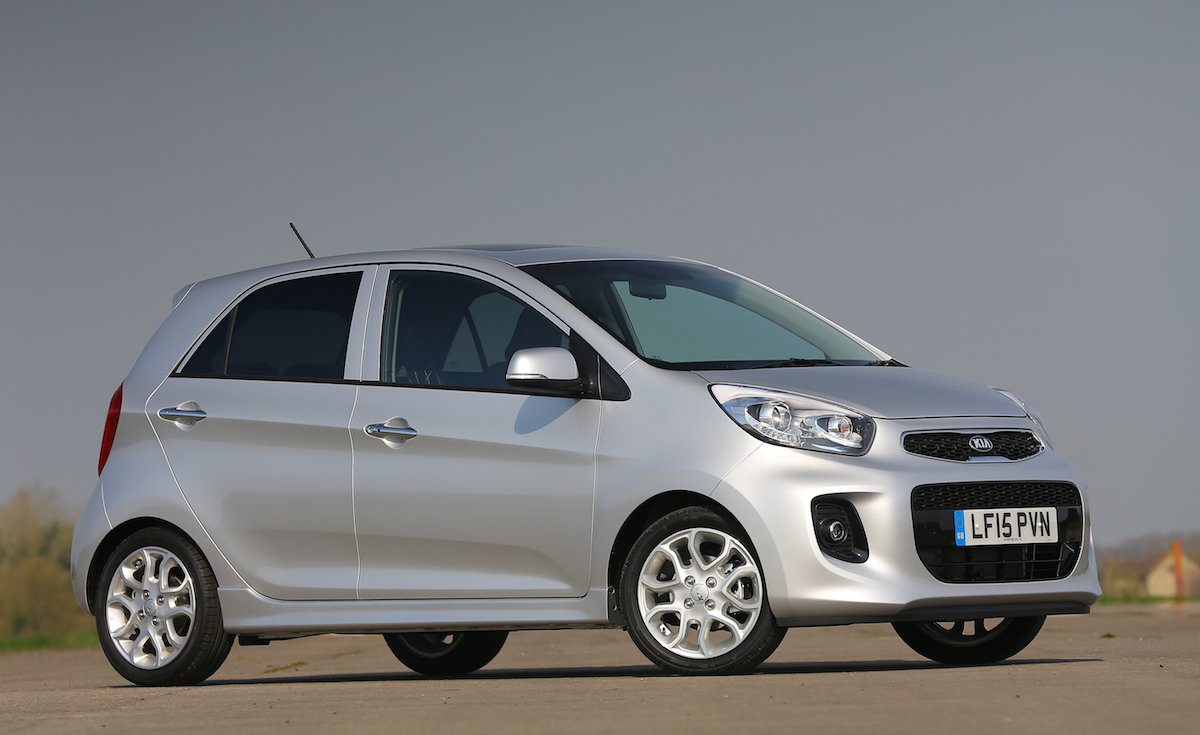
What is the Kia Picanto?
The Picanto is Kia’s city car – the smallest model it builds – and it’s been around since 2004. This second-generation model was introduced in 2011 and majors on value for money and good looks. You could argue that cars such as the Citroen C1 and the Fiat 500 are prettier than the Picanto, but it’s still a handsome little car, even if things take a bit of downhill turn when you open the doors.
Most fixtures and fittings are moulded from hard, shiny plastics, while the pot-bellied dash is populated by basic clocks and dials. However, all the switches are big and logically laid out, and the cabin is reasonably well screwed together.

How practical is it?
Although the steering wheel is only adjustable for height, the seat height adjuster is cleverly placed at the front of the seat, so it’s easy to crank things into a comfortable position, and there’s sufficient head- and legroom in the front.
Space is rather tight in the rear seats, but if you go for a five-door model, then it’s a little better and more accessible. The 200-litre boot is about average for a city car of this age; it’s bigger than the Fiat 500’s, but smaller than the Volkswagen Up’s boot (and those of its near-identical siblings, the Seat Mii and the Skoda Citigo) and the Hyundai i10.
What's it like to drive?
The Picanto’s steering is direct, and the body is neatly controlled, so it always feels light as it breezes its way in and out of traffic, and it’s planted and secure on the motorway. There is a fair bit of road and wind noise at 70mph, but you’d expect as much in a city car.
The basic 1.0-litre three-cylinder engine has impressive economy on paper, but you need to drive it hard to make progress, and that will take a bite out of fuel economy.
For this reason, we’d point you in the direction of the larger 1.25-litre engine. It’s still no ball of fire and can be loud as you accelerate, but the extra oomph makes it much more usable.
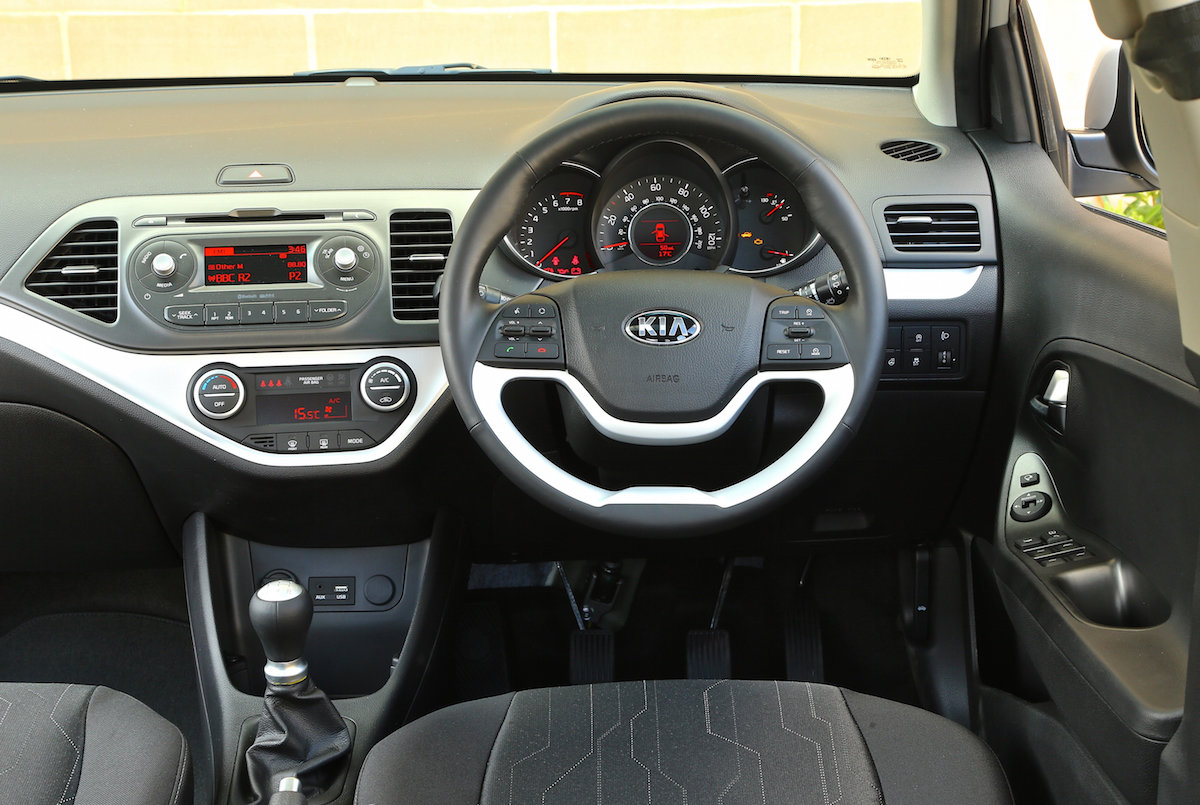
Technology, equipment & infotainment
The Picanto’s trim levels are called 1, 2, 3, and 4, which is wonderfully simple. Entry-level 1 versions were very basic, with steel wheels and no air conditioning. This was rectified quite early on with Air models, which added air conditioning, a CD player, and a height-adjustable driver’s seat.
The 2 trim level is a much better place to start, because it includes Bluetooth phone connectivity, electric windows, and alloy wheels. The 3 upgraded the standard stereo and added more climate control and automatic headlights. Kia later replaced 1, 2 and 3 with SE, Halo and Equinox models, but it kept the top-spec 4 version, which added cruise control and heated seats.
Don’t expect to find any of the latest touchscreen infotainment systems or Apple CarPlay or Android auto phone connectivity, as these came after the Picanto’s time.
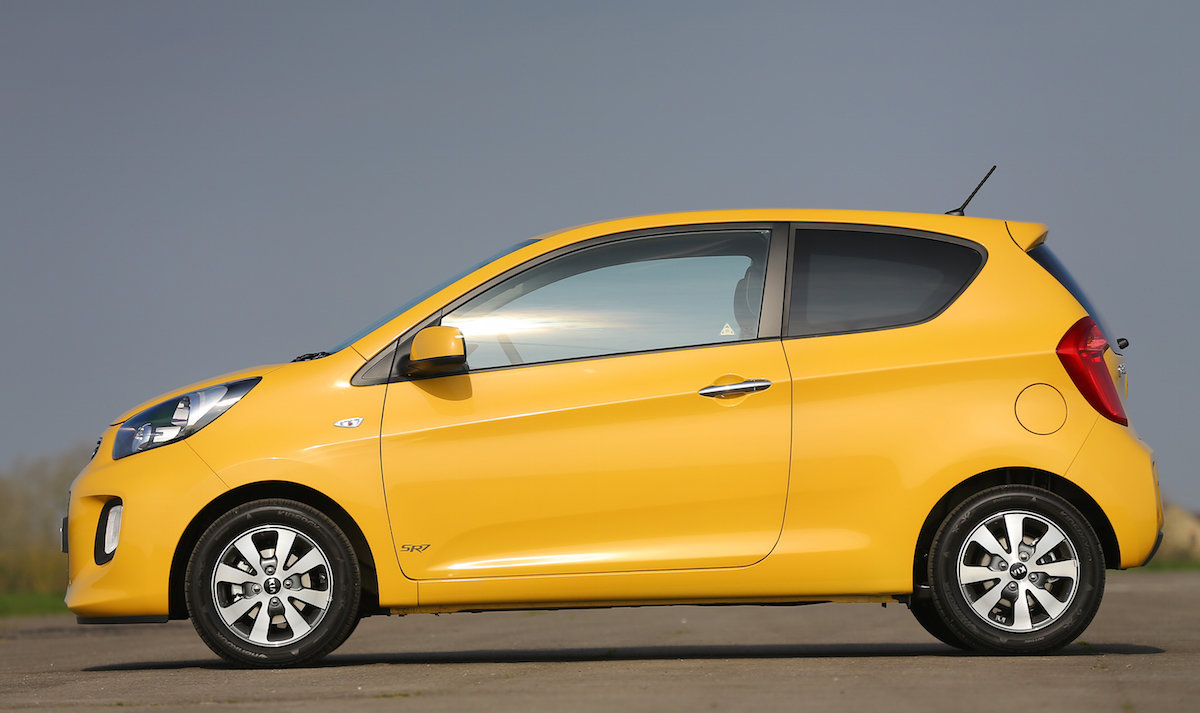
Kia Picanto running costs
Theoretically, the 68bhp 1.0-litre three-cylinder petrol engine is the most economical of the bunch, and the claimed 67.3mpg (tested under the old and less realistic NEDC cycle) looks fantastic on paper but you have to drive it so hard to get anywhere that you can wave goodbye to mpg the sixties.
Consequently, both the 1.0- and 1.25-litre petrol engines will return roughly the same mpg – around mid-fifties in real-world driving, which is not to be sniffed at.
Most Picantos come with a five-speed manual gearbox, but the bigger engine is available with a four-speed automatic. It’s not the smoothest automatic transmission and it will dent fuel consumption by as much as 10mpg, but it may be worth it if you do a lot of driving in town.
There’s nothing particularly complex about the Picanto, so maintenance costs won’t break the bank, and service intervals are set every 10,000 miles or 12 months.
The Picanto’s low insurance groups make it a very attractive first car. The 1.0-litre models sit in group five out of 50, and even the more powerful 1.25-litre versions are only in group eight.
Kia Picanto reliability
The Picanto benefitted from Kia’s class-leading seven-year warranty when it was new, and while all of these second-generation examples’ warranties will have expired by now, it says a lot about their hardiness that Kia set so much faith in them.
But it also means the majority of these cars will have had fastidious servicing for the first seven years of their lives, in order to keep that warranty valid – and that’ll mean they’re more reliable propositions now than many of their contemporaries.
Mind you, Kia has a very good reputation for reliability regardless. According to What Car?’s latest reliability survey, Kia came 8th out of 30 manufacturers, and while the second-generation Picanto didn’t feature, its successor came 10th out of the 26 city cars to feature, with an impressive score of 97.2%
What's more, although the earliest examples of this generation of Picanto are now 15 years old, we still haven't heard of any serious common faults that have come to light since it was launched. In fact, the Picanto’s reputation for dependability has only solidified as less robust rivals like the Fiat Panda and Ford Ka have developed their own foibles.
It's still worth doing some general checks before you buy, though. Firstly, look for examples with a good service history that shows regular maintenance – these cars are now at an age and value where this can often get forgotten about.
Most Picantos spend a lot of their lives undertaking short journeys in town, so keep a particular eye out for scrapes, scratches, and loose bits of trim. Check the tyres for uneven wear, which could suggest that the steering geometry is out of alignment.
Ensure all the gears engage smoothly, then try labouring the car by selecting third gear at low speeds and accelerating hard. If the engine baulks, then that’s OK, but if the revs rise significantly and the car doesn’t respond accordingly, then that’s a sign that the clutch is on its last legs, which can be an issue with cars used predominantly in town.
- Kia used to be known for its budget-focused and rather uninteresting cars before it became a top-10 UK manufacturer, and this transformation is well illustrated by the difference between the first Picanto – built between 2004 and 2007 – and this second-generation model. In 2006, Kia poached designer Peter Schreyer from Audi, who went on to make its cars much more visually appealing. This resulted in a huge increase in popularity and a big rise in residual values.
- There was just as significant a step change in terms of quality, practicality and driving experience between this second-generation Picanto, and the third generation car launched in 2016. You wouldn’t guess it to look at them, as they look quite similar – but if you’re looking at later, higher-spec second-gen models and thinking you might be able to stretch to a third-gen car, do so, because it’s a considerably better all-rounder.
- Several special edition models were available with this generation of Picanto, all of which offered styling upgrades and extra equipment. They’re rarer than the standard versions, but keep an eye out for White, VR7, Graphite, Equinox, Quantum, and Chilli.
- If you’re on a budget: The entry-level 1.0-litre three-door car fulfils that brief. We wouldn’t recommend it, because every other model is better equipped in every way and, given how old this version of the Picanto is, there isn’t a huge price difference between this version and, say, a 2 trim level with a 1.25-litre engine of a similar age.
- If you want the most equipment: A VR7 special edition model comes with air-con, a leather-trimmed steering wheel, and Bluetooth as standard, while features such as alloy wheels, reversing sensors, electrically adjustable and heated door mirrors, and electric front and rear windows are also included.
- If you need an automatic: Four-speed automatic versions of the Picanto are available with the more powerful 1.25-litre engine.


