Kia Sorento (2015-2019) review | A solid used seven-seater
Kia Sorento cars for sale
4.0
Expert review
Pros
Practical interior
Third-row seats are roomier than most
4WD as standard
Cons
Seat Tarraco is better to drive
It's a big car to park
Diesel-only engine range

The CarGurus verdict
There’s a lot to like about the Kia Sorento. Granted, it isn’t as dynamic as rivals such as the Skoda Kodiaq or Seat Tarraco, so it isn’t as responsive or involving to pedal along.
But it feels like a sturdy, solid car that's practical and spacious. It’s safe, too, and it can go anywhere, thanks to the four-wheel-drive system fitted on every version.
It's also a very comfortable family car, well suited to long journeys and, with five passengers, there’s still a lot of available boot space. It’s well equipped, it should prove to be reliable, and it works well when used as a tow car. So while it isn’t all that much fun to drive, as a big family car that’ll go anywhere and take as many people as you need, the Sorento is a great bet.
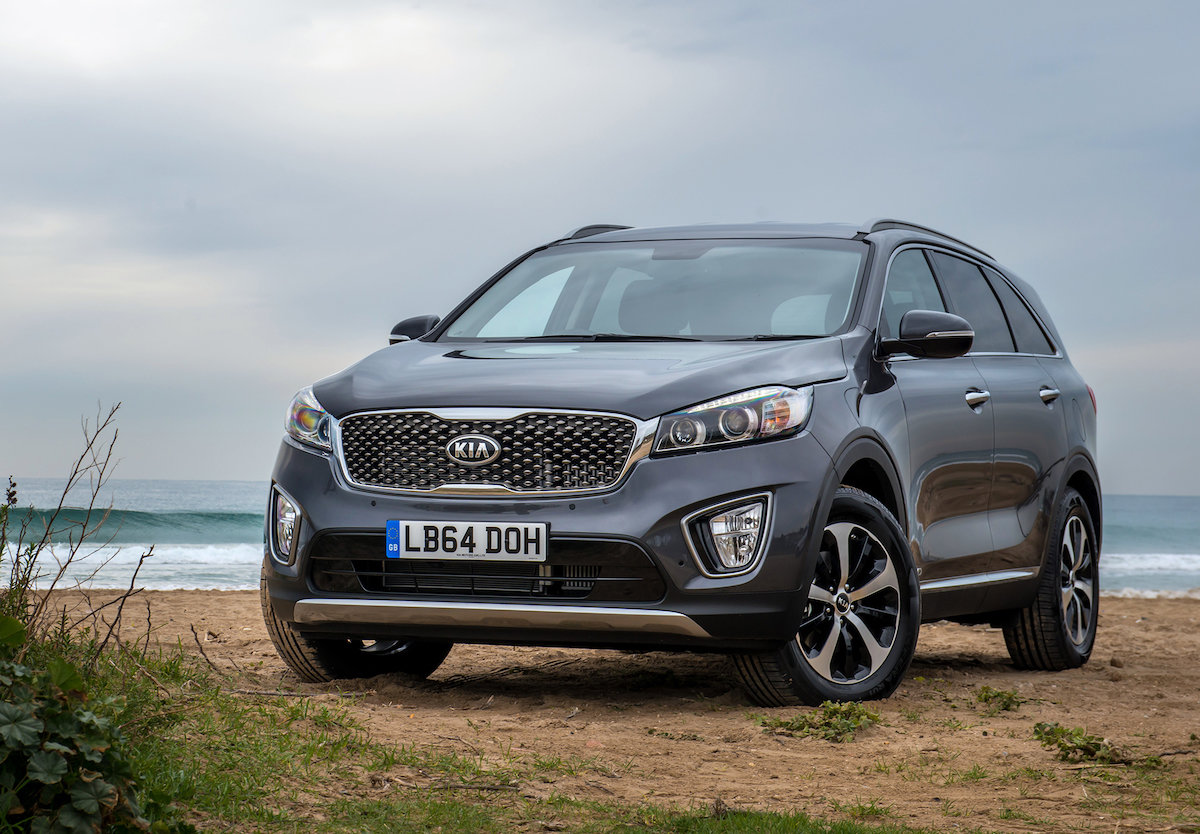
What is the Kia Sorento?
Kia is currently one of the biggest car manufacturers in the UK, and its sales really gained traction in the 2010s. The third-generation Sorento SUV is one example of how it moved upmarket and reeled in buyers from what were then more established brands.
It's a hefty seven-seat SUV, and a rival to the Skoda Kodiaq, Seat Tarraco, and the Hyundai Santa Fe, the last of which it shares its underpinnings with.
As such, it’s a favourite with drivers that regularly need to carry more than three passengers; it’s also beloved of caravan and boat owners, as it’s a very highly regarded tow car.
The Sorento is something of a departure from the brand’s budget roots, because it’s teeming with equipment and really quite luxurious, which is how Kia positioned it. That said, it was also much better value than many rival SUVs when it was new.
There’s little about the Sorento’s looks to dissuade you from thinking that you’re looking at a premium product. It has all the design cues we expect from a large SUV, including the big ‘tiger nose’ grille that has defined Kia’s cars in recent years. Other than that, it’s all very neat, restrained, and conservative, just like the premium German brands.

How practical is it?
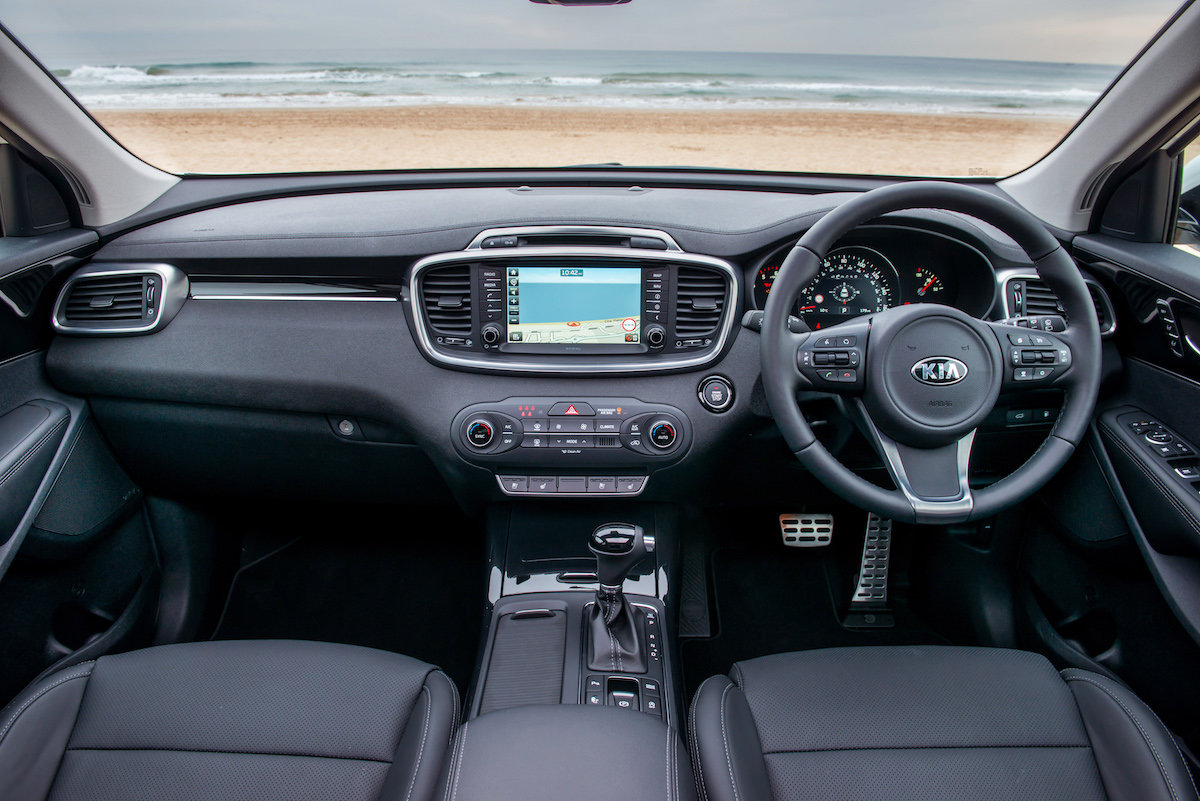
The Sorento has a quality cabin, with soft-touch plastics covering the upper surfaces and big, comfortable front seats that afford a good driving position. The dashboard is well laid-out with robust switchgear, and even the entry-level model has loads of equipment.
There’s plenty of room up front, and the second row of seats also has enough space for three adults, thanks to generous head- and legroom. There’s also a pair of seats in the third row, which should just about accommodate adults, though they’re more appropriate for children. They’re not easy to get into, though, as only one of the middle-row seats folds forward to allow access to them.
The boot is limited to 142 litres with all three rows of seats in place, which is enough for a few shopping bags but not much more. Fold the third row of seats flat (which is easy, thanks to a quick pull on a strap) and there’s a very usable 660 litres behind the 60:40-split middle bench, which can also slide forward and back. Fold down the middle three seats and you have 1,732 litres of luggage space, which is more than the Land Rover Discovery Sport, but less than the Skoda Kodiaq’s 2,065 litres.
What’s it like to drive?
The Sorento is set up for comfort above all else. The steering is accurate, there’s plenty of grip, and it largely resists body roll, but it’s not engaging to drive in the same way that the Land Rover Discovery Sport is. The soft suspension, and the resulting ability to soak up whatever the road surface throws at the car, is what it’s all about.
There’s only one diesel engine – a 197bhp 2.2-litre unit. It does the job, but proper luxury SUVs come with smoother and more powerful engines, and the Sorento’s can’t match them for refinement, because it sounds clattery when you accelerate. There’s also a little wind noise from the big mirrors.
It also weighs 2.6 tonnes, which is a lot of car to pull around; no surprise, then, that the 0-62mph acceleration time is unspectacular, at nine seconds dead. This drops further to 9.6 seconds if you choose the automatic gearbox; a six-speed unit, which was switched out for a more modern eight-speed auto in 2018.
Technology, equipment & infotainment
This is a trim walkthrough and a review of the tech and infotainment. How easy is the touchscreen to use, are there physical dials too, are CarPlay and Android Auto standard etc.
The Sorento’s trim levels are pretty straightforward. They start at KX-1, then move through KX-2, GT-Line (from 2018), KX-3, GT-Line S (also from 2018), and KX-4. The entry-level KX-1 is a very well-equipped car, and includes 17-inch alloy wheels, air-conditioning, Bluetooth connectivity, a DAB radio, cruise control, a seven-inch touchscreen infotainment system, smartphone integration including Apple CarPlay and Android Auto, rear parking sensors, privacy glass, a rear spoiler, and roof rails.
At KX-2, an eight-inch touchscreen is introduced, along with exterior styling details, leather upholstery, heated seats, satnav, and a reversing camera. The incremental equipment additions continue up the grades but, in short, you’re not likely to want for much with any version.
The Sorento’s touchscreen could be accused of looking a little dated nowadays, but that’s partly because it uses such simple graphics, and that means it doesn’t require much processing power to work. Consequently, it’s actually pretty swift and responsive to use. And while some of the menus contain lots of options, which can make them difficult to decipher at first glance, the consistent menu structure makes everything surprisingly easy to get the hang of.

Kia Sorento running costs
The Sorento relies on just one powertrain for all the different versions of the car: a four-cylinder 2.2-litre CRDi turbodiesel engine. It’s available with a six-speed manual gearbox or a six-speed (later eight-speed) automatic transmission.
But don’t imagine that a diesel engine results in brilliant fuel economy. In fact, the Sorento will only get around 35mpg in the real world when equipped with a manual gearbox; expect even less when it comes with an auto – between 30 and 32mpg, depending on which version of the auto you choose.
If you’re looking at Sorentos built in and around 2017, make sure you buy one registered after 1 April 2017. On that date, the tax regime changed from the old CO2 emissions-based system to a new flat rate. The Sorento’s emissions were pretty high, so it became cheaper to tax under the new regime – you’ll save yourself anywhere between £20 and £120 a year by opting for a later car.
Insurance costs are respectable, with models falling between groups 24 and 27. Kia’s servicing costs are reasonable, too, and regular maintenance is due every 12 months or 20,000 miles.
Kia Sorento reliability
Kia has a solid reputation for reliability, and the Sorento is consistent with that. It wasn’t featured in the What Car? Reliability Survey last year as it’s now a little too old, but in previous years it achieved consistently high scores in its class. What’s more, Kia tends to do pretty well in the same survey, and last year came 8th out of the 30 car makers that were included.
Don’t forget that Sorentos that are less than seven years old will still have a portion of their original manufacturer warranty remaining, too. Buy one from a Kia dealer, and they may even be prepared to tack their own warranty extensions on to the end of that period.
Common faults are few and far between, but it’s worth keeping in mind that manual Sorentos that are fitted with a tow bar will likely have been used for some fairly heavy towing work. It’s therefore important to pay attention to the clutch feel on the test drive – and be prepared that if the clutch does want replacing, you might have to replace the dual-mass flywheel at the same time, which couldresult in a hefty bill.
- Safety is one of the Sorento’s key qualities, and it was awarded the full five stars in independent testing body Euro NCAP’s crash test. Every version has all-wheel drive, which adds an element of sure-footedness in slippery conditions, but a host of electronic active crash prevention features, plus six airbags and Isofix child seat anchor points, contribute to scores of 90% for adult occupant protection and 83% for child occupant protection.
- At seven years and 100,000 miles, Kia’s new car warranty is one of the best in the business. And it matters when you’re buying a used Kia, too; after all, there are still examples of this third-generation Sorento out there that have some warranty left on them. What’s more, many Kia dealers will offer their own extensions that can be tacked on to the end of the manufacturer warranty, too.
- Kia positioned the Sorento’s upper trim levels against established premium rivals, But while the KX-1 was a lot of car from new, by the time the range reached the range-topping KX-4 model, you had to question whether it was really on a par with the cars with which it was competing. Now that those cars are a few years old, though, their values have fallen relative to those premium rivals – and that makes them look particularly good value.
- If you want the most affordable Sorento: look for an early KX-1. You’ll obviously have to compromise on the amount of equipment you’ll get, but you’ll still benefit from all the space and strength the Sorento has to offer.
- If you want as many toys as possible: go for a late, post-facelift KX-4. That’ll give you the most modern third-generation Sorento you can get, in its most luxurious form. Just keep in mind that if you’re willing to compromise on equipment, you can probably find an early version of the fourth-generation car, with its impressive hybrid powertrain, for the same sort of price.
- If you want an automatic Sorento: try and seek out a facelift (post-2018) model. Kia switched its older six-speed auto out for a newer eight-speed gearbox that year. It’s smoother and quicker to shift, and results in better fuel economy too.
- If you need to tow a big caravan with your Sorento: go for a manual example. They’re rarer, but they get a 2,500kg towing capacity; the auto’s is reduced to 2,000kg.


