Kia Soul EV (2020-2024) review | A bargain long-range used EV


Pros and cons
What we like
Good to drive
Lots of standard equipment
Roomy for passengers
What to consider
Boot is on the small side
Being EV-only means it's expensive to buy
High insurance group
The CarGurus verdict
Regardless of whether you choose the smaller or bigger-battery model, the Kia Soul EV is a fantastic all-round electric car. While it was pricey when it was new, it’s beginning to look like a bit of a bargain on the second-hand market, with truly impressive levels of equipment
It has a great range and it’s good to drive, so we’d recommend it over all of the immediate alternatives, as long as you like the way it looks and can live with the smaller-than-average boot.
out of 5 expert review
What is the Kia Soul EV?
This is the third generation of the Kia Soul and, although it’s not the first to be sold with an electric powertrain, it is the first one without the option of a petrol or a diesel engine.
That decision was a bold move from Kia, given the second-generation Soul was quite a popular little car in both petrol and diesel forms. But at the time, the new Niro and its sister car, the Hyundai Kona, were both competing on the patch the Soul had previously made its own – and Kia wasn’t sure it could squeeze another small crossover into that market.
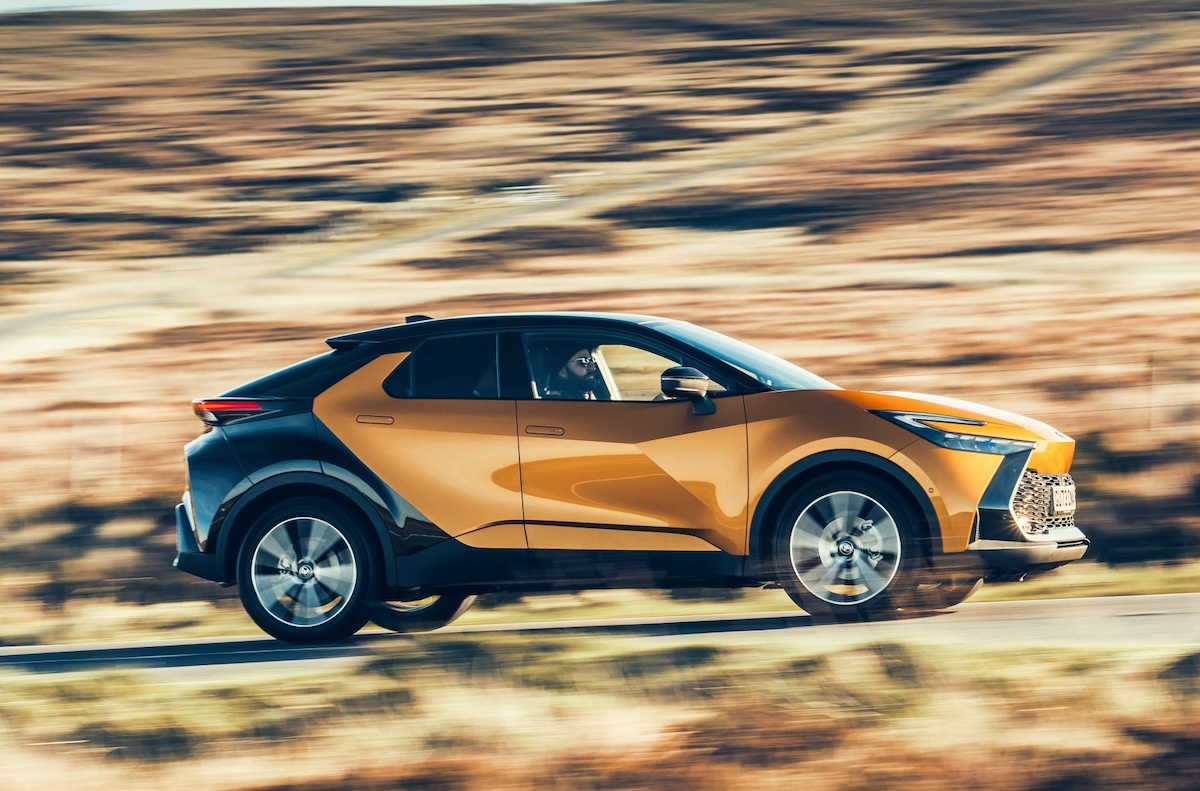
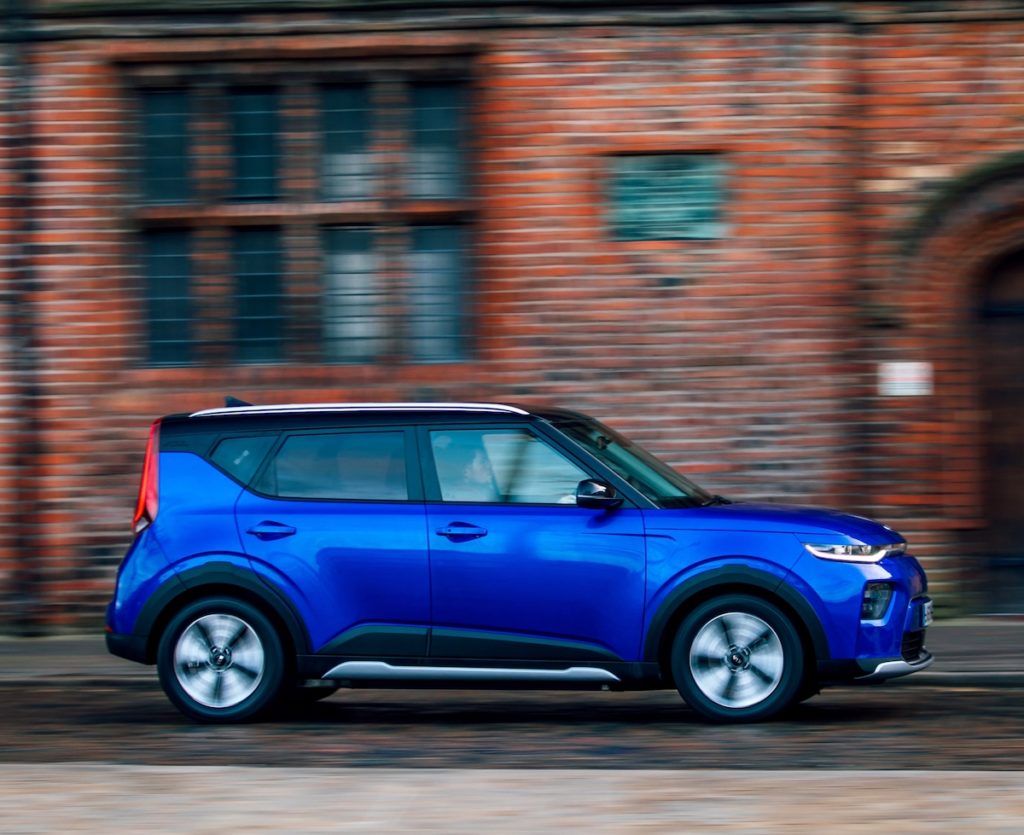
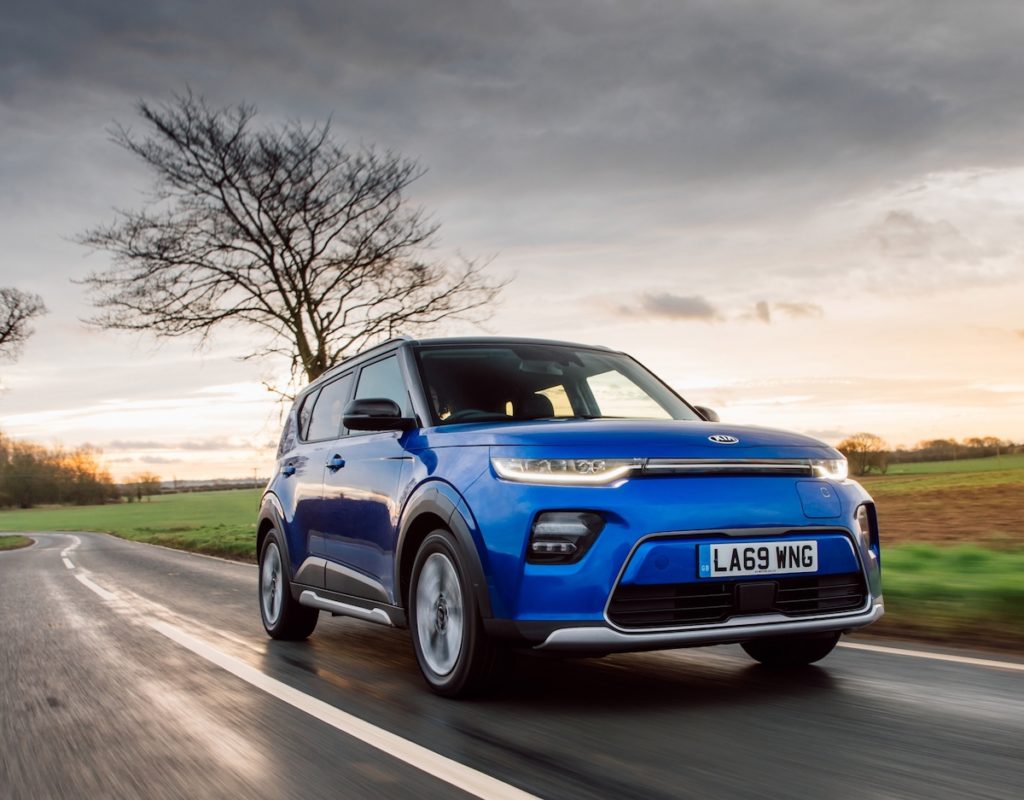
So the Soul was aimed at young buyers for whom the Niro and Kona simply weren’t fashionable enough – hence the extrovert styling – and who would be interested in making the switch to electric power, something that rivals like the Nissan Juke, Renault Captur and Toyota C-HR didn’t offer.
Practicality
How practical is it?
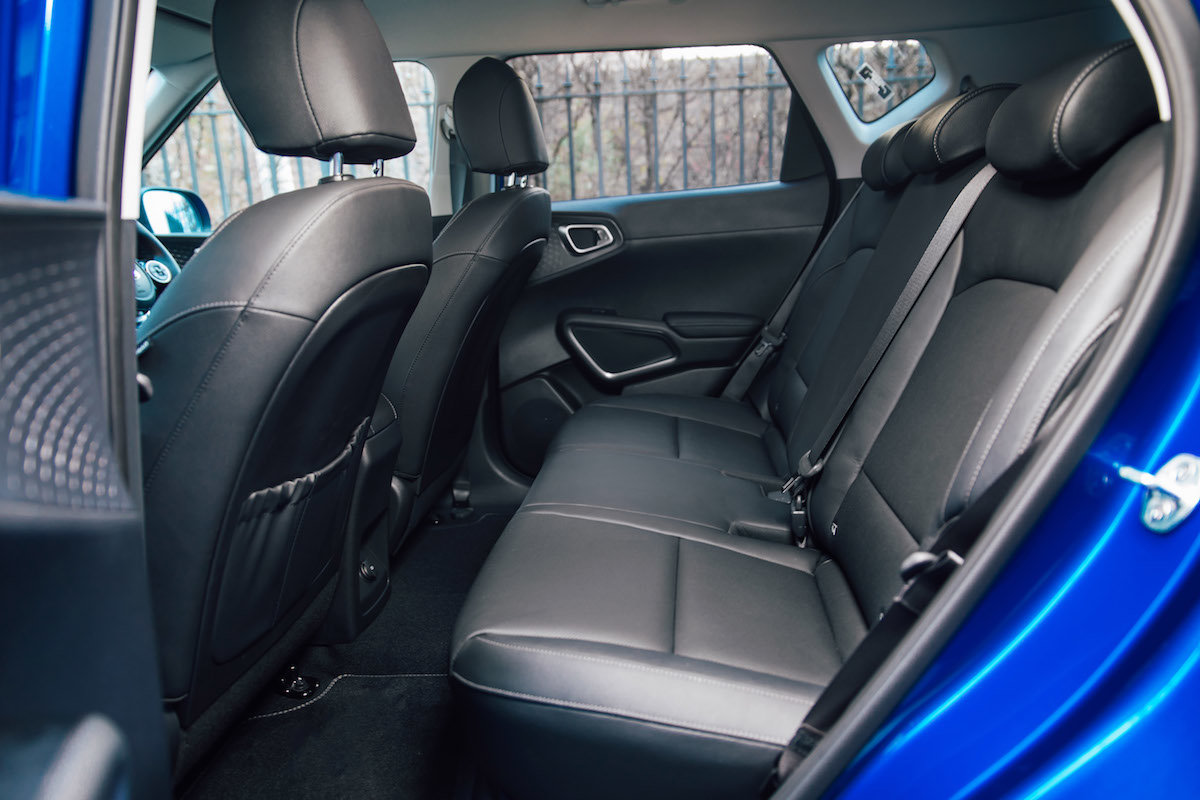
There’s plenty of space in the back seats, including an extraordinary amount of headroom – enough for passengers and their top hats, should you be ferrying people to a wedding or the 18th century.
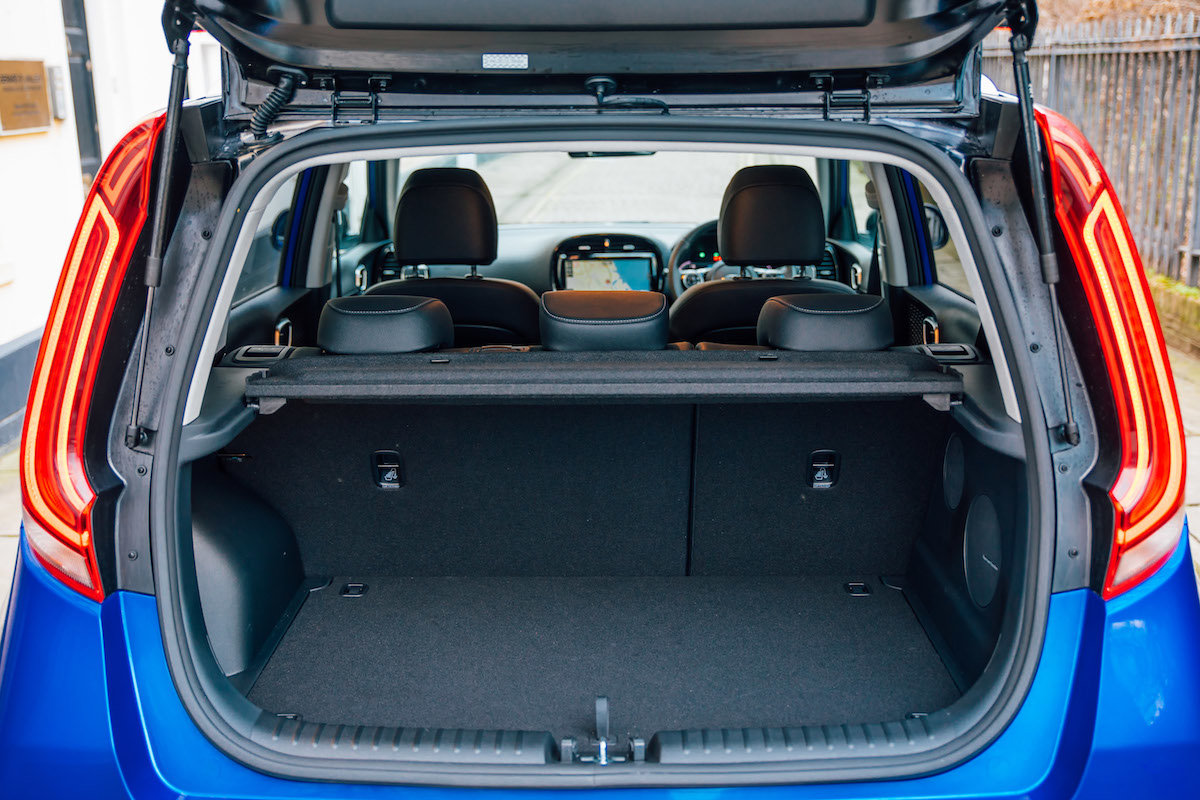
The boot is disappointing, though. It’s deep, and good enough for a light buggy or the average weekly shop, but it’s also short, which may be a deal breaker for those after proper family practicality. There are 315 litres available with the rear seats upright, which is smaller than the Volkswagen Golf’s 381 litres – and that’s about average for a family hatchback.
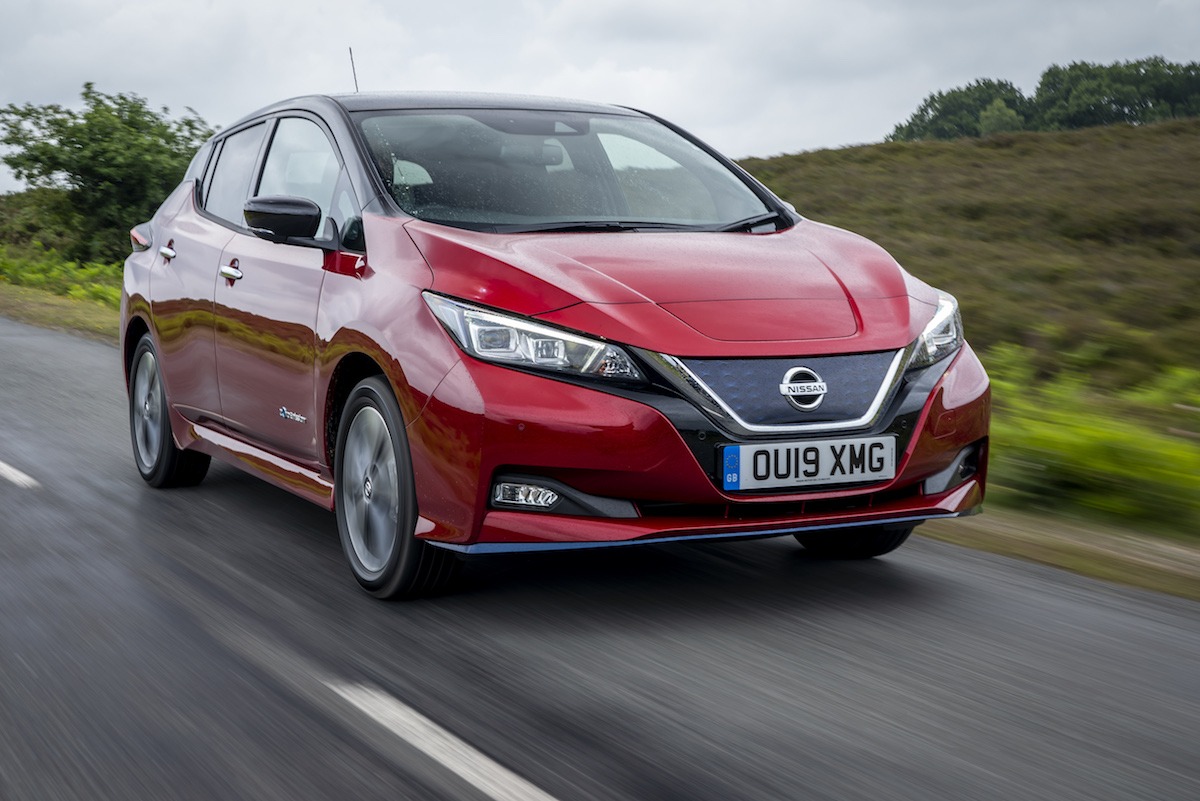
Still, there is a variable-height boot floor that creates a useful hidden area to store the charging cables, and the 60/40 split rear seats fold easily. However, rival electric crossovers such as the Peugeot e-2008, the Nissan Leaf, and the MG ZS EV have bigger boots.
Driving
What’s it like to drive?
The Kia Soul EV is lovely to drive. It’s no hot hatch, despite both batteries offering an enthusiastic leap off the line from a standstill (as evinced by the 0-62mph acceleration time of just 7.5 seconds), but the smooth, progressive steering and neutral chassis instil confidence, so it’s satisfying whether you’re trawling through town or driving along a country road.
It's quite happy at higher speeds too, where some electric cars feel short of puff. An adjustable regenerative braking system means you can toggle the speed at which it comes to a halt without needing to prod the brake pedal, while the four driving modes – Normal, Sport, Eco, and Eco+ – allow you to tweak its characteristics. The last one of those is a bit heavy-handed, because it blunts the power and deactivates the air conditioning, so it’s best reserved for eking out range rather than permanent use.
When it was launched in 2020, the Soul EV was only offered with a 64kWh battery pack and 201bhp electric motor (which drives the front wheels), and a smaller battery option was added in 2023. This Soul EV Urban model uses a 39.2kWh battery and 134bhp motor for a WLTP range of 171 miles. At the same time the 64kWh model was renamed as the Soul EV Explore. It was discontinued as a new car in 2024.
The success of the highly desirable Hyundai Kona Electric and Kia e-Niro, has afforded the Korean brands a reputation for delivering long range electric cars at sensible prices, and the Soul EV doesn’t disappoint.
Its range figures aren’t far off what you can get in real-world driving, either. We’ve spent quite a bit of time in the Soul EV and found that it’ll do 4.0miles/kWh easily, which means that 250 miles of range is quite achievable from the big battery model. A big motorway journey could see the range dip to more like 220 miles, which still isn’t bad. Charging takes less than 11 hours from a 7.4kW home wallbox charger (six hours for the Urban model), while plugging into a rapid DC charger will get you an 80% charge in as little as 45 minutes.
Tech and equipment
Technology, equipment & infotainment
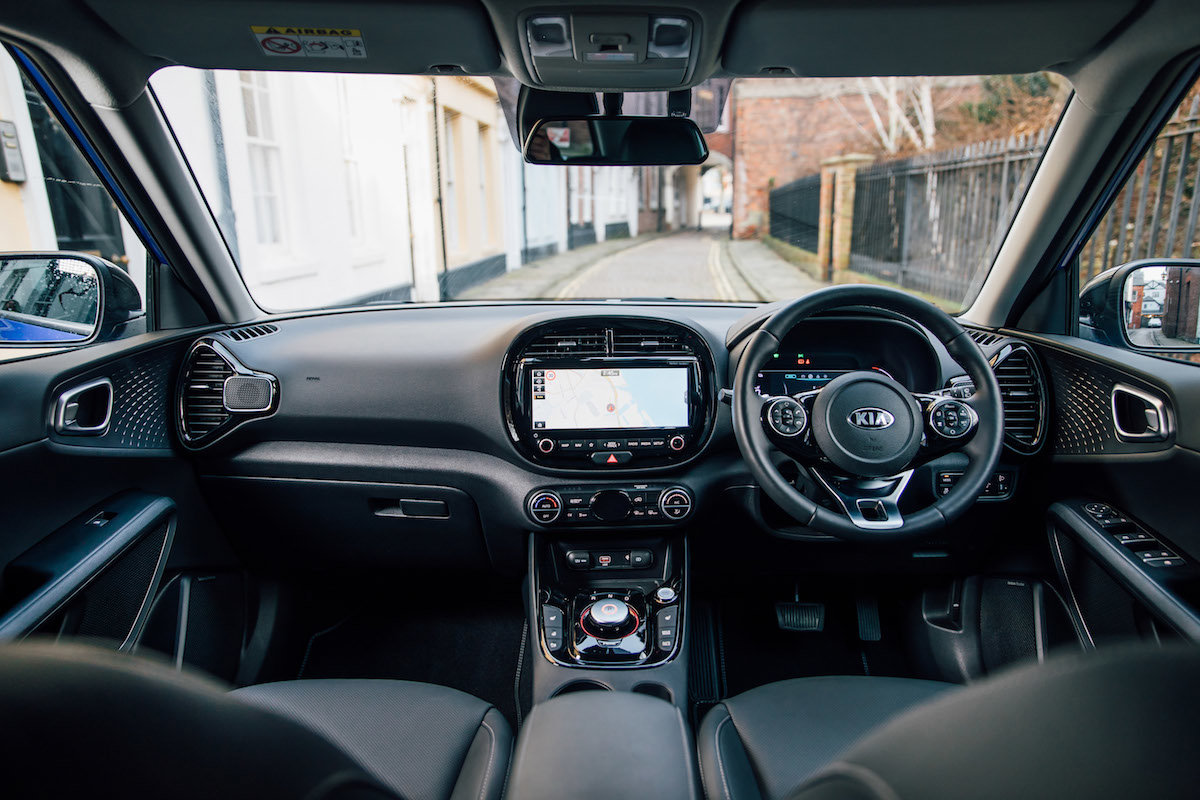
The Soul EV's interior is a little bland and there are cheap panels and tacky finishes here and there, but it’s smart enough on the whole and logically laid out. The excellent 10.25-inch (8-inch in Urban models) touchscreen infotainment systems are the central focus of the cabin, and they are among the best in the class. The graphics are sharp, the screen responds quickly, and everything is easy to find and adjust. Satnav, Apple CarPlay and Android Auto, Bluetooth audio streaming, hands-free controls, and a DAB digital radio are all included.
That’s not where the equipment list ends, either. The Soul EV was initially offered with just one trim level, known as First Edition; this was later replaced by another solitary trim level known as Maxx, and this by Urban and Explore. The Urban gets the least equipment, including unheated cloth seats and a plastic steering wheel. But other models have heaps of kit, including heated leather seats, a head-up display, 10-speaker Harman Kardon sound system, semi-autonomous drive mode, LED headlights, keyless entry, and a reversing camera.
Running costs
Kia Soul EV running costs
The Soul EV will be very cheap to run, and for what you get, it’s an affordable used buy, too. There are cheaper second-hand EVs, of course, like the Nissan Leaf and MG ZS EV – but few, if any, can match the Soul’s range and equipment level for the money.
The Kia is very efficient and goes further per kWh of energy than most rivals. You could further reduce charging costs by using off-peak tariffs, which is easy to do courtesy of the timed charging facility on the free app, or on the car's screen.
Servicing is required every 10,000 miles or 12 months, which is a much shorter interval than you get with some electric vehicles, including the Volkswagen ID.3. You can, at least, spread servicing costs into fixed monthly payments via Kia's Care scheme.
The Soul EV falls into insurance group 34, which is a little higher than for most conventional family SUVs.
Kia Soul EV reliability
The Kia Soul EV wasn’t sold in high enough numbers for us to have garnered any concrete reliability data. But the signs are good; for starters, it does have a comprehensive seven-year, 100,000-mile warranty (paint is covered for five years against corrosion), and all but the earliest used Soul EVs will still be covered by the balance of this warranty.
The lithium-ion battery is covered for the same duration, but there’s no performance guarantee, as you get with Renault, Nissan, and BMW among others, who will all refurbish the battery if it drops below 70% of its as-new performance. Also, many other manufacturers cover electric car battery components for eight years, albeit separately from their typically shorter, conventional warranties.
Kia as brand is rated highly for reliability. It came 8th out of 30 manufacturers tested in the 2025 What Car? reliability survey, and it generally performs well in such assessments. Its dealers have a good reputation for customer service, too.

What owners say
Very well balanced mini SUV fully electric at affordable price
20 October 2023I love my new Kia Soul ev. Its so stylish with plenty of space and Im especially over the moon with the heated steering wheel..It runs so quiet and smooth and plenty of guts ! Great car.
18 March 2022So comfy especially if you have aches and pains. The car has very sturdy seats and not too high not too low to climb into. Lovely drive. I always loved my picasso for the above comments but will always buy kia now. Spacious inside very attractive car. Deffo reccommend
1 July 2021What owners say
Very well balanced mini SUV fully electric at affordable price
20 October 2023I love my new Kia Soul ev. Its so stylish with plenty of space and Im especially over the moon with the heated steering wheel..It runs so quiet and smooth and plenty of guts ! Great car.
18 March 2022So comfy especially if you have aches and pains. The car has very sturdy seats and not too high not too low to climb into. Lovely drive. I always loved my picasso for the above comments but will always buy kia now. Spacious inside very attractive car. Deffo reccommend
1 July 2021Different, efficient and very nice to drive. Solid build and great warranty.
27 February 2021Its a good compact car with everything you need
15 February 2023So far so good, smallish mpv but loads of room inside. The boot has a secret compartment which is large, USB connector, rear sensors . All in all for £3000 its great......if im being picky, I dont like it when theres no alert or bleeps to say you have left your lights on after turning engine off.
7 November 2021Three things to know
- The Soul EV was initially only offered with a single, highly-specced trim level, known as the First Edition. This model is the one to aim for, as it came with a heat pump as standard, which will help to prevent range drop-off in wintry conditions. When the First Edition changed to the Maxx in 2021, the heat pump was stripped out, never to return. You also get a couple of other choice extras with the First Edition, like a head-up display, an electrically adjustable driver’s seat, and wireless phone charging – all of which were lost when it became the Maxx.
- The Kia Soul EV will charge at a peak rate of 77kW which, in normal speak, means that you can get an 80% charge in around 45 minutes if you can find a charger that can match it – and these days, most can.
- The Kia comes with all the cables you need to charge the car, including a Type 2 cable that will give you access to AC public chargers, such as those you typically find in town centres and supermarkets. There’s also a cable for charging from a normal domestic three-pin socket, which is really useful for getting a top-up when visiting friends or family but – given that it’ll take 30 hours for a full charge – isn’t ideal for routine charging.
Which one to buy
- If you regularly do longer trips: any 64kWh Soul will be a fine companion, but the best option will be a First Edition. The heat pump will mean you experience less range drop-off during the winter months. = If you don’t: go for an Urban. Its range is plenty for driving around town, and you’ll still get enough for those occasional medium-length journeys. And if you do have to go even further afield once in a while, charging shouldn’t be a faff.
- If you want the newest and best Soul there is: look for a last-of-the-line Explore model. This will get the 64kWh battery along with the latest styling tweaks, introduced in 2023.
- If you want to carry things on the roof: go for one of the 64kWh models. They all come with flush roof rails, which make it easy to attach roof bars. The Urban doesn’t, so it’ll need a generic foot pack that clamps onto the cant rail.