Kia Stonic Review (2017-present)
Kia Stonic cars for sale
4.0
Expert review
Pros
Generous seven-year warranty
Lots of standard kit on all models
Good to drive
Cons
Most basic cars miss out on some safety systems
Firm ride won't suit everyone
Diesel particulate filters can clog if the car is only used for short journeys
The CarGurus verdict
The lack of safety kit on lower-spec models is a shame, and it might be of concern to those who plan to use the Stonic as a family car. But in most other areas, Kia has put together an impressive small SUV that ticks lots of boxes.
As well as being a looker, with impressive levels of standard equipment across the range, the Stonic drives well and gives owners peace of mind with its brilliant warranty and strong reliability record. There are cars that do a few things better, but the Stonic a very good all-rounder and deserves to be on your shortlist of small SUVs.
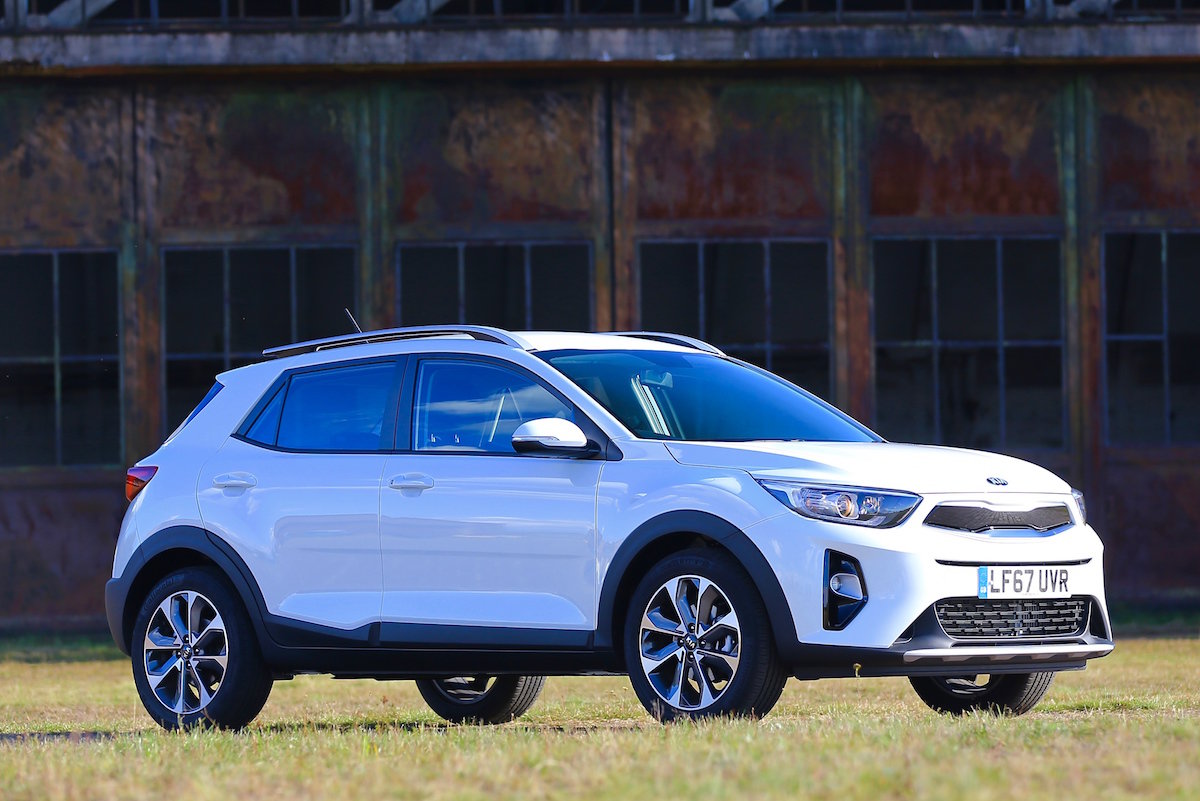
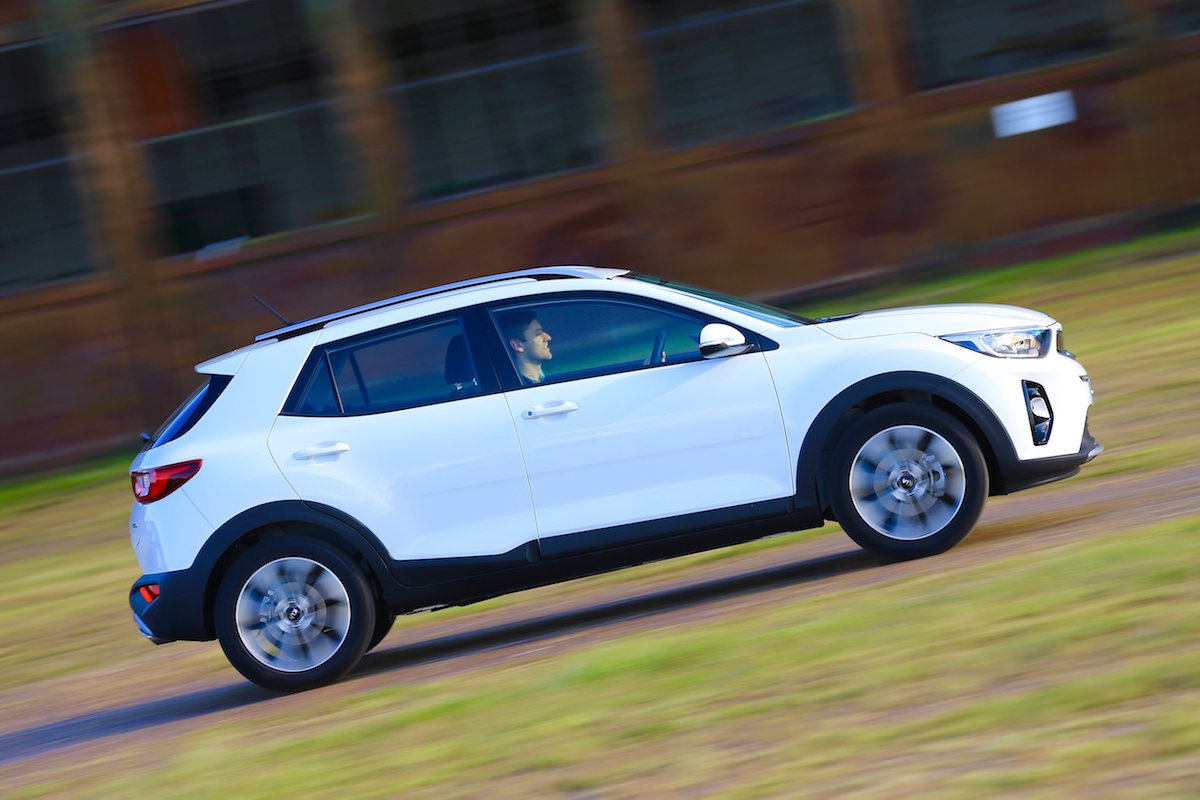
The Stonic is Kia’s smallest SUV. When it launched in 2017, the Korean manufacturer already had several impressive high-riding vehicles in the form of the Sportage and the larger Sorento, but with the public lapping up hatchback-sized compact SUVs, the Stonic was brought in to take the fight to rivals such as the Seat Arona, the Citroen C3 Aircross, and the Renault Captur. And the Skoda Kamiq. And the Nissan Juke. And many, many more.
It uses many of the same mechanical parts as the Kia Rio hatchback, which itself competes with the Ford Fiesta and Vauxhall Corsa superminis, so that should give you an idea of how much space a Stonic would take up on your drive. Build quality is good, and the materials stand up well against other cars of this type and price. The cabin is not quite as flashy as the exterior, and a little overloaded with buttons, but it feels suitably classy and up to date.
The Stonic majors on styling and equipment. It’s also pretty good to drive, and Kia’s customary seven-year warranty is yet another selling point.
Inside, you’ll find a low driver’s seat, which feels more hatchback-like than a typical SUV’s driving position. That also makes it a little more engaging than your average SUV, but if you’re after a more commanding view of the road, then the Stonic might not be for you.
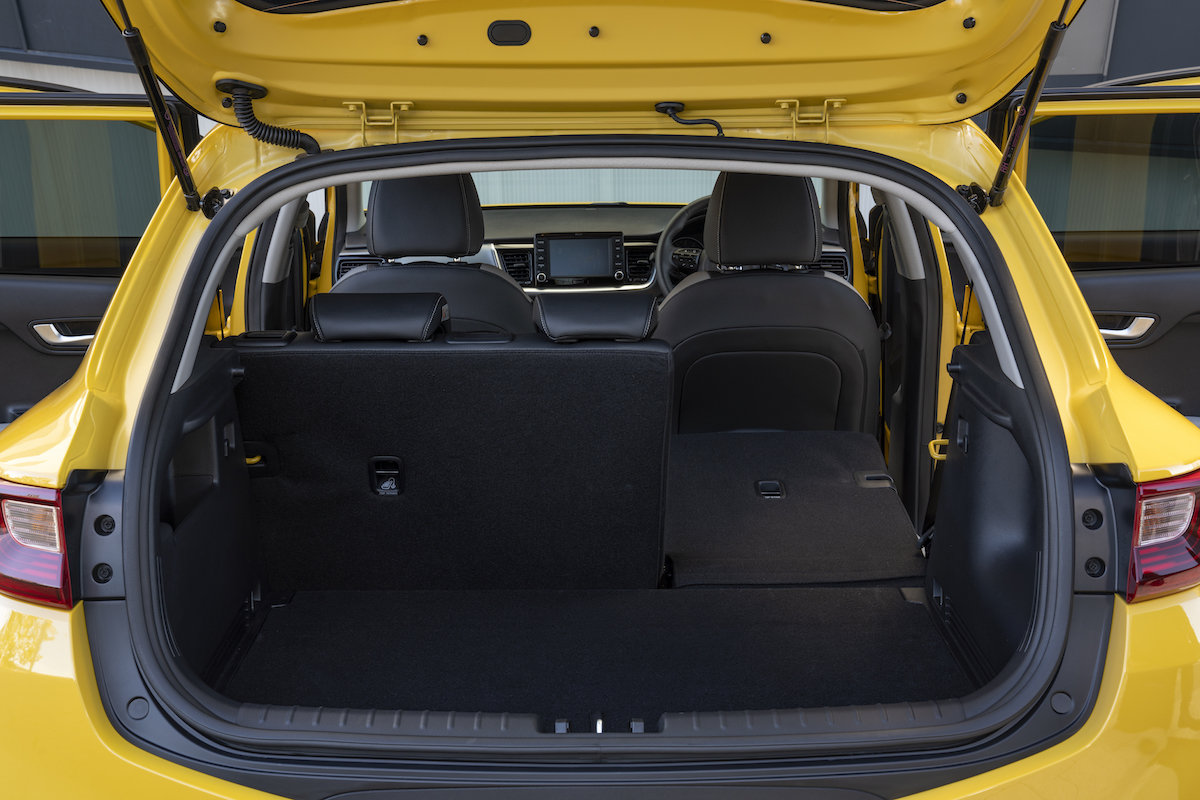
There’s enough room for two adults in the rear seats, providing they’re not too tall; six-footers might find the headroom a bit tight. Unlike some rivals, you should be able to fit a third adult in the back as well, because it’s relatively wide and there’s a decent amount of rear legroom.
The Stonic has a 352-litre boot, which isn’t bad for this class, but it is bettered by rivals such as the Seat Arona, which has 400 litres.
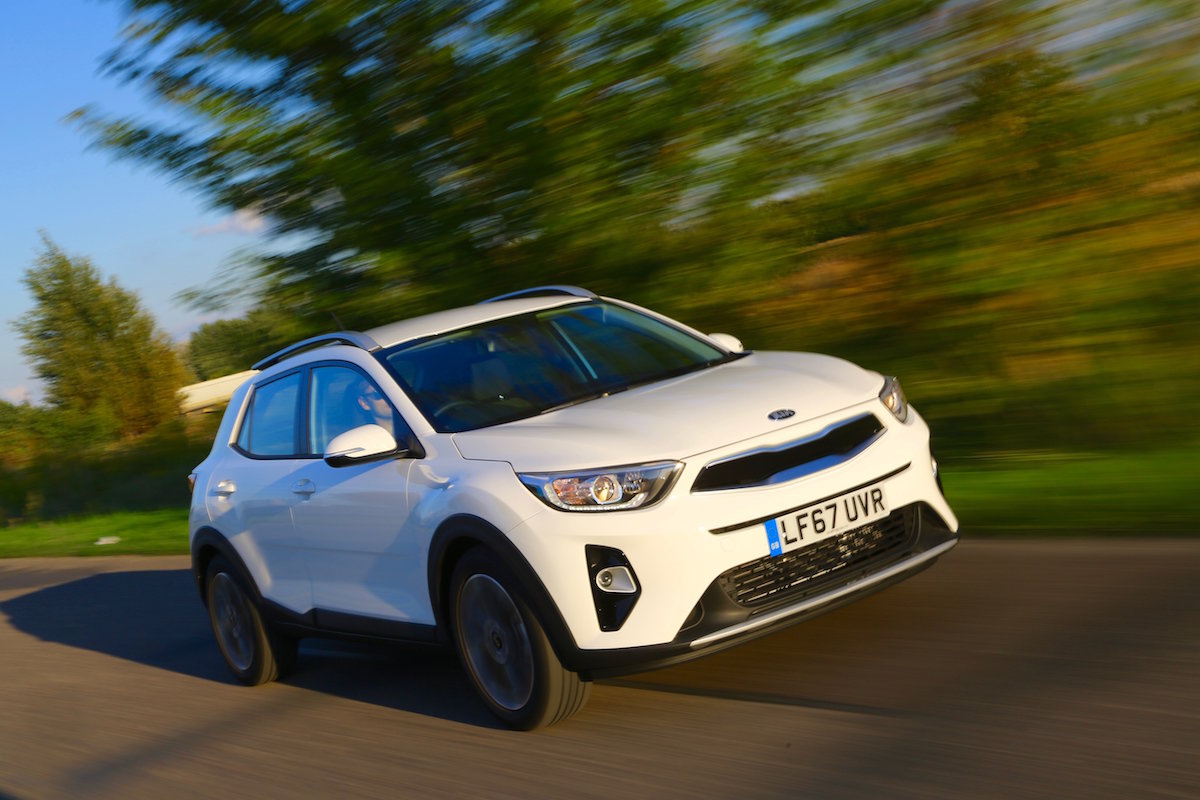
The Stonic is more competent and agile through the corners than you might expect. It’s not quite as engaging as Seat’s Arona, but it’s not far behind, resisting body roll in the bends while feeling taut and keen. The pay-off is that the ride is firmer than that of some rivals, so if you’re not bothered about sportiness and would prefer comfort, then the Skoda Kamiq or the Volkswagen T-Roc (or the smaller T-Cross) might be better.
All Stonics are front-wheel drive. The engine range starts with the 1.4-litre petrol, which has 98bhp. It’s the cheapest to buy, but it’s quite an old engine and it feels a bit weedy. You’re better off with the punchier and more efficient 1.0-litre turbo T-GDi model which has 118bhp. In 2020, a 99bhp version of the 1.0-litre turbo engine was added and the 1.4 was dropped.
If you do big motorway mileage and want a diesel engine, then there’s a 1.6-litre CRDi with 108bhp, which does the job and gets better fuel economy than the petrol, but is rather noisy. You might find it difficult to track one down, too, as it didn’t sell that well and was dropped by Kia in 2020. All models have a five- or six-speed manual gearbox, and a seven-speed dual-clutch automatic is also available.
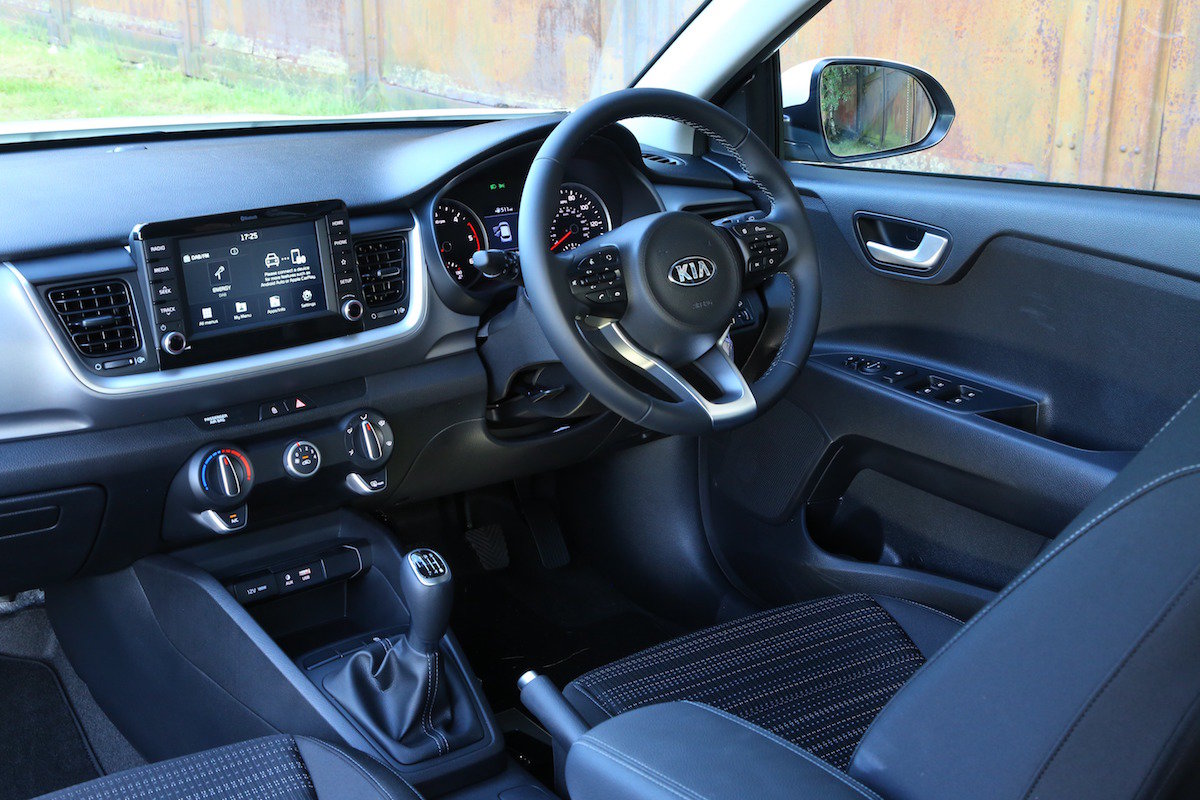
Trim levels start, slightly confusingly, with the 2. Like the rest of the range, it rides on 17-inch wheels (16-inch from 2020) and features aircon, rear parking sensors, Bluetooth, and a seven-inch screen in the middle of the dashboard, as well as Apple CarPlay and Android Auto.
On early cars, if you wanted satnav then you needed the First Edition model, which also included extra safety systems, keyless entry and start, and faux leather upholstery. Later, 3 and 4 trim levels were added to replace the First Edition. The 3 included satnav and upgraded aircon, as well as extra safety equipment, while the 4 added features such as heated seats and steering wheel, and keyless entry and start.
The range was overhauled in late 2020. This involved ditching 3 and 4 models, and replacing them with GT-Line, Connect, and GT-Line S versions. GT-Line gets a sportier body kit and a spoiler, as well as LED headlights, a reversing camera and some different colour options, as well as the full range of available safety systems. An upgraded eight-inch touchscreen infotainment system was also included. Connect models get keyless entry and start and two-tone paint, as well as upgraded aircon, while the GT-Line S adds heated front seats and steering wheel to the GT-Line model, as well as adaptive cruise control and front parking sensors.
None of the Stonic’s engines are particularly hard on the wallet. As we mentioned above, the diesel has the best official fuel economy, but it’s tricky to find. The 1.4-litre engine is rated at 51.4mpg, while the 1.0-litre with 118bhp, pre-2020 mild hybrid extra bits, will give 56.5mpg, according to the old and often unrealistic NEDC economy test. After 2020, the engine is rated at 51.4mpg; this was achieved through a new lab testing procedure called WLTP, which tends to give lower official figures but is more realistic (trust us; it’s better than before). The 99bhp version, also measured under WLTP, is rated at 49.6mpg.
Insurance groups range from 8 to 14 of 50, which means premiums will be low. Some rivals have models in lower groups, but they tend to have less equipment than the Stonic.
Servicing is due every year or 10,000 miles for petrol models, or 20,000 miles for the diesel. Kia offers fixed-price service plans that will cover you against inflationary price rises and, while prices vary depending on the age of the car, they’re competitive against rivals.
Kia has a great reputation for reliability, and independent studies tend to back that up. The company came ninth out 30 manufacturers in the 2021 What Car? reliability survey, and the Stonic itself finished 35th out of 75 cars in the 2022 Auto Express Driver Power survey, neither of which are bad results.
Kia’s seven-year, 100,000-mile warranty has long been the best in the business. None of the Stonic’s rivals get anywhere near this. We haven’t heard of any common problems with the Stonic, which is yet another positive sign, and there were no official recalls at the time of writing.
- Trim levels start, slightly confusingly, with the 2. Like the rest of the range, it rides on 17-inch wheels (16-inch from 2020) and features aircon, rear parking sensors, Bluetooth, and a seven-inch screen in the middle of the dashboard, as well as Apple CarPlay and Android Auto.
- On early cars, if you wanted satnav then you needed the First Edition model, which also included extra safety systems, keyless entry and start, and faux leather upholstery. Later, 3 and 4 trim levels were added to replace the First Edition. The 3 included satnav and upgraded aircon, as well as extra safety equipment, while the 4 added features such as heated seats and steering wheel, and keyless entry and start.
- The range was overhauled in late 2020. This involved ditching 3 and 4 models, and replacing them with GT-Line, Connect, and GT-Line S versions. GT-Line gets a sportier body kit and a spoiler, as well as LED headlights, a reversing camera and some different colour options, as well as the full range of available safety systems. An upgraded eight-inch touchscreen infotainment system was also included. Connect models get keyless entry and start and two-tone paint, as well as upgraded aircon, while the GT-Line S adds heated front seats and steering wheel to the GT-Line model, as well as adaptive cruise control and front parking sensors.
- If you want the best fuel economy: The best fuel consumption figure on paper comes from the 1.6-litre diesel version of the Stonic. It has an official MPG of 67.3, but it didn’t sell particularly well, so you’ll have to keep your eyes open for a second-hand one.
- If you rarely go out of town: Diesel cars aren’t particularly well suited to short, low-speed journeys, due to a bit of tech called a diesel particulate filter, which helps to control emissions. Cars fitted with them need to be driven regularly at motorway speeds to work properly, and too many short journeys can cause them to get clog up. Better, then, to go for a petrol, and the most fuel-efficient will be the 118bhp 1.0-litre model with the upgraded six-speed manual gearbox that was introduced in 2020.
- The best all-rounder: While later models are more efficient, they’re also more expensive, so we’d look for an earlier Stonic 1.0-litre 118bhp petrol model. The entry-level 2 model has pretty much everything you’ll need, but keep your eyes peeled for a well-priced 3 model to add a few more toys. You might also want to find a model that’s fitted with the optional safety systems.
- If you want a sporty look: It doesn’t add anything to the driving experience, but both GT-Line and GT-Line S cars look more imposing than other models in the line-up, thanks to a sporty body kit and a rear spoiler.

