Kia Venga (2009-2019) review | A practical small car – but not a pleasant one to drive
Kia Venga cars for sale
2.0
Expert review
Pros
Versatile family-friendly cabin
Some of the original seven-year warranty should still cover recent examples
Generous kit on all models bar the entry-level '1'
Cons
Dull to drive
Disappointing fuel economy
More reliability issues than you'd expect of a Kia
The CarGurus verdict
Verdict
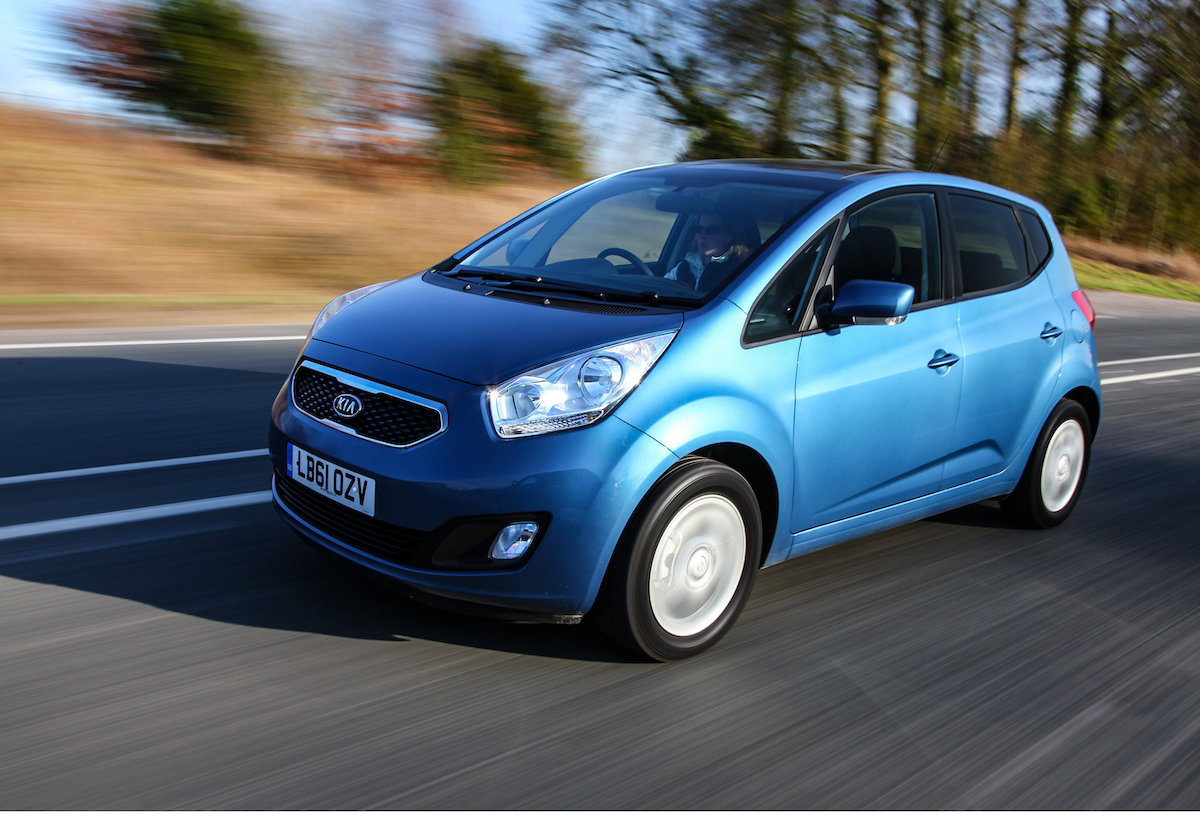
The great shame of the Kia Venga is that it isn’t better to drive. Small family cars don’t need to behave like sports cars, of course, but the Venga’s engines require determined encouragement to deliver even modest performance, its steering is vague, its body roll prodigious, and its ride quality unsettled. Other Kias are better than this, but more importantly, so are the Venga’s rivals.
The Venga delivers room, and lots of it, for passengers and luggage, and its back seats are really clever. Standard equipment levels are generous, especially if you can stretch to a 3 or a 4 trim, and the fact that the Venga was only on sale in the UK for 10 years suggests its attractions outweigh its drawbacks.

What is the Kia Venga
Not quite a hatchback, not quite a people carrier, the Kia Venga occupies a middle ground between the two. It was designed to be an affordable small car with a greater degree of practicality than your average supermini, along the lines of the Honda Jazz, Ford Fusion, Renault Modus and Hyundai ix20, the last of which it shares a platform with. It therefore appeals to urban family buyers and elderly
There’s plenty of standard equipment, but that’s about the extent of the Venga's strengths, because the driving experience and running costs leave much to be desired. If you're in need of a very cheap runabout that has more space than something like a Ford Fiesta then the Venga might make some sense. It's also popular with those who want a small automatic car, but don't like the idea of a CVT transmission. If that's you, try to find a later model with the six-speed auto, which is a stronger performer than the earlier four-speed unit.
How practical is it?
The Venga looks like a regular small hatchback, albeit a tall one, but its spacious and versatile cabin qualifies it as a mini-MPV. It easily accommodates four adults with generous headroom and legroom and, while it’s a bit of a squeeze in the rear with a third passenger in the middle, it’s not uncomfortable. The front seats are mounted quite high and upright, aiding the view from behind the steering wheel, which older owners appreciate. They also commend the Venga’s comparatively low sills, which make sliding in and out much easier.
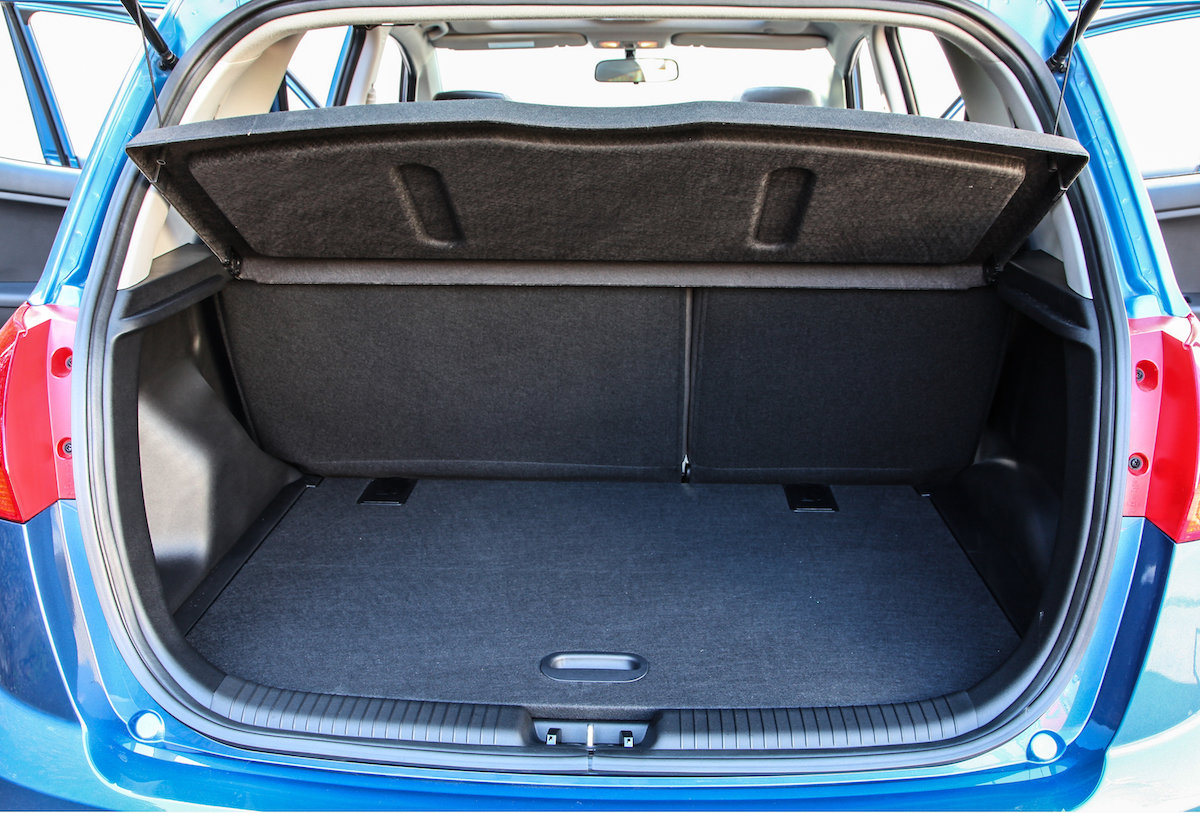
The rear bench is a 60:40 split-folding arrangement, and the outermost seating positions have reclining backrests for passengers who fancy a kip. Both sections of the rear bench slide fore and aft – separately or as a single unit – allowing either greater legroom or boot space. The rear seat backs fold flat for hauling larger items, opening up a gargantuan 1,253 litres, and the boot floor panel can be set at two heights, the highest position of which creates underfloor storage. Even when the boot is at its smallest configuration it boasts a whopping 440 litres of space – 550 when you slide the back seats forwards – and its practicality is boosted by a low loading lip, wide opening and flat boot sides.
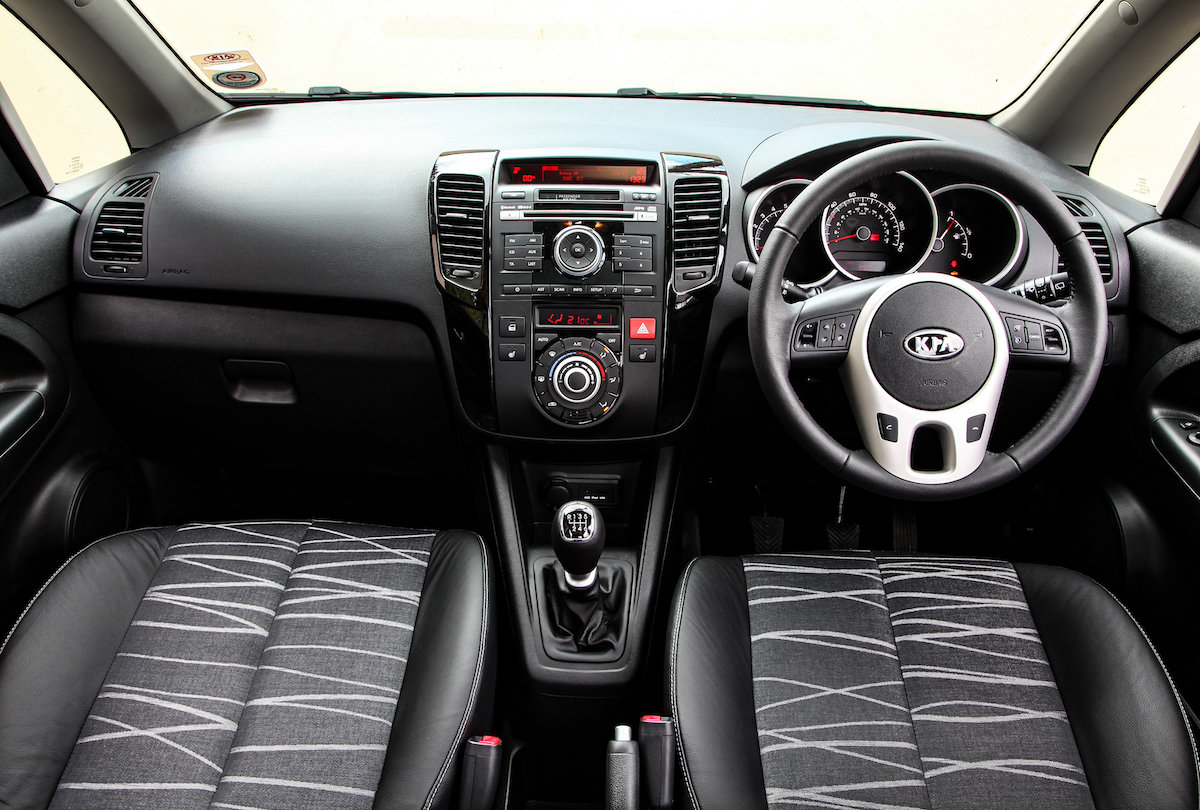
It's let down by cheap, hard plastics used for the facia and door trims, which scratch and scuff easily and can end up looking shabby, although Kia made some improvements in this department when the Venga was facelifted in 2015.
What’s it like to drive?
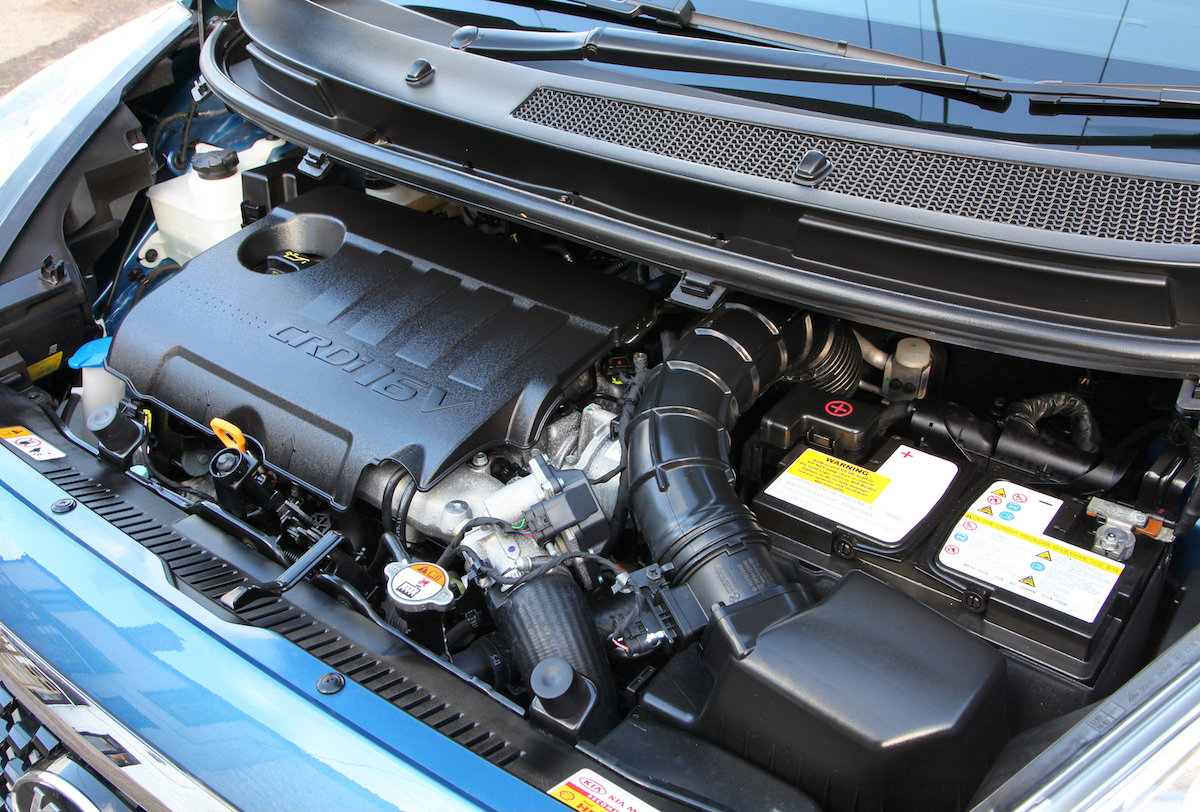
The Venga is available with 1.4 and 1.6-litre petrol and diesel engines, none of which are perky performers. The 1.4-litre petrol is the weakest; it has the same 89bhp as the 1.4 CRDi EcoDynamics turbodiesel, but it lacks the diesel’s mid-range torque and struggles if the car is fully laden. The 123bhp 1.6-litre petrol is adequately energetic, and the 1.6 CRDi the most relaxed of the line-up and better for longer trips and higher mileages, but all the Venga’s engines are noisy when revved.
Other dynamic disappointments include the ride and handling. The Venga's ride is bumpy, especially at low speeds around town, and although the steering is light, it’s devoid of feel, and when you tackle a corner even at a very modest speed the Venga rolls excessively. Sure, it’s not a racing car, but it could do better.
Technology, equipment & infotainment
Standard equipment levels are generous on all bar the basic trim level, known as the 1, which doesn’t have much to speak of beyond electric front windows and mirrors. The 1 Air is much the same, though the addition of standard air conditioning does mean it feels a little less Spartan.
The 2 is far from short of kit, by contrast, including alloy wheels, an iPod cable, Bluetooth, rear electric windows, folding door mirrors, and reversing sensors. The 3 adds climate control, front fog lamps, privacy glass, heated seats, cruise control with a speed limiter, satnav and, from 2015 onwards, automatic lights. A top-end 4 trim level was introduced with the 2015 facelift, which added a keyless engine start/stop button, a heated steering wheel, and a panoramic sunroof.
The 3 and 4 models got a touchscreen infotainment system that was shared with Kia’s other contemporary models. As in those cars, this system is quite basic to look at, but it’s swift to respond and easy to find your way around, making it one of the better touchscreen systems from the time.
The 1 and 1 Air were dropped from the range shortly after the facelift was introduced, leaving 2, 3, and 4 versions to soldier on until the Venga’s demise. Also of note was the SR7 special edition, which was available in 2015, sitting between 1 Air and 2 versions in the range, and coming with automatic headlights and privacy glass. Buyers had the choice between either of the 1.4-litre engines; the 1.6s weren’t available with this version.
Kia Venga running costs
The running cost that vexes Kia Venga owners the most is how much fuel their car uses compared with the official fuel consumption figures. Even the most positive owner reviews of the Venga include the caveat that their car is thirsty: ‘it drinks like a 3.0-litre car but accelerates like a 1.0-litre’ was one owner’s opinion of his 1.6-litre automatic.
The 1.4 CRDi turbodiesel has an official combined figure of 64mpg, which is far better, but real-world consumption is more likely to be in the mid 50s. Several owners report seldom achieving better than 35mpg from their 1.4 petrol, when it’s claimed to give up to 50mpg.
Service intervals for the diesel engines are every 20,000 miles, the petrols every 10,000 miles, but all of them require servicing annually. Insurance, meanwhile, should be reasonable, with the Venga range spanning groups 8 to 14.
Vengas registered before 1 April 2017 will be taxed according to their CO2 emissions, which means the more polluting models – i.e. the 1.6-litre petrols and especially the automatics – will be more expensive to tax if registered before this date. Conversely, if it’s a low-CO2 diesel model you’re after, it’ll be much cheaper to tax if you buy one registered before this date.
Kia Venga reliability
Kia’s seven year warranty will now have expired even on the latest Vengas, but it does at least offer the residual reassurance that most owners will have serviced their cars at a main dealer regularly (for the first seven years, at least) in order to maintain that warranty.
As a brand, Kia tends to do very well in independent reliability surveys – it came eighth out of 30 manufacturers in the 2025 What Car? reliability survey – and the Venga doesn’t sully that reputation, but that’s not to say it’s perfect.
There was an annoying issue with the 1.4-litre CRDi turbodiesel engine. In some instances, when you prodded the throttle, there was a delay in the car actually accelerating, and a reduction in power. This was random and didn’t affect all cars, and it took Kia about three years to admit there even was an issue, following pressure from owners all over Europe. The eventual fix was a software upgrade, and while most 1.4 Vengas should have had this carried out by now, some may have slipped through the net. If you’re concerned about your car’s performance in this respect, get in touch with a Kia dealer with your VIN number and ask them to check.
There are also reports about the 1.4 CRDi making a ‘chattering’ sound. Some owners have been informed that ‘they all do that’, but others have traced the noise to faulty fuel injectors and an ECU issue. There’s now a theory that the injectors have an eight-year lifespan, so make sure the car you’re looking at runs smoothly.
Another ongoing issue concerns the Venga’s ISG system, or Intelligent Stop & Go: it seems it’s not so intelligent. Intended to improve the urban fuel consumption and reduce CO2 emissions of Vengas with a manual gearbox, ISG automatically turns off the engine when the car is out of gear and your foot is off the clutch. Depress the clutch and the engine fires up again. Except that the ISG system seems to work very rarely.
Rattles from the dashboard have upset some owners, and wind noise from the panoramic sunroof has irked others. Front brake pads rattling in their calipers are sometimes a source of irritation, and there have been a few reports of the gear lever on the automatic becoming stiff or sticking in place, due to a stretched gear cable. Starter motors are now starting to fail, as are door lock actuators, and broken front suspension springs are becoming more common. The tops of the rear doors are known to rust, too, starting underneath the rubber seal.
- The cosmetic end of a 2015 facelift involved sharpening up the Venga’s nose and tail, together with a raft of other revisions that included better quality cabin materials, a couple of new paint colours and some different alloy wheel designs. On-board tyre pressure monitoring (TPM) became standard across the range, and for some models, there were improvements to the satnav and infotainment systems, including a seven-inch colour touchscreen and full MP3 player compatibility with aux-in and USB ports.
- Less than 12 months after the Venga’s 2015 facelift, Kia introduced a new and much-needed six-speed automatic gearbox, which, like its four-speed predecessor, is available only with the 1.6-litre petrol engine. The four-speed auto is flawed: its gearchanges are clunky, its kickdown savage, it’s prone to holding too high a gear when climbing hills, and it wrecks the fuel economy. The six-speed auto is a massive improvement in almost all areas.
- The Venga’s four-star EuroNCAP safety score was not horrendous back in 2010, when it was tested, though by modern standards, the crash test results of 79 per cent for adult occupant protection and 66 per cent for child protection are somewhat below-par.
- The best all-rounder: Assuming you’re not buying it purely for urban use, which doesn’t suit diesels, the 1.6-litre CRDi has enough muscle to haul a fully-laden Venga down the motorway without fuss, and returns reasonable fuel economy. As for trim levels, try to stretch to a post-facelift 3.
- The safest: All Vengas enjoy the maximum five-star EuroNCAP crash test rating when new, but post-facelift models have six airbags – front, side and curtains – and there are also active front headrests and ISOFIX mounts for child seats in the rear. Electronic stability control and ABS are standard, as is hill start assistance, and many models are equipped with daytime running lights.
- All the bells and whistles: As it’s the range-topper, Kia made sure that the Venga 4 groans under the weight of its standard equipment. The infotainment system features a 1Gb hard drive and they were sold with seven years of free annual upgrades for the satnav’s European maps.
- On a budget: A 1.4 EcoDynamics 1 is your best bet. It’s not only the most affordable Venga there is, but it’s also the most frugal, so it’ll save you a bunch on running costs too. It’s basic inside, and the driving experience is tedious, but it offers a surprising amount of space for very little cash.


