Land Rover Defender Review (1990-2016)
Land Rover Defender cars for sale
3.0
Expert review
Pros
Hard to think of another car with more heritage and character
Can tackle almost any terrain
Simple mechanicals suit DIY tinkering
Cons
Agricultural to drive on Tarmac
Lacks modern safety kit
Reliability and corrosion are both worries
The CarGurus verdict
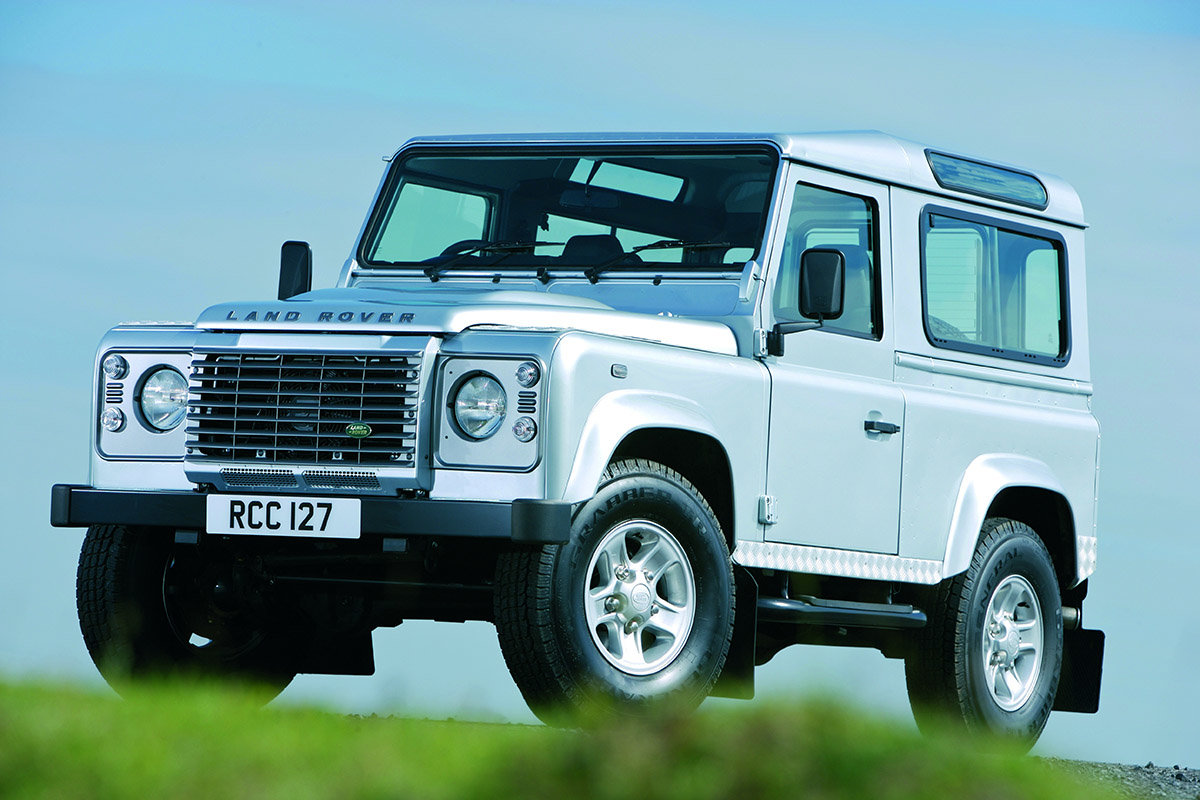
There’s nothing quite like the Land Rover Defender, and if you want one, you probably won’t be considering anything else, for that very reason. It’s expensive to run and agricultural to drive on the road, but few other cars are so recognisable or quite so downright cool.
But the Defender isn’t simply some poseur’s plaything. As a tool, used in earnest off road or for towing, it’s still one of the foremost utilitarian cars available, even after so long out of production. Its uncompromising design and simple mechanics make it the best friend of anyone who just needs to get the job done.
What can you say about the Land Rover Defender that hasn’t already been said? It’s an icon of Britain, and a workhorse beloved even by those who’ve never driven one. It’s as much a part of the fabric of the UK countryside as thatched cottages and oak trees, yet it’s as well-suited to desert dunes as it is the Yorkshire Dales.
Its basic styling dates to 1948, when the earliest Land Rover – retrospectively called the Series I – went into production. After two more iterations, a heavy revamp saw it renamed simply 90 and 110 in 1983, referring to the two lengths of wheelbase available, but it wasn’t until 1990 that the Defender finally gained the name it would wear until the end of its life, and by which it would come to be remembered.
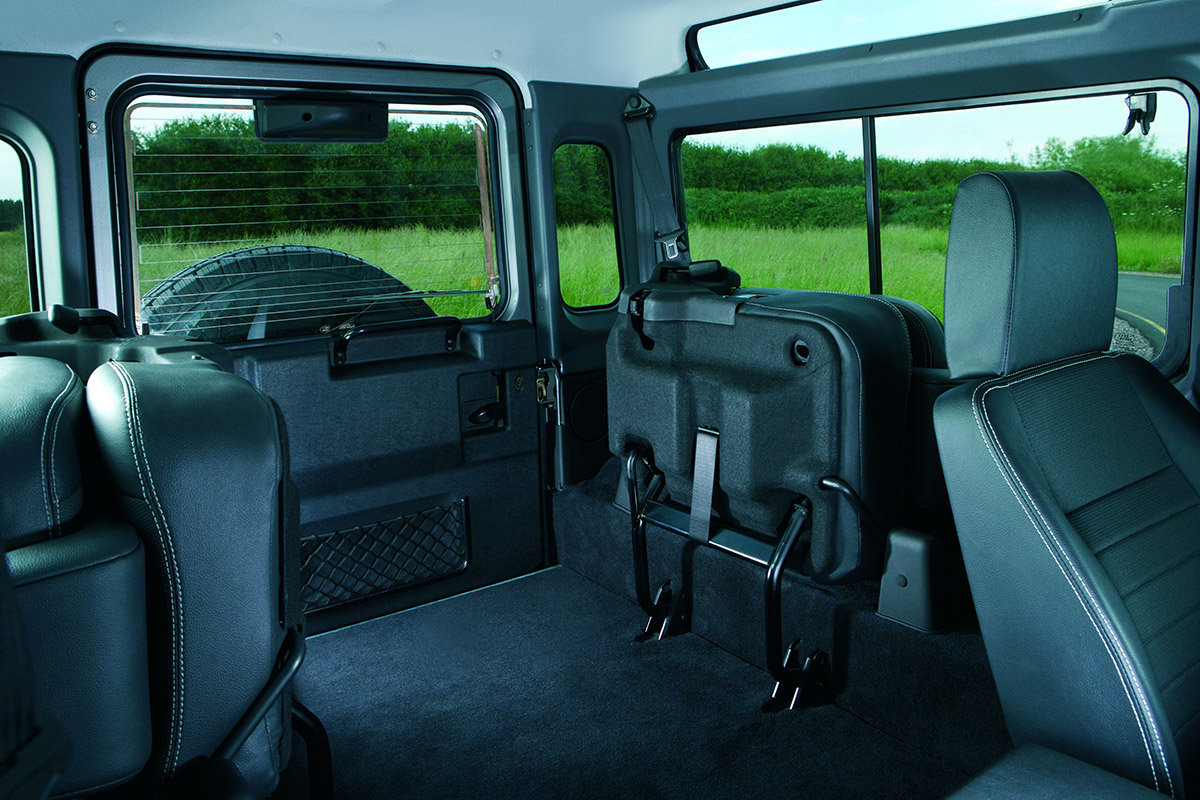
The Defender was available in an incredible array of guises, and that’s before you get to the ones that were adapted for specific tasks by specialist body builders. There were van-style versions with no seats in the back at all, pick-ups, straight-up five seaters, seven-seaters, and plenty more variations on those themes. The best thing is to pick one that suits the job you need it to do.
What’s more, with its wipe-clean interior, and few electrics, you can pretty much hose out a Defender, which makes it an ideal companion if you regularly climb aboard with grimy boots, muddy dogs, or mucky cargo.
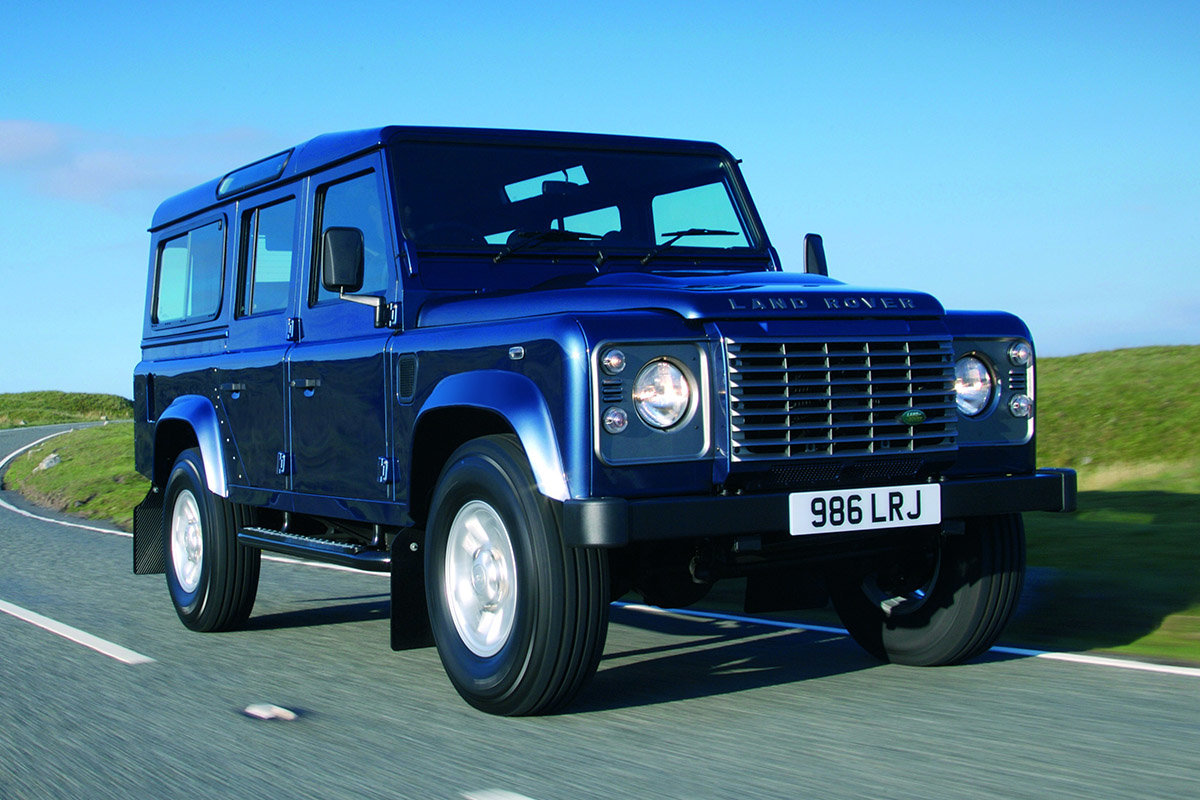
Noisy engines, bouncy suspension, an awkward driving position and vague steering mean the Defender hardly the sort of car you’d want to spend too much time in on tarmac, and especially not on a motorway.
So why do people choose to? Well, there’s certainly something about its gruff toughness that appeals on a subjective level, despite its many objective flaws. Yes, the Defender is crude, but unashamedly so, and its honesty and purity of purpose soon start to charm you. It’s great for towing, too.
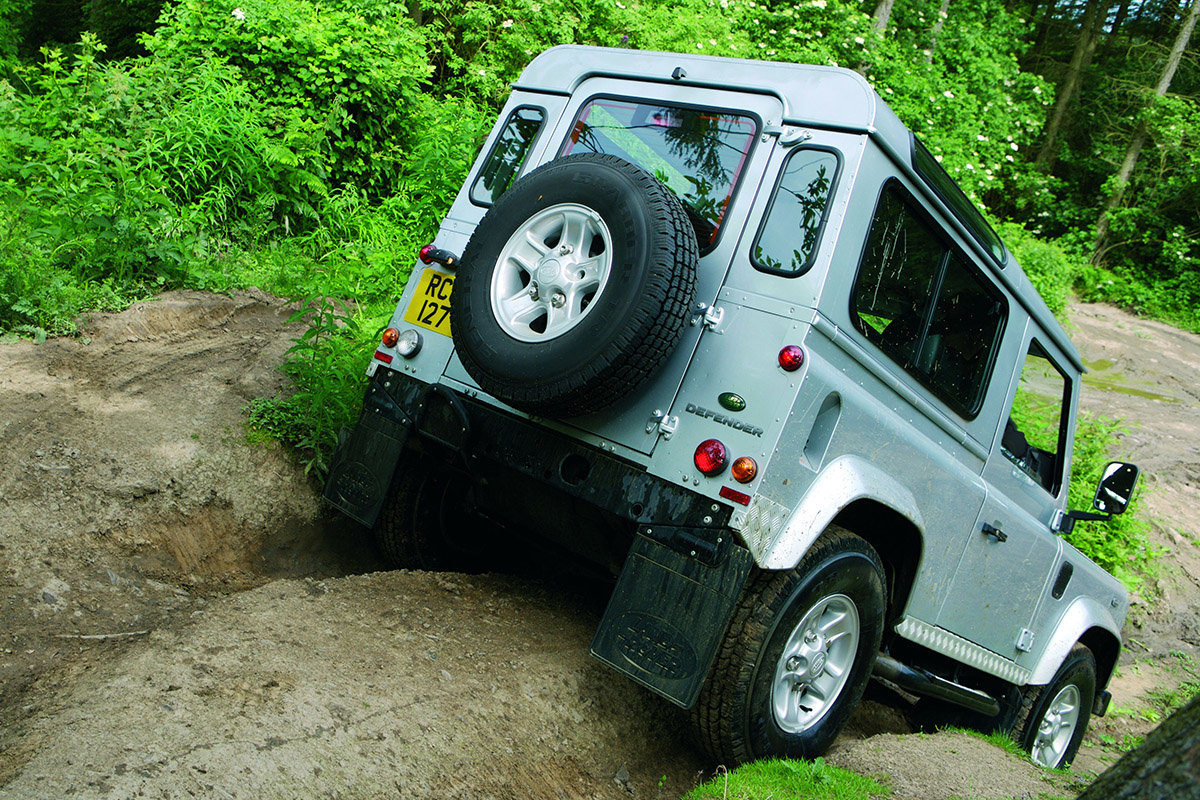
If you need to head away from the tarmac for any reason, then there are few, if any, off-roaders better suited to the task. The Defender’s rugged construction and no-nonsense four-wheel drive system will haul you out of almost any tricky situation.
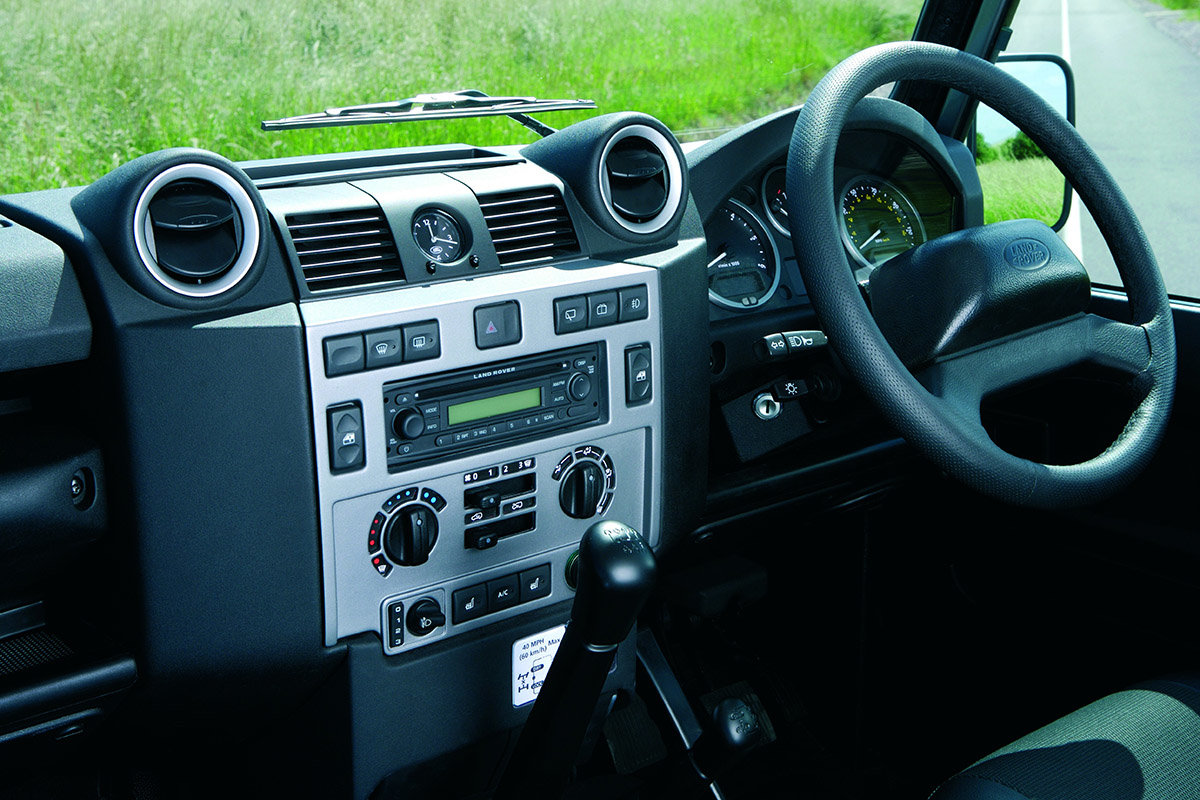
There are plenty of models in Land Rover’s range, past and present, that offer tech, comfort, and luxury. The Defender was not one of them, so if that’s what you’re after, look elsewhere.
It did, however, sprout all manner of accessories, fancy wheel options and paint finishes, and Land Rover produced a run of special editions that were pitched far more toward the King’s Road than the Kalahari.
The final three are arguably the most desirable: the Autobiography, Heritage, and Adventure editions were produced to celebrate the final year of Defender production in 2015. All three gained distinctive paint finishes and various bits of extra equipment.
The Defender’s fuel economy will vary depending on which engine you choose, but generally, you should see an MPG figure of somewhere between 25 and 30 from a diesel. V8s, on the other hand, will chew up fuel faster than you can think about it – don’t expect to see more than 10-15mpg on average.
You’ll also want to think carefully about the tax implications of whichever Defender you’re going to buy. Examples registered before 2001 will fall under the old-style tax system, which means they’ll cost much less than those registered thereafter, whose high CO2 emissions make their annual tax bill significantly higher.
The Defender is a mechanically simple machine, but it’s also quite specialised, and as a result, servicing is no cheaper than you might find on other 4x4s of a similar age. You should also keep in mind that 200TDi and 300TDi versions come with a cambelt, which needs to be changed regularly. The 200TDi’s belt will last five years or 60,000 miles, whichever comes first, while the 300TDi’s needs changing every six years or 72,000 miles.
The Defender went through a lot of changes throughout its long life, so even the common problems can be nuanced. It’s worth contacting a good, independent Land Rover specialist (there are plenty of them) if you’re not sure about something and, if you’re planning to hand over a chunk of cash, it may be worth having them inspect the vehicle before you buy.
Defenders might have aluminium body panels (for the most part), but rust is nonetheless a problem. The chassis is built from steel, as is the bulkhead, and these areas are particularly prone to corrosion. Be particularly careful with cars that have led a hard working life, as their chassis may have been caked in salty mud without having been cleaned for long periods at a time, leaving them riven with rot.
You’ll want to check that the low ratio and diff locks do what they should, which you can do by engaging them and driving the car in a tight circle with the window open; if you don’t hear the inside tyres slipping and grabbing, that’s a bad sign.
As a rule, the earlier the car, the more durable its interior, so be prepared for later cars that have led hard lives to show it inside. Check all the electrics work because glitches are not unheard of.
Any rough running or misfire from the engine is a bad sign, and you’ll want to keep an eye out for control unit and fuel pump problems on the later Ford-engined cars. V8s are more fragile and suffer from worn camshafts and a tendency to pop their head gaskets.
- The Defender (and the earlier 90/110 models) are set apart from earlier Land Rovers by their more sophisticated suspension. The change from cart springs to coil springs brought improvements in the car’s on-road driving manners without compromising its off-road ability. At the same time, Land Rover introduced a five-speed gearbox, a one-piece windscreen, and a plastic grille and headlight bezels, which is an easy way to tell these later Land Rovers apart from the earlier Series cars.
- The Defender was available with a choice of petrol or diesel engines. The petrol option was an old-fashioned 3.5-litre V8, which sounded great and had plenty of lazy, low-down grunt, but it was incredibly thirsty, and therefore unpopular. The diesels are far more common; the 107bhp 2.5-litre 200TDI, which was available at the Defender’s inception, was replaced in 1994 by the 111bhp 2.5-litre 300TDI. That was superseded by the 122bhp 2.5-litre TD5 in 1998. In 2007 came a major change, with the TD5 replaced by a Ford-sourced 2.4-litre diesel, again with 122bhp. That was replaced in 2012 with a 2.2-litre engine with the same power output. Both the latter engines came with six-speed gearboxes, rather than five-speed. Did you get all that?
- Production of the Defender ceased in 2016, but Land Rover revealed plans in 2018 to build a series of V8-powered “resto-mod” versions of the Defender. These aren’t new cars, rather older examples that have been rebuilt from the ground-up to a new specification, including a 399bhp Jaguar V8 engine and a host of luxury extras. They don’t come cheap – when they were fresh out of the factory, they cost £150,000 – but they’re by far the most coveted examples of the Defender.
- The best all-rounder: Ask five different Land Rover enthusiasts which is the best Defender engine, and you’ll probably get five different answers. By and large, the TD5 is reckoned to offer the best blend of modernity, power, reliability, refinement, ease of repair, economy, and character, so we reckon the best all-purpose version has to be a five-door Defender 110, with the TD5 engine, produced between 1998 and 2007.
- For serious off-roaders: You might want to look at the shorter 90. You get three doors, rather than five, so practicality takes a hit, but the shorter wheelbase makes it nimbler and less likely to ground out.
- For on-road use: It pays to buy as late an example as you can. With more creature comforts, a more modern interior, and smoother, quieter engines, one of the Ford-engined Defenders will be considerably easier to live with than its agricultural forebears.
- Something for the weekend: If you’re not too worried about high running costs, you might want to seek out a V8. They’re great fun to drive and sound fantastic.


