Land Rover Discovery Sport 2026 review | Versatile family SUV with optional seven-seat practicality
Land Rover Discovery Sport cars for sale
4.0
Expert review
Pros
Extremely capable off road
Versatile and practical seven-seat cabin
Well judged ride and handling balance
Cons
Poor reliability record
Five-seat models are worth less than seven-seaters
The car's weight takes the edge off its performance

The CarGurus verdict
The Discovery Sport's poor reputation for reliability might be a sticking point, and we wouldn’t blame you for thinking twice. But if you’re prepared to take the risk – or to spend a bit extra on an extended warranty – there’s still a lot to like. For one thing, the Discovery Sport is one of the most versatile premium SUVs of its size. Fold the seats down, flip them up, slide them about: whatever you ask of it, it seems the Disco Sport has an answer.
It isn’t the fastest SUV in the world, but its unhurried nature soon starts to rub off on you. Long journeys pass easily when you’re sitting in the comfortable seats and upmarket interior, especially in later examples, while stable handling and a comfortable ride help it feel calm and collected around town or on a B-road. Just check that you can live with its questionable reputation for reliability.
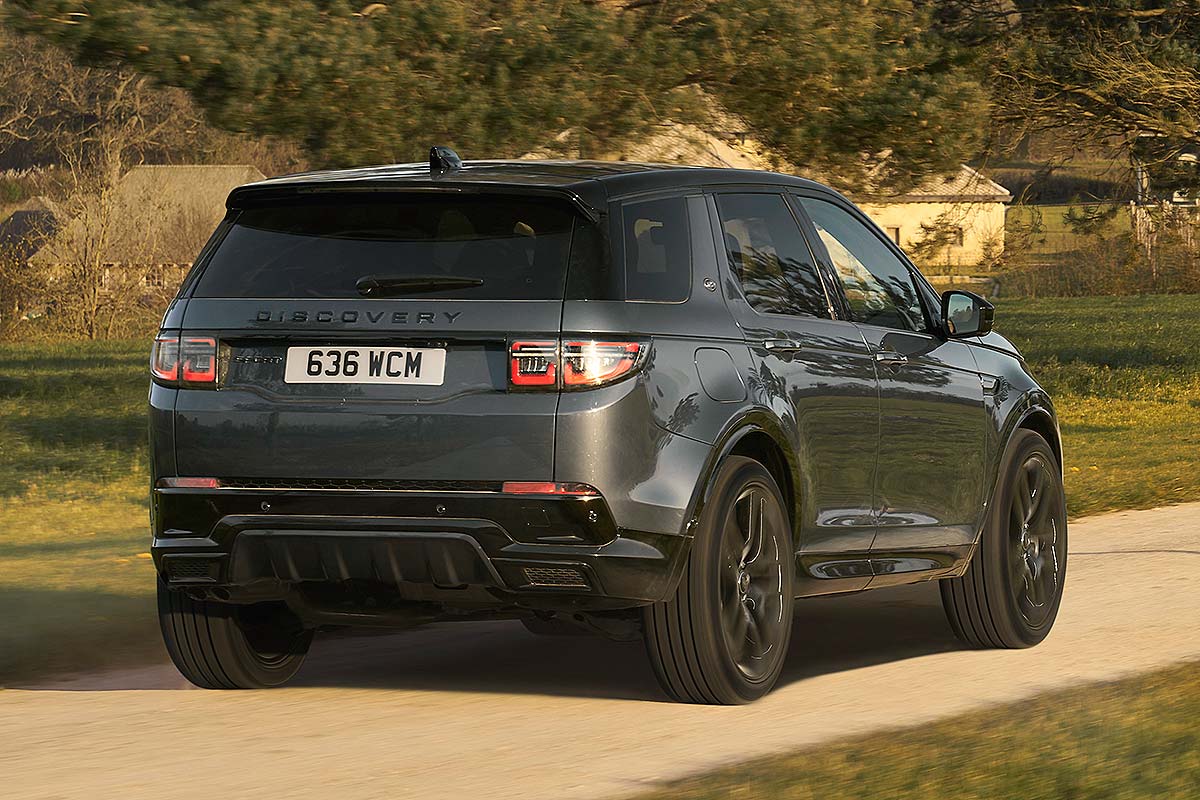
What is the Land Rover Discovery Sport?
Seven seats. That might not sound like much of a USP: after all, car makers have been building cars with seven seats for years now, and vans with more than that for far longer.
However, the option of seven seats marked the Land Rover Discovery Sport out as something a little different from its rivals when it replaced the ageing Freelander in 2014. It was something the Discovery Sport’s premium-badged rivals simply couldn’t match. If you wanted a BMW or Audi SUV with seven seats, you had to upgrade to a much larger one.
And while you could head to a more mainstream manufacturer for such a thing – Nissan would sell you an X-Trail, Mitsubishi an Outlander, and so on – none of these options could offer the same cachet or class.
These days, the Discovery Sport faces more direct competition, not least from the Mercedes-Benz GLB. Even so, the Disco Sport, as it’s known to its friends, remains one of the few premium compact SUVs to offer useful family practicality, genuine off-road ability and the option of seven seats. For some, that’s a winning combination.
How practical is it?
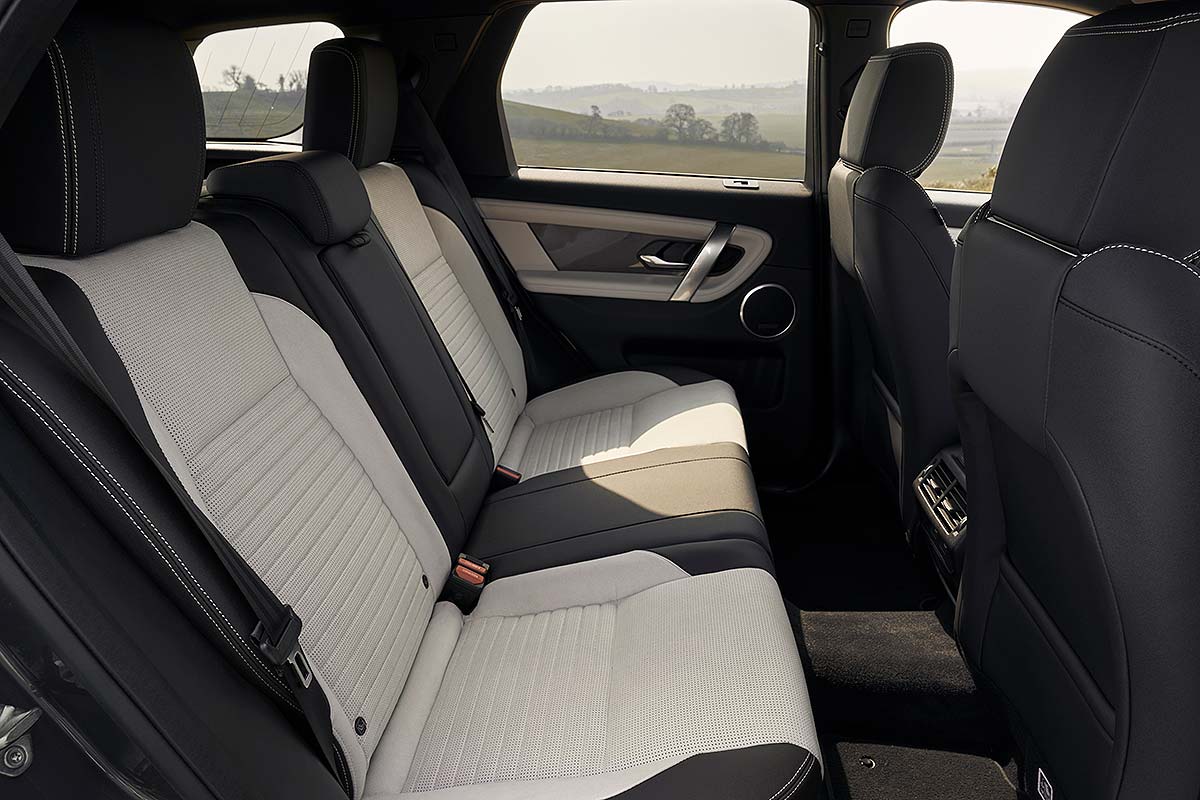
The Discovery Sport is one of the more practical premium SUVs of its size. The driving position is particularly satisfying, with a commanding view out, well-placed armrests and the kind of upright seating position that reminds you this is a Land Rover rather than a lightly raised hatchback.
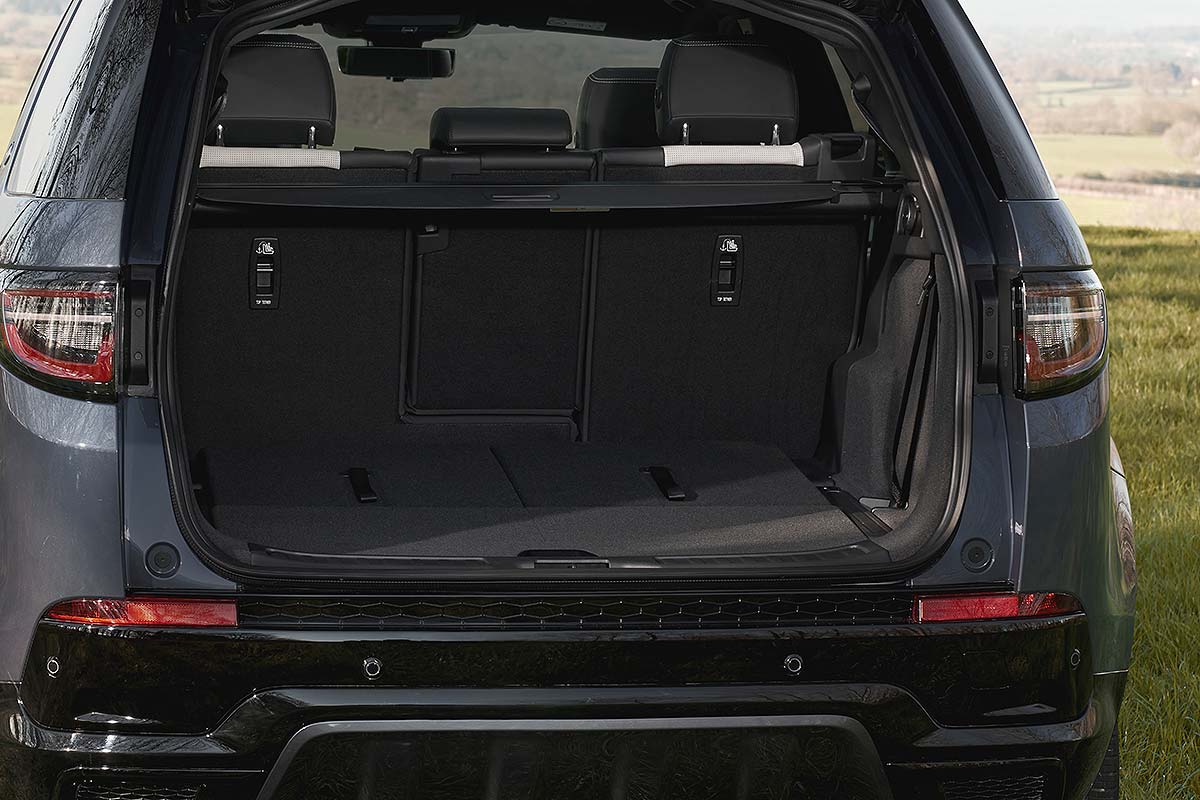
The middle row is spacious, with plenty of headroom and legroom, and there’s only a small hump running through the floor, so even the middle-seat passenger is treated reasonably well. The rear bench slides back and forth, allowing you to prioritise either passenger space or boot capacity, while the three middle-row seats fold individually.
The big draw, of course, is the option of two extra seats in the boot. They’re best suited to children or occasional use, but they make the Discovery Sport more versatile than most premium SUVs of this size. Just be aware that the plug-in hybrid version is five-seat only, so you’ll need a diesel model if the 5+2 layout is important.
Boot space depends on which version you choose. Five-seat models offer a generous 780 litres of luggage space with the rear seats in place, or 1,574 litres with them folded. Choose a 5+2 version and those figures drop to 657 litres and 1,451 litres respectively, while there’s only a small amount of space left when all seven seats are in use.
The cabin in later cars feels much smarter than in earlier examples. Older Discovery Sports were sturdy but a little plain inside, while newer versions boast better materials, a cleaner design and more modern tech. It still feels more practical than plush, but that’s arguably part of the appeal.
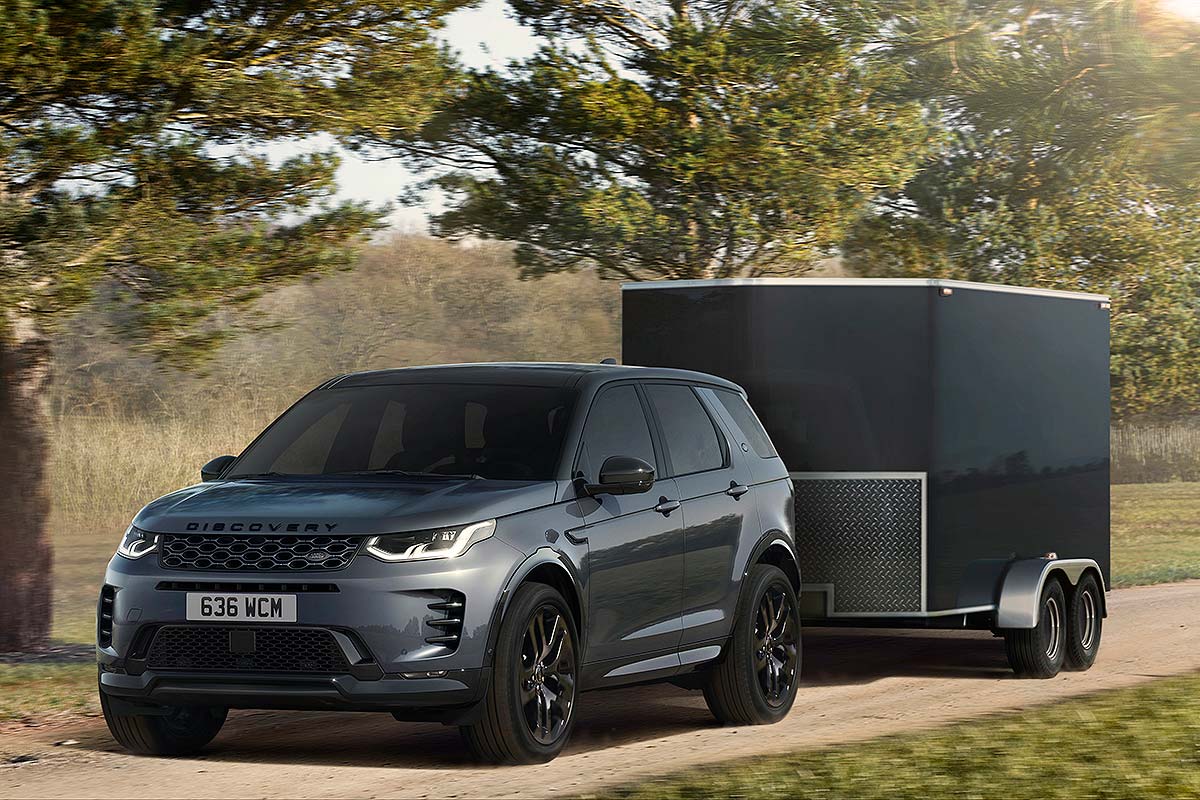
What's it like to drive?
Off-road, the Discovery Sport is as capable as you'd expect a Land Rover to be, with more ability than most owners are ever likely to need. The majority of buyers will spend most of their time on the road, though, and happily it performs well there, too.
It’s clearly set up for comfort, which is no bad thing in a family SUV. The Discovery Sport smooths out most bumps and potholed surfaces without becoming too floaty or uncontrolled, so it feels relaxed on longer journeys and reassuringly solid around town.
It’s surprisingly good in corners as well. Yes, the tall body leans over a bit, but there’s plenty of grip and the steering is progressive enough to inspire confidence. This is still a heavy car, mind you, so lower-powered versions need a bit of stoking if you want brisk progress.
Current engine choices include D165 and D200 mild-hybrid diesels, plus the P270e plug-in hybrid. The D200 is the better diesel if you regularly carry passengers or tow a trailer, while the P270e offers the strongest acceleration and the potential for short electric-only journeys, provided you can charge it regularly.
Technology, equipment & infotainment
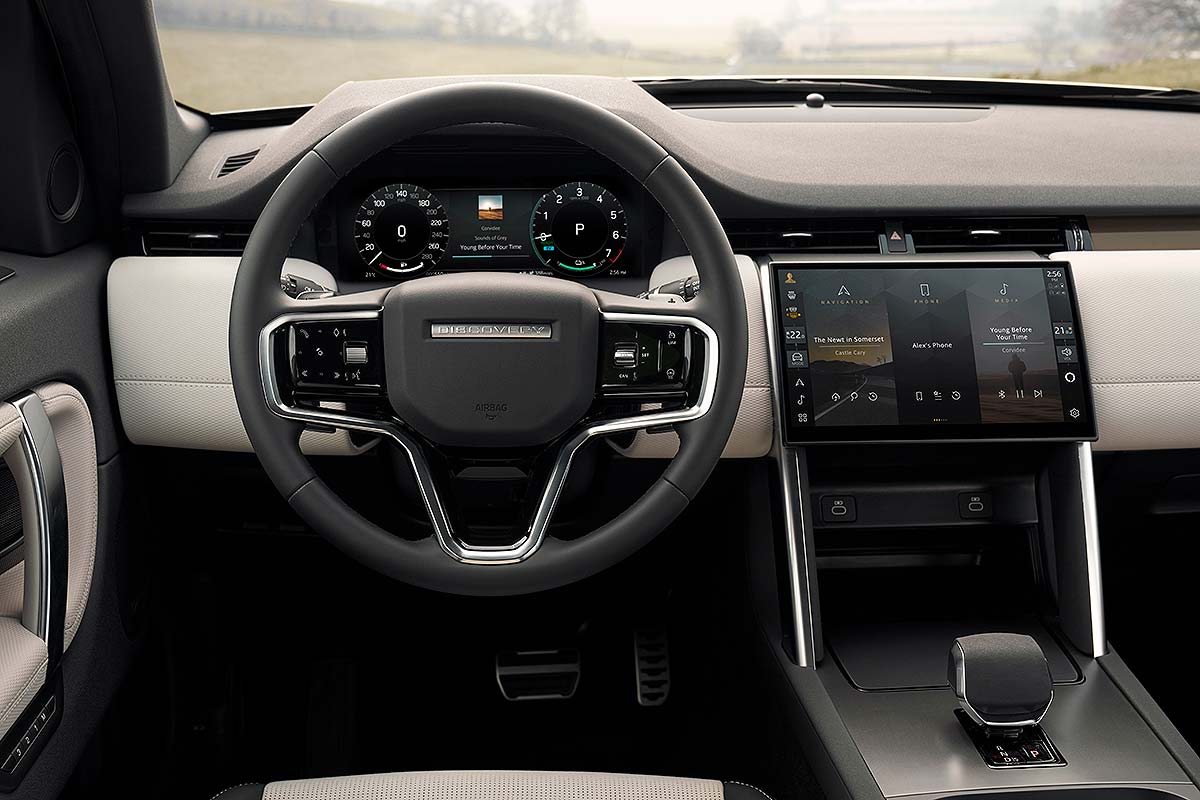
The Discovery Sport’s interior has improved considerably over the years. Older examples feel sturdy but a little plain, while later cars have a much sleeker dashboard layout, better materials and a more modern infotainment system.
Current versions use Land Rover’s Pivi Pro system, displayed via a 11.4-inch curved touchscreen. It looks sharp, responds quickly and is easier to navigate than the older systems fitted to early Discovery Sports. Smartphone connectivity, navigation and connected services are all available, although some buyers may still miss having more physical shortcut buttons for frequently used functions.
There are currently three trim levels: Dynamic S, Landmark and Metropolitan. Equipment varies depending on age and trim level, so it’s worth checking the exact specification of any used example. Later cars can come with features such as a digital instrument panel, an electric tailgate, upgraded LED headlights, adaptive cruise control, keyless entry and camera-based rear visibility systems. Higher-spec models feel properly premium, but even more basic versions should have the essentials expected of a modern family SUV.
Land Rover Discovery Sport running costs
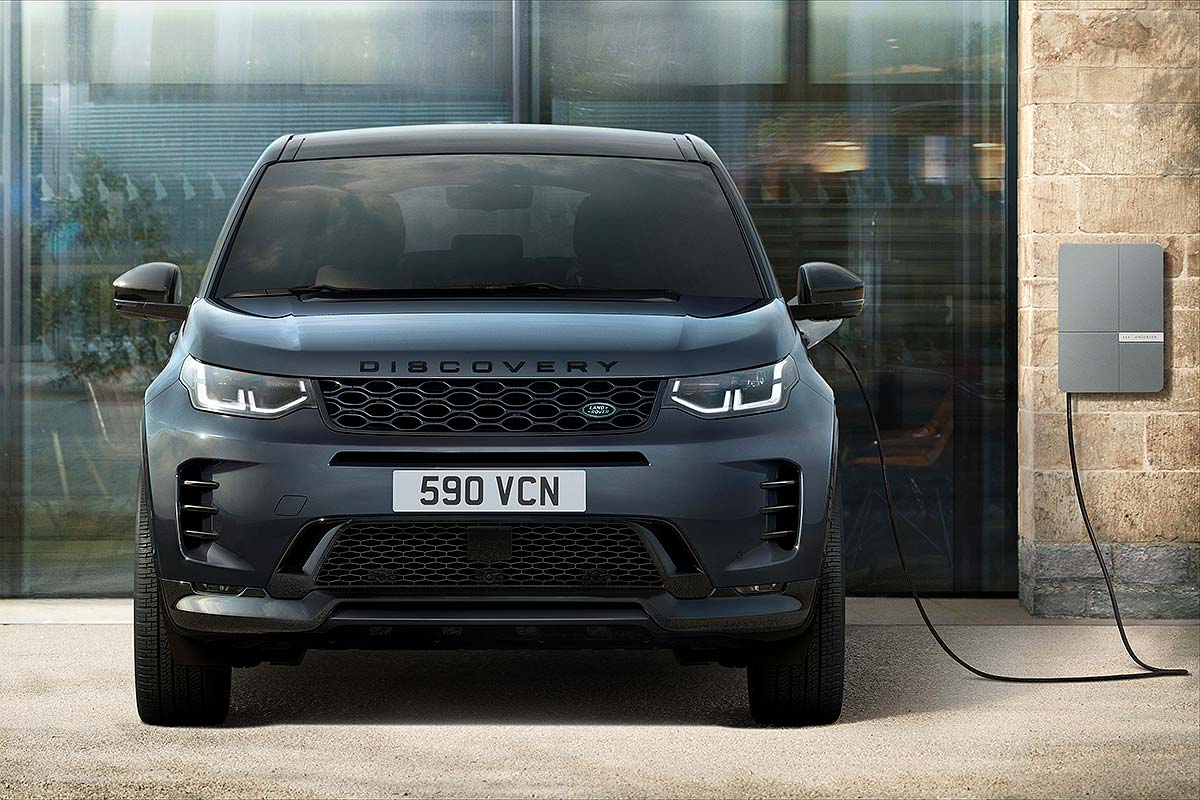
The Discovery Sport is not the cheapest family SUV to run, but costs should be manageable if you choose carefully. Diesel models are the most sensible choice for higher-mileage drivers, especially if you want the 5+2 seating layout or plan to tow. Current D165 and D200 mild-hybrid diesels officially return up to around 40mpg, although real-world economy will depend on driving style and wheel size.
Of the current diesels, the D165 should be the cheapest to run, but the D200 is likely to be the better all-rounder because it delivers stronger performance without a huge fuel economy penalty. Earlier models such as the D150, D180 and D240 can still make sense as used buys, but condition, service history and specification matter more than chasing the last few miles per gallon.
The P270e plug-in hybrid offers excellent fuel economy and low CO2 emissions, but only if you remember to plug it in. Land Rover quotes an official 36-38 miles of range, but something approaching 30 miles is more realistic. Run it with a flat battery, though, and it will behave like a standard petrol SUV.
Land Rover servicing and maintenance costs aren’t cheap, and buyers should budget accordingly. Main dealer servicing can be expensive, although service plans may help spread the cost, while independent Land Rover specialists can be a good option for older cars. Later engines use timing chains rather than rubber timing belts, which removes one regular belt-change cost, but it doesn’t mean maintenance can be ignored.
Land Rover Discovery Sport reliability
The Land Rover Discovery Sport doesn’t have a particularly glowing reputation for reliability. In the latest What Car? Reliability Survey, Land Rover finished 26th out of 30 manufacturers, while the Discovery Sport finished 69th out of 76 cars in the family SUV category. Commonly reported issues included faults with the bodywork, electric motor, engine electrics, hybrid battery pack, brakes, exhaust, gearbox and infotainment.
With that in mind, a strong warranty is well worth considering. Every new Discovery Sport originally came with a three-year, unlimited-mileage warranty, and Land Rover also offers extended warranty cover on eligible cars.
A full service history is essential, and buyers should check carefully for warning lights, electrical glitches, infotainment issues, gearbox hesitation, water leaks and evidence of completed recall work. The Discovery Sport’s blend of premium equipment, four-wheel drive, plug-in hybrid tech and optional seven-seat practicality make it very appealing, but also means there is plenty to go wrong if the car has been neglected.
- Discovery Sport engine names can look confusing, but the basic logic is fairly simple. Later models use a letter to show the fuel type – P for petrol and D for diesel – followed by a number that broadly reflects power output. The exception is the plug-in hybrid, which adds an ‘e’ to show its electrified powertrain. Older cars used names such as TD4, SD4 and Si4, so it’s worth checking the exact engine rather than relying on the badge alone.
- The plug-in hybrid is worth understanding properly. The current P270e combines a 1.5-litre three-cylinder petrol engine with an electric motor, giving strong performance and the potential for short electric-only journeys. However, it’s available only as a five-seater because the hybrid hardware takes up the space normally used by the third-row seats. If you need the Discovery Sport’s 5+2 seating layout, you’ll want one of the diesel models instead.
- The Discovery Sport doesn’t rely on old-school off-road hardware such as low-range gears or locking differentials. Instead, most versions use Land Rover’s Terrain Response system, which adjusts the throttle, gearbox, four-wheel-drive system and traction control to suit different surfaces. It’s not a Defender, but it’s still more capable away from tarmac than most of its rivals.
- Best all-rounder: The D200 is the engine that makes most sense for many buyers. It’s stronger and more relaxed than the D165, especially if you regularly carry passengers, use all seven seats or tow. It’s also available with the useful 5+2 seating layout, unlike the plug-in hybrid. According to official figures, the D200 should return up to 43.2mpg on a combined cycle.
- Best for low running costs: The D165 is worth considering if you mostly drive gently and want to keep costs down. It’s slower than the D200, but it should be cheaper to buy and still offers decent fuel economy. Just bear in mind that the Discovery Sport is a heavy car, so the lower-powered diesel can feel a little stretched when fully loaded.
- Best company car choice: The P270e plug-in hybrid is the one to look at if you can charge regularly and want the lowest Benefit-in-Kind (BiK) costs. It offers up to 38 miles of electric range, or around 28 miles in reality, which could be enough for the daily commute. However, it is five-seat only, so avoid it if you need the extra row of seats.