Lexus ES Review (2018-present)
Lexus ES 300h cars for sale
3.0
Expert review
Pros
Comfortable ride
Comfortable ride
Beautifully finished interior
Cons
Small boot by class standards
Fiddly infotainment system
Fiddly infotainment system
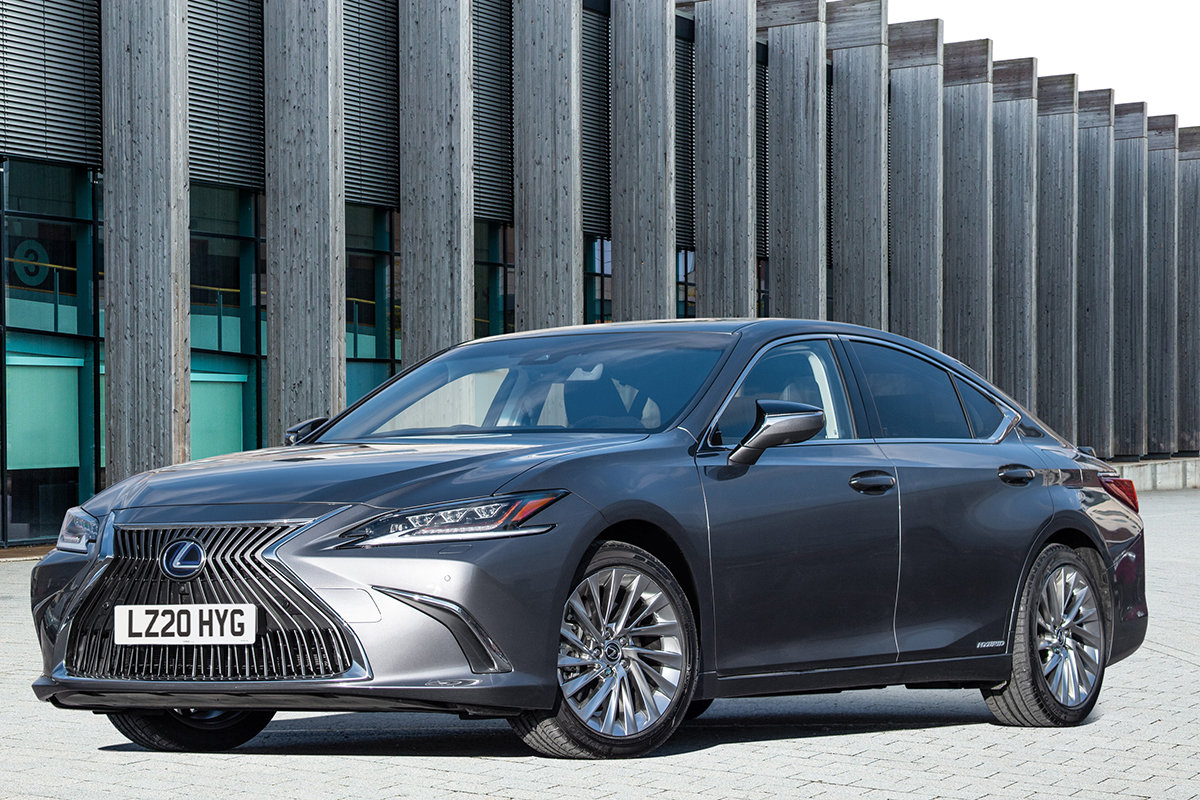
The CarGurus verdict
The Lexus ES is a car spoiled by just a few too many flaws to be able to recommend it over and above the best in its class. There’s the small-ish boot and the fiddly entertainment system, the coarse engine and its droning soundtrack, and the slightly soft and squidgy handling.
But the ES isn’t without merit. If comfort, cost and peace-of-mind are your key criteria, it should definitely be on your shortlist, as it should be if you plan to use it in town frequently, where its excellent fuel economy makes it an obvious choice.
What’s more, if you do plump for an ES, you’ll be joining a select group of owners who’ve managed to look beyond the obvious choices and have ended up in something just a little more exclusive.

What is the Lexus ES?
If you've heard of the Lexus ES, the chances are that you’re one of a select few people in the country who even know this car exists, let alone want to buy one.
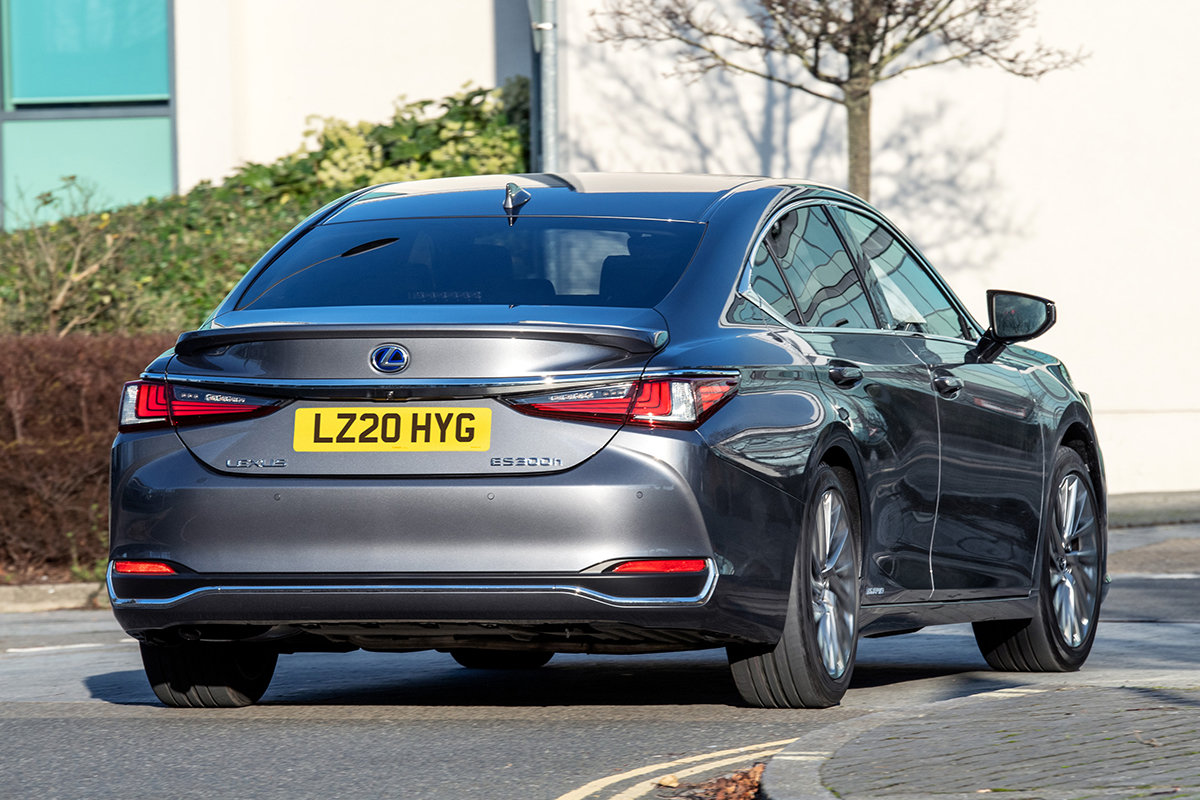
The new ES replaced the old GS in 2018, and that pitched it up against luxury heavyweights like the BMW 5-Series and Audi A6. What set the ES apart was that it was, and remains, only available as a hybrid.
Given cars with hybrid or electric engines are all the rage these days, you’d think that’d make the ES the flavour of the month. But buyers of this kind of car tend to prefer the big-name badges of its rivals, and so it’s struggled thus far to make an impact.
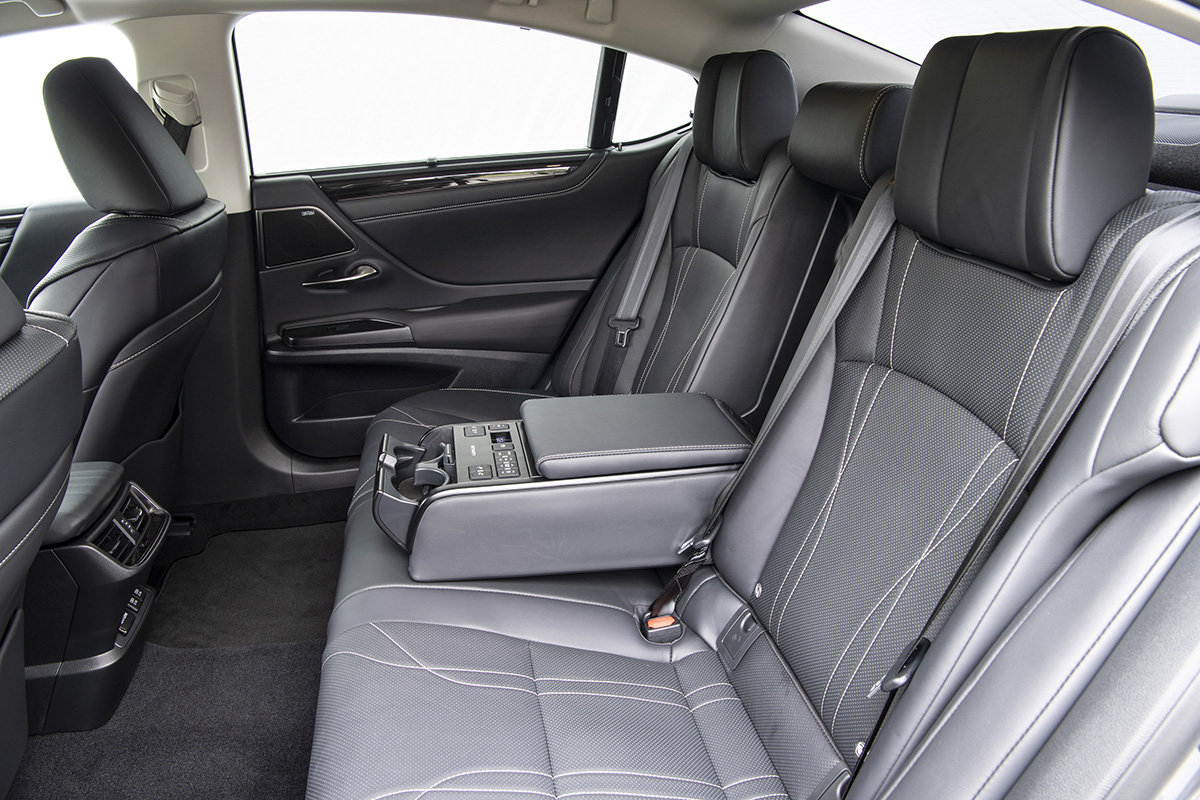
That doesn’t make it a bad car. As you climb aboard the ES you’ll probably be quite taken by its opulently appointed interior. Ribbons of thick, glossy wood sit amid reams of soft leather that envelope not only the seats, but the dashboard and door panels, too. It looks good, it radiates quality and it sets the tone for a somewhat leftfield alternative to the ubiquitous German saloons.
How practical is it?
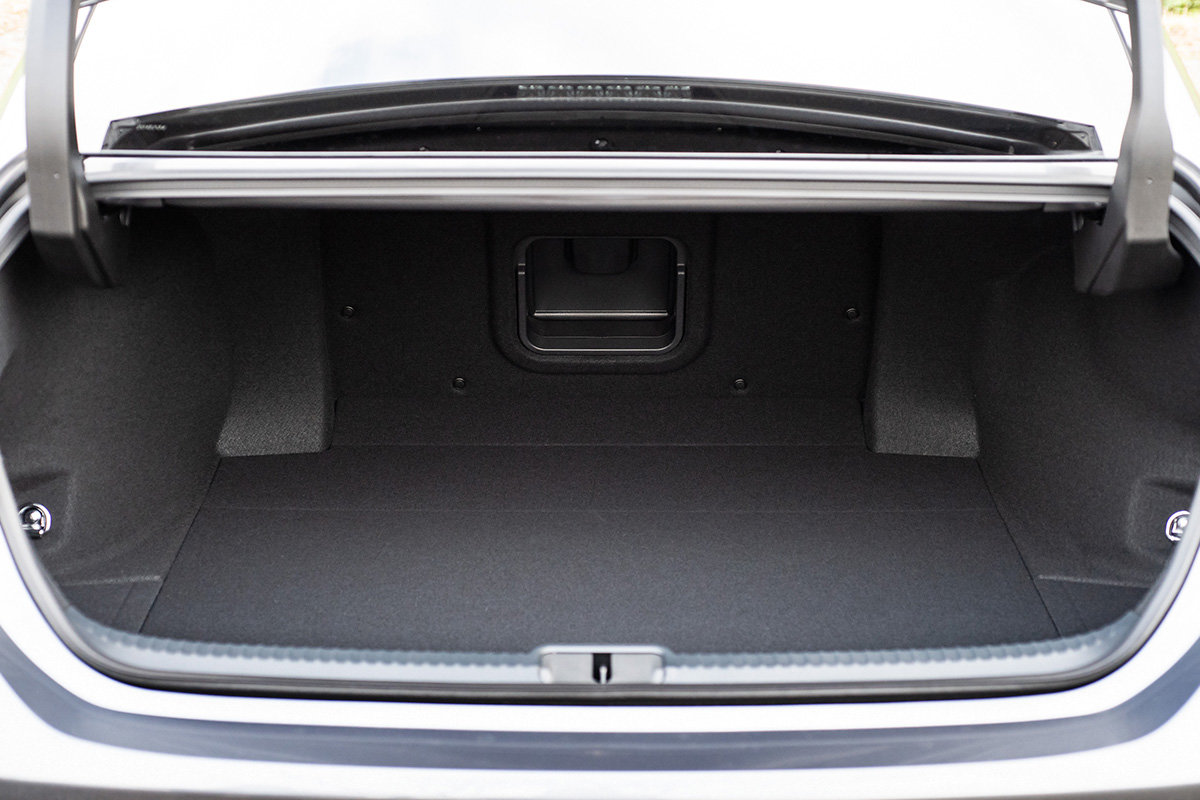
The ES is a big car, comparable in size to the BMW 5 Series. The available boot is a little smaller than that available in most rivals at 454 litres, which is almost 100 litres down on the boot space offered by a Mercedes E-Class. It's also worth noting the relatively narrow boot opening, the raised load lip and the fact that the rear seats cannot be folded down, as is the case with many rivals.
There's no estate version of the ES, either, so it can't compete with the likes of the BMW 5 Series Touring, Audi A6 Avant, Mercedes E-Class Estate or Volvo V90 when it comes to ultimate load-lugging capabilities.
Passenger room is perfectly decent, however, albeit again slightly less generous than you'll find in most rivals.
What's it like to drive?
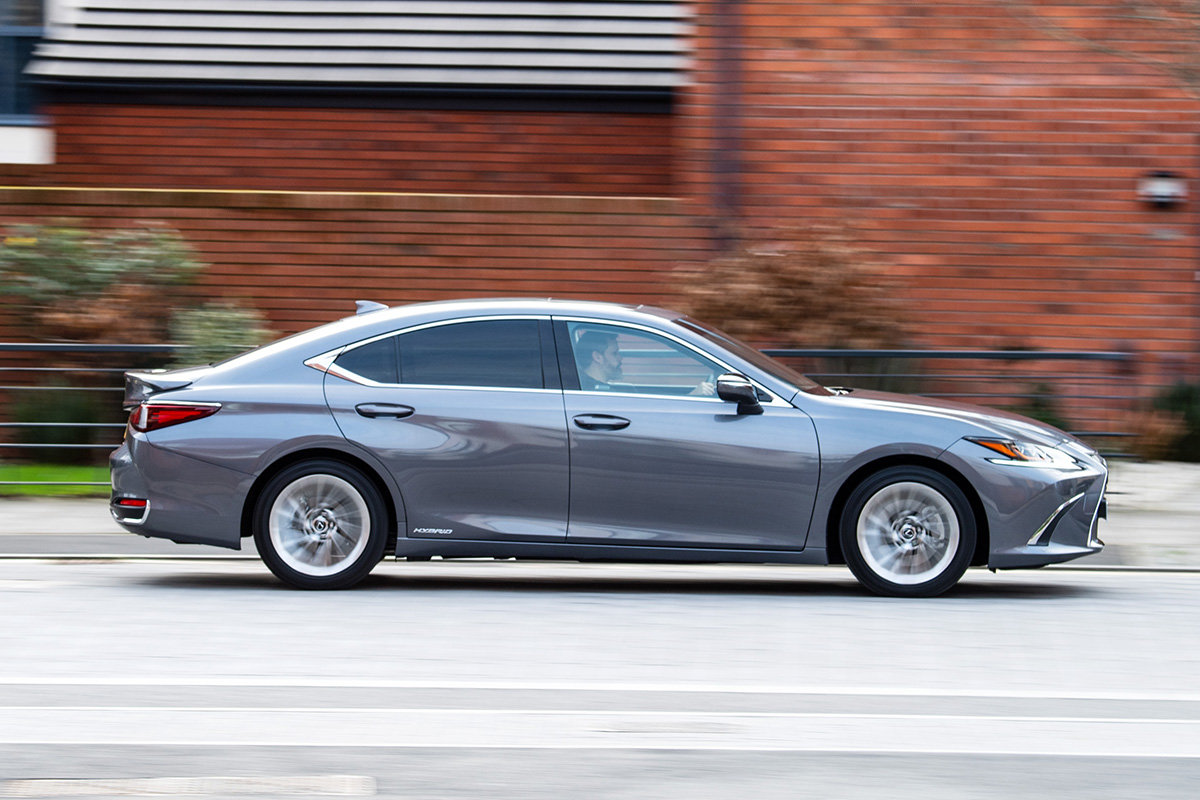
Prod the starter button and the ES starts up in electric mode; there’s no engine noise, just an electronic 'bong' to tell you it’s turned on. The petrol engine kicks in later, once the speed has risen a little, and it stays on whenever you’re driving along at normal speeds or accelerating hard; the ES will run on electric power alone, but only at low speeds or when you’re coasting.
It isn’t the smoothest petrol engine; you can feel it through the steering column as well as hear it, and that trait is exacerbated by the CVT gearbox, which holds the revs up high as you gain speed, which means even moderate acceleration is a noisy process.
This, combined with the ES’s soft suspension and light, numb steering, means it’s about as far from a sporty driver’s car as it’s possible to get; if that's what you're looking for, you'll be far better off with a Jaguar XF or the 5-Series. However, when you settle down to a cruise on the motorway, you can see why it is the way it is; that soft suspension means you glide along in unruffled fashion and the engine, now more relaxed, is barely audible. Combined with the lack of wind- and tyre noise, that makes the ES a relaxed cruiser.
Technology, equipment & infotainment
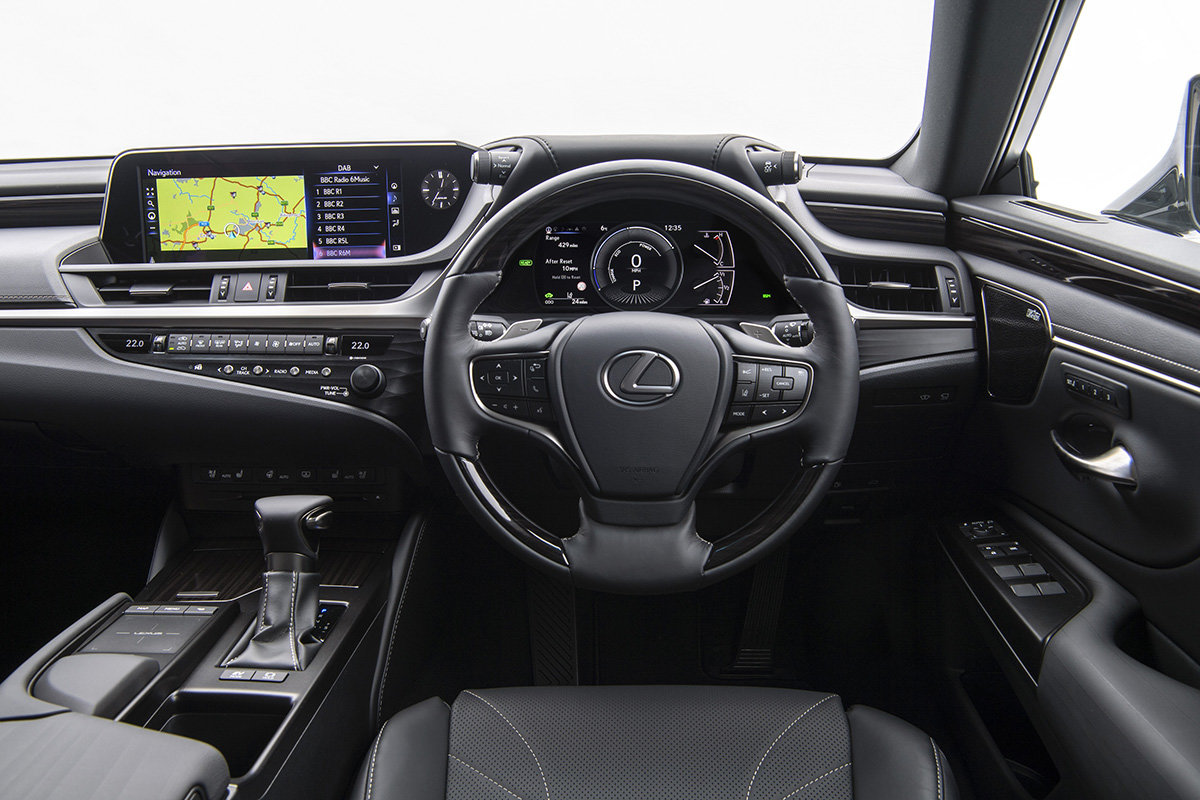
Sink into that opulent interior and you’re greeted by a virtual instrument cluster, as you’d now find in virtually all of the ES’s rivals. It’s clear and easy to read, but lacking the flexibility and choice of different display modes that you’d find elsewhere.
On top of the centre console sits a widescreen infotainment system. This, it turns out, is one of the ES’s big bugbears, because it’s operated using a touchpad. This makes it very difficult to select the function you want when you’re on the move, which makes the whole system distracting and fiddly to use, and it’s not helped by a menu layout that isn’t entirely intuitive. Not the best start when you’re up against the likes of BMW’s impressively intuitive iDrive system.
In other respects, though, the ES fares well in the equipment stakes. The base model, simply called the ES, gets heated front seats, adaptive cruise control, artificial leather upholstery, Android Auto and Apple CarPlay. But you don’t get automatic wipers or satellite navigation; for those extras, you have to either add the optional Premium Pack, or upgrade to the Premium Edition. Alternatively, you can upgrade to the F Sport, which gets sportier styling inside and out, and adaptive suspension. The top of the ES range is the Takumi, with extra wood and leather (even on the steering wheel), ventilated front seats, heated rear seats, and a Mark Levinson hi-fi.
Lexus ES running costs
Compare the ES like-for-like with its rivals, and its pricing when new looks pretty reasonable. It’ll cost you less to buy than any of the diesel alternatives, and while it won’t hold its value quite as well proportionately, in hard cash terms that doesn’t matter so much as it isn’t starting from as high a price in the first place.
It’s also on a par with most of them in terms of fuel economy; you’ll see around 50-55mpg on a motorway run. However, where the Lexus really excels is around town; because of the way its hybrid system harvests energy when you’re slowing down in traffic, it actually uses less fuel in town, where diesels will use more. That makes the Lexus a particularly good choice if you do lots of urban driving, as your MPG should rise.
The Lexus also bests its rivals on CO2 emissions, which means it’ll make a cheaper company car. It can’t compete with the plug-in hybrid versions of those rivals on company car tax; however, the higher list price means those rivals might be much more expensive to lease, so you might struggle to get them past the fleet manager, whereas the Lexus might be more attainable.
Lexus servicing is a little dearer than some rivals’, and it’s worth keeping in mind that you can’t use Lexus’s cut-price service deals for older cars until your car is five years old; Audi’s rival scheme, for example, kicks in at three years old.
Fortunately, regular maintenance shouldn’t throw up any nasty surprise bills for timing belts; instead of a rubber belt, the ES uses a metal timing chain in its engine, which shouldn’t need changing and should last the lifetime of the car.
Lexus ES reliability
It’s hard to come up with a definitive idea of the ES’s reliability, simply because with so few sold, there have never been enough buyers to give a good sample to include in reliability surveys.
But we can draw some conclusions from Lexus’s other models, which by and large have an excellent reputation. Lexus was also the top-rated marque in the What Car? Reliability Survey, beating every other manufacturer that took part with an overall score across all of its models of 98.7%.
The good news doesn’t end there. You see, Lexus has just introduced a brilliant new warranty scheme: you get a three-year, 60,000-mile warranty as standard, but each time you have your Lexus serviced at a main dealer, you get an extra year’s worth (and 10,000 miles’ worth) warranty, up to a maximum of 10 years and 100,000 miles. So if you’re prepared to keep servicing your car at a Lexus dealer, you could get as much as 10 years’ warranty, and that smashes the measly three-year offerings of its rivals out of the park.
- The ES only comes as one model – the ES300h – and it gets a 2.5-litre petrol engine allied to an electric motor and a battery, the same as you'll find in the Toyota Camry. Most of the ES’s rivals don’t offer this sort of hybrid drivetrain; they come as plug-in hybrids instead, and that means they have much larger batteries that you can plug in to charge. The result is that they’ll go much further on electric power and deliver impressive fuel economy when in hybrid mode – but only when they’ve been charged up. Once they’ve depleted their batteries, fuel consumption becomes quite a bit greater. Because the Lexus doesn’t rely on having its battery topped up externally, its fuel consumption remains the same no matter how far you drive it.
- There are four trim levels to choose from; the base model, simply called the ES, gets heated front seats, adaptive cruise control, artificial leather upholstery, Android Auto and Apple Carplay. But you don’t get automatic wipers or satellite navigation; for those extras, you have to either add the optional Premium Pack, or upgrade to the Premium Edition. Alternatively, you can upgrade to the F Sport, which gets sportier styling inside and out, and adaptive suspension. The top of the ES range is the Takumi, with extra wood and leather (even on the steering wheel), ventilated front seats, heated rear seats, and a Mark Levinson hi-fi.
- The ES300h is fitted with a type of gearbox called a CVT, or constantly variable transmission. It’s a clever sort of automatic transmission that doesn’t have cogs in it, like most gearboxes; instead, there are two cones, linked by two bands, all working together to provide the optimum gear ratio at all times. That means it’s very efficient, but it’s odd to drive, because it means the engine revs stay constant even though you’re accelerating, and it’s this that results in the monotone drone you hear whenever you need to accelerate with any sense of urgency in the ES.
- If you're on a budget: The most affordable ES is the entry-level model, which doesn't even get a trim name. It does have some impressive features considering its lowly status in the range, and could be worth a look if you're not fussed about having satnav. Honestly, though, there's not much difference in the prices when new, which brings us to our next choice...
- If you want the best all-rounder: You haven’t really got much choice in the ES range, but we reckon your best bet is to opt for the Premium Edition. Weirdly, it actually costs less to buy than the basic ES with sat-nav added, despite coming with more equipment, which makes it seem like a bit of a bargain, and because it gives you satnav and automatic wipers, it’s about level pegging with the SE specification of the Audi A6 or BMW 5 Series.
- If you want to push the boat out: The Takumi trim is a cut above other ESs thanks to its opulent swathes of leather and wood and high-end sound system. You can have it with or without digital door mirrors; we’d have it without, given they’re an expensive extra and don’t really work as well as real mirrors.


