Lexus IS F Review (2008-2013)
Lexus IS F cars for sale
4.0
Expert review
Pros
Super-saloon performance meets Lexus reliability
Fantastic-sounding V8 engine
Later cars are more stable
Cons
Not as involving to drive as a BMW M3
Epic running costs
Rare cars, so increasingly hard to find a good one
The CarGurus verdict
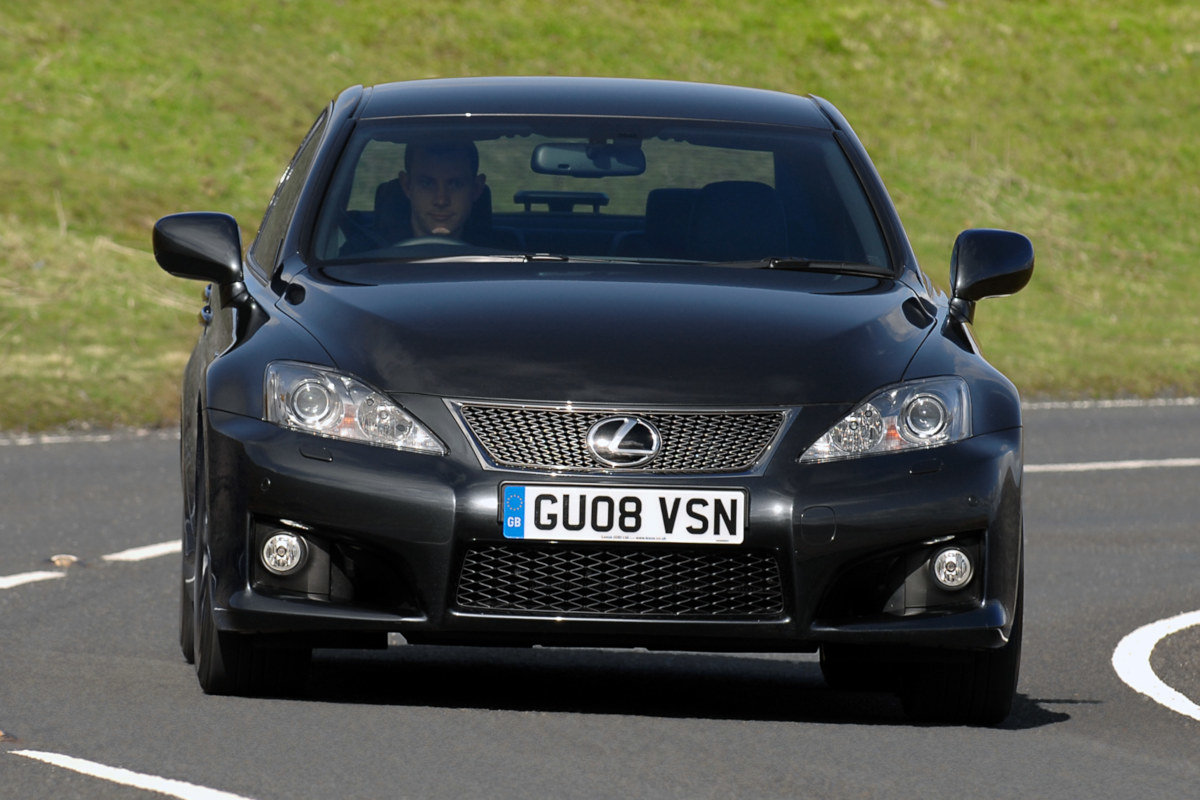
The Lexus IS F is a thrilling car to drive and particularly tempting if you’re looking for a blisteringly quick performance saloon that’s different to the norm. However, it does come with some downsides: it isn’t quite as involving as the best in its class, it’s quite expensive to buy and run, and – for a Lexus at least – it can be more prone to costly faults than you might expect.
You’ve probably heard of the Lexus IS, but the IS F isn’t quite as well known. This high-performance version of Lexus’s second-generation IS saloon was launched in 2008 with legendary cars like the BMW M3 in its sights. Trouble is, such was the appeal of its big-name rivals that relatively few IS Fs found homes, and that makes them rare cars these days.
To some that rarity will add to the appeal. If you’re after a performance car that’s a little different to the norm, the IS F could be right up your street.
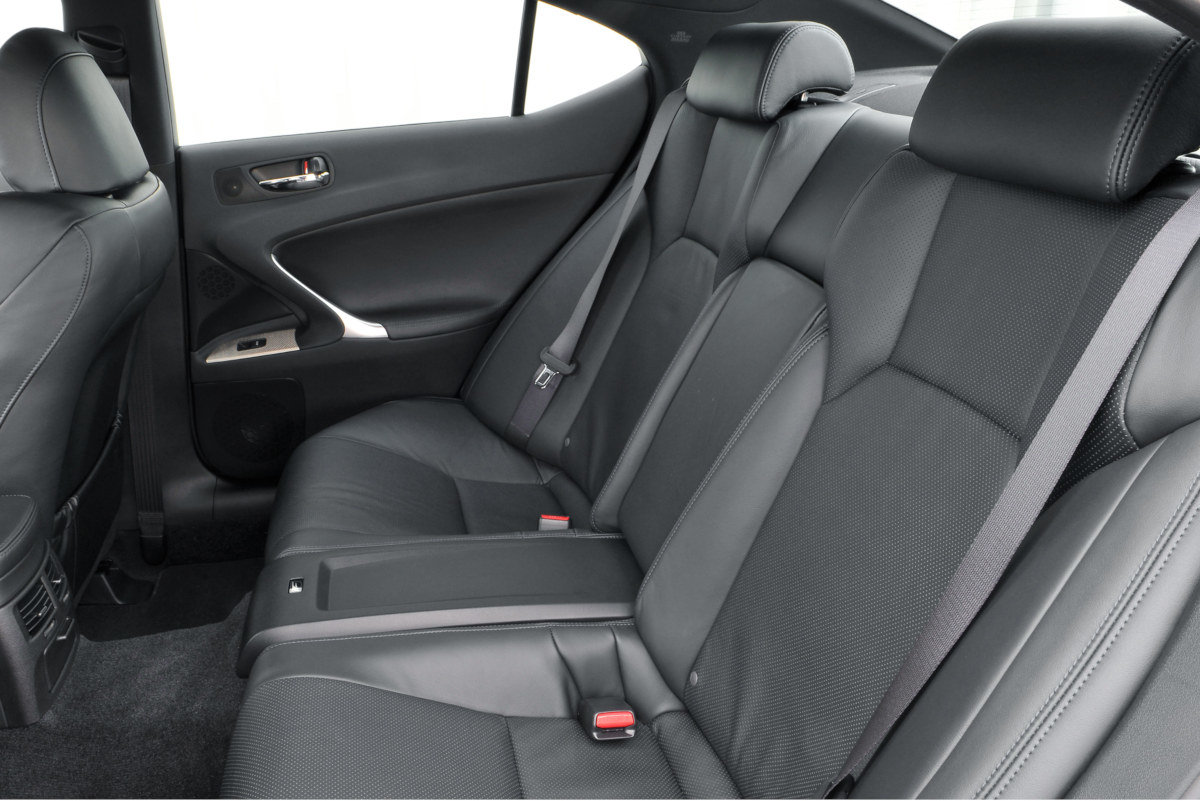
Often, the main argument for choosing a performance saloon like this over a two-door sports car is those rear seats, and in that regard the IS F isn’t the best. It feels rather cramped in the back compared with its rivals, especially the larger Jaguar XFR, which was actually slightly cheaper to buy when they were new.
Nonetheless, there are four usable seats here, including Isofix points in the back. The rear seats don’t fold, but there is a ski hatch that allows you to post long, thin objects through (bonus points to anyone who actually does go skiing in an IS F) and you also get a decent-sized boot. All means that the IS F still trumps a typical two-seat sports car, even if it does lag behind most of its saloon counterparts.
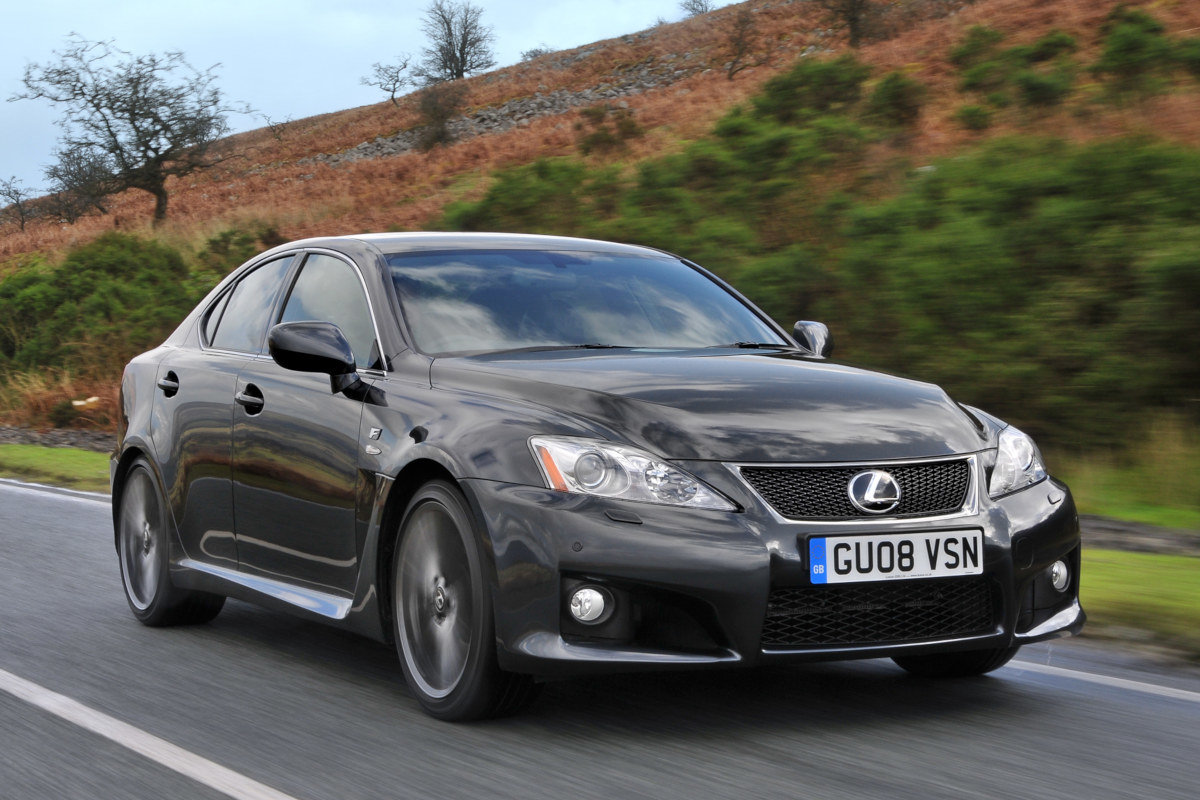
This is where we return to the IS F’s strengths. For a start, there’s the engine, which is a 5.0-litre V8 known for its frenetic, high-revving power delivery and characterful, wailing soundtrack. But this isn’t some big, dumb muscle car. The IS F was famed for a chassis that had had real time and effort spent on it; perhaps a hair’s breadth shy of the best performance saloons of its day in terms of its outright involvement, but big on lateral grip and feel, and quite capable of being poured into a lurid powerslide.
There’s a rich, analogue feel to the IS F (and its magnificent engine, in particular) which really helps the driving experience to stand out in an increasingly sanitised world. Driven gently, it’s a refined executive saloon capable of covering long distances without drama, but when you’re in the mood it takes on an altogether more aggressive character.
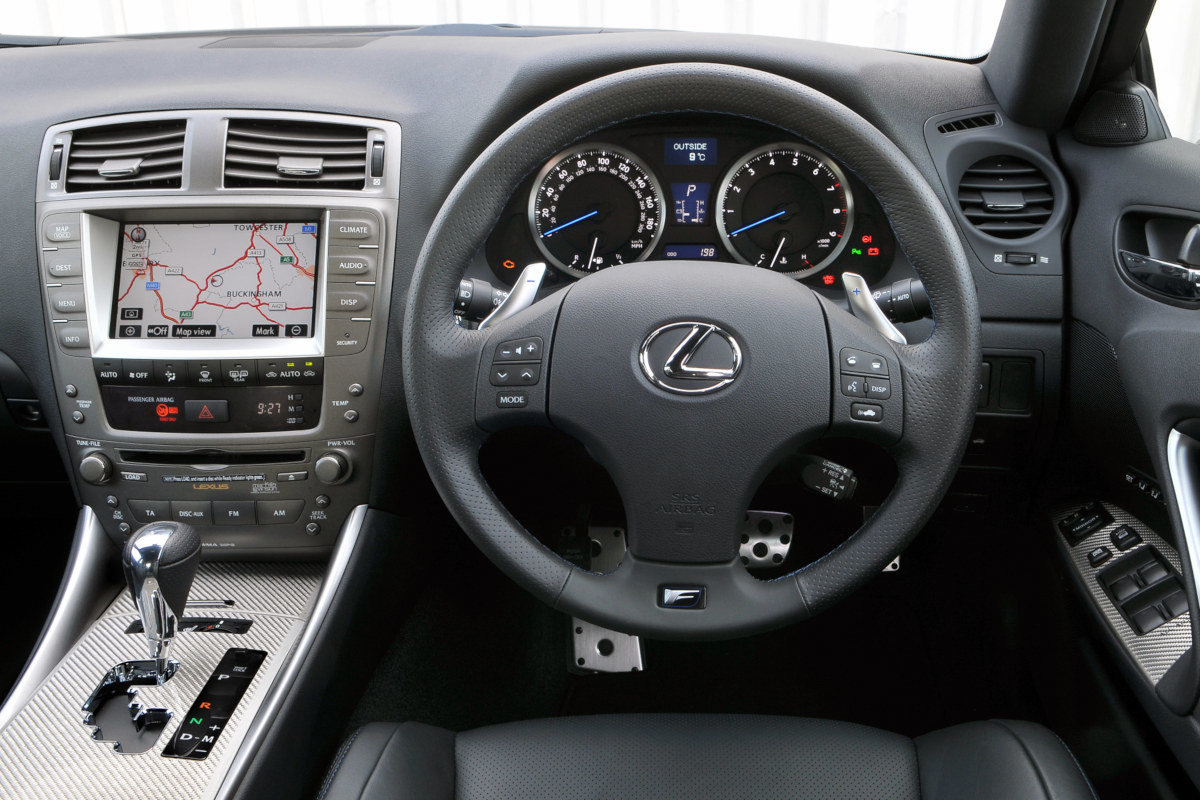
Inside you’ll find an interior put together with the sort of precision and robustness we’ve come to expect from Lexus. True, some of the plastics aren’t quite up to the standards of those German rivals, but the IS F still feels as plush and as racy as you’d expect from a car of its type.
Lexus is known for generous levels of equipment and the IS F maintained that reputation. The only real option when the car was launched was whether or not to have a sunroof – you got xenon headlamps, satellite navigation, adaptive cruise control and a Mark Levinson hifi.
An update in 2010 saw DAB radio added to the stereo, along with Bluetooth and a USB input. The sat nav system was also improved, and it now came with an onboard hard drive, which doubled as a storage device, capable of storing around 2,000 songs. New wheels and a new white leather interior were offered as options, while a Torsen limited slip differential became standard.
It’d be quite unrealistic to expect the Lexus IS F to be cheap to run, given that it’s powered by a 5.0-liter V8, and so it goes: even the official combined figure is just 24.8mpg, meaning in the real world you’ll probably struggle to get it above 20mpg.
Tax is similarly wallet-sapping. This generation of IS F was introduced before the current flat-rate VED system came into place, so it’s taxed on its prodigious CO2 output. It may have been less polluting than a contemporary BMW M3 or Mercedes-Benz C63, but a CO2 rating of 270g/km still puts it into the top bracket at £630 a year. Insurance costs will be pretty eye-watering, too.
The IS F’s service schedule calls for a small service every year or 10,000 miles, whichever comes up sooner, and a larger service every two years or 20,000 miles. Keep in mind that the 60,000-miles service is bigger than the rest, and could cost as much as £1000 at a Lexus dealer; if you’re buying a car around that mileage, you’ll want to check it’s been done, or if not, budget for it.
On the plus side, the IS F is fitted with a timing chain which should last the life of the car, rather than a timing belt that needs changing every few years.
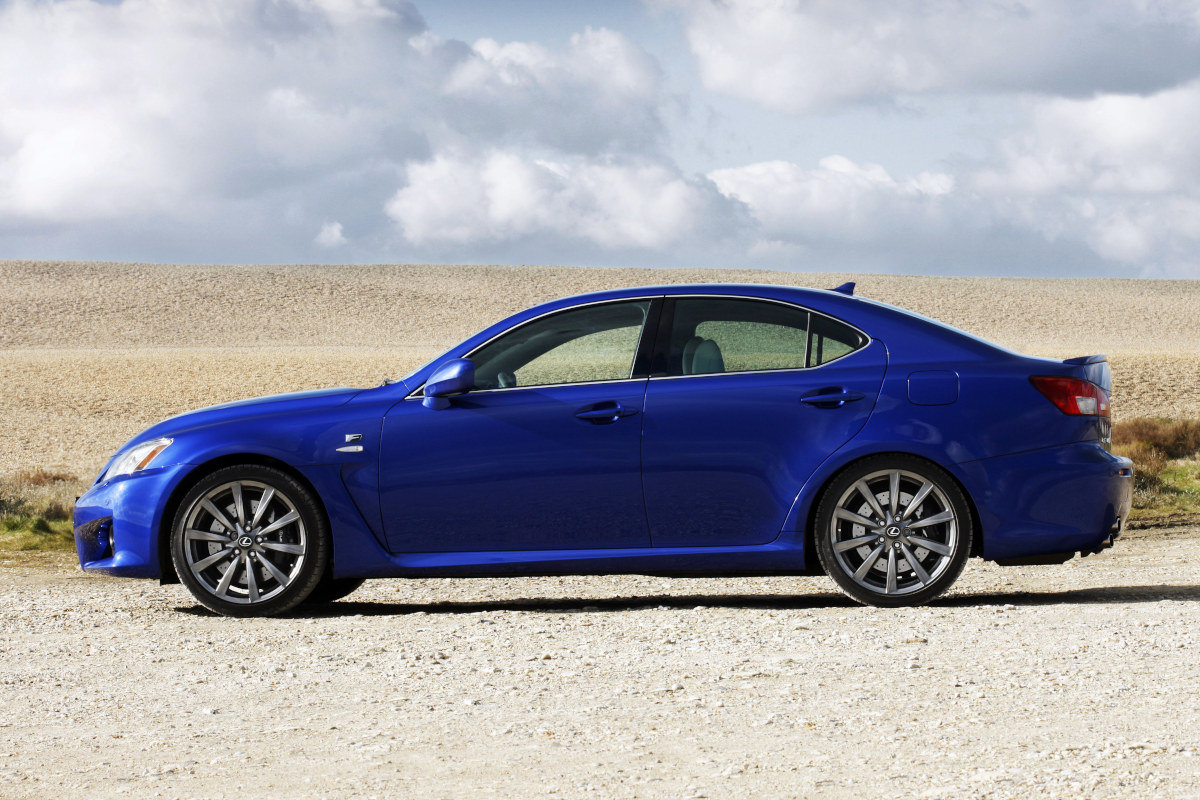
Given Lexus’s excellent reputation for reliability, it might come as a surprise to learn that the IS F has quite a few significant and costly problems you’ll want to watch out for.
First, keep an eye out for cracked exhaust manifolds, for which the most obvious symptom is a ticking noise when the engine is running. You’ll also want to do your best to check down in the bowels of the engine, between the two banks of the V, to make sure there are no coolant leaks down there – another known fault.
Both of these faults can be very expensive to fix, so make sure you check for them, and if you’re not confident doing so, we’d advise getting the car you’re hoping to buy inspected.
Another pricey problem can be found inside the car, where the touch-sensitive screen on the entertainment system can stop working, which means that while the system still powers up and shows graphics, it won’t respond to your commands when you touch ‘buttons’ on the screen.
Make sure the standard automatic gearbox changes smoothly and doesn’t hold onto gears, too – it’s rare, but high-mileage IS Fs have been known to suffer gearbox failure.
One other thing to keep in mind is that the standard wheel alignment can cause the front tyres to wear on their inside edges. Make sure you check the full width of the tyre tread for wear by turning the steering wheel first one way and then the other, checking as you go.
That might all sound quite scary. However, it's important to point out the IS F is also capable of accumulating the kind of high mileages you'd usually associate with a diesel car. Find a good one and stay on top of the maintenance, and – for this kind of car – it should be prove to be extremely durable.
- The IS saloon may have been in its second generation by the time that this car arrived, but the IS F was Lexus’s first real attempt at a sports car. The F in its name is a reference to Fuji Speedway in Japan, owned by Lexus’s parent company Toyota, where much of the development work took place.
- Early IS Fs used an electronic system known as Brake LSD. This mimicked the locking effect of a limited slip differential (LSD) by applying the brakes to transfer torque across the rear axle to the wheel with the most grip. It wasn’t entirely effective, however. The mechanical limited slip differential fitted to later cars worked a lot better – it reportedly reduced the car’s lap time around Fuji by a full two seconds. You can tell the updated cars apart thanks to the blue trim on the steering wheel and the revised infotainment system.
- Make sure you’re happy with the way the IS F rides before you sign on the dotted line. It’s renowned for being firm, and many people find the IS F quite uncomfortable (although the brilliantly supportive seats help to mitigate this to some extent). Minor suspension revisions in 2011 softened the ride, making it a little more tolerable, but it’s still no limousine.
- There was only one version of the IS F, so there are real no trims to choose between, apart from the option of a sunroof and two different interior colour schemes on the later cars. Whichever one you go for, we'd opt for a later model if possible, one with the proper limited-slip differential fitted. These are cars from 2010 onwards, which will have blue trim on the steering wheel and an updated infotainment system. In fact, we'd go as late as possible in the run, as Lexus made little tweaks to the IS F over its life, and by 2013 the suspension had been fettled to improve stability. The downside, of course, is that later ones will likely cost more.


