Lexus LC 500 Review (2017-2020)
Lexus LC 500 cars for sale
3.0
Expert review
The CarGurus verdict
Many of the LC’s competitors are more exciting to drive: the Porsche 911 and Jaguar F-Type, for instance, are both far lighter and more driver-focused. Meanwhile, the likes of the BMW 8 Series and Mercedes S-Class Coupe are more spacious inside and more relaxed in demeanour. The Lexus sits somewhere in the middle, not quite sure if it wants to be a luxury coupe or a sports car.
It is compromised, therefore, which is something you’ll have to overlook if you just can’t resist its gorgeous styling, brilliant cabin and joyful V8 engine (in the LC 500, at least). What’s perhaps most appealing about the LC is its individuality, from the way it looks to its defiant use of an otherwise out-of-favour naturally aspirated V8. For a particular type of buyer, one for whom the more obvious choice would be unthinkable, the Lexus LC will stand head and shoulders above its illustrious rivals.
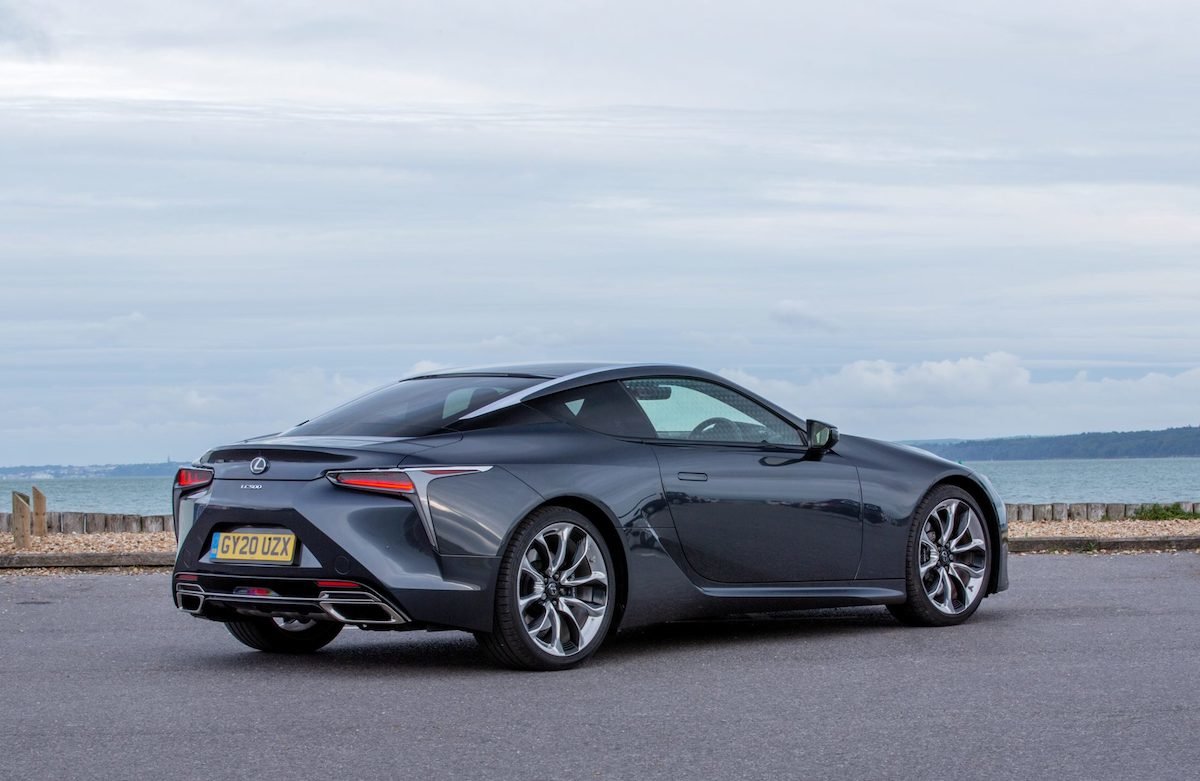
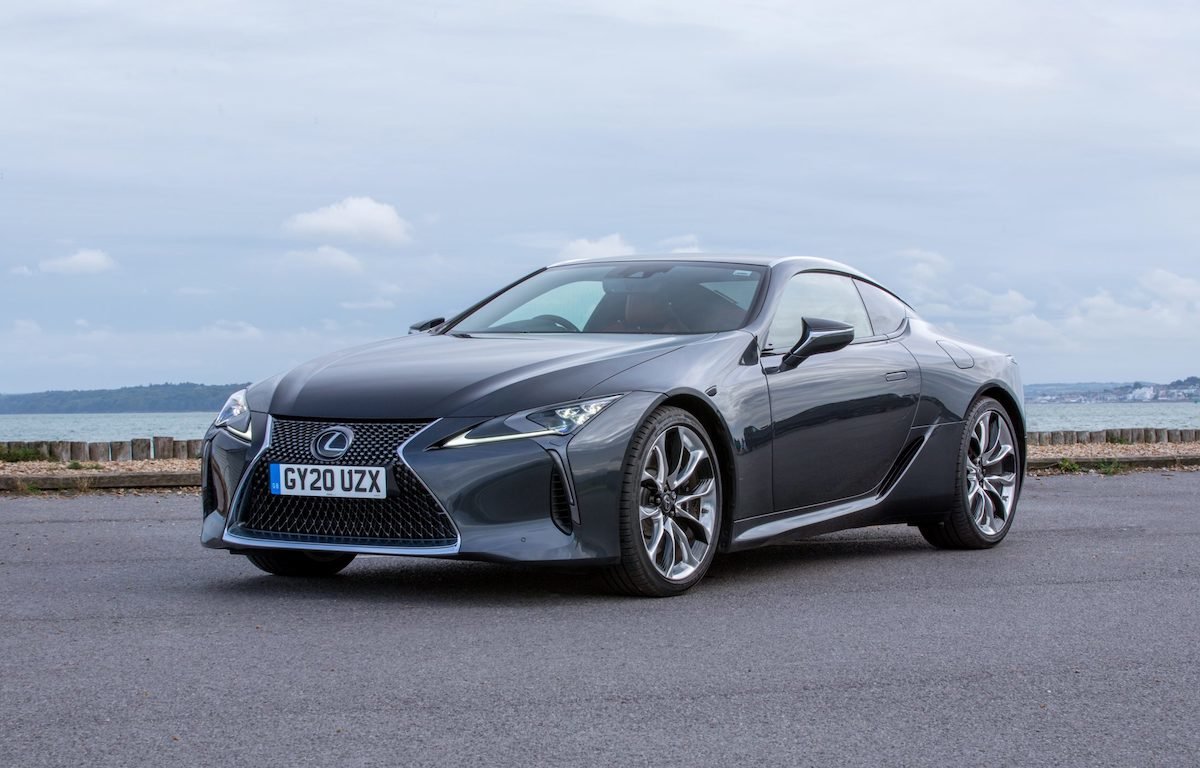
Lexus could have spared itself the cost and inconvenience of producing a concept version of the LC by simply plonking the series production car on a show stand and pointing some bright lights at it. The Japanese marque pulled the covers off the LF-LC Concept at the North American International Auto Show in 2012. Like many concept cars it looked sensational with its impossible proportions, statement-piece front grille and enormous wheels. We all assumed that should it ever make production, it would be heavily watered-down and scarcely even recognisable.
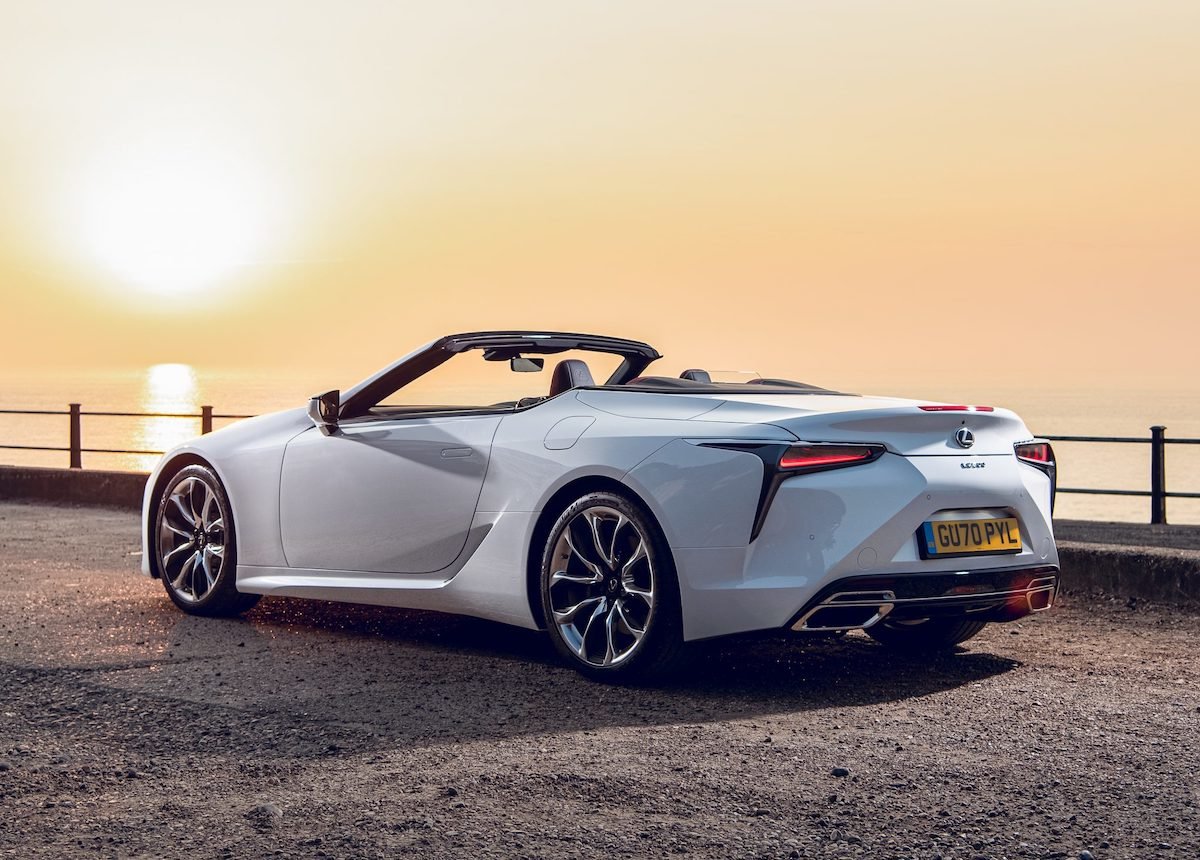
Not so. The showroom model, badged LC and unveiled four years later, was almost unchanged from the concept. Even several years after the production car hit the road, it remains one of the most striking vehicles you'll find. Its interior is spectacular, too, both in terms of the architectural forms of the dashboard and the sheer quality of the build and materials.
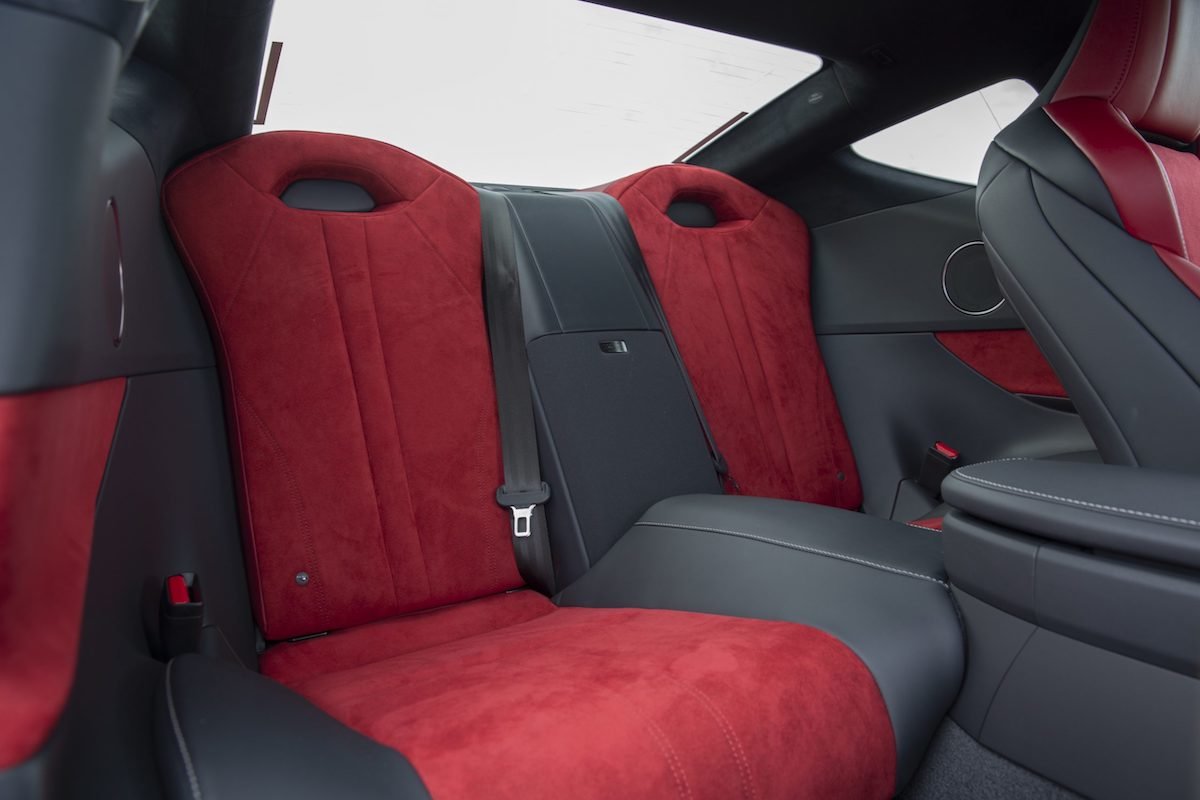
It's not a small car, the LC, but even so, practicality is very limited. There's plenty of space up front, and a decent amount of stowage for your odds and ends, but those in the back aren't as lucky.
Regardless of whether those up front aren't too tall, legroom is very limited, while the car's aggressively sloping roofline means that headroom is in even shorter supply. Even a Porsche 911's rear seats are roomier than the LC's, and you wouldn't exactly call that car the last word in passenger-friendly practicality, would you? If adult passengers do fit, they certainly won't want to stay there for long: only small children will travel in relative comfort. It's probably best to view the rear seats as additional storage space, rather than for regular passenger-carrying duties.
And you might need that additional storage space, too, as the boot is rather small at 197 litres, dropping further to just 172 litres in the hybrid. That's smaller than the space you get in most city cars, and although it's roughly on a par with the 911, rivals such as the Jaguar F-Type and BMW 8 Series offer quite a bit more room. Both the opening and the boot space itself are awkwardly shaped, too, and the loadspace also has an uneven floor.

Aside from the way it looks, a good deal of the car’s appeal is that in LC 500 guise, it has beneath its bonnet a howling 5.0-litre V8 that’s naturally aspirated. While all its rivals favour more efficient (on paper at least…) turbocharged engines, the LC’s atmospheric V8 is a reminder of how tuneful and intoxicating high-performance motors once were. It sounds fantastic, delivers its power in an exciting way and though it lacks the sheer forcefulness of a heavily turbocharged engine, its 471bhp gives the LC 500 urgent and insistent straight-line performance. Meanwhile, the 10-speed automatic transmission is both smooth in normal driving and reasonably responsive in manual mode.
The other powertrain option in the LC is the 500h, which is a self-charging hybrid that marries a 3.5-litre V6 petrol engine to an electric motor to deliver a total of 354bhp. It's still quick, unsurprisingly, if not as quick as the V8, but it doesn't deliver the same aural delights, and feels a little clinical by comparison. It's not all that much more efficient in the scheme of things, either.
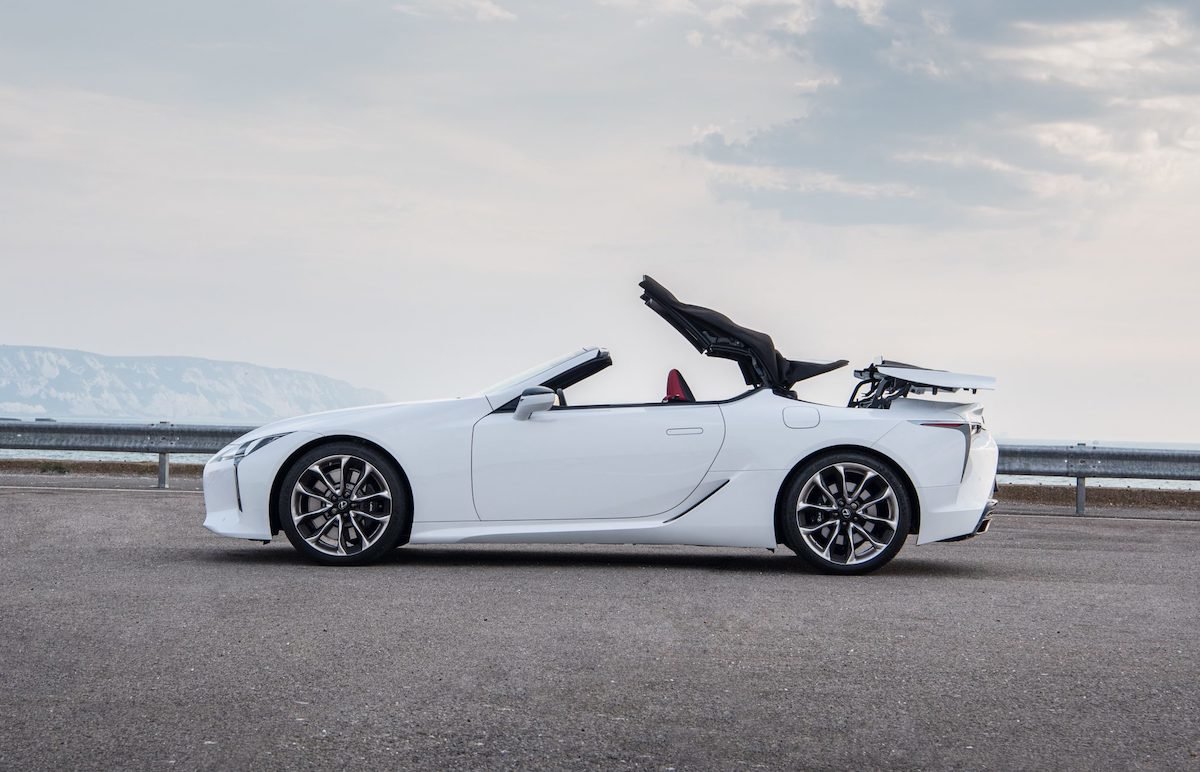
In 2019, Lexus expanded the LC model range with the Convertible variant. Paired only with the V8 powertrain, the droptop model features Lexus’ first fabric folding roof (until this model the company had favoured folding hardtops). The four-layer hood is unusually well-insulated from the elements and it can be raised or lowered at the press of a button in 15 seconds at speeds up to 31mph.
At around two tonnes, the LC is no lightweight sports coupe. In fact, that sizeable mass defines the car’s entire character. One immediate rival, the Porsche 911 Carrera S, is lighter by around 500kg and therefore better as a driver’s car in every regard. It feels nimble, agile and tautly controlled, where the LC can be lazy and unresponsive in corners. Instead, the Lexus is better aligned ideologically with the Mercedes S-Class Coupe, a more refined and elegant kind of coupe, or a grand tourer, in other words.
The LC is well-balanced in corners and its tyres generate plenty of grip. In the firmer modes of the adjustable suspension, there’s reasonable body control as well, but the steering is entirely devoid of feel and the car always feels its weight. The LC is therefore not the kind of car that you’d wake up early one Sunday morning just to go for a drive in.
A pity, then, that it doesn’t off-set those limitations as a driver’s car with the plush, stress-reducing ride quality of a great grand tourer. The LC always picks out imperfections in the road before transferring them directly to the cabin. It’s never uncomfortable, but by never being truly thrilling to drive either, the Lexus finds itself stuck between two poles, neither one thing nor the other.
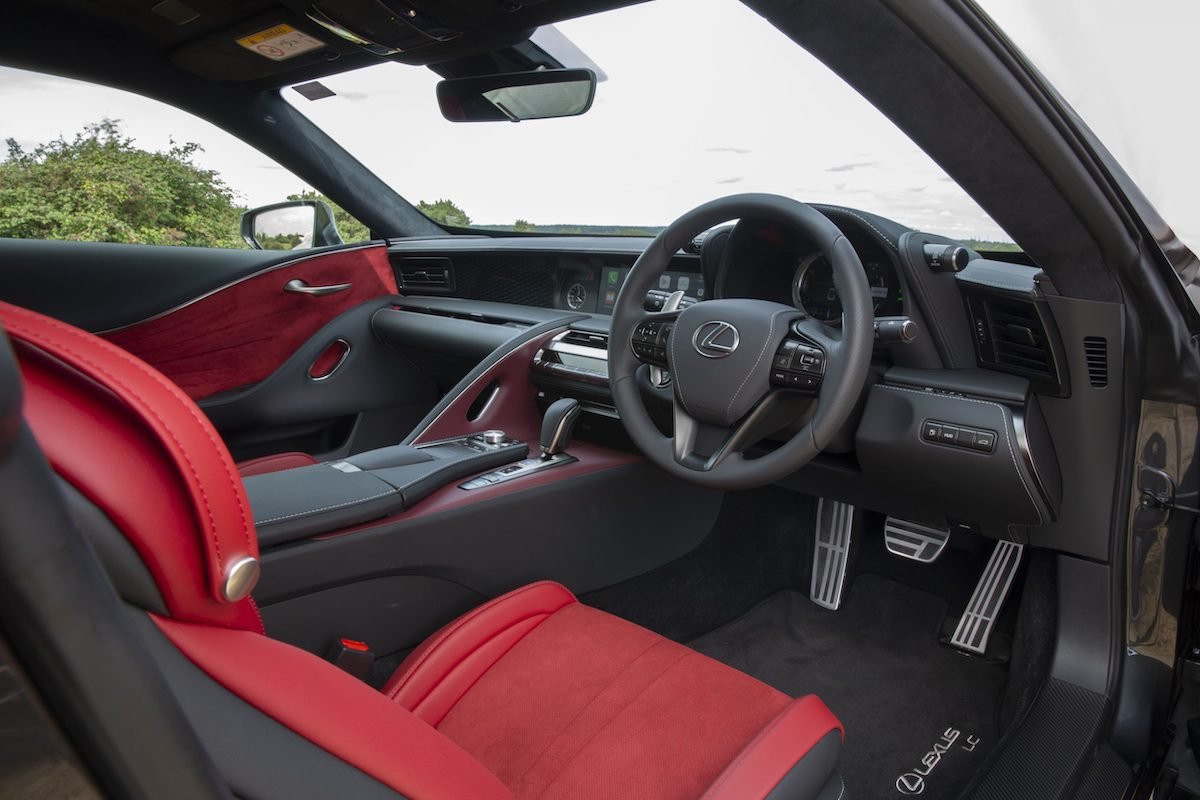
The LC’s unusual infotainment system interface, typical of Lexus, uses a computer laptop style trackpad rather than a more conventional touchscreen or click-wheel. If we're being kind, it's not as easy to use as either. If we're not being so kind, it's a absolute ergonomic nightmare.
In time you adjust and grow accustomed to its idiosyncrasies, although certain annoyances remain exactly that, such as the six-stage process you must go through simply to adjust your seat heating.
That said, your interior is sumptuously trimmed with materials that look and feel positively gorgeous, and they're all assembled in such a way that makes the car feel like it'll withstand many, many years of use. Your interior also comes fitted with all the luxury kit you'd expect of the time, too, just as well given its lofty pricetag.
An £80,000- car when new, the Lexus LC will invariably ask a lot of your bank card during its time with you. Expect a full set of tyres for the 21-inch wheels to cost around £800, for instance. Even the less powerful LC 500h sits in insurance group 47, while the V8 model falls into group 50, the top one.
Lexus says the LC 500h will return around 35mpg in mixed driving, meaning a real-world mpg figure around the low 30s mark is realistic. Meanwhile, the V8 should return 24mpg, says Lexus, which probably equates to 21mpg in reality and as little as 18mpg when you really extend the 471bhp engine for extended periods of time.
Lexus offers fixed-price servicing for all its models. An initial service on an LC 500 after 10,000 miles costs £395. Owners should take their cars back in for routine maintenance every 10,000 miles after that. Every other service is labelled Intermediate and charged at the same rate at the first service. After 20-, 40-, 60-, 80- and 100 thousand miles, though, an LC 500 should receive a fuller service, charged at between £600 and £900.
This is where Lexus really excels itself. Toyota’s premium spin-off has a world-beating reputation for reliability and it regularly finishes first in owner satisfaction surveys. The LC may be a highly strung performance car, but very few problems have made themselves known over the years, and it's entirely reasonable to expect it to perform to the same very high standards as the marque’s other upmarket models.
Mechanical components will prove to be very durable over time. Moreover, the exceptional material and build quality within the cabin means the LC should look and feel as fresh from within in a decade’s time as it did when fresh off the forecourt. Faults requiring the attention of a main dealer should be very few and far between, too.
As it does with all its models, Lexus included in the asking price of an LC an industry-standard three-year/60,000-mile warranty. Since the LC went on sale, though, Toyota and Lexus have introduced a scheme whereby your warranty is extended for one year or 10,000 miles every time you have your car serviced according to schedule at a main dealer, up to a maximum of ten years or 100,000 miles. This can be applied to your LC retrospectively, even if it's had non-dealer services in the interim.
- Lexus quoted a 0-62mph time of 4.7 seconds for the LC 500 and a 168mph top speed. There is a second model in the line-up, the LC 500h. A petrol-electric hybrid with a 3.5-litre V6 engine, the 500h sits directly alongside the 500 in the range. When new, the two versions cost the same at around £80,000. With V6 engine and electric motor combined, the LC 500h delivers 354bhp to its rear wheels, enough for 0-62mph in 5.0 seconds and 155mph flat out.
- Like all modern Lexus performance cars, the LC offers its driver a whole suite of drive modes. You scroll through these modes using a rotating stalk that sprouts out from the side of the instrument binnacle. The default mode is Normal. By rotating the stalk towards you can toggle between Eco and Comfort. By twisting it away, you switch to Sport S and the racier Sport S-. There’s a customisable mode, too, which allows you to choose your own parameters for the drivetrain, steering and adaptive suspension.
- Lexus offered two upgrade packages for the LC. The Sport Pack added around £5,000 to the asking price and included 21-inch forged wheels, a carbon fibre roof, electrically-adjustable sports seats and Alcantara trim. Meanwhile, the Sport Pack cost even more still and additionally added a retractable rear spoiler, a Torsen limited-slip differential for improved traction and greater handling precision, rear-wheel steering and yet more Alcantara. The latter package is a must-have if you intend to enjoy your LC to its fullest on the open road.
- On a budget: having hit the road in 2017, early cars are gradually slipping down in value. There aren’t too many to choose from, but you’ll be able put yourself in either a hybrid or a V8 for around £55,000: the LC’s rarity means values are holding strong.
- For city slickers: the LC 500h will be better suited to urban driving than the LC 500 thanks to its quiet, clean and more efficient hybrid powertrain. Just be aware that the transmission, which blends a CVT with a four-speed auto, rather inhibits the car’s suitability to more spirited driving.
- Pick of the bunch: the LC is at its most appealing with the V8 engine and a fixed metal roof, not least because the Convertible – with its blocky fabric hood – loses much of the Coupe’s elegant, flowing form. Just don’t expect a really thrilling driving experience from the Lexus LC 500 (or very good fuel economy).
- The best in class: the latest Porsche 911 Carrera S mightn’t trouble the Lexus in terms of kerbside appeal, but it’s no less usable, its rear seats aren’t any smaller and, being so much lighter, the Porsche is altogether more exciting to drive, although its twin-turbo flat-six is underwhelming compared to the LC’s soaring V8.


