Lexus NX 300h Review (2015-2021)
Lexus NX 300h cars for sale
3.0
Expert review
Pros
Superb build quality
Very unlikely to go wrong
Comfortable and reasonably quiet if driven smoothly
Cons
Not as fuel-efficient as the official figures suggest
Lots of road noise at speed
Irritating infotainment system
The CarGurus verdict
If you’re looking for the ultimate in trouble-free motoring then the Lexus NX could be just the ticket. It’s comfortable, well built, immaculately tailored and more reliable than a Swiss watch. If you drive it considerately, it’s also extremely refined, although the inherent quietness of the drivetrain can make road noise seem disproportionally apparent.
Although fuel returns won’t be as readily achievable as the headline figures suggest, running costs may be more affordable than you imagine, given the increasing gap between petrol and more expensive diesel fuel prices. It’s not a cheap car to buy initially but residual values are encouragingly strong, and likely to remain so given the increasing popularity of hybrids, so come resale time you’ll claw back a fair percentage of your initial outlay.
Granted, the styling won’t be to everyone’s taste, upfront space isn’t the most palatial and the infotainment system is more difficult to negotiate than the Crystal Maze, but other than this, irritations in the NX owning experience are few and far between.

You have to think the Lexus NX has never really received the credit it deserves. Overlooked, primarily because of our obsession with diesel-powered German SUVs and a somewhat irrational mistrust of hybrid powertrains, the NX’s precision fit and finish, comprehensive levels of standard equipment and stellar reliability record are more than a match for any Teutonic rival.
The NX also offers a very competent driving experience, providing you drive it within its comfort zone. By far the most popular powertrain is the self-charging hybrid, designated Lexus NX 300h, which uses a punchy 2.5-litre four-cylinder petrol engine mated to a torque-rich electric motor that powers all-four wheels via a CVT automatic (Continuously Variable Transmission).
This review focuses on the first generation NX, available from 2015 to 2021, although there is now a revised version if you’re buying brand new. The new car builds on the previous NX’s strengths and it also adds the option of a plug-in hybrid engine, which wasn’t offered in the generation we’re looking at here.
For such a large looking car, space between the doors is quite restrictive, and the seats themselves are rather narrow, so despite a good range of adjustment for the driver’s chair and steering column, things may prove a bit too snug for larger folk.
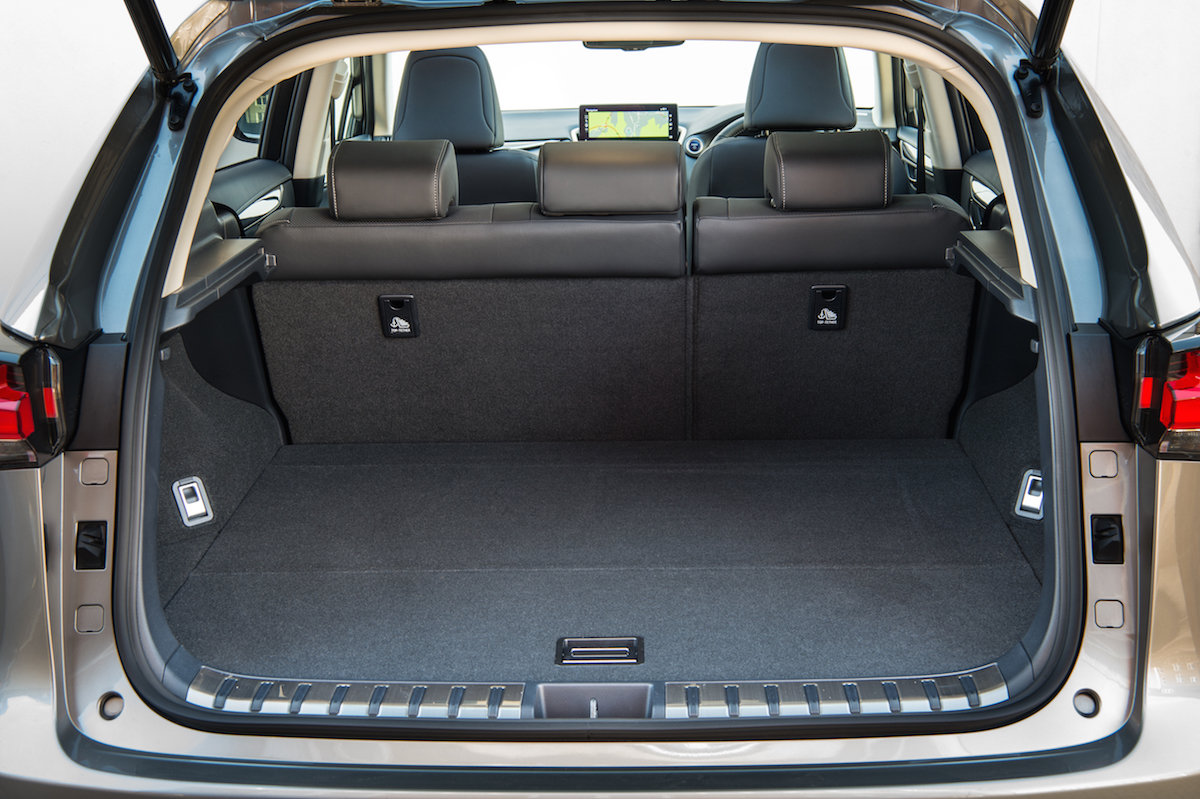
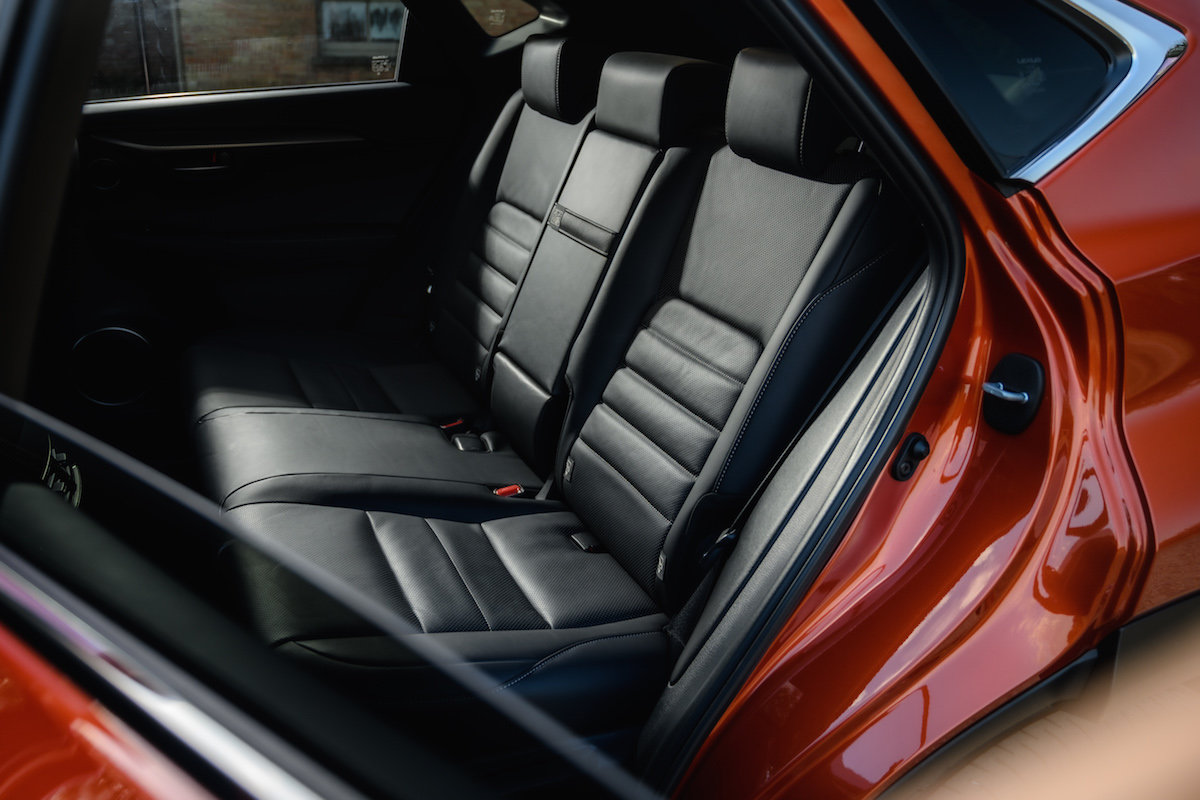
Conversely, reclining rear seats, impressive legroom and a decent amount of headroom provide enough space for a couple of adults to stretch out like lottery winners in the back, while the boot space is more than sufficient to launch a twin-pronged assault on the M&S food hall and homeware department.
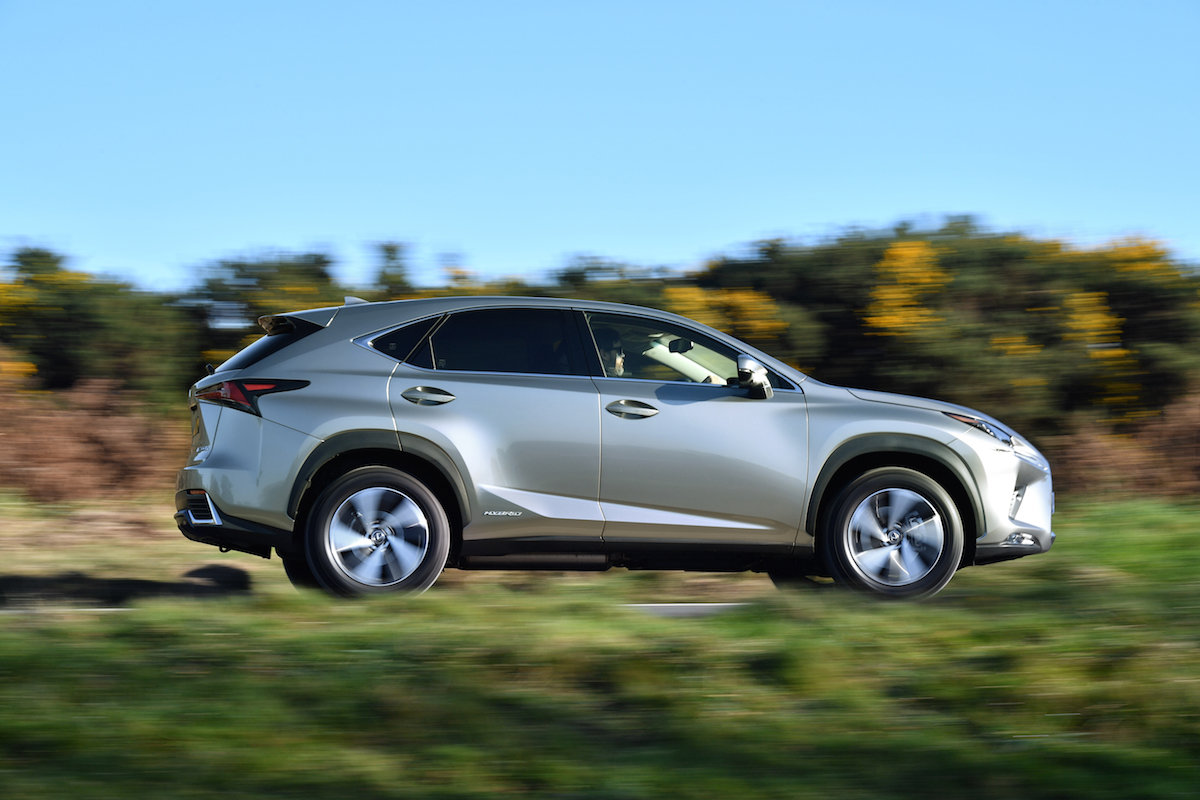
If you’re familiar with other CVT gearboxes there’s a good chance you groaned at the first mention of the dreaded acronym earlier in this review – they can be infuriating. But there’s no need to be unduly dismissive, as the NX’s transmission is one of the best iterations of the species. Thanks to strong low and mid-range torque and smooth engine refinement, the NX is capable of gaining speed progressively and proportionally, and for the most part, it ably avoids the stratospheric rev surge that many CVTs demand when a shot of acceleration is called for.
Yes, if you give the accelerator pedal a sadistic prod then the engine revs will soar, but driven similarly to a strong turbodiesel, judiciously metering the accelerator pedal to stay just ahead of the acceleration curve, the NX delivers meaningful performance with limited powertrain dramas.
The NX 300h will also run in silent electric mode, albeit for a very limited period, but because the transitions from electric to petrol power and vice-versa are so seamless, chances are, you’ll remain oblivious to any machinations happening under the bonnet. Set against this background of mechanical refinement, the high levels of tyre-road surface interaction seem all the starker. While the suspension can be a bit fidgety at low speed and a little wallowy at higher speeds, the ride quality is generally comfortable and the steering successfully marries easy town spinning elements to planted motorway reassurance.
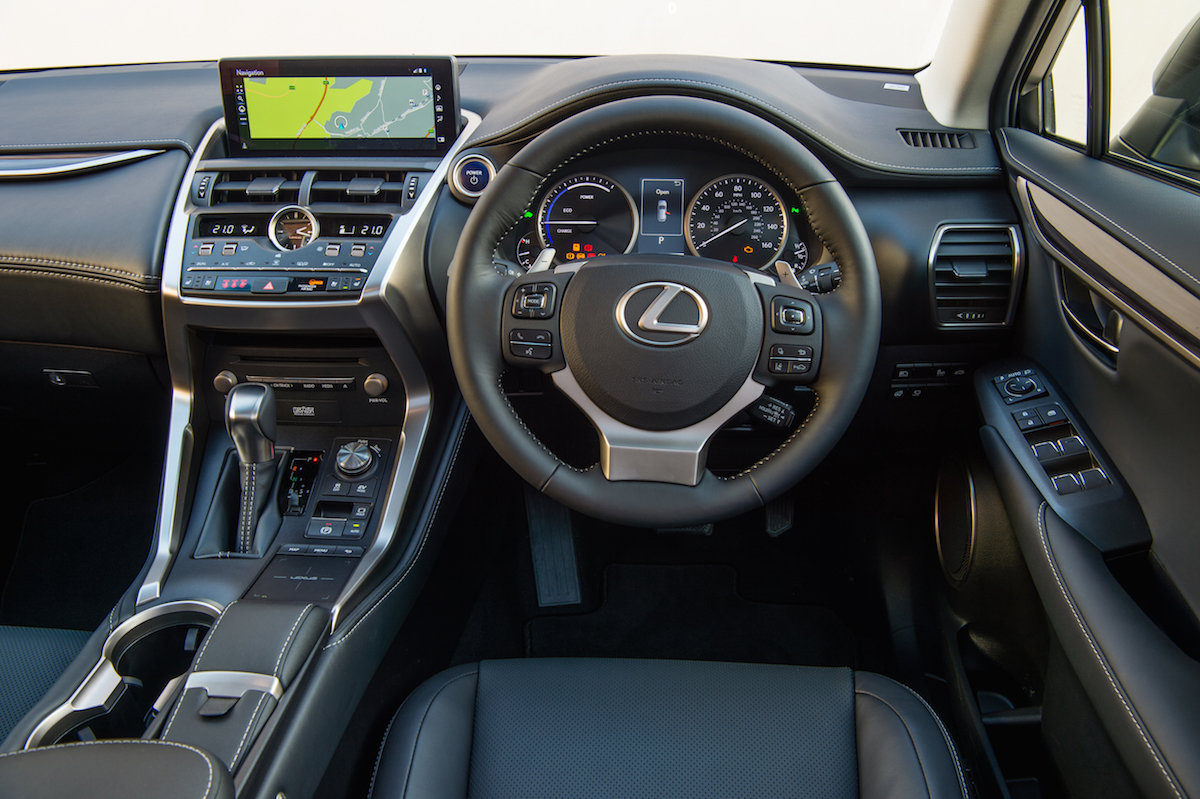
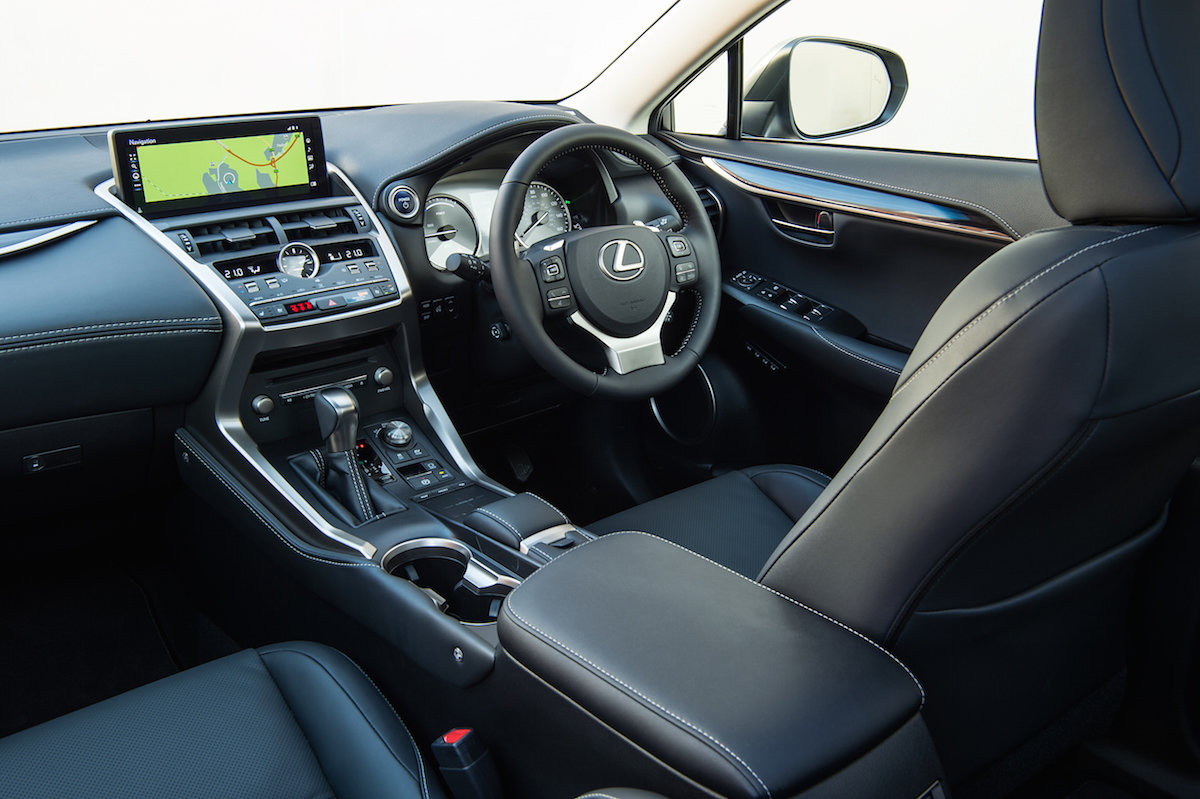
The cabin of the NX offers an intriguing mix of luxury and sophistication, but you need to weigh these wow factors against some fundamental ergonomic flaws. While the positives include piles of posh features, set against acres of lush panelling and deep-pile carpets, the negatives are a frustratingly eccentric infotainment system and a rather skewed driving position.
Although the central screen is a decent size and access to Bluetooth, AppleCarPlay and Android Auto connectivity is included, everything is a bit jumbled and the operational side of matters is less than impressive, as an unintuitive touchpad-style controller does its utmost to make hitting the various icons tricky when you're stationary, never mind when you're driving.
There’s no arguing with the equipment list, though. Even entry-level cars come with eight airbags, including a driver’s knee airbag, dual-zone climate control, alloy wheels, leather seats, rain-sensing wipers, parking sensors and a rear-view camera. F Sport features a blingier meshed grille, sports suspension and larger alloys. Top of the range cars are fitted with a head-up display, a premium sound system, heated steering wheel and ventilated front seats.
Not so very long ago, prices of used NX models were hovering around the same sort of area as many diesel-engined German rivals. Far fewer NXs were sold compared to mass sellers like the BMW X3 and Audi Q5, and as a consequence that exclusivity, along with a reputation for unburstable reliability, kept used values of the NX relatively high. Now, because of the decline in popularity of diesel and a growing awareness and acceptance of hybrid technologies, used prices are higher than ever.
Lowish CO2 emissions of 121g/km and claimed fuel returns of 54.3mpg are persuasive factors both in terms of wallet and environmental impact, even if we know these figures are a bit ambitious. If you’re a town dweller then you’ll get closest to these figures, as the 300h operates most efficiently at low speeds, where it is able to maximise electric propulsion, either to drive solely on electric power or when boosting the petrol engine’s acceleration.
It will be far less frugal on faster routes when the petrol engine is doing most of the work, so if you figure on getting mid-thirties mpg overall, you probably won’t be too far off the mark. If fuel economy is one of your primary concerns then it will be best to steer clear of any initial savings offered by a 200t as it will prove a very thirsty alternative.
NX services are due annually or on average every 10,000-miles. This will also allow you to have a full hybrid system health check, which includes a formal written report. With each Hybrid Health Check, you receive an extra one year or 10,000-mile hybrid battery warranty extension, until the vehicle is 15 years old.
Insurance groupings for the NX are pretty stiff at group 32 for the 300h hybrids and 38 for the 200t.
Given Lexus’s reputation for rock-solid reliability, this could be the shortest chapter in history. With results drawn from the responses of more than 18,000 British motorists, self-charging hybrid-electric models from Lexus and Toyota registered a perfect 100 per cent score in the 2019 What Car? Reliability Survey. For Lexus, this was the third successive year it topped the manufacturer's table.
Lexus was also named Britain’s most reliable auto brand in the Which? car reliability survey. Using a real-world study of more than 47,000 motorists and almost 59,000 vehicles, including new to eight-year-old cars, highlights included a fault-free report for the NX.
With all these glowing reports behind it, it does seem somewhat odd that Lexus only offered a three-year, 60,000-mile warranty, which seems all the more stingy given parent company Toyota’s five-year offer on cars that are generally much cheaper. This means a lot of used examples will now be out of warranty.
At the same time as a service, Lexus will also carry out a hybrid health check. All being well, this will provide you with a further one-year or 15,000-mile hybrid battery extended care package and a certificate of this fact to accompany your service documentation. This procedure can also be extended annually, for up to 10-years from the first date of vehicle registration.
- The hybrid NX’s drivetrain is a complex mix of a petrol engine and electric motors, but in essence, it uses various drive modes to achieve the best compromise between performance and economy. It can achieve 40mph using electric power alone, which is supplied by the hybrid battery, meaning it also produces zero tailpipe emissions. Unfortunately, this freewheeling can only be maintained for very limited periods and more often than not you’ll hear the petrol engine running. At speeds above 40mph, the petrol engine will chime in automatically and more vigorous demands see the electric motors supplement the 2.5-litre petrol engine to maximise acceleration. When decelerating or coasting to a stop, the petrol engine will cut out to reduce emissions, while braking creates regenerative kinetic energy, which is fed back to the battery pack.
- So much for the theory, in practice, the 300h Hybrid operates most efficiently around town, where it can maximise its electric power. It is far less frugal on faster routes, though, as the petrol engine is left to do the lion’s share of the work, hauling along the mass of the car plus the battery pack and electric motors.
- Although there are 2.0-litre turbocharged examples of the NX, these cars didn’t sell at all well and as a consequence, Lexus killed them off quite early in the NX’s production cycle. You’ll also see the occasional advert for front-wheel drive hybrid versions, but the all-wheel drive cars are by far the most common.
- If you want the most affordable NX in the line-up: If you can track one down, a 200t model will undoubtedly be the cheapest way of getting an NX standing on your drive. That said, you need to be aware that these models differ hugely in terms of the powertrain from the 300h hybrid models, as they have no electric drive, and instead, use a 2.0-litre turbocharged engine and a six-speed automatic gearbox. Primarily sold as base models, consequently, equipment levels don’t tend to be as lavish as the hybrid’s, and with a combined fuel return figure of 35.8mpg, they are (on paper, at least) almost 20mpg thirstier that the hybrid cars.
- If you’re looking for a more conservative option: The NX is certainly no shrinking violet but if you prefer to tone things down a bit then you should limit your search to either an SE or Luxury model painted in one of the more sober colours. With less of the flashy adornments, smaller alloy wheels and more compliant suspension than the F Sport models, these cars will give you all the same hybrid advantages, as well as being a tad more comfortable, both on your eye and posterior.
- If you want the full-on ‘check-me-out’ option: The NX is the absolute antithesis of sober German design, featuring a riot of slashed body panels and showy daytime running lights, and if you want the ultimate rock and roll version, the F Sport models take the shouty-ness up to level 11. Complete with lashings of chrome detailing, Miami vice alloy wheels, a kicking Mark Levinson stereo and an enormous meshed grille that looks like the entry point to a parallel universe, these cars will certainly get you noticed.

