MG HS Review (2019-2024)
MG HS cars for sale
4.0
Expert review
Pros
Excellent value for money
Lots of luxury kit and safety features
Spacious and practical cabin
Cons
The plug-in hybrid is a lot more expensive than the rest of the range
Some rivals have bigger boots
Antiquated infotainment
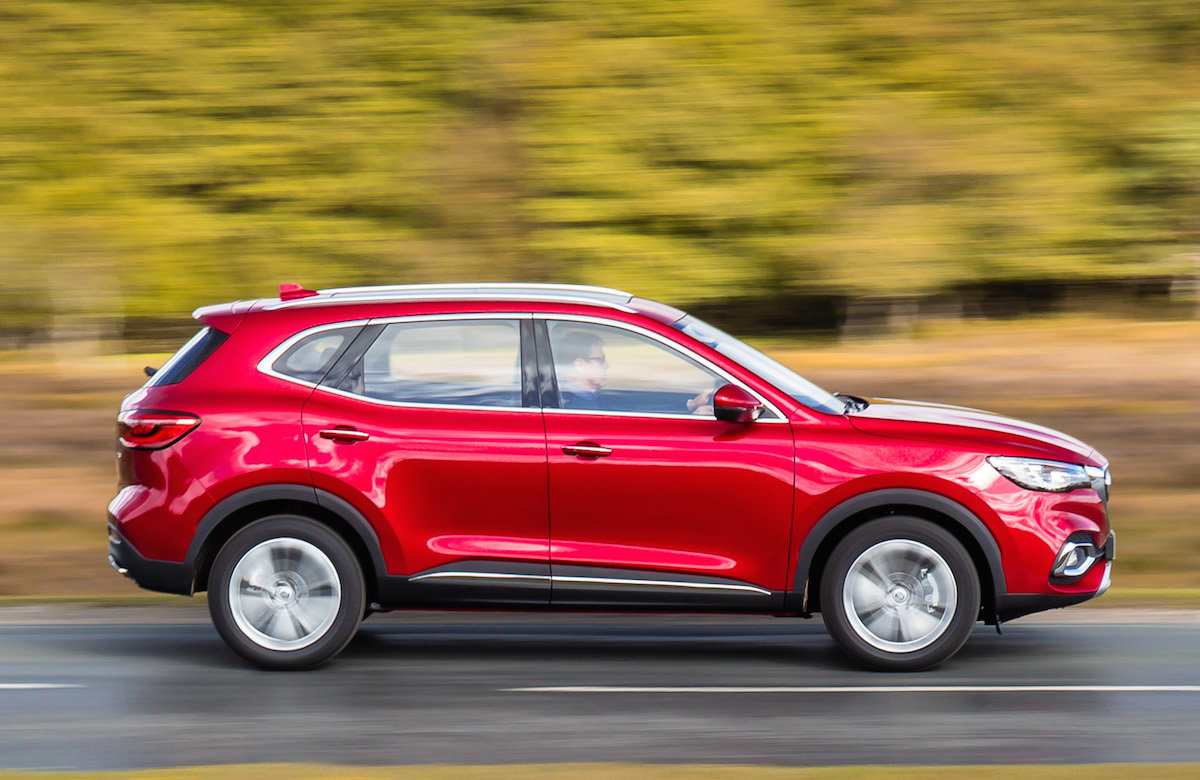
The CarGurus verdict
Clearly, the MG HS offers excellent value for money, especially when you consider the comprehensive safety kit and the sheer amount of luxury equipment that the base models provide. Throw into the mix contemporary exterior styling and a spacious, practical and surprisingly high-quality interior, and things begin to look even more appealing. Granted, the 1.5 T-GDi petrol engine may not be the most refined or the most frugal, but it does provide sufficient performance to hold its own on most routes even with all the family on board.
As for the infotainment system, well, yes, it is rather antiquated in terms of its responses, but this is far from a deal-breaker. So that only leaves us with the fact we expect used values to soften once more stock becomes available outside of the dealer network. All things considered, though, at this price point, we struggle to think of many rivals that give you so much for so little.

If you’re part of the baby boomer generation then you’ll no doubt remember the halcyon days of MG. You’ll probably also recall how this once great marque found itself in the dog house back in the noughties, as it attempted to sell some rather questionable budget offerings. If the HS SUV is anything to go by, however, MG is definitely on the comeback trail.
Following a strategy similar to the one practised by famed resurrection specialist, Skoda, MG is in the business of offering lots of metal at a knockdown price. Consequently, this family SUV shares similar dimensions to the Volkswagen Tiguan but can be had for the same sort of money as the smaller T-Roc.
Not that this is a case of ‘never mind the quality etc.’ Certainly, you’ll be impressed by the amount of interior space but you’ll also find yourself nodding in sage-like approval as you poke and prod and cast a critical eye over the material quality and fit and finish. A neat, leather steering wheel gets things off to a good start, while all the switches have a solid, tight-fitting feel and there’s also plenty of soft-touch plastic and some convincing-looking faux leather on the dashboard and doors.
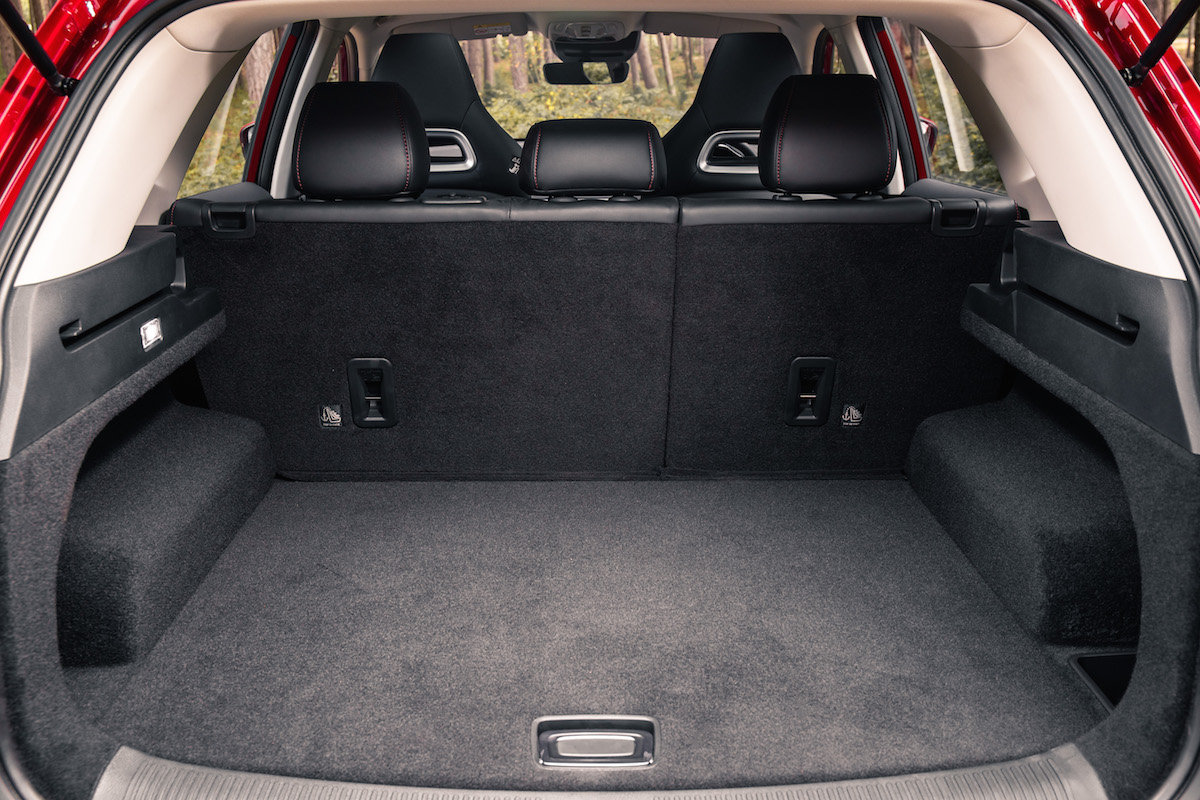
Family SUVs are all about practicality, and that’s something the HS is good at – albeit not up there with the best in this fiercely competitive class. Although the rear seats don’t slide back and forth, there’s enough space for gangly teenagers to stretch out, and if they are feeling particularly surly, they can recline the seatbacks and adopt a slouchy ‘I don’t care’ position.
The boot is not huge but it will easily cope with the ‘big shop’ and because the rear seatbacks split-fold 60/40 that garden tip run will be easy-peasy. There's also a useful storage area beneath the boot floor, which will come in handy for storing wellies and brollies, or hiding that blooming annoying talking teddy.
It’s worth pointing out that the MG HS is quite literally ‘a lot of car for the money’. On paper, its interior space is dwarfed by outwardly similar cars like the Skoda Kodiaq, but the price difference is such that this isn’t really a fair comparison. Compared to other SUVs at this budget, the HS stacks up well.

It may not be the most cultured device when revved but the 1.5-litre petrol engine delivers flexible performance and the standard six-speed manual gearbox is sweet enough to saunter through the gears with minimal effort. There’s also a seven-speed DCT automatic available: the performance remains largely unchanged, but fuel economy does take a slight hit compared to the manual.
If you want the raciest HS as well as the most efficient model, then the plug-in hybrid version has loads of get-up and go and will run on electric power alone for up to 32 miles. It does push the price up by almost £10,000, though, so if it were our money, we’d be inclined to stick with the entry 1.5-litre model.
The suspension also strikes a good balance between comfort and control, taking the sting out of most imperfections quite effortlessly. As an all-rounder, that’s priced at just under £23,000, the HS is difficult to fault.
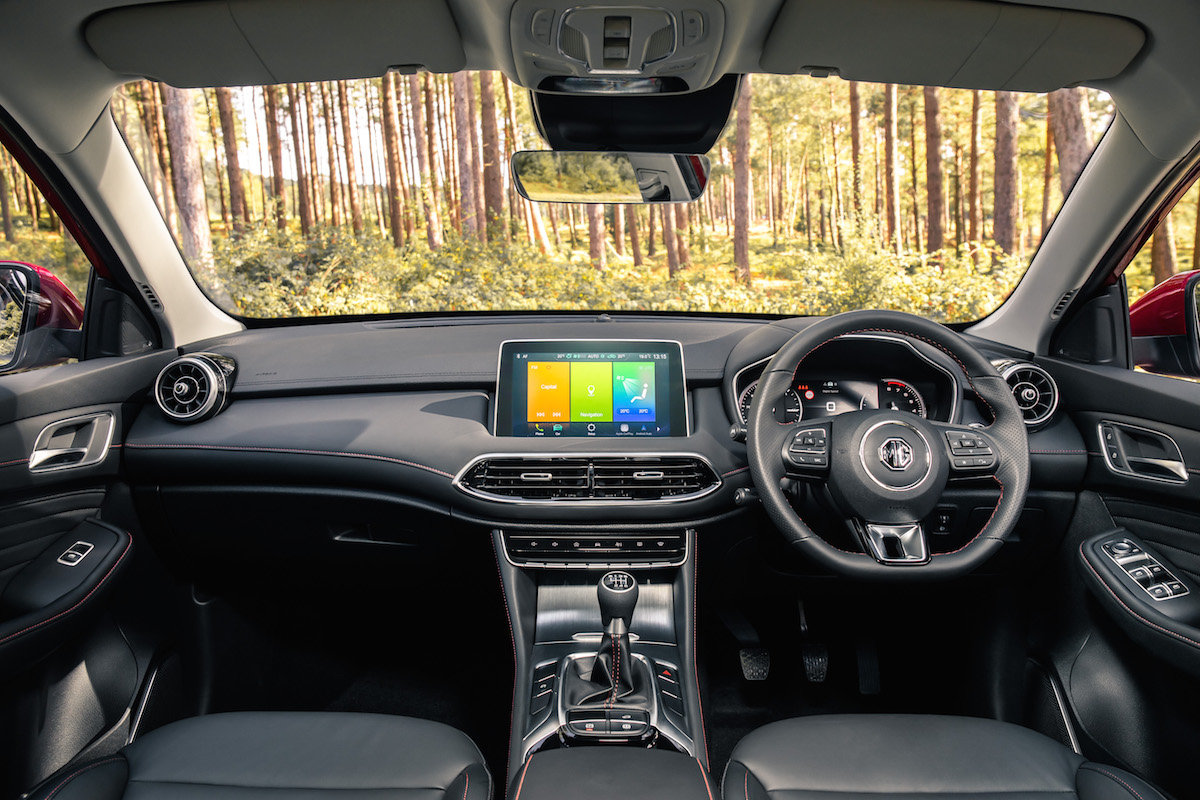
You might assume that the MG’s budget price has been achieved by skimping on the equipment, but that couldn’t be further from the truth. How many budget SUVs can you name that offer leather seats, alloy wheels and adaptive cruise control (when paired with the DCT), as standard on the entry-level car?
Something that could do with improvement is the response of the 10.1-inch infotainment touchscreen. It isn’t difficult to navigate, thanks to big, boldly-coloured icons, but it is properly chilled out, with a distinct delay between pressing the screen and anything occurring.
If you’re thinking about your next company car and the associated tax implications that go with it, then you might want to consider the HS Plug-in Hybrid. It has a claimed fuel consumption of 155.8mpg, thanks in no small part to its 32-mile electric range, which gives it a combined a CO2 output of just 43g/km. This places it in a 12% BIK tax band and the upshot of this in hard cash terms is, a 40% taxpayer will pay around £1,492 per annum in tax.
Contrast this with the 174g/km that the petrol-only 1.5-litre DCT turbo model emits, which places it the highest 37% benefit-in-kind bracket. Although its lower P11D price does go some way to reducing the bill, a 40% taxpayer will still end up forking out more than twice as much to the chancellor.
If a new car is just beyond your price range then it’s worth looking for nearly-new deals, starting at around £17,500. This will also help you to circumnavigate any delivery waiting times, and you should be able to save a couple of thousand pounds by purchasing a dealer demonstrator model or a very low mileage car. Obviously, you’d expect any of these cars to look and perform as new.
All new MG vehicles need to be serviced each year or every 15,000 miles, whichever comes first. A standard service plan covers a scheduled service regime, set at 15,000 miles/12 months, giving you the option for maintenance for up to five years/75,000 miles.
There’s also an optional low-mileage service plan, which is capped at 10,000 miles per year, reducing the need to replace some components, which may not have deteriorated with miles.
Both service plans cover the replacement cost of all scheduled parts. Any items that, at the time of servicing, your MG Dealer advises for replacement outside of the scheduled service items (e.g. brakes, tyres, wiper blades etc.), will be at an additional cost.
At the time of writing, insurance groupings ranged between 16 and 18 for 1.5-litre Excite and Exclusive models, but because of its complexity, the plug-in hybrid is rated in group 28.
The HS is based on an all-new platform and the vast majority of its driveline components are also new, so it is all but impossible to draw a comparison with previous MG models in terms of reliability.
If you search the various MG forums the worst comments you’re likely to find are complaints about the irritating amount of bings and bongs emitted by the cars on startup and the annoying chimes that are triggered when the doors are opened. Hardly the stuff of gnashing teeth and anguish.
As a brand, MG finished in 10th place out of 30 manufacturers surveyed in the What Car? 2021 reliability survey, which is a considerable improvement on previous years, and bodes well for the HS.
All MGs come with a seven-year, 80,000-mile warranty, which is quite a bit better than the industry norm of 60,00 miles and three years. Consequently, even if you’re buying used, there should be a fair chunk of that warranty left over. That said, Kia offers an even better seven-year warranty with 100,000-mile cover.
- Did you know, that in China, Porsche is thought of primarily as a manufacturer of SUVs? So, maybe those keyboard warriors who keep banging on about it being sacrilege to nail an MG badge on an SUV just need to get out a bit more. What’s more, without Chinese investment, MG would probably be just another illustrious British marque consigned to the annals of history.
- Based on a bang-up-to-date platform, capable of running fossil fuel and electric powertrains, the HS achieved a maximum five-star score when crash-tested by Euro NCAP, achieving impressive results for occupant protection and for its standard anti-collision safety systems.
- The HS is also the first model to feature MG’s all-new plug-in hybrid powertrain, which uses a turbocharged 1.5-litre four-cylinder petrol engine, a 16.6 kWh battery pack and a 90 kW electric motor. This power output is controlled via a super-complex ten-speed automatic gearbox, which is said to juggle six engine speeds and an additional four speeds for the electric motor. In total, the maximum power output of the hybrid system is 258bhp, which is a sufficient amount of oomph to fast-forward the HS to 60mph in just under seven seconds. Although it can run on petrol power alone, if you want to minimise your costs it is best to plug it in regularly. With a maximum pure-electric range of 32 miles, recharging a flat battery takes around three hours, so it’s probably a regime you want to carry out overnight.
- If you want the best value proposition: Value is clearly an MG USP, so it makes perfect sense to stick with the entry-level car. As well as all the safety kit, which includes active emergency braking with pedestrian and bicycle detection, lane-keep-assist with lane departure warning blind spot detection and rear cross-traffic alert, the entry-level Excite trim gives you loads of creature comforts. These include 17-inch alloys, intelligent high beam assist, faux-leather heated front seats, adaptive cruise control, keyless entry and press button start-up, automatic headlights and wipers, a 360-degree reversing camera, satnav, Apple CarPlay and Android Auto. Phew!
- If you spend a lot of time in traffic: If you’d like to place a little less strain on your left leg then adding the seven-speed dual-clutch automatic will help but it will also add around £1,600 to your invoice. In practice, it changes ratios pretty smoothly but it is not so great when it comes to slow-speed manoeuvres, as is can be quite snatchy. Consequently, you’ll need a bit of a delicate right foot to avoid a spot of bumper kissing when parking in limited spaces between other cars.
- If you’re inclined to a bit more bling: Fork out an additional £2,400 for top-flight Exclusive trim and on top of the aforementioned roster you’ll get LED headlights, electrically adjustable sports front seats, two-tone leather upholstery, colour adjustable ambient lighting, a panoramic roof and an electric tailgate. Metallic paint costs an additional £545 for all models.

