MG6 Review (2011-2016)
MG MG6 cars for sale
2.0
Expert review
Pros
Surprisingly sporty to drive
Lots of standard equipment
Keenly priced
Cons
Iffy build quality
Lacklustre fuel economy and emissions
Question marks over parts supply and reliability
The CarGurus verdict
There is a plethora of capable, sensibly-priced family cars out there that are easy to live with and inexpensive to run. A Ford Focus or Skoda Octavia, for example, won’t be costly and keeping one of those on the road will be straightforward.
Consequently, the potential parts-related problems alone make it difficult to recommend the MG6 to anyone in the market for a mid-sized car. There also aren’t that many MG6s out there, making buying one a more involved process and making readily available support less common.
Then there are the build quality and refinement gripes, the uninspiring engines and the unremarkable emissions and economy figures. Ultimately, while the MG6 does admittedly have its plus points, the only reason to buy one would be if you found an exceptionally cheap car or you were a devout fan of the brand. Otherwise, we'd recommend you stick with the supported, known and eminently capable mainstream options.
If you’re shopping for a used family car, or an economical and practical medium-sized runabout, you can pick from all manner of popular and proficient models. You could go for an eminently sensible Skoda Octavia, for example, or a fine-handling Ford Focus.
If your budget is a little higher, you could go for a Volkswagen Golf. Alternatively, cars such as a Hyundai i30 or Vauxhall Astra might be more in your price range. In short, whichever way you cut it, you have plenty of great options to pick from.
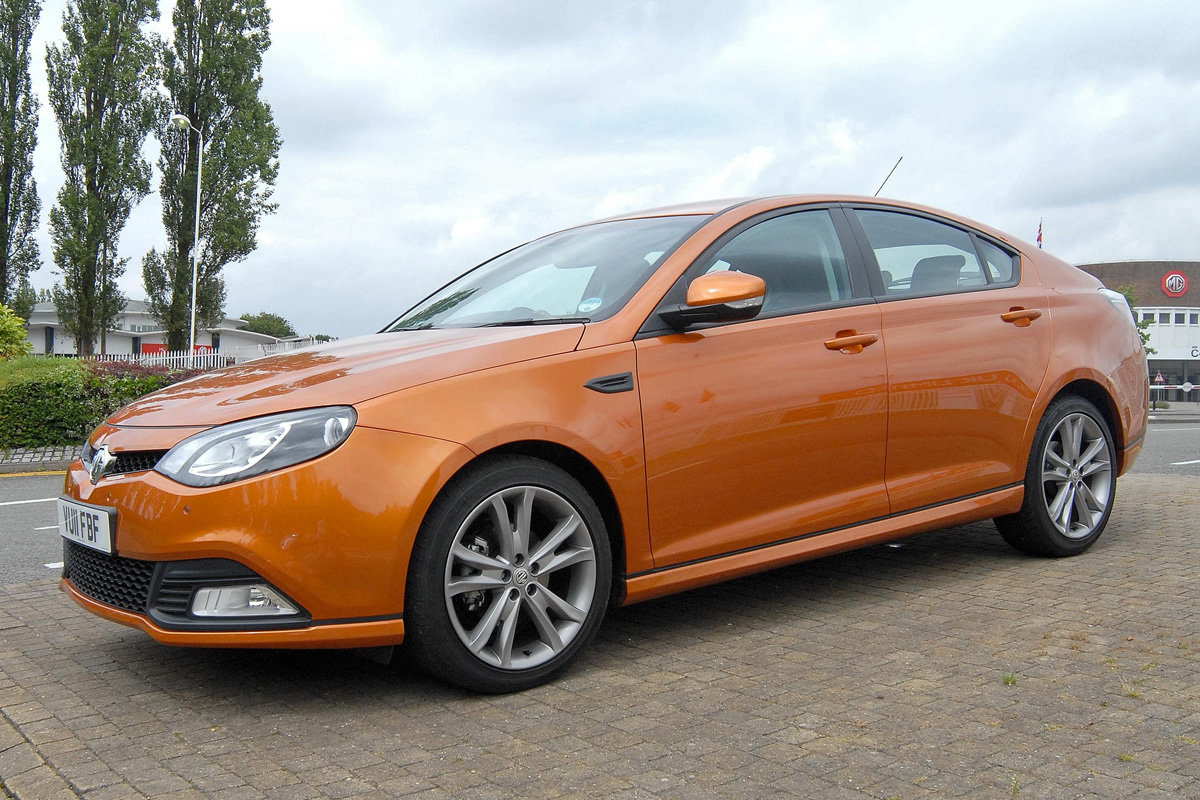
What’s unlikely to be on your list, however, is an MG Motor MG6. But if you’re browsing the classifieds, you may well stumble across some very temptingly priced used examples while searching for your next car. Such low prices may well give you pause for thought, but there are plenty of catches if you go for an MG6. That’s not to say that it’s a car entirely without merit. It first arrived in showrooms in 2011 and marked the revival of the classic British brand, following its acquisition by Chinese manufacturer SAIC in 2007. Unlike the company’s more recent models, the MG6 was also designed and engineered in the UK, and final assembly was carried out at the historic Longbridge plant in Birmingham.
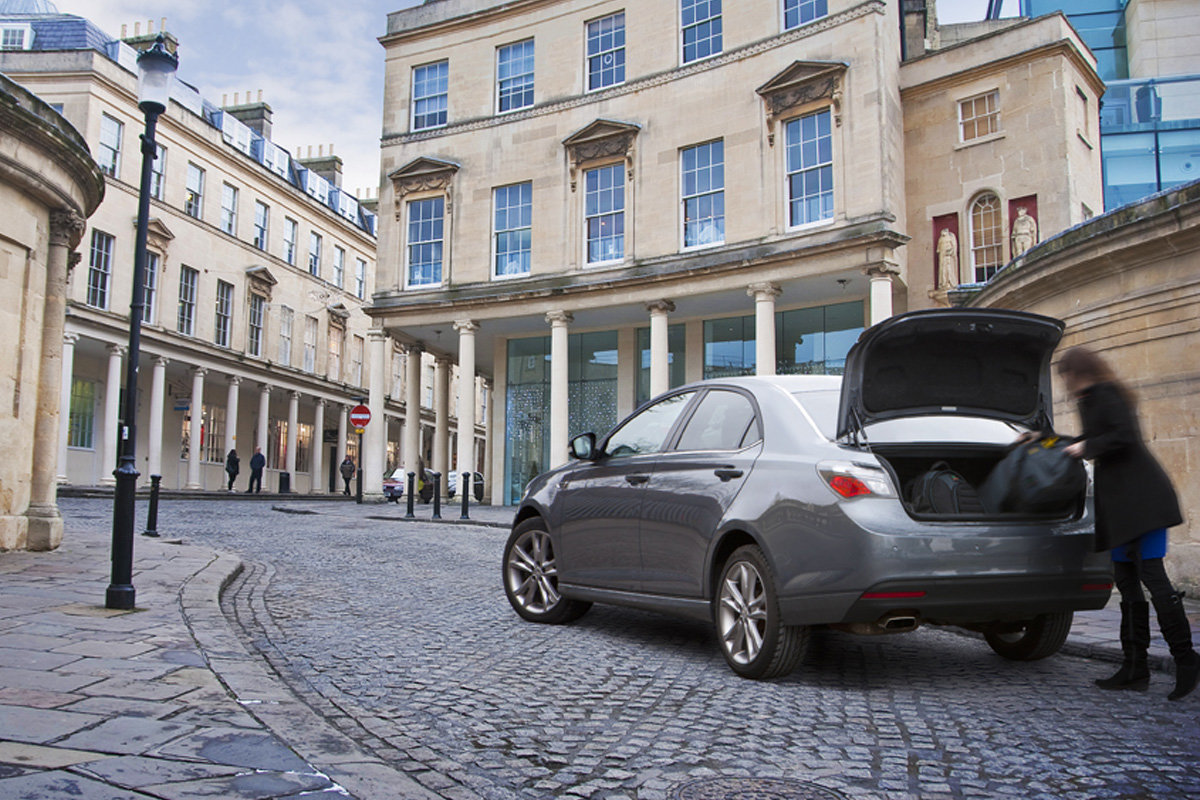
Based on the Chinese-market Roewe 550 saloon, the MG6 is comfortably larger on the outside than a traditional family hatchback like the Ford Focus or the Volkswagen Golf. To a certain extent, this plays out in the interior space too. At 498 litres, the boot dwarfs that of a Golf or a Focus from the same era, although the Skoda Octavia is larger still.
There’s a decent amount of room for people too – particularly in the front. Space is reasonable in the back too, although the low roofline and small rear windows can make it feel a little claustrophobic for taller passengers.
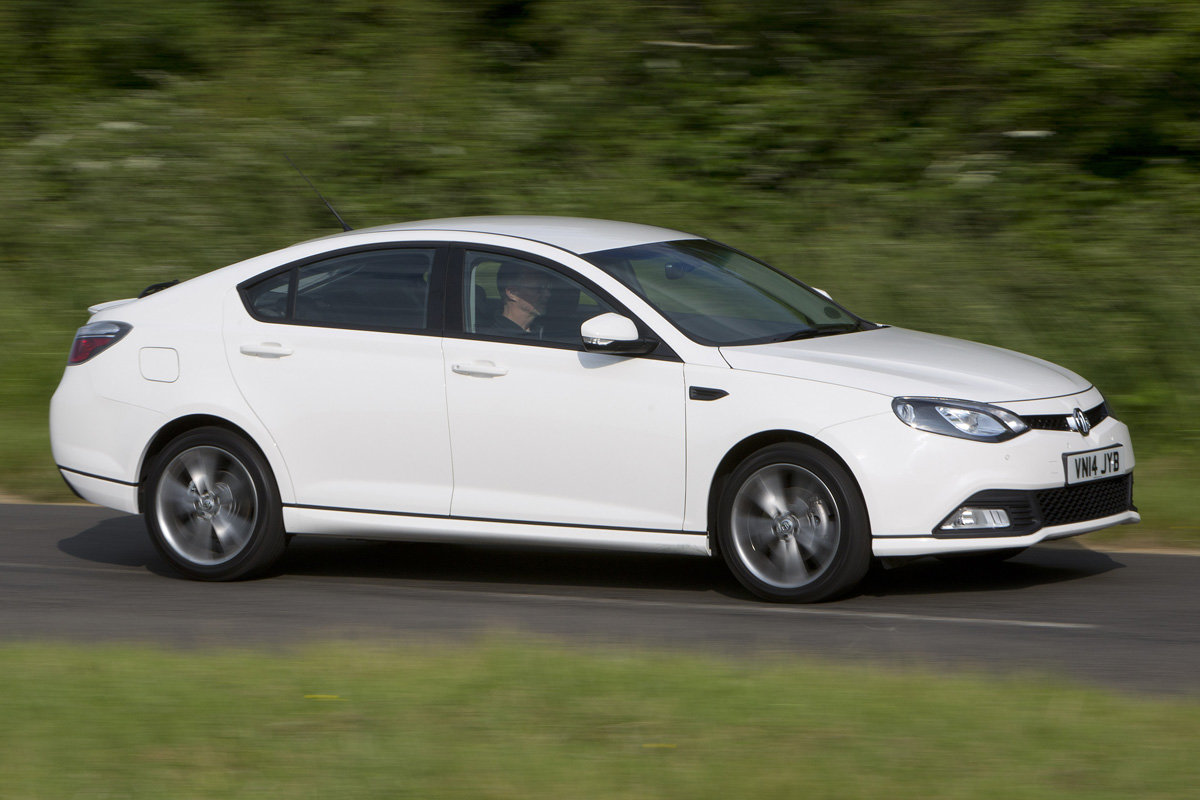
The MG6 may not be a return to the company’s glory days as a sports car manufacturer, but it is more engaging than a lot of its rivals. Its steering and suspension were tuned specifically for UK roads, resulting in a car that feels alert and composed. Despite this sporty edge to the handling, the ride remains reasonably supple too.
It’s roomy, comfortable and decent to drive. So, a big thumbs up for the MG6, then? Well, not quite. The interior quality was poor, refinement was substandard, the engines – both petrol and diesel – were gruff and unenthusiastic, and running costs were high.
Initially, the line-up consisted of just a practical five-door hatchback model called the MG6 GT, which was offered with a 1.8-litre four-cylinder turbocharged petrol engine and a manual gearbox. Trim levels were dubbed S, SE and TSE, and standard equipment included air conditioning. A saloon version called the Magnette was also released, along with what's generally listed as a 1.9-litre diesel engine (although here's a pub fact: with a displacement of 1849cc, it should really be called a 1.8).
Performance from either of these engine options is reasonable, if unexceptional, but where they fall down is their refinement. Both produce more noise and vibration than you’ll generally find in the MG6’s competitors. This posed a problem for MG when the car was new as it wasn’t actually that much cheaper than its more polished counterparts. Today, used values tend to reflect the MG6’s rougher edges, but we’d still wary of recommending it, given the poor interior quality and patchy reliability.
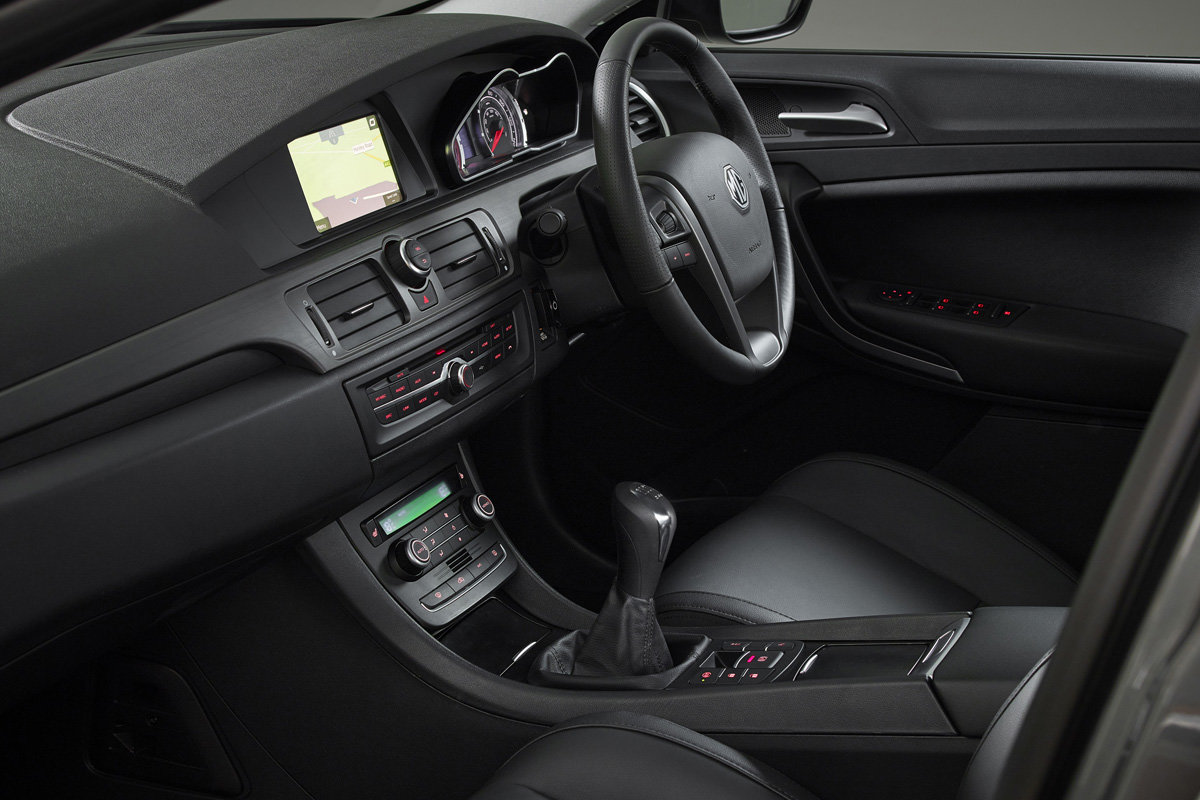
MG seems to have a knack of improving its cars over time, and the 6 was no exception. The early range consisted of S, SE and TSE trim levels. The entry-level S model came with electric windows, an eight-speaker stereo with an auxiliary in, a USB port and hill-hold control. SE versions came with features such as tyre pressure monitoring, a 6.5-inch media system with satnav, cruise control and leather steering wheel trim. Range-topping TSE models benefitted from leather seats, 18-inch alloy wheels, front parking sensors and a rear parking camera. All come with air conditioning and some variants also feature climate control.
From April 2015, the design was refreshed and the MG6 benefitted from new trim specifications, now known as S, TS and TL. The entry-level S model now came with heated front seats, LED daytime running lights and an electronic parking brake. Upgrade to the TS and you’ll get an eight-speaker hifi and a touchscreen infotainment system, while TL brings electrically adjusted leather seats and climate control.
When new, the MG6 wasn’t particularly cheap to run. Fuel and VED costs were sometimes higher than competitors’ and, more problematically, list prices were sometimes uncompetitive and it didn’t retain its value very well.
Depreciation subsequently meant that, overall, the cost of ownership could easily be higher than more popular and common alternatives – particularly if you went for the thirstier petrol-engined model. However, discounts could sometimes negate the impact of depreciation a little and help keep lifetime costs in check. Production of the MG6 ended in 2016, so only used cars are available. Resale values are consequently less of a problem, especially if you’re looking at earlier examples.
In terms of economy, expect the six-speed diesel versions to return around 50mpg, if not a little more, in normal conditions. The five-speed petrol models, on the other hand, should be capable of returning around 35mpg in real-world conditions. VED costs do vary significantly, so you’ll need to check the specifics of the model you’re looking at to avoid any surprises. An early diesel could cost £165 a year, for example, while a later and cleaner facelifted version will set you back £30. All of the petrol models are quite expensive to tax.
Diesel MG6s have a timing chain which helps keep running costs down, but the petrol version has a timing belt that needs to be changed every 75,000 miles or five years. If you’re looking at used petrol examples, you need to watch out for this; replacing it is not a cheap job and it could skew the overall cost of the car significantly.
Servicing should otherwise prove fairly conventional, in terms of costs – the diesel needs a service every year or 15,000 miles, as a case in point – but the car’s niche nature and question marks about parts supply and support means that it won’t be as easy to maintain or repair as some alternatives. Such problems, coupled with reliability and quality issues, could make MG6 ownership fairly arduous.
All MG6s are now beyond their original manufacturer’s warranty now, so you may want to look at an independent warranty, or at least set some money aside as MG6s can suffer from reliability issues. They’re not terribly problematic but common issues include electrical faults, clutch and transmission issues. The paint can also wear quickly and, similarly, interior trims can suffer with age.
Because the cars have so little value, some may not have been serviced or maintained properly. This means, if you’re set on one, try and find an MG6 that has been serviced to schedule and cared for. Otherwise, repair and maintenance costs could quickly ramp up the initial purchase price and total more than the cost of simply buying a better, more popular car.
On the plus side, there’s only been one official recall currently listed for the MG6, which was to tackle an issue with a potential short circuit in the main electrical harness. If you’re looking at a used MG6, you can use the online government recalls website to check whether it is affected. Subsequently, the owner or a dealer may be able to tell you if the relevant fix has been carried out.
- The facelifted MG6 introduced in April 2015 was a significant step up. It offered better value for money, a refreshed design, interior upgrades, improved kit levels and a new trim line-up. It was also lighter and quicker than its predecessor. Consequently, it was a better car than the early MG6, although it now only came with a diesel engine (reflecting the direction that the car industry was heading in at that time).
- The MG Motor MG6 scored four out of five stars from independent saferty organisation Euro NCAP when it was tested in 2011. It received a 73% rating for adult protection, 71% for child occupant protection, 42% for pedestrian protection and 71% for safety assistance. Not terrible results by any stretch, but far behind many rivals. A 2012 Kia Ceed, for example, scored five stars and 89, 88, 61 and 86% respectively.
- Most MG6s are hatchbacks, but the pre-facelift model was originally offered with the option of a four-door saloon body. It was called the Magnette, in reference to a popular MG saloon from the 1950s and 1960s.
- If you want the best all-rounder: The later diesel-only MG6 is a notably better car than the earlier variants and offers more kit, a better interior and efficiency and performance improvements. Consequently, it’s a good option if you are set on an MG6. The 1.8-litre DTi-Tech diesel produces 148bhp and 258lb ft of torque, which gives you a 0-60mph time of 8.4 seconds and a claimed average of 61.4mpg. Aim for a TS model, as that comes with upgrades like HID headlights, cruise control and the MG Touch infotainment system.
- If you want the best fuel economy: The facelifted diesel version of the MG6 is the most efficient. It promises up to 61.4mpg and emits 119g/km of CO2. The pre-facelift version, on the other hand, averages 53.5mpg and emits 139g/km of CO2.
- If you want driving fun: If you’re looking for a more sporting experience then you should probably aim for one of the earlier petrol TCI-Tech turbocharged cars. The 1.8-litre petrol engine produces 158bhp and 184lb ft of torque, which allows the turbo MG to accelerate from 0-60mph in 8.4 seconds. There was BTCC Special Edition of the MG, which commemorated the car’s involvement in touring car racing, but it received primarily cosmetic upgrades and isn’t worth going out of your way for.
- If you want the most creature comforts: For the plushest MG6 it’s worth going for a facelifted diesel model, with the higher-quality interior and more technology, in range-topping TL specification. These feature a wide array of kit, including a rear parking camera with guidelines and satnav, and also benefit from electric leather seats, cornering lights and dual-zone climate control. There is no automatic version of any MG6 though, which might prove problematic for some buyers.


