Maserati Ghibli Review (2013-2022)

Pros and cons
What we like
Glamorous appearance
Luxuriously equipped
Sporty performance from V6 petrol engines
What to consider
Uncomfortable ride
Expensive to run, even if you choose a diesel
Not as practical as its rivals
The CarGurus verdict
Those bored with the same old predictable choices in the executive saloon market might well consider the Ghibli to be an appealing prospect. It looks great, it’s something out of the ordinary, and it’s built by a glamorous Italian brand with heaps of heritage and pedigree.
However glamorous, though, it’s also true that in most tangible areas, the Maserati trails its more conservative executive saloon rivals. It’s not as comfortable, enjoyable or refined to drive, it’s not as practical, and it’s not as high in quality. It’s also comparatively expensive to buy and run. It’s not a bad car by any means, and if you’re sold on the looks and the exclusivity, you’ll probably love it. However, when the competition is so brilliant, not to mention more affordable, being just good isn’t good enough. For most buyers, there are likely to be too many areas in which the Ghibli simply doesn’t stack up.
out of 5 expert review
What is the Maserati Ghibli?
So, you’re partial to an executive saloon thanks to the impressive mix of capabilities they give you, but having already owned Audi after BMW after Mercedes after Jaguar, you’re getting a bit bored of the same-old-same-old choices. So, what do you do? Well, you could choose something a bit less ubiquitous and a little more glamorous. Step forward, the Maserati Ghibli.
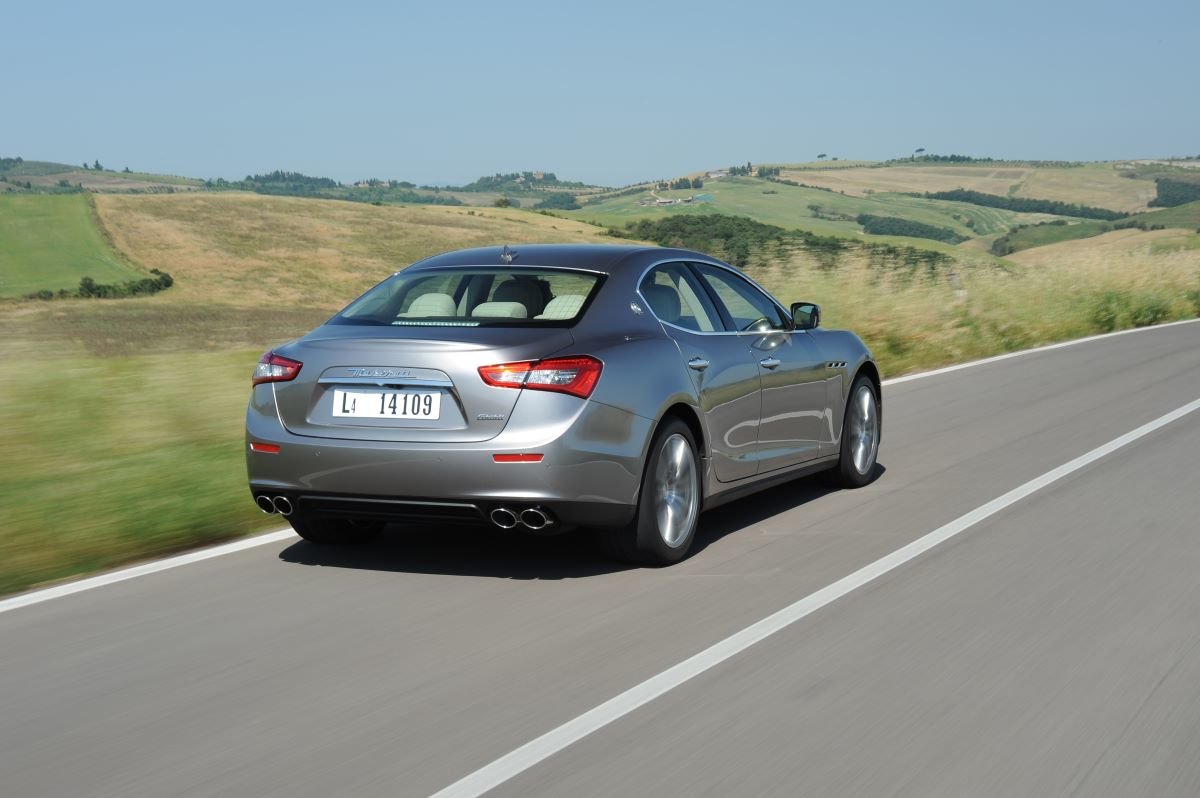
The Ghibli had a nine-year production run from 2013 to 2022, and was designed to provide a more stylish, more elegant and more exclusive alternative to cars such as the A6, the 5 Series, the E-Class and the XF. It certainly does that, with flamboyant looks reminiscent of a scaled-down Quattroporte. That means sleek lines and bold details absolutely everywhere. What’s more, the exclusivity aspect is further enhanced by the prestigious Maserati badge, and the fact that these are cars you don’t see every day, unlike the rivals mentioned.
Practicality
How practical is it?
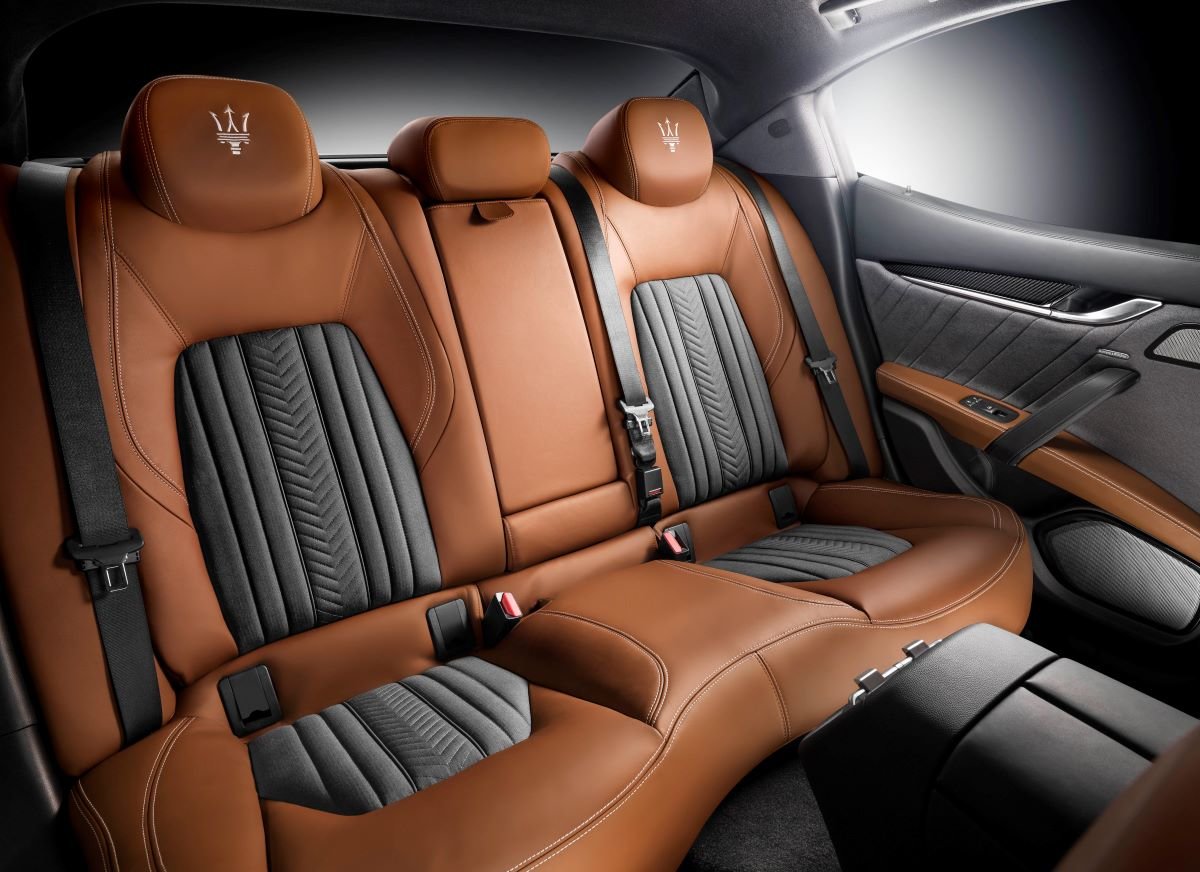
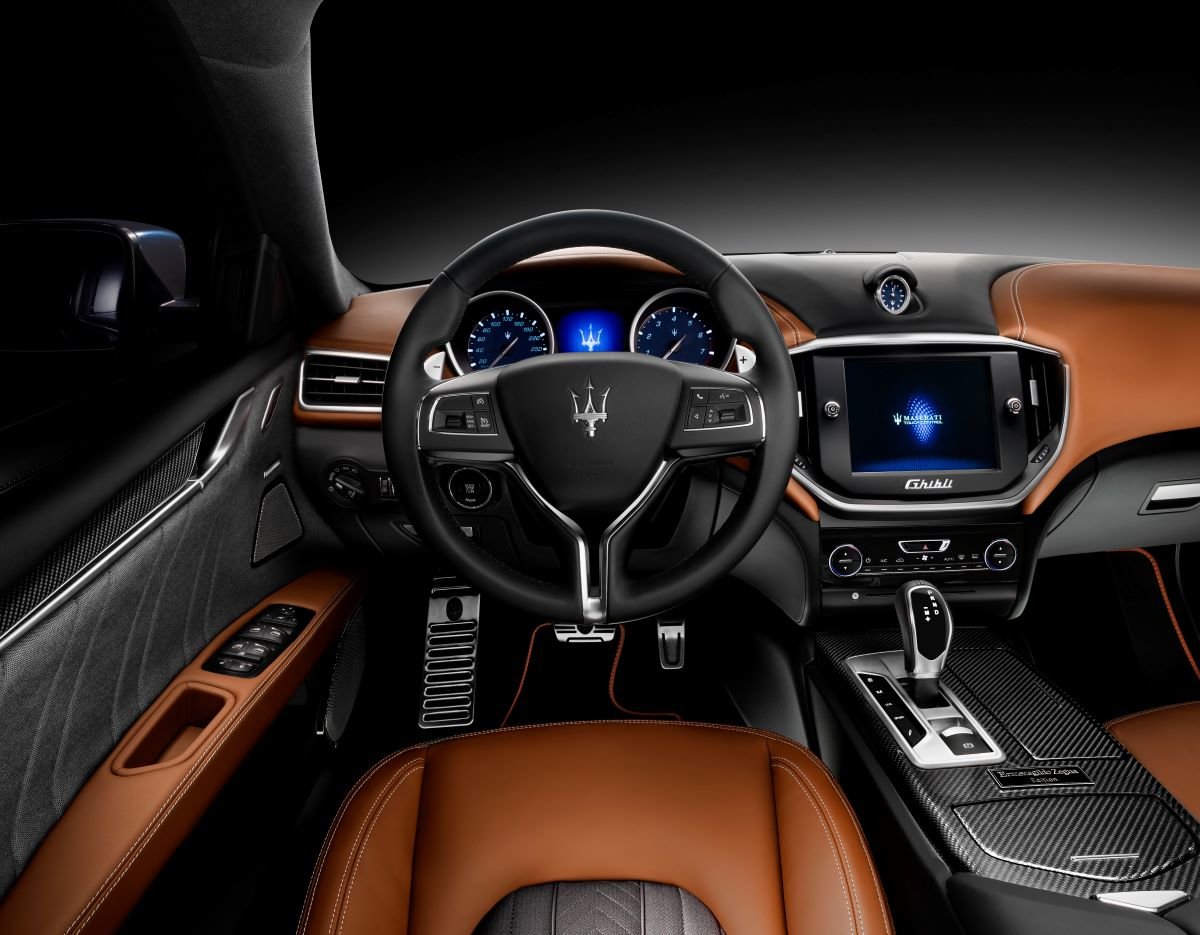
The question, though, is this: however glamorous it is, can the Ghibli live with those excellent rivals in other areas? Well, let’s kick off inside the car. The driving position is spot-on and the seats are really supportive, and to support the desired luxury car feel, you get lashings of stitched leather here and soft-touch plastic there. The thing is, though, that rather too many of the other plastics on display are harder and less appealing, while much of the switchgear is recognisable from much cheaper Fiat Group models.
The way everything is assembled isn’t as substantial or as solid as it is in the established German rivals, either, so this supposedly luxurious option actually feels like a step down in quality. Meanwhile, comparatively tight rear space means it isn't great for back-seat passengers, but the 500-litre boot is reasonably large.
Driving
What's it like to drive?
Unfortunately, the Ghibli can’t live with its excellent rivals in terms of its road manners, either. Whatever your speed or whatever the state of the surface, the suspension struggles to smother lumps and bumps that simply wouldn't bother a BMW or a Mercedes, so it’s not as comfortable.
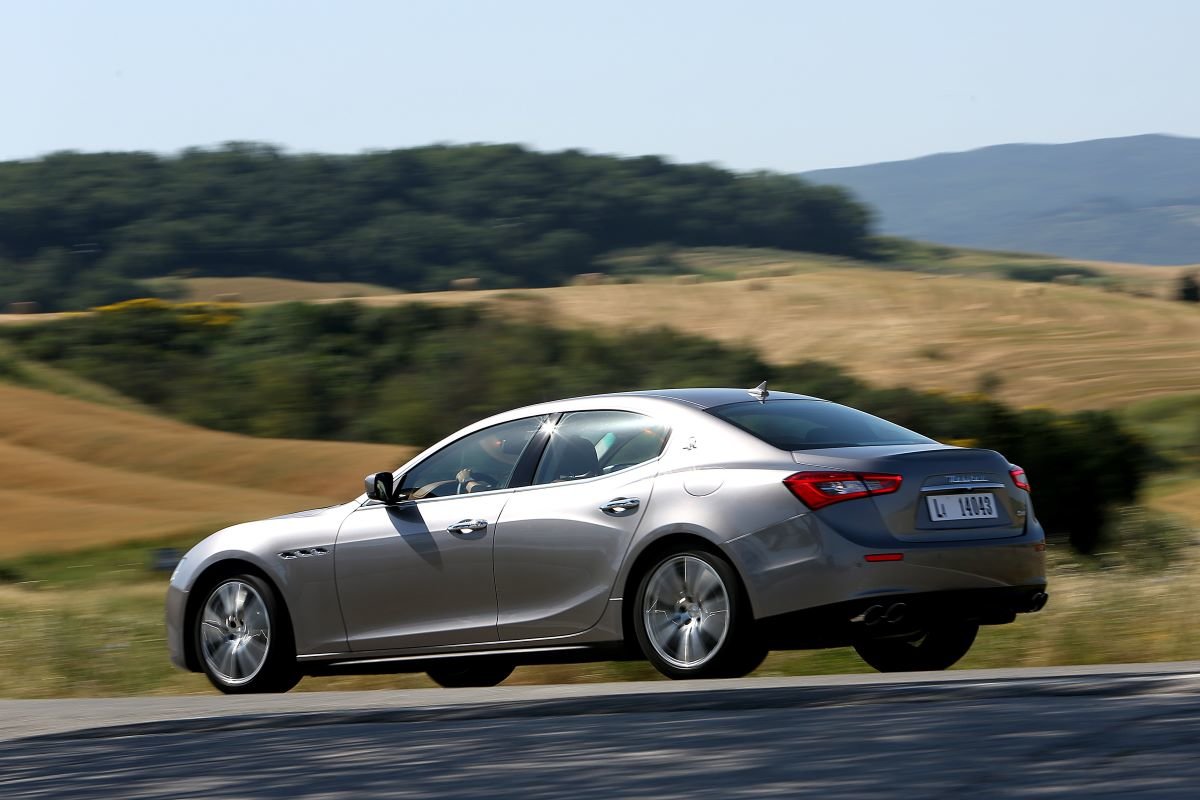
The Ghibli handles better than it rides, feeling stable and secure in fast corners, but at the same time, it doesn't feel as agile or as involving as its best rivals due to its considerable weight and its slightly numb steering. Noisier engines also mean it’s not as refined, either.

Tech and equipment
Technology, equipment & infotainment
To begin with, the three versions of the Ghibli – the Ghibli, the Ghibli Diesel and the Ghibli S – were differentiated only by the amount of power under the bonnet and the type of fuel that generated it. However, during a facelift in 2017, various ‘upgrade packs’ – or as the rest of the world knows them, trim levels – were introduced, known as GranLusso and GranSport. The facelift also brought a range of engine upgrades, new electric power steering, and some extra driver aids.
Plenty of luxury kit is laid on as standard and, if you buy a later car, you get a touchscreen infotainment system that’s logical, responsive and user-friendly (the earlier system it replaced wasn’t nearly so good, mind).
Running costs
Maserati Ghibli running costs
Compare used Ghibli prices to those of equivalent high-end versions of the Audi A6, BMW 5 Series, Jaguar XF and Mercedes E-Class, and the Maserati is the priciest car of the lot, and that’s despite the fact that it doesn’t hold on to its value quite as well as the rest. Bear in mind, too, that the Ghibli doesn’t offer the less powerful, less expensive versions that all its rivals do.
Anyone buying a Maserati would probably have fairly low expectations in the fuel economy department, and so it proves. Predictably the diesel is the best of the bunch, but even that version’s official WLTP figure of 35mpg isn’t great, especially when compared with the equivalent figures for rivals. The petrols should get around 25mpg according to the official stats, but to get anywhere near that in the real world, you’ll have to drive so gently that owning a Maserati would be rendered completely pointless in the first place.
Again, anyone buying a Maserati will be expecting steep insurance bills, and sure enough, all versions of the Ghibli are classified in group 50, the most expensive group there is. According to the servicing schedule, the Ghibli shouldn’t need routine maintenance any more often that its more mainstream rivals, but the work will cost a bit more when those occasions roll around.
If your Ghibli was registered after April 1st 2017, it’ll cost £475 per year to tax between years two and six of the car’s life, and then £150 per year after that. Cars registered before that are taxed based on their CO2 emissions. On the majority of versions, you’ll pay £330 per year in tax. A couple of the diesel models drop as low as £205, but some versions of the S rise as high as £565.
Maserati Ghibli reliability
If you’re having heart palpitations at the very thought of living with a temperamental Italian sports car, we wouldn’t blame you. Maserati isn’t a firm famed for its mechanical dependability, and indeed, the brand sits rock-bottom of the 40 manufacturers assessed in this area by Warranty Direct’s Reliability Index.
However, things might not be as bad with the Ghibli as this might suggest. The Warranty Direct result is based pretty much purely on the poor performance of the Gran Turismo, with which the Ghibli shares virtually nothing. What the Ghibli does share, though, is parts from other proven Fiat-Group models. The platform is a scaled-down version of the one used in the Quattroporte, the electrics are from Bosch and the gearbox is the very same ZF unit used in many of the Ghibli’s rivals. The diesel engine is lifted from the Jeep Grand Cherokee, while the petrol engines are hand-built at Ferrari’s factory in Maranello, meaning each will have had many hours of care and attention lavished upon it.
That said, it’s still unclear as to whether Maserati is quite out of the woods yet, as reports have been mixed on the Ghibli. Some have reported trouble-free motoring, while just as many others have reported problem after problem. The jury is still out, then.
Various recalls have been issued over the years, affecting everything from the airbags to the suspension, so it’s worth checking that any necessary work has already been carried out. Particularly the one to fix a leaky fuel line on some early cars.

What owners say
Three things to know
- If you’re thinking that the Ghibli has a bit of a daft name, you might be interested to learn that this isn’t actually the first Ghibli that Maserati has built. The nameplate dates back to the 1960s, when it was worn by Maserati’s grand tourer of the day, a car designed to provide competition to cars like the Ferrari Daytona and the Lamborghini Miura. That’s a world away from the executive saloon that the Ghibli has become today.
- Even today, in a world that seems to think diesel is a dirty word, success in the executive saloon section of the market hinges on the availability of diesel power. And as a result, the Ghibli is the first ever Maserati to be offered with a diesel engine. It’s the same 3.0-litre V6 unit you’ll find in the Jeep Grand Cherokee and the Chrysler 300C, so it’s tried and tested in terms of reliability, but it’s nowhere near as refined as the diesel engines in rivals from Audi and BMW.
- The Ghibli is priced to compete with higher-end versions of its rivals, so it’s not as affordable. So, if you’re going to buy a Ghibli, you’d better make sure that exclusivity is more important to you than anything else, and that you’re prepared to pay a little extra for it.
Which one to buy
- If you put your sensible head on, then the engine you want will definitely be the diesel. Granted, it doesn’t feel all that quick, not as quick as you expect a 271bhp Maserati to feel anyway, but it’ll give you way better fuel economy than the petrol and you’ll be able to cruise much further without having to stop to refill the tank.
- However, if you’re buying a Maserati over an Audi or a BMW, there’s a good chance you’re a bit of a car enthusiast, and if you are, you might well want one of the petrols, both of which are Ferrari-sourced V6s that sound fantastic. The mid-range one has 345bhp (325bhp on earlier examples before a mid-life engine upgrade), and it feels much, much stronger than the diesel, pulling strongly through the entire rev range.
- The S has the same engine, but the power output is cranked up to 424bhp (404bhp on earlier cars). By most standards, it feels properly rapid, to which a 0-62mph sprint time of less than five seconds will testify. However, when you consider that the most bombastic versions of the BMW 5 Series (namely the M5) and Mercedes E-Class (the E63) are much faster still, it kind of undermines the Maserati’s sporting credentials a bit.
- Three trim levels are available, and we can’t see much reason to look beyond the basic one. It comes with leather upholstery, two-zone climate control, cruise control, four powered windows, powered front seats, automatic lights and wipers, and keyless entry. Both the GranLusso and GranSport trims add additional styling touches, a powered steering column, soft-close doors, and LED headlights. However, the GranLusso aims to double-down on luxury with upgraded leather and heated front seats, while GranSport dials up the sportiness, with paddle-shifters for the automatic gearbox and an adaptive ‘Skyhook’ suspension.


