Mazda CX-7 Review (2007-2012)
Mazda CX-7 cars for sale
2.0
Expert review
Pros
Far more sporty to drive than most SUVs from this era
Generous standard kit, especially if you choose the Sport Tech
Lots of space for passengers
Cons
Not much room for luggage
The petrol model is very thirsty
Some owners report stretched timing chains
The CarGurus verdict
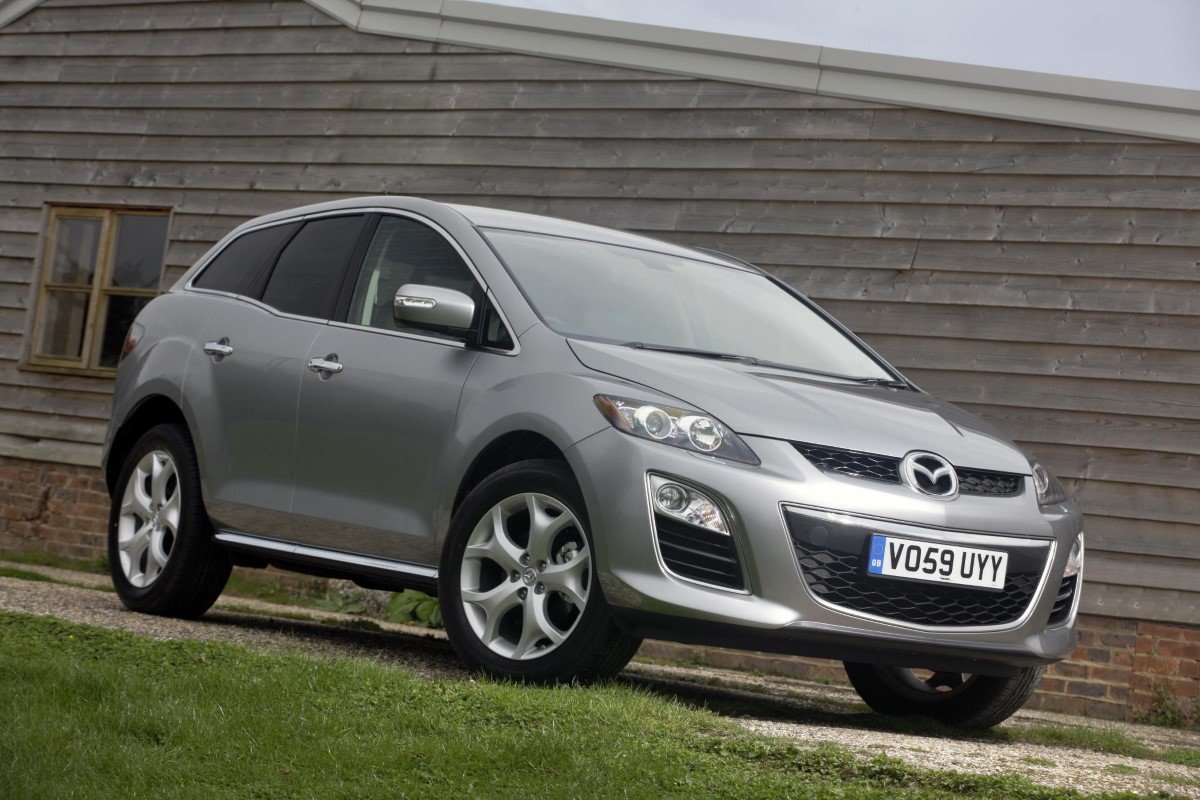
The Mazda CX-7 is not like other SUVs from the late 2000s. Quite apart from the fact that its sole engine in early models drank petrol, instead of diesel like its rivals, the CX-7 was far better looking than the competition, and more involving to drive.
Some might suggest it’s a triumph of style over substance, because it is arguably the least practical car in its class, due to the poor boot capacity. The cabin is spacious, but that won’t be much consolation if you can’t get all your luggage in the car. If you want something that looks like an SUV but is sportier to drive, you can’t go wrong with a CX-7, but if you want an SUV that can lug loads, you should probably consider something like the Honda CR-V or, if your budget stretches, a BMW X3 or an Audi Q5.
What is the Mazda CX-7?
When is an SUV not an SUV? That isn’t much of a riddle these days because our thirst for cars that look as if they’re as happy off the tarmac as they are on it seems to grow by the month. But in 2007, when Mazda launched its CX-7 sports crossover, it was unusual for a car with a raised ride height to not have any off-road abilities whatsoever.
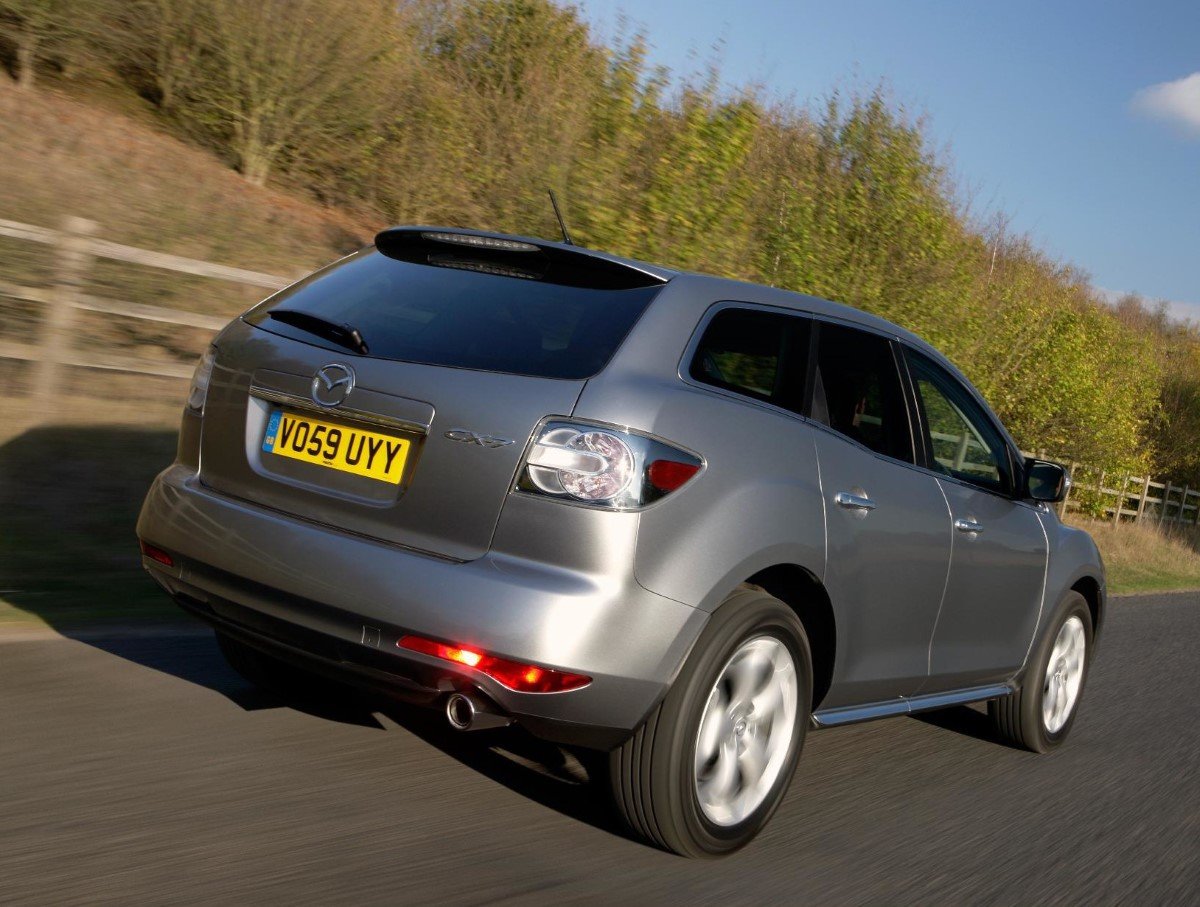
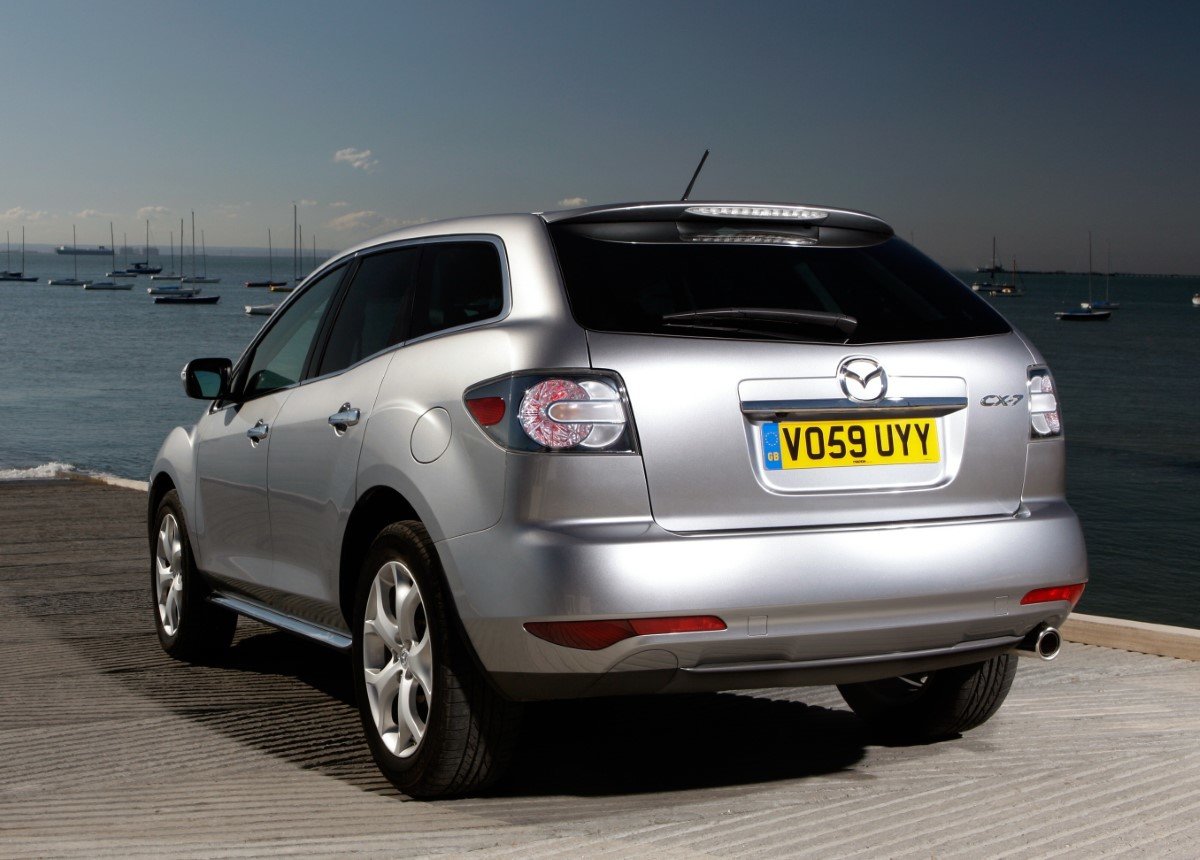
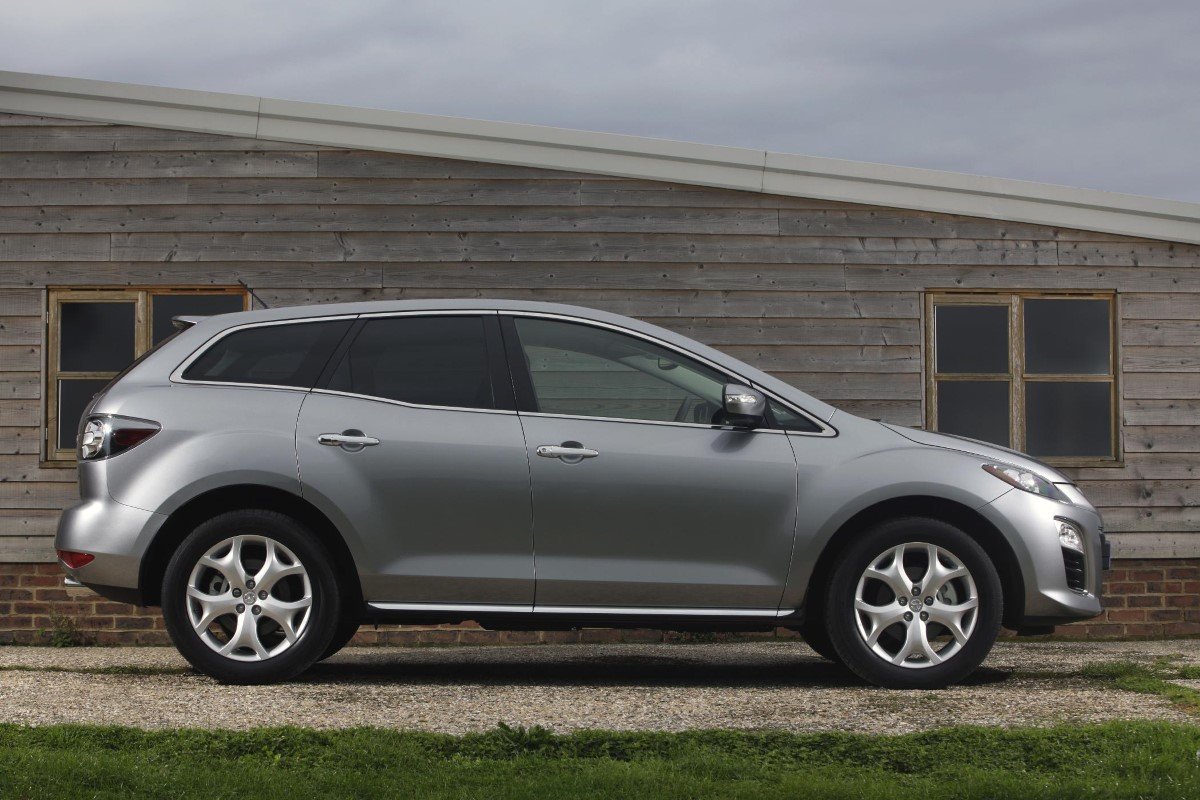
The intrigue was fuelled further by the CX-7’s exterior, which was a lot sleeker and sportier than most SUVs of the time. Indeed, the ‘X’ in CX-7 hints at the styling, which points to Mazda’s much-loved MX-5 and RX-8 sports cars. The design works well, and the CX-7 looks cleaner and less slabby than its rivals.
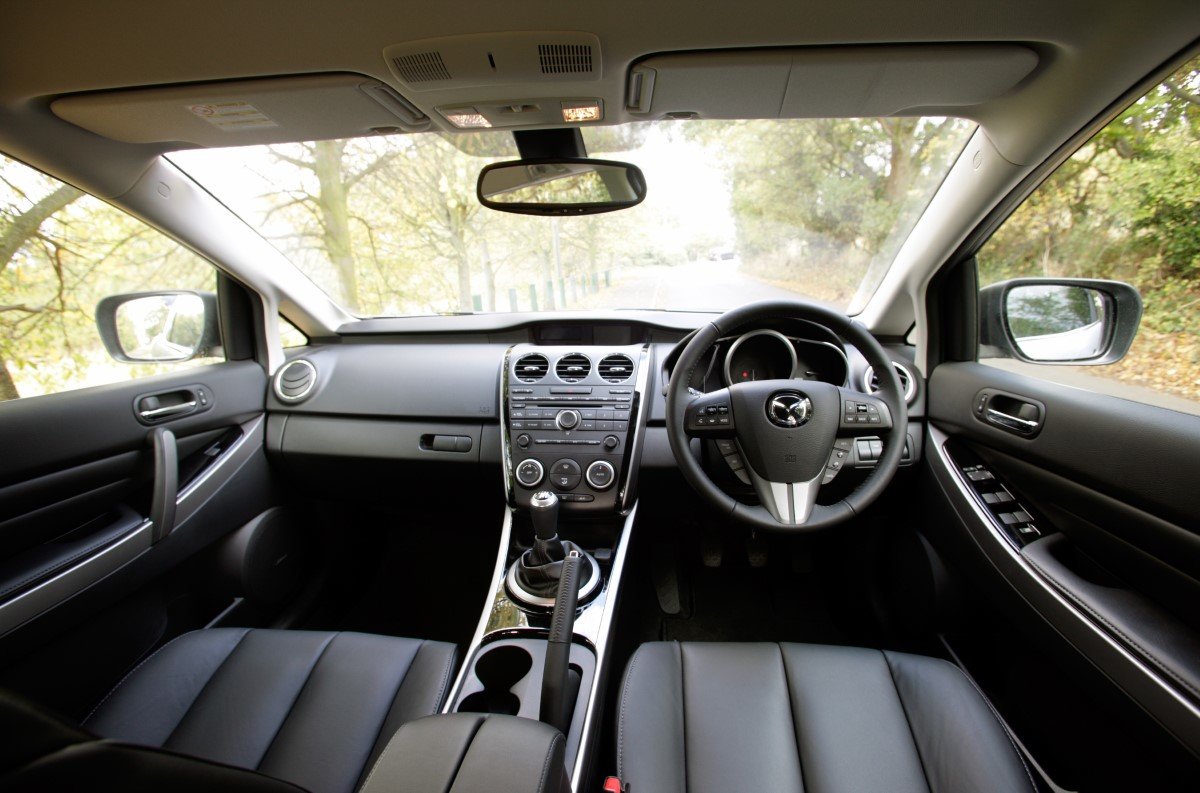
That flair takes a bit of a downward turn inside. Mazda tends not to build interiors that delight and engage occupants; they’re usually put together, but with cheaper materials than you’ll find in BMW X or Audi Q models, with uninspiring, dark colours. Also, the satellite navigation has a tiny screen, which makes it hard to read. It was replaced by the CX-5 in 2012.
How practical is it?
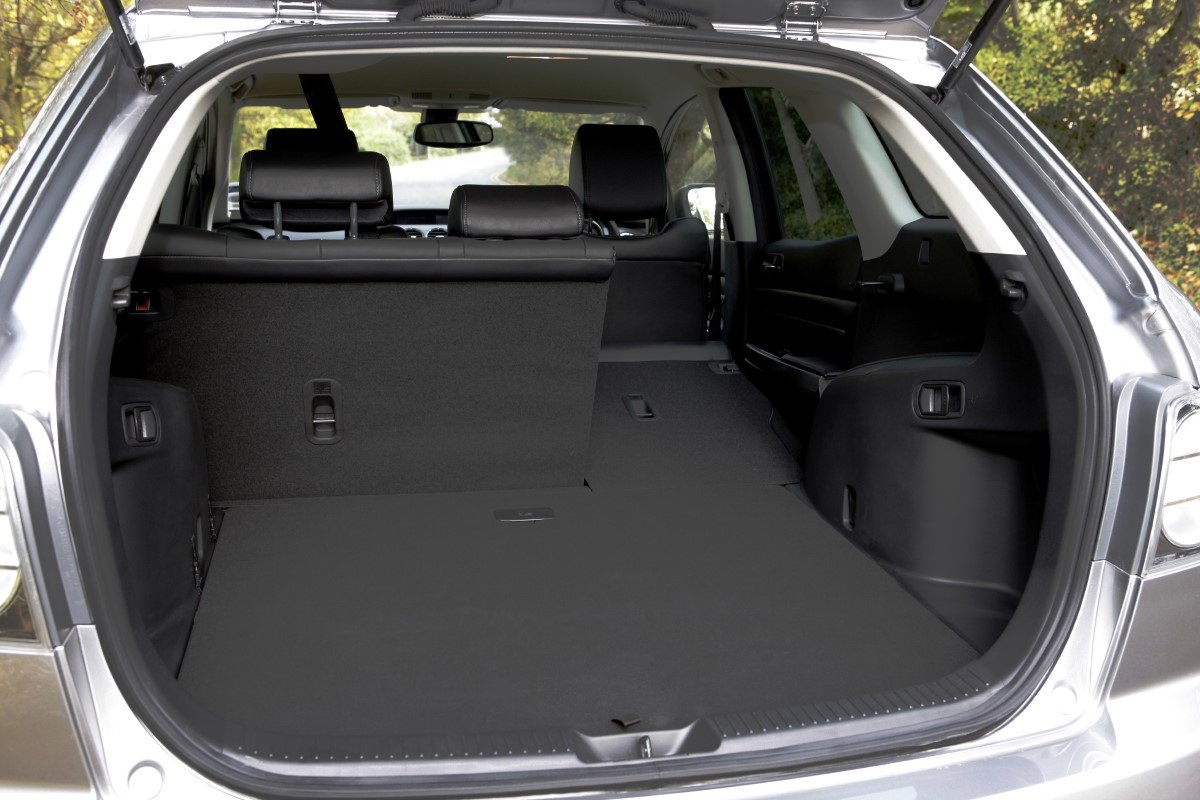
The front seats are very comfortable, with a good driving position. The rear seats are equally comfortable and spacious enough for adults, with enough headroom and legroom, while the bench has a neat one-touch system for folding it flat in a 60/40 split to extend the CX-7’s boot capacity.
However, there’s something rather curious about the CX-7’s boot. The capacity is just 455 litres, expanding to 744 litres with the rear seats down. That’s less than contemporary rivals such as the Toyota RAV-4 or the Honda CR-V and, less even than the smaller Mazda CX-5, which has a 503-litre boot that increases to 1,603 litres. The CX-7 is a also five-seater, so giving up so much space to its rivals is an exercise in poor packaging.

What's it like to drive?
Things improve considerably on the road. Mazda usually makes cars that are engaging to drive, so it’s no shock to discover that the CX-7 doesn’t drive like most SUVs. There’s an agility to it, along with enough stiffness to ensure that nobody inside is thrown around. The ride is quite firm, but not enough to disturb cabin occupants, and any harshness from road surfaces is minimal. UK market cars were fitted with an all-wheel drive system, but Mazda recommended that owners didn’t take the CX-7 off-roading.
The CX-7 was originally designed for the US market and fitted with a 256bhp 2.3-litre petrol engine to meet the tastes of North American drivers. A 2.3-litre petrol engine, however, is not to the taste of many British drivers – at least not in an SUV of this era – so a strong 171bhp 2.2-litre turbodiesel, previously used in the Mazda6, replaced it in 2009. The diesel isn’t as quick or as powerful as the petrol, but it’s considerably less expensive to run.
Technology, equipment & infotainment
Mazda kept things simple with the CX-7’s trims, releasing just two.
The standard one includes leather seats, a CD multichanger, cruise control, rear parking sensors, and Isofix child seat anchor points.
The higher Sport Tech trim adds sat-nav, Bluetooth, MP3 connectivity, and some other modern conveniences to justify the additional premium.
Mazda CX-7 running costs
As you might expect, running costs for the original petrol of the CX-7 aren’t for the tight-of-pocket. The official fuel consumption figure of 27.7mpg is optimistic, especially considering that the engine was previously fitted to the Mazda3 MPS hot hatchback and the Mazda6 MPS performance saloon. Expect to nearer to 20mpg, or less if you really let rip with all its 256bhp.
The diesel engine that replaced it in 2009 is far more frugal and has an official figure of 37.7mpg. Again, this is a figure many drivers will struggle to achieve, but somewhere in the low 30s should be possible.
Likewise, the CX-7’s emissions are an important consideration. The petrol variant has an emissions figure of 243g/km, which means it will be really quite expensive to tax. The diesel’s emissions are better, at 199g/km, but that’s still not low, so don’t expect Vehicle Excise Duty to be a snip.
Insurance won’t be cheap, either, because the CX-7 sits in groups 32 and 33 out of 50. If you’re an experienced driver with no-claims discount, the premiums shouldn’t be too onerous, but either way, this isn’t the cheapest of cars to insure.
Service and maintenance shouldn’t be too much of an issue, partly because Mazdas tend to be well built and reliable, in common with many Japanese brands. Franchised dealers or independent garages will be able to do any regular services or irregular repairs.
Mazda CX-7 reliability
The CX-7 is knocking on a bit, but Mazda’s solid reputation for reliability bodes well. The brand usually scores well in customer satisfaction indices, such as in What Car?’s 2021 reliability survey, where it finished eighth out of 30 manufacturers.
However, problems have been reported with the CX-7. Early cars with the petrol engine had turbocharger issues, which is often related to a stretched timing chain. Other issues include transfer case failures and iffy fuel injectors.
These issues are relatively few and far between, but if you do buy a car that develops some of the problems mentioned above, they could well be expensive to fix, possibly requiring a new engine.
- The CX-7 was designed at Mazda’s principal design studio in Hiroshima, Japan, then first shown at the 2005 Detroit Auto Show as the MX-Crossport concept. The European production version was launched at the Paris International Motor Show in September 2006.
- Safety was one of the standout features of the CX-7 when it was new. It was tested in 2010 by EuroNCAP and awarded a four-star crash-test rating. We’re used to five-star cars these days, but under the testing regime of the time, four stars was a good result. Adult protection was rated at 76%, child protection was 79%, and the safety assist score was 71%. This was achieved via the likes of front, side, and curtain airbags, plus rear parking sensors.
- To optimise the CX-7’s performance and driving dynamics, Mazda conducted speed tests on derestricted sections of Germany’s Autobahn. It was also put through its paces in handling and roadholding tests on the famous Nürburgring Nordschleife race circuit.
- For power: The CX-7 was initially sold in the UK with a single engine, a 2.3-litre petrol. At the time, diesel was the fuel of choice for most SUV owners because of its superior fuel economy and lower CO2 emissions. This meant that take-up of the CX-7 was somewhat slow, with British drivers less interested than their American counterparts in the 256bhp and the 7.7-second 0-62mph time. There are used petrol cars out there, but they’re few and far between.
- If you want better fuel economy: By 2009, Mazda realised that a petrol-powered CX-7 wasn’t going to fly with UK buyers, so it withdrew it from sale, replacing it with a turbodiesel version, which then became the only available variant. Post-2010 cars come with the firm’s 2.2-litre diesel, which has 171bhp and will hit 62mph in 11.3 seconds. Like the petrol car, it had a six-speed manual gearbox.
- If you want the best all-rounder: We’d stick with the diesel for fuel economy and treat ourselves to the top-spec Sport Tech model for its extra features. Depreciation means it shouldn’t cost too much more than the base model by now, and Bluetooth alone is worth it to be able to stream content from your phone.


