Mazda3 Review (2019-present)
Mazda Mazda3 cars for sale
4.0
Expert review
Pros
Stunning styling for a family hatchback
High-quality fit and finish
Satisfying to drive, with nimble handling and a comfortable ride
Cons
Far from the most spacious car in its class
Naturally aspirated petrol engines need lots of revs
Relatively high emissions
The CarGurus verdict
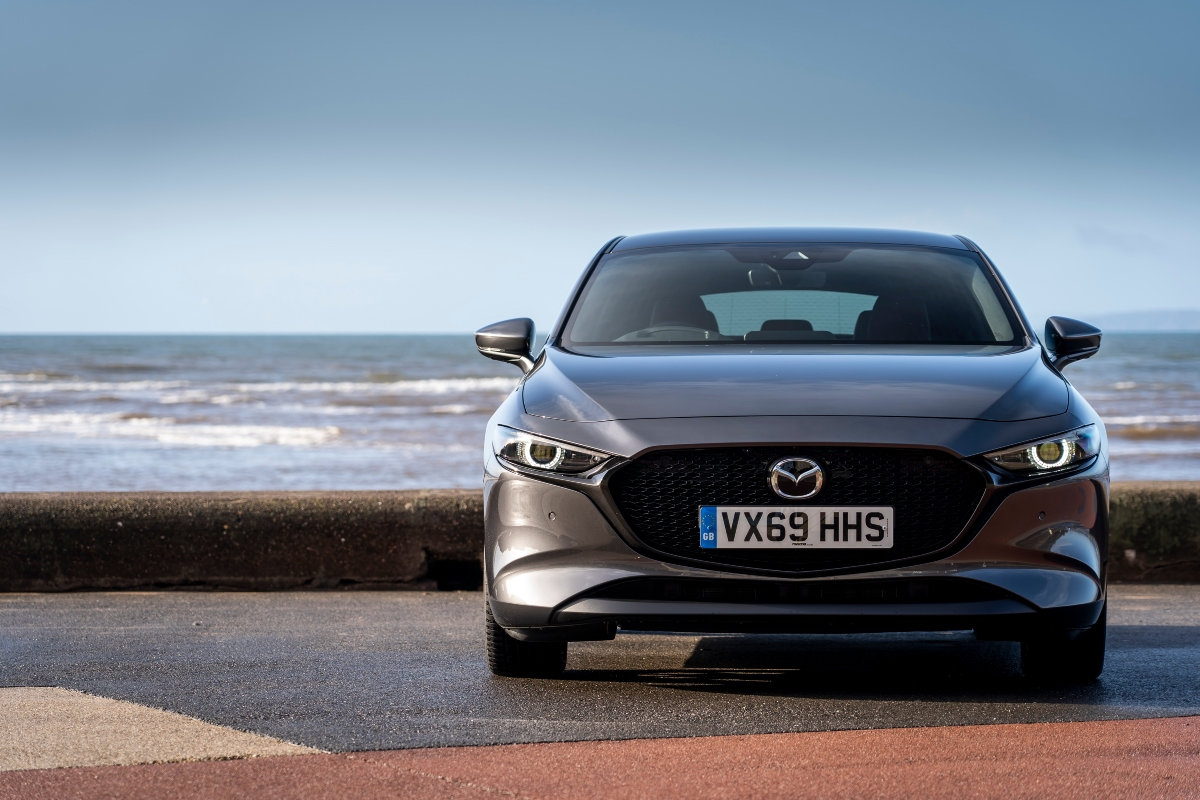
The Mazda3 is a thoroughly likeable car that offers distinct design, a finely tuned driving experience, and just about enough space to suit a modest family.
However, there are some shortcomings. It’s a little dark and gloomy in the back seats and the Skyactiv petrol engines don’t have the oomph of most competitors because Mazda eschewed turbochargers. This also means it suffers on emissions, so company car drivers may not find it financially attractive.
However, if you are prepared to consider overlooking those issues, give it a try. We are confident you will be pleasantly surprised at how good the Mazda3 proves to be.
What is the Mazda3?
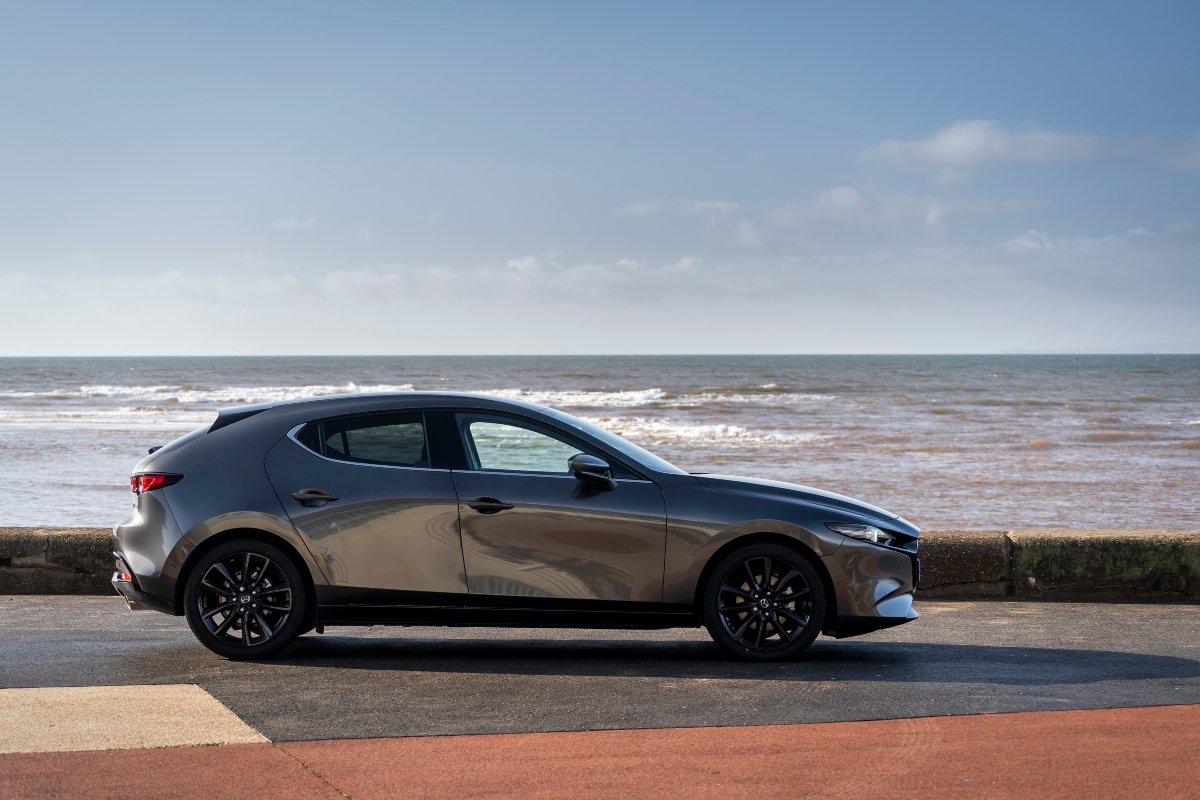
The Mazda3 is by far and away one of the best-looking family hatchbacks around. The manufacturer’s design team took inspiration from a couple of acclaimed concept cars, the soft, shapely curves of which were carried over to production.
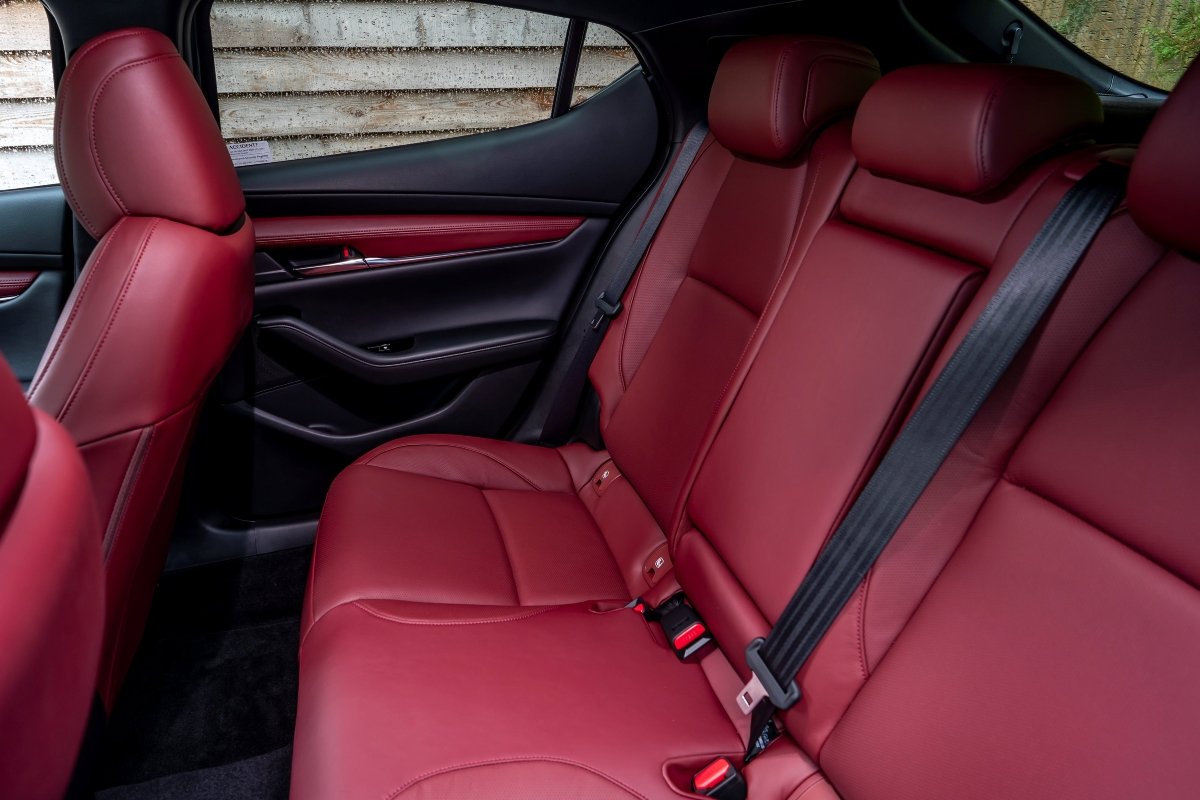
We won’t kid you that the Mazda3 – whether in five-door family hatch form or in its four-door saloon guise – is the most spacious car in its class, particularly in the back seats, where it can feel dark and a little cramped, but from front, the cabin is very appealing, and has an air of quality and simplicity about it.
How practical is it?
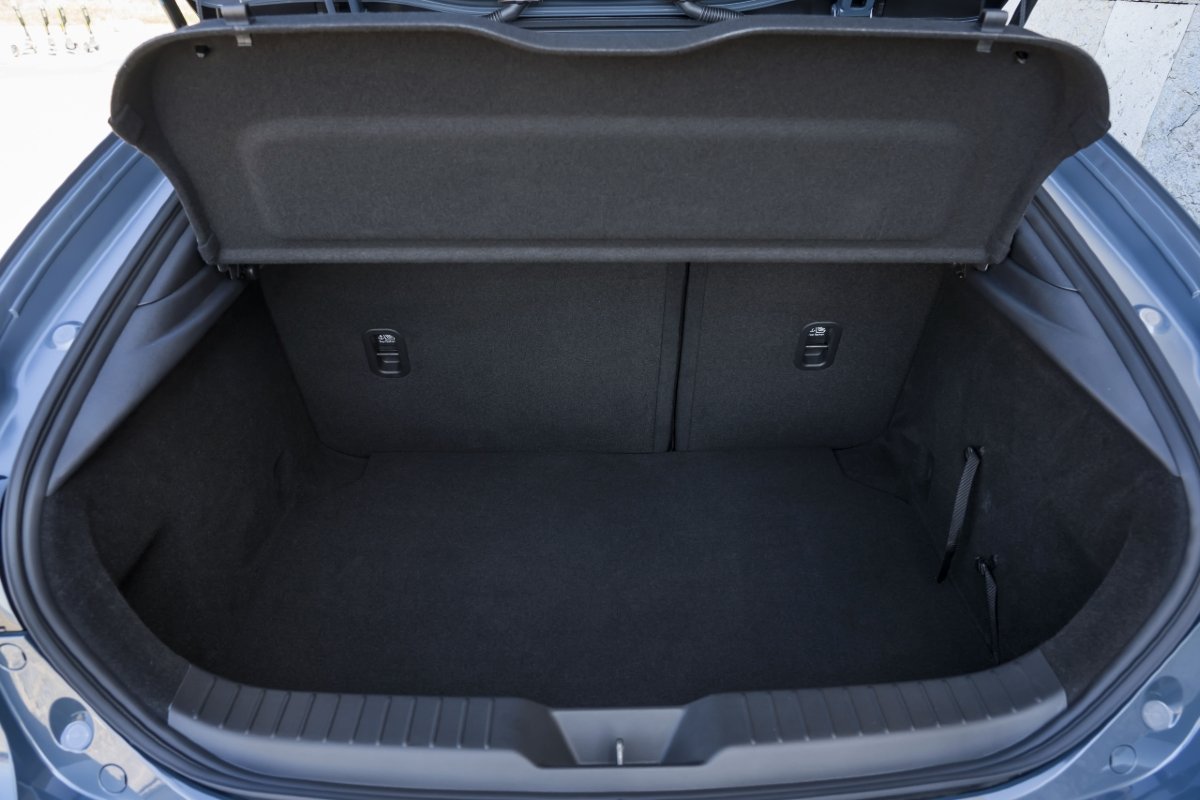
The hatchback’s boot has flat sides, and the seat backs drop down and divide 60/40. It offers 358-litres of luggage space with the seats up, or 1,026 litres when they’re folded, which is a little less than a VW Golf but far from poor. The saloon version has 450 and 1,138 litres, but bear in mind that, with the hatchback, you can fit a luggage restraint behind the back seats and load it to the roof.
The rising waistline, the big rear pillar, and the low roof mean it can feel dark and claustrophobic for rear-seat passengers. There are two sets of Isofix mounting points, one for each outer seat, but larger child seats come close to reaching the roof, because it slopes steeply as it drops to meet the tailgate. If you need to use high-backed booster seats – especially for children between the ages of about seven and 11 – then check that the Mazda can handle them.
What's it like to drive?
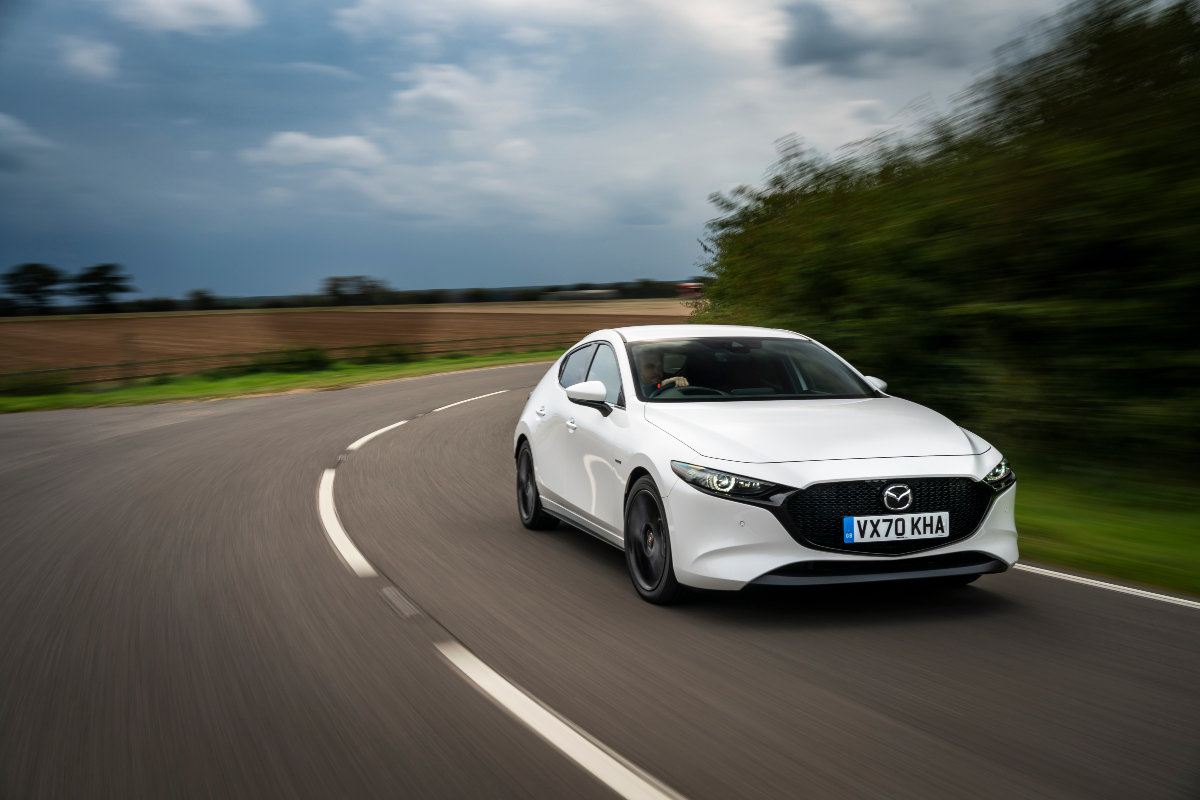
Mazda has created a front-wheel drive car that feels calm, composed, and mature. Its controls are light and precise, especially the steering and the manual gearbox, the ride is composed across country or on main roads, while noise levels – except for tyre noise – are low. It won’t tire you out during a long drive, and it’s as engaging as a Ford Focus or a Volkswagen Golf.
Having completed five-hour stints behind the wheel, we can confirm that the driving position is excellent; the seats are comfortable and there’s plenty of space, including large door bins and stowage areas.
The main difference between the Mazda3 and its competitors is that Mazda only offers naturally-aspirated petrol engines, known as Skyactiv-G or Skyactiv-X. These two (very) mild hybrid petrol engines do without turbochargers in favour of larger capacities, and there’s no diesel option. The success of this approach boils down to how you like an engine to feel; those who like lots of pulling power low in the rev range won’t be fans, whereas anyone who prefers to rev an engine and feel a little more involved will likely enjoy it.
Technology, equipment & infotainment
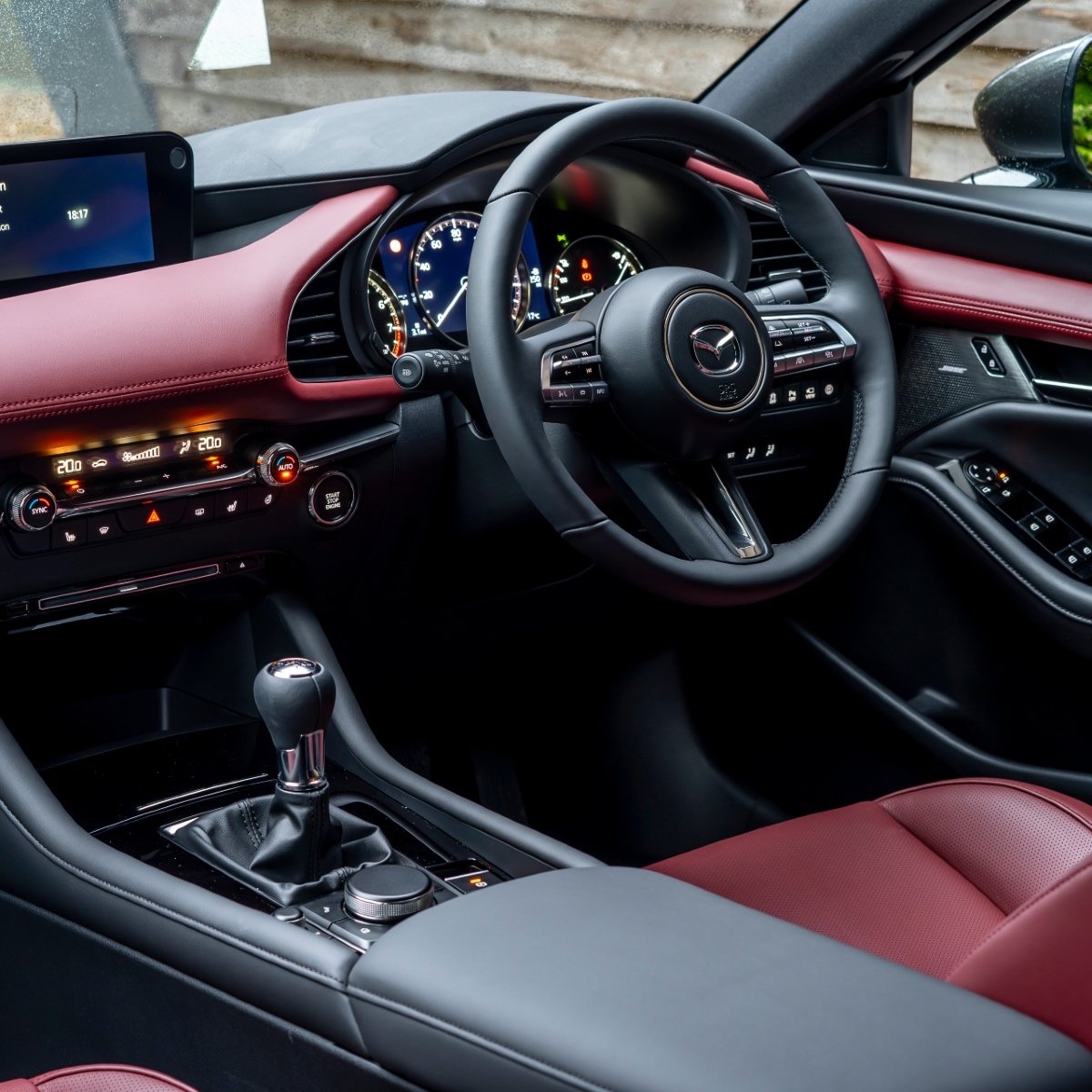
While there isn’t much choice in the powertrain line-up, there’s plenty when it comes to trim levels. Even the entry-level SE-L comes with alloy wheels, automatic lights and wipers, manual air-conditioning, four powered windows, rear parking sensors, adaptive cruise control, and an infotainment system that supports DAB, sat nav and Apple Carplay/Android Auto.
Upgrading to SE-L Lux trim earns you extra goodies such as two-zone climate control, keyless entry, heated front seats, front parking sensors and a reversing camera.
Sport Lux trim adds mostly cosmetic enhancements, but GT Sport gives you leather upholstery and Bose surround sound for your stereo, while GT Sport Tech adds a suite of even cleverer driver assistance systems.
Mazda’s infotainment system, MZD-Connect, has an 8.8-inch display resting on top of the dashboard. This is easily as smart a thing as you’ll find in an Audi A3, a BMW 1 Series, or a Mercedes A-Class.
Unlike other car makers, Mazda has resisted integrating touchscreen technology. Instead, all the functions of MZD-Connect are controlled through a rotary dial between the seats or via voice commands. In some ways, it’s a safer approach, because it comes intuitively so your eyes don’t spend as much time looking at the screen instead of the road ahead. But anyone with a thing for technology may view it as a retrograde step.
Mazda3 running costs
Mazda isn’t following the widespread trend to offer hybrid (at least in the conventional sense), plug-in hybrid, or electric power with its family hatchback. Instead, it is convinced that by offering comparatively large petrol engines or investing in new technologies to combine different methods of combustion, it can cater for the needs of most drivers, most of the time.
The most economical model is the more powerful 178bhp Skyactiv-X motor, which returns an official 48.7mpg on the combined cycle. It also has CO2 emissions of 131g/km, which means a company car driver will pay a reasonable rate of benefit-in-kind (BIK) tax.
Ironically, the less powerful engine costs more to run. It returns economy of 44.8mpg and has CO2 emissions of 138g/km of CO2, which earns it a one per cent penalty over the Skyactiv-X and sees company car users levied with heftier BIK tax. That’s not as good as its key competitor, the Toyota Corolla. In 1.8-litre hybrid guise, the Corolla returns 62.7mpg and emits 116g/km, which is beneficial for both private and business motorists, saving on road tax in the first year and slashing company car tax.
And when budgeting for servicing costs, the car maker offers a package of three services for the Skyactiv-G powered Mazda3, either as a one-off payment or spread out as a monthly sum. The Skyactiv-X engine costs a little more for the same package, and both require a service every year or 12,500 miles, whichever is first.

Mazda3 reliability
The likes of Hyundai and Kia offer greater peace of mind when it comes to warranty cover, by providing five and seven years of cover respectively, while Toyota will cover owners for a decade, but only if they have their car serviced at a franchised dealer once a year. Mazda, by contrast, sticks to a warranty that’s nothing out of the ordinary – three years and 60,000 miles.
Mazda out in a middling performance in the 2024 What Car? reliability survey, placing 16th out of 31 manufacturers.
The Mazda3 achieved a five-star result from Euro NCAP when it was tested for safety. It scored an impressive 98% in the adult occupant category, as well as 87% for child occupant protection. Standard safety includes the latest active technology, such as autonomous emergency braking, lane keeping assist, blind-spot monitoring, rear cross traffic alert and driver fatigue warnings.
- Although the Mazda3 saloon has a larger boot than the hatchback, it doesn’t offer the same level of versatility. In the hatchback, you can place a luggage guard behind the back seats and load the boot to the roof – you can’t do that in the saloon – and the hatchback’s tailgate also has a larger opening.
- You can get an all-wheel drive version of the Mazda3, which can be paired with the 178bhp 2.0-litre Skyactiv-X engine and a choice of a six-speed manual or six-speed automatic gearbox. However, this all-weather feature is only available with the flagship GT Sport Tech trim level, so it’s among the most expensive versions.
- Mazda’s Skyactiv-X engine is a novelty in the car industry. The four-cylinder, petrol-powered unit combines the combustion processes of both petrol and diesel engine – spark ignition and compression ignition. It’s a genuine innovation, one that is meant to bring the driving enjoyment of a petrol with the economy of a diesel. We managed an average mpg of 45 but suspect there is room for improvement. The driving experience is indeed smoother and more refined than a diesel, even if, at times, the engine feels ever-so-slightly out of tune.
- The best value for money: If you don’t want to get carried away with fancy engines, posh trim levels, and all-wheel drive, then consider the Sport Lux trim level and the entry-level 120bhp 2.0-litre Skyactiv-G engine. It comes with larger, 18-inch alloy wheels, which complement the car’s distinct design, and you get enough gadgets and gizmos to make it feel that you haven’t cut corners.
- The sportiest: Every version of the Mazda3 rides and handles very well but step up to the more powerful 178bhp Skyactiv-X engine, and performance is respectably brisk, with 0-62mph taking 8.2 seconds and a top speed of 134mph. That’s never going to trouble a Golf GTI, but it gives the car a brisk turn of pace.
- For grip in all weathers: Unusually, Mazda offers all-wheel drive with the Mazda3. As we mentioned, this is available exclusively with the more powerful Skyactiv-X engine in the top GT Sport Tech trim, and with either a manual or an automatic gearbox, but only in the hatchback.

