Mercedes-Benz A-Class Mk2 (2005-2012) review | A practical family runaround
Mercedes-Benz A-Class cars for sale
3.0
Expert review
Pros
Very roomy for its size
Comfy, high-up driving position
Well finished cabin
Cons
Dull to drive
Some versions lack air conditioning
Even the newest models are now quite old

The CarGurus verdict
Whether or not you should buy a second-generation A-Class depends partly on whether you like its unconventional styling, and partly how much you enjoy driving. It’s not for people who think a car is more than a means of getting from A to B. It is also getting old now, so while its more basic approach to everything can be a positive, the A-Class that followed will feel far more current – even though it too can be more than a decade old.
That said, ease of access for those with mobility issues, combined with a lofty driving position, wins the Mk2 A-Class many friends. Its cabin is chic, well-made, spacious and versatile, especially when equipped with the optional Easy-Vario Plus seating package. Retirees and small families will find much about the second-generation A-Class that suits their lifestyles. And in terms of image, the Mercedes-Benz three-pointed star puts an upmarket shine onto this aged compact hatchback.
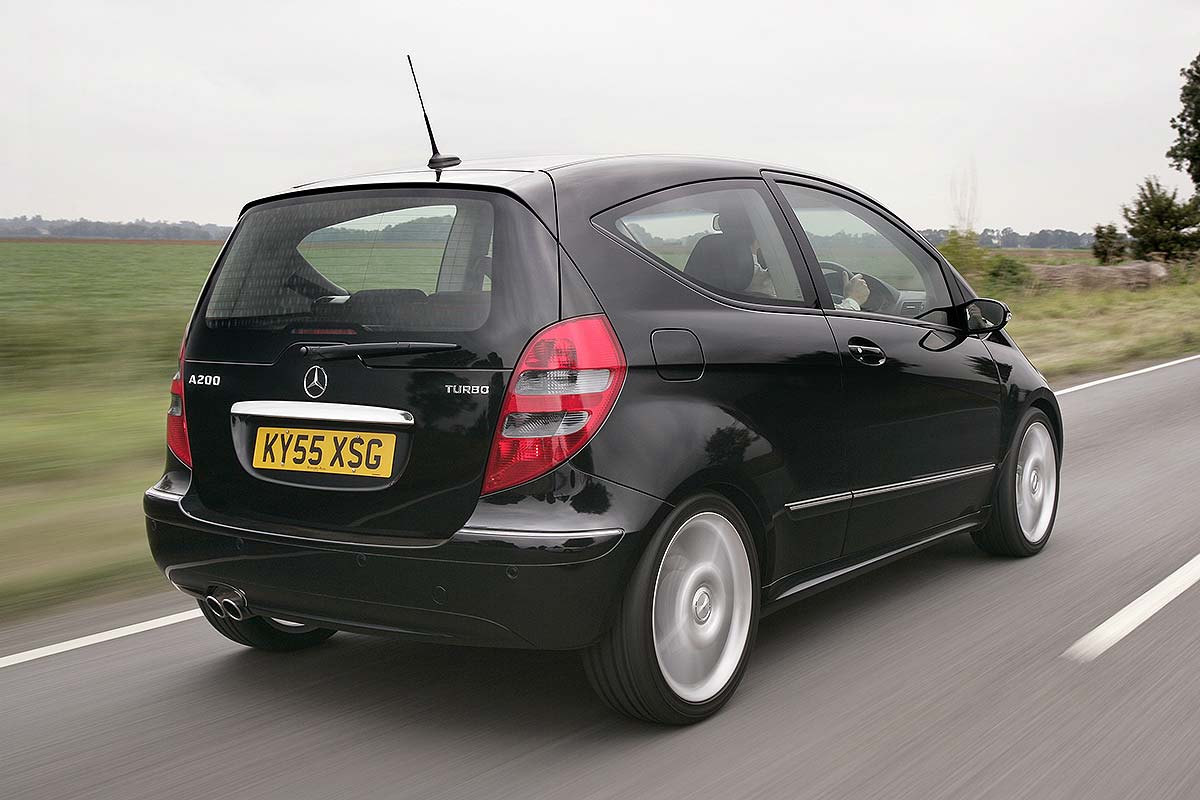
What is the Mercedes-Benz A-Class?
There were plenty of critics of the short, upright body style of the first-generation Mercedes-Benz A-Class when it arrived in 1997. However, by the time it was replaced by the second-generation A-Class of 2005, Mercedes had sold 1.1 million of them – 88,372 of which found homes in the UK. No wonder the company kept the recipe broadly the same for the Mk2, known by brand aficionados as the ‘W169’. Buyers seemed to like the idea of Mercedes ownership at a lower price point, and in a family-focussed, practical body. It was a very different proposition to the larger C-Class, E-Class and S-Class models.
While the modern A-Class is a much more conventional hatchback, this Mk2 A-Class offers function over form. It may not be the most stylish used car on the market, but there are still plenty of positives for this two-decade-old design.

How practical is it?
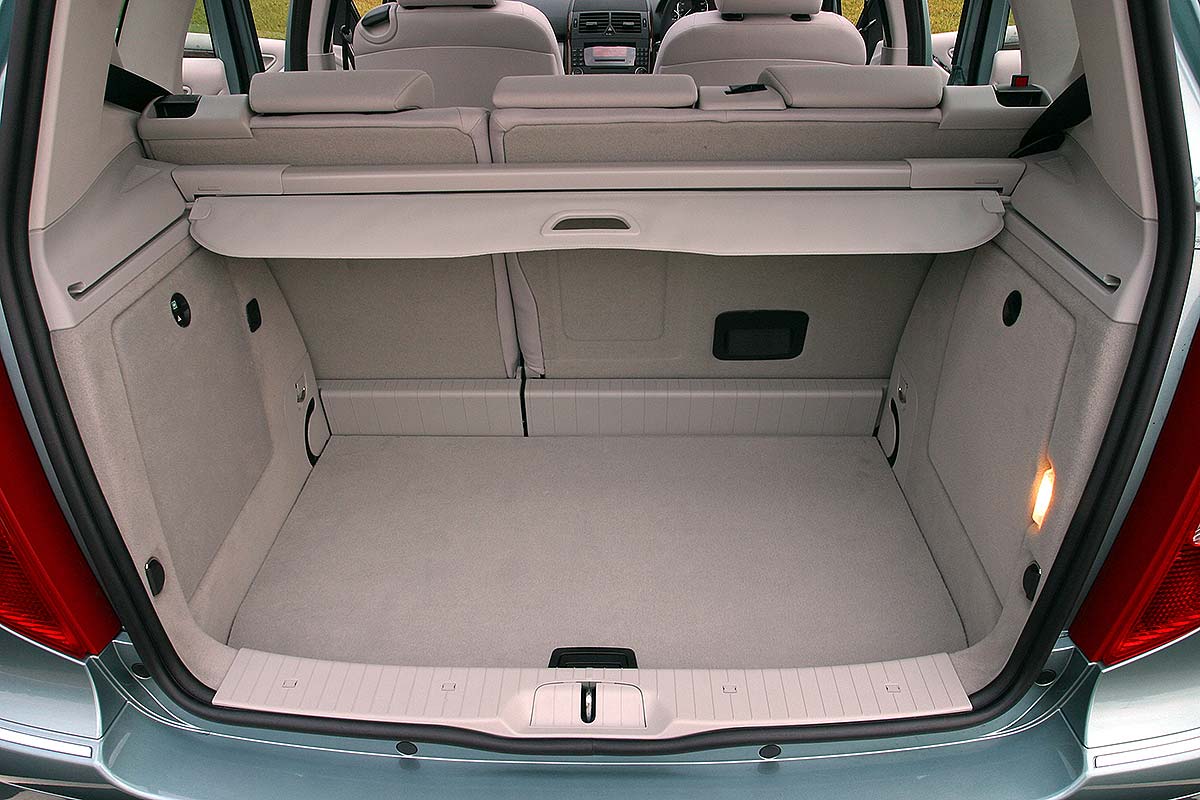
The front-wheel-drive second-generation A-Class features many improvements over the original car. As well as being wider than its predecessor, it has a 14mm longer wheelbase, meaning more interior space and a larger boot – 435 litres, to be precise. All second-generation A-Class models feature a two-level boot floor.
Mercedes-Benz offered both a five-door saloon and a three-door coupe for the first time. The former is the most practical, with greater access to the second-row seats. Both versions will seat five, however, although the middle rear seat is narrow and best kept for short journeys.
The outer rear seats can be folded down individually but not at the same time, with a 60:40 split if you want the centre seat to come down as well. Mercedes also offered Easy-Vario and Easy-Vario Plus systems. The former allows you to remove the rear seat cushions and adjust the height of the boot floor to create a compartment underneath, while the latter means you can remove the rear seats and passenger seat entirely for a load capacity of 1,995 litres.
The design and quality of the car’s cabin materials is vastly improved compared to the previous A-Class, while the seats themselves are much more comfortable. Isofix child seat mounting points are standard in the rear of the car, too.
When the A-Class was new, Mercedes offered roof-mounted storage boxes and ski racks as extra-cost options, as well as a boot-mounted bicycle rack. In addition, with the Easy-Vario or Easy-Vario Plus seating, there was even a bicycle storage solution for the cabin itself, utilising various interior mounting points and straps. So, if you’re determined to keep your bike dry and dirt-free before you go for a ride, look out for these online or in the boot of any A-Class you eye up as a potential purchase.
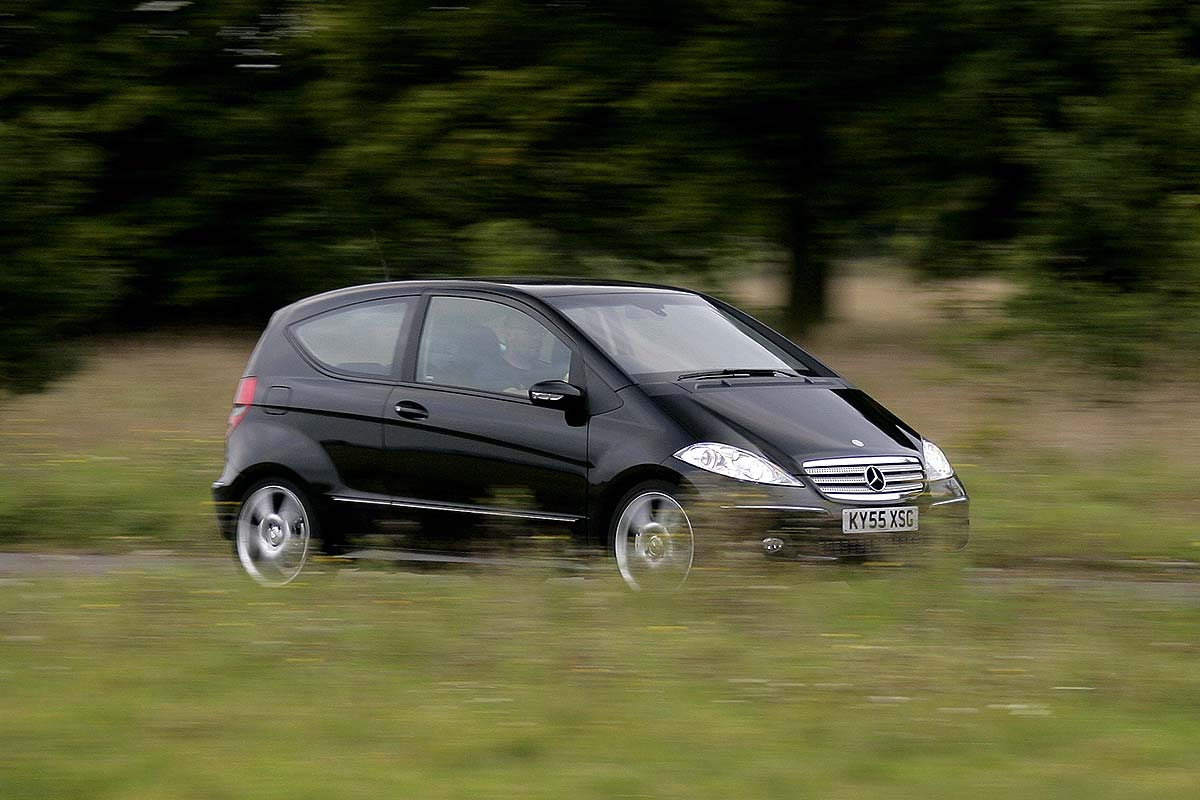
What’s it like to drive?
In comparison to the Mk1 A-Class, the W169’s petrol and diesel engines are more powerful and economical. The car also has more safety equipment, including stability control as standard on all models. Depending on the engine and the model year, buyers could have a five- or six-speed manual gearbox, or an optional Continuously Variable Transmission (CVT) known as ‘Autotronic’. As well as Comfort and Sport modes, a manual setting offers virtual gears, where the revs rise and fall as you use the shifter to change up or down.
Despite being a dynamic step forward from the first-generation model, the second-gen A-Class doesn’t dish up much driving pleasure. Turn the steering wheel and you'll find the system is overly light, the car’s handling lacklustre and the ride quality crashier than you’d experience in most rival hatchbacks. The poor ride is surprising given it’s a revised set-up rather than a carry-over. Also its petrol engines are loud when revved hard while its diesels are noisy all the time.
What A-Class W169 owners seem to appreciate, however, is the high, upright driving position and supportive seats. They make getting in and out easier for those with back and knee problems, and offer good visibility without the need to drive a hulking SUV. The A-Class might not be the prettiest car, but there should always be a place for function over form, an idea that has been lost in some modern vehicles. Furthermore, Mercedes fitted brake discs as standard all-round – no rear drums here, thank you – so you have decent stopping power.
At launch, there were four petrol engines: a 1.5-litre, 1.7-litre, 2.0-litre and 2.0-litre turbo – with the flagship model made obvious by its ‘Turbo’ badging. There was also a direct injection 2.0-litre diesel (diesels are badged CDI) producing 82bhp in the A160 CDI, 109bhp in the A180 CDI and 140bhp in the A200 CDI. For the 2008 facelift, the 2.0-litre turbo petrol was dropped in the UK, but Mercedes added BlueEfficiency packages to several of the petrol and diesel engines to improve their fuel economy and reduce emissions. The most successful of these is the A160 CDI BlueEfficiency, with official fuel consumption of 64.2mpg and CO2 emissions of 116g/km.
Technology and equipment
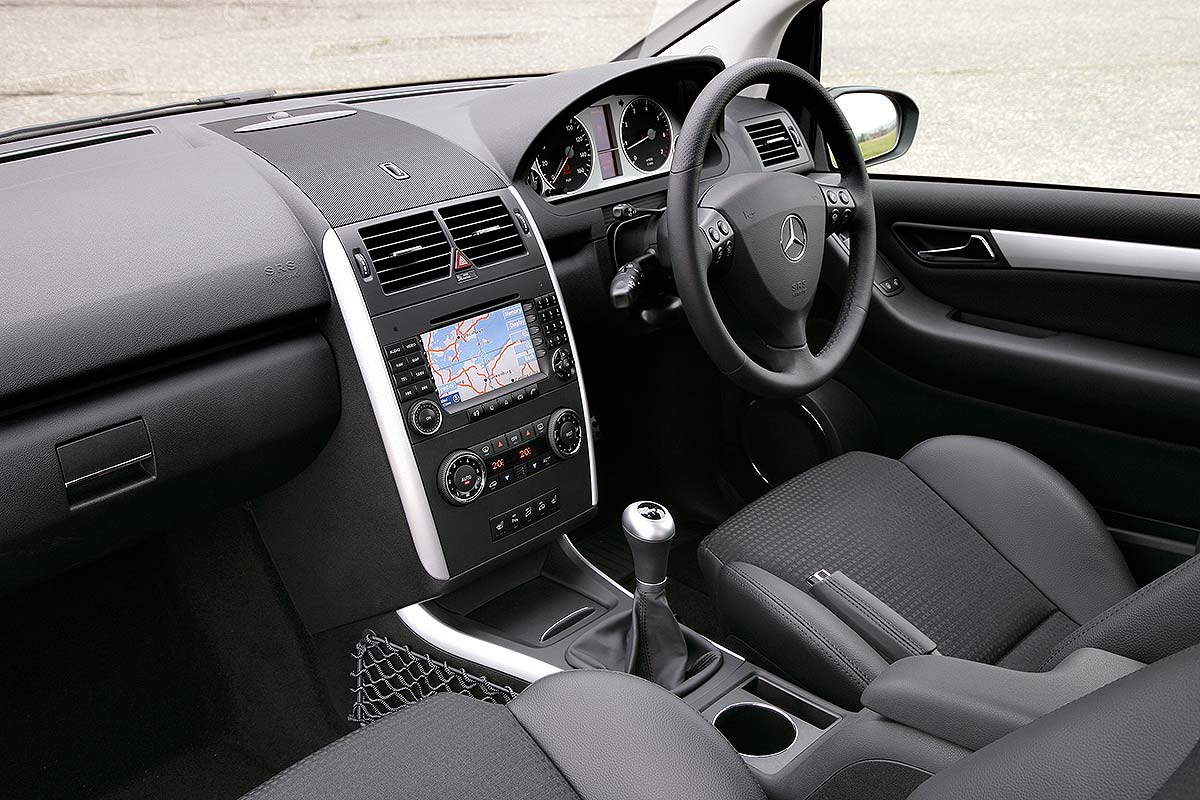
It’s true that facelifted versions of the second-gen A-Class look more stylish inside and out, and have better infotainment systems. But that’s not to say the pre-facelift car isn’t worth having. Heated and electric door mirrors were standard, for example, while a 6.5-inch central screen (known as the Command APS control and display system) was available as an optional extra. Everything was controlled with buttons and wheels – of which there were many – and the system used a DVD-based mapping system that could plan a route before allowing you to eject the disc and listen to a regular music CD.
This could be combined with the optional Harman Kardon sound system for what Mercedes calls a ‘live concert atmosphere’. You could even connect a mobile phone and your text messages would flash up on the screen. Not bad for the mid-noughties, right?
For a fresher feel, though, it’s the post-2008 facelift car you want. Sure, a central navigation screen was still an optional extra, but everything inside feels a little sleeker and more modern. Whether it’s pre- or post-facelift, one system to watch out for is Active Park Assist with Parktronic. As the name suggests, the car could parallel park for you, so it’s a system that’ll still prove handy today. Parking sensors were also included, should you prefer to park the car yourself.
Depending on the age of the A-Class you look at, features such as cruise control, folding mirrors, heated seats, a panoramic roof, electric rear windows, automatic climate control (known as Thermotronic) and hill assist were available. Bi-xenon headlights could be optioned, too, bringing with them a then-futuristic cornering function, where the lights would ‘look’ in the direction you’re turning at speeds of up to 25mph.
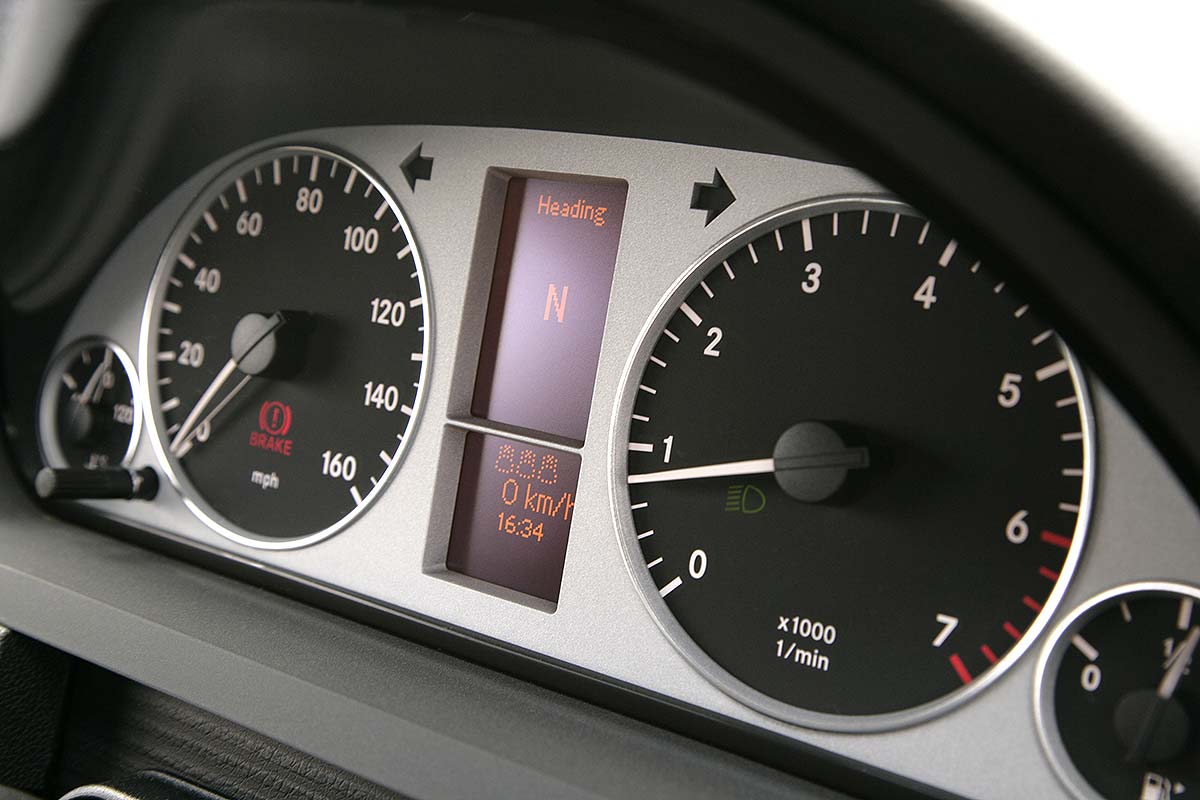
Mercedes-Benz A-Class running costs
Discounting the A200 Turbo, which isn’t all that commonplace anyway, petrol engines in the second-generation A-Class all deliver more than 39mpg. If you can find yourself a BlueEfficiency A150 or A160, though, you may be able to squeeze 48 miles from a gallon of unleaded. Predictably, diesel is the more economical fuel type, with the regular CDI models delivering between 49 and 57mpg, and the A160 BlueEfficiency’s 1.6-litre CDI engine managing up to 72mpg. Engines like this make you miss good old-fashioned diesel workhorses.
Annual road tax isn’t too painful for a second-gen A-Class, with most cars spanning a range of £35 to £360. The exception is the A200 Turbo, which attracts a £410 charge. It’s little surprise the Turbo gets hit hardest by the insurance industry as well. It’s in group 30 (out of 50), while the rest of the range sits between groups 11 and 20.
Owners who bought the second-gen A-Class new complain about the high cost of having their cars serviced at Mercedes-Benz dealers, and with the vehicles now long outside of their manufacturer warranties, independent Mercedes specialists might be a better bet. Be mindful of your 30-year anti-corrosion warranty if you do decide to take your car to an independent garage, though, especially if it’s only ever been serviced at a Mercedes dealer before. The Mk2 A-Class has an onboard service indicator that tells you when an A or B service is required, a handy feature that will keep proper maintenance front of mind.
Mercedes-Benz A-Class reliability
The second-generation A-Class is fairly dependable, as evidenced by its 25th place out of 100 cars in the 2010 JD Power customer satisfaction survey. Still, that was a long time ago and there are now a few problems to look out for.
Increasingly, rust is becoming a vexatious issue, typically in the car’s doors and tailgate. Sorting out those could cost you £3,500 or more, so if you spot rust you should walk away. Some sunroofs are now starting to let in water, too, with the potential for damaging electrical systems, while the plastic tube from the washer bottle to the rear wiper can come adrift, soaking the boot carpet. Deteriorating tailgate seals can exacerbate the problem. Water of a different form – condensation – can sit on the cylinder head of diesel models used only for short journeys and therefore not getting hot enough, which can cause the glow-plugs to be corroded and lead to an expensive replacement cylinder head.
Then there are electrical gremlins. When test-driving any potential purchase, check that everything works as it should: window wipers, electric mirrors, heated seats, the stereo and navigation screen (if fitted), window switches and so on.
Make sure the clutch isn’t slipping as it can cost more than £1,500 to fit a new one. On the subject of transmissions, there are reports of failures with the CVT automatic ’box – beware warning lights on the dashboard – because of dodgy electronic sensors. Rectification requires the replacement of the gearbox’s valve body, which could cost several thousand pounds, more or less writing off the car. Also with the CVT, ask for evidence that the transmission fluid has been changed every four years or 37,000 miles. And still on the subject of gearboxes, a stiff manual gear change in a diesel car could be the result of a dry clutch spline. Regular re-greasing should sort this out.
Finally, when driven spiritedly, an A-Class of this vintage can chew through front brake discs in about 25,000 miles. Ask when they were last replaced. For what it’s worth, some owners have reported that squealing brakes can prove tricky to silence.
- A-Class W169 BlueEfficiency models feature a raft of measures to improve fuel economy and reduce emissions. They sit 10mm lower than standard cars, have a blanking plate behind the grille to channel air smoothly away from the engine bay and use narrower, low-rolling-resistance tyres. In addition, they employ better energy management, are fitted with a diesel particulate filter (the diesel engine only, of course), and benefit from stop-start technology – claimed to reduce urban fuel consumption by up to nine percent. The BlueEfficiency package was available on A150, A160, A170 and A180 petrol versions of the second-generation A-Class, along with the A160 CDI diesel.
- When the Mk2 A-Class was first introduced in 2005 it came with what Mercedes-Benz called Mobilo-life, a generous 30-year anti-corrosion warranty and breakdown cover. Given the car is now known to suffer with some rust issues around the doors and tailgate, it’s a godsend to current owners and you as a potential buyer. There’s a catch, though: your car must always have been serviced within the Mercedes-Benz dealer network and have received regular MB anti-corrosion inspections. And any rust has to have perforated the metal.
- Although you hope you’ll never need to feel the benefit, Mercedes angled the engine of every Mk2 A-Class slightly forward. The reason was to encourage the engine to be pushed underneath the pedal box and also under the driver’s and passenger’s legs in the event of a front-end impact. This was one of the clever features that helped the second-generation A-Class to achieve a five-star Euro NCAP safety rating.
- If you want the best value: When the Mk2 A-Class was new you could upgrade from Classic to Classic SE trim for an extra £300. In doing so you’d bag yourself air conditioning (including a refrigerated 8.5-litre glovebox), an upgraded stereo system with a CD multi-changer and front fog lights. It’s a trim level we’d look out for, in combination with the A180 CDI engine, which provides perky performance together with 54.3mpg.
- If you prefer a petrol engine: The 95bhp 1.5-litre unit of the A150 is a wee bit short of puff, so look out for the popular A170, which is powered by the 116bhp 1.7-litre motor. You’ll appreciate its extra performance on the motorway and on empty A-roads, hitting 62mph in 10.9 seconds rather than 12.6 seconds.
- If you want the best fuel economy: Look out for the BlueEfficiency models that arrived with the facelift in 2008. The best fuel mileage of the bunch comes from the 1.6 TDI BlueEfficiency, claimed to give up to 64.2mpg combined. This was back in the day when fuel tests allowed a little more wiggle room than now, mind. Furthermore, any car you buy today will likely have covered a fair few miles. which probably means a slight drop in economy compared to when it was new. In summary, you’re unlikely to see more than the high-50s miles to the gallon on a good day.
- If you want performance: The second-generation A-Class wasn’t made for performance, and there was never an AMG version. But there was the A200 Turbo, powered by a turbocharged 2.0-litre petrol engine with 193bhp. Zero to 62mph takes 8.0 seconds and it’ll do 141mph flat-out. You can combine this engine with Avantgarde trim for extra equipment, including alloy wheels, a multi-function steering wheel and leather upholstery.


