Mercedes-Benz SLC Mk1 (2016-2020) review | Compact and stylish roadster with a folding metal roof
Mercedes-Benz SLC cars for sale
2.0
Expert review
Pros
Folding metal roof adds security
Glamorous looks
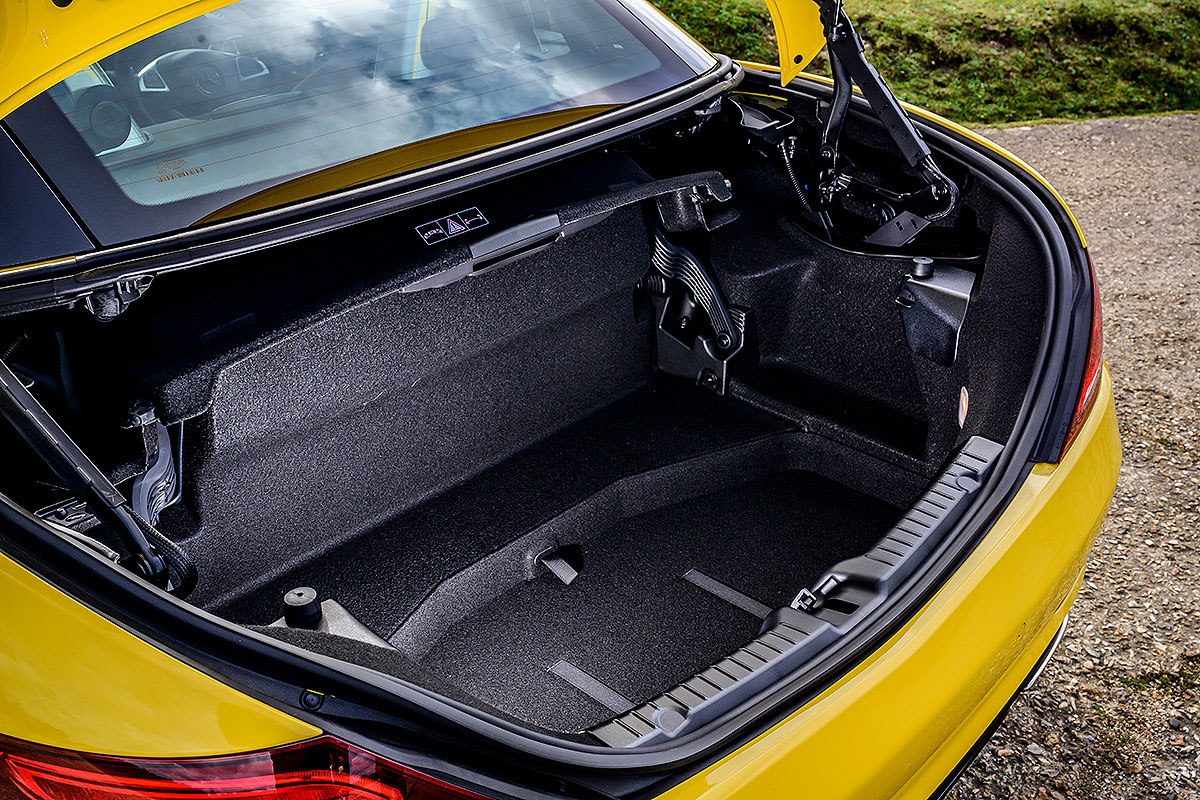
Boot is a reasonable size with the roof up
Cons
Boot space reduces with the roof down
Dated and cramped interior
Not exciting to drive nor comfy to travel in

The CarGurus verdict
The Mercedes-Benz SLC isn’t the sharpest or most exciting small roadster, and even the AMG SLC 43 can’t match a Porsche 718 Boxster or BMW Z4 for driver involvement. The cabin also feels dated, particularly the infotainment system, and some rivals are more comfortable over Britain’s pockmarked roads.
That said, the SLC still has plenty of charm. Its folding metal hardtop gives it coupe-like refinement and security, while still allowing proper open-air driving when the sun eventually appears. As a stylish and comfortable used roadster with the ‘right’ badge, the SLC is hard to ignore.

What is the Mercedes-Benz SLC-Class?
First, there was the Mercedes-Benz SLK. Launched in 1996, this stylish little roadster made its mark by offering a slice of open-top Mercedes glamour at a more affordable price than the larger SL.
By 2016, the SLK was into its third generation, at which point Mercedes-Benz renamed it SLC to bring it into line with the rest of the model range. The change also brought a mild facelift, including revised styling, updated equipment and a new steering wheel.
In truth, though, the SLC remained much the same car as the SLK it replaced. That means a compact two-seat roadster with a folding metal hardtop, rear-wheel drive and a more relaxed character than sharper rivals such as the Porsche 718 Boxster and BMW Z4.
How practical is it?
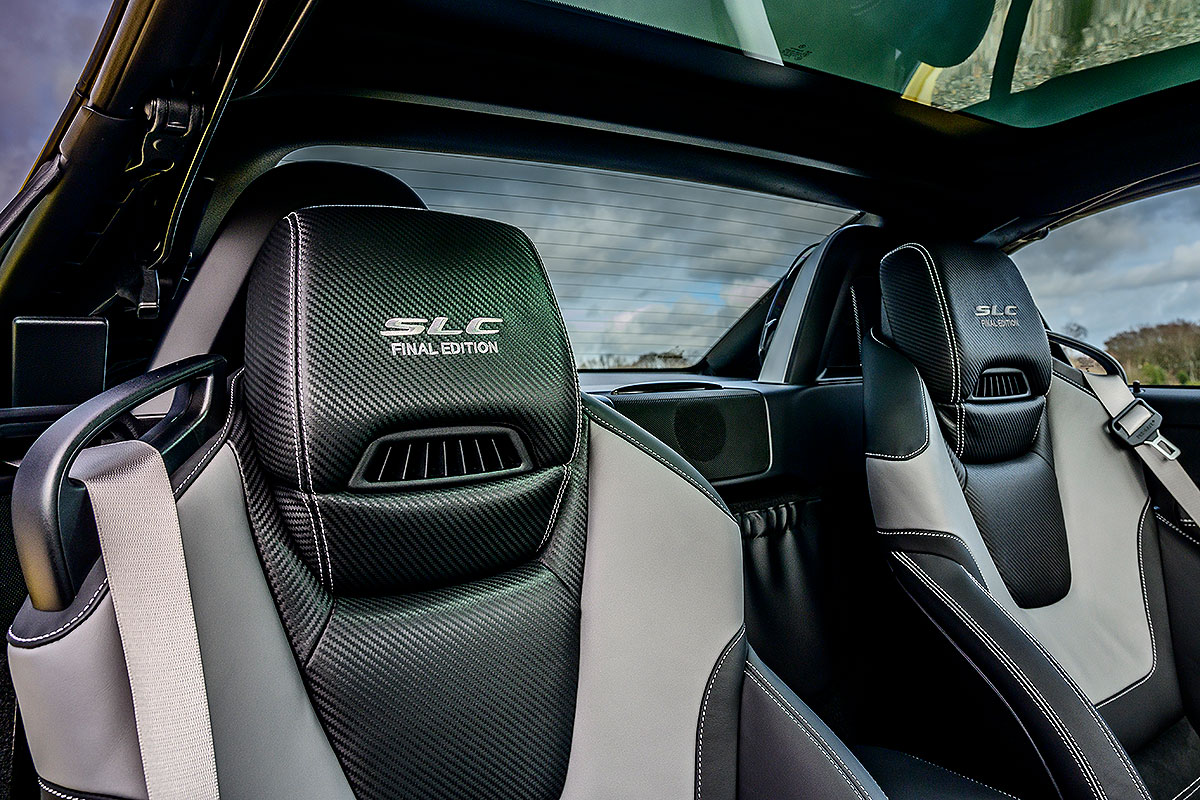
By the standards of small two-seat roadsters, the SLC is reasonably practical, although taller drivers may find the cabin a little tight. The driving position is low and sporty, but there isn’t a huge amount of spare room inside, especially if you’re tall.
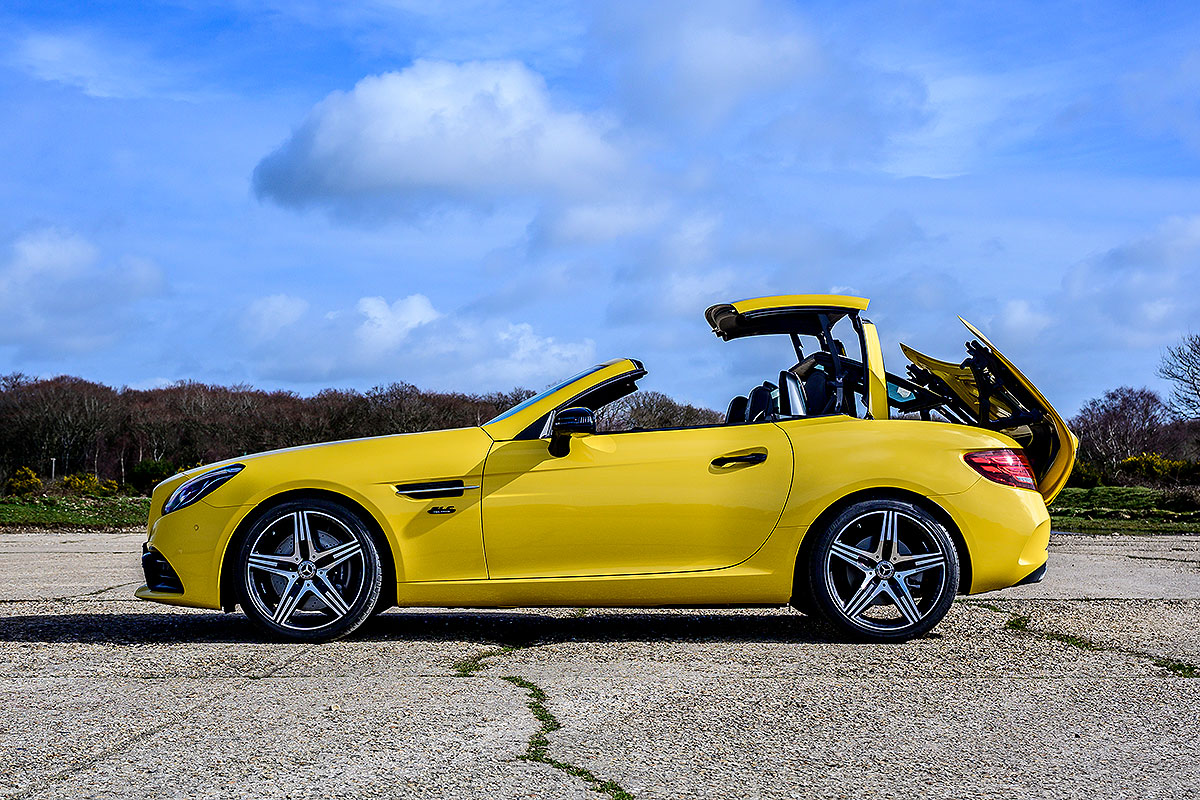
The folding metal hardtop is the SLC’s biggest party trick. It gives the car better refinement and security than a traditional soft-top when the roof is raised, while still allowing proper open-air motoring when the weather plays ball. The trade-off is boot space, because the roof has to go somewhere when it’s folded away.
With the roof closed, boot capacity is 335 litres, which is perfectly acceptable for a weekend away. Lower the roof and that drops to 225 litres, so you’ll need to pack sensibly if you want to enjoy the sunshine without leaving half your luggage behind. Still, for a compact roadster with a folding hardtop roof, the SLC remains usefully practical.
What's it like to drive?
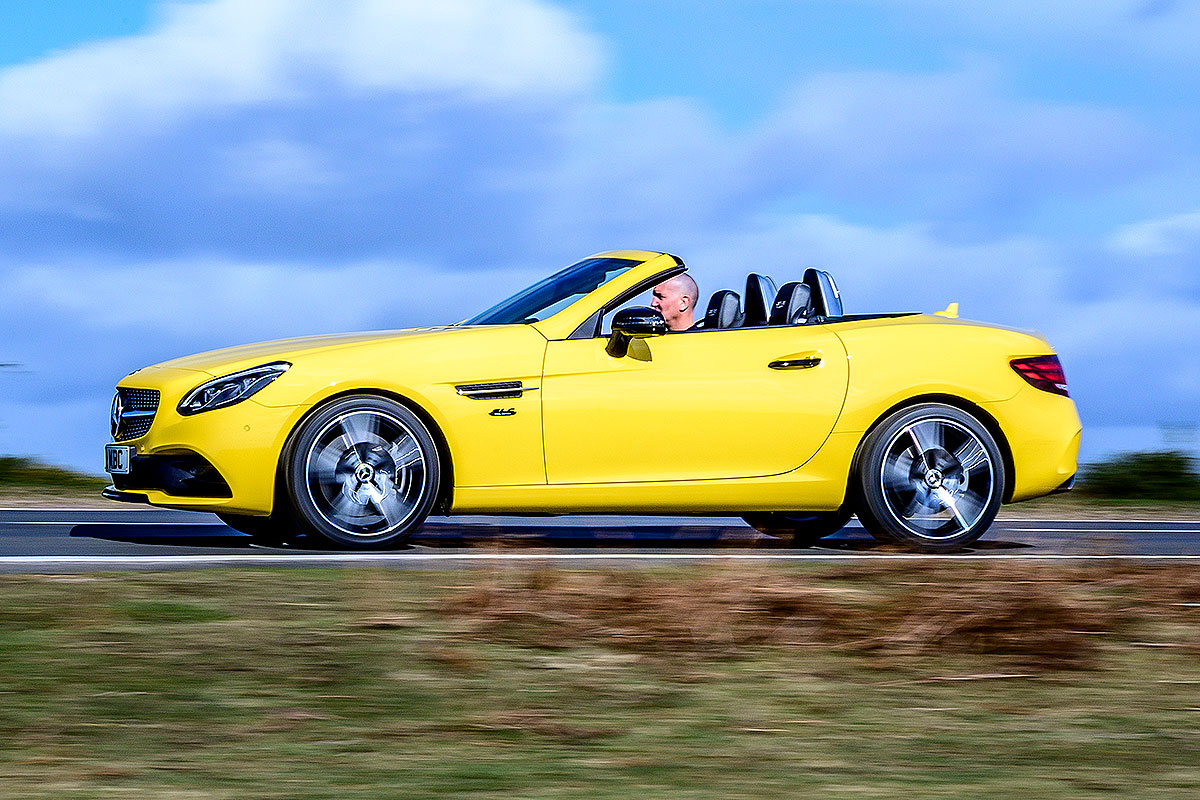
The SLC is more of a relaxed cruiser than a sharp sports car. It feels secure enough when cornering, but it doesn’t encourage you to press on in the way a Porsche 718 Boxster or even a Mazda MX-5 might. There’s some body-roll, and the steering can feel heavy without offering much feedback, so enthusiastic driving isn’t its strongest suit.
Ride comfort is also a mixed bag. The folding metal hardtop keeps wind and road noise under control, making the SLC feel more refined than many soft-top rivals at speed. Around town, however, it can feel jittery on potholed roads, and some cars even suffer from the odd creak or shimmy from the body structure.
Earlier versions were offered with a wider range of engines, including the slower SLC 180 petrol and the economical but rather gruff SLC 250d diesel. Later Final Edition models were limited to the SLC 200, SLC 300 and Mercedes-AMG SLC 43. The SLC 200 and 300 both use 2.0-litre turbocharged petrol engines, while the AMG SLC 43 has a 3.0-litre V6.
For most buyers, the SLC 200 is quick enough and has the novelty of being available with a six-speed manual gearbox, while the SLC 300 gets a nine-speed automatic transmission as standard. The Mercedes-AMG SLC 43 offers serious performance and an improved soundtrack, but even this model is more of a compact GT than a true sports car.
Technology, equipment & infotainment
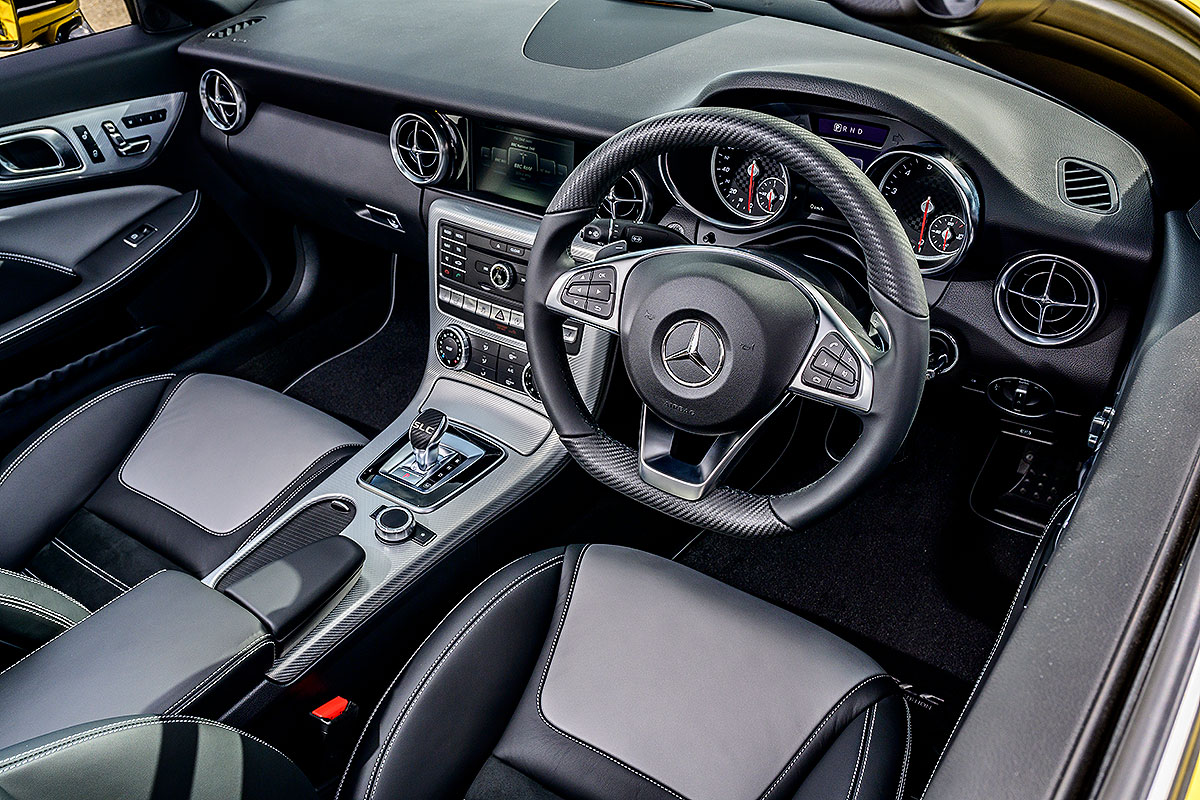
The SLC’s dashboard is neat enough but looks a little dated in comparison with current Mercedes-Benz models. The 7.0-inch infotainment screen looks tiny by modern standards, while the software and menu structure feel dated. That said, the basic controls are easy to understand, and later cars included smartphone connectivity via Apple CarPlay and Android Auto.
One of the SLC’s best features is Airscarf, Mercedes-Benz’s neck-level heating system, which blows warm air around your neck and shoulders when the roof is down. It sounds like a gimmick until you use it on a cold day, at which point it starts to feel like witchcraft.
By the end of production, the SLC was sold in Final Edition form. Standard equipment included an AMG styling kit, 18-inch AMG alloy wheels, memory seats, Airscarf, Garmin navigation, smartphone integration and the Vario-roof. Final Edition Premium models added LED headlights, a reversing camera, Airguide wind deflectors and a panoramic glass roof.
Mercedes-Benz SLC-Class running costs
The SLC should be reasonably affordable to run by roadster standards, although it’s not especially cheap compared with some rivals. The SLC 200 is the most economical version, with fuel economy of up to 40.4mpg with the manual gearbox, while the SLC 200 automatic and SLC 300 automatic both return an official 37.2mpg. In real-world driving, expect to see around 30mpg, depending on your driving style.
The Mercedes-AMG SLC 43 is naturally more expensive to run. Its 3.0-litre V6 brings stronger performance, but official fuel economy drops to around 32mpg. Fuel, tyres, brakes and servicing will all cost more than on regular four-cylinder versions.
Servicing costs are likely to be higher than for an Audi TT or Mazda MX-5, especially if you stick with Mercedes-Benz main dealers, so finding a decent specialist will help keep costs under control.
The SLC’s strongest financial argument is likely to be depreciation. Values have already softened, and well-kept Final Edition models should remain desirable thanks to their folding metal hardtop, relatively compact size and the fact that Mercedes-Benz no longer sells an equivalent small roadster.
Mercedes-Benz SLC-Class reliability
There isn’t a huge amount of specific reliability data for the Mercedes-Benz SLC, partly because it was a relatively niche car when new. However, it was closely related to the earlier SLK, so many of the same strengths and weaknesses apply.
The SLC is not especially complicated by modern Mercedes-Benz standards, particularly in four-cylinder SLC 200 and SLC 300 forms. The engines and automatic transmissions are generally well proven, but buyers should still check for a full service history and evidence of regular maintenance.
The folding metal hardtop is the main thing to inspect carefully. Make sure it opens and closes smoothly, listen for creaks or hesitation from the mechanism, and check for water leaks around the roof and boot seals. Electrical equipment, seat adjustment, Airscarf and infotainment functions should also be tested before buying.
Mercedes-Benz as a brand finished joint 22nd out of 30 manufacturers in the latest What Car? Reliability Survey, so the badge alone is no guarantee of trouble-free ownership. Even so, a well-maintained SLC should prove dependable if it has been looked after.
- One big difference that came with the move from SLK to SLC was the AMG engine. Gone was the old SLK 55’s naturally aspirated 5.5-litre V8, replaced by a smaller 3.0-litre twin-turbo V6 in the Mercedes-AMG SLC 43. It lost some of the SLK’s muscle-car character, but it still delivered serious performance, with later versions able to hit 62mph in 4.7 seconds.
- The SLC’s folding metal hardtop is one of the car’s biggest selling points. It takes around 20 seconds to raise or lower and can be operated at speeds of up to 25mph, so you don’t have to stop completely if the weather turns British. It also gives the SLC better security and refinement than many fabric-roofed roadsters.
- The SLC 200 with a manual gearbox may sound appealing if you like the idea of a traditional rear-wheel-drive sports car, but the gearbox itself is not especially satisfying. Its long, slightly notchy shift doesn’t feel particularly sporty, so the nine-speed automatic is usually the better choice. It suits the SLC’s relaxed character and makes the car much easier to enjoy as a compact luxury roadster.
- Best all-rounder: The SLC 200 Final Edition makes most sense for many buyers. It’s not especially fast, but that suits the SLC’s relaxed character, and it keeps running costs to a minimum. We’d look for one with the nine-speed automatic transmission, which is fractionally quicker to 62mph and suits the car better than the manual gearbox.
- Best for a bit more pace: The SLC 300 is worth considering if you’re after stronger performance without stepping up to the AMG model. It uses a more powerful version of the 2.0-litre petrol engine and comes with the nine-speed automatic transmission as standard. It’s also noticeably faster to 62mph than the SLC 200.
- Best for performance: If you really want a fast SLC, the Mercedes-AMG SLC 43 is the one to have. Its 3.0-litre twin-turbo V6 gives it serious pace and a more interesting soundtrack, but it’s more expensive to buy and run. Rivals such as the Porsche 718 Boxster and BMW Z4 M40i are more rewarding to drive.


