Mitsubishi Mirage Review (2013-2019)
Mitsubishi Mirage cars for sale
2.0
Expert review
Pros
Low running costs
Like most Mitsubishis, it should be reliable
Respectable economy and emissions
Cons
Bland looks
Poor to drive
Low-rent cabin finish
The CarGurus verdict
There is no shortage of choice for buyers of a used small car, whether a city car or supermini. From the Hyundai i10 and Kia Picanto, to the Toyota Aygo, Peugeot 108 or Citroen C1, to the Volkswagen Up, Seat Mii and Skoda Citigo, there are lots of accomplished or attractive city cars on sale. The supermini segment is even more packed: the much-loved and popular Fiesta and Polo are joined by the likes of the Nissan Micra, Vauxhall Corsa, Peugeot 208 and Toyota Yaris.
Potential Mirage buyers therefore have plenty of models to choose to spend their money on, which makes recommending the Mitsubishi even harder. In its favour, it has low running costs and reliability: working against it are its lack of character, cheap-feeling materials and uninspiring on-road manners.
The Mirage isn’t a bad car, but it is somewhat lacklustre. If you want an anonymous runabout, it’s the perfect choice. If, on the other hand, you want a car that you feel at home in and enjoy driving, there are plenty of better alternatives.

Good question. Unless you’re an ardent car-spotter it’s entirely possible that the Mitsubishi Mirage has passed you by so far, or at least failed to register in the same way as household names such as the Ford Fiesta or the Volkswagen Polo.
In truth, the Mirage is a size smaller than these superminis. It falls into a slightly odd size bracket, smaller than say, a Fiesta or a Polo, but larger than the Ford Ka or Volkswagen Up that sit beneath them in their respective ranges. There’s an ingenuity behind this idea that deserves to be applauded – providing a car that’s still small enough to thread down city streets yet somewhat more practical than those designed purely for that purpose.
Unfortunately, that is pretty much the limit of any new thinking that has gone into the Mirage. Because while the Mirage is a perfectly adequate small hatchback, that’s probably as far as one can go in praising it.
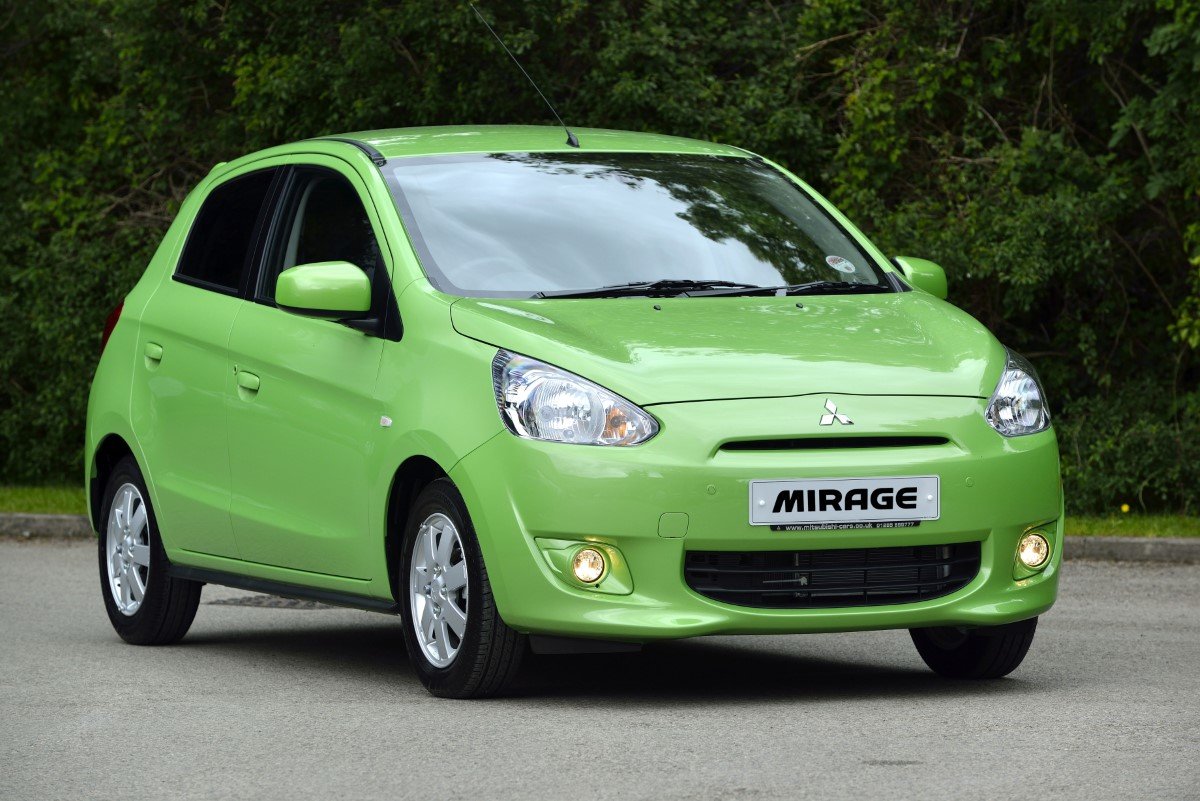
Take the exterior design, for example. There’s absolutely nothing wrong with it; it’s in no way an ugly car by any means. But it’s not exactly inspiring, either, with rather bland curves and nothing to get excited about anywhere across the body panels of this five-door car. This is perfect if you want an anonymous car to pootle about it, but at a time when many of us want a car that expresses our personality, the Mirage is for people who don’t want to stand out in a crowd.
It's similarly underwhelming to drive. But on the plus side, it’s cheap, economical and roomier than a traditional city car.
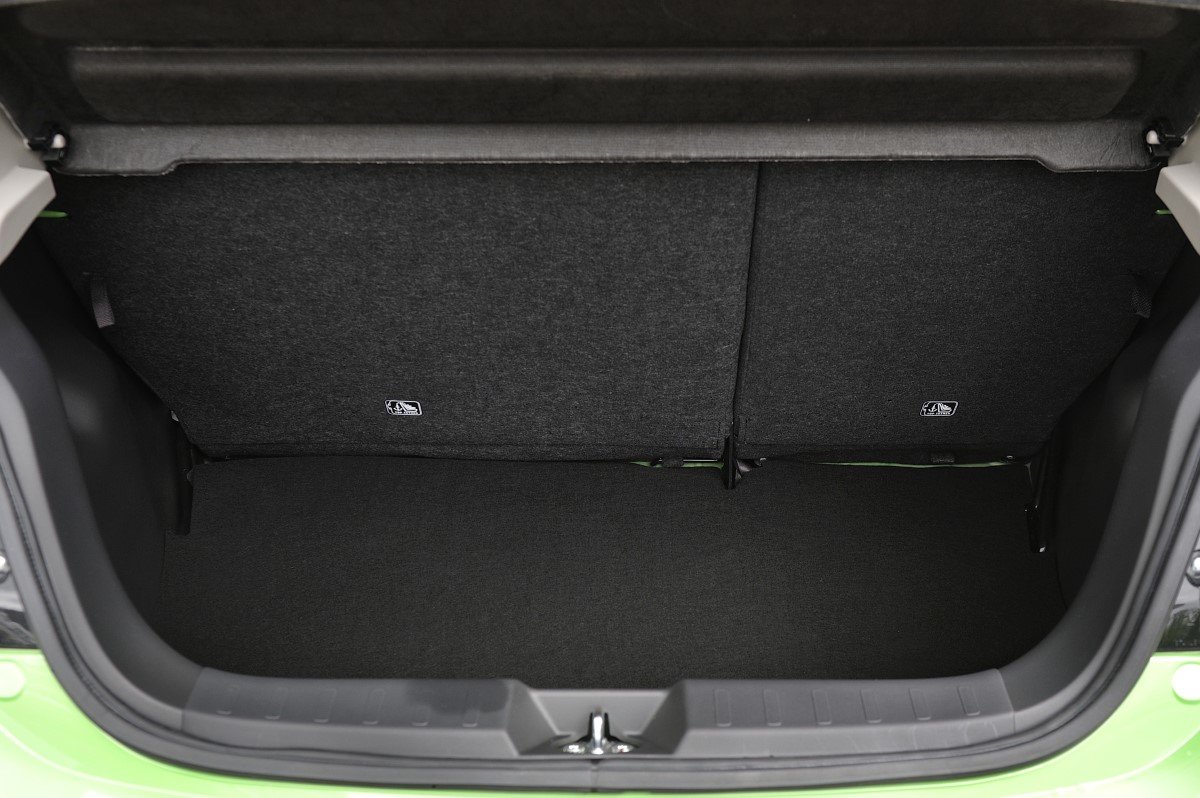
You may be getting the sense that the Mirage is a bit of a ‘vanilla’ car, with adequate but uninspiring capabilities, and that theme continues inside. The materials are absolutely fine – at the cheaper end of the spectrum, even among small car rivals, but durable enough – and the front seats are actually pretty comfortable. Space in the back is pretty decent by city car standards, although that’s very much a relative term. It remains a tight squeeze for taller grown ups. The boot space is competitive for the segment, with 235 litres available with the rear seats in place and 910 litres if you fold them down. There is a bit of a high lip to the boot, though, which can be inconveniently awkward with heavier loads. For comparison, a Ford Ka of the same era managed 224 litres with the seats up and 747 litres with them down, but the larger Fiesta offered 290 litres and 974 litres respectively.

Take the Mirage onto the road and the mediocrity continues. The suspension is soft, which should translate into a composed ride quality, but somehow it doesn’t: it feels fidgety at times, struggling to remain controlled when it hits poor road surfaces. Similarly, the handling is uninspiring, with uninvolving steering and plenty of body roll when cornering.
The Mirage began life with a choice of 1-litre or 1.2-litre petrol engines, but the smaller unit was later dropped. Both are relatively sluggish. On paper, one thing that makes the pint-sized Mitsubishi stand out within this class is its availability with an automatic gearbox, although this noisy and inefficient CVT is best avoided unless you really, really want an auto.
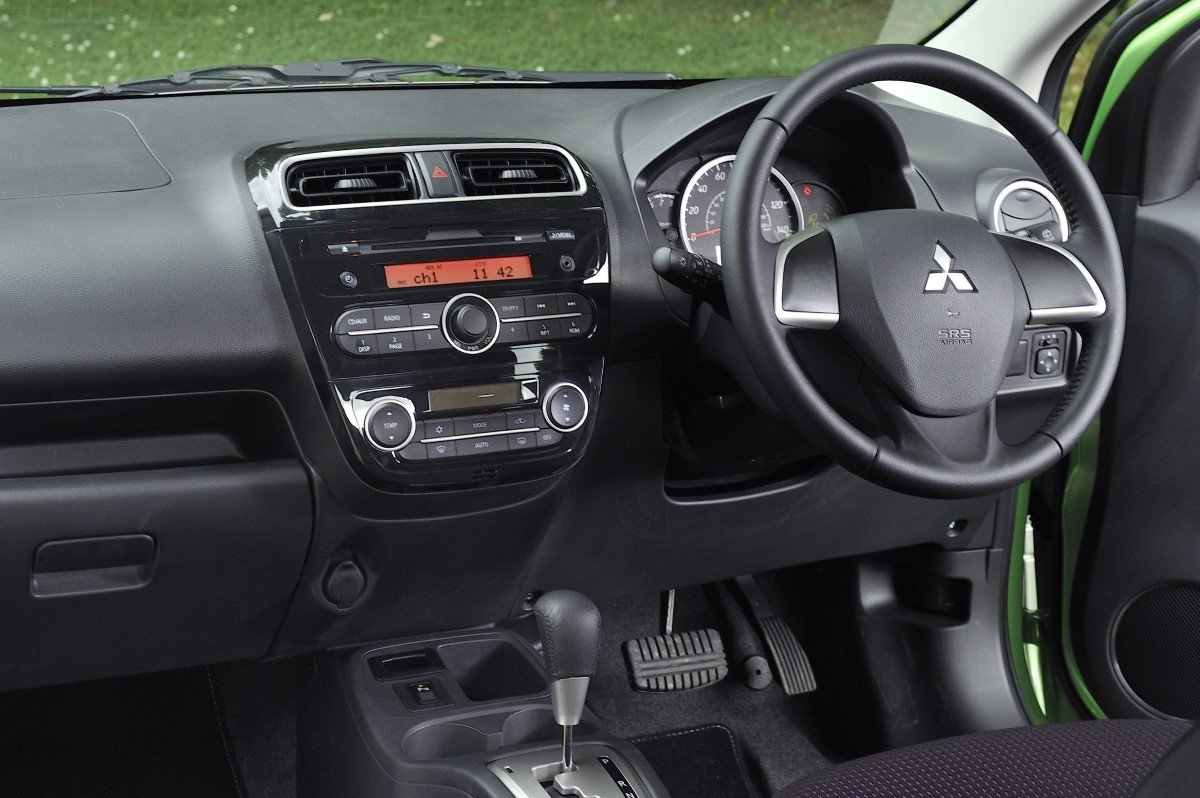
The dashboard of the Mirage, while laid out perfectly logically and easy enough to use, does seem a little outdated, especially compared with rivals launched in the last few years. The touchscreen infotainment systems fitted to higher spec models aren’t the slickest either, although the kit list is pretty generous.
What exactly you get depends on the exact age and specification of the car in question. Later examples all came with Bluetooth and USB connectivity for the stereo, air conditioning, electric windows and keyless entry. The top-spec First Edition came with ‘big car’ features like automatic air conditioning, cruise control, heated front seats and rear parking sensors.
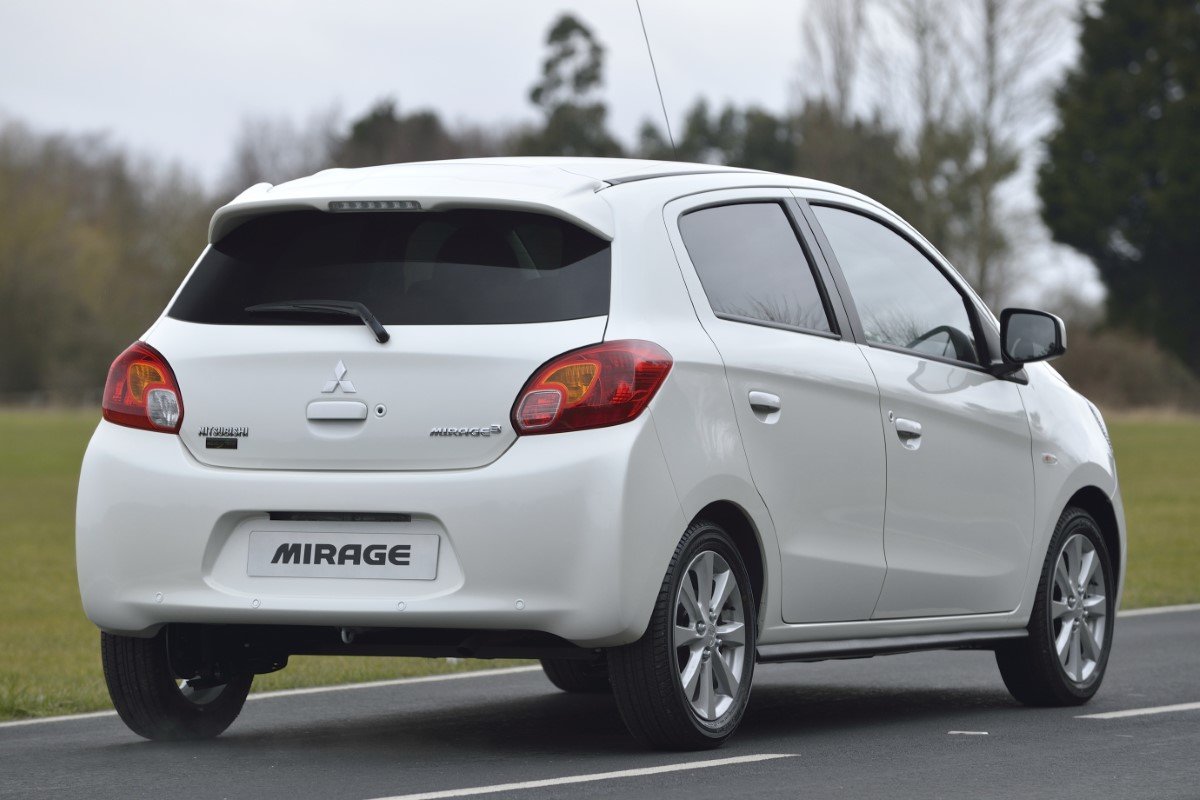
As we’ve already mentioned, the Mirage is a very light car, which contributes to it being efficient, with low running costs.
The 1.0-litre engine (which was only on sale until October 2015) returns an MPG figure of 67.3 and emits less than 100g/km under the old NEDC emissions testing regime, which certainly seem impressive, although the usual caveat of real-world economy figures being lower still applies.
The 1.2-litre engine that will be found in most used examples is pretty similar, with fuel consumption of up to 68.9mpg – or, under the latest, more realistic WLTP test, 56.5mpg - and CO2 emissions ranging from 113-127g/km depending on which trim level and specification you choose.
If you buy a post-2017 example the CO2 rating is a moot point to a certain extent, as all examples will fall into the same £165 flat rate road tax bracket. Earlier examples will be cheaper to tax, however, as the rating system for cars registered before 1st April 2017 depends on their CO2 emissions. None are expensive, and the 1-litre car is actually free to tax, due to its 96g/km CO2 output.
Insurance groups for the Mirage range from 14 to 21 (out of 50), so premiums shouldn’t be too expensive.
One thing to bear in mind is that Mitsubishi has ceased selling new cars in the UK, but the dealer network will continue to provide servicing and warranty support for cars that are still covered by their original agreement.
While Japanese carmakers generally have a good reputation for reliability, Mitsubishi has had a somewhat patchy record in recent years. The brand’s rating as a reliable manufacturer has fallen and risen over the years that the Mirage was on sale, while the Mirage itself was built in a new factory, so it’s fair to assume that early cars might have had a few teething problems.
That said, reports of problems with the Mirage are few and far between, with only minor issues being raised by owners who are generally happy with their car.
The Mirage was recalled with a braking issue in 2015, while some ECU issues were the cause of another recall in 2019. If you’re looking at a used car, check that the original owner did take the car to a dealership to get the issue addressed.
- One of the reasons why the Mitsubishi Mirage struggles to meet the standards of many of its European rivals is that it has been designed as a ‘global car’, which means that it is sold all over the world, in advanced car markets such as the UK as well as countries in the developing world. As such, cheaper materials are used to keep the price down, while all the cars are built in one factory in Thailand and then exported across the globe.
- Despite this one-size-fits-all approach, which often results in lower safety standards, the Mirage actually performed pretty well in the EuroNCAP crash tests that are the basis for comparisons with cars that are considered direct rivals. The Mirage was tested in 2013 and achieved a four-star rating and a 90% score for adult occupant protection. Unfortunately, a large proportion of comparable cars at the time were getting awarded five stars and the Mirage’s Safety Assist score was just 55%, indicating the lack of electronic collision-avoidance features such as automatic emergency braking. Later models added a lot of these active features, but the car was never re-tested to improve its score. Had that been done, it may well have achieved a five-star rating.
- There is a feature of the Mirage that works in its favour, which is the fact that it is such a light car. It tips the scales with a kerbweight of just 845kg, which is impressive, especially when you consider that the most popular small car in the UK, the Ford Fiesta, weighs in at over 1,000 kg (and more when you start adding equipment fitted on upper trim levels). The most obvious benefit to this is that the lightweight Mirage has good fuel economy and low emissions, with some versions returning 96g/km under the old NEDC emissions tests.
- If horsepower isn’t important to the way you drive: Early cars had a smaller 1.0-litre, three-cylinder engine fitted under the bonnet that produced just 70bhp. When specified as such, the MIrage can hit 62mph from a standing start in 13.6 seconds and then push on to a top speed of 107mph. However, this version wasn’t hugely popular among British buyers, who tended to opt for the slightly larger 1.2 unit.
- If you want the best all-rounder: Most buyers who want a used Mirage will go for the more commonly available 1.2-litre, three-cylinder engine. This has an output of 79bhp, and it propels the Mirage from 0-62mph in 11.7 seconds, leading to a top speed of 112mph. It is available with a five-speed manual gearbox or a CVT automatic transmission.
- If you want all the features: Rather than entry-level and fully-loaded models, the Mirage had just one trim level, called Juro, for most of the time it was on sale in the UK. Features included colour-coded bumpers and door handles, tailgate spoiler, 14-inch alloy wheels, front fog lamps, electric windows and USB connection. This was upgraded in 2019 (just before a heavily revised, facelift model was introduced in 2020) to grades called 3 and 4, which were fitted with extra equipment, including LED rear lamps, air conditioning, Bluetooth with music streaming, smartphone connectivity (Apple CarPlay and Android Auto), automatic rain sensors, keyless entry with push-button start and an Auto Stop and Go system.


