Nissan Figaro Review (1991-1991)
Nissan Figaro cars for sale
2.0
Expert review
Pros
Cute and distinctive looks
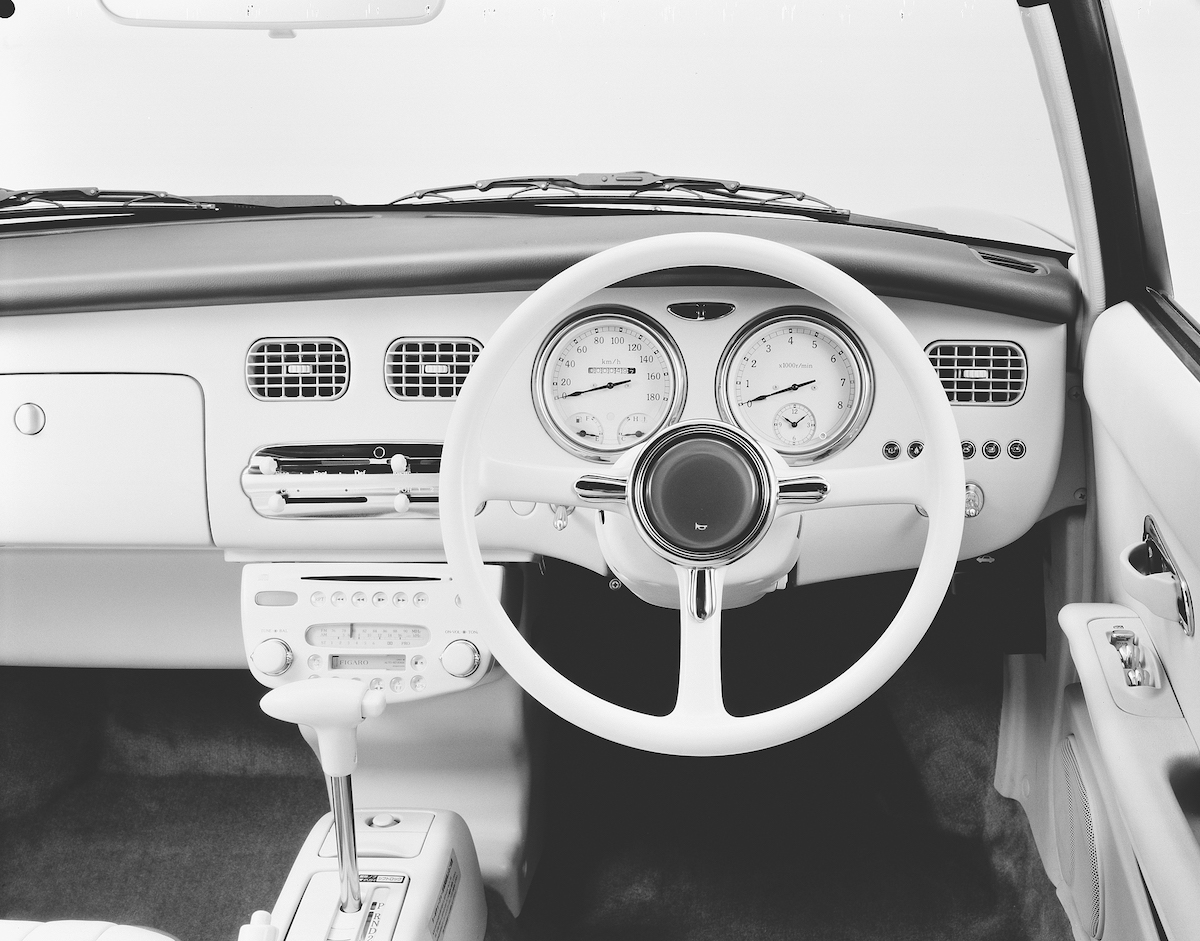
Retro-themed cabin
Easy to park
Cons
Steady performance
Potentially leaky roof
Prone to rust
The CarGurus verdict
You don’t buy a Nissan Figaro for modern motoring technology. You don’t buy a Nissan Figaro for efficiency, or performance, or reliability. You buy a Nissan Figaro because you think it looks cool. And, whatever your tastes in car design, there’s no doubting that the postmodern retro aesthetic of the Figaro is something of an outlier, compared to cars designed in the last 30 years. It’s not a unique car, but it is unusual, and owners undoubtedly buy them for reasons that have little in common with those that usually underlie a car purchase.
For these reasons, it’s not easy to compare the Figaro with competitor models because, well, there aren’t really any. The Suzuki Cappuccino, built from 1991 to 1999, is similar in many ways, as is the later Daihatsu Copen (both adhere to rules for small cars in Japan, called kei cars), but the Figaro’s design is more retro. The bottom line is, if you want a Figaro, check it out thoroughly before buying and take good care of it.
In the 1980s and 90s, with a world moving faster thanks to technological developments such as the mobile phone and the personal computer, we started to look back at our recent history for some comfort in the face of all the changes.
The concept of postmodernism began to enter our lives in the form of retro-looking design and trends. Japan was fertile ground for this philosophy, which is why Nissan set up a special projects team at the Aichi Machine Industry factory, later named the Pike Factory, after the long spear (because it’s cutting edge and thrusting. Get it?) The Pike Factory built limited-edition vehicles using a design strategy adopted from industries such as personal electronics – which Japan dominated at the time.
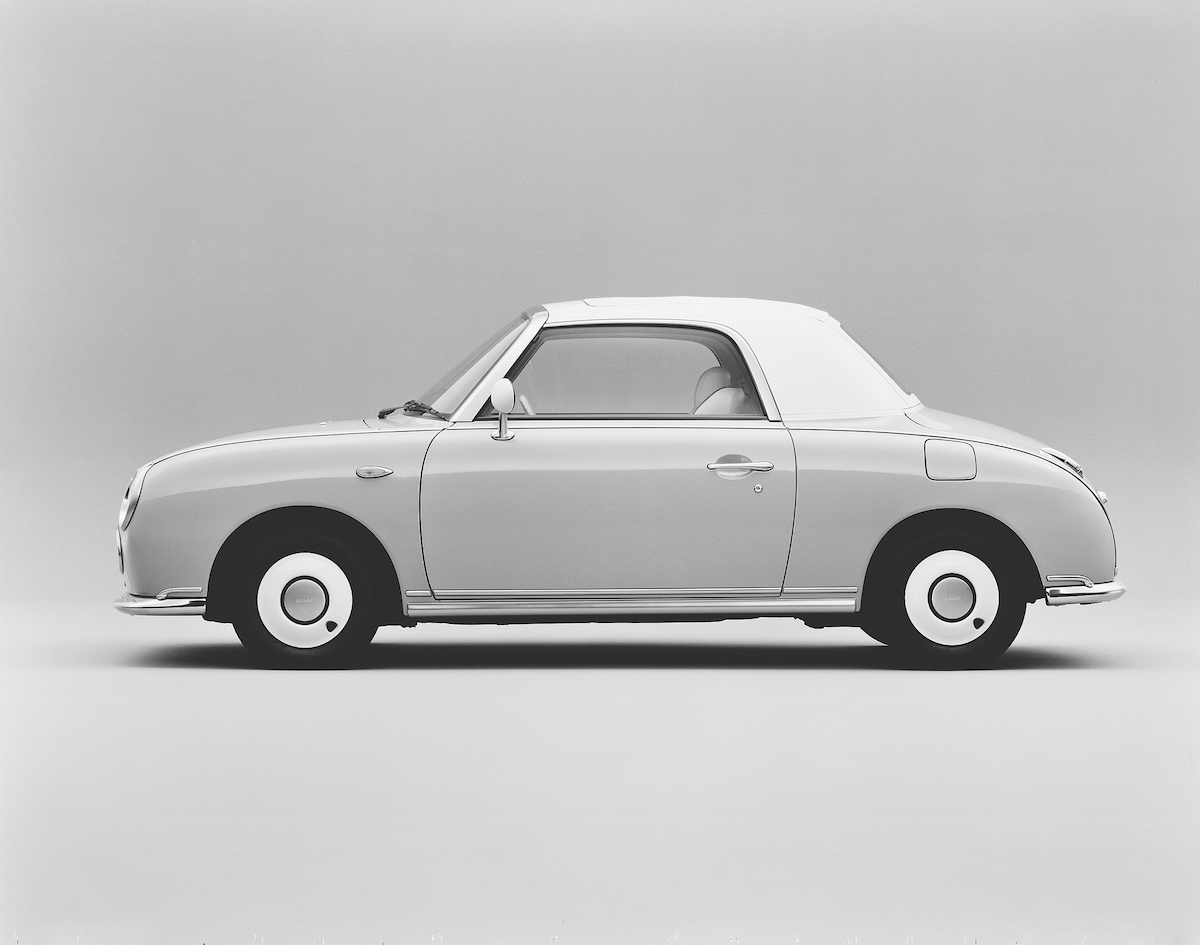
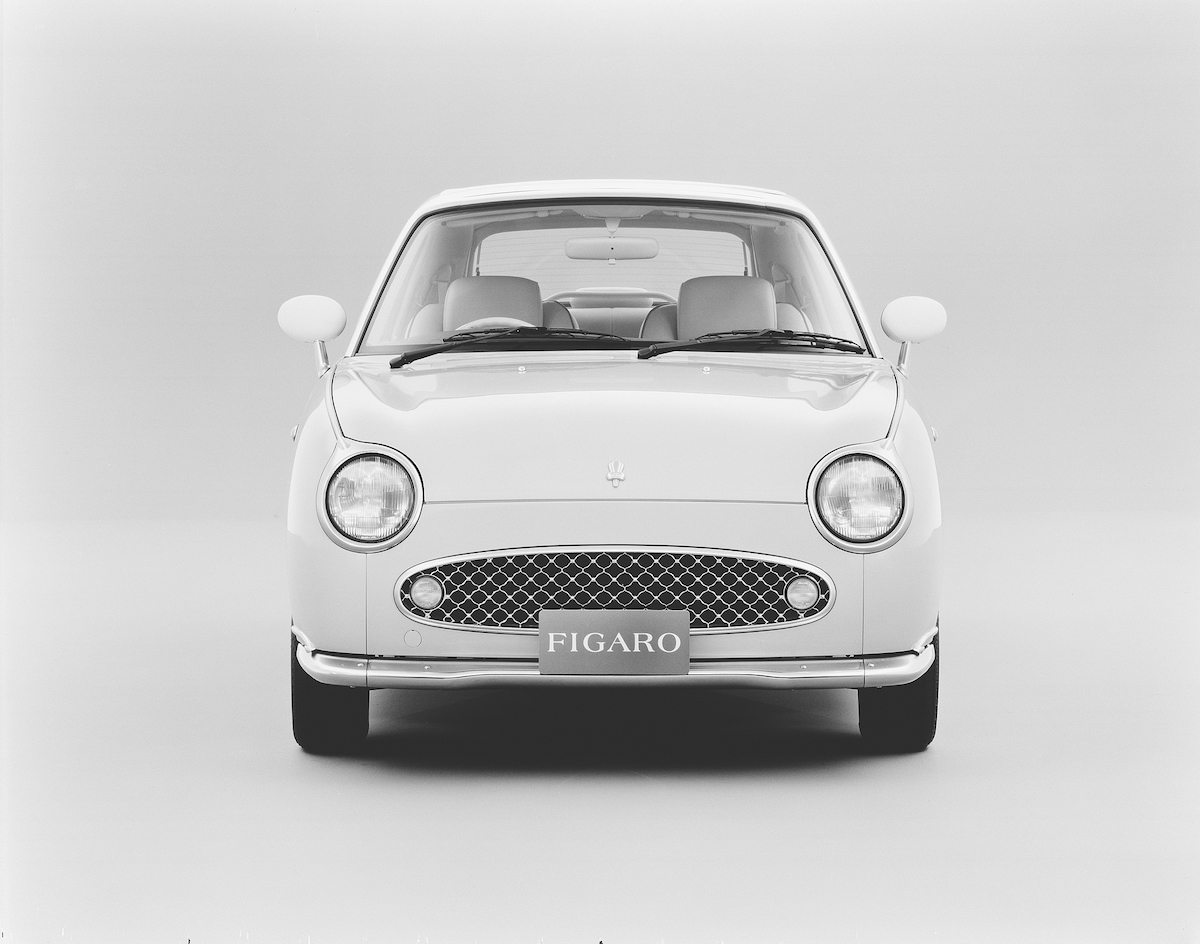
And so Nissan developed the retro, cutesy Figaro. Of the 20,000 Figaros built, it’s thought that around 6,000 of them have ended up in the UK, and there’s a thriving fanbase of enthusiasts for the cute two-seater. Nissan took styling influences from the likes of the Mini, the Fiat 500 and the Citroen 2CV, as well as references from the 1930s and 50s. It created a car that will appeal to anyone who considers design to be a priority. The retractable fabric roof, with integrated glass rear window, ensures that the Figaro has that summery lifestyle vibe that owners love.
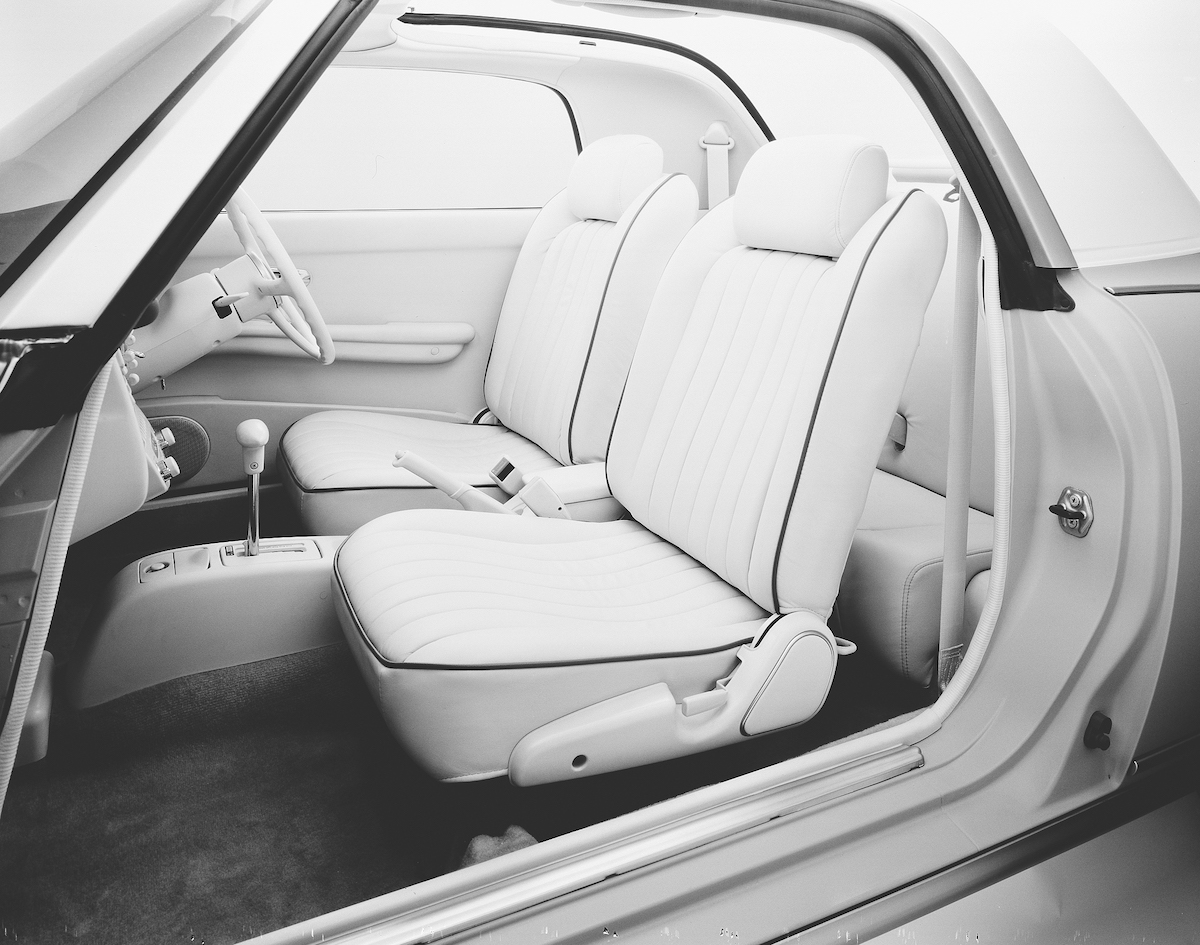
Inside the Figaro, the retro theme continues, with Bakelite-style knobs, pale leather and chrome-edged dials. A pale paint with a special finish was used on the dashboard to make it feel softer, while the car also featured a CD player, which was quite the innovation at the time (there’s also a radio and cassette player).
Given it’s a two-seater, and based on a small hatchback, space isn’t especially generous inside. The boot’s rather peculiar, too, featuring a reverse-opening lid that reveals a shallow compartment, and a separate top-hinged door between the rear lights, from whence slides out a tray that can contain the tool kit, warning triangle, and other bits and bobs – or be emptied to provide space for an extra bag or two.
Under the bonnet is a turbocharged 987cc Micra petrol engine that generates 74bhp, mated to a three-speed automatic transmission. This is not a car that will offer a sporty drive to match its looks – unlike a Mazda MX-5 of a similar vintage – so don’t expect a Figaro to have much performance. This is now a 30-year-old car, even if the quoted 0-62mph time is 11.1 seconds and the top speed is 106mph. It’s absolutely fine around town – its natural environment – but the shortage of power is evident on faster roads, such as motorways.
The Figaro isn’t really a sports car, so it doesn’t drive like one. Again, in urban areas it’s perfectly manoeuvrable, and its size makes it easy to park, but on the open road, its Micra roots show, with some noticeable body roll in faster corners.
The Figaro is powered by the same engine as the first Nissan Micra, which dates back to 1982, so it will be unlike modern engines in many ways. The danger with such aged units is that there are often insufficient spare parts. However, Nissan does still build parts and sells them via its franchised dealerships, so maintenance is possible without the need for expensive bespoke components.
Talking of maintenance, Nissan dealerships could be the first port of call, but they will also probably be the most expensive option. It’s also worth remembering that the Figaro was never officially sold in this country, so technically, Nissan doesn’t support it. There should be plenty of independent specialists to enable you to shop around, along with any less marque-specific mechanics. An annual service should cost in the region of £250-300.
Of course, the engine pre-dates modern equivalents in terms of emissions standards, so if you drive into London or any of the other British cities with designated Clean Air Zones, you'll have to pay to enter.
The Figaro’s official fuel consumption figure of 38.7mpg might also be a little out of reach in real-life driving, especially after 30 years of use. However, if you have it regularly serviced, you should be able to manage around 30mpg or more.
Vehicle Excise Duty for the Figaro is £170 a year, as many of the cars were registered before March 2001 when the rules were changed.
Insuring a Figaro depends on the usual variables – age, where you live, annual mileage – along with its value. Finding a company to cover you is even less straightforward than it is with a modern car, because the Figaro is classed as a classic car or grey import, so we'd recommend getting quotes from classic car insurance specialists.
Rust can be a problem with many Nissan Figaros. That said, rust can be treated if it is caught before really taking hold of the bodywork. Check the wheelarches and the underside of the car for any tell-tale signs of corrosion. If the rust has spread to the chassis, then you could be looking at some hefty bills.
Another issue, unsurprisingly for an older convertible, is a potentially leaky roof. The boot is designed to enable water from a wet, folded roof to run off via drainage pipes, but a garage is the best storage option to avoid leakage issues. Alternatively, a cover will help keep the car dry inside.
Like all old cars, engine and mechanical failures are inevitable. The three-speed automatic gearbox, for example, can take a battering on longer journeys, but regular servicing will do a lot to nip potentially expensive problems in the bud. Nissans, in common with the output from other Japanese carmakers, do tend to be pretty reliable, so regular checks will help your Figaro to stay on the road for longer.
But make sure you sign up with a breakdown service; this is a 30-year-old car, after all.
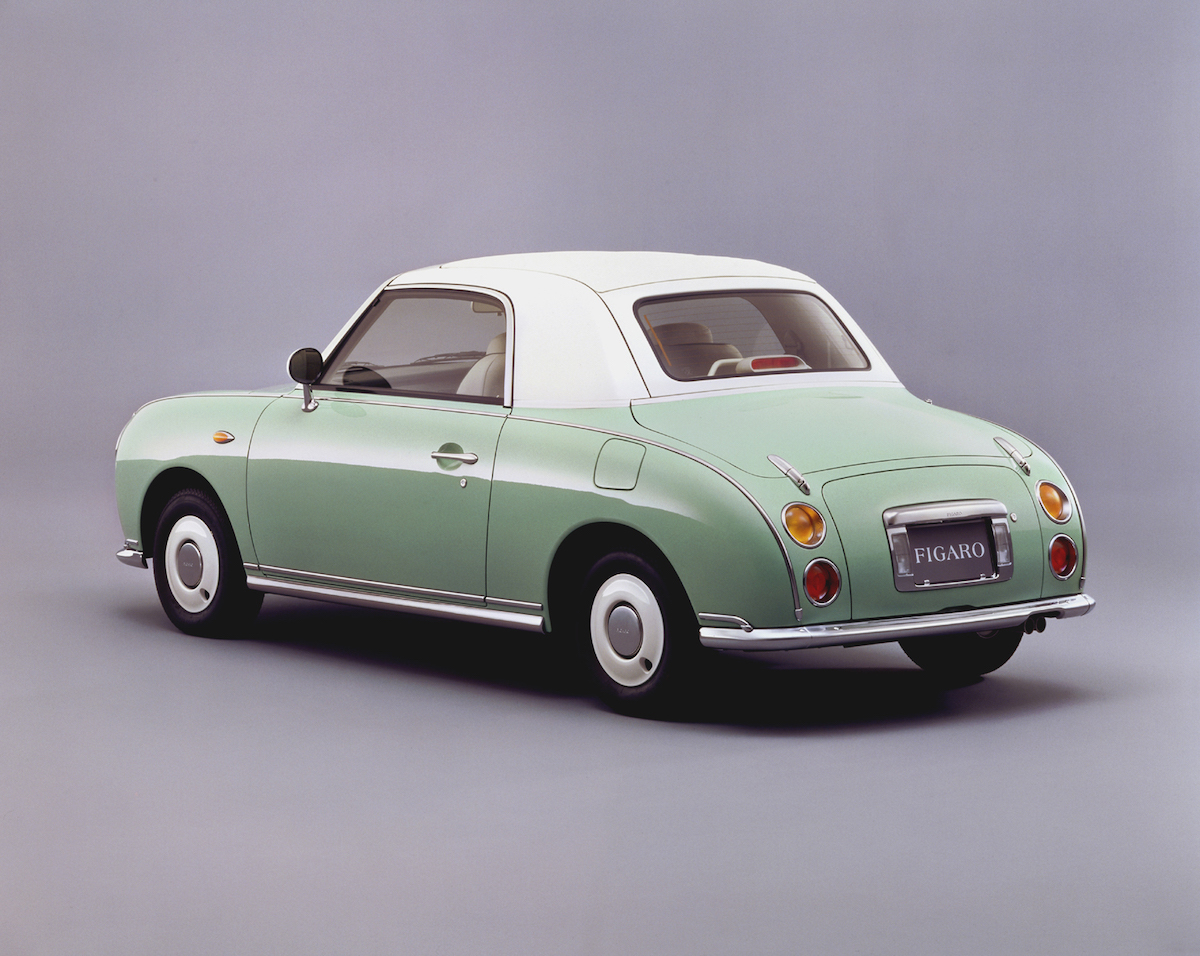
- The Figaro is available in just four original colours (although some were later resprayed in different hues). Nissan opted for a pastel colour palette, designed to reflect the changing seasons and their different characteristics: the beige Topaz Mist represented autumn; a pale Emerald Green is intended to make you think of the spring; Pale Aqua blue is summery; and Lapis Grey evokes winter. With the retro styling and hints of motoring in times past, these colours fit the Figaro perfectly.
- The Nissan Figaro officially went on sale on 14 February 1991 for 1.87m Yen (around £12,100 at the time, or £23,300 in today’s money). This Valentine’s Day launch tells you all you need to know about the thinking behind its prospective market, along with the pastel exterior colour options and creamy white cabin. UK owners tend to be women (including former Doctor Who assistant Sarah Jane Smith, who drove one in The Sarah Jane Adventures BBC TV series) and there’s a thriving Figaro Owners Club, where fans of the model share advice and organise meetings.
- The Nissan team responsible for the Figaro previously launched a trio of innovative retro vehicles: the Be-1, Pao and S-Cargo (a van with snail-like features) in the late 80s. The Figaro was unveiled at the 1989 Tokyo Motor Show, when Nissan said it was intended to have “a delicate feeling of stylish elegance in everyday life” while satisfying owners' “zestful desire for a good time”. Demand was so great, Nissan had to allocate the cars to buyers via a lottery system and, after the initial 8,000 were sold, the manufacturer decided to build another 12,000.
- If you want a particular trim: There’s only one version of the Nissan Figaro – with a 1.0-litre turbo petrol engine and three-speed automatic gearbox – so buyers only need a preference of colour. All the cars were built in 1991, so every example is around the same age, give or take a few months.
- If you want a collector's car: While there's no guarantee the Figaro will become collectable, its rarity and devoted following means there's a chance. For those considering a car that might become collectable, condition, history, and mileage are key factors. Most examples tend to have driven between 60,000 and 80,000 miles, but if you spend some time looking, you could find one with less than 40,000 on the clock. At the other end of the spectrum it's possible to find Figaros for sale with 200,000 miles behind them.


