Nissan Note Review (2013-2017)
Nissan Note cars for sale
3.0
Expert review
Pros
More spacious and practical than a conventional supermini
Economical to run
Comfortable ride and handling
Cons
Some safety kit was reserved for upper trim levels
Not as reliable as you'd expect
A Ford B-Max is more fun to drive
The CarGurus verdict
Part of the reason why the Note was on sale for such a relatively short time was that Nissan didn’t really know how to market the car. Was it a compact MPV or a supermini?
In some ways, customers have benefitted from this confusion, as the Note slipped under a lot of car buyers’ radar and those owners who did buy a Note found that they had quite a lot of car for the money. Because not only was there a choice of trim options, some of which had a range of useful – and innovative – equipment, but the engine choices all offered economical running costs. This combination, along with the spacious interior, can make the right used Note a good-value used buy.
At the same time, as when it was on sale, it faces stiff competition from the Ford B-Max, Skoda Yeti and even the Honda Jazz, which appeals to a similar older demographic of car buyer as the Note.

Nissan is a carmaker that spent a lot of time and energy rethinking traditional bodystyles in the early 2000s. It practically invented the crossover SUV when it launched the Qashqai, a move that has been copied by almost every car brand since.
But even before that came the Nissan Note, launched in 2006 as a compact MPV, a people carrier with a spacious interior, but based on the same underpinnings (shared with Renault) as a conventional supermini hatchback. It wasn’t a huge seller, but it had its fans, not least because it was a very decent small car with lots to commend it.
Fast forward to 2013 and the second-generation Note hit the showrooms. Built in Sunderland, the new Note tweaked the formula, being more supermini-like and placing less emphasis on the family car MPV side of its character.
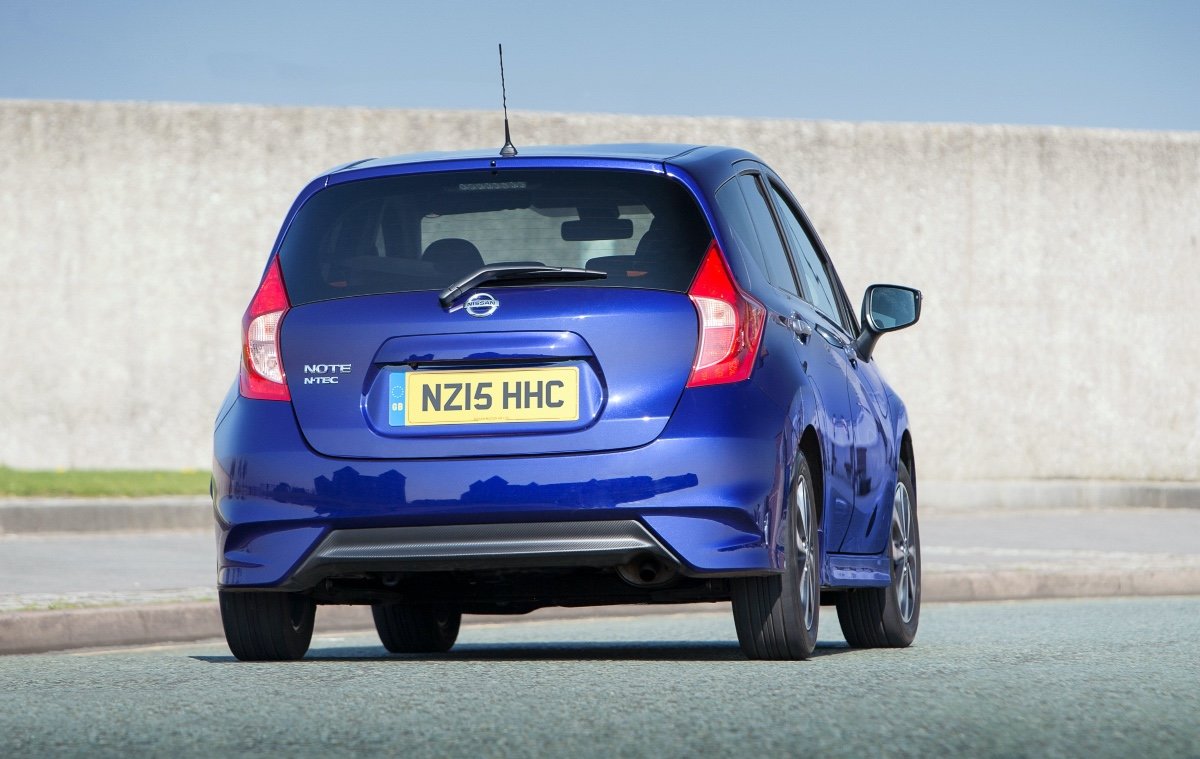
This is obvious from the design of the car. Less boxy than the original, this Note has the appearance of being sportier and lower-slung, thanks to the wheels being pushed further to the corners, creating shorter overhangs. The roof has been lowered by only 20mm, which looks more because of the other styling changes. The side profile still indicates we’re in the presence of an MPV, as does the upright design of the rear, but it looks as if Nissan attempted to position the Note against the Ford Fiesta, rather than the Ford B-Max, to take two potential rivals as examples.
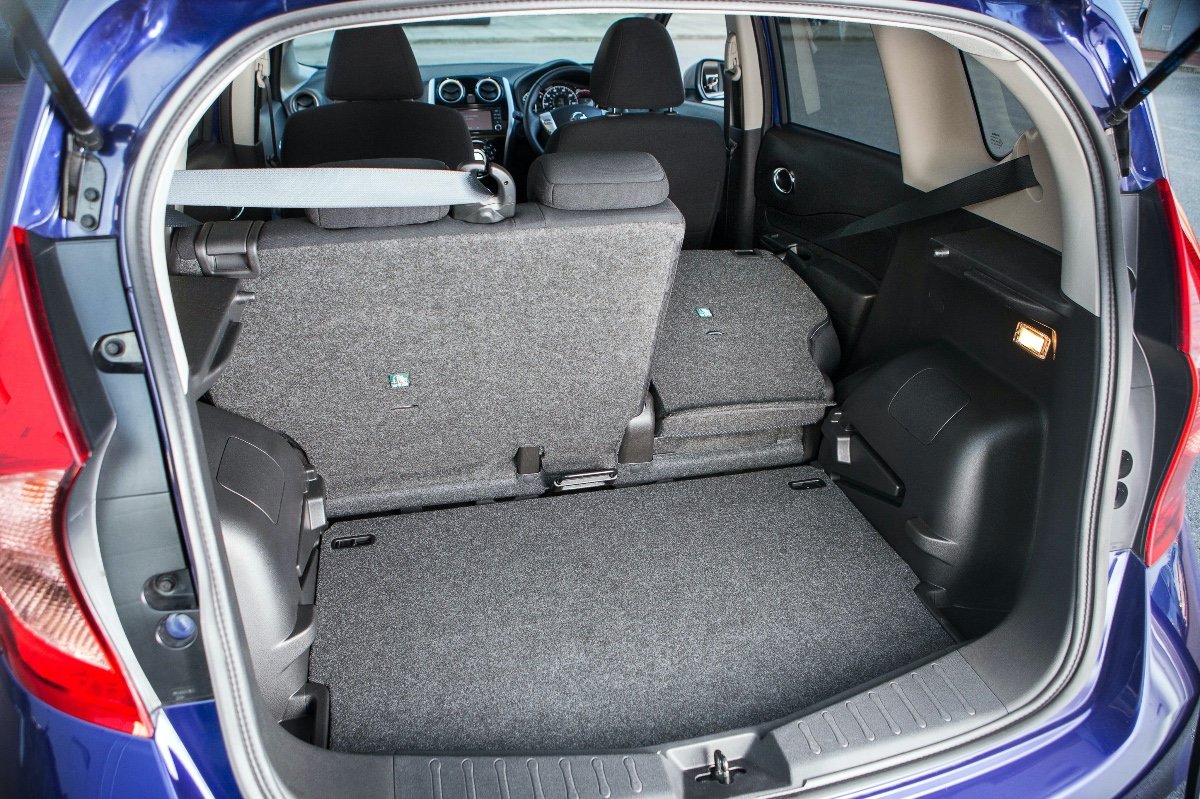
The interior of the Note does, however, appear more compact MPV than supermini. It feels spacious, with lots of room in the back, especially when you realise that in some trim levels the rear bench slides back and forth to change the amount of legroom and/or bootspace by 150mm. The rear doors also open to almost 90 degrees, making it easy for any rear passengers to enter or exit, or to place a young child in a booster seat in the rear seats.
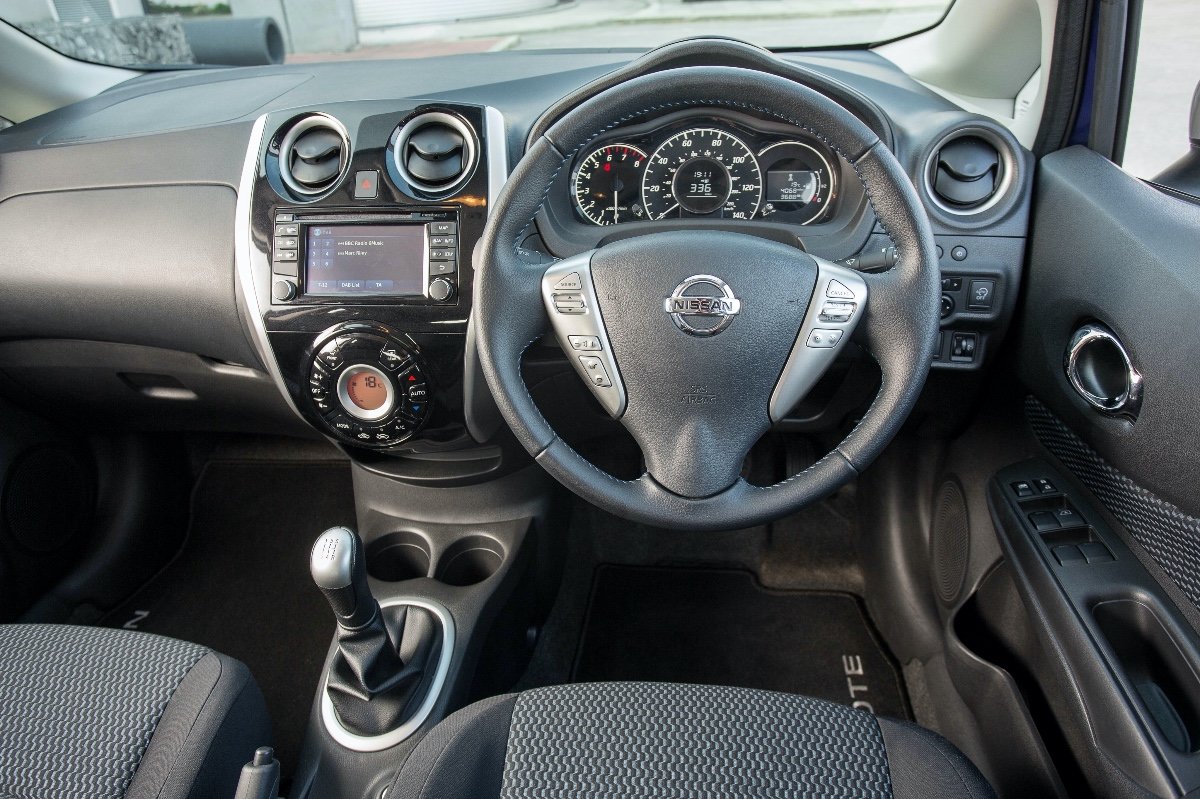
Less flexible is the driving position, which is rather too high-set and doesn’t have reach adjustment on the steering wheel, so taller drivers might find it difficult to establish a truly comfortable position. Visibility, however, is good, thanks to the large glassed areas around the car, the upright stance and the airy feel of the cabin.
There are a few storage spaces in the car, but none of them particularly innovative or eyebrow-raising, nothing that will make you sit up and positively want a Note. The centre console also feels a little cluttered, with two vents, a 5.8-inch touchscreen for the infotainment system and heating/air conditioning controls all squashed together vertically.

One of the plus points in the Note’s favour is the simplicity of the engine range, with just one petrol engine and one diesel on offer to buyers.
The petrol engine is a three-cylinder 1.2-litre unit, which is available in two different variants, with different power ratings and some significant other differences. There’s enough usable performance from the base, naturally aspirated 78bhp engine, along with 60.1 mpg as the official fuel consumption.
The other petrol version is a supercharged DIG-S unit that increases the power to 97bhp and improves efficiency, with an economy figure of 65.6mpg. This version is available with a manual gearbox or a CVT (continuous variable transmission) automatic that lowers fuel economy to 55.4mpg.
The 89bhp 1.5 dCi diesel engine is, as you’d expect, even cheaper to run: the official fuel consumption figure was 78.5mpg, but as with all such figures – especially under the old NEDC testing regime – it will be hard to match in real-world driving conditions.
The CO2 emissions figures for all these engines were very low, so they’re cheap to tax, even now. The most you’ll pay is £30, for the CVT auto 1.2 DIG-S, while the lower-powered petrol version is just £20: the other two variants both had CO2 figures under 100g/km, so they’re zero-rated.
Insurance groups are very low, ranging from group 6 to group 10. If you have a car fitted with the Nissan Safety Shield system, it will take it down a couple of groups, as the technology should help reduce the likelihood of collisions.
The service intervals for the Note are 12 months or 12,500-mile (whichever comes first). Servicing costs should be kept well in check, thanks to Nissan dealers offering to service your car according to a fixed-price list, irrespective of the car’s age. This fee also includes individual repair costs, such as replacement brake pads.
Japanese carmakers generally have a good reputation for reliability, with the brands tending to be highly rated and models being well placed in customer satisfaction surveys.
Unfortunately, this is not the case with the Nissan Note. While customers were satisfied with many aspects of ownership, reliability wasn’t one of them. It’s not a disaster, but there are reports of issues with the CVT transmission, the air-conditioning system, the electrical system and the anti-roll bars. And the Note's three-year warranty will have expired now, so owners of used Nissan Notes should try and get some extended cover.
There have also been three major recalls for the Note. The first concerns cars built between July 2013 and May 2014, and relates to a potential malfunction of the push-start button to turn on the engine, which remains pressed in and engaged when the vehicle has started, instead of popping back out. One potential problem that this can cause is that the emergency engine stop may activate if the car continues to be driven, halting the car suddenly.
The other recall is for Notes built between July 2015 and January 2016. The issue here relates to the engine coil, which might not be the correct specification, leading to the engine stalling and not restarting again.
The final recall relates to a small batch of cars built in April 2016, where the ABS anti-lock braking system might not work as it should, resulting in the wheels actually locking under heavy braking.
- The second-generation Note was a generally short-lived model, being on sale in the UK for just five years (most models are generally in showrooms for around seven years). This might be as a result of Nissan making it more like a supermini, a bodystyle that is very popular, but one that almost every carmaker sells a version of. Indeed, when it was removed from sale, the Note was replaced by a new generation of the Nissan Micra, which increased in size to match the Note’s practicality.
- One useful feature is the Nissan Safety Shield, which combines Lane Departure Warning, Blind Spot Warning and Moving Object Detection to help make the driver aware of other road users around the car. In addition, there’s an Around View Monitor that uses cameras around the car to offer a 360-degree bird’s-eye view. This might be a useful aid for drivers who don’t like parallel parking, as they can actually visualise how the car reverses into a space, relative to the cars in front and behind. The package only on upper trim levels, which is why EuroNCAP only awarded the Note a four-star rating.
- The materials used in the interior are a little stolid: very functional and, by the look of them, hard-wearing, but uninspiring and lacking in any pizzazz that might draw one in. The Hyundai ix20 and Kia Venga, despite being regarded as more budget options, arguably have better-quality interiors.
- If you want to go for a Note on a budget, go for the Visia trim level, which is fitted with the basic level of equipment, but that includes stop-start, cruise control, Bluetooth, electric windows and mirrors, six airbags, an alarm and remote central locking. There was no air-conditioning as standard, but it was an option, so if you check you might strike lucky and find a Visia with this feature.
- If you want an economical Note, you’re pretty spoiled for choice, as all the different engine variants are relatively cheap to run. However, if you look for a 1.5-litre dCi diesel, you should be able to get 60mpg without too much effort and it’s zero-rated for car tax.
- If safety is an important consideration when buying a car, the Note is available with an innovative Nissan Safety Shield system, which is a suite of safety features available on upper trim levels, including n-tec and Tekna.


