Nissan Pulsar Review (2014-2018)
Nissan Pulsar cars for sale
3.0
Expert review
Pros
Lots of passenger space
Good safety standards
Well equipped
Cons
Dull to drive and look at
Lots of hard and scratchy plastics in the cabin
Not as much boot space as you'll find in a Skoda Octavia
The CarGurus verdict
You’ve probably picked up on our assessment of the Pulsar as a sensible car, a plodder in a highly competitive segment of the market that contains consumer favourites such as the Focus and Golf, cars that are often bought without too much thought, because buyers know what they’re getting.
And if you also consider that there are also some very good other models – the Seat Leon and Skoda Octavia come to mind – then it’s easy to see why a plodding model such as the Pulsar couldn’t muster enough interest among hatchback buyers to stay the course beyond a few years.
But the Pulsar could make for a good used car purchase. It's practical, spacious, generally well equipped (and very well equipped at the upper trim levels), doesn’t cost too much to run and should prove reliable. It’s not a car for enthusiastic drivers, but if you don’t fall into that category, the Pulsar could be a sensible choice as family car.

Sensible. There’s no word in the English language that is more of a passion killer than ‘sensible’. It’s a word that describes a positive trait, but in our go-faster, always-on, glamour-seeking modern world, sensible is a turn-off, a drag, a fun sponge.
But we all need a little sensible in our lives. Some of us need a lot, not least when it comes to cars. We can’t all be racing drivers, we have families to haul around, so a sensible car is exactly what we need.
So hurrah for the Nissan Pulsar, a sensible, solid family hatchback that the Japanese carmaker launched in 2014, the first time it had produced such a car since the Almera in the mid-noughties, when it then decided to lead the industry in developing the first mainstream crossover SUV, the Qashqai. Nissan’s sensible alternative to the wildly trendy SUVs didn’t catch on, though, so the Pulsar quietly exited stage left in 2018.
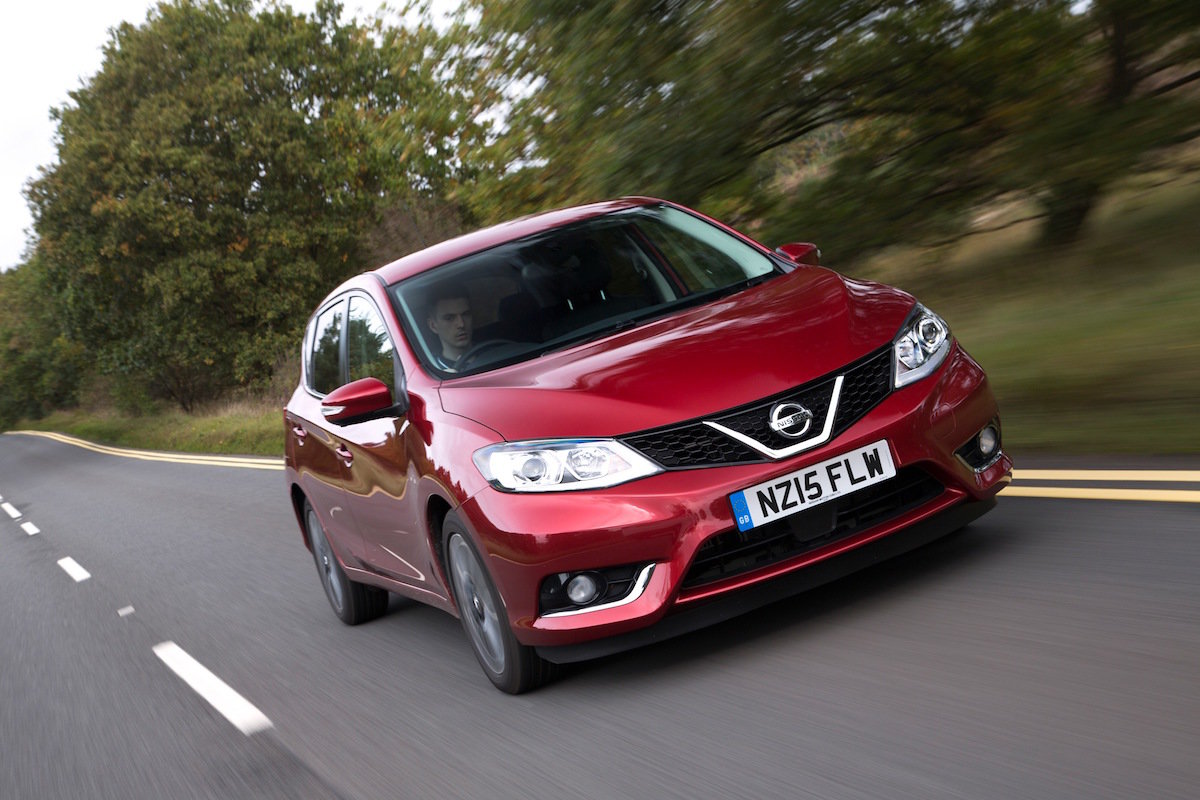
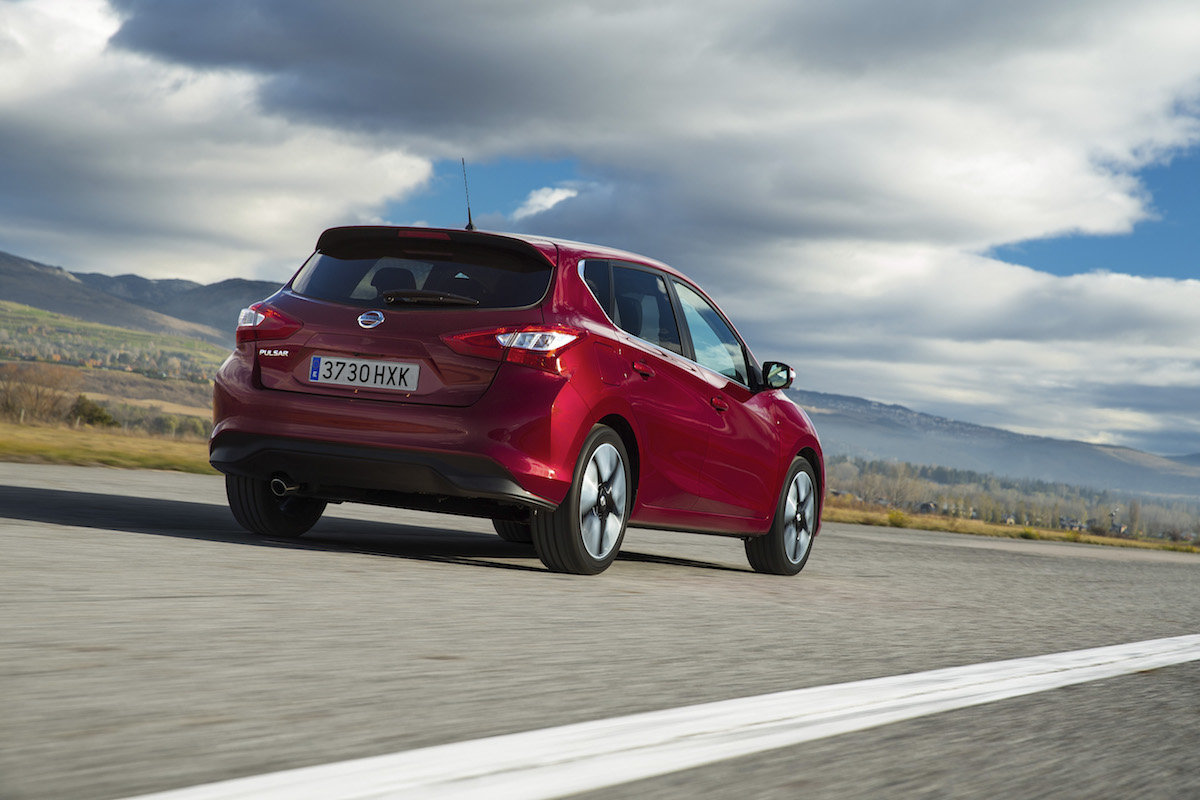
How sensible the Pulsar is can be seen as soon as you clock its exterior styling. It's very conservative, with nothing to help it stand out in a crowded hatchback segment that not only has the Ford Focus and Volkswagen Golf leading the pack, but also features accomplished cars such as the Seat Leon, Honda Civic, Audi A3, Skoda Octavia, Vauxhall Astra, Renault Megane, Peugeot 308, Mazda 3, Hyundai i30 and Kia Ceed.
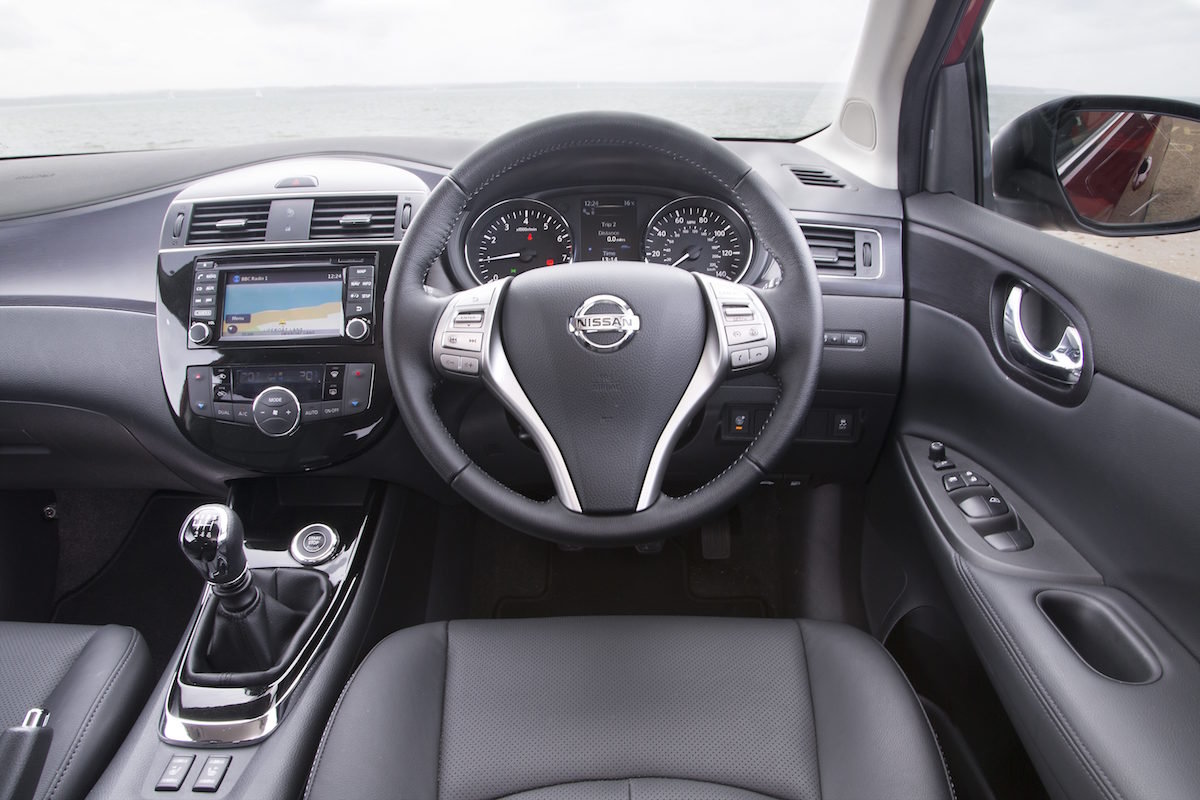
If you’re hoping for different story inside the Pulsar, you’re going to be disappointed. Again, it's all very straightforward and easy to understand, but while the build quality seems solid enough, the quality of the materials isn’t great, with hard and scratchy plastics.
One thing about having a sensible car is that you know it will be comfortable and major on practicality, and so it proves with the Pulsar. There’s plenty of space up front, with the driver’s seat having enough adjustability to make it easy to get a safe and comfortable driving position. There’s even better news from the back, where the rear seats have an almost luxurious amount of space: legroom is plentiful and headroom is equally generous.
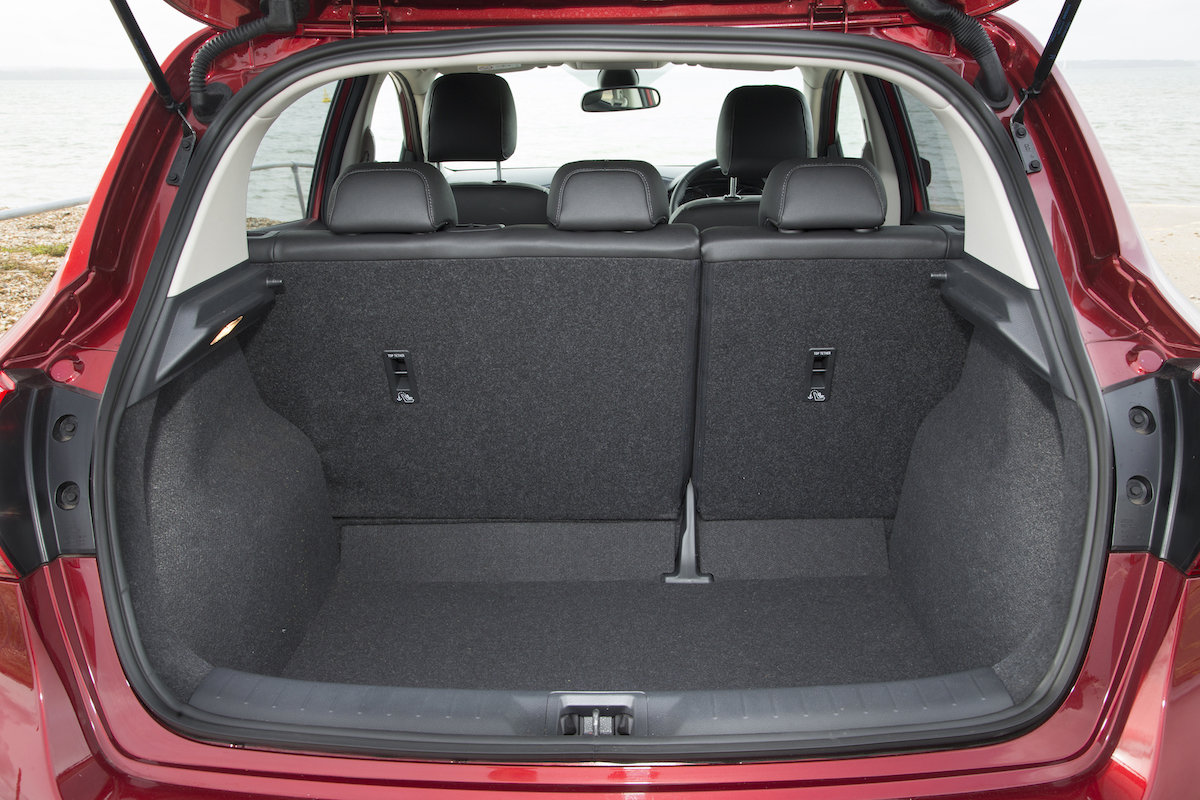
The boot space isn’t so generous, but at 385 litres, it’s more than a Golf or Focus, but it almost inevitably falls foul of what amounts to a Tardis in the hatchback segment, the Skoda Octavia.
Get the Pulsar on to the road and it rapidly becomes apparent that this is also a sensible car to drive. There are no dramas, it has light, but accurate steering, enough grip for most drivers. If you try to push the car, it will not respond with any kind of dynamism, though, so don’t even try. Just be content that this is a car engineered to make steady progress, and that’s all.
Understandably for a sensible car, comfort levels are very good, with a soft suspension doing a good job of ensuring there are no untoward disturbances in the cabin. The Pulsar is also very refined and quiet, even when the engines are revving fairly heavily, so this is a very pleasant place in which to spend some time.
Running costs are going to a be priority for anyone in the market for a sensible car like the Pulsar, so it’s good news that the Nissan hatchback is an inexpensive car to own.
Firstly, in terms of fuel bills, the Pulsar keeps things simple, with buyers having just three engines to choose from, one diesel and two petrol units. The diesel is a 1.5-litre dCi 110 unit with a 108bhp output and an official fuel economy figure of 78.5mpg. It's worth noting, though, that all the Pulsar’s efficiency stats were arrived at under the old NEDC testing regime, which was laboratory based, so the resulting figures bear little relevance to what is achievable by most drivers in real-world conditions. With this in mind, factor in a return of around 60mpg, which is still very decent.
The lower-powered of the two turbo petrol engines, the 1.2-litre DIG-T, has an official fuel consumption figure of 56.5mpg, which converts to around 40mpg in the real world, which isn’t too bad for a petrol engine. Even the more powerful 1.6-litre DIG-T 190 engine returns an official figure of 49.5mpg, so that shouldn’t break the bank, either.
CO2 emissions are also kept well in check in the Pulsar, with the diesel’s 94g/km ensuring any cars first registered before April 2017 will be tax free, while later cars will be liable for £150 annual payments. The 117g/km of the 1.2 DIG-T and the 134g/km of the 1.6 DIG-T will now cost owners the flat rate of £150 a year.
Insurance isn’t too costly for the Pulsar range, either, with cars in groups 10 to 18, depending on trim level and the equipment fitted (if your car has autonomous emergency braking as standard, it will mean a lower group than without it, because the likelihood of a collision is lower).
The Pulsar needs to be serviced every 12,500 miles for petrol models and 18,000 miles for diesels. Minor services cost from £150 for petrol models and £160 for diesel cars, with major services around £220 and £250.
There are mixed reports about the Pulsar’s reliability, with 20.7% of owners claiming to have experienced one or more faults in the first year of ownership.
The Pulsar hasn’t been featured in many customer satisfaction surveys, but it does share a lot of its mechanical parts – including its engines – with those fitted in the Nissan Qashqai, which does do well in reliability polls. Nissan is also a manufacturer with a good record, usually appearing in the top half of tables of carmakers.
However, the Pulsar has been subject to three recalls. In April 2016, it was recalled because a software data file calculating the headlamp beam position didn’t correctly adjust the height of headlamp aim when the rear of the vehicle was heavily laden, meaning other car drivers could be dazzled by the incorrectly positioned light. Cars built between May 2014 and December 2015 were affected.
In July 2016, Pulsars made between September 2014 and May 2016 had a failing rear oxygen sensor that didn’t set a Diagnostic Trouble Code (DTC) in case of the inappropriate content of the exhaust gases. And in September 2020, there was a recall for a defective child lock in cars produced between September 2015 and March 2018.
All Nissans come with a three-year/60,000-mile warranty, which is about average for this class, with a 12-year anti-corrosion warranty is also standard. The two rivals with better warranties are the Hyundai i30, with its five-year package, and the Kia Ceed with a seven-year warranty.
- A sensible car is a safe car, and that is very true of the Pulsar. It was awarded the full five stars after being crash-tested by EuroNCAP, attaining an 84% score for adult occupant protection and an 81% score for child occupant protection. These scores were achieved with the usual array of airbags, Isofix anchor points and seatbelt pretensioners, but also because apart from the base models, all Pulsars have a healthy number of active safety features to prevent collisions, including the likes of autonomous emergency braking.
- When the Pulsar was launched, it was available to buyers with a choice of four trim levels: Visia, Acenta, n-tec and Tekna. There was a decent level of standard equipment from the entry-level Visia, including tyre pressure monitoring, a five-inch TFT screen, Bluetooth and USB connectivity, air-conditioning, electric windows, cruise control and electric mirrors. Acenta added autonomous emergency braking, dual-zone climate, keyless start and entry, and automatic lights and wipers. The extra features on the n-tec trim included DAB, 5.8-inch satnav, reversing camera, LED headlights and part-leather trim. The range-topping Tekna models added a surround-view camera system, heated leather seats, leather upholstery, LED headlights and safety upgrades such as blind spot and lane departure warnings.
- The Pulsar wasn’t on sale long enough to have had any comprehensive mid-life facelifts, but there were changes to the range during its on-sale time. In 2015, for example, a more powerful 1.6-litre DIG-T 190 petrol engine was added to the line-up. Then, in 2016, the n-tec trim level was renamed N-Connecta, while the N-Connecta Style Edition was launched in September 2017, with exterior upgrades that included black bezel sports headlights, daytime running lights, black door mirrors and 18-inch black diamond cut alloy wheels.
- The most economical Pulsar version was one powered by the 1.5-litre dCi 110 diesel engine. It’s not a quick car, by any means, but the official fuel consumption figure of 78.5mpg was certainly impressive. If you can find a used example in Acenta trim and you might just have the most sensible possible Pulsar.
- If you want a family hatchback that will mostly be used as an urban runabout, but with occasional longer trips, you will probably want to look for a 1.2 DIG-T in n-tec trim, as this has some useful features, including a reversing camera and brighter, safer LED headlights.
- The ‘performance’ Pulsar, or the closest thing to it, anyway, is the 1.6-litre DIG-T 190, which produces 187bhp and can complete the 0-62mph sprint in a very respectable 7.7 seconds. And if you're pushing the boat out, relatively speaking, for this range-topping engine, you might as well look to match it with the Tekna trim.


