Peugeot 2008 Review (2019-present)
Peugeot 2008 cars for sale
4.0
Expert review
Pros
Very comfortable ride
Well finished cabin
Excellent electric version
Cons
Not cheap to buy
Fiddly infotainment system
Rear seats don't slide
The CarGurus verdict
It isn’t hard to see why compact SUVs like the 2008 are becoming increasingly popular; they offer all the space of a family car with the dimensions of a smaller model, making them more manageable around town, and with an added dash of cleverness thrown in.
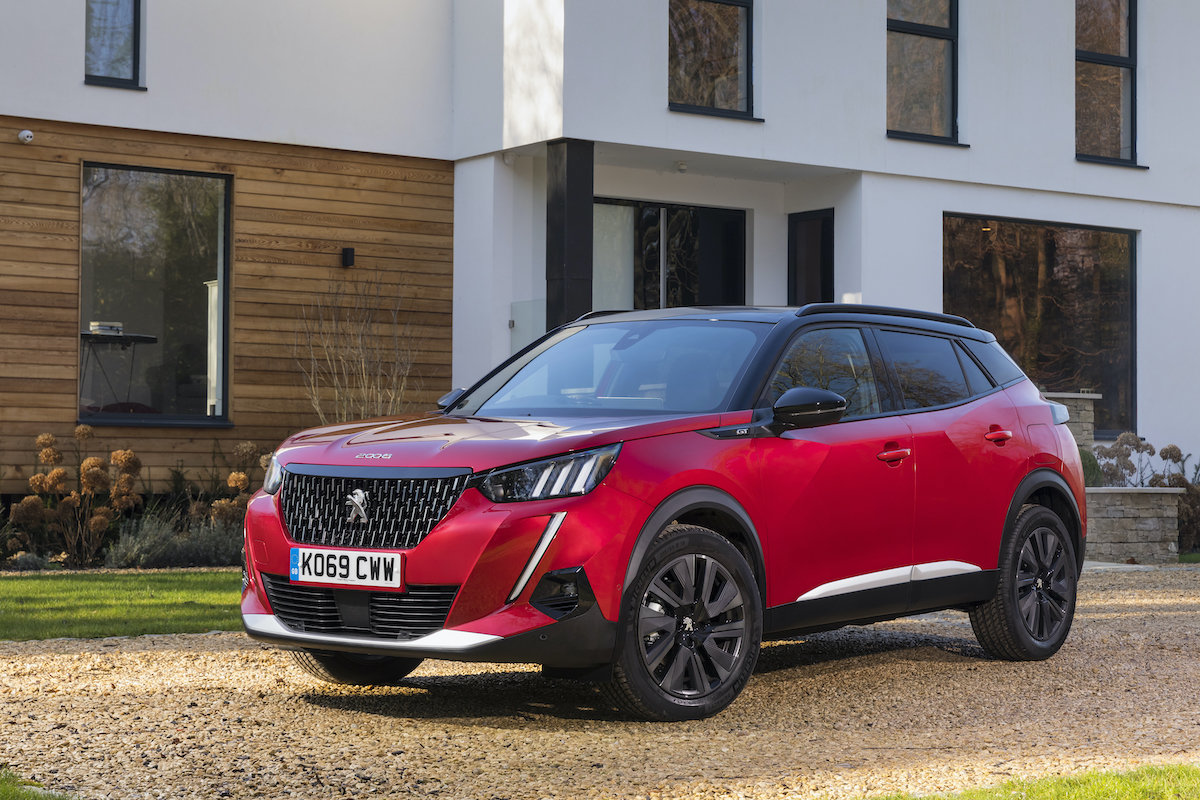
Among them, the 2008 is one of the better offerings, with plenty of all-round talent and lots of smart design. It doesn’t come cheap, though, which is why we advise sticking with the more affordable versions.
Do that, and you’ll benefit from a smooth-driving, upmarket-feeling little SUV with a decent spread of equipment on board, and punchy engines that don’t chow down too much fuel. In electric form it’s even better, though of course, it’s also even more costly to buy.
So you want an SUV. That’s no surprise; most people do these days. But you don’t want a big, tall, heavy one. You want the benefits of that raised seating position and better visibility, but you also want town-friendly dimensions and low running costs. What you want, in short, is a car like the Peugeot 2008.
The 2008 was one of the first of the burgeoning glut of compact SUVs, which took the manageable dimensions of a standard small car, jacked up the ride height and raised the roof, both to create more space inside and to jump on the coat-tails of the SUV trend. The original 2008 wasn’t all that great, to put it bluntly, but this second-generation car is much better.
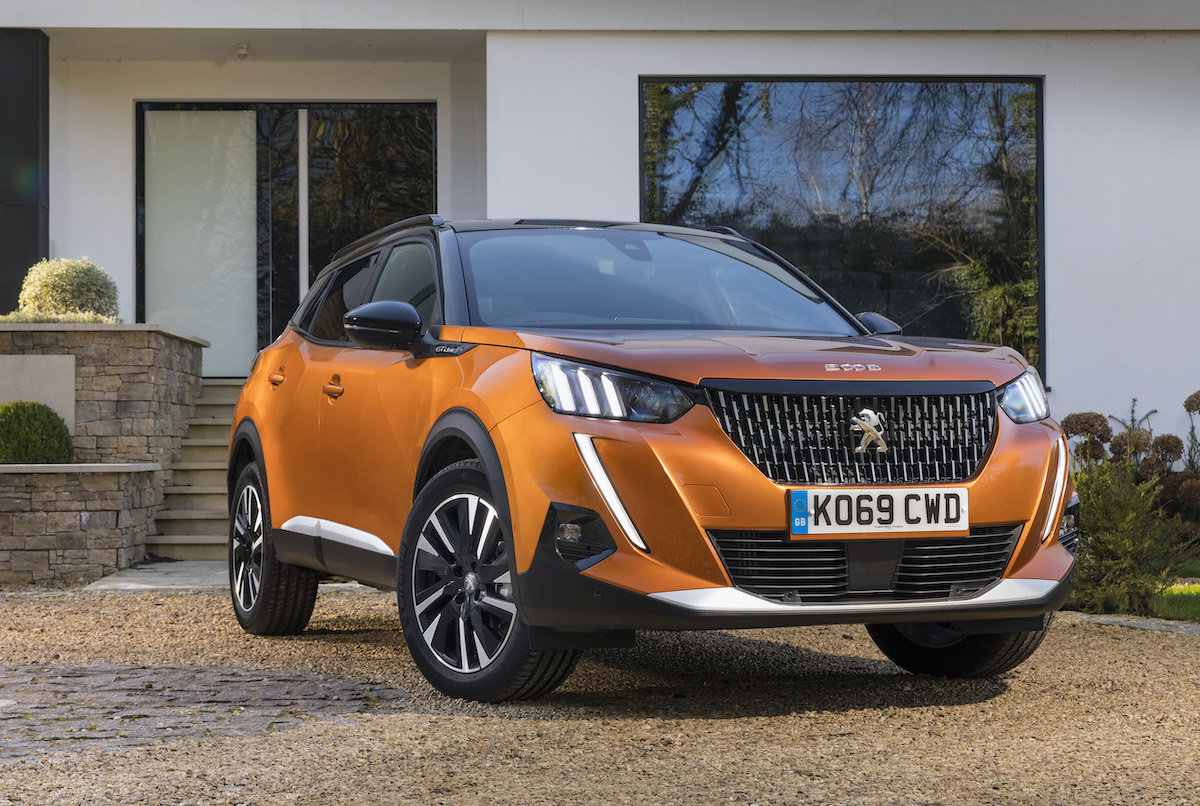
For starters, it’s a smart-looking thing, with lots of upmarket touches to the styling. The same goes for the inside, where there’s a sleek interior with beautifully crafted switchgear and a variety of high-quality materials. It’s also good to drive and available with an all-electric powertrain, which is an increasingly attractive option.
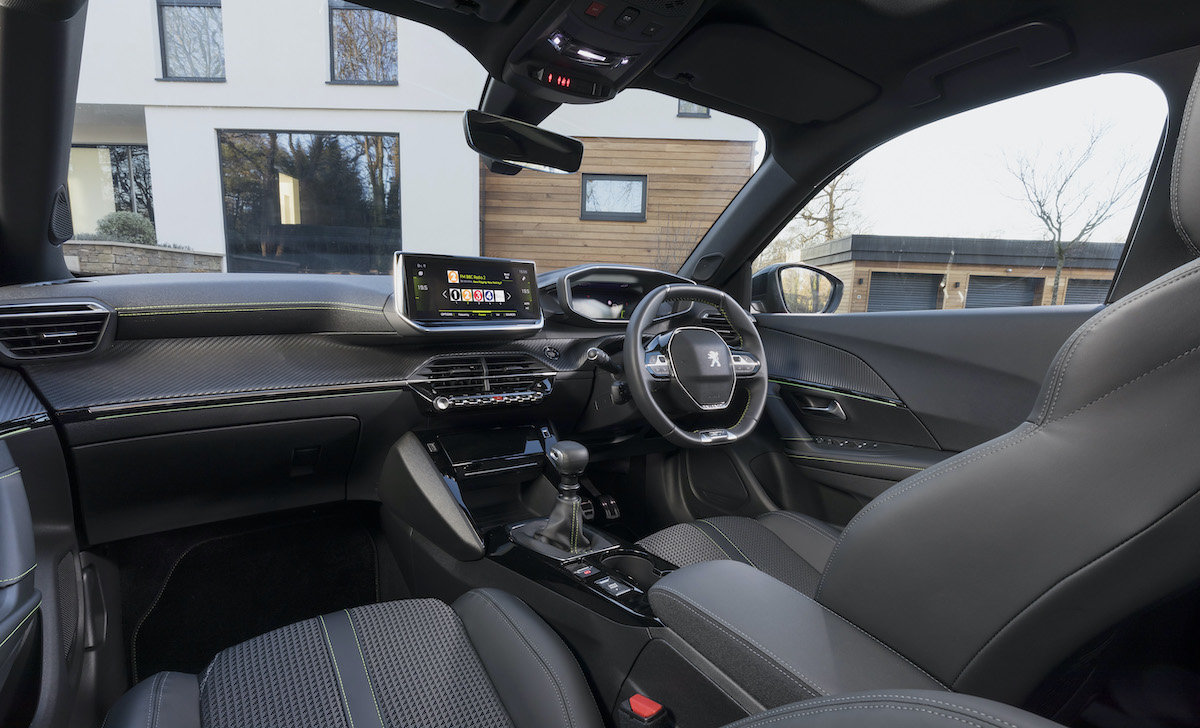
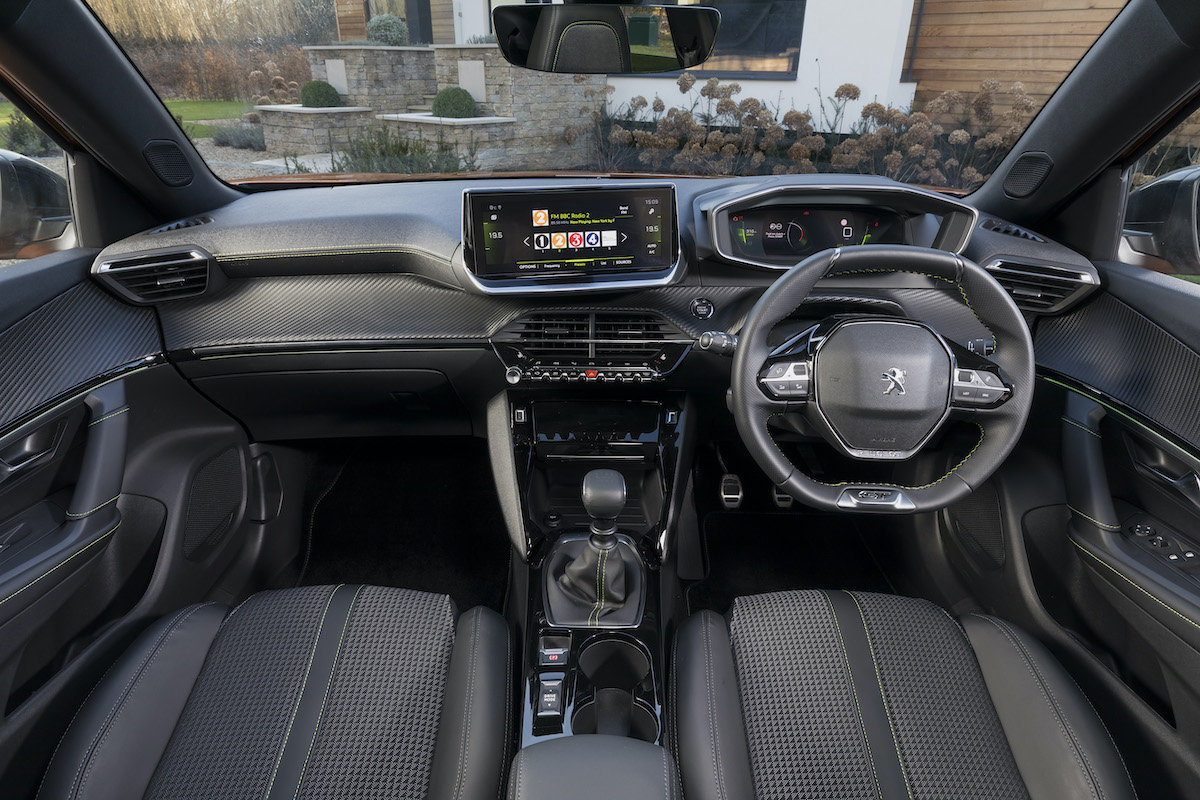
Unusually, you look over the top of the steering wheel - rather than through it - at a slim set of virtual dials perched on top of the dash, as is the way with Peugeot's 'i-Cockpit' interior layout. Higher-specification models get a very futuristic-looking three-dimensional setup for the dials, meanwhile. Whether with or without this latter feature, the 2008 is a delightful car to sit in, and the driving position is flexible, so it isn't hard to get comfy.
There’s just enough storage for all the usual odds and ends, including a deep cubby ahead of the gear lever that also doubles as a wireless smartphone charging pad on top spec models. Between the front seats there’s a deep lidded compartment, plus there are handily-sized door bins and various cupholders. Yet you also suffer that old French car bugbear of a glovebox that’s slashed inside because of the intrusive glovebox.
As for passengers, the 2008 isn’t the most spacious car of its type, but it isn’t far off. The rear seats don’t do any clever tricks, like the sliding bench you get in the Renault Captur and Citroen C3 Aircross, but there’s enough head and legroom that even taller passengers won’t feel hemmed in. More importantly, it’s perfectly sized for kids, making it a great choice for the young families that the car is aimed at. There are also two ISOFIX mountings in the rear, while GT models add a third in the front passenger seat.
At 434-litres the boot is a good size and all but the most basic models get a handy false floor, which when you lift the floor to access the storage compartment beneath stays up thanks to a clever clip system. With it in place it also creates a totally flat floor when the rear bench is folded and carrying capacity is increased to 1,467-litres. As a final neat touch, you can store the parcel shelf under the floor when you’ve lowered the rear seats, meaning you don’t have to leave it behind.
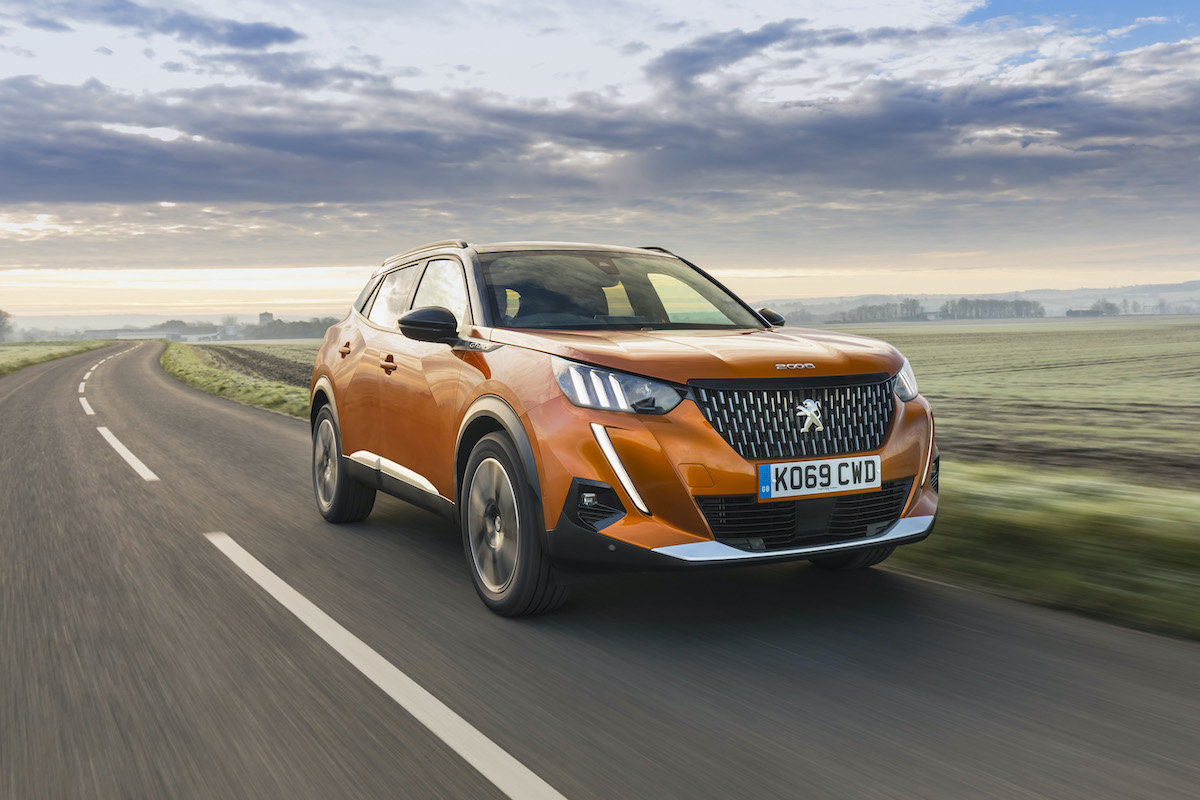
The 2008 is pretty good to drive, too, with responsive handling that belies its tall stance, and while the steering is a little light and lacking in feel, it is at least direct. There’s plenty of grip at the front wheels, too, so the nose bites well when you turn the wheel and the 2008 always feels eager to swing into corners.
Like the old 2008 you can select the Advanced Grip Control system that’s designed to help you out off-road or in slippery conditions, such as when it’s snowing. While cars like this are unlikely ever to head off the beaten track, its combination of a special traction control system and mud and snow tyres will prove handy in adverse weather - although at £700, it’s not cheap.
We love the 1.2-litre petrol engine, which punches way above its weight when allied to the six-speed manual gearbox, with gutsy, flexible performance. However, if an electric car fits into your life, we’re also big fans of the e-2008, which accelerates swiftly and smoothly thanks to its 134bhp motor and cruises along in near-silence. It also has a claimed range of 211 miles - although 160 miles is a more realistic estimate in day-to-day use.
There’s also a 1.5litre diesel, which is a surprisingly smooth and muscular performer. Yet unless you’re planning to rack up a huge annual mileage, its efficiency benefits over the petrol aren’t good enough to justify its higher price.
Whichever 2008 you go for, you’ll appreciate the comfortable way it rides bumps. True, the sharpest ruts might cause a small jolt through the car, but the rest of the time the 2008 feels stable and composed, even on the motorway, which isn’t always the case with cars of this type.
At the top end of the range, the Peugeot 2008 gets very pricey, so you’ll probably want to stick with lower-specification models. Happily, these come well equipped, with even the entry-level Active getting alloy wheels, air conditioning, LED headlights, rear parking sensors and virtual dials. You get Apple CarPlay and Android Auto as standard, too.
Upgrade to Allure to add climate control, front parking sensors, and that smart 3D virtual gauge setup; there’s then Premium versions of both Active and Allure models that add satellite navigation if you need it. GT Line is where the 2008 gets pricey, but you do get a reversing camera, heated front seats and ambient lighting, while top-spec GT adds adaptive cruise control, keyless entry and a panoramic roof.
Happily, the touchscreen on the 2008 is more responsive and easier to use than some of Peugeot’s earlier efforts, although you still have to hit a shortcut key on the dash to access the air-con controls that are housed in the display. Entry-level cars get a seven-inch screen, while more expensive models benefit from a larger 10-inch unit.
Depending on the model you choose, the 2008 gets either a four star or five star EuroNCAP rating. The entry-level models are awarded the former, while those fitted with the Drive Assist Pack get the full five. All cars feature autonomous emergency braking, but the cars with the upgrade also add cyclist detection and adaptive cruise control, both of which help it garner the extra points needed for top marks.
The cheapest 2008 to run is, of course, the electric version. If you can get away with charging it up exclusively at home, you’ll pay a fraction of the cost of a tank of fuel each time you want to charge it up. What’s more, servicing is cheap and repair bills are likely to be few and far between as there are so few moving parts in the electric motor.
The BlueHDi diesel version will cost quite a bit more to run, but of course it’s much cheaper to buy. Still, you can expect to see somewhere in the order of 50-55 mpg in the course of your usual daily driving, on average. That figure drops to 40-45 mpg with the 1.2-litre 100 petrol engine, and you can knock a further couple of miles per gallon off respectively for the 130 and 155 versions of the same engine.
Peugeot’s servicing costs should be roughly on a par with most other mainstream manufacturers’, if perhaps a touch higher. Peugeot also offers tailored service plans, which can help you to spread the cost of your annual servicing throughout the course of the year, by forking out a monthly payment, and you can buy one of these at any time up to a year after the car was first registered. All 2008 engines have a rubber timing belt, and that’ll need replacing every 10 years or 112,500 miles at the very latest, so don’t forget to factor in this additional cost.
It’s quite hard to get a handle on how reliable the 2008 will be. Firstly, that’s because it’s still relatively new, so there isn’t much data available on this newer model to work with.
The other reason is that Peugeot’s results in recent reliability surveys vary wildly. In the 2019 JD Power Vehicle Dependability Study, for example, the marque came in first place out of 26 manufacturers. That's a doubly impressive score given Peugeot used to have a pretty poor reputation for dependability.
However, in the 2020 What Car? Reliability Survey, Peugeot finished a rather lowly 25th out of 31 manufacturers, with the previous generation 2008 – which shares some of the latest model’s engines – getting only a fairly average score. So really, trying to predict the 2008’s reliability is finger-in-the-air stuff, and rather depends on who you ask.
Either way, we’ll wager cars like the Kia Stonic and Soul EV, with their much longer warranties, and the Skoda Kamiq, which has a pretty good reputation no matter who you ask, will be safer bets.
- The e-2008 is available in all six of these variants, effectively swapping the petrol or diesel engine for a 134bhp electric motor and a 50kWh battery. That should mean it’s good for around 160-180 miles between charges in the real world, depending on the weather conditions, and it comes with a fast 100kW on-board charger, which means it can be boosted from 10% to 80% battery capacity at a rapid charger in as little as half an hour.
- One of our big bugbears with all modern Peugeots is the touchscreen entertainment system, and the 2008’s is no exception. The biggest issue is that you have to use it to control the heating and air conditioning – there’s no separate panel of physical buttons – and this means you have to take your eyes off the road to come out of, say, the satnav screen, and go into the heating screen every time you want to adjust the temperature. Add to that the system’s slightly sluggish responses and its sometimes fiddly screen layouts, and you can see why we aren’t fans.
- The 2008 uses the same CMP underpinnings that are also used on the firm’s smaller 208 supermini, as well as the Vauxhall Corsa and Mokka models. This is because both brands now come under the umbrella of automotive giant Stellantis, which also owns Alfa Romeo, Chrysler, Fiat, Jeep, Maserati and Opel.
- For most buyers, we reckon the 1.2 PureTech 100 Allure offers the best blend of equipment, fuel economy and value. It isn’t too pricey considering what you’re getting, unlike some of the models higher up the range, and its nippy little engine should offer more than enough grunt for most situations the 2008 will find itself in.
- However, if you’re able to run an electric car and can afford the extra cost, we’d seriously consider switching the petrol engine for the electric powertrain. It doesn’t come cheap, but you’ll make back some of the extra cost in savings on your fuel bills, and you’ll get the benefit of zippy, whisper-quiet performance and seamless acceleration.
- The electric version will also keep your tax bills low if you’re a company car driver, but if you don’t have anywhere to plug it in, consider the 1.5-litre diesel version instead. It isn’t quite as quiet or as smooth, but it still has plenty of punch and the low CO2 emissions will mean it’s cheaper to tax than the petrol model.
- If you’re in need of an automatic gearbox, there’s only one available, and it’s paired with the more powerful of the two 1.2-litre petrol engines. That makes it quite expensive, so we’d suggest downgrading slightly to the Active Premium model.
- But if you really want to push the boat out, you can always choose the 1.2 PureTech 155 GT, which comes with an automatic gearbox as standard. It’s fully loaded with toys and has a powerful engine, and consequently feels very luxurious for such a small car. As well it should, given how much money it’ll set you back.

