Peugeot Boxer Review (2006-present)
Peugeot Boxer cars for sale
3.0
Expert review
Pros
Impressive load space and payload
Economical 2.2-litre diesel
Well equipped
Cons
Rivals are more refined and better to drive
Some gearbox issues with older used models
Electric version won't go far on a charge

The CarGurus verdict
There's a wide range of large and flexible vans on the market, including those offered by Mercedes and Ford, and each is more modern, refined and better to drive than the Peugeot. This isn’t a failure of the Peugeot, just the result of competitors such as the fourth-generation Transit being launched seven years after the Boxer.
Peugeot’s updates and revisions have helped keep the Boxer in contention, though, particularly when it comes to the 2.2-litre BlueHDi engines that allow the vehicle to comply with modern emissions regulations.
It’s also still a competitively economical option, with many versions offering a claimed average MPG of up to 36. Despite its age, it still offers much in the way of load space, payload capacity, equipment, adaptability and configurability. Consequently, if you’re happy with the way it drives and performs, a Boxer could be a sensible purchase if you want a large van.
The Peugeot Boxer is a large van, offered in an array of configurations, and competes with alternatives like the Volkswagen Crafter, Renault Master, Vauxhall Movano and Mercedes-Benz Sprinter.
It was introduced in 2006 and marked a significant improvement over the previous generation, offering improved practicality and on-road manners, as well as economical HDi diesel engines. It was also available with an array of then-modern equipment, including electronic stability control and electronic brake assist.
The Boxer isn’t a bespoke Peugeot product, though; it’s the result of a collaboration with Fiat and Citroen. Consequently, it’s basically the same as the Fiat Ducato and Citroen Relay. Like those bigger vans, it offers more storage space and payload capacity than Peugeot’s Partner and Expert vans. New or established Peugeot customers needing improved practicality and capability, as a result, have something to choose from in the company’s range.
Early cars were available with the brand's 2.2-litre and 3.0-litre four-cylinder diesel engines, while in 2014 a major facelift was carried out. The revisions included new equipment, revised styling and some durability improvements. Cleaner 2.0-litre BlueHDi diesel engines were also introduced in September 2016, allowing the Boxer to meet more challenging Euro 5 emissions regulations. Then in 2019 the requirement to make the van compliant for even stricter Euro 6 regulations meant Peugeot changed engines again, this time to an all-new 2.2-litre unit.
At launch, the Boxer was offered in crew cab, chassis cab, window van and panel van configurations. Tipper and dropside variants were later launched as part of a standalone conversion programme. There are three wheelbase options - short, medium and long.
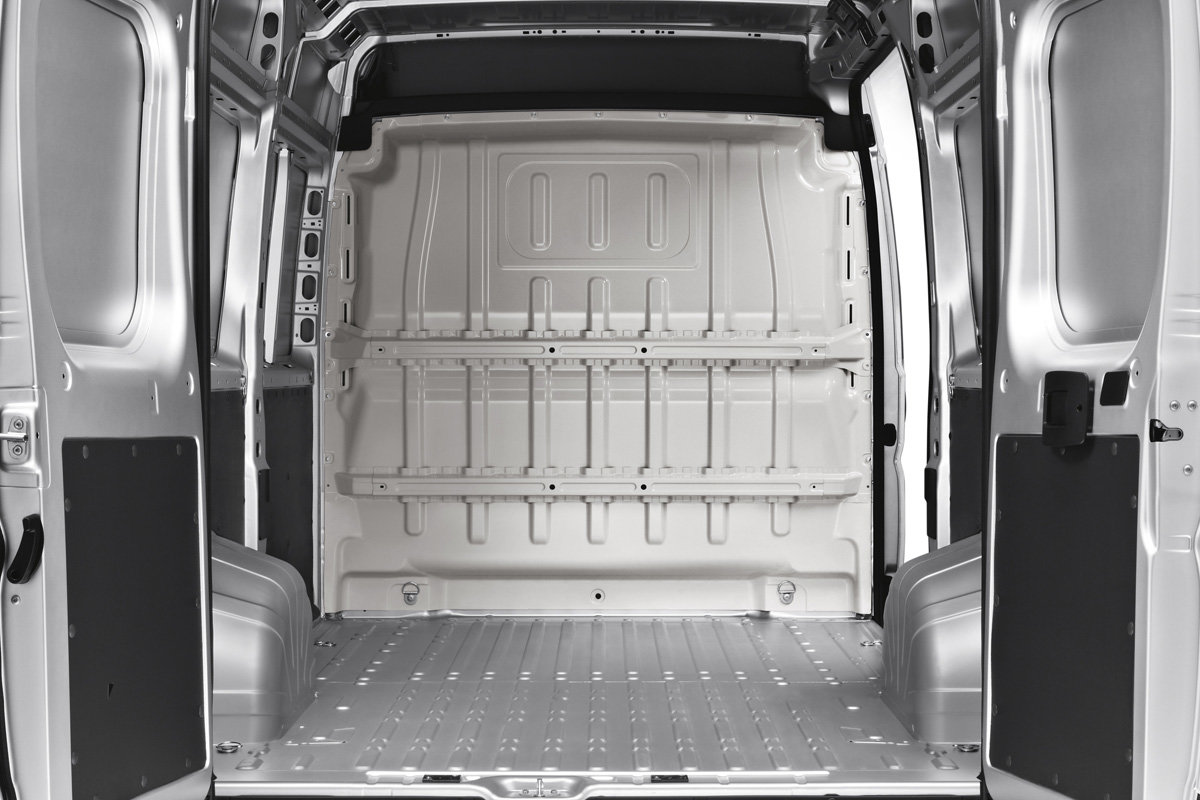
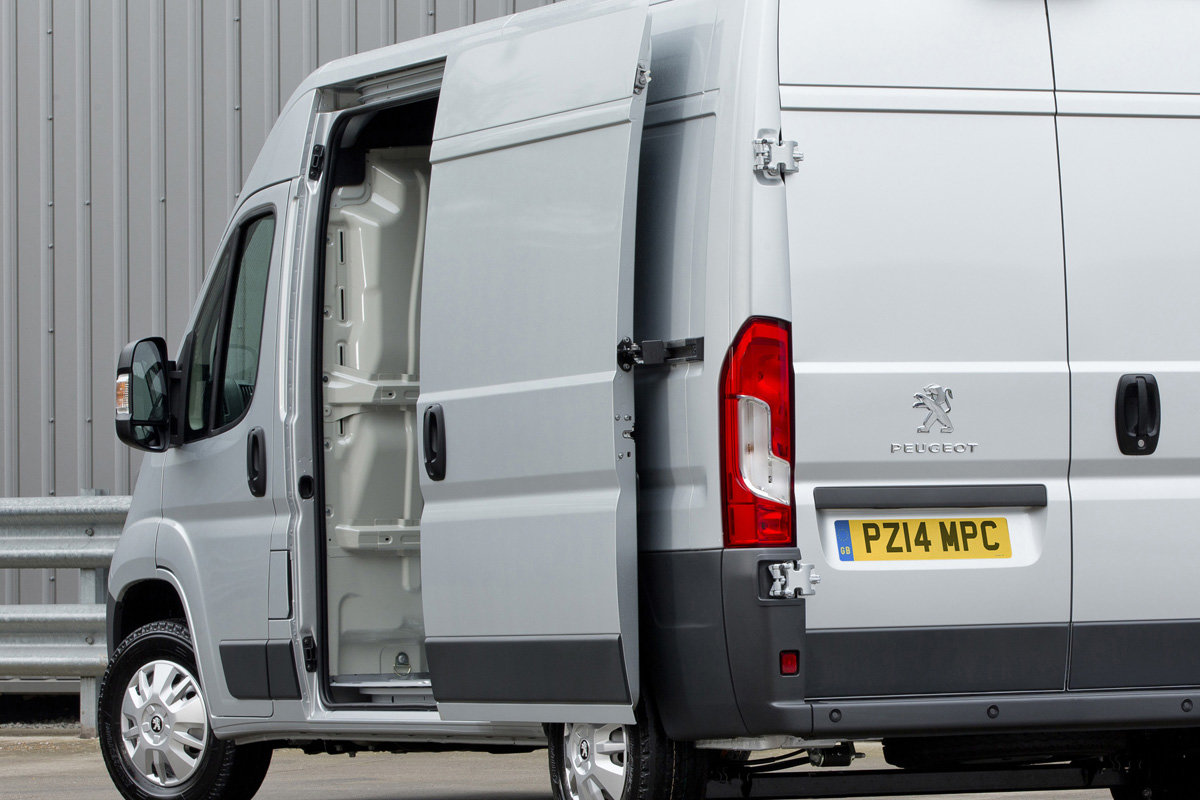
Nowadays, the Boxer range consists of several versions in a range of trim levels. The basic body styles are panel van, crew van and window van, which have payloads ranging from 1,125kg to 1,870kg and load lengths from 2,670mm to 4,070mm. Any of these will prove a capacious and practical choice, while the rear doors open 180 degrees in the panel van to improve access.
A 270-degree opening option is also offered for all variants. For wider loads, the Boxer has one of the biggest spaces between the wheel arches on any van, and a wide side door that will allow pallet loading.
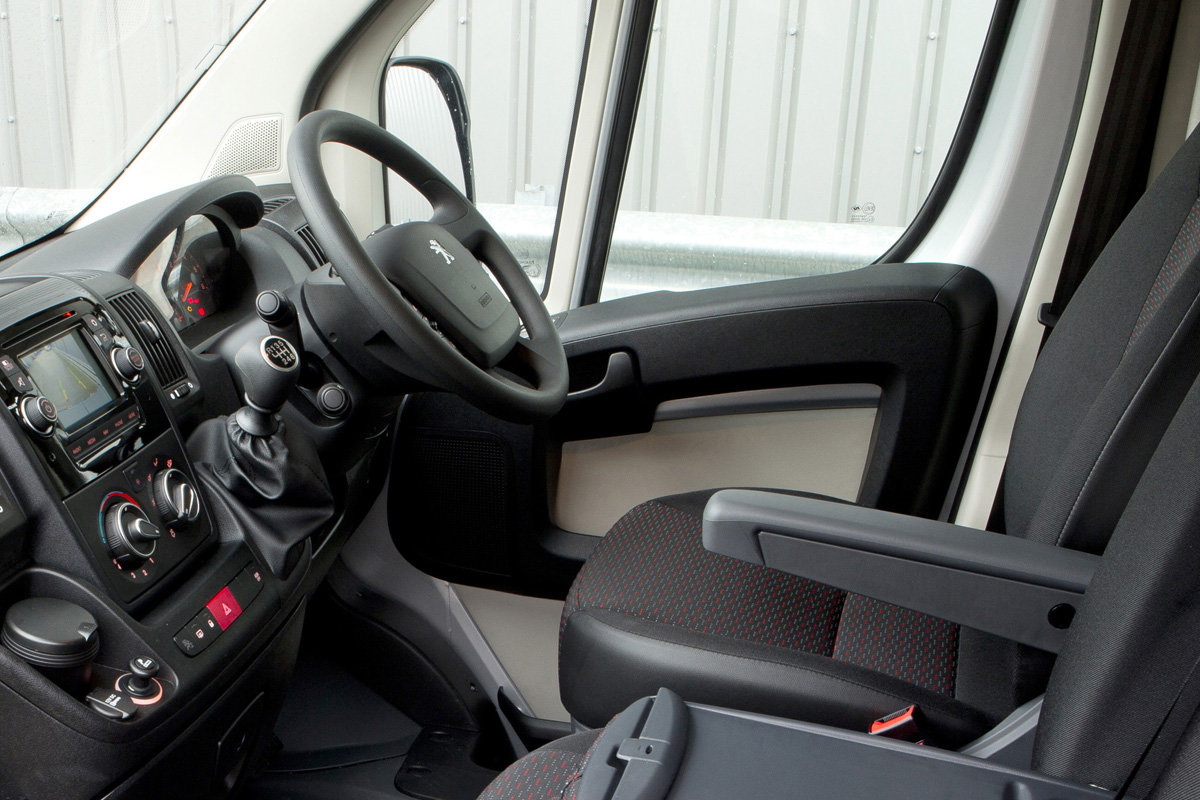
For odds and ends, there are two gloveboxes up front, and the placing of the handbrake on the right of the driver frees up space in the middle. There are also numerous cubby holes for smartphones, pens and wallets, plus enough cupholders to make sure you never go thirsty on a shift. And of course like so many vans there’s room for three up front, with all getting decent leg and shoulder room, plus enough headroom that you could wear a couple of top hats, if that’s your thing.

Power is provided, in current diesel models, by one of two 2.2-litre BlueHDi diesel engine options. The base BlueHDi 120 S&S variant produces 118bhp and 310lb ft of torque, while the higher-performance BlueHDi 140 S&S model outputs 138bhp and 340lb ft. Both come paired with a six-speed manual gearbox, which sends drive to the front wheels.
Even though these latest engines are comparatively modern, and the Peugeot has been upgraded elsewhere over the years, the way the Boxer feels and drives makes its underlying age apparent. Outright performance isn’t a problem but, compared to newer competitors, the rough suspension and lack of handling finesse make it a tiresome driving experience if you spend a long time behind the steering wheel. Older versions also get a 2.2-litre HDi diesel, but it lacks the power and efficiency of the later cars, but its workmanlike delivery and strong torque means it's still a decent option.
It’s not quiet either, which increases fatigue in the driver's seat (and passenger seat, for that matter) on longer drives. That said, the recently launched electric version is much smoother and its cabin isn’t spooled by the intrusive drone of a diesel engine. It’s a punchy performer too, accelerating smartly off the line and feeling brisk up to suburban speeds. However, its relatively short range means this is unlikely to be the first choice for any business that needs long haul transport - it’s better suited to local trips and last-mile deliveries.
On the plus side, all versions are manoeuvrable, with light steering and a good view forward. That, coupled with rear parking sensors or the optional reversing camera, means the Peugeot isn’t a chore to handle in tighter areas. Having said that, rivals such as the newer Volkswagen Crafter are more comfortable and better to drive.
Power is provided, in current diesel models, by one of two 2.2-litre BlueHDi diesel engine options. The base BlueHDi 120 S&S variant produces 118bhp and 310lb ft of torque, while the higher-performance BlueHDi 140 S&S model outputs 138bhp and 340lb ft. Both come paired with a six-speed manual gearbox, which sends drive to the front wheels.
Even though these latest engines are comparatively modern, and the Peugeot has been upgraded elsewhere over the years, the way the Boxer feels and drives makes its underlying age apparent. Outright performance isn’t a problem but, compared to newer competitors, the rough suspension and lack of handling finesse make it a tiresome driving experience if you spend a long time behind the steering wheel. Older versions also get a 2.2-litre HDi diesel, but it lacks the power and efficiency of the later cars, but its workmanlike delivery and strong torque means it's still a decent option.
It’s not quiet either, which increases fatigue in the driver's seat (and passenger seat, for that matter) on longer drives. That said, the recently launched electric version is much smoother and its cabin isn’t spooled by the intrusive drone of a diesel engine. It’s a punchy performer too, accelerating smartly off the line and feeling brisk up to suburban speeds. However, its relatively short range means this is unlikely to be the first choice for any business that needs long haul transport - it’s better suited to local trips and last-mile deliveries.
On the plus side, all versions are manoeuvrable, with light steering and a good view forward. That, coupled with rear parking sensors or the optional reversing camera, means the Peugeot isn’t a chore to handle in tighter areas. Having said that, rivals such as the newer Volkswagen Crafter are more comfortable and better to drive.
If you’re not looking to go down the all-electric route, the good news is that you don’t have to think too hard about new Peugeot Boxer running costs. All of the engine options average roughly the same, on paper at least, regardless of the body style or dimensions.
A BlueHDi 120 L1H1 Boxer 330 panel van, for example, averages 26.6-34.9mpg. An L4H2 Boxer 440 BlueHDi 140, on the other hand, clocks in at 25.5-36.0mpg. Their Euro 6.2-compliant CO2 emissions are also similar, at 279-222g/km and 291-221g/km, respectively.
All versions, e-Boxer aside, have a 90-litre fuel tank, granting good range. Average 25mpg in your Boxer and it should cover some 495 miles on a single tank of diesel. The BlueHDi engines also feature a stop-and-start system that will help boost fuel economy and reduce emissions in traffic.
Costs and economy will vary significantly depending on your particular payload, driving conditions and driving style. And, in turn, increased demands will lower the service intervals and associated costs. Some variants also have timing belts, so you need to ensure that the relevant servicing has been carried out when required.
To help keep your expenditure controllable and predictable, Peugeot offers an array of service plans. They can last up to five years, with a selection of mileage options, and prices are fixed for the duration of the plan. For 10,000 miles a year, Peugeot quotes a cost of £10 a month for 36 months and a total of 30,000 miles. These plans can be purchased up to 12 months after the van has been bought, too, so there’s no need to jump in immediately.
A new Boxer being used in a normal fashion will only have to visit a dealer every two years or 32,000 miles, which will help keep downtime to a minimum. Those enduring heavy-duty use, however, will need to visit a dealer more frequently.
The Boxer is a comparatively straightforward van, and has been since launch, and many of its components are well proven. However, bear in mind that the earliest examples are now 16-years old and so are likely to have led a very hard life.
Peugeot has also improved the durability and strength of the Boxer over the years, which should help keep problems to a minimum. The facelifted version introduced in 2014, for example, got a stronger body, improved door mechanisms, bigger brakes and upgraded damper brackets.
On older used models, though, you’ll want to keep an eye on the gearbox and gear linkages, as both can suffer from issues. There have also been reports of issues with the airbag ECU, indicated by the airbag warning light not going out, so keep an eye out for that on any test drive.
All new Boxers also come with a three-year, 100,000-mile warranty. If you’re looking at an e-Boxer, its battery is guaranteed for eight years and 100,000 miles, to 70 per cent of its capacity. Peugeot also includes a breakdown assistance service for the first year of Boxer ownership, which includes European cover and roadside assistance. This can be extended for 12 or 24 months, if desired.
The three-year warranty matches that offered by Volkswagen on its Crafter, although companies such as Mercedes offer a better three-year warranty with no mileage limit. If you’re going to be racking up the miles, especially given that the Sprinter is more modern and comfortable, it may be worth considering. Peugeot’s warranty is at least unlimited for the first two years, which could be of use to some.
If you’re looking at used Boxers, you’ll want to check out the government’s recalls checker website. The Boxer has been the subject of several recalls over the years, so it’s important to check which apply to any potential used purchase and to ascertain if the applicable issues have been rectified. An early 2006 model, for example, should have been recalled for issues relating to the steering, parking brake mechanism, braking system and indicators.
- An all-electric version of the Boxer, called the e-Boxer, will likely appeal to those operating in urban or emissions-controlled areas. Initially it was available with an electric motor that produces 122bhp and 258lb ft of torque, and 37kWh and 70kWh battery options are offered. The 37kWh battery offers a WLTP range of up to 73 miles, while the 70kWh option offers 139 miles. In 2022, Peugeot restricted choice to a single battery option, which was a larger 75kWh unit that upped the range to a claimed 154 miles.
- The Grip and Asphalt versions of the Boxer feature upgrades that make them better suited to off-road use and road use, respectively. The Grip version of the Boxer gets underbody protection, reinforced suspension, hill-descent control, all-season tyres and mud flaps, among other tweaks, while the Asphalt model benefits from a rear parking camera and sensors, automatic lights, automatic wipers and additional practicality and safety equipment. Many of these upgrades can be specified on other models, though, so you’re not constrained to one particular set-up.
- An extensive array of options is offered for the Boxer, making it easy to tailor each particular model to your requirements. Upgrades include overhead cabin storage, a programmable Webasto heater and climate control, as well as electric folding mirrors, tyre pressure monitoring, a smart tachograph and self-levelling pneumatic rear suspension. You can also get a full steel bulkhead with sliding window and a variety of glazed door options. The Peugeot Built for Business line also serves up off-the-shelf conversions, allowing customers to get Boxer models in configurations such as tipper, dropside and curtainside.
- If you want maximum payload: The Boxer 440 BlueHDi 140 S&S six-speed manual version is the most accommodating model in the range. It offers a maximum indicated payload of 1,870kg, in conjunction with a load volume of 15 cubic metres and a cargo area that’s 4,070mm long. Peugeot breaks the current range down by length and height classification and, in this case, the variant is classed as an L4H2. The gross vehicle weight (GVW) of this model is 4,005kg, though. If you need a sub-3.5-tonne GVW van, the maximum payload offered is 1,570kg.
- If you want the most space: There is a taller version of the Boxer, classed L4H3, which offers 17 cubic metres of storage space thanks to its increased roof height. Its payload capacity is a lesser 1,380kg, so it’s not ideal if you’re looking for maximum load-bearing capability. For applications focused more on lugging around taller and more awkward payloads, up to a maximum load height of 2172mm, it could be just the ticket.
- If you want the lowest running costs: Most new Boxers offer up similar fuel consumption, with all offering a claimed MPG of between 25.5 and 36. The CO2 emissions do vary considerably with specification, though, but the spread of values isn’t terrific. On paper, the more powerful BlueHDi 140 is also often reported as delivering fractionally better economy than the 120, which may be because it has to work less to shift the Boxer around.
- If you do mostly short trips: If you’re looking for a short-distance van, primarily for use in towns or cities, it could well be worth considering the electric e-Boxer, especially if you have to operate in an area where emissions-control zones are growing in number and becoming increasingly stringent. However, it is an expensive van and its range limitations will mean that it’s not ideal for all. It does, at the very least, give Peugeot a rival for electric vans such as the Renault Master ZE and electric Mercedes-Benz Vito

