Peugeot RCZ Review (2009-2015)
Peugeot RCZ cars for sale
4.0
Expert review
Pros
Entertaining to drive
Surprisingly practical for a coupe
The RCZ R is very quick
Cons
Cramped rear seats
Some reliability issues
The looks aren't to all tastes

The CarGurus verdict
When it was launched the RCZ was very much out of character for Peugeot. Some of the French brand’s traditional customers were confused by the car, and considered a racy-looking coupe to be too exotic for Peugeot. And yet long-term the success of the RCZ gave Peugeot the confidence to believe that seductive styling was a marketing tool that was not exclusive to the likes of BMW and Audi and Volkswagen.
The RCZ may not enjoy class-leading driving dynamics, yet it does dish up enough in the way of thrills and excitement, giving few owners cause for complaint. And the ultra-rare RCZ R version, well, that’s a proper sports car.
Given the RCZ’s reliability issues, it wouldn’t hurt to have a pre-purchase inspection by a marque specialist or the AA/RAC, but because it’s a comparatively special model, many owners have cared for them well. Peugeot sold 12,000 or so RCZs in the UK, so you should have plenty of choice to pick a good one.
At the 2007 Frankfurt motor show, Peugeot revealed the 308 RCZ concept car. A 2+2 coupe, it was a huge departure from the somewhat dour styling of contemporary Peugeots. With its feline rear haunches, so-called ‘double bubble’ roof that echoed the design signature of the Italian coachbuilder Zagato, and striking, silver-finished ‘roof arches’ that curved from the base of the windscreen to the top of the rear wings, the 308 RCZ was an instant hit with critics and the public alike.
The French company denied production plans, of course. Those who didn’t believe that denial did believe that a production version would be very much watered down from the concept car. Imagine the collective surprise, then, when at the 2009 Frankfurt motor show, Peugeot launched the RCZ and it looked exactly the same as the concept car, double bubble roof and all.
Based on the Peugeot 308 hatchback, the RCZ is lower and wider but does share its stablemate’s basic suspension setup and its facia: Peugeot had to save money somewhere. The sports coupe’s 1.6-litre turbocharged petrol engines were developed in a joint venture with (BMW) MINI, and its 2.0-litre HDi turbodiesel motor is a PSA production, so can also be found in various Citroens as well as other Peugeots.
Over its lifetime, the RCZ’s eye-catching looks remained largely unchanged, although Peugeot did facelift the car in 2013. The most obvious change was to the front grille, which gained a more gaping look in line with other models in the line, while there were also some minor updates to specification and trim.
Fun, fast, stylish and practical, the RCZ was a big hit for Peugeot when it was new, and remains an attractive proposition on the second-hand market.
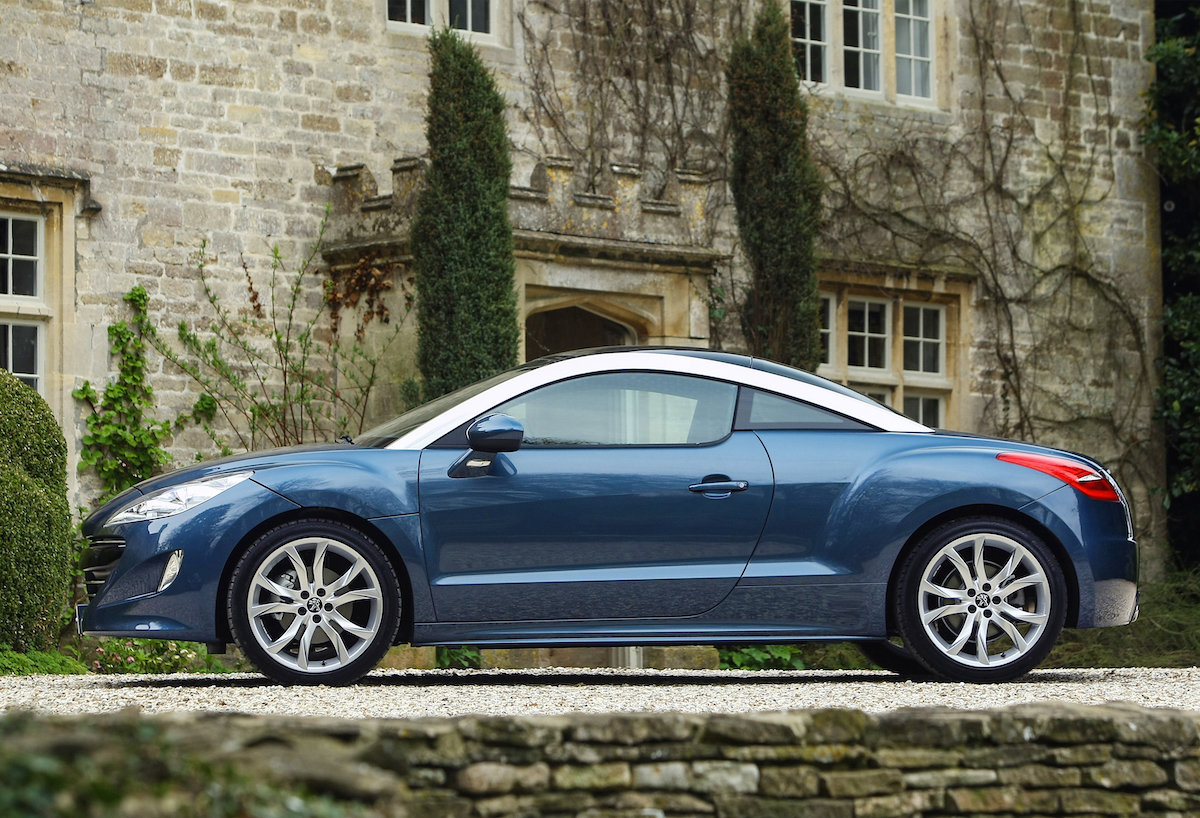
Let’s be honest here - you’re not going to be choosing the sleek and stylish RCZ for its practicality. That said, even compared to the contemporary coupe competition, such as the VW Scirocco, the Peugeot demands some compromises when it comes to space and versatility.
For most folk the front seats are nicely supportive, plus there’s a wide range of seat and wheel adjustment, but the high set pedals can cause ankle aches on longer journeys. Then there’s the back seats, which are cramped enough that even small children are likely to throw their toys out of the pram after being asked to spend any length of time in them.
On the plus side, the boot delivers a very useful 384-litres of space, although unlike many it doesn’t feature a hatchback opening, meaning access can be tricky for larger loads. You can, however, fold the seat back flat to extend the boot, which at a squeeze can then accommodate a mountain bike.
Some critics grumble that the RCZ has the same dashboard as the 308 hatchback, but it’s functional and not unattractive and doesn’t really detract from the overall experience of the car, especially as Peugeot has used some higher grade materials. Less impressive is the lack of storage - there’s a single cup holder, narrow door bins and, that traditional French car grumble, a glovebox that’s rendered largely useless by the need to accommodate the fuse box.

The 1.6 turbo petrol engines (badged as THP) have three power outputs. The entry-level model, the THP156, has 154bhp which is good for 0-60mph in about 8.0 seconds. The next version up (THP200) is somewhat feistier with 197bhp and a 0-60mph time of 7.4 seconds.
King of the hill is the RCZ R, introduced into UK showrooms in January 2014, which was reworked by Peugeot Sport with a heavily revised engine, and uprated gearbox, clutch, suspension and brakes. The 266bhp RCZ R can reach 60mph from standstill in 5.6 seconds and its top speed is limited to 155mph. The 163bhp 2.0 HDi helped broaden the RCZ’s appeal at a time when Audi was still a while away from launching a diesel version of the TT. It’s as quick as the lower-powered petrol model, but gives 54mpg.
Its steering might be a tad light, but dynamically the RCZ is the best-handling Peugeot of its era, making it impressively sporty and involving for a front-wheel drive car. The ride is rather firm as a result, and it's not as comfortable as a TT, but that's forgivable -perhaps even desirable - given its racy character. The RCZ R, meanwhile, has the muscles and demeanour of a serious sports car, which are reflected in its second hand prices. It's no less comfortable than the regular RCZ, either, which might even make it the best version of the bunch.
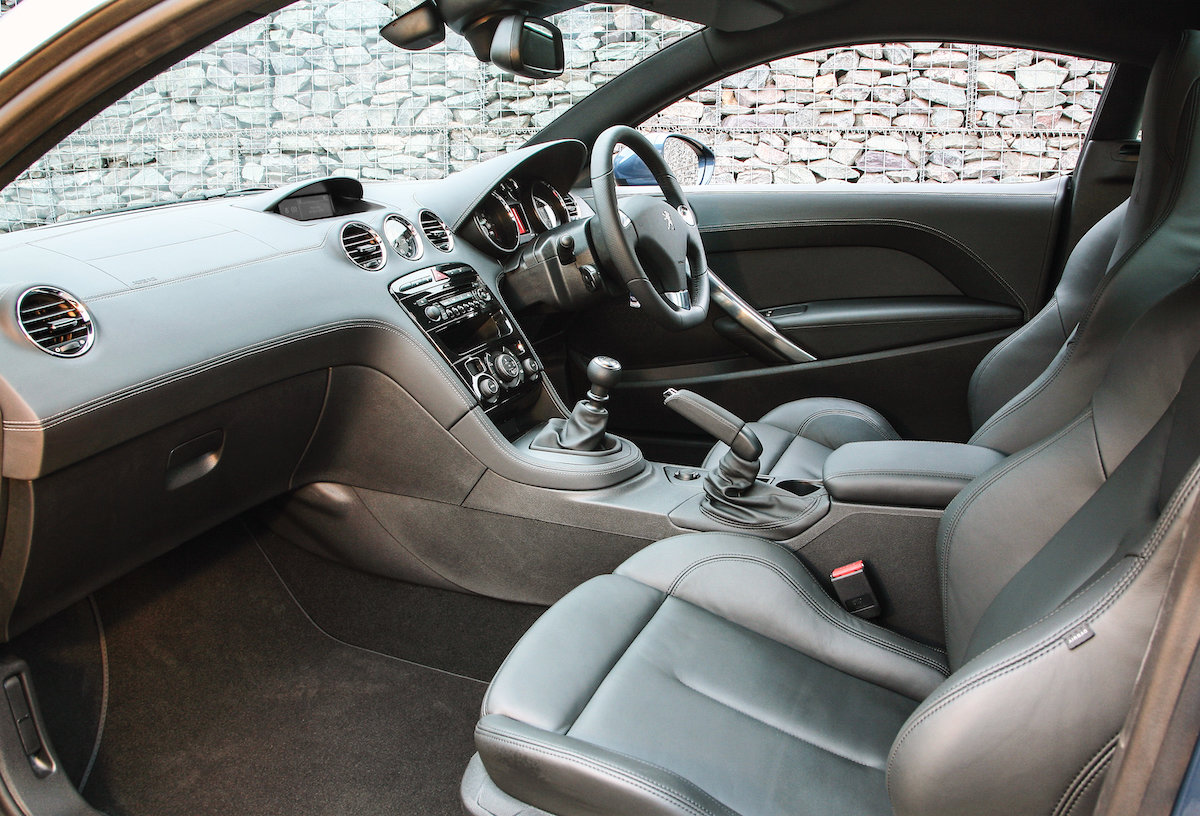
Peugeot kept the trim levels relatively simple on the RCZ and started with just two, the entry-level Sport and GT: later the GT Line slotted in between them. In 2014 the RCZ R topped the range, but with only 300 of those sold in the UK, you’re unlikely to see one.
The Sport has 18-inch alloys and cloth upholstery: curiously the lower-powered (154bhp) version is the only model that offers the option of a six-speed automatic gearbox, complete with steering wheel-mounted paddle-shifters for manual changes. The GT has 19-inch alloys, leather upholstery and parking sensors. All models bar the RCZ R have an automatic two-position active rear spoiler.
In terms of technology, the RCZ now feels very dated, with most getting a traditional infotainment set-up that runs to a CD player and radio with an aux-in for external music players. Most do get Bluetooth, however, which at least allows hands-free calling and music streaming from your phone. Sat-nav was an option and there’s no denying the fact the screen can be raised and lowered from the top of the dash is quite cool, but the graphics, mapping and interface are all very old hat now.
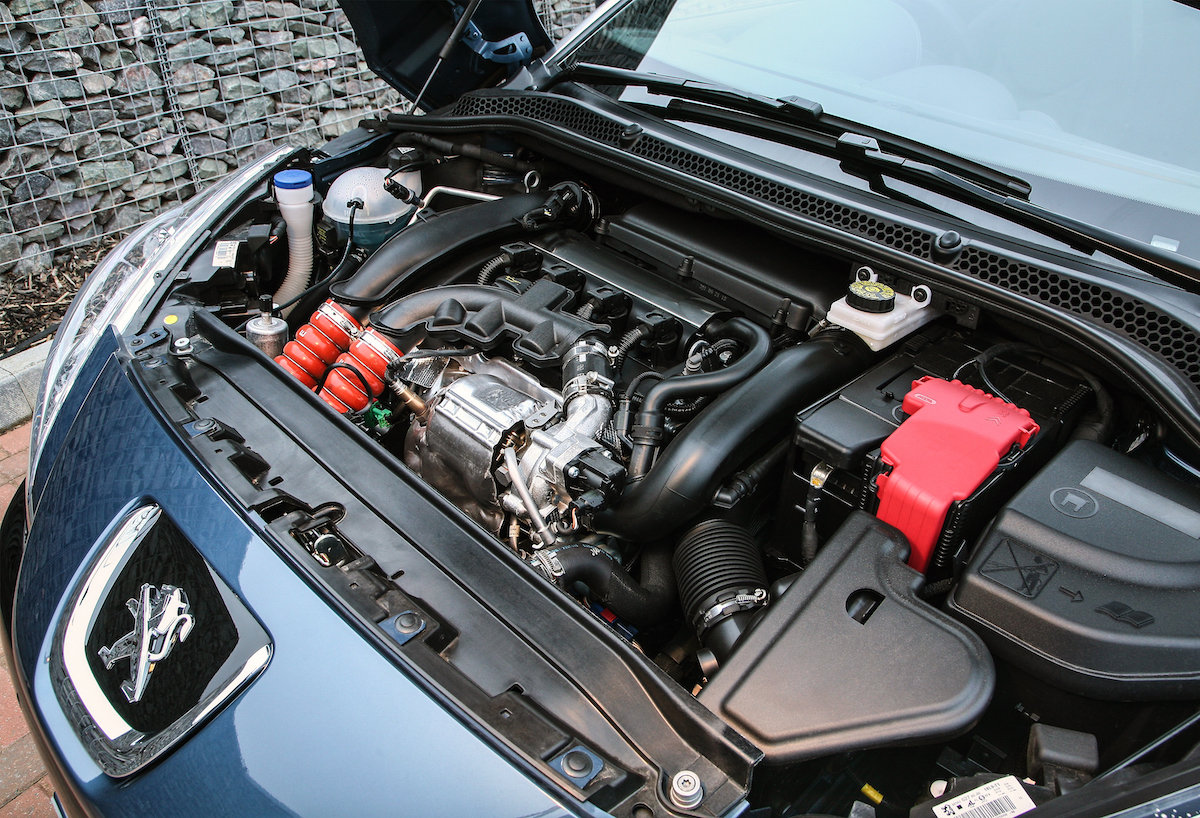
To look at the Peugeot RCZ, you might imagine that it's going to be a relatively costly beast to run, but because it’s based on the general underpinnings of the 308 hatchback and its engines are from other mass-produced models, the distinctive coupe is comparatively light on your wallet. The slight exception to that statement is the high performance RCZ R model. In addition to annual servicing, you need to change the spark plugs every year, too, and it’s much harder on its brakes and tyres. But with just 300 of them registered new in the UK, it won’t be a problem for most of us.
Now that second-hand examples are getting a bit older, both the petrol and diesel models are due an annual/10,000-mile service, and Peugeot offers a fixed price servicing deal that uses ‘approved’ parts rather than OEM ones, to keep prices down. A minor service at a Peugeot dealer is from around £199, a major one £329. A set of approved front discs and pads is £199 (£229 for the rears), and a timing belt replacement for the 2.0 HDi diesel – due every 10 years/140,000 miles – is £399. Of course an independent garage may well be able to beat these prices, but they do at least give you a benchmark against which to compare.
Tyres from the premium brands will set you back between £130 to £190 a corner, while insurance groups for the RCZ range between 27 and 33 for the mainstream models, rising to group 42 for the rampant RCZ R.
The RCZ 2.0 HDi is the most economical of the pack, with an official figure of 54mph, but what’s surprising is that the potent RCZ R boasts a 44mpg fuel consumption figure, equal to that of the lowest powered THP 156 and beating the 42mpg attributed to the THP 200. Depending on the trim level the annual road tax for the HDi ranges from £135 to £155, while the span for the petrol models is £170 to £250.
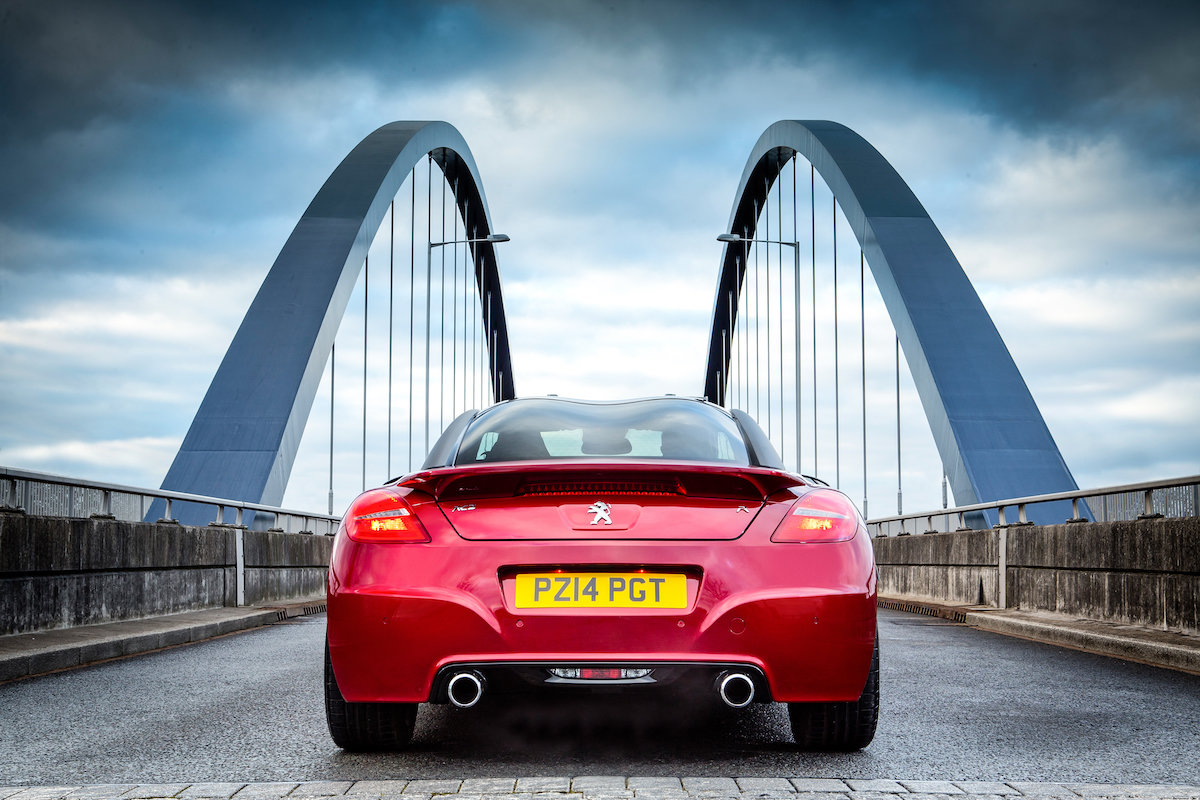
In common with the (BMW) MINIs that share the 1.6-litre turbocharged petrol engine, the RCZ can suffer from the failure of its timing chain tensioner, and then the timing chain itself. At idle the car can sound like a diesel tractor, and if you don’t have the issue sorted out then you may be staring down the barrel of a £5,500 engine rebuild. The tensioner was modified for use in the RCZ R that was launched in 2014, and all petrol engines from then on featured the uprated component.
Age is bringing further problems for the 1.6 petrol engines: ignition coil and spark plug failures, engine oil leaks, cracking turbo hoses, coolant system leaks, and failure of the car’s electronic control module. A knocking noise from under the bonnet may not be the doomsayer you imagine: there’s a chance it could be the engine mounts telling you they are on the way out. When the RCZ was new the oil change intervals were every 20,000 miles or roughly two years, but the commonly accepted wisdom now is to at least have your car looked at every year or 10,000 miles.
Talking of oil changes, the RCZ R has a limited-slip differential between the front wheels, allegedly sealed for life. Most experts advise that you should ignore that claim and change the diff’s oil every 60,000 miles or sooner.
The brake calipers of older cars are starting to corrode to the point where they become ‘sticky’ and don’t release the brakes, while the hill start function is also known to play up and leave the brakes on. The latter is an electrical malady, and there are others including the infotainment system, boot release, fuses and instrument lighting. Poorly performing HDis may require a software update for the main ECU: the diesel has also been the subject of recalls for fuel leaks caused by chafing fuel pipes and the distortion of the fuel filler cover.
Clutches are known to be a weak spot, and if the gearchange on the six-speed manual seems a little graunchy, this can be an indication that water has infiltrated its components. Water ingress can be an issue with the ‘roof arches’, too, which are beginning to suffer from corrosion on some examples.
- Unlike other Peugeots, there aren’t too many special editions of the RCZ, just the Asphalt, Red Carbon and Magnetic. The best of those is the Asphalt and it is truly a limited edition, just 75 in the UK. The Asphalt was launched in June 2011, it’s based around the 197bhp petrol turbo engine, and its most distinctive feature is its Telluric matt grey bodywork, with black roof and matching black brake calipers. Inside there’s Nappa leather upholstery and Alcantara trim for the steering wheel and gear lever gaiter. It also features satnav and a top-end stereo.
- Coinciding with a facelift for the RCZ in 2013, Peugeot increased the amount of personalisation options its sports car could be ordered with. There were new colours for the roof arches – Aluminium, Sand and Matt Black – two new bodywork colours, extra alloy wheel designs, new decal stripes, plus a Black Pack and Sports Pack. The former fuses matt black roof arches with black grille bars, calipers and mirror caps, while the latter includes a smaller diameter steering wheel, a short-throw gear-shift, and a ‘Sound System’ resonator to make the RCZ sound a little bit wilder when accelerating.
- There’s more to the RCZ R than a dollop of extra power, some stiffer suspension and a set of bigger alloys with wider tyres. The fast flagship was engineered by Peugeot Sport and its turbocharged 1.6-litre engine gets forged aluminium pistons, bespoke conrods and twin scroll turbo, plus a motorsport developed exhaust manifold. The suspension also features a wider track, unique geometry and stiffer springs and dampers. Then there’s the massive front brakes and calipers, which are taken from the firm’s world rally championship-winning 206 WRC competition car.
- If you want the best RCZ experience: The RCZ R is fast and furious… and almost impossible to get hold of, unfortunately. An RCZ with the THP200 1.6-litre turbo engine and GT spec makes an excellent alternative. It’s plenty quick enough – 0-60mph in 7.4 seconds – there are more to choose from, its handling should make you smile, its insurance costs aren’t too steep given what sort of car it is, and its official Combined fuel consumption is 42mpg. Pick a post-2013 facelift example and it will be loaded with kit.
- If you’d like some impressive fuel economy with your performance: The RCZ 2.0 HDi turbodiesel’s 0-60mph time of 8.4 seconds is no more than adequate for a sports coupe, but it’s in the mid-range that its performance really shows its strength: you can find yourself thundering along for little apparent effort. Driven more sedately you can also expect up to 54mpg, ten more than the most parsimonious of the petrol RCZs can manage.
- If you’re a speed freak: No doubt about it, Peugeot’s most powerful production car since the mid-engined 205 T16 homologation special of the 1980s, the RCZ R, is the holy grail of the line-up. A top speed limited to 155mph and a 0-60mph time of 5.7 seconds sees to that. And thanks to development by Peugeot Sport, it’s genuinely excellent to drive hard. But with only 300 registered in the UK (and doubtless fewer on the road now thanks to accidents), you’ll have your work cut out to find one.
- If you’ve got limited funds: Don’t dismiss the entry-level 1.6-litre petrol turbo engine. Compared with the rest of the range its 154bhp might not seem up to much, but if you ignore 0-60mph times it zips along with commendable energy and sits in insurance groups 27-28. And if you’re buying an RCZ primarily because you think it looks cool, you’re not going to be disappointed with its get up and go.

