Polestar 2 Review (2020-present)
Polestar Polestar 2 cars for sale
4.0
Expert review
Pros
Stunning build quality
Very rapid acceleration
Good battery range
Cons
The Performance Pack is pricey
A Jaguar I-Pace is roomier
No traditional dealer network

The CarGurus verdict
If you’re not yet convinced an EV could slot seamlessly into your daily life, the Polestar 2 is not the car to change that. After all, in terms of charging infrastructure, the clear market leader is still Tesla. But, the Polestar has a comparable driving range than to the Tesla Model 3, and it knocks the Tesla for six when it comes to design and build quality. There is an all-pervading sense of integrity about the Polestar 2 that Tesla owners will be unfamiliar with. As far as practicality and performance are concerned, there’s very little to choose between the two models, although the Polestar’s hatchback boot is much more useful than the Model 3’s narrower saloon boot aperture.
But most people who pick a Polestar over a Tesla will do so precisely because it isn’t a Tesla. They’ll favour the Polestar 2 over the Model 3 because they like what the brand stands for and they appreciate its far more sophisticated exterior design, as well as its higher quality cabin. Competition in the executive electric car market just got very serious indeed.
What is the Polestar 2?
For a time, Polestar was the high-performance division of Volvo, in much the same way BMW M is responsible for sportier versions of the German company’s mainstream cars. More recently, though, Polestar has become a standalone brand in its own right, with an emphasis on delivering upmarket EVs that are good to look at and drive. Both brands are owned by a Chinese parent company, Geely.
The newly emancipated company signalled its arrival with its first car, the achingly pretty Polestar 1, at the start of 2020. As compelling as its show-car proportions and exquisite detailing were, that model was something of a red herring. All Polestar cars from now on will be all-electric vehicles, but with both a combustion engine and an electric motor incorporated into its powertrain, the Polestar 1 is a plug-in hybrid. What’s more, the two-door coupe is very limited in number and each one costs the better part of £150,000.
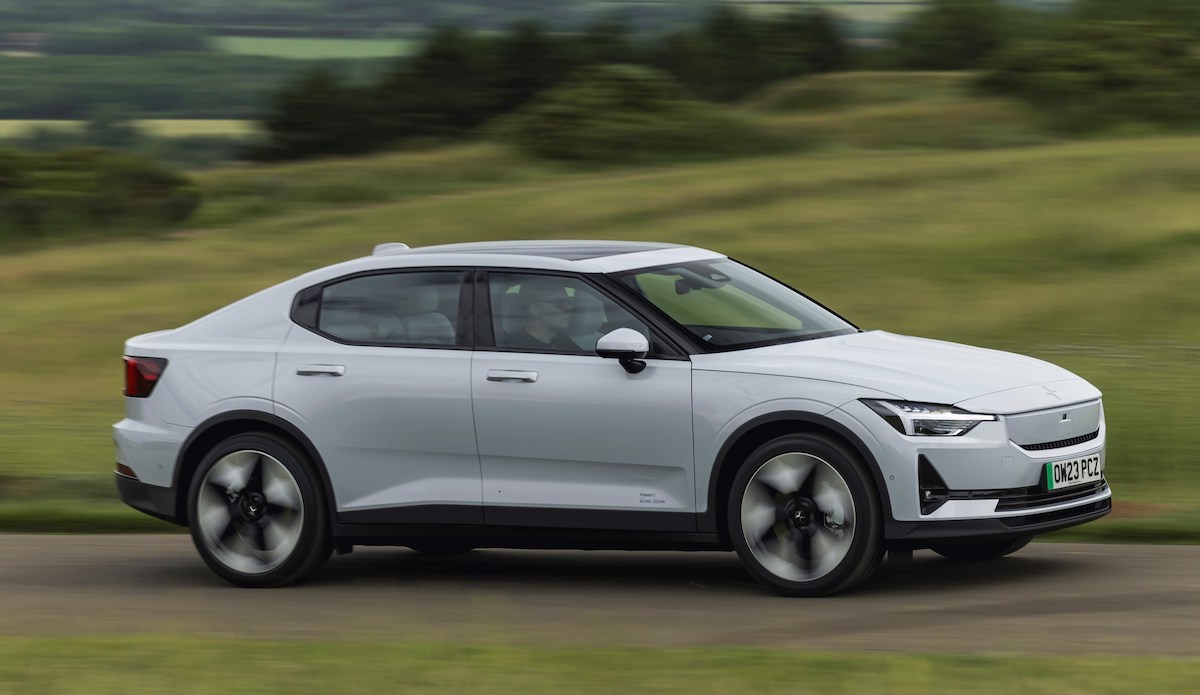
In a sense, then, it’s with the Polestar 2 that the company really set out its stall. With its five-door hatchback configuration (or fastback, if you accept the brand’s definition), this new car is very clearly aimed at the Tesla Model 3, BYD Seal, Kia EV6, Hyundai Ioniq 6 and every other posh EV in the rather crowded £45,000 to £55,000 price zone. For now, the Polestar 2 range offers a choice of either two- or four-wheel drive models, the latter featuring a pair of electric motors generating just over 400bhp, or 469bhp in the full-fat, Dual Motor Performance version.
A facelift in 2023 bought mild tweaks to the styling but significant changes underneath, with more power across the range, and the Single Motor models becoming rear-wheel drive rather than front-wheel drive. A bigger battery (up from 78kWh to 82kWh) increased the maximum WLTP claimed range in the Polestar 2 from 335 miles to 406 miles.
How practical is it?
Polestar is pitching the 2 as a sleek and stylish machine that’s infused with some coupe-like kerb appeal. Yet while the car is no doubt handsome, it also delivers a decent dose of practicality, because in reality it's a five-door family hatchback.
For starters, it shares its seats with other Volvo models, meaning you’ll be sitting in some of the most supportive chairs in the business, plus there’s a wide range of adjustment to help get you comfortable behind the wheel. There’s also loads of handy storage, including doorbins deep enough to lose the odd drinks bottle in, a large glovebox and a lidded cubby between the front seats.
Those sitting in the back also get decent head- and legroom, plus there’s space for three adults at a squeeze: although none would have terribly nice things to say about you after a long journey. The car’s rising window line also means that it can feel a little claustrophobic for rear-seat occupants.
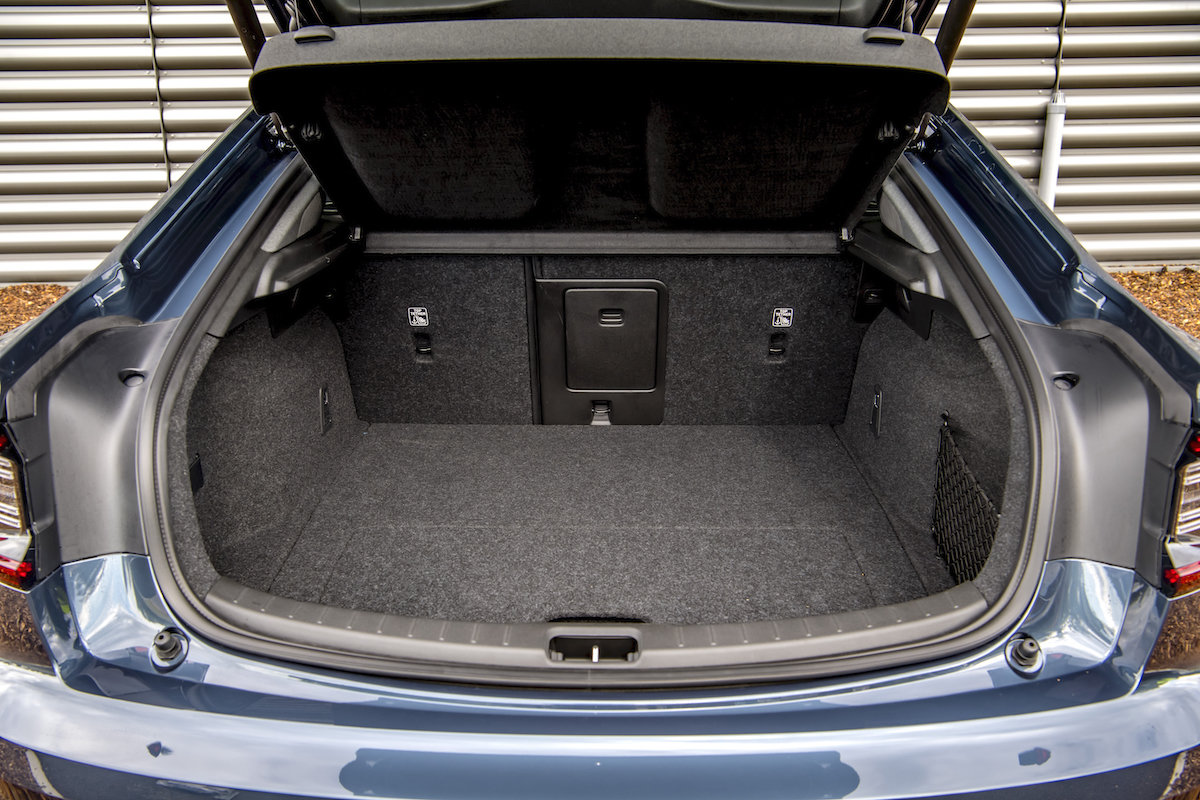
A large hatchback opening makes it easy to load bigger items, while the 405-litre carrying capacity compares favourably with rivals. There’s also an extra 41 litres of space under the boot floor, while folding the split-fold rear seats flat liberates 1,095 litres. A 35-litre ‘frunk’ is perfect for storing charging cables under the bonnet.
Speaking of which, the 2 is available with either 69kWh or 82kWh battery packs (with usable capacities of 67kWh and 79kWh respectively), with both spread across the floor of the vehicle and stuffed into what would traditionally be referred to as the transmission tunnel, meaning it has very little impact on space. The smaller battery serves-up 313-339 miles of range in the entry-level single-motor car, while every other Polestar model gets the big battery with its WLTP range of 344-406 miles depending on whether you opt for the racy twin-motor model or the sensible, single-motor version.
And what about when the battery is depleted? Well, the Standard Range car will charge at up to 130kW, while the Dual Motor cars manage up to 205kW (up from 150kW on the pre-facelift car) which is good for an 80% charge in under 30 minutes on any Polestar 2. Use a 7kW domestic wallbox and you’ll get a full charge in around 10 hours for the Standard Range car, or 13 hours for the Long Range.
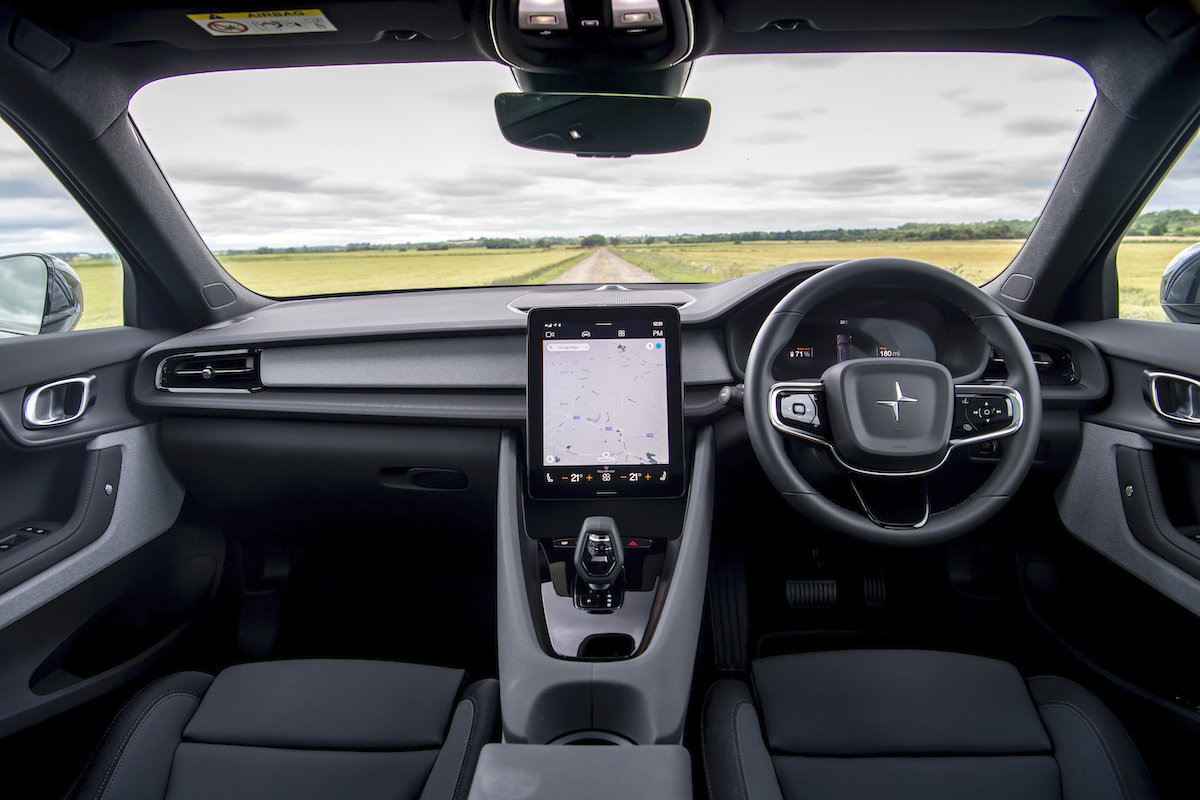
As well as its handsome Nordic styling, one of the 2’s real assets is its high-quality cabin. There are woven fabrics across most surfaces (Polestar refers to these as vegan, stressing that no leather has been used, or perhaps no vegans), while the minimalist dashboard, which is almost entirely free of buttons, means the interior looks as good as the exterior. The standard of fit and finish within the cabin is exceptional.
What's it like to drive?
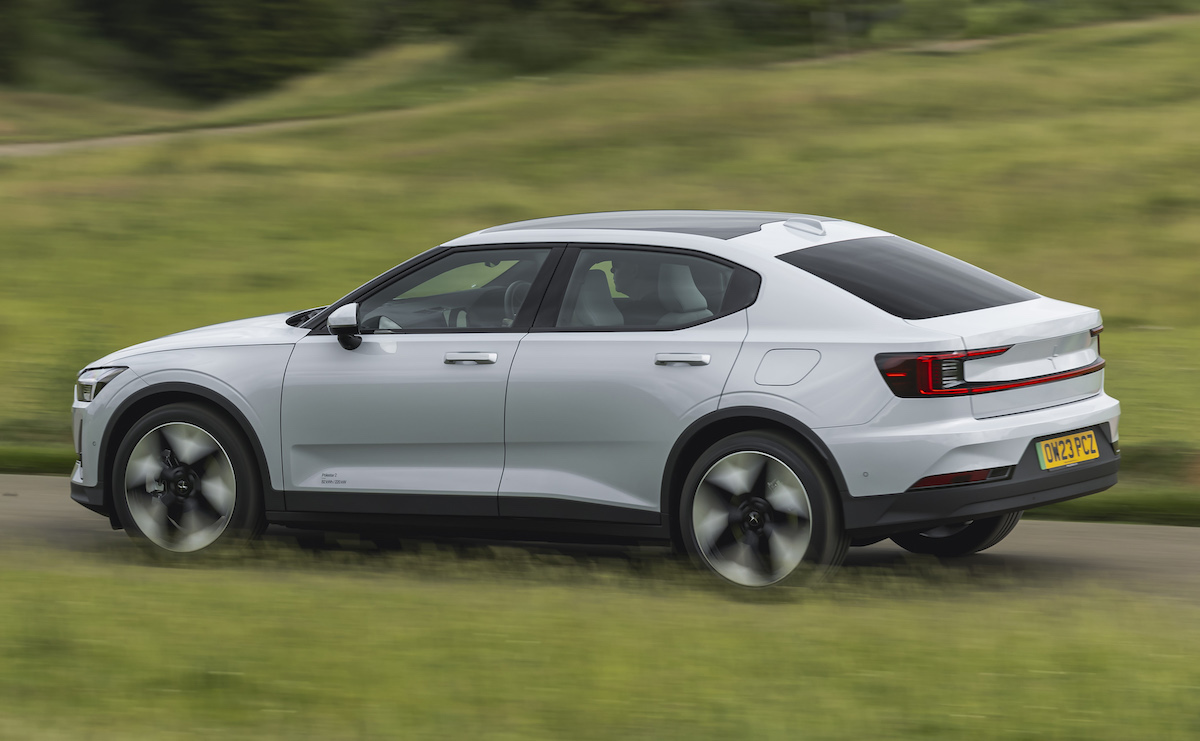
The Polestar 2 drives very well. The flagship 469bhp twin-motor model feels absurdly fast in a straight line, seeming to pull as hard from 60mph as it does from a standstill. Polestar quotes a 0-62mph time of 4.2 seconds. Yet even the entry-level 268bhp single-motor version is no slouch and will sprint from 0-62mph in a claimed 6.4 seconds. Moreover, both versions serve up smooth and near-silent acceleration, the absence of a traditional gearbox (it effectively gets a single-speed automatic transmission) means there’s no unsettling jerks or pauses in the acceleration, which is more relaxing for drivers and passengers alike.
The regenerative braking system offers a ‘one pedal’ mode, so that you barely need to touch the brake pedal when you’re around town, as the car is harvesting energy from the motors when it’s coasting or braking, causing the car to slow down when you lift off the throttle. It takes a little getting used to, but once mastered it's the most efficient way of travelling. If you don’t like the sensation, however, you can simply reduce the amount of regeneration, or switch the system off completely.
Elsewhere, the steering is very crisp and direct, and handling responses are unusually sharp for this sort of car. While it doesn’t quite manage to be exciting to drive along a flowing B-road, it is both tremendously accelerative in a straight line and very composed in corners.
Yet the Polestar’s biggest strength is that it combines this accurate and poised handling with a supple ride. There’s a little firmness at low speed, but once up and running the Swedish machine does a fine job of soaking up the worst bumps and potholes.
Technology, equipment & infotainment
Essentially, the Polestar is available in a single trim level with a number of ‘upgrade’ packs available should you want more. That means that even a completely standard car is very well equipped, with dual-zone climate control, LED headlamps, electrically powered and heated seats, front- and rear parking sensors and a reversing camera.
A £2,000 Pilot Pack adds adaptive matrix LED headlamps, a surround view parking camera and various other driver aids, while the £4,000 Plus Pack features a heat pump for more efficient in-car warming, a panoramic glass roof and Harman Kardon sound system. Then there’s a £5,000 Performance Pack that bundles in larger brakes, bigger wheels with high performance tyres and manually adjustable Ohlins dampers for the suspension.
The Polestar 2 is the first production car to feature Android’s new automotive operating system. Using a slick-looking 11.1-inch touchscreen, it features applications such as Google Maps, meaning it’s one of the more intuitive in-car infotainment systems out there. You can sync the car with your Gmail account, while the Google Assistant voice command system is perhaps the best of its type.
As long as you take the time to learn the right commands, you can simply ask the car to play your favourite album or navigate you to a particular location without using the touchscreen. However, there have been reports of the set-up suffering various glitches, but regular software updates help.
Of course, the Polestar is a Volvo at heart, which means it’s also one of the safest ways to travel. Euro NCAP awarded the car five stars, while you get all the usual safety features plus a number of hi-tech driver aids. Autonomous emergency braking is standard, while an advanced adaptive cruise control system can steer, stop and accelerate the 2 at speeds of up to 81mph.
Polestar 2 running costs
If you’re switching into an EV from a petrol or diesel-powered car, you will make very significant savings on running costs. However, recharging an electric car is certainly not free. The cost of replenishing your EV’s batteries can vary enormously, depending on where and how you do so.
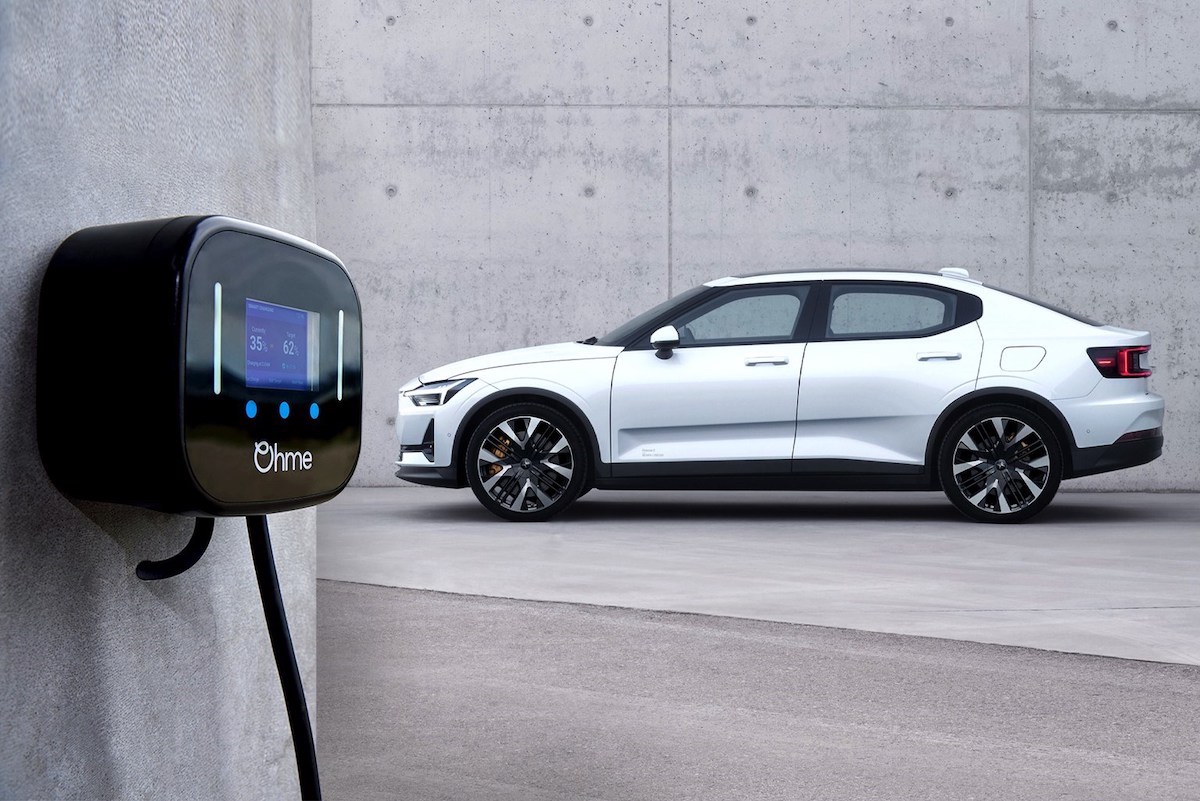
The cheapest and most cost-effective way of charging is to do so overnight at home. Charging the battery over a number of hours (rather than rapid charging it) is also the best way to look after it in the longer term. At an average cost of 40p per kWh, fully charging a Polestar 2 Long Range at home will cost around £31.60, or you can more than halve that if you have a cheap, overnight tariff and charge in off-peak hours.
Meanwhile, charging at a public charge point could cost more than double that, although the Polestar has a long enough range that very few drivers with home chargers will need to routinely use rapid chargers.
Aside from the cost of recharging, other running expenses include replacement tyres (around £600 for a full set) and insurance. However, you won’t pay Vehicle Excise Duty and you’ll make savings on London’s Congestion Charge and similar low emissions schemes in other cities.
Polestar doesn’t - and won’t ever - have a permanent dealer network like most established car makers, preferring instead to sell its cars online. The upside for customers here is that the cost of building and maintaining a dealer network isn’t hidden away in the car’s list price.
As well as buying a Polestar 2 with cash or financing it, there's also a third option. Car subscriptions are relatively new but they’re becoming increasingly popular. They bundle the cost of renting the car in with the cost servicing, maintenance and so on, meaning drivers pay a flat monthly fee with no hidden charges.

Polestar 2 reliability
Polestar might not be building a full dealer network, but being part of the Volvo group does mean it has plenty of service stations around the country. Electric cars are simpler in some ways than combustion-engined vehicles and therefore require less routine maintenance, although they should still be serviced in accordance with the manufacturer’s guidelines.
Polestar offers owners the first service free of charge, as long as it falls within the first three years of ownership or the first 31,250 miles covered, whichever comes sooner. Meanwhile, the warranty runs for the sooner of three years or 60,000 miles, which is pretty much par for the course.
Certain aspects of the car are protected for longer than that, however. Paintwork defects and surface rust will be rectified free of charge in the first three years regardless of the number of miles the car has covered. For eight years or 100,000 miles, any battery defects will be put right at Polestar’s expense (although this doesn’t cover the natural and inevitable degrading of the lithium ion battery over time). Finally, should any rust spread from an inner panel to an outer panel causing an unsightly blemish during the car’s first 12 years, Polestar will pick up the tab.
In addition to the warranty, Polestar also offers Europe-wide roadside assistance free of charge for the first three years the car is on the road. This period can be extended one year at a time.
Polestar has done alright in reliability surveys – not bad, but not amazing either. The Polestar 2 was rated the 9th most reliable electric car out of 20 EVs included in the 2023 What Car? Reliability Survey, being placed virtually on a par with the Tesla Model 3 and usefully higher up the rankings than the Kia EV6.
- The optional Performance Pack includes manually adjustable Ohlins suspension, uprated Brembo brakes, grippier tyres and gold accents both inside and out. You’ll need to raise the car on a ramp to make adjustments to the suspension, which is why Polestar anticipates owners finding the balance between ride comfort and handling precision that suits them, and then leaving the dampers well alone. You’ll need to be a particularly keen driver to appreciate the benefit of the uprated suspension: despite its adjustability, the ride quality will always be on the firmer side. Either way, we think the car handles and rides more sweetly without the expensive upgrade.
- The official range is 406 miles (WLTP) for the Long Range Single Motor model. By way of comparison, a Tesla Model 3 Long Range will cover 390 miles (impressively, the Tesla is also faster than the Polestar). However, it’s important to be aware that the real-world range for the Polestar, or any electric car for that matter, will likely be somewhat less than the official figure – as a rough estimate, you can normally assume that it’ll be around 15-20% lower than the WLTP figure in summer, and around 30-40% lower in winter.
- It says Polestar on the tin, but underneath the stylish bodywork the 2 is very similar to the Volvo XC40 and C40, as well as the Chinese market Lynk & Co 01. All are underpinned by the Swedish brand’s CMA (Compact Modular Architecture), which is a strong and relatively light structure that can be adjusted fairly easily to suit different applications.
- If you don't want any extras: The basic Polestar 2 isn’t cheap, but it is competitive with those obvious rivals, and the Swedish machine doesn’t exactly leave you feeling shortchanged, with a top-notch quality and plenty of standard kit.
- If you love driving: Then steer clear of the outrageously expensive Performance Pack. At £5,000 it adds more grip, stronger brakes and adjustable Ohlins dampers for the suspension. The problem is, the latter addition requires you to get underneath the car with a spanner to make changes, and even when you do the ride is firm. The standard suspension offers a far sweeter balance between ride and handling.
- If range matters most: The Long Range Single Motor is, fairly obviously, the one to go for in this instance. The WLTP range of between 379-406 miles is impressive, so you shouldn’t need to rely on the public charging infrastructure too often.


