Porsche 911 997 Review (2004-2011)
Porsche 911 cars for sale
4.0
Expert review
Pros
Tremendously enjoyable to drive
Easy to use as an everyday car
PDK dual-clutch 'box is much superior to the older Tiptronic auto
Cons
High running costs
Some engine reliability issues
Cabrio isn't quite as good to drive as the coupe
The CarGurus verdict
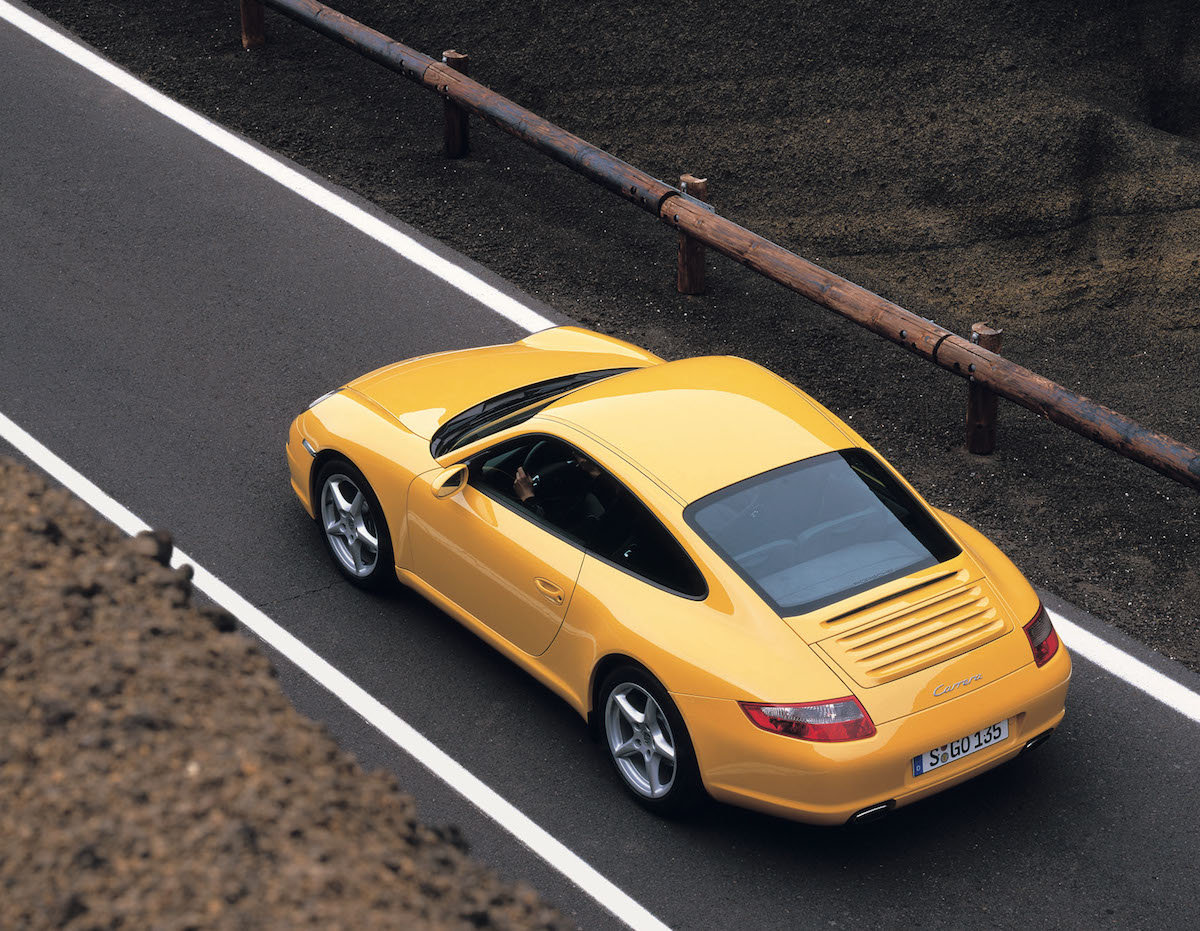
It’s with good reason that the Porsche 911 is universally referred to as an ‘iconic’ sports car. Supremely quick and thoroughly engaging to drive hard, it’s also a car you can comfortably use for your day-to-day activities, and is loaded with hi-tech convenience and safety features.
The 997 sold in sufficiently high numbers when new that there’s a reasonable choice of models and specs on used car forecourts. But it is a specialist sports car and as detailed in this review it has had some problems – for peace of mind we’d advise investing in an independent expert inspection before signing on the dotted line.

Beloved of motoring writers and driving enthusiasts for its speed, poise, entertainment value and practicality, the 997-series of the Porsche 911 is a high performance sports car that you can use for both high octane thrills and for life’s mundanities.
The 997 line-up features an extraordinarily wide range, from the entry-level Carrera through to the supercar-fast Turbo mode, as well as some hardcore track-focused derivatives (the GT3 and GT3 RS). Whatever you want from your sports car, the 997 has its covered.
Launched in 2004 as a coupe with a choice of a 321bhp 3.6-litre flat-six engine for the Carrera model and a 350bhp 3.8-litre unit for the Carrera S, the range soon expanded to include a Targa glass-roofed version (late 2004), four-wheel drive Carrera 4 and C4S derivatives (2005) and a Cabriolet (2006). And buyers could choose between a six-speed manual gearbox and a five-speed Tiptronic automatic.
The Turbo and GT3 arrived in 2006, while the GT3 RS hit showrooms (and race tracks) in 2007, followed a year later by the bonkers GT2.
In 2009 Porsche launched a revised 997, now commonly known as the Gen 2. The engines gained direct fuel injection and VarioCam Plus valve-gear for greater performance and efficiency – power rose to 345bhp for the 3.6 and a hearty 380bhp for the 3.8 – and the much superior PDK dual-clutch gearbox replaced the Tiptronic for those who prefer two-pedal motoring with an automatic gearbox. In 2010, the Turbo S joined the range, as did the adrenaline-pumping GT2 RS, which was the first 911 model to breach the 600bhp mark.
The 997 is an outstanding sports car, but before you buy one there are a few things you should be aware of.
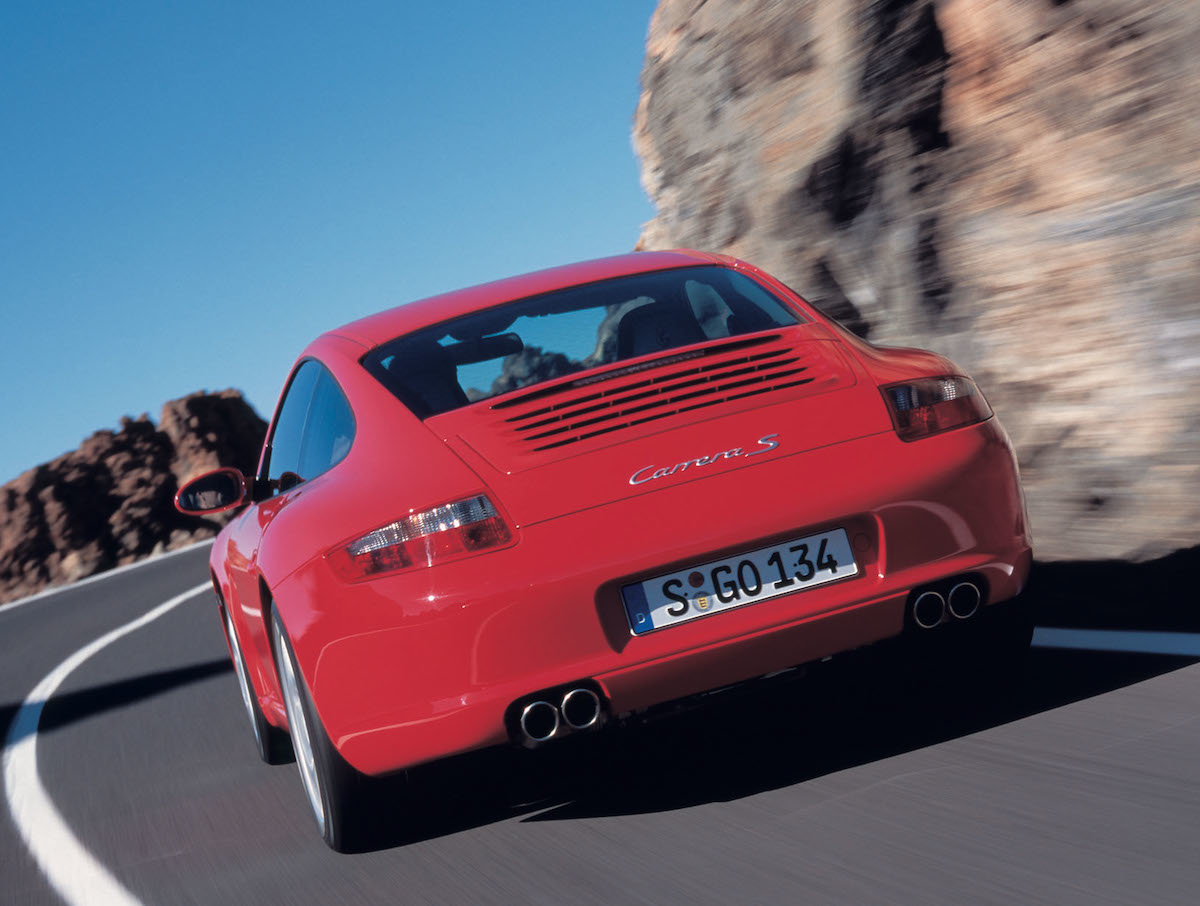
Like its predecessors and descendants, the 997 generation is one of the most practical and hassle-free cars of its type. No other sports car comes close to matching the Porsche’s blend of space, versatility and ease-of-use. It’s no family estate car of course, but if you need a high performance coupe that’s good for more than high days and holidays, then look no further.
In 997 form, the 911 was still a remarkably compact car (subsequent generations swelled in size), meaning it feels remarkably wieldy on the road, inspiring confidence in traffic and on tight lanes, as well as being easy to park.
It’s helped in this regard by the excellent visibility front and back, and a driving position that’s more upright than most. There’s also a reasonable amount of seat and wheel adjustment so that getting comfortable behind the wheel shouldn’t be an issue, even for taller drivers. And of course, the 997 gets a 2+2 layout that includes a couple of small seats in the rear. No adult will want to sit in these cramped chairs, but children will be comfortable, even on longer journeys.
Like all 911 models there’s a usefully deep luggage area in the nose, which in the 997 has a handy 135-litre capacity. Bear in mind, however, that the four-wheel drive models (including the Turbo and Turbo S) have 105-litres due to the need to make room for the front differential. If you need to carry more and there’s just two of you, then those rear seats fold flat in seconds to create a large flat storage area. Expect in the GT3 models, which go without rear seats in favour of a scaffolding-like roll cage.
In terms of storage in the cabin, there’s a glovebox, some narrow door bins and a shallow kidded cubby between the front seats. There’s also a pair of pop-out cupholders in the dashboard.
Many enthusiasts steer clear of the 911 because it’s too ‘obvious’ and they’re put off by the constant adulation it receives in the press and on numerous brand-loyal forums. However, take a 997 for a test drive and you’ll pretty quickly learn what the fuss is about and, quite likely, be reaching for your wallet to make a deposit.
Refined over decades, the 911’s trademark rear-engined layout creates a unique driving experience that’s hugely involving whatever your skill level. The 997’s handling is free of the tail-happy characteristics that could make early cars a handful, yet for experienced drivers there’s still plenty to learn and exploit when behind the wheel of a 911, making it an endlessly enjoyable companion.
The steering is light, precise and full of feedback, and the car feels beautifully poised and balanced through corners. On a stretch of twisting tarmac the 997 comes alive, diving into and out of corners with enthusiasm, making every trip a moment to savour. A taut suspension set-up means excellent body control and flat cornering, yet while the ride is firm it's never uncomfortable.
Then there’s the howling flat-six engine hanging out over the rear axle, its hollow bark and impressive muscle egging you on with every extra engine revolution. Even in standard 3.6-litre guise the 911 feels fast, while 3.8-litre S is pretty much as fast as you’d want to go on the road. Even so, there is a rare and even more potent GTS version of the Gen2, while the Turbo and Turbo S serve-up warp-speed acceleration (a sub 3.0 seconds 0-62mph time is on the cards if you want).
For the ultimate in driver thrills you need to look for the GT models, which are crammed with the brand’s motorsport DNA. The GT3 and GT3 RS are the purest choices thanks to their stripped out interiors, special suspension set-ups and naturally aspirated engines, which combine to make these models the most immersive and engaging of the lot. There’s also the 4.0-litre GT3 RS 4.0, but it’s as rare as an honest politician and will cost you a king’s ransom to buy.
Finally, the GT2 and GT2 RS are the wildest of the lot. Combining the GT3 model’s pared-back, track ready chassis and body with a tuned turbo engine and two-wheel drive, these machines demand respect but will also get the adrenaline flowing like few others.

When you consider that the last 997 models rolled off the Porsche production lines in 2011, it’ll come as no surprise to find it can’t match modern models for the latest tech and kit. That said, the 911 does have the basics covered, with air conditioning, electric windows and remote central locking featuring on all cars. Gen2 machines were better equipped still, with LED running lights appearing as well as handy extras such as Bluetooth.
The good news for buyers now, is that many 911 owners got carried away with the options list when new, so used models tend to be generously specified. For instance, it’s rare to find a 997 that doesn’t have leather trim for the seats, upgraded hi-fi and xenon headlamps. Either way, make sure you spend some time checking the exact spec of any car you’re looking at, as it could reveal the odd surprise.
Only when it comes to infotainment are you likely to be disappointed, with a simple CD Player and radio being commonly fitted as standard. There was a touchscreen sat-nav option, but its clunky by today’s standards with poor graphics and outdated features.
The good news is that Porsche now producers a range of up-to-date infotainment systems that slot seamlessly into its older cars, yet boast all the latest features, such as Apple CarPlay and USB connectivity.
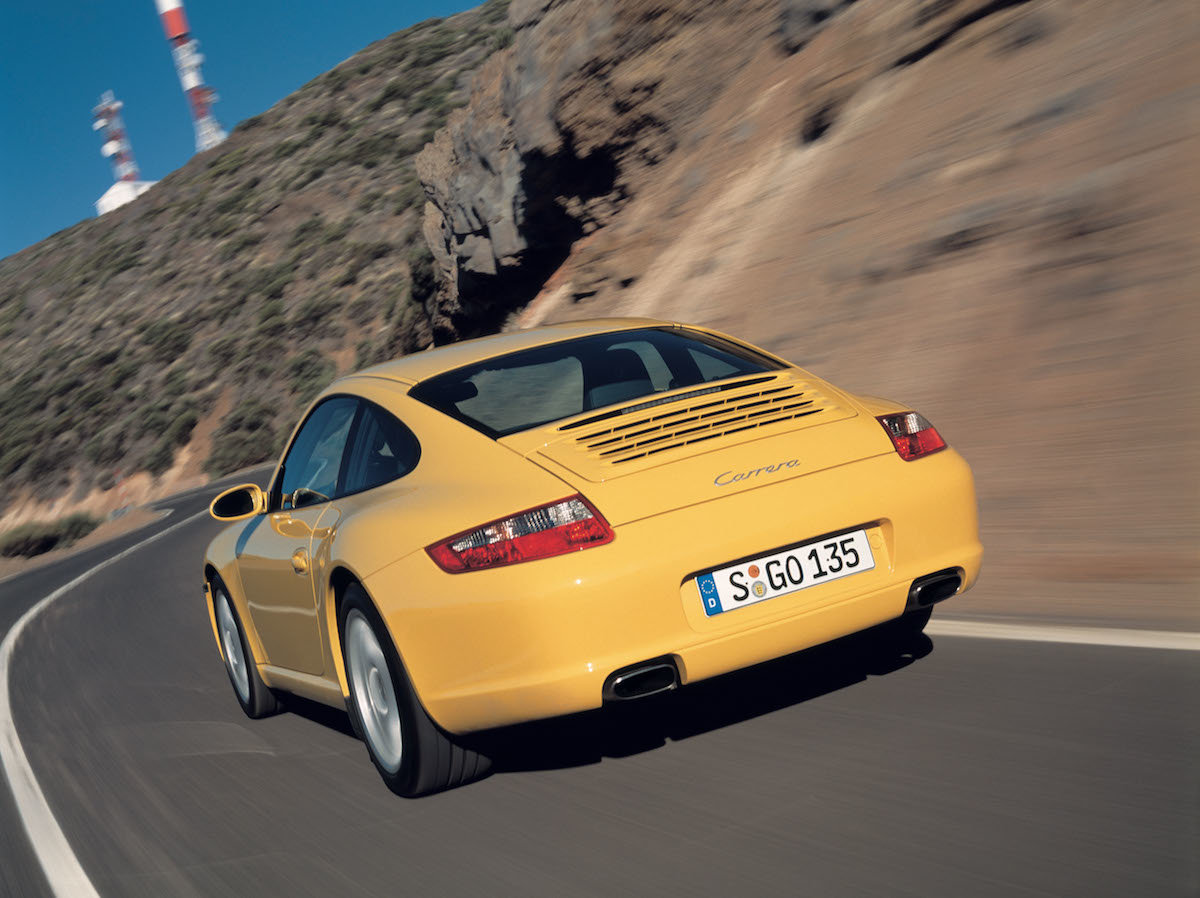
The 997 is a top flight sports car capable of more than 180mph, so there’s absolutely no prospect of it being cheap to run. You might possibly achieve 30mpg after a gentle cruise on the motorway, but in regular driving you’re more likely to see 25mpg, and if you start to use the Porsche’s quite considerable performance, then fuel consumption jumps to about 20mpg. Road tax, meanwhile, ranges between £325 a year to £570 depending upon engine and transmission. In regular driving you might get 20,000 miles out of a set of tyres, but if you start to use your 997 in the way Porsche intended then you may need a new set inside of 12,000 miles. And as tyres aren’t something you want to scrimp on, a premium brand could set you back around £360 for a pair of rears, £230 for the front two.
Provided you don’t do the majority of your driving in a town or city, you may get up to 80,000 miles out of a clutch, but bank on spending around £1,000 when it’s time for a new one. Another almost certain expense, unless the previous owner has already attended to it, is the replacement of the air conditioning condensers in the 997’s nose. They typically last eight to ten years in British conditions: because of their position they get covered in leaves and mud and then rot and leak, leaving you with a £1,200 bill.
Unless you use the brakes super-aggressively all the time, the inside faces of the discs are prone to corrosion, and it’s about £600 to replace a pair of discs, pads and wear sensors. Service intervals are every two years or 20,000 miles. A minor service is in the region of £300 and a major one just the other side of £500.
In Britain there’s an extensive network of talented independent Porsche specialists, some with reputations that equal or exceed those of the official dealer network, and they can save you a small fortune. If you do decide to buy a 997 – or indeed any Porsche – it could be worth seeking out an independent specialist that's local to you.
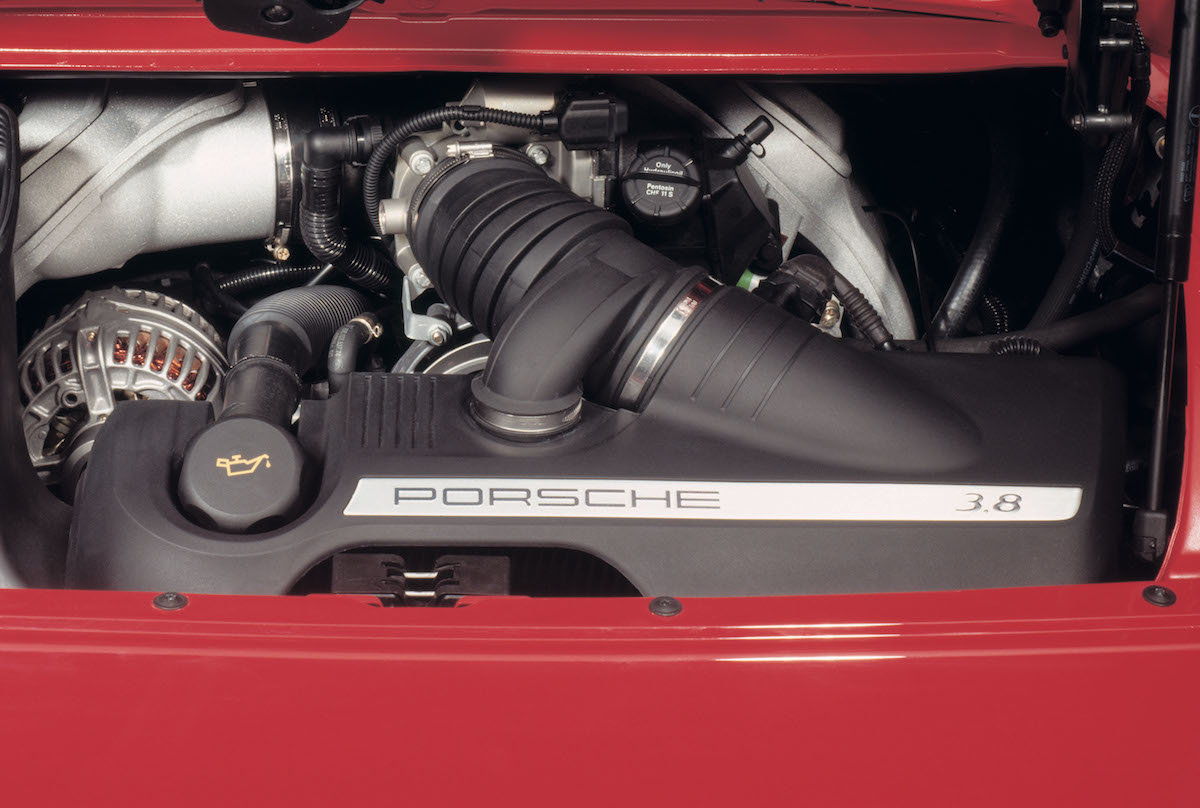
The internet would have you believe that every engine of every 997 is a £10,000 rebuild just waiting to rip the wallet from your pocket. Scored cylinder bores, and failure of the bearing at the end of the intermediate shaft driving the camshaft (the IMS bearing) have resulted in very expensive engine rebuilds, it’s true, but the problem is nothing like as commonplace as the legend woven in some internet forums.
Mostly these issues affected a tiny percentage of Gen 1 cars, and largely the 3.8-litre engine, and by now pretty much all the cars likely to suffer engine failure have already done so. But given the financial consequences of alighting upon the exception to the rule, if you’re worried ask a Porsche specialist to insert an endoscope into the bores to look for damage. A blackened left-hand tailpipe when the right-hand pipe is clean is another clue, as is a ticking from the engine at idle.
Early Gen 2s are starting to suffer from corroded tandem vacuum pumps. They typically have a lifespan of 10 years or so before they start leaking oil on to the rear of the engine. The pump costs about £600 to replace.
As mentioned in the Running Costs section, the air conditioning condensers and the radiators in the nose have a finite life, and early cars are likely to have reached that point by now – if these items haven’t already been replaced then budget on the fact that they probably will have to be soon.
The 997’s nose is prone to stone chipping, especially on higher mileage cars, so if you suspect a respray at the front, don’t be too alarmed. However, evidence of painting anywhere else on the car could suggest accident damage, so be sure to ask that question.
- Although the 3.6-litre cars are less powerful than the 3.8s, in day-to-day driving the difference between them is far less obvious than the figures might suggest – and the 3.6s are cheaper…
- While the Tiptronic automatic is fine for trundling around town, the PDK gearbox of the Gen 2 models gives smoother changes and far greater control for drivers who prefer to make their own decisions about when to shift gear, say, on a winding back road.
- The built-in satnav – part of the Porsche Communication Management (PCM) system – of the Gen 2 cars is far superior to the clunky setup in the Gen 1 and is capable of being upgraded.
- The one that does it all: the Gen 2 Carrera 4 S coupe powered by the 3.8-litre engine. It’s as much of a sports car as anyone can sensibly use on the road.
- Best value: the Gen 2 3.6-litre Carrera coupe. It was outsold by roughly three to one by the S model when new and remains the less popular choice secondhand, but the facelifted car has almost as much power as the Gen 1 3.8.
- For soaking up the sun: Porsche has always made very good Cabriolets and the 997 continues this tradition. For top-down fun with a true feeling of exclusivity, it's For suspension offering the best of both worlds: any model fitted with Porsche’s PASM switchable adaptive damping system. In Sport mode it does exactly what it says on the tin, and in Normal is nicely comfortable for a car of this kind.

