Porsche 968 Review (1992-1995)
Porsche 968 cars for sale
4.0
Expert review
Pros
Incredibly well balanced handling
Strong performance from the 3.0-litre engine
The Club Sport is brilliant for track days
Cons
Club Sport prices are high
Stiff running costs
Needs to be carefully maintained to avoid expensive problems

The CarGurus verdict
One of the all-time great sports cars, the Porsche 968 is so responsive, so communicative, that it encourages drivers to lift their game, to think harder about how they’re driving because they’re more intimately involved in the process: modern electronic driving aids may have made today’s sports cars massively quicker than the 968, but few (bar a Lotus or two) are as involving.
But you have to enter Porsche 968 ownership with your eyes and your wallet wide open. They’re not cheap to run, they require diligent maintenance, and when buying you need to be thorough about checking the car over. We recommend you employ the services of a reputable independent Porsche specialist for a pre-purchase inspection that includes putting the car on a ramp to look underneath it.
One of the more underrated Porsches, history is now proving the 968 to be one of the best. Buy wisely and you’ll enjoy every mile.
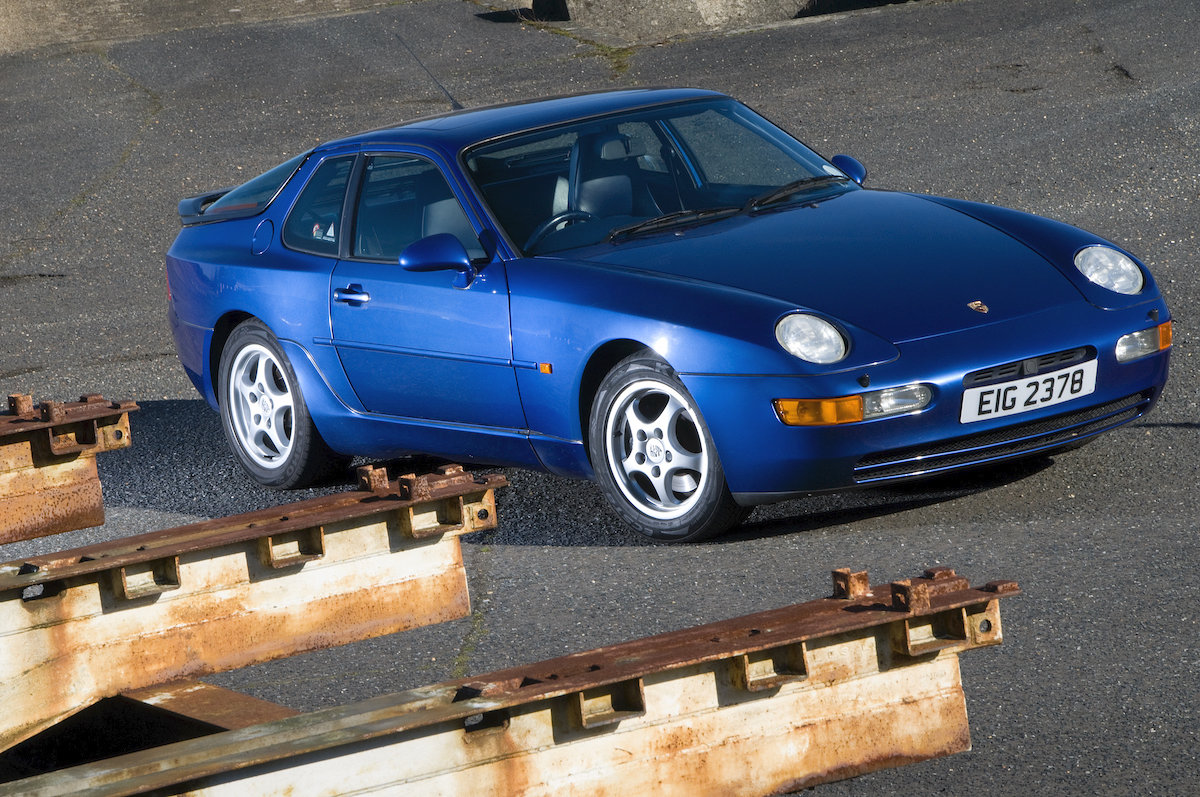
When Porsche set about creating a third generation of the ageing 944 model, its engineers made so many changes that it was decided the car qualified as a whole new model, the Porsche 968.
Although 83% different to its predecessor, the Porsche 968 retains the same basic long-nosed coupe (and cabriolet) shape, still has a four-cylinder engine in the front and the gearbox in a transaxle at the rear for near perfect 50:50 weight distribution and a boon to the handling balance, and remains rear-wheel drive.
Living in the shadow of the 911 meant the 960 sold in comparatively low numbers, and these days its rarity means that you’ll have to hunt hard to find a good one, and prices are fairly robust. Available as a 2-2 coupe with a large glass hatchback, and a two-seater cabriolet, there are three main versions of the Porsche 968, and a couple of specialist models – the Turbo S and Turbo RS – that were produced in such extremely limited numbers we won’t deal with them here.
Introduced in 1993, the coupe-only 968 Club Sport is a lightweight version of the car – it lacks electric windows, central locking, radio, aircon, electric hatch release, and even the rear seats – designed for use on the race track. With its circuit-tuned suspension and hardcore Recaro sports seats the 968 Club Sport was much admired by the motoring press when new, but wasn’t so quick out of the showroom. This encouraged Porsche to launch the UK-market-only 968 Sport in 1994, with many of the creature comforts put back in. Both have since become sports car icons, with prices to match.
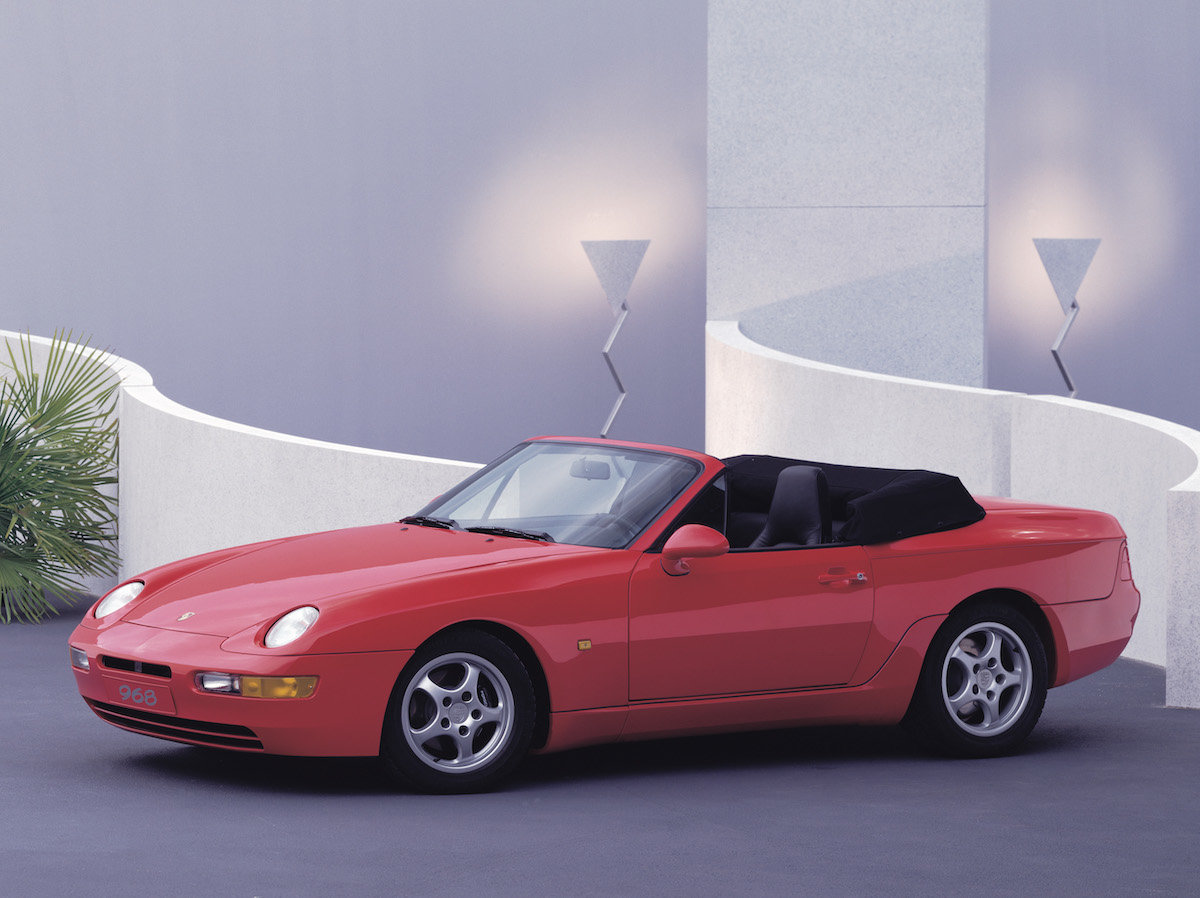
As sports cars go, the 968 is a fairly sensible one, with more space than you’d think and enough comfort to make it easy to live with on the daily grind. Bear in mind, however, that with the youngest examples knocking on the door of 30 years old, this should be considered a classic car rather than commuting hack - although the Porsche would still be up to the task.
By modern standards the driving position will take a little getting used to, while taller drivers will struggle with the fixed height steering wheel that’s really set too low. Yet the seats are comfortable, while the combination of excellent visibility and compact dimensions makes the 968 feel nimble and confidence-inspiring on the move.
In the rear are a pair of jump seats that would be torture for adults but are the perfect size for small children. You can also fold the backrests to extend the shallow but large boot, which is housed under a vast glass hatchback tailgate. In fact, you’ll be able to fit more into a 968 than you’d expect, but be aware there’s no load cover so your belongings will be on display.
The open-topped Cabriolet is a strict two-seater, as the folded roof sits where the rear bench would normally go, plus it has a smaller boot. On the plus side, the fabric hood itself is powered, so it can be raised and lowered fairly quickly, and sits under a flush-fitting cover when stowed.
The basic design of the engine is the same as the 944’s, with a 3.0-litre four-cylinder 16-valve unit with a pair of balancer shafts as an aid to smoothness. For the 968, however, Porsche added its VarioCam variable valve timing system, which allows the large capacity four-pot engine to be muscular and flexible at low to medium revs, and also quick-revving and powerful at high engine speeds. These days, of course, 237bhp doesn’t sound like much, but with a kerb weight of 1,370kg in its heaviest guise, the Porsche 968 is still capable of 0-60mph in 6.3 seconds and a top speed of 156mph.
Outright speed isn’t what the Porsche 968 is all about, though. Its forte is ripping rapidly along winding back roads, its communicative steering wheel writhing gently your hands, beneath your backside the chassis channelling detailed information about how the suspension and tyres are performing on straights and through the corners, and you, the driver, feeling an intimate connection with the car. If you drive for enjoyment rather than just as a means of getting from place to place, there are few better cars to be behind the wheel of than a Porsche 968.
If you can find one, and are willing to pay the premium, then the Sport of Club Sport versions offer the purest driving experience. The stiffer suspension set-up means a small sacrifice in ride comfort (although by today’s standards it’s fairly supple), but the trade-off is sharper responses and more taut and controlled handling, particularly on bumpy roads.
A fairly precise, short throw six-speed manual gearbox was standard on the 968, but a surprising number were fitted with a four-speed Tiptronic automatic. Novel at the time, it allowed the driver to make ‘manual’ changes using the lever or buttons on the wheel, but it's a fairly slow-witted transmission and should be avoided unless you need two pedals rather than three.
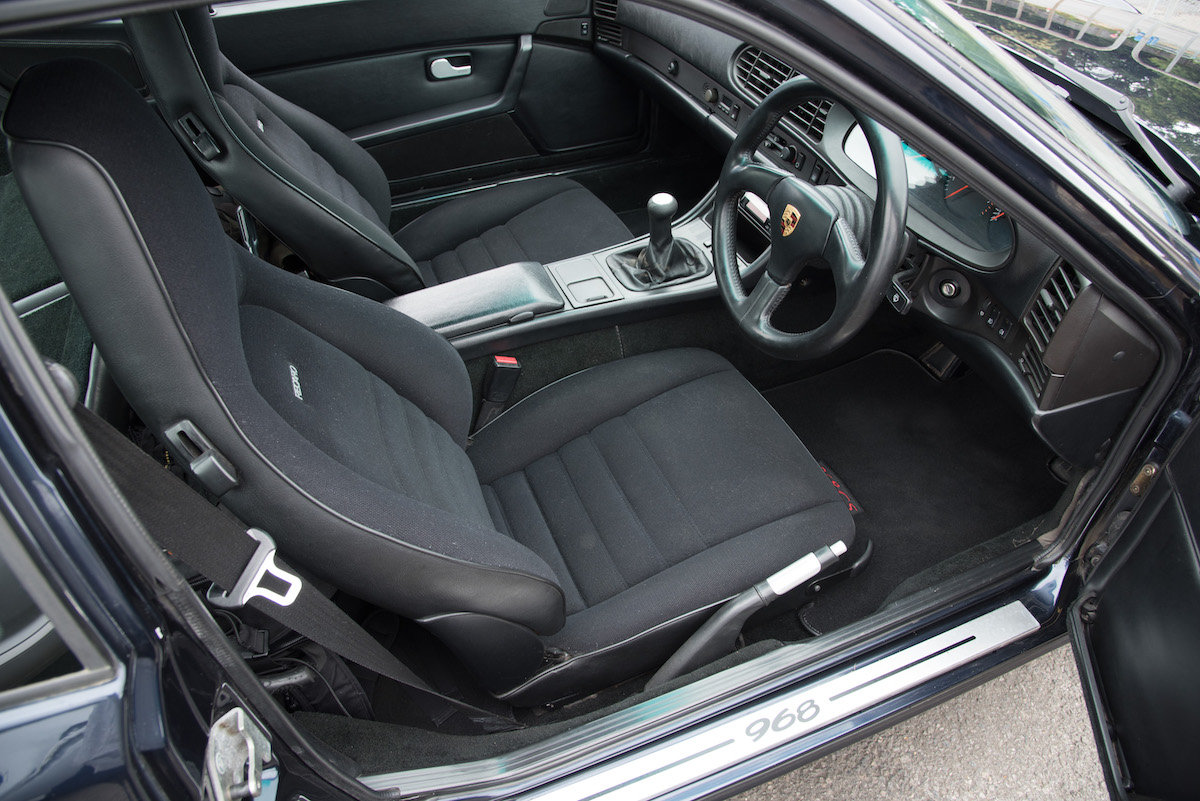
Once again, you need to bear in mind the 968 is a 30 year-old car that can trace its roots back to the 924 of the early Seventies, so don’t get your hopes up when it comes to gadgets and gizmos. Electric windows, powered door mirrors and central locking feature on most versions, while leather set trim were rare options that are worth looking out for today. Later cars were also available with a driver’s airbag.
The Club Sport is even more basic, because as part of the weight-saving regime Porsche stripped out almost every item it deemed unnecessary, even the radio. Speaking of which, infotainment will be limited to an old school single DIN stereo with either a cassette player (remember those?) or CD unit. However, if you fancy splashing out, then Porsche now offers a period-looking replacement that can include, sat-nav, a DAB radio and even Apple CarPlay.
Even with prices in the ascendency, a Porsche 968 might not seem outrageously expensive to buy. Running one is an entirely different matter, especially if you’re planning to rack up the miles.
You’ll need to have your Porsche 968 serviced every 12 months, pretty much regardless of how few miles you may have done in that year. At an independent Porsche specialist expect to pay around £250 for a ’12,000-mile’ service and £365 for the ’24,000-mile’ variety. The real expense starts when you begin to replace the engine’s various belts and chains. The camshaft timing belt and balancer shaft belt need renewing every 40,000 miles (Porsche says 48,000, specialists disagree) or four years, and it’s recommended that the cam chain and its tensioners are done at the same time: the bill will be about £1,100.
Typically a 968 clutch lasts 60-70,000 miles and costs from around £680 to replace. Actually the bill will probably come to more than that, as while the engine and gearbox are – expensively – split apart from each other, many garages recommend also replacing the dual-mass flywheel to save on future labour costs. A complete new stainless steel exhaust system may set you back £1,400, although a back box section is roughly £480.
On the consumables front, new tyres – which are different sizes front and rear – range from about £90 each to £160 depending on which quality brand you choose, while front brake pads are roughly £50 a pair, plus an hour or so of labour to fit if you’re not a DIYer. The Porsche 968 is now of an age where its dampers are reaching the end of their lives, and while you can buy replacements for £150 or so, you’ll probably want to renew all four, with labour on top of that. Labour costs are also a major consideration when replacing the Cabriolet’s mohair hood; the hood itself is around £450, but it’s another six hundred quid to fit it.
Given the age of its engine technology, the fact that the Porsche 968 gives around 30mpg is commendable. As for insurance, it will pay to ring around for a classic car policy that suits your intended annual mileage and where you plan to keep your car. That latter consideration might add to your running costs, as some owners pay to over-winter their 968 in a secure storage facility.
It’s not so much that the Porsche 968 is unreliable, more that it’s sensitive to rigorous maintenance and in certain areas potentially a victim of its age.
It’s critical that the camshaft timing belt and balancer shaft belts are replaced every four years/40,000 miles, but more important is to regularly check the cam chain, its tensioners, and the teeth on the end of the camshaft sprockets. The latter are known to break, causing the chain to jump and slip, leading to an expensive interface between valves and pistons. A full rebuild can be as much as £2,400, so while a regular inspection might set you back a few quid, it’s worth it.
Some experts reckon that even a well cared for Porsche 968 will need a top end rebuild by about 120,000 miles and a full rebuild at 150,000, so bear that in mind when you’re budgeting for your car’s upkeep.
Odd noises from the back axle area can be a sign that the pinion bearings in the six-speed manual gearbox are starting to fail with age and mileage, while vibration from the engine may simply be caused by the failure of the hydraulic engine mount. On a test drive make sure that the air-conditioning is blasting out icy air over the course of a few minutes; even when recently regassed, some systems may be suffering from the failure of the aircon condenser and compressor, leading to a £1,000 replacement bill.
A clonking noise from the front suspension, combined with shake from the wheels, may be a sign that the front suspension is in need of refreshing, particularly the lower control arms and anti-roll bar drop-links. And if the nose is wandering excessively, the front dampers are likely to be done for. Brake pipes are known to corrode and while it’s recommended that you replace the whole lot with longer-lasting copper nickel alternatives, that represents a £1,200 hole in your bank account.
Water can leak into the cockpit through the sunroof and deteriorating seals around the glass hatch, soaking the headlining and carpets, and in a worst-case scenario, damaging the electronic control unit that lives under the front passenger seat. Although made of galvanised steel, the Porsche 968 is now old enough that rust is starting to take hold in the rear wheel arches; it’s not a difficult repair if attended to early enough.
- As even the youngest example of the Porsche 968 rolled out of the showroom in 1995, expect to find some age-related issues with any car you’re looking at. That said, those that are left are by now are in the hands of Porsche enthusiasts who will have spent a small fortune on their upkeep. But there may still be potential problems in the offing, which is why you should invest in a pre-purchase inspection by a reputable independent Porsche specialist. They’ll know what to look for on the car, and within the pile of servicing and repair paperwork that’s bound to come with it.
- Don’t be put off by high mileage, as long as there is a pile of supporting paperwork that establishes that as well as regular servicing, the schedule of various engine belt and chain replacements has been adhered to. It’s not unknown for a Porsche 968 to have racked up 250,000 miles and more over the years, and still feel fresh if it has been well maintained. Some aficionados insist that the 968 is the best-made car that Porsche has ever produced.
- The Porsche 968 responds well to properly set up suspension geometry, and this isn’t something that your local back street garage or national tyre and exhaust chain will be able to handle for you. Check on the Porsche 968 owners’ forums for advice on the best specialist suspension geometry outfit close to you. This won’t be a cheap process and chances are that you will end up having to buy some new suspension components, but if you’re serious about your driving then it’s a very worthwhile investment.
- If you’re not a hardcore driver but still want to have fun: While the Porsche 968 Club Sport and Sport are up on a pedestal, the standard 968 remains immensely rewarding to drive and is remarkably quick on the right, winding, road. But it also has enough creature comforts that you can consider using it as your daily driver; even if you do tuck it away for the winter, you certainly wouldn’t hesitate using it for long trips when the weather improves.
- If you enjoy the wind in your hair (or baseball cap): About a third of the Porsche 968s sold in the UK were Cabriolets, and while not as dynamically able as the coupe versions, you can still have plenty of fun in them. The 968 Cabriolet is strictly a two-seater, though, and its boot is on the small side, yet some owners report enjoying week-long touring holidays in their cars. When up the mohair hood is very weather- and wind-proof, but it does restrict rear three-quarter vision.
- If you are unable – or can’t be bothered – to change gears for yourself: Look out for a 968 with Porsche’s excellent Tiptronic automatic gearbox. The Tiptronic ’box has received a bad rep from the motoring press because it turns the 968 into less of a sports car, but if you’re more the ‘grand tourer’ type of driver or spend a lot of time in town, then you should get along with it just fine. For back road driving Porsche has set up the shift programmes to be sportier than a regular automatic, and you can also change gears manually.
- If you’re looking for the ultimate Porsche 968: Given that the Porsche 968 is a sports car then the supreme version of it must surely be the track-focused 968 Club Sport. Well, yes and no… If you intend to use it mainly for track days and have no need for convenience and practicality, the 968 Club Sport is every bit the stuff of legend. But prices are now the stuff of legend, too, and many a 968 Club Sport has been uprated with motorsport components to make it even more extreme. The 968 Sport, however, has the same sports suspension, is easier to live with in normal driving, is easier to find and cheaper…


