Renault Captur Mk1 Review (2013-2019)
Renault Captur cars for sale
4.0
Expert review
Pros
Attractive styling
Practical for such a small car
Smooth ride
Cons
Not very engaging to drive
Some question marks over reliability
Could be better finished inside
The CarGurus verdict
There are a few question marks about reliability, but otherwise, the Captur is one of the best all-round small SUVs that you can buy. Facelifted cars will be slightly nicer inside, but the early ones are also impressive and will cost less. Do your homework and make sure you get a car that’s been well looked after, and you’ll have something that’s as practical, comfortable and good-looking as any other small SUV on the market.

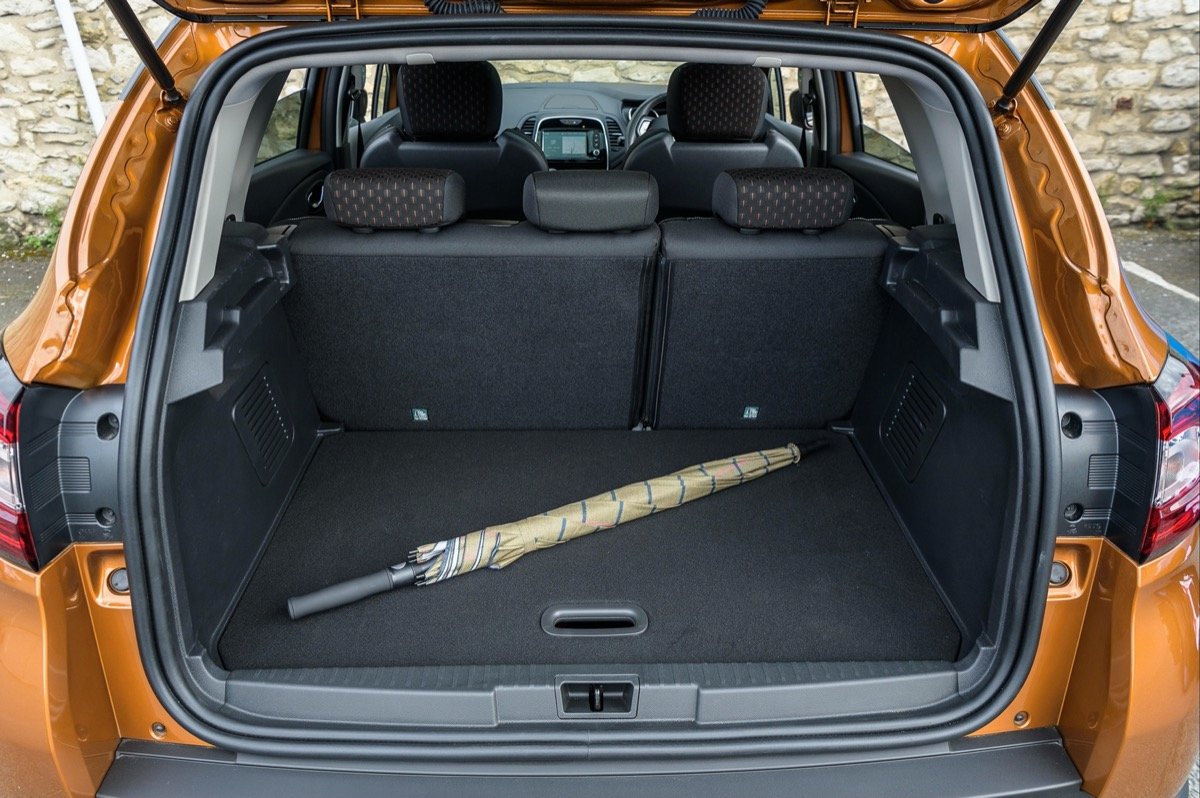
Customers loved the fact that it took up no more space on the driveway than a hatchback, but offered a higher driving position and a flexible space inside. You can move the rear seats backwards and forwards to prioritise passenger legroom or boot space, giving you between 377 litres and 455 litres of the latter. That's pretty huge for this type of vehicle, and bigger than some larger cars, too. And, regardless of whether you're sitting in the front seats or the back seats, this is one of the roomiest cars of its type for passengers.
To add to the practicality, you’ve also got a storage box on top of the dashboard, a nice deep cubby hole between the front seats and big pockets in the doors.
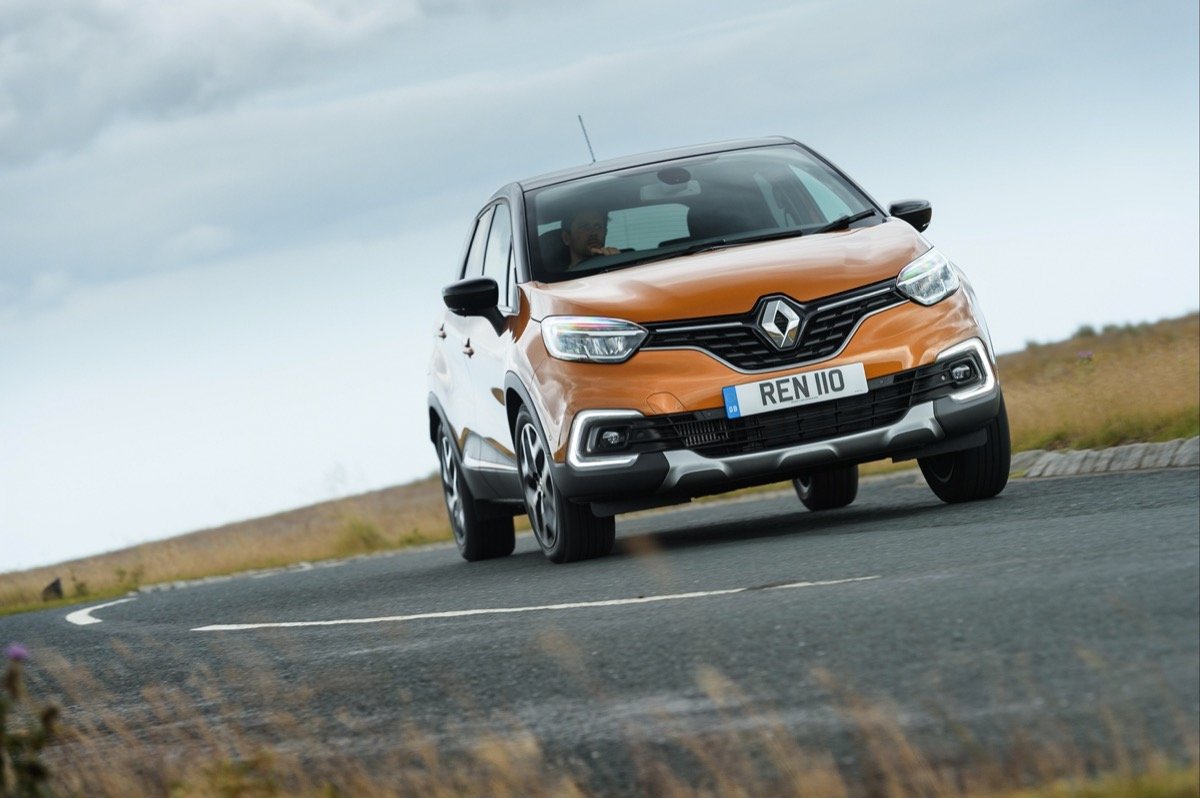
The Captur is a car set up for comfort, as is sensible in a family car, and it's all the better for it. The suspension does a great job of isolating occupants from the effects of a poorly surfaced road, keeping life impressively comfortable and serene.
Granted, that does mean this isn't the sharpest-feeling car of its type. There's more body roll to be felt in corners than in rivals such as the Seat Arona and Mazda CX-3, and the steering is rather light and vague-feeling. However, with plenty of grip and decent balance, the car never feels anything other than stable and secure.
The engine range starts with a 0.9-litre petrol with 89bhp, called the TCe 90. This should be fine if you do mostly short, low-speed journeys around town and don’t have too much to carry. If you do venture further afield, the 1.2-litre TCe 120, which has 118bhp, could be a better bet.
You can also get a diesel-powered, 89bhp 1.5-litre called the dCi 90, and cars from 2015 were available with a 108bhp version, called the dCi 110. The diesels sold better than the petrols, so you’re more likely to see these on the used car market, and they have the advantage of more grunt lower down in the rev range, which can make progress seem more effortless. They’ll get better fuel economy, too, especially on longer journeys. Most used Capturs had a manual gearbox, but there were a handful sold with an automatic. All models are front-wheel drive, with no four-wheel drive option.
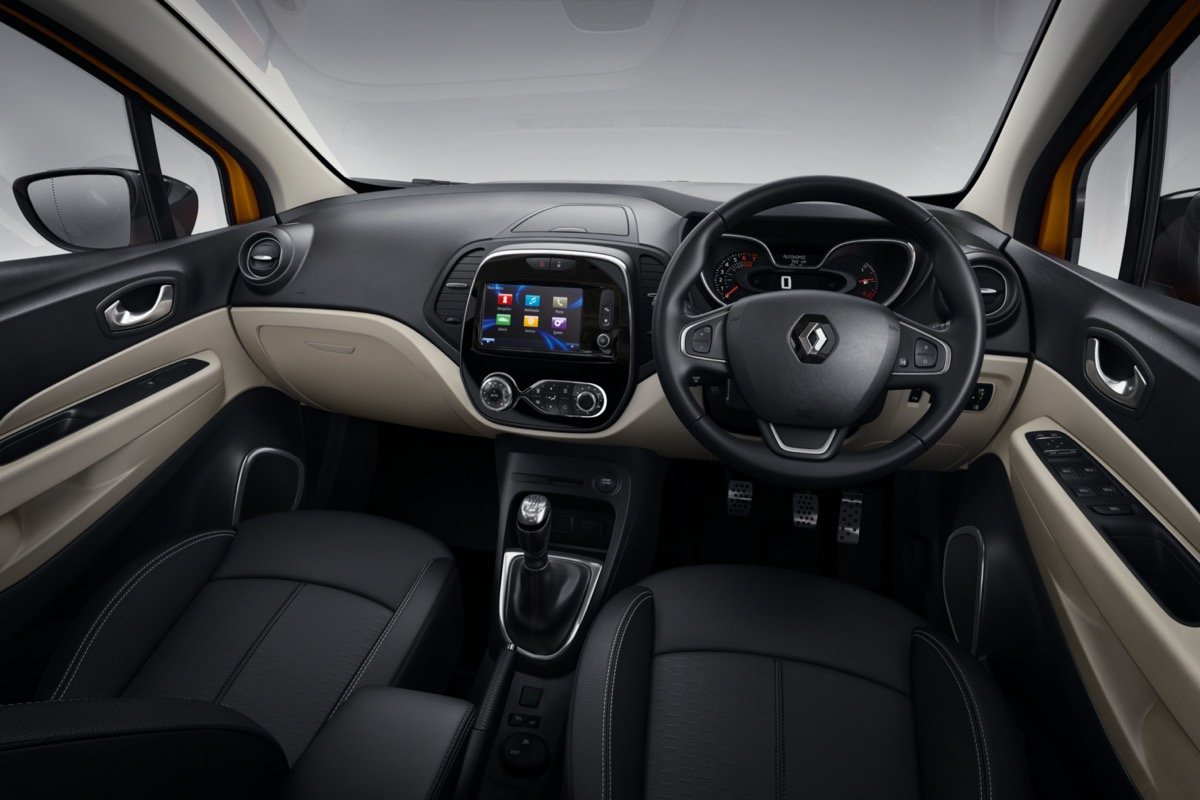
Early cars were available in Expression, Expression+, Dynamique Media Nav and Dynamique S Media Nav trims, and the top-spec Signature model followed shortly afterwards. Expression might have been the entry-level model, but it still had alloy wheels and cruise control. No aircon, though: that was added in the Expression+. Dynamique Media Nav added a touchscreen infotainment system with satnav and Bluetooth, while the Dynamique S Media Nav model had tinted windows and rear parking sensors.
If you want a bit more swank in your Captur, the Signature model has leather seats, a rear-view camera and an upgraded sound system. From late 2015, the ‘Media’ part of the names was dropped, and a new special edition Iconic trim was added, based on the Dynamique S but with extra colours, part-leather upholstery and some additional features including a reversing camera.
In 2018 Renault overhauled the trim levels, with a new range that started with the Play (16-inch alloys, DAB, satnav, aircon) and then went to Iconic, which is not to be confused with the earlier special edition model of the same name. Yes, it’s confusing. It included 17-inch alloys, tinted windows and rear parking sensors. The top-spec model, GT Line, got a more rugged look, a rear parking camera, LED headlights and part-leather upholstery. Then in 2019, a special edition Captur S Edition was released, with the option of a 1.3-litre petrol engine with either 128bhp or 148bhp.
If you want the best fuel economy, the 1.5 dCI 90 diesel has an official consumption figure of 78.5mpg if you pick one with a manual gearbox, and the 110 version isn’t far behind. The petrols have lower MPG figures, but are still fairly reasonable; the 1.2-litre automatic is the worst at up to 51.4mpg.
Vehicle Excise Duty costs will vary depending on when the Captur you buy was registered, as the rules differ for cars first registered before or after 1 April 2017. Later cars will have a flat rate regardless of spec or engine, but earlier models will be charged depending on their CO2 emissions. The two diesel engines will actually be VED free, due to low CO2 emissions, while others will be up to £150 a year.
Insurance costs should be very reasonable, with the Captur sitting between groups 9 and 16 (of 50), depending on model.
Servicing is due every year or 18,000 miles, and Renault offers set-price plans for two or four services, as well as one plan that includes filters and plug changes. These will cost between £300 and £700. For older cars, it might be better to use an independent specialist, which will be cheaper.
All Capturs will need a new cambelt every six years or 90,000 miles, which will cost between £400 and £500, so it’s worth checking to see if it’s been done on the car you’re looking at.
Renault has a mixed reputation for reliability. The brand itself sits relatively high in the manufacturer rankings on Warranty Direct’s Reliability Index, which looks at older cars, but it’s below the average score on JD Power’s 2019 Vehicle Dependability Study, which suggests reliability isn’t as good now as it once was.
Some independent studies for the Captur put it not far off the top of the rankings, with owners experiencing relatively few problems compared to rivals. But it fared less well in others, sitting 69th out of 75 in the 2018 Driver Power survey. Early cars came with a four-year, 100,000-mile warranty and four years of breakdown assistance, but that decreased to three years and 60,000 miles on cars from early 2018, which isn’t particularly reassuring.
Common problems include a glitch on early cars affecting the trip computer’s fuel economy reading. It can be fixed with a software update. Watch for a sticking boot release that won’t work with the remote control, and check the wheel arches, as some trims weren’t fitted properly and stuck out from the bodywork.
With a lot of Capturs used around town, check the bodywork of any potential purchase for dinks, and the alloy wheels for scrapes.
There was a recall on the Captur in 2015 to remedy an issue with the positioning of the front wheel arch liners, which could rub on the brake hoses and cause a brake fluid leak. Other recalls included an issue with a seatbelt fixing bolt, suspect welding on the catalytic converter, potentially cracked front wheel hubs and issues with dipped headlight alignment. Remedial work should have been carried out by now, but it’s worth checking with any Renault dealer.
- The Captur was given a facelift in 2017, with some exterior styling tweaks and a new dashboard inside, so these models are likely to be slightly more expensive. New trims were also added, including a Signature S Nav at the top of the range, featuring heated leather seats, while the old Signature trim was renamed Signature X. The entry-level Expression trim was dropped.
- Inside, the materials used aren’t quite as solid to the touch as some rivals, and the infotainment system found in higher-spec models is dated. While cars from 2017 onwards include Android Auto for smartphone connectivity, you can’t get it with Apple CarPlay. If you want DAB radio, you’ll need a car from the end of 2015 onwards.
- If you want the most powerful Captur, go for a an S Edition model, which you could get with a 148bhp petrol engine. This will give you more punch than any of the others, but don’t expect a hot hatch experience.
- If you’re on a budget: The most affordable Captur will be an early 0.9-litre Expression model. You’ll get the bare-bones features, but if aircon is essential then keep an eye out for an Expression+ instead.
- If you want all the toys: The later GT Line models have the most standard features, and include just about everything you could get on a Captur. This included front- and rear parking sensors on bodywork that included front- and rear skid plates for an off-road look, as well as part-leather heated seats, automatic parking and a rear-view camera.
- If you want the best all-rounder: The most flexible model will be the 1.5 dCi 110, in Dynamique Nav trim. This will give you the best balance of power and running costs, and enough equipment to keep you comfortable. There should also be plenty of these on the used market, so make sure you hold out for the best possible example.


