Renault Rafale (2024-present)
Renault Rafale cars for sale
3.0
Expert review
Pros
Spacious, user-friendly interior
PHEV version is good to drive
All models are well-equipped
Cons
Plug-in hybrid model is expensive
Cabin can be noisy at speed
Interior not as premium as some rivals’
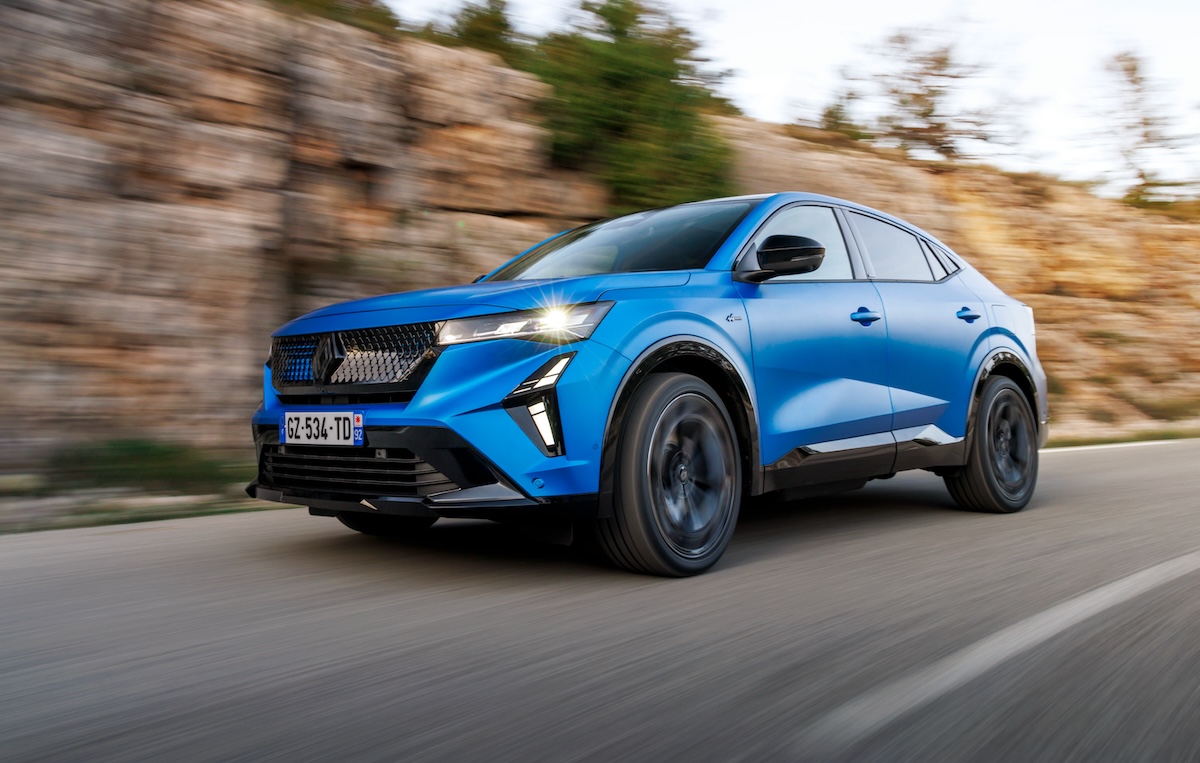
The CarGurus verdict
It’s a likeable car, the Renault Rafale. It’s spacious, well-equipped and has quite a distinctive character, both in the way it looks and the way it drives. It’s also rather expensive and the £50,000(ish) price tag of the top-spec model puts it in direct competition with cars that have a more premium feel inside, and more finesse in the way they drive. Models at the lower end of the range would seem to make more sense, but they miss out the advanced features that set higher-spec versions apart from the competition.
Overall the Rafale is a car that will appeal to a specific – and fairly small – group of potential buyers, but there’s nothing wrong with that. While it falls a bit short in some areas, it over-indexes in others that might make it worth your consideration.
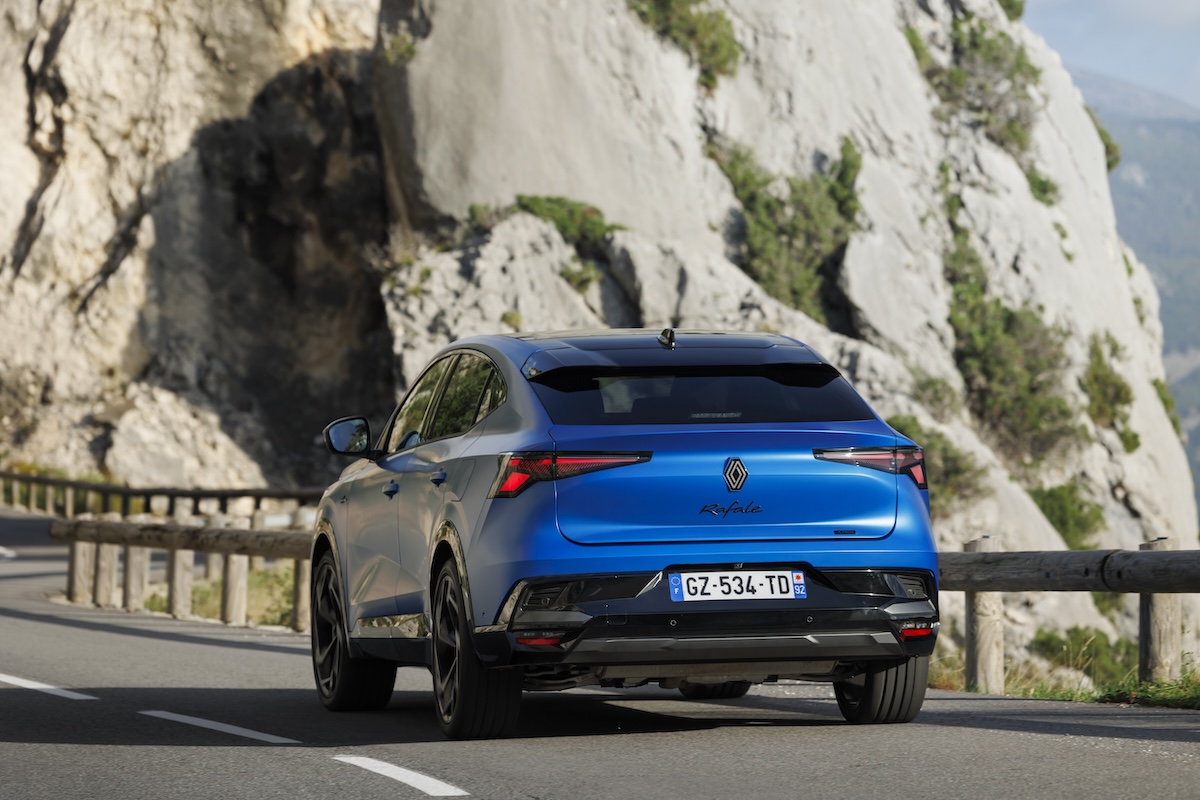
What is the Renault Rafale?
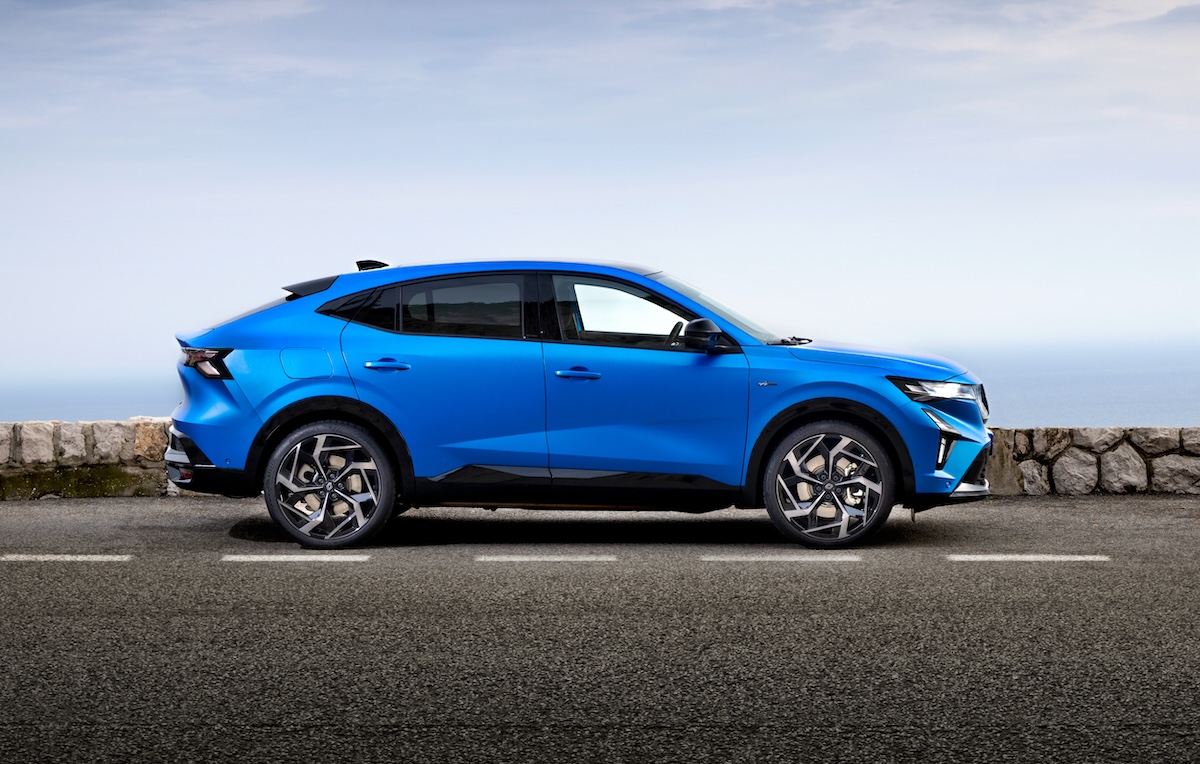
You might be wondering where the Renault Rafale sits in the French brand’s ever-expanding SUV lineup. It’s understandable when Renault already has seven on its books if you count the SUV-ish Megane E-Tech, with another one to come when the Renault 4 goes on sale in 2025. But it’s actually quite simple: the Rafale is Renault’s flagship model in the UK – a high-spec SUV coupe (or is it coupe SUV?) with a similar vibe to cars such as the Citroen C5 X and Peugeot 408. You could also see it as an alternative to EVs such as the Ford Mustang Mach-E, Skoda Enyaq Coupe and Tesla Model Y but the Rafale is offered only with hybrid power; there’s a front-wheel-drive full (self-charging) hybrid or a plug-in hybrid with four-wheel drive. Both go under the umbrella name of Rafale E-Tech.
Although it has a similar shape to the Arkana, Renault’s other SUV coupe, the Rafale is longer, wider and bolder – all sharp edges and creases rather than gentle curves. And while the Arkana’s alloy wheels range from 17 to 19 inches in diameter the Rafale has either 20- or 21-inch rims. It’s got more bling and it’s probably no coincidence that the Rafale is a close match – in size and shape – to the Audi Q5 Sportback, BMW X4 and Mercedes-Benz GLC Coupe. Whereas those are straightforward coupe versions of standard SUV models, however, the Rafale is something more bespoke. It sits on a long-wheelbase version of the platform used for the Austral family SUV but shares no exterior panels with it. It’s also available with some high-end features that you can’t get on any other Renault model.
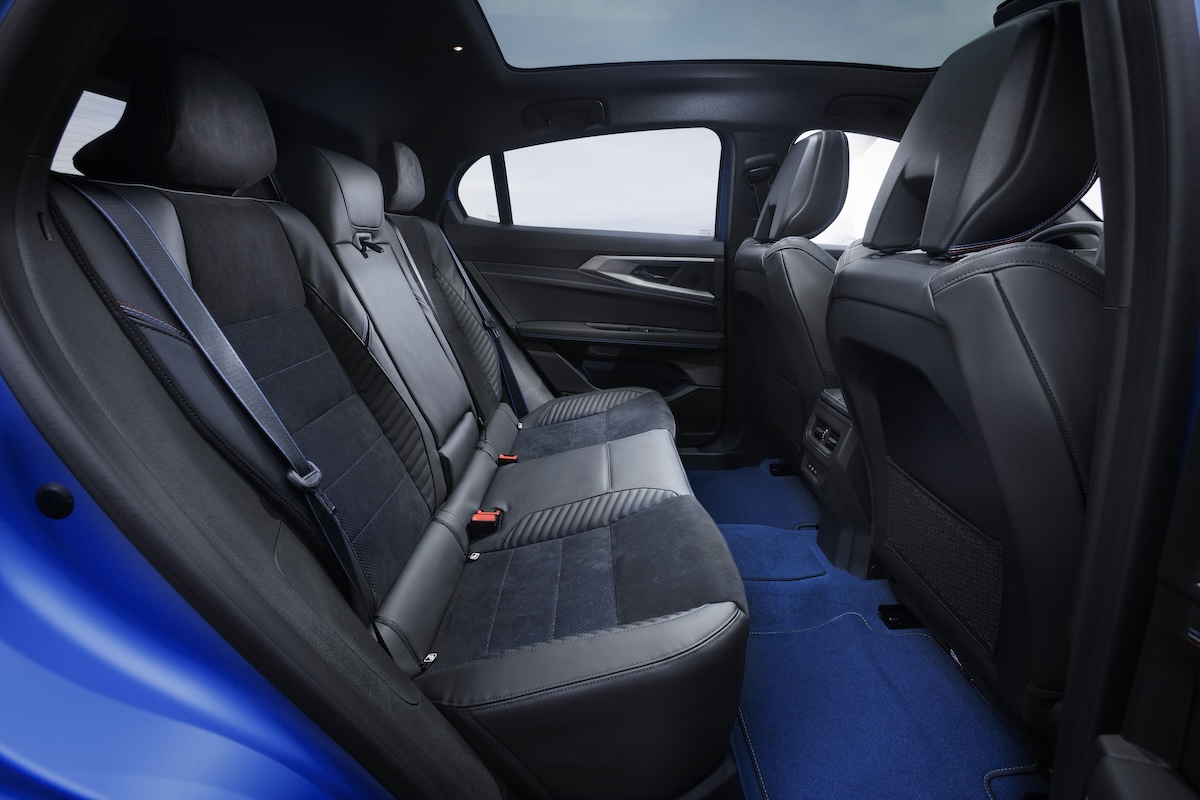
How practical is it?
Despite its coupe roofline the Rafale is a practical car. Much of that is thanks to its long wheelbase, which frees up very generous legroom inside. Four six-footers have space to lounge. The cabin is wide, and the almost-flat floor means that there’s decent space for three adults across the back seat. Access is good front and rear, with unusually long rear doors. A comparatively low seating position has its pros and cons. On the plus side there’s decent headroom in the back, even for six-footers; the downside is that you don’t get the elevated view that you do in a conventional SUV and even average-size passengers may feel like their knees are pushed high because of the short drop to the floor. Kids, meanwhile, might feel hard done by due to the small-ish rear and side windows, but they’ll probably love the ‘Solarbay’ panoramic glass roof that’s standard for higher-specification models. It doesn’t open like a conventional sunroof, but instead shades different sections to block out the light.
Continuing with practicality, there’s oodles of space in the front seats and the driving position has a good range of adjustment. Rear visibility isn’t great, as you might expect, and some drivers may find the chunky front pillars obscure their view when pulling out of junctions. All models have a rear-view camera and front, rear and side parking sensors, though, and the 360-degree parking camera that’s standard for the top two trim levels comes in handy.
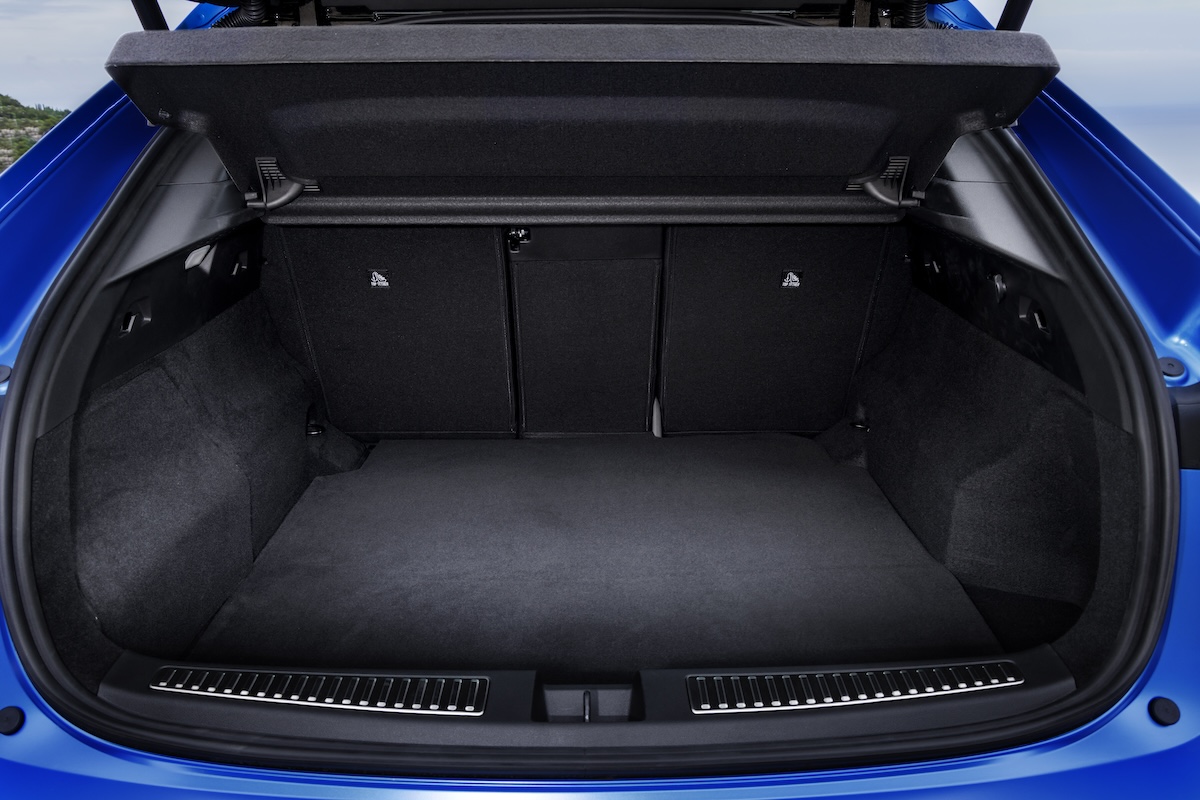
The boot is large, with a capacity of 535 litres that’s competitive with most mid-size SUVs. The full hybrid also has an additional 112-litre bootspace under the floor. As with any SUV coupe, the sleek rear bodywork means that the boot is long and low rather than the cube-like space you get with a conventional SUV. There’s a bulky load lip, too, which can make getting heavy items – or dogs – in and out less straightforward than it could be.
The 40/20/40 split rear seat backs provide useful versatility and with them folded down there’s a very long load space, albeit with a step in the middle. In-cabin storage is okay, with some roomy covered sections between the front seats and a clever rear armrest for most versions (see more in the 'Three Things to Know' section of this review), but door bins that are on the shallow side.
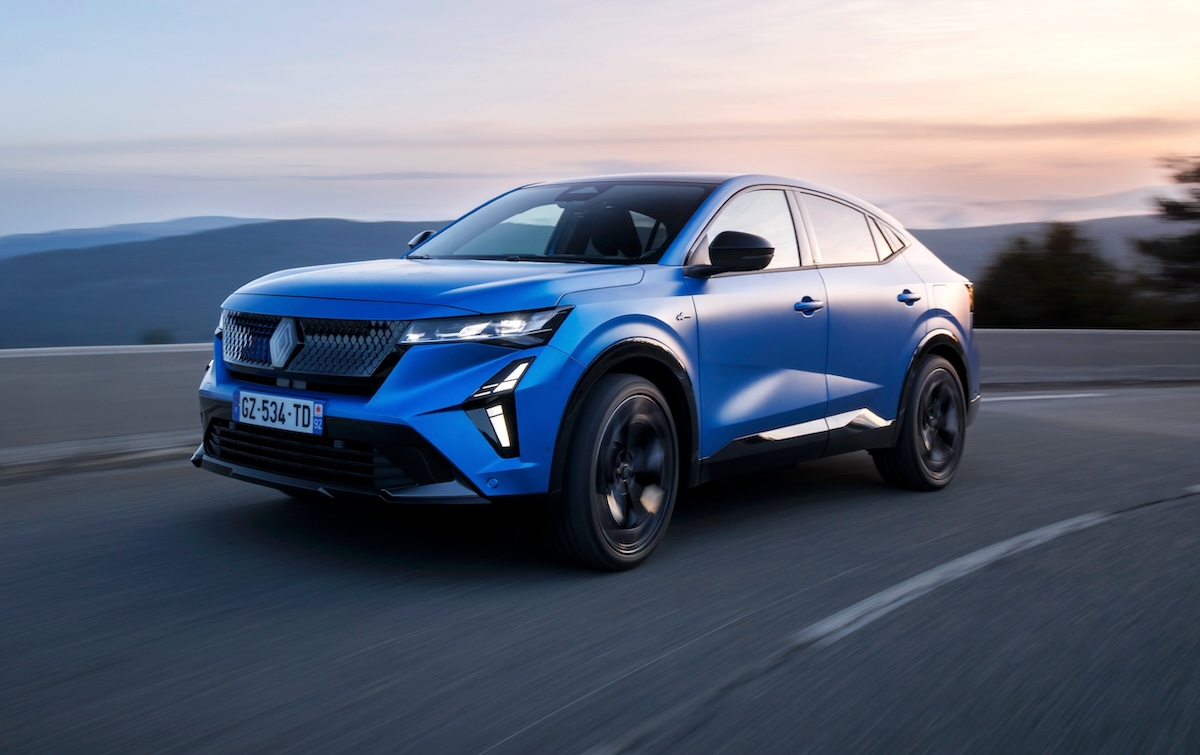
What’s it like to drive?
Every Rafale is a hybrid combining a turbocharged 1.5-litre, three-cylinder petrol engine with electric power. The full hybrid version – called E-Tech full hybrid 200 – has a total of 197bhp and front-wheel drive. Plug-in hybrid (PHEV) models – labelled E-Tech 4x4 300hp – have 296bhp and four-wheel drive as standard. As with many new cars, the Rafale is not available with a manual gearbox.
So far, we’ve only driven the plug-in hybrid in top-spec Atelier Alpine trim. In addition to the electric motor of the full hybrid model that drives the front wheels it adds a 134bhp electric motor to the rear axle, giving on-demand four-wheel drive. The system constantly changes the power split based on how much charge the battery has and how hard you put your foot down. Mash it to the floor and acceleration is rapid, as a 0-62mph time of 6.4 seconds suggests. As well as getting off the mark swiftly it pulls strongly in the mid-range, so overtaking or joining the motorway is easy. At lower speeds, you can waft around quietly using solely (or mainly) electric power – Renault quotes a maximum electric-only range of 65 miles with a fully charged battery, which is very competitive. Once you’ve used that up the system functions as a standard hybrid, but regardless of how much charge is left the petrol engine sounds boomy when you accelerate hard. It can also cut in unexpectedly, sending a low-pitched rumble through the cabin, while the wide, low-profile tyres kick up a fair bit of road noise at speed.
If the Rafale PHEV’s powertrain lacks a bit of polish, Renault has tried to apply some to this family car’s ride and handling to help it compete with premium-badge rivals. Every Rafale apart from the entry-level version has ‘4Control Advanced’ – a four-wheel-steering system that can turn the rear wheels in the same direction as the front pair at higher speed – to improve stability – or in the opposition direction at low speed to give greater manoeuvrability and a tighter turning circle.
The Atelier Alpine model goes further still, leaning on the appeal of Renault’s Alpine high-performance brand to give the Rafale a sporty, premium sheen. It adds Alpine-tuned suspension, as well as an adaptive function that uses a camera to read the road ahead and prime the suspension accordingly. All clever stuff, and the end result is a car that shrinks around you and inspires lots of confidence. You can tackle corners quickly without fuss and the steering has a decent weight to it, although the Rafale doesn’t feel as engaging or organic in its responses as rivals such as the BMW X4.
Ride comfort is pretty good considering the top-spec Rafale’s big wheels and sporty brief, but there’s the odd thump over larger bumps. We’ve yet to drive lesser versions, so can’t comment on how they compare, or whether all this chassis tech is worth the extra you pay for it. The maximum braked towing weight for all versions is 1,500kg.
Technology, equipment & infotainment
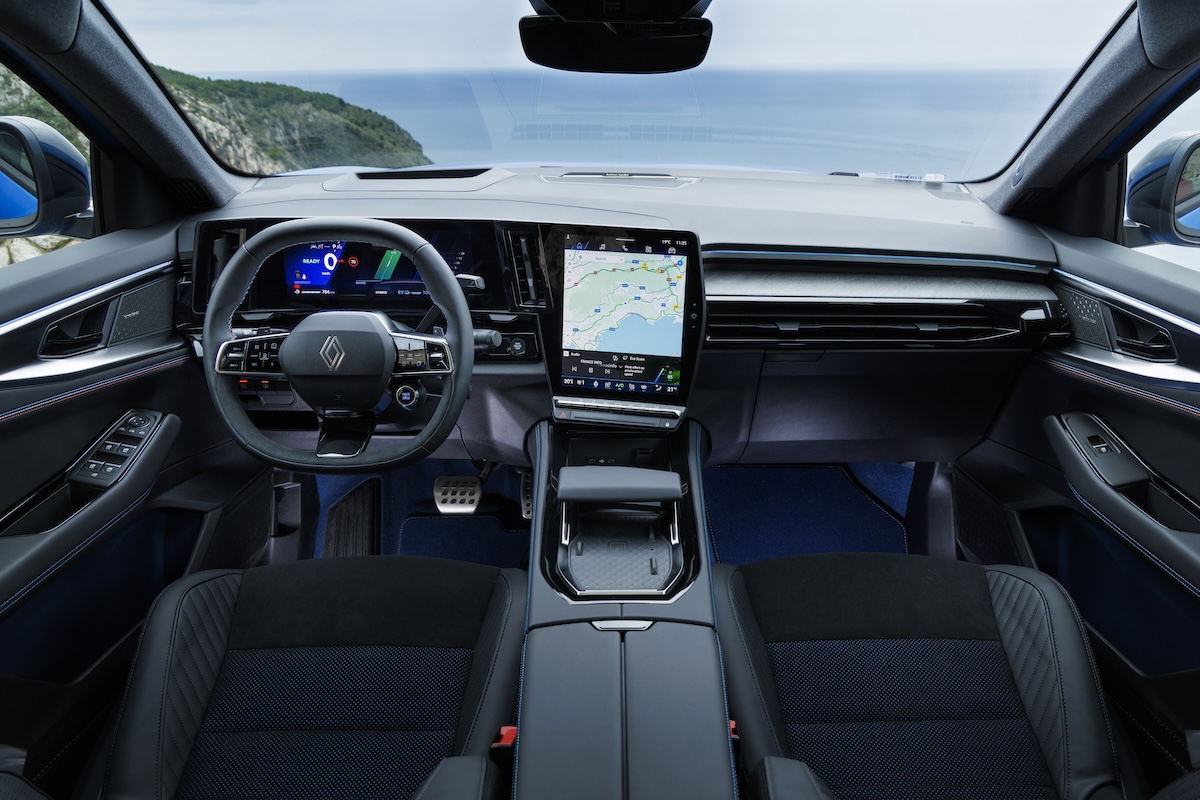
In recent years Renault has developed a knack for creating car interiors that combine a pleasantly high-tech look with genuine ease of use (the latest Clio being a great example), and the Rafale is no different. It shares most of its dashboard with the Austral SUV and it’s a goodie. At the heart of it is a large (12-inch) portrait-format touchscreen. It has clear graphics, straightforward menus and quick responses, so it’s easy to use and everyday functions are simple to get the hang of. It’s a system that even technophobes can get along with, while digital natives can make the most of its Google built-in functionality (including Google Maps), advanced settings and 50 available apps.
As you’d expect of Renault’s halo model, even entry-level Techno trim (available only for the full hybrid model) is well-equipped. Standard features include wireless charging and Apple CarPlay/Android Auto integration, automatic headlights and wipers, front, rear and side parking sensors, LED headlights with automatic high beam, a rear-view camera, electrically heated and folding door mirrors and keyless entry.
Techno Esprit Alpine (available for both full- and plug-in hybrid models) adds features such as four-wheel steering, a head-up display, heated and electrically adjustable front seats, an electric taligate and a heated steering wheel and windscreen.
Iconic Esprit – the top trim level for the full hybrid – adds a Harman Kardon audio system, 360-degree camera, hands-free parking, Solarbay roof and lots more besides.
Atelier Alpine trim – reserved for the PHEV model – includes bespoke suspension settings and a range of visual upgrades.
Safety equipment is comprehensive, with all models having a mass of driver assistance features, including adaptive cruise control, a rear cross-traffic alert function, lane-keeping assist, a blind-spot warning system and various automatic braking features.
Renault Rafale running costs
The Rafale is Renault’s costliest model, and sits in fairly elevated territory. As of early 2025 it starts at just over £38,000, while the Atelier Alpine version squeezes just under the £50,000 barrier without options. That makes it pricier than rivals such as the Peugeot 408 and Citroen C5 X, although the Rafale costs far less than an equivalent Audi Q5 Sportback, BMW X4 or Mercedes-Benz GLC Coupe. Prices for pure-electric rivals such as the Tesla Model Y and Ford Mustang Mach-E intersect the Rafale at the lower end of their ranges, but top-spec versions cost more.
Official combined fuel economy for the full hybrid is 60.1mpg; the plug-in hybrid has a combined figure of up to 565mpg on the combined cycle but Renault also quotes a mid-40s mpg figure in ICE mode. In our time with the car a mix of motorway, city and rural roads saw an average of about 37mpg from the petrol engine. The maximum pure-electric range is 59-65 miles for plug-in models, with the larger alloy wheels of Atelier Alpine models accounting for the lower figure.
Insurance groups are on the high side, ranging from 29 to 39. Note that all Rafales bar the entry-level model are subject to the ‘expensive car supplement’ tax on cars that cost more than £40,000, adding hundreds of pounds to the car’s annual VED bill.
Renault Rafale reliability
The Rafale is too new to make a call on its long-term reliability. Many of the parts it uses are shared with the Austral, which is also still relatively new to the market.
Renault has an average record for reliability in general, although it achieved an impressive 9th place out of 31 manufacturers in the 2024 What Car? Reliability Survey. Warranty cover is a bog-standard three years or 60,000 miles, whichever comes soonest. That's a long way behind the likes of Kia (five years, unlimited mileage) and Kia (seven years, 100,000 miles).
- The plug-in hybrid Rafale doesn’t accept rapid charging – its onboard charger limits the maximum charger to 7.4 kW (the same rate as most home chargers), giving a 0-80% charge in just under three hours. Using a standard domestic socket the same charge will take just over nine hours.
- All but the entry-level Rafale come with an ‘Ingenious Rear Armrest’ that folds out from the central rear seat back. It features two arms that swivel out, each with a cupholder and clips that allow a phone or tablet to be fixed in place at various angles – perfect for letting the kids watch devices hands-free.
- The Rafale’s ‘Solarbay’ panoramic glass roof offers varying degrees of opacity that you can change at the flick of a switch, or using voice prompts via the Google Assistant function built into the infotainment system. You can choose to have the roof all dark, all light, or half and half – with the light (or dark) section at the front or back.
- If you want the best value: Go for the entry-level Techno model. It looks all-but identical to the range-topping version but costs more than £10,000 less. It's still a hybrid, has the same touchscreen infotainment system and externally the only real difference is 20-inch rather than 21-inch alloy wheels.
- If you want the ultimate Rafale: Opt for the range-topping Atelier Alpine version for all the bells and whistles. As well as some smart cosmetic upgrades it has chassis tuning by Alpine and an active suspension system that uses a camera to read the road ahead.
- If you want the lowest company car tax bills: Choose the plug-in hybrid model in Techno Esprit Alpine trim. Opting for the PHEV powertrain in its least expensive form will save you in benefit-in-kind tax versus the entry-level hybrid car.
- If you want matte blue paintwork: It has to be Atelier Alpine trim. While matte white paintwork is available for all but the entry-level model, only the range-topping car has the option of matte ‘Summit Blue’ paint.