Seat Ibiza Review (2008-2017)
Seat Ibiza cars for sale
4.0
Expert review
Pros
Attractive styling
Broad range of engines
Reasonable running costs.
Cons
A Ford Fiesta is generally sweeter to drive
A Toyota or Kia could be more dependable
Base-model trims are sparsely equipped.

The CarGurus verdict
Seat’s Ibiza offers attractive looks and an array of decent engine options, trim levels and body styles, which makes it easy to find a car that best suits your particular needs. It’s also affordable, the running costs are sensible, reliability is generally good and it’s a pleasant car to drive.
Whether it’s the best option for you, however, depends on which version you’re considering. If you want a Cupra, for example, the reliability issues with the earlier engine mean you’re best off looking elsewhere, and even if you go for the more reliable later car, hotter versions the Ford Fiesta are even more rewarding for drivers.
Even if you just want a conventional hatch, the neatly finished and sweet-handling Fiesta could well be a better bet. Similarly, if you just want a basic and affordable supermini that just offers fuss-free ownership, a Kia, Hyundai or Toyota is probably the wiser move. If you otherwise like the smartly styled package offered by the Seat, though, you’ll find a lot to like.
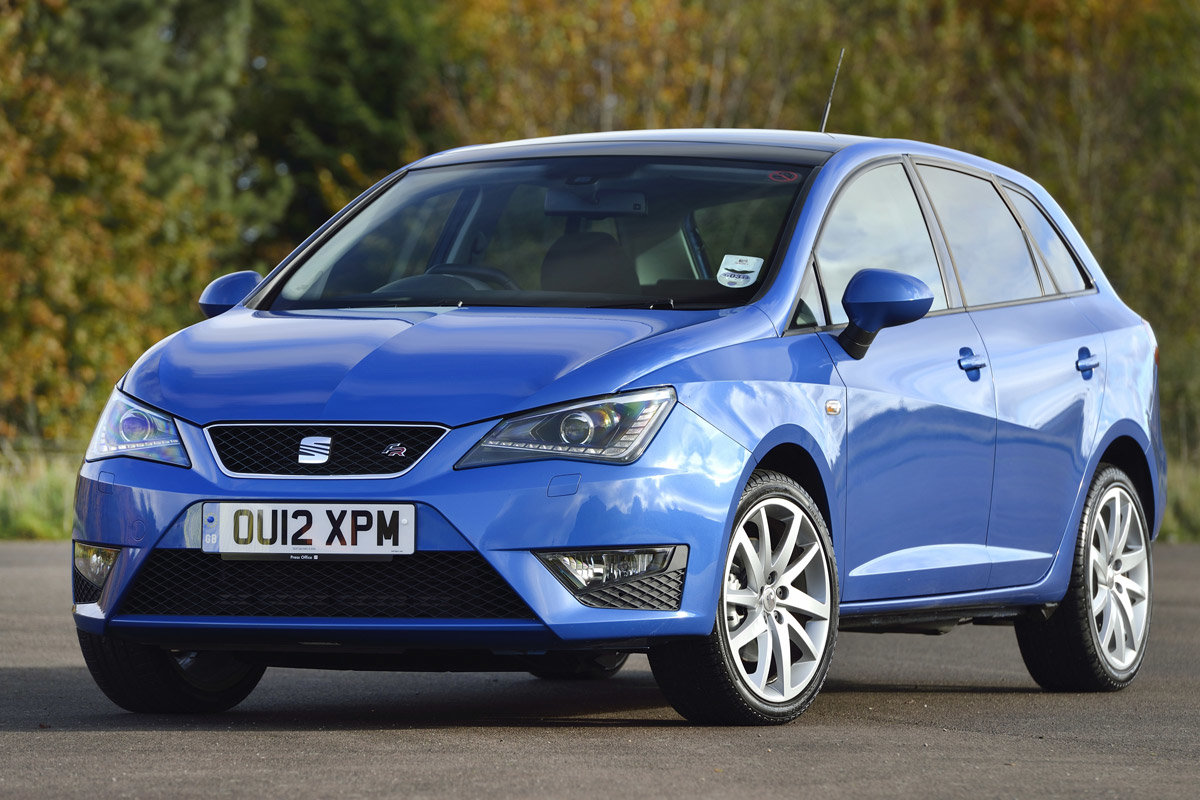
What is the Seat Ibiza?
The fourth-generation Seat Ibiza is a supermini, designed to rival cars such as the Volkswagen Polo and Ford Fiesta, which made its debut in 2008.
It was an all-new car from the wheels up and it was offered with an array of modern features, including a seven-speed dual-clutch automatic transmission, front fog lights with a cornering mode and hill hold assist. A five-speed manual gearbox was also available and engine options initially included 1.2-, 1.4- and 1.6-litre petrols.
It was replaced by the current Seat Ibiza in 2017.

How practical is it?
The Ibiza was also bigger than its predecessor, which allowed for more interior space and a 292-litre boot in five-door models. Safety was impressive, too, with the then-new Ibiza attaining five stars for adult occupant protection, and four stars for child occupant protection, in Euro NCAP crash testing.
It wasn’t top-drawer everywhere, though. While it had a large boot for its class, and the ST offered up 430 litres of boot space, rear space could be a bit cramped, and alternatives such as the Skoda Fabia offered up more luggage space in both hatchback and estate form.
What's it like to drive?
Your first impressions are of a car that feels agile and responsive to the steering, the Ibiza darting off centre at the merest sniff of a twitch of the wheel. Trouble is, it doesn’t quite make good on the promise of this initial interaction; hereafter, it feels a little inert, with very little feedback delivered up through the wheel to the palms of your hands, and a chassis that lacks the playful reactivity of a Fiesta’s.
On the plus side, the ride is decent enough, wind and road noise are well shut out, and none of the engines are particularly vocal, so the Ibiza is a pleasant enough companion with which to rub along on a day-to-day basis.

Technology, equipment & infotainment
What subsequently bolstered the popularity of the Ibiza further was the sheer array of options that Seat added to the line-up. You could opt for hyper-efficient Ecomotive models, standard five-door hatch models, sporty FR models, the three-door Sport Coupe – SC – and the practical five-door ST estate or the hot Cupra. And all of that, don’t forget, was before you’d tackled the numerous engine and equipment options.
At launch, the standard S model included a height- and reach-adjustable steering wheel, electric front windows, remote central locking, a six-speaker stereo and steering-column mounted audio controls. You wanted to aim for an SE version at least, because it included upgrades such as cruise control, air-conditioning, a trip computer, 15-inch alloy wheels and electric heated door mirrors.
Electronic stability control wasn’t standard originally but could be added as part of a pack that also included tyre pressure monitoring, emergency brake assistance and a hill-hold function.

Seat Ibiza running costs
When it comes to conventional versions of the Ibiza, you can expect running costs to be low, although there are a few caveats.
A basic 1.2-litre petrol model could average some 47mpg, for example, while even the quicker and more powerful turbocharged 103bhp 1.2-litre TSI could return 55.4mpg. The diesels are frugal, too, even in early 1.6-litre trim. The 103bhp TDI engine was reputed to be capable of averaging 67.2mpg, which was impressive considering it could also accelerate the Ibiza from 0-62mph in 10.5 seconds.
Consequently, fuel costs are unlikely to be problematic. VED costs are manageable, too, with many models dipping into the £0-£30 band, although some of the bigger naturally aspirated versions do end up in higher bands. The 1.6 Sport, for example, costs £205 a year, so check the details of each car you’re interested in carefully.
Seat does offer service plans, for cars aged 1-15 years old, which can be purchased online. Usefully, by entering the registration of your car or potential purchase into the system, you can get quotes for monthly and one-off payments for service plans. Expect the combined cost of a major and a minor service to come in at around £500 for an older car.
Because there are so many variants, however, and because many Ibizas are now much older, you should ask a dealer or specialist if there are any specific servicing tasks that a car might require. Transmission fluid changes, timing belt services, new water pumps and cabin filters are all facets that might have been overlooked, so tread carefully. You’ll also want to set aside some money for unexpected repairs, as a used Ibiza of this generation will potentially be quite old.
Going for the higher-performance versions, such as the Cupra, will also bump up your running costs – on the tyres and braking consumable fronts, at the very least – so it’s worth doing some research to make sure you’re happy to stomach such bills.

Seat Ibiza reliability
A new Ibiza would have come with a three-year, 60,000-mile warranty, which is a conventional offering in the supermini segment. It could be extended up to five years and 90,000 miles, too, so you may find later cars that still have a modicum of warranty remaining.
Most cars will be devoid of warranty now, though, due to their age or mileage – or both – but you might encounter cars at independent dealers with an aftermarket warranty, which will at least offer some protection.
Generally, however, the Ibiza has a fairly decent reputation for reliability, especially the less complicated and more straightforward versions. There haven’t been many recalls, either, although you’ll still want to check any prospective purchase against the government’s 'Check Vehicle Recalls' service to ensure there’s nothing amiss.
There are some key points to be mindful of, though. The seven-speed dual-clutch gearbox is known to be problematic, particularly in early cars, and the supercharged and turbocharged 1.4-litre TSI engine found in the Cupra variant can be unreliable. Aside from being complex and prone to faults, it also tends to get through oil at a rate of knots. Couple that with DSG woes and you could be in for a very tiresome experience.
Many cars will be getting tired, too, so you want to find an example that’s been maintained well and serviced according to schedule. You want to think about what the Ibiza in question has been used for, too, as a Seat that’s racked up lots of miles around town may well feel a bit baggy and have lots of dings, scrapes and kerb marks, whereas one that’s spent its life on the motorway will probably feel better and be in a smarter condition.
If you’re interested in a used Seat Ibiza and are concerned about reliability, you could opt to buy one from the Seat Approved scheme. This approved used car scheme offers cars that are up to ten years old and each is resold with 12 months’ warranty. All cars go through a comprehensive multi-point check and refresh and you also get 12 months’ roadside assistance and other benefits, such as five days’ complimentary drive-away insurance.
- You could tell where money had been saved compared alongside the Volkswagen Polo with which the Ibiza shared its underpinnings. The Seat was still put together well, but it lacked the solidity and level of finish of its sibling. As a result, and as you might expect, time takes its toll on the Ibiza’s interior more obviously than on that of the Polo; fabrics wear more readily, and plastics are more prone to scratching or breakage.
- Seat updated the Ibiza at several points and also facelifted the car in 2012. The exterior was reworked, with upgrades including a trapezoidal grille, while the interior was updated with a new climate control system, swisher finishes and a larger 10.7-litre glove box. While many tweaks were subtle, the net result was a more desirable and practical car. Depending on model, the engine line-up included a 1.2-litre petrol, a supercharged and turbocharged 1.4-litre TSI engine, a turbocharged 1.2-litre TSI petrol and 1.2- and 2.0-litre diesels. A dual-clutch automatic transmission was available with some engines, while others received five- or six-speed manuals. Another major facelift followed in 2015, which added Seat’s Full Link mobile phone connectivity.
- An Ecomotive version of the Ibiza, which majored on economy, was unveiled in 2008. It was available in five-door hatch or three-door SC body styles and benefitted from a frugal 79bhp 1.4-litre TDI diesel engine and a host of efficiency tweaks, including tyres with a low rolling resistance, drag-reducing covers for its steel wheels and revised gear ratios. All of these tweaks resulted in a compact hatch that was reputed to average a heady 76.3mpg while emitting 98g/km of CO2. -
- The best all-rounder: There’s plenty of choice in the Ibiza range but, to tick as many boxes as possible, we’d go for the five-door hatch with the smooth and efficient 1.0- or 1.2-litre TSI petrol turbo engines. We’d generally stick with the manual transmission, for reliability reasons, and go for one of the updated models in SE or FR trim, as the base-grade variants don’t come with enough kit for most.
- For maximum practicality: The five-door ST estate is the one to go for, as it offers an impressive 430 litres of boot space with the rear seats up, compared to the 292 offered by the five-door hatch. Again, a TSI engine and SE or FR trim would be our choice, but you might want one of the diesels if you’ve lots of miles in mind.
- For the eco-minded: Even the hottest versions of the Ibiza aren’t that thirsty but, if you want to cover lots of ground between refills, seek out one of the 1.4-litre diesel Ecomotive models or the standard 1.6-litre diesel. Both are capable of delivering impressive mpg figures, granting you a long range and lower fuel bills.
- For peak performance: Go for a Cupra, but one of the updated models, which were made available in the UK in January 2016, as these come with a more powerful 189bhp 1.8-litre TSI engine. Aside from being quicker, and capable of dispatching the 0-62mph sprint in 6.7 seconds, the bigger turbocharged engine is much more reliable and less complicated than the preceding turbocharged and supercharged 1.4-litre engine. The same engine is also found in the distinctive Bocanegra SC version of the Cupra.


