Seat Leon Review (2020-present)
Seat Leon cars for sale
4.0
Expert review
Pros
Blends a sporty driving experience with a comfortable ride
Plenty of space for people and luggage
Fuel-efficient engines
Cons
Can't quite match its Audi or Golf cousins for interior quality
Reputation for reliability merely average
Bare-minimum warranty arrangement
The CarGurus verdict
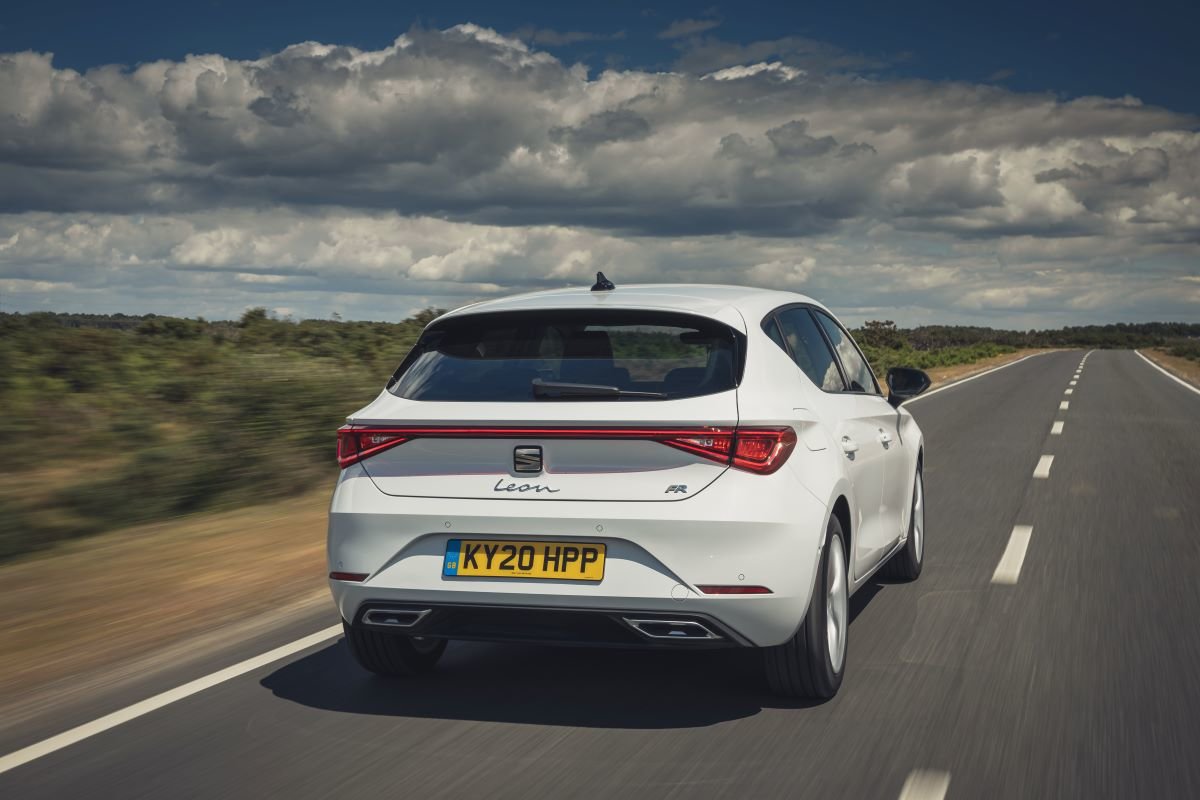
With the same mechanical bits and bobs as brilliant cars like the Audi A3 and Volkswagen Golf, the Seat Leon is off to a pretty good start in life. And sure enough, it shares many of the same dynamic attributes, with perky-yet-efficient engines, and an enjoyable-yet-comfortable driving experience, albeit one with a slightly firmer, sportier edge than its siblings.
Granted, it can’t match them for interior quality, with some harder, less appealing surfaces and finishes to be found, but it’s competitive with most other rivals on that score, and it feels very solidly made. The cabin also come equipped with most of the luxury kit you could want, and with lots of passenger space and a fairly big boot, it’s practical, too. Perhaps most appealingly, though, the Leon is a fairly stylish choice in the class, and one that’s impressively affordable, both to buy and to run. All this gives the Leon a level of all-round ability that’s very hard to ignore.

What is the Seat Leon?
Ever heard the phrase ‘always the bridesmaid, never the bride’? Well, if you were the Seat Leon, you could be forgiven for thinking that this little expression summed you up in a nutshell.
You see, as one of the Volkswagen Group’s many midsize hatchbacks – those including the Audi A3, Skoda Octavia, and of course the VW Golf – it uses pretty much all the same oily bits as all the rest of them. That means it shares many of the same dynamic attributes, along with other similar attributes in the areas of efficiency, practicality, dependability and technology. And yet, even though the Leon is a fabulous car in its own right as a result, it never proves quite as popular with buyers as the slightly more glamorous members of its stable. Where’s the justice?
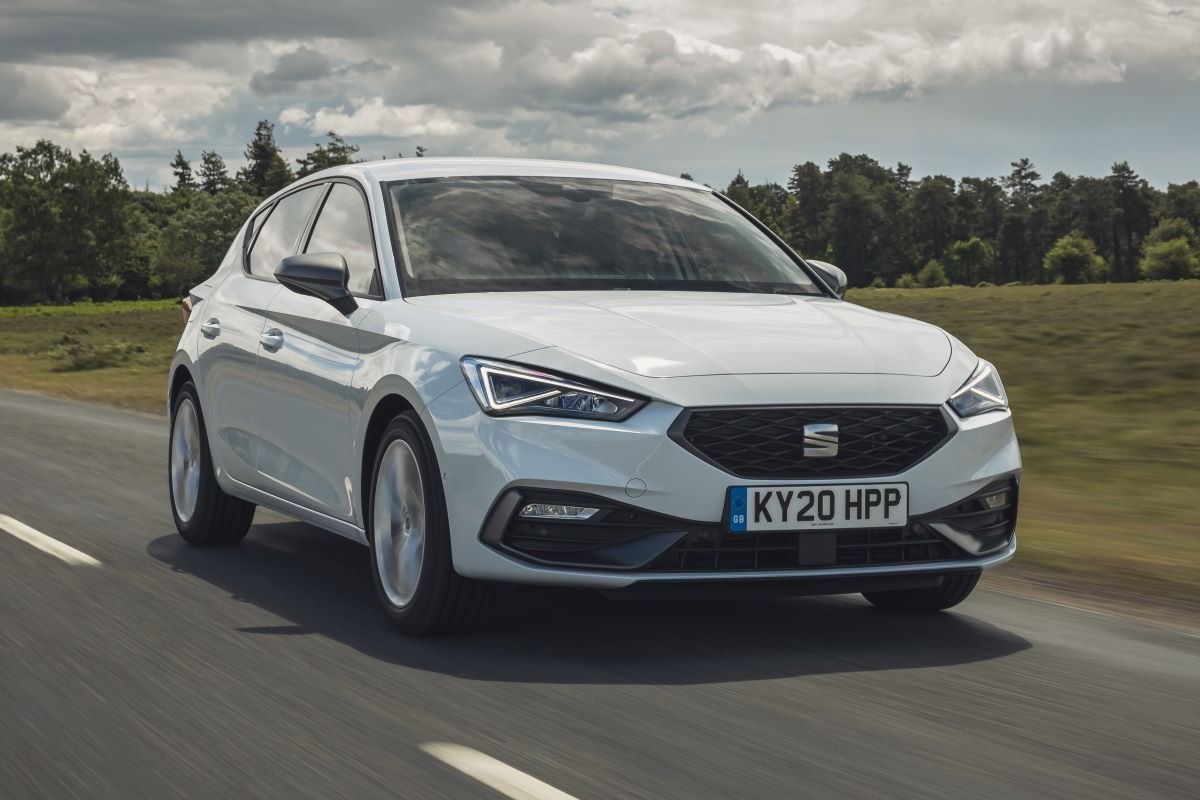
We’d argue, though, that what the mk4 Leon lacks in glamour, it more than makes up for in edginess. Each of the VW-Group siblings brings a slightly different character to the party, and the Leon’s is sporty, stylish, yet at the same time, impressively affordable, a role that the car plays brilliantly.

How practical is it?
And while delivering on the style aspect of that equation can often mean compromising on practicality, there’s not a bit of that with the Leon. Its crisp lines look great, and they also conceal a cabin that’s actually roomier than those of some of its siblings, and that also compares very well with the class-leaders on that score. Rear legroom is particularly impressive, and the boot is pretty big at 380 litres, too.
And that's in the Leon hatchback; boot space is boosted to 620 litres in the estate version, and you get a clever adjustable floor that helps you make the most of the boot space. Happily, if you choose the estate, you don’t lose out on the Leon’s sporty driving experience; it’s just as poised and precise as the hatchback, and that makes it one of the most involving estates around.
What's it like to drive?
Granted, to achieve the car’s sportiness, it has a firmer-feeling suspension set-up than you'll find in most of its rivals – especially in FR-trimmed cars which have an even sportier setup than regular Leons. This means it’s not quite as comfortable or as cosseting as, for example, a Skoda Scala or even a Ford Focus.
It’s still comfortable enough, though, and this dynamic approach does deliver a level of handling sharpness with the Leon that its Volskwagen Group siblings can’t match, giving you a real feeling of connection with the road, and making the Leon a really enjoyable car to drive. A range of perky-feeling engines also contributes to the dynamic sizzle.
Technology, equipment & infotainment
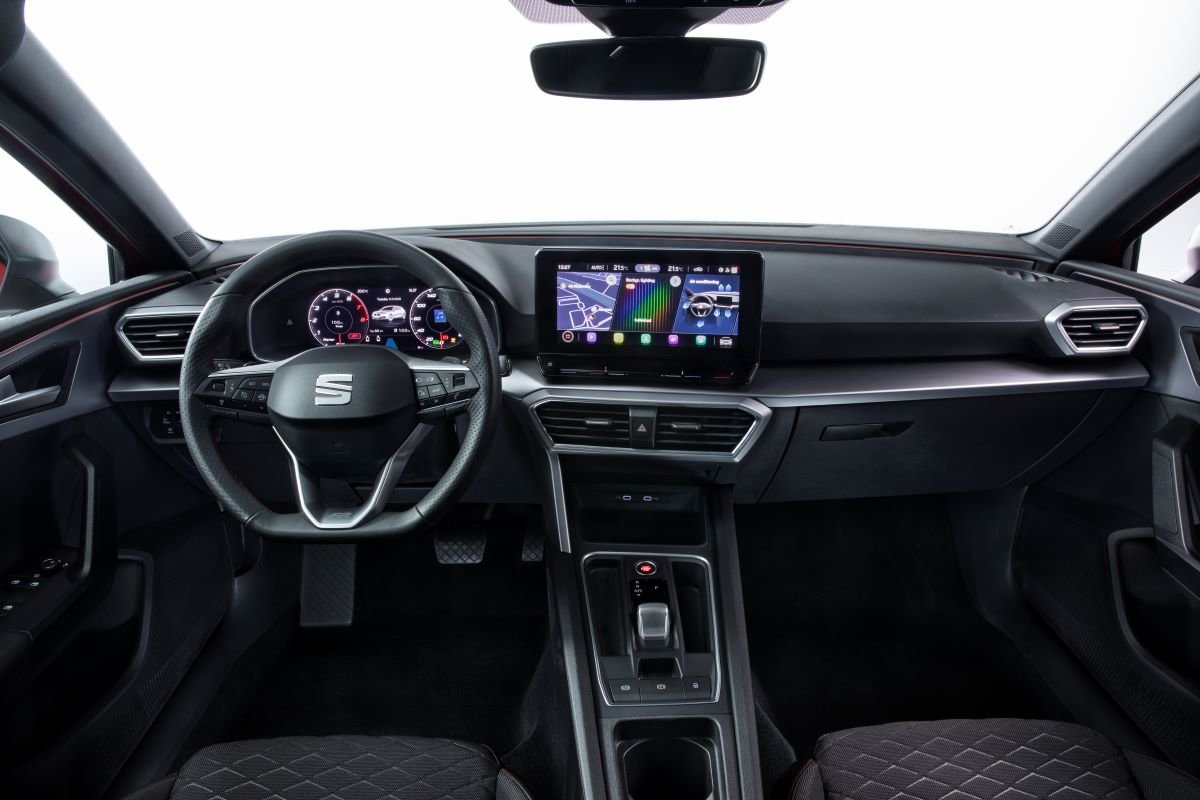
In either hatchback or estate form, the Leon delivers on the affordability bit, too, with prices that are competitive with those of mainstream rivals and impressive efficiency figures that’ll ensure low running costs. Granted, cabin quality takes a wee bit of a hit as a result, with materials and finishes that aren’t quite as glossy or appealing as those in the VW or Audi, but it’s a match for most other rivals. Equipment hasn’t been scrimped on, either, with most versions coming with all the luxury and safety kit you really need.
So, while the Leon isn’t perfect, it’s a superbly impressive all-rounder in a very competitive class, and one that delivers a mix of style and sportiness that some buyers will find very attractive. We’re a little surprised there aren’t more buyers who do, to be honest.

Seat Leon running costs
In terms of new car purchase prices, the Leon costs a fraction more than key rivals such as the Ford Focus, Honda Civic and Vauxhall Astra, but the differences are marginal. Look at the starting price of the Leon range, meanwhile, and it’s far lower than that of the Volkswagen Golf, making the Leon much more attainable. However, the entry-level Leon has less power and less equipment than the entry-level Golf, and when you compare versions that are more similar on those factors, the prices become much closer, although choosing the Leon will still save you a four-figure sum. Pound-for-pound, all of the cars mentioned depreciate in value at a pretty similar rate, meaning the difference in the prices of used examples will also be fairly proportionate.
On the efficiency front, the Leon does a very competitive job when compared with rivals, pretty much all of which are already very impressive in this area. Both the 1.0-litre and lower powered 1.5-litre petrol engines will return an official maximum of about 52 mpg, while both the 148bhp 1.5s - the mild hybrid included – sit back at around the 48 mpg mark. At the time of writing, the diesel was the pick of the bunch on this score, with an equivalent figure of up to 67mpg, but that’ll inevitably be superseded by the plug-in hybrid once figures become available for that. However impressive this figure turns out to be, though, don’t go expecting to match it in the real world. What you actually get will depend entirely on how much time you spend driving the car on electric-only power.
At the time of writing, insurance groups sat between 14 and 23, but that’ll inevitably change over time as more engines join the range, as we know they will. You can be fairly confident, though, that premiums will be very affordable on all but the most powerful versions.

Seat Leon reliability
With this generation of Leon still being fairly new, there isn’t very much reliability data available, and until there is, we can’t really be of all that much help on common problems to look out for. As yet, there have been no recalls to tell you about, either. However, Seat has a fair-to-middling reputation for mechanical dependability as a brand, so that should provide some peace-of mind. Compared with its fellow VW-Group brands, Seat doesn’t perform quite as well as Skoda in surveys such as the JD Power UK Vehicle Dependability Study or the Warranty Direct Reliability Index, but it’s pretty much neck-and-neck with Volkswagen and it comprehensively out performs Audi on a consistent basis. It should be noted, though, that while Seat’s performance in this area is fairly solid, it’s not quite as solid as those of key rivals such as Ford and Vauxhall.
Like all of Seat’s cars, the Leon comes with a three-year/60,000-mile warranty as standard. That’s a fairly run-of-the-mill arrangement. Pay a bit more, and you can extend your car’s warranty to last for four years or 75,000 miles, or for little more cash, five years or 90,000 miles. What’s more, you can do this either when you buy the car brand new or when your warranty is just about to expire.
- The Leon may be one of the more affordable offerings among its fellow Volkswagen-Group hatchbacks, but that doesn’t mean it feels like a poor relation: all versions come well stocked with luxury and safety equipment. The entry-level SE trim comes with alloy wheels, air-conditioning, four powered windows, rear parking sensors, metallic paint, keyless go, cruise control, six airbags, automatic emergency braking, lane keeping assistance and an 8.25-inch touchscreen infotainment system that brings together a DAB radio, Bluetooth and Apple Carplay/Android Auto.
- However, we’d recommend upgrading a stage further to SE Dynamic trim, because this version gets a bigger 10.0-inch touchscreen with built-in satnav, along with a digital instrument panel, front parking sensors and darkened rear windows. If you fancy something little racier, FR trim gives you all manner of sporty styling touches, including swankier lights front and back that have cool scrolling indicators, and you also get rain-sensing wipers and three-zone climate control on top. FR First Edition cars, meanwhile, have upgrades including a rear-view camera and adaptive suspension.
- You can have your Leon in either petrol or petrol mild hybrid form, or you can choose the same super-efficient plug-in hybrid system as other Volkswagen Group cars, allowing you up to 38 miles of electric-only running (according to provisional figures). You also have the option of a fire-breathing Cupra-badged hot hatch model with a 2.0-litre turbo petrol engine that pushes out around 296bhp.
- It’s likely that some will be buying their Leon on a budget, and those folk will want to consider the entry-level 1.0 TSI petrol engine. This turbocharged 1.0-litre three-cylinder engine only develops 108bhp, so performance will be modest, but choosing it makes the Leon impressively affordable to buy, and good fuel economy figures mean it’ll also be cheap to run.
- However, we reckon most buyers will want a little more punch in order to make the most of the Leon’s nimble handling, and on that score, we reckon that the 1.5 TSI Evo 130 is a better bet. It feels a little flat if you let the revs drop below 1,500rpm, but above that, the car has a quicker turn of pace than you might expect from something with 128bhp.
- If ultimate economy is your goal, though, or if you’re selecting a company car, you’ll probably want to have a gander at the e-Hybrid version. This is a plug-in hybrid that combines a 1.4-litre petrol engine with an electric motor and a high-capacity battery to deliver 201bhp, along with an electric-only range of up to 38 miles. A full charge takes just three hours when hooked up to a 7kW wallbox charger, or six hours on a three-pin domestic socket.
- For the Leon buyer who needs a bit of extra space, of course, the estate version makes the most sense. You can only have our favourite SE Dynamic version with the 1.5 TSI Evo 130 engine in estate form, which probably makes sense as you’ll want the extra pulling power. If you’re frequently going to carry heavy loads, it’s worth considering an upgrade to the 1.5 TSI Evo 150 for its extra grunt, although you’ll also have to upgrade to the FR model, which brings with it a slightly higher price.


