Skoda Octavia Review (2013-2019)
Skoda Octavia cars for sale
4.0
Expert review
Pros
Great value for money
Hugely practical
Reputation for delivering hassle-free motoring
Cons
A little unexciting to drive, aside from the vRS versions
Base models are very basic
Not exactly a head-turner

The CarGurus verdict
The Skoda Octavia is an extremely sensible family car to buy. In hatchback form it simply can’t be beaten on space for its size, while the estate is vast and versatile. All Octavias feel like they’ll last a lifetime, too, and while some do suffer from reliability glitches, they’re relatively few and far between.
No, it won’t be the most exciting car you’ll ever own, but the hassle-free and cost-effective ownership experience an Octavia will offer should more than make up for that.

What is the Skoda Octavia?
The Octacia is Skoda’s mid-range family car – but it’s bigger than the norm, and in that fact lies the secret to its success. The Octavia is loved by families simply because it delivers more space than most of its rivals, yet for similar or potentially even less money.
It's offered in five-door hatchback and estate models, with engines and trims ranging from cheap and cheerful through to the performance-oriented vRS versions, so there's something for everyone. The Mk3 Octavia reviewed here was replaced by the mk4 in 2024.

How practical is it?
Exceptionally so. The hatchback version’s boot is enormous – at 590 litres, its rivals pale by comparison. But this enormous luggage space doesn’t come at the expense of room for passengers; indeed, in the back, the Octavia manages to be more capacious than most of its rivals, too, while up front there are lots of clever places to put your odds and ends.
And if the hatchback isn’t big enough, there’s always the simply voluminous estate version, which gains 610 litres beneath the load cover. And when the seats are folded, you get a whopping 1,740 litres to play with – more than you’ll find in some small vans.
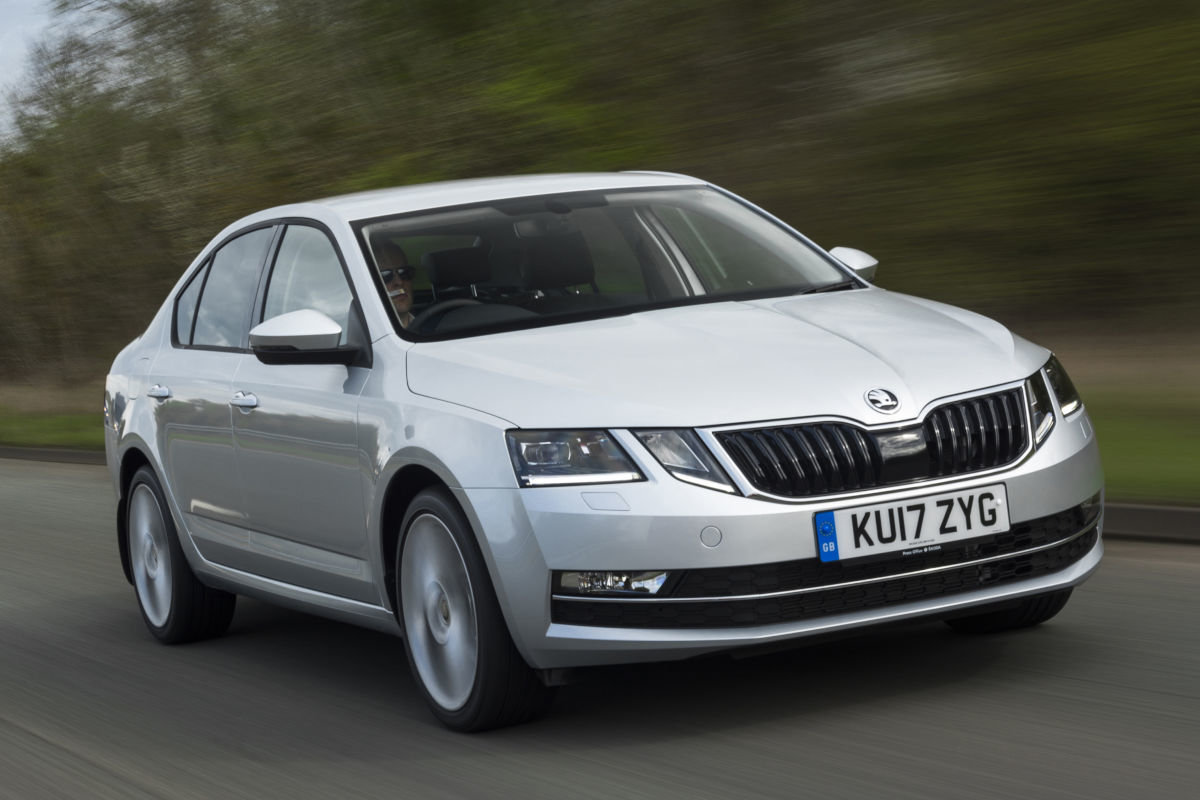
What's it like to drive?
Take one look at the Octavia, and you probably won’t be expecting a riveting driving experience. Neither will you get one – but for all that, the standard hatchback and estate both handle crisply and cleanly, with direct steering and neutral, predictable responses.
Granted, the ride can feel a little firm at times, but this trait is generally mitigated by choosing a model with smaller wheels, whose plump tyres tend to damp out any stiffness.
The excellent turbocharged petrol engines are, without exception, responsive and smooth. Diesels are gutsy, too, and while they can get a little vocal when pushed, they aren’t so intrusive as to be annoying.

Technology, equipment & infotainment
The model range starts with the rather basic-feeling S, but runs right through to the luxurious (and rare) Laurin & Klement version.
We recommend choosing the SE or SE Technology models, though, because they offer the best balance of price and equipment.
There’s a great range of engines to choose from, too, with super-efficient diesels and responsive turbocharged petrols making up the bulk of the cars you can buy second-hand. The Octavia was popular with fleets, so there are lots of used examples out there, many of which are SE trim level and upwards, so you're spoiled for choice.

Skoda Octavia running costs
The most economical versions of the Octavia are the 1.6-litre turbodiesel models, especially those badged ‘Greenline’. You can expect to see these achieve as much as 70mpg out on the road if you’re driving carefully. The 2.0-litre TDI engines, meanwhile, will get 60-65mpg out on the road, while 1.0-litre petrols can achieve 55-60mpg in the real world.
Even performance versions are tolerably efficient, though, with the 2.0 TSI vRS capable of 35-40mpg in the real world. For a good blend of performance and fuel economy, you can always try the diesel version of the vRS, which should be able to get 45-50mpg.
Servicing on the Octavia can vary from car to car, because high-mileage cars will have been set to Skoda’s ‘long-life’ schedule, which requires it to be serviced every two years or 20,000 miles, whichever accrues first. However, unless you’re going to be doing a particularly high mileage, it makes more sense to get your car serviced according to Skoda’s ‘fixed’ service schedule, which requires a service every year or 10,000 miles.
Skoda offers pre-paid service plans, while cars that are three years old or more can also benefit from the company’s fixed-price servicing offer at Skoda dealers, under which an oil and filter change is £99, an interim service costs £169, while a major service is £279.
Both the 1.8- and 2.0-litre petrol engines in the Octavias use timing chains which, in theory, shouldn’t need changing throughout the life of the car. All other models use timing belts which need replacing every five years or checking every 160,000 miles; additionally, the timing belts fitted to diesel examples should be replaced every 140,000 miles, if that benchmark is reached sooner. Replacement will cost anywhere between £200 and £600, depending on which engine is fitted and where the work is carried out.

Skoda Octavia reliability
As with other Volkswagen Group cars that have been fitted with dual-clutch automatic gearboxes, automatic Octavias can suffer expensive problems with their gearbox control units and clutch packs. Both are expensive fixes, so if it’s an automatic Octavia you want, look out for any jerkiness or judderiness on your test drive, make sure the gearbox selects every gear promptly and without hesitation, and walk away from any car with a gearbox warning light on.
Octavias’ infotainment systems have also shown up various problems, from a lack of sound to software glitches. It’s therefore a good idea to spend some time going through the infotainment system and checking that everything works.
It’s also worth noting that petrol-powered Octavias equipped with timing chains have been known to snap them thanks to weak tensioners. With that in mind, listen carefully to the engine of any vRS you plan to buy, and avoid cars which are making metallic rattling noises from under the bonnet.
- If you’re after an Octavia that’s sporty, there’s always the vRS. Available in both diesel and petrol form, this hot hatch isn’t quite as well-rounded as the Golf GTI with which it shares its platform, but it shares the standard Octavia’s winning practicality, and teams it with sporty looks and the sort of performance and handling that’ll always put a smile on your face.
- The rugged Octavia Scout comes with four-wheel drive and a ride height that’s 33mm higher than the normal Octavia’s. That makes it ideal if you want to venture off-road now and again, but don’t fancy an SUV.
- Diesel Octavias are incredibly efficient, but you might be surprised by how close petrol versions get; 1.0-litre turbos can achieve more than 60mpg on a motorway cruise, and while you might think such a small engine would feel gutless in such a big car, it simply doesn’t.
- If you want the cheapest running costs: The 1.6 TDI Greenline SE can achieve as much as 70mpg if you have a light foot, meaning it's fantastic if you don't like visiting the petrol station forecourt too often.
- If you need an automatic: The 1.4 TSI DSG SE is such a fine all-rounder that it's arguable the best Octavia of all. The VW Group's 1.4-litre turbocharged engine is a smooth and willing performer, and it partners well with the DSG gearbox for the vast majority of the time. Expect a relaxed drive and good fuel economy.
- If you fancy something faster: The 2.0 TSI vRS shares some of its hardware (including the engine and manual or dual-clutch automatic gearbox) with the Volkswagen Golf GTI. It is no surprise, therefore, that it's a swift car. The handling might not be as sharp as it is in the VW, but for a fast and roomy family car, the Octavia vRS is a great choice.

