Smart ForFour Review (2014-2022)
Smart forfour cars for sale
2.0
Expert review
Pros
Manoeuvrability makes it very capable in the city
Unusual styling stands out
Generally feels like a premium product
Cons
Not all that much fun to drive
Rather expensive compared with rivals
Small boot
The CarGurus verdict
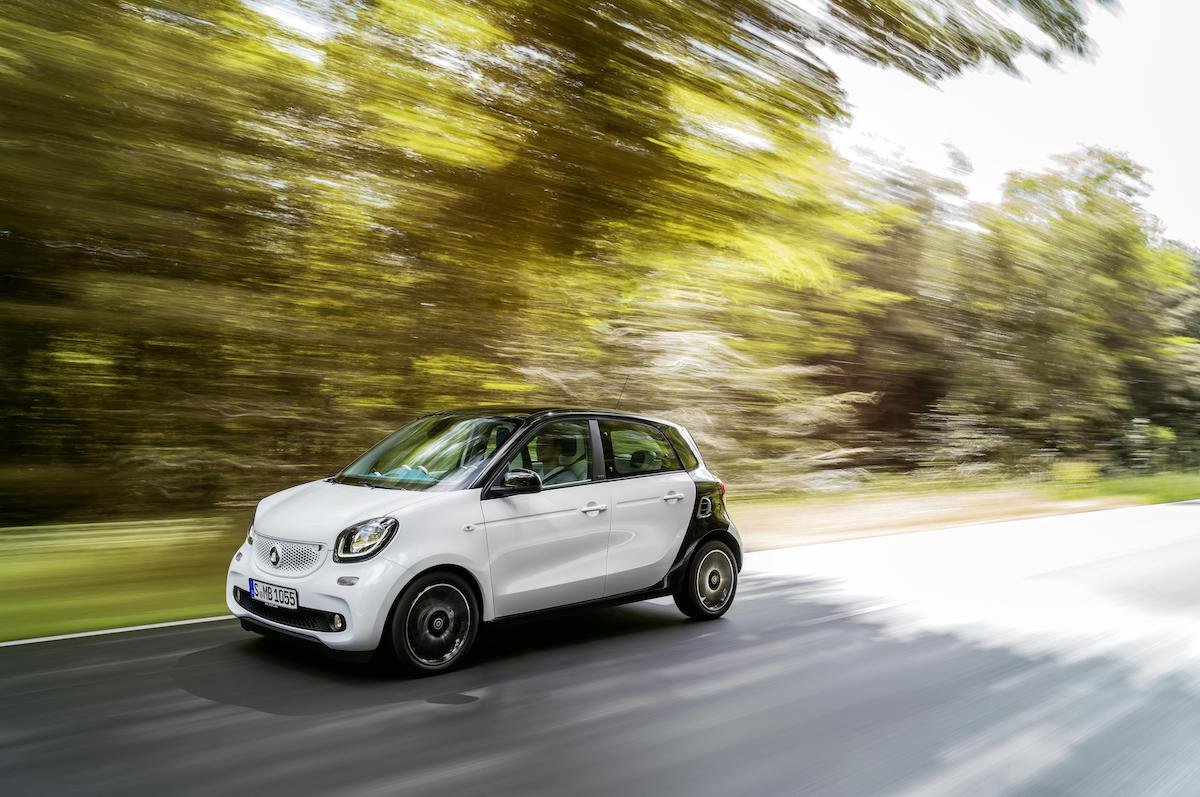
Taken for what it is, the Smart ForFour makes for a brilliant around-town companion, offering an extremely tight turning circle and a diminutive footprint that ensures it is a doddle to park. The drive is relaxed and fuss-free, the interior feels funky but refined and clever touches, like the folding seats and wide aperture doors, make daily life simple.
However, a Smart car has always been an expensive option and there are plenty of extremely good rivals, ranging from the refined Volkswagen Up and cleverly-designed Toyota iQ, to the solid Hyundai i10. Fiat’s 500 is arguably just as chic, while the Skoda Citigo is also a strong contender for everyday practicality. Renault’s Twingo is also near-mechanically identical, but also cheaper to buy.
Because of this, it becomes very difficult to recommend the Smart ForFour to those who aren’t perhaps bothered by the playful styling, slick interiors and good amount of standard equipment. Although all of these things can be picked up for a very reasonable price on the used market now depreciation has worked its magic.
What is the Smart ForFour?
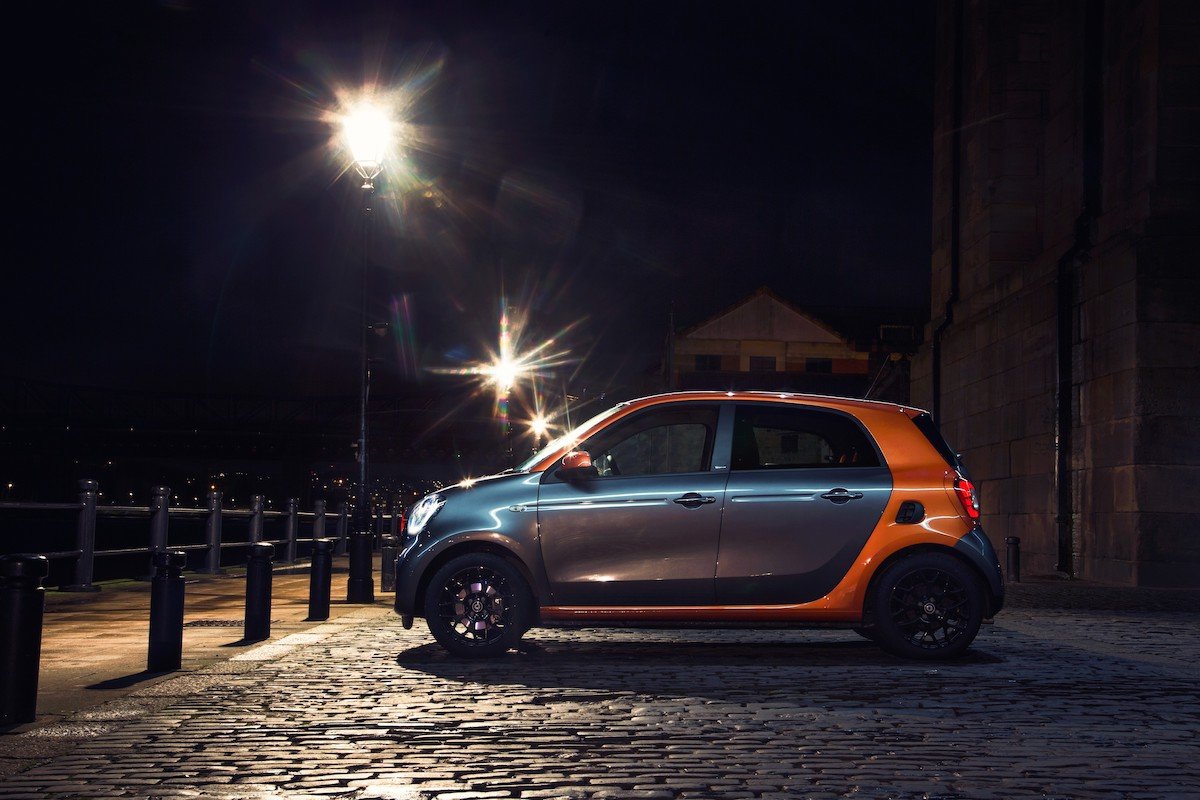
The Smart ForFour has always struggled to match the sales success of its smaller, two-seat ForTwo sibling. Customers have tended to favour the diminutive dimensions of the original Smart car, which famously allowed owners to squeeze into seemingly impossible inner-city spaces and, sometimes illegally, park perpendicular to the curb in heavily contested urban roadside spots.
However, Smart attempted to boost popularity of its four-seat (hence the name – geddit?) ForFour with a renewed second generation. Developed in conjunction with the modern Renault Twingo back in 2014, it promised a more refined driving experience, with more sound deadening and a slicker interior than its French cohort. Production ended in 2022 and its successor was the Smart #1, launched in 2024.
How practical is it?
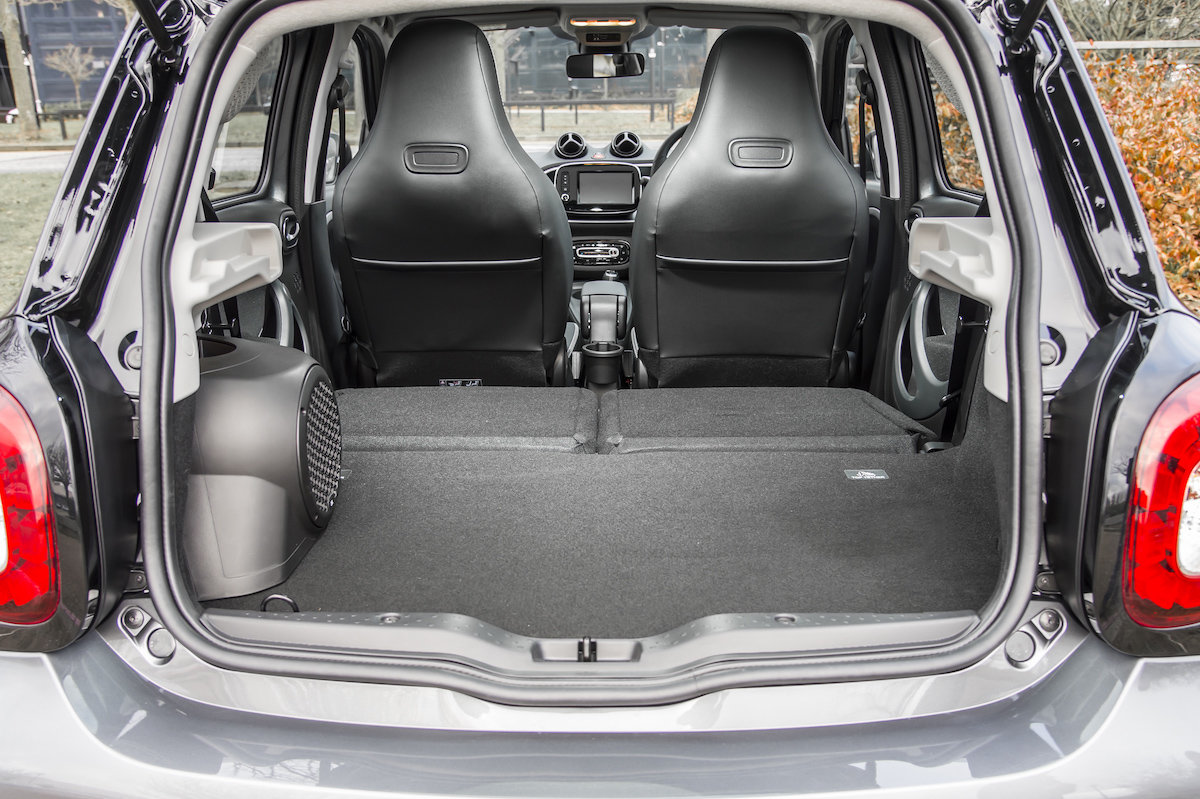
Inside, it’s definitely the most spacious Smart car money can buy but it’s still very small and to counter that, engineers at Smart came up with some very, ahem, smart ways of maximising interior space. The rear doors, for example, open to 85 degrees, making it much easier to climb in and out of the relatively cramped rear quarters. It’s also great if you have child seats to contend with and makes it much easier for children to clamber around.
The engine is also under the boot floor in a Smart car, so there is some compromise on the already tight stowage space. With rear seats intact, it can only muster 185 litres of load space, falling quite a way behind the Volkswagen Up, for example, at 251 litres.
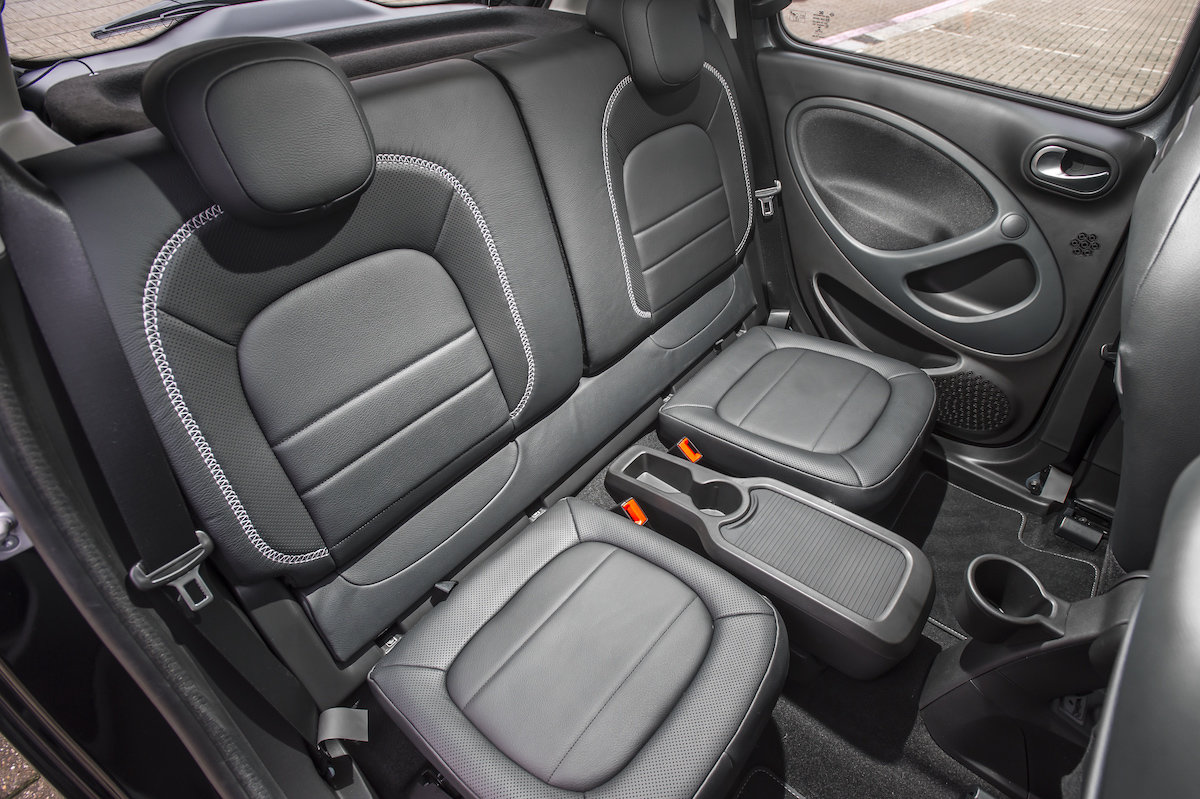
But again, Smart has been clever and the rear seats quickly and easily fold completely flat so you have access to an impressive 975 litres, or even more if you fold the front passenger seat completely flat, too.

What's it like to drive?
Available with either a non-turbo 1.0-litre petrol engine (producing a modest 70bhp) or a turbocharged, three-cylinder 0.9-litre pumping 89bhp to the rear wheels, this second generation was also offered with either a five-speed manual gearbox or an optional six-speed, dual-clutch automatic transmission, the latter making life a little easier in stop/start traffic.
The ForFour has always been designed for shorter hops and urban use and because of this is nippy through traffic, with excellent manoeuvrability and an ultra-tight turning circle. The rear-wheel-drive layout and well-balanced chassis also makes it quite fun to drive on twistier routes, although don’t expect sports car performance levels with those small power outputs.
While there is a lot more refinement in the Smart ForFour than in rivals, such as the Renault Twingo and Fiat 500, it’s still not the most comfortable place to sit on longer motorway journeys. The smaller engines have to be worked hard to keep up with faster traffic and it’s still quite noisy inside.
The clever Direct-Steer system, which allows for such a Black Cab-rivalling turning circle of just 8.65 metres, makes steering response at higher speeds vague, and the grip level when really pushing things hard diminishes quickly. However, drive it normally (ie not like a rally driver) and you’ll find the ride is comfortable and very well judged for the UK’s poor road surfaces, particularly when the smaller 16-inch alloy wheels are specified.
Technology, equipment & infotainment
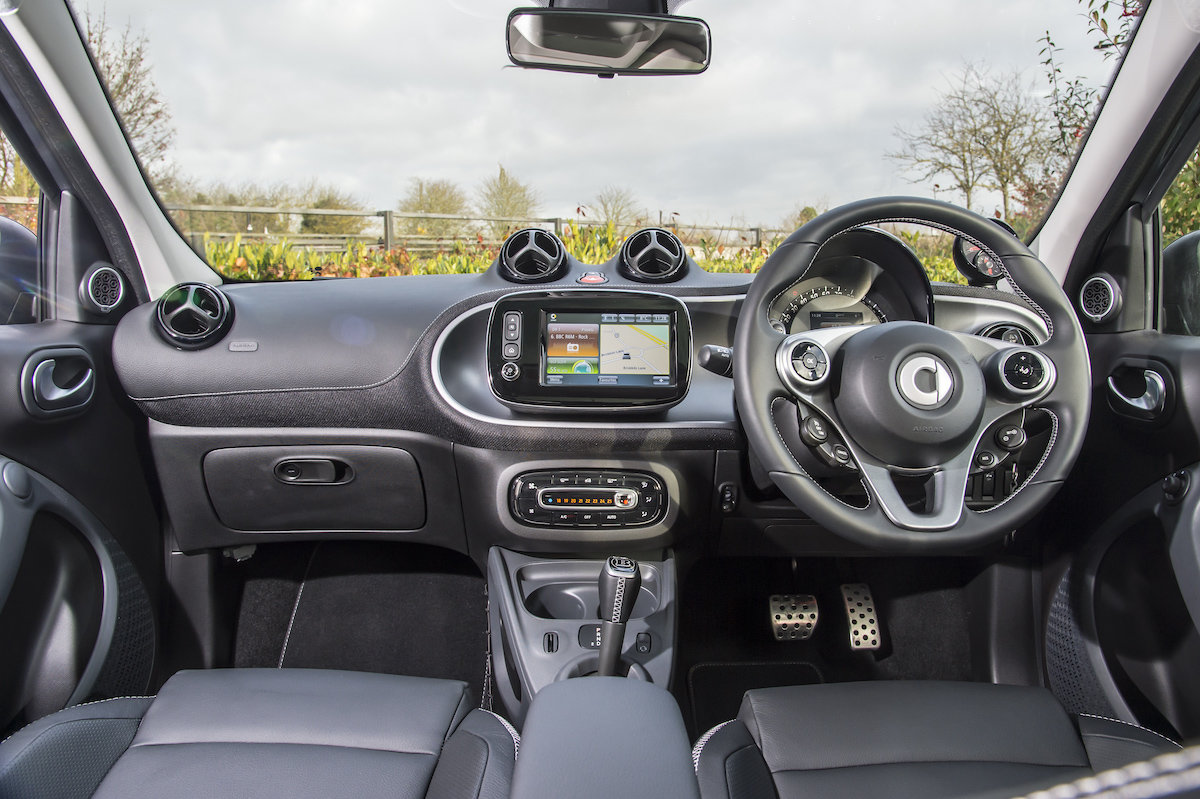
The general fit and finish of any Smart car is very good, with plenty of design flourishes that make it feel vibrant and, dare we say it, trendy inside. Hunt lower down in the cabin and you will find some cheaper plastics, but it’s otherwise fairly tactile, with vibrant contrasting colours to break up the typically drab blacks found in many rivals.
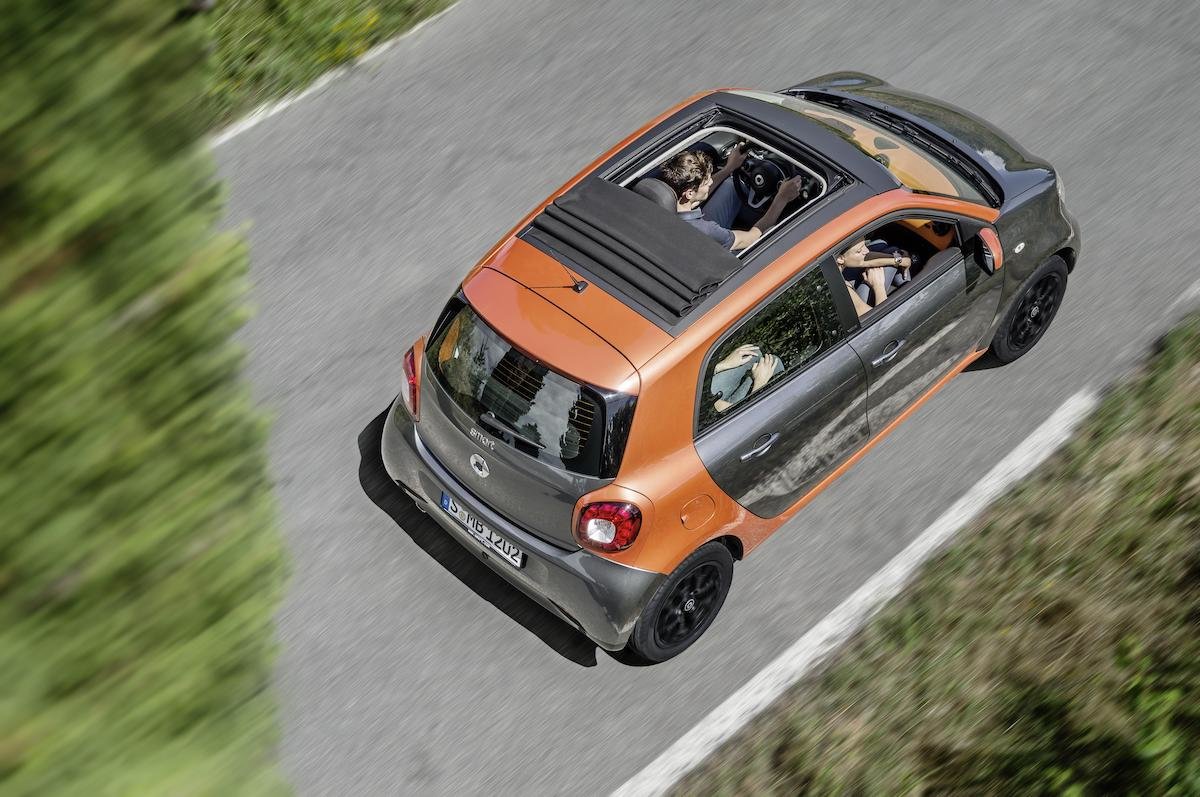
Opt for the mid-spec Prime models and above and you get a digital rev counter and heated front seats, while Night Sky versions get a large retractable fabric sunroof that makes it feel a bit like a small convertible. Naturally, ForFour Brabus models sit at the very top end of the price spectrum and feature all sorts of racy touches, like 17-inch wheels and sports suspension, which don’t do much for overall comfort but do make the Smart ForFour look quite cool.
Smart ForFour running costs
As with many used cars, the price will largely be down to age of vehicle, the spec and the number of miles it is showing on the clock. With this in mind, used prices of the second-generation Smart ForFour vary wildly, from the very cheap high-mileage options, to much more expensive newer machines.
That said, the ForFour used market isn’t as strong as, say, a Fiat 500, meaning absolute bargains can be difficult to come by, especially where the more recent second-generation model is concerned.
But thanks to the relatively small petrol engines, daily running costs should be low and most drivers can expect to return fuel economy of 54.3mpg in the range-topping 89bhp engine with automatic gearbox, while the the manual 0.9-litre can manage an MPG of 52.3.
The Smart ForFour also produces 113-123g/km of CO2 emissions, meaning it falls into the cheaper end of the annual vehicle tax table. Being small, safe and not particularly powerful, Smart cars fall into cheaper insurance groups and make sensible first cars for younger drivers.
Smart ForFour reliability
Unfortunately, reliability has never been a Smart car’s strongest attribute and the fact that many repairs and servicing duties are taken care of by the Mercedes-Benz group makes things quite pricey when they go wrong.
On top of this, the three-year warranty is very standard and actually falls behind many cheaper rivals, with the likes of Hyundai’s i10 and the Kia Picanto offering either a five-year or astonishing seven-year warranty.
The first-generation Smart ForFour, which was largely based on the Mitsubishi Colt, fared pretty badly in terms of reliability indexes and surveys, scoring on the poor end of the spectrum due to pricey repair prices and complicated issues with the electrical system. The second generation, being a complete overhaul, should have ironed out many of these creases but there have still been complaints from owners.
A number have cited faulty alarms, which seemingly go off for no reason, while some have cited electrical gremlins with the infotainment system. Others have bemoaned the real-life range, which can’t get anywhere the figures claimed by the manufacturer.
Surprisingly, Smart has only issued one official recall, which was back in 2017 and revolved around the adjuster lock nut on the handbrake. It could loosen, resulting in excessive parking brake travel and meaning the parking brake might not be fully applied. This should have been remedied at dealer level, but it's always worth checking.
- The Smart ForTwo and ForFour are no longer offered with an internal combustion engine from new. Instead, Smart has rebranded both of the cars under the Mercedes-Benz EQ electric car program. As such, the ForFour is now only offered with a 60kW (80bhp) electric motor and Lithium-ion battery packs that are capable of around 80 miles of motoring before they run dry.
- Safety has always been top of the Smart car agenda, and despite the diminutive footprint of the original ForTwo and ForFour, both were fitted with the marque’s Tridion safety cell. This has been carried over and as such, independent safety organisation Euro NCAP awarded the FourFour a suitably fitting four out of five stars, praising the additional active safety systems, such as electronic stability control, lane keep assist and a forward collision warning.
- As previously mentioned, this is a rear engined car, allowing designers and engineers to improve front crash protection and free up more cabin space for passengers in the front. That said, there is still a finite amount of room for storage and many will find that the bottle holders and cubby holes err on the elf-sized.
- If you want to stand out: There's always a big focus on personalisation with small cars and the Smart is not one to shy away from limited editions, zany colour palettes and an often baffling array of trim level choices, many of which simply change the hue of the dashboard or splash some fancy paint on the car’s surface.
- If you want the best all-rounder: The mid-range Prime models are a great place to start, as they blend nice styling options - such as 15-inch alloy wheels - with convenience features like a large panoramic roof that lets a good amount of light into the cabin. There is also leather adorning the seats and some of the dashboard, while front seats get heating functionality. Prime Sport models add a few racy touches and the aforementioned Night Sky models feature that retractable fabric sunroof that makes it feel a bit like a quasi-convertible.
- If you just want the basics: Strangely, the entry-level Pure models aren’t always the cheapest to buy on the used market but they are the most spartan when it comes to equipment. Steel wheels with wheel covers, cloth seats and a very basic FM radio with some Bluetooth functionality are all that’s on offer here.
- If you want the sporty look: Gravitate towards the Brabus models, in which the engine develops a few extra horses (107bhp), the suspension is lowered by 10mm, and sporty design touches include twin exhausts tips and additional racy bodywork. It'll never compete with the Abarth-tuned Fiat 500s or even the Volkswagen Up GTI in terms of performance, but it certainly looks the part.
- If you want a few extras: Like many other models in the small car segment, Smart offered lots of bespoke packages and optional extras at the time of launch, meaning niceties like cruise control, climate control and more advanced touchscreen satnav infotainment systems can be had.

