Suzuki Swift Review (2024-present)
Suzuki Swift cars for sale
4.0
Expert review
Pros
Fun to drive
Low running costs
Well equipped as standard
Cons
Not as cheap as it once was
Small boot for the supermini class
Rivals offer more passenger space
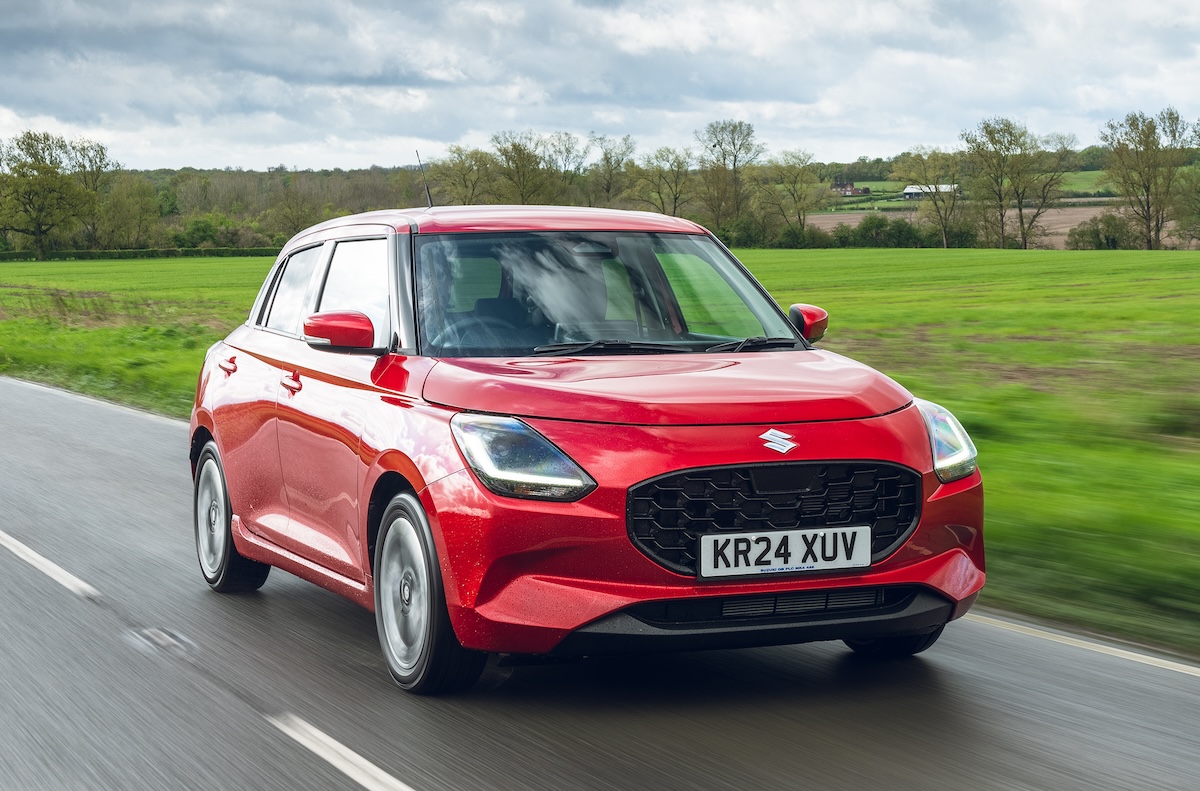
The CarGurus verdict
The Suzuki Swift has long been something of a hidden secret in the UK car market. Perhaps that’s because it’s always been slightly smaller than the obvious supermini rivals such as the Ford Fiesta and Renault Clio. However, we think this latest model is the best yet, and what it lacks in boot space, it makes up for in dynamic verve, low running costs, and stacks of standard equipment.
If you’re in the market for a small car, the Swift should really be in your top-three choices for consideration. It’s that good.

What is the Suzuki Swift?
The modern Suzuki Swift is now in its fourth generation. It’s a very straightforward proposition in that it’s a petrol-powered supermini with one engine option, which can be had as either a manual or CVT automatic. At launch, only two trims are available; both are packed with equipment.
Its maker describes it as a customer-centric offering, and points out that with cars such as the Ford Fiesta and Nissan Micra no longer on sale, and other superminis moving towards electric propulsion, the Swift’s appeal lies in its simplicity and low cost.
Suzuki markets the latest Swift as an all-new car, although in reality it uses the same platform and is the same dimensions as the previous Swift. That means it’s just under 3.9m long and just over 1.7m wide, and this also contributes towards its low kerbweight of 949kg-1,037kg depending on specification.
Rivals for the Swift include the Dacia Sandero, Renault Clio, Vauxhall Corsa and Skoda Fabia, although it’s worth knowing that the Suzuki is slightly smaller than those cars both in exterior dimensions and interior space.

How practical is it?
If you have experience of the previous generation of Swift, you’ll know exactly how practical this new model is, because very little has changed. Boot space stands at 265 litres, expandable to 589 litres with the rear seats folded (although note there’s no adjustable height boot floor, so folding the rear seats leaves a big step in the floor of the car to negotiate). For overall boot capacity, the Swift offers enough for a family supermarket shop or a folded baby buggy (definitely not at the same time, though), but is still smaller than in every single one of the Swift’s rivals.
The rear seats will fit three people at a pinch. Headroom is ok for anybody up to six-foot tall, and while your knees might brush the back of the seat in front, it’s not an uncomfortable space in which to spend time. A Skoda Fabia is usefully bigger, but if you’re coming from a Fiesta, the Swift should feel quite familiar in terms of space.
In the front seats the latest Swift is roomy enough for tall adults, and there’s enough adjustability in the driving position for most people to get comfortable. A good-sized glovebox and an assortment of of open trays and cupholders completes the picture. All of which is to say, if you can live with the Swift’s smaller-than-average boot, the rest of the car is perfectly adequate for space.

What’s it like to drive?
All Swifts are powered by a 1.2-litre, three-cylinder naturally aspirated petrol engine. This produces 82bhp and 83lb ft of torque, and is combined with a mild hybrid system to optimise fuel efficiency. The engine can be paired with either a five-speed manual gearbox or a CVT automatic gearbox. As standard – and like most other superminis – the Swift is front-wheel drive. However, Suzuki does offer an all-wheel-drive upgrade branded AllGrip. This is available on the top-spec Ultra trim with a manual gearbox only.
So far we’ve only driven the Swift with a manual gearbox and front-wheel drive. Not that this was a chore - far from it - because the gearbox itself has a delightfully slick action and is a pleasure to operate. The engine might lack some power and, ultimately, performance (0-62mph takes 12.5 seconds in the manual model, 11.9 seconds with the automatic), but it always feels game enough, and the mild hybrid system provides some welcome extra boost at low revs.
The Swift’s ride is on the firmer side, which is particularly noticeable at lower speeds. The payoff is that the car feels really agile which, combined with well-weighted and direct steering, contributes towards this being a genuinely fun car to drive. Ultimately, it can’t quite match the now-discontinued Ford Fiesta for dynamic prowess, but it’s not ever so far behind.
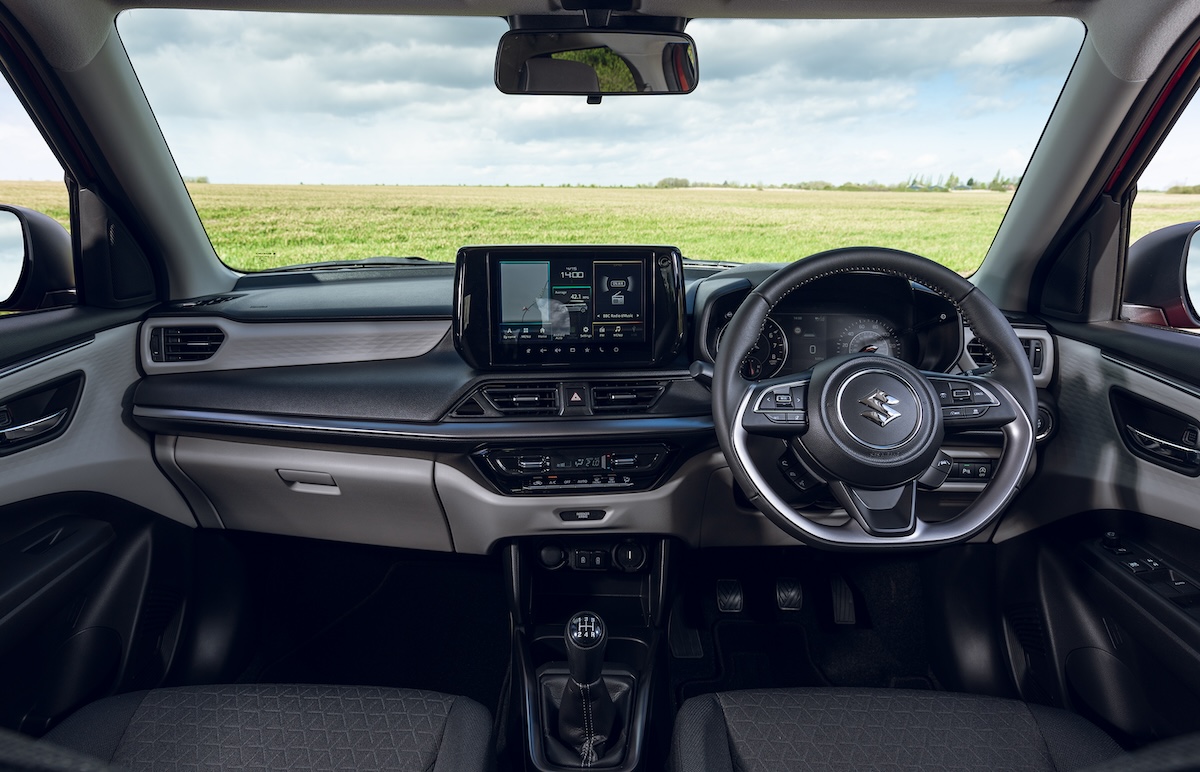
Technology, equipment & infotainment
Suzuki offers the Swift in two trim levels, called Motion and Ultra. Both are extremely well equipped, to the point where you wonder if there’s space for a cheaper and less well equipped model to join the range.
Motion trim includes heated seats, air-conditioning, rear parking sensors and a reversing camera. Upgrading to Ultra upgrades the air-conditioning to climate control (with an extra vent for those in the rear seats), power folding door mirrors and a polished finish for the 16-inch alloy wheels (the only wheel size avaiable for the Swift).
All models also come with a full suite of active safety sysems including adaptive cruise control, lane keeping assist, blind spot monitoring and rear cross traffic alert.
Motion and Ultra models share a 9.0-inch touchscreen infotainment system with integrated satnav, plus wired Apply CarPlay and Android Auto. The system itself is a big step on from Suzuki’s previous efforts, and the graphics, menu layout and load times are about as good as any in this class, if not a match for systems from BMW and Mercedes. As with so many infotainment systems, any complaints you might have can be addressed by connecting your phone and using its interface rather than the car’s built-in software.
Suzuki Swift running costs
Suzuki’s focus on keeping the Swift as light as possible pays dividends when it comes to running costs. The manual has an official WLTP fuel economy figure of 64.2mpg, as well as CO2 emissions of 99g/km, which is even more impressive given the engine feels so tractable (thank the helping hand of the mild hybrid system for that). In real-world driving, we couldn’t make the Swift dip below 52mpg, even when driven with the kind of enthusiasm that the car’s tidy handling encourages.
In terms of purchase price, the Swift is a match for anything in the supermini class on a like-for-like equipment basis, bar perhaps the Dacia Sandero, and it is being pitched with some very competitive finance deals. However, what Suzuki doesn’t do is offer the Swift in a no-frills trim that would allow for an entry-level model that could undercut rivals such as the Vauxhall Corsa and Renault Clio for price.
The one slight blot on the Swift's copy book in this area is insurance. The previous Swift had ludicrously high insurance groupings due to the fact that crash damage was relatively expensive to repair, and because the new car shares its platform, that anomaly has been inherited. Depending on trim level, you'll be looking at groupings of between 25 and 28, and on an 82bhp budget supermini, that's simply bonkers: some rivals even have single-figure groupings. It's a particular shame because it effectively rules the Swift out for the young drivers who would otherwise find the car so very appealing.

Suzuki Swift reliability
The latest version of the Swift shares some components with its predecessor, which bodes well as far as reliability is concerned. That’s because the previous generation of Swift came top of its class in the 2023 What Car? Reliability Survey. This is supported by Suzuki’s generally excellent reputation for reliability (the brand finished fourth of the 32 manufacturers included in the same survey), and its consistently high ratings for customer satisfaction.
Not only that, but in addition to the standard three-year/60,000-mile warranty offered on new Swifts, Suzuki now offers a 'service activated warranty' for older cars. This means that, so long as owners continue to use a Suzuki dealer for servicing, the company will top up the warranty each year to a total of seven years or 100,000 miles.
- Suzuki offers a service activated warranty on used models. What this means is that, provided you have your car serviced at a main dealer, Suzuki will add an extra year of warranty coverage. This applies to cars up to seven years old, provided they have covered less than 100,000 miles. It’s a great value offer, if not quite as geneous as Toyota’s 10-year, 100,000-mile coverage.
- Suzuki is confident that the slow demise of the small car sector is a result of legislation rather than a lack of customer demand. As such, it believes this latest Swift will be the ideal replacement car for people who might be trading in their Ford Fiesta, but who don’t want a larger crossover such as Ford’s own Puma.
- Suzuki is keeping quiet about whether there will be a Sport version of the latest Swift. Due increasingly strict emissions regulations, it is unlikely that any new model could adopt the turbocharged 1.4-litre petrol engine of its predecessor.
- If you want the best value: The Motion trim with a manual gearbox is really all the Swift most people will need. It’s stacked with equipment, good to drive, and competitively priced.
- If you want an automatic: We’d still stick with the Motion trim, but tick the box for the CVT automatic gearbox. The major caveat being we haven’t had a chance to drive a Swift with this gearbox yet, and so can’t comment on how it performs.
- If you have on-street parking: We’d be temped to upgrade to Ultra specification for its power folding door mirrors.
- If you live off the beaten track: An all-wheel-drive supermini is a rare thing indeed, but that’s precisely what Suzuki offers in the Swift. This is no off-roader (you’ll need a Jimny for that), but an Swift AllGrip with all-season tyres would make for a pretty neat winter warrior.


