Toyota Verso Review (2013-2018)
Toyota Verso cars for sale
4.0
Expert review
Pros
Clever and practical cabin
Reliable, hassle-free family motoring
Affordable used prices
Cons
Short on luggage space if all seven seats are in place
Dull looks, even for an MPV
Not all engines were available with an auto

The CarGurus verdict
It would be easy to dismiss the Verso as just a boring box on wheels. After all, lots of rivals are sharper to look at, more appealing inside and offer greater interior space. However, as cars get older, they tend to become more troublesome and few, if any rivals, can be bought with more confidence than the Verso, thanks to Toyota’s reputation for tremendous reliable longevity.
Yes, it’s a ‘sensible’ choice, and you will buy a Verso more with your head than your heart, but once acquired, we guarantee it won’t be long before the affordable running costs, bulletproof cabin quality, easy flexibility and effortless driving characteristics make your Verso seem like an indispensable part of the family. If you like the sound of this is kind of hassle-free, family-friendly motoring, a used Toyota Verso could be just the ticket.
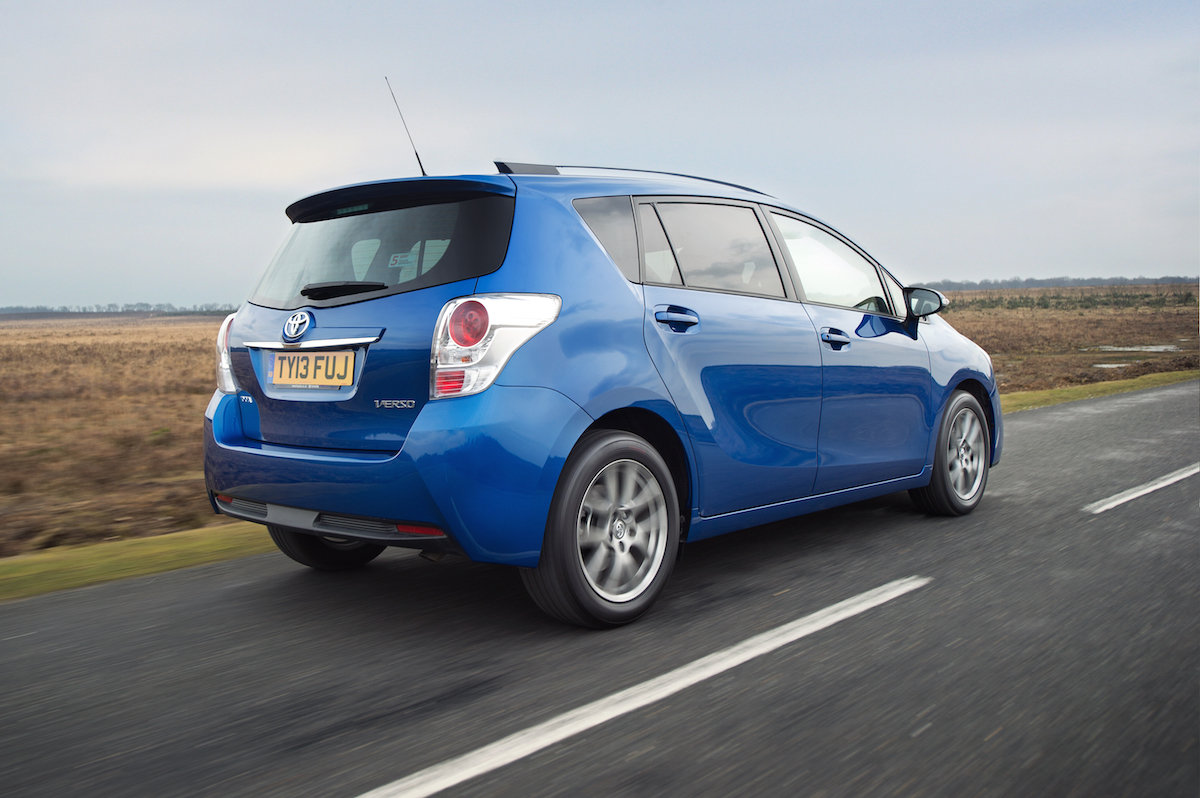
What is the Toyota Verso?
Our current obsession with SUVs has certainly had a detrimental effect on the values of the less fashionable people carrier, but if you’re looking for a vehicle that will see your babies into long trousers, you might want to forget about the future and concentrate on the here and now. Once you’ve got your head around this, you’ll struggle to find a stouter family car than the 2013-2018 Toyota Verso.
But what about that styling and the image? Yes, you will have to take a hit on both fronts, but the sight of a surprisingly small number waving bye-bye to your bank account will do wonders for your tarnished ego.
How practical is it?
Although the Verso’s cabin is not exactly a fun factory, what it lacks in visual appeal it more than makes up for in scuff-resistance and jammy sandwich wipe-clean durability.
There’s not a massive amount of storage solutions but you do get a couple of cup holders up front, along with a small under armrest bin and a two-storey glove box. Seatback picnic trays are also included in most models so the kids won’t have to endure the indignity of scoffing their sarnies off their laps. Just as positively, there are bottle holders located in the rear wheel arches.
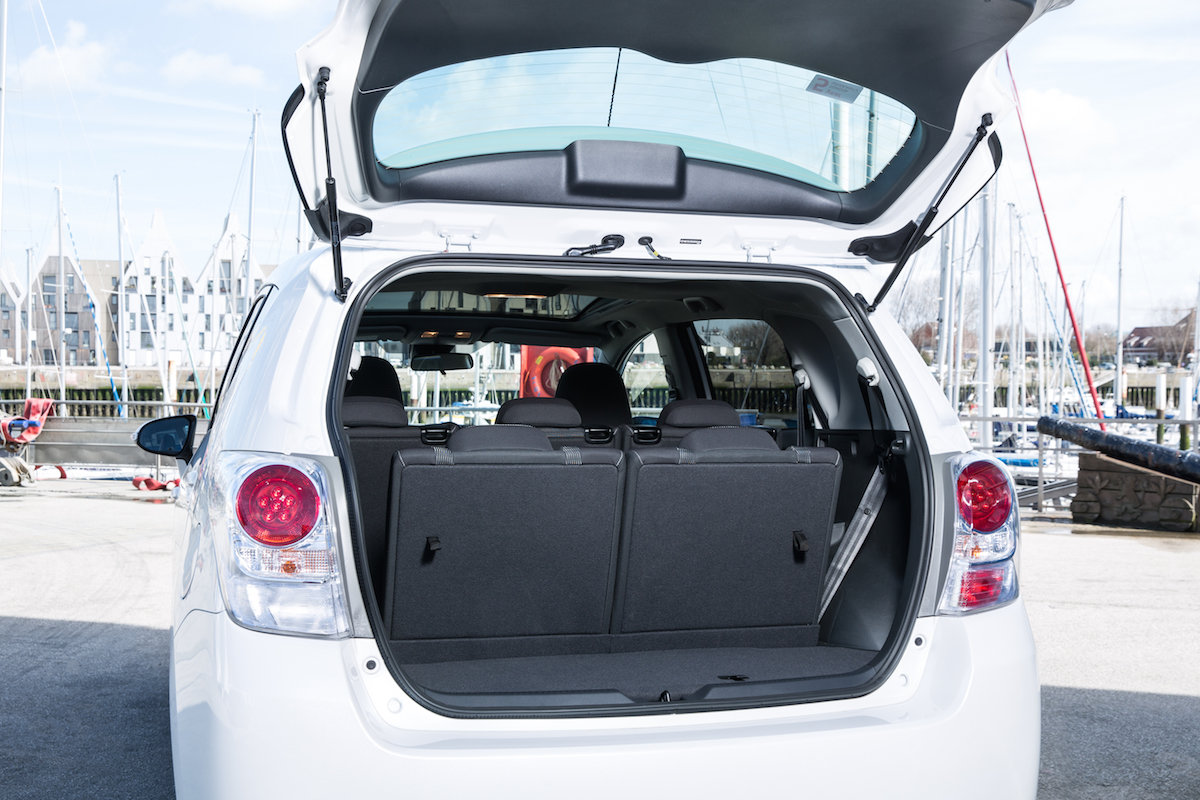
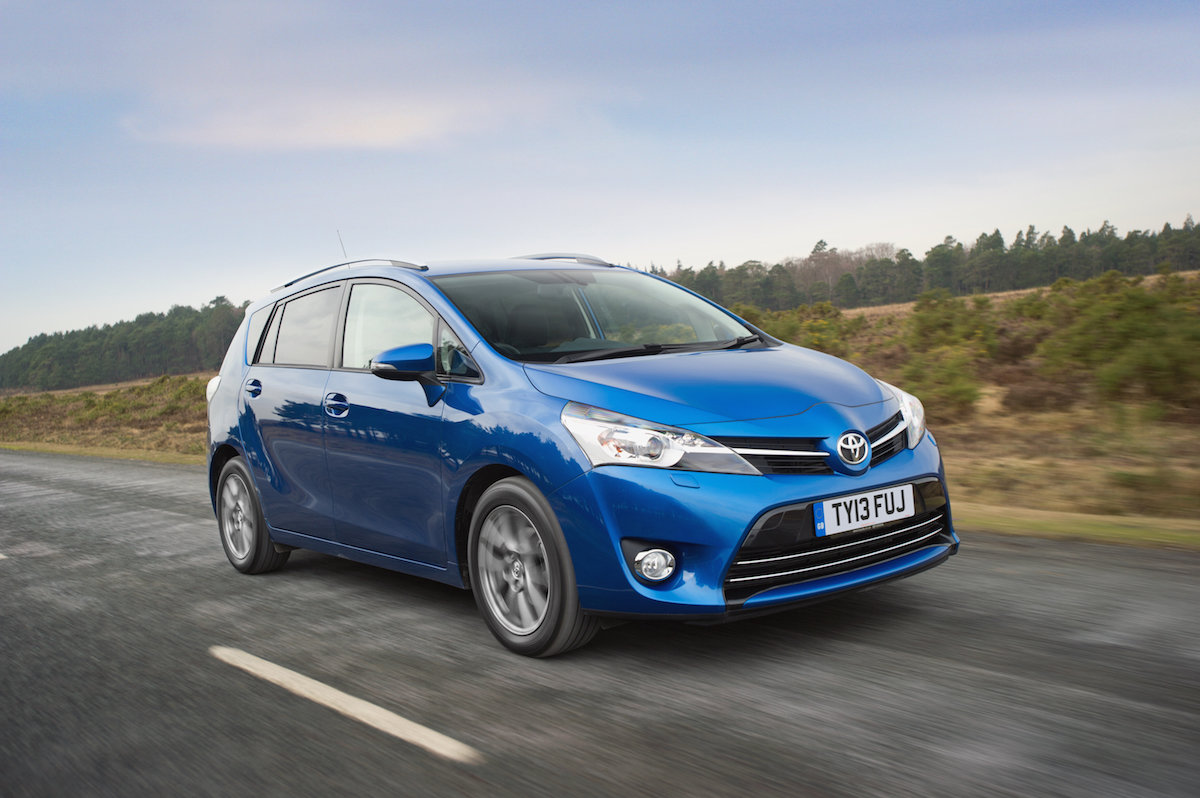
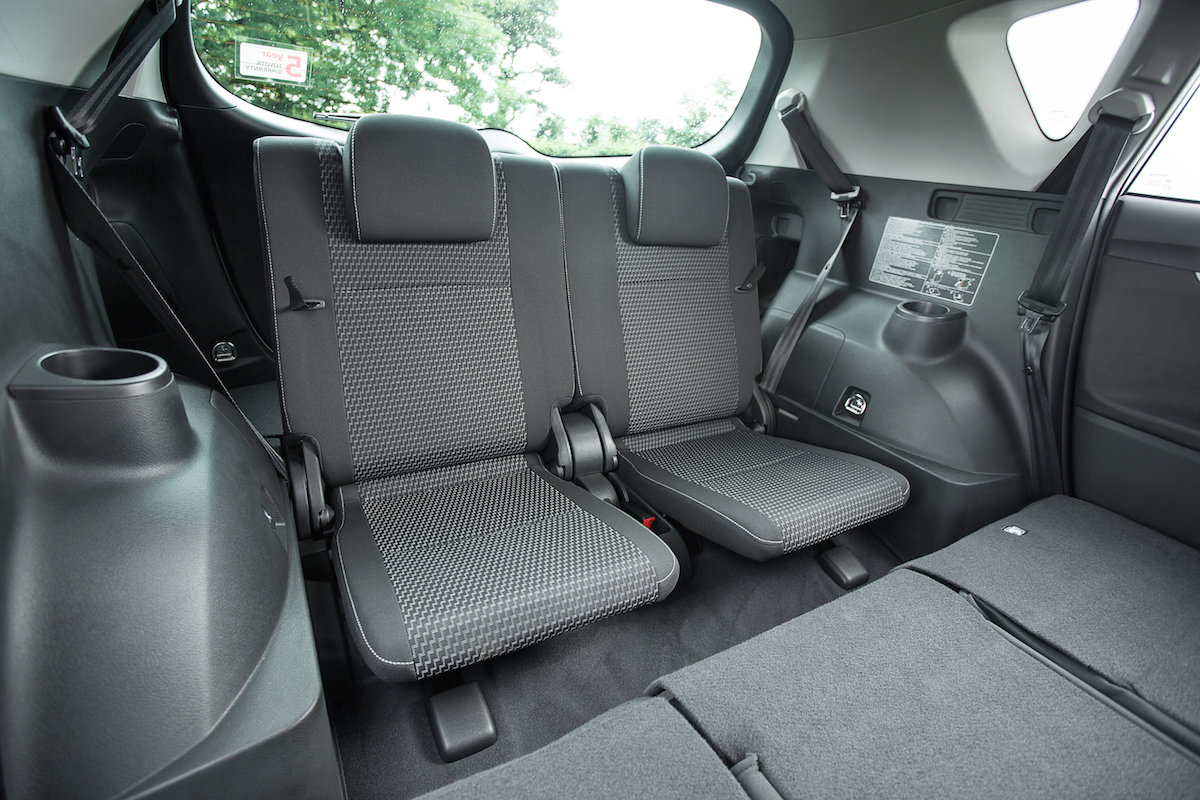
Versos of this era are available as five- or seven seaters. Most were sold with seven and the post-2013 facelifted models can be readily identified by their slimmer grilles and headlights. The middle row in the seven-seater splits three ways and the seats slide back and forth individually to share out space between legroom or boot space. Furthermore, the seatbacks flip forward to helps access the third-row pews.
Additionally, because both rows fold completely flat into the floor, the Verso will double as a delivery van, and with everything laid flat you can hoover up every last vestige of crumb and crayon.
Although the rearmost seats are about as comfortable as a pair of seaside deck chairs and even the kids will have to sit with their knees up around their chins, they’ll work fine if you’re only ferrying them and their mates to their after-school club activities.
The Verso isn't the biggest MPV ever made and consequently, with all the seats in place there is just 155 litres of available luggage space and only 440 litres with the two rearmost seats folded.
What's it like to drive?
All the Verso engines offer adequate motorway performance, reasonable economy and decent refinement. As for everyday driveability, the Verso provides a solid blend of comfort, and more importantly, excellent body roll control.
If you're looking for fun from your MPV then a Ford S-Max is a much better choice, because the Toyota is about as far from exciting as it's possible to get. But for solid, dependable motoring the Verso is a solid choice.
Technology, equipment & infotainment
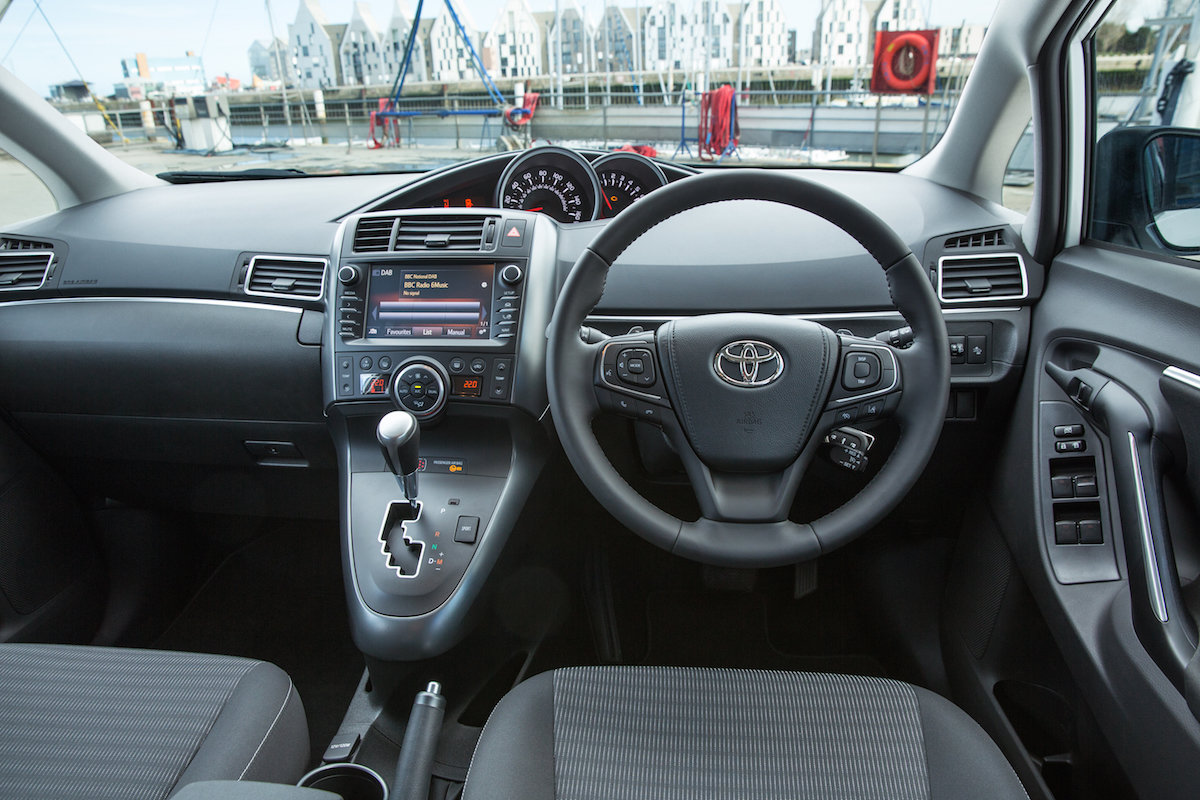
The Verso is available in several trim levels, the most popular being Active, Excel, Icon and Design. Active trim gives you essentials like air-conditioning, electrically adjustable door mirrors, a height-adjustable driver's seat, a DAB radio and Toyota's full Pre-Sense safety systems, which features plenty of electronic driver aids and a plethora of airbags, helping the car to achieve a full five-star EuroNCAP crash rating. It also comes with basic 16-inch steel wheels, automatic headlights, front fog lights and heated door mirrors.
Upgrading to Icon, adds niceties such as 16-inch alloy wheels, dual-zone climate control, keyless entry, cruise control, a reversing camera and Toyota's Touch 2 infotainment system including Bluetooth and USB connectivity. Top-end Design models come with satnav, a panoramic sunroof and tinted rear windows.

Toyota Verso running costs
If you’re looking for the ultimate in Verso fuel economy, the 1.6-litre diesel is the one to look out for. It will officially return 62.8mpg, which is a fair improvement over 57.6mpg achieved by the 2.0-litre unit found in earlier cars. It is also quite a bit quieter, due to its superior mechanical refinement.
The two petrol-engined Toyota Verso models do like to be revved, so you might want to take their official consumption figure with a pinch of salt. The 1.6-litre has a claimed average of 41.5 mpg while the larger 1.8-litre, which comes with a CVT automatic gearbox, is actually a tad superior, officially returning 43.5 mpg.
Recommended service intervals stand at every 12 months or 10,000 miles (or 12,500 miles for the diesel), whichever comes first, but along with every other aspect of Verso life, this shouldn’t cause you any stress.
Once your Verso is five years old it qualifies for Toyota’s 5- Club, which effectively gives you a 20% saving on your bills. At the time of writing, you can take out 24 or 36-month service plans. The two-year deal costs £190 to cover the initial interim service then monthly payments of £23 to spread the cost to your next intermediate service. If you include the price of a major service this will initially cost £272.
Toyota main dealers will promise to price match, so if you can find a lower price for a service using genuine parts, send them your quote and they’ll match it.
Insurance groupings range between 10 at the bottom of the range to 11 at the top, so premiums should be well within budget, and if you want to add your teenage children to the policy, the additional cost of this should be pretty reasonable.
Toyota Verso reliability
This is a Toyota we’re talking about after all, and the company’s record for building cars able to circumnavigate the Globe without pausing for breath is the stuff of legends.
Every Toyota comes with a five-year warranty and up to 100,000 miles of cover as a new car, which is excellent compared to the more conventional three-year warranties offered by many rivals. So if you get one of the very last Versos it should still have some cover left. Even if the car you buy is beyond this age group, the fact Toyota give such a comprehensive warranty in the first place should tell you how much faith the company has in the durability of its products.
One of the reasons for this is down to the simplicity of the manufacturing process, and the affordability gained from this approach is reflected in the repair costs
Parts prices for a Verso from this period are very reasonable and if you shop around you should be able to pick up an air-, oil- and fuel filter for around £40. Add in another £20 for a set of wiper blades and £30 for five litres of decent motor oil, and you’ve got yourself a quick DIY service for under £100. A replacement engine pulley drive belt should be somewhere in the £25 bracket and a timing chain kit is about £140.
Toyota usually does extremely well in the various reliability and customer satisfaction surveys. Take the What Car? reliability survey as an example; in the 2020 survey, Toyota came third out of the 31 carmakers assessed in the study, and guess which manufacturer finished in pole position? Yes, sister brand Lexus.
- Engine-wise, the Verso is available with 1.6-litre and 1.8-litre petrol engines with 130bhp and 145bhp, respectively. On the diesel engine front, there's a 1.6 D-4D, which was co-developed with BMW and a larger 2.0-litre. Most come with six-speed manual gearboxes but the 1.8-litre petrol unit comes with Toyota’s ever so efficient but ever so slippy V-Matic CVT transmission. More on this later.
- When this version of the Verso was launched the streets were simply awash with MPVs. More commonly known as people movers, everything from the groundbreaking Renault Grand Scenic to the simply mammoth Chrysler Voyager and plenty more besides, including cars like the Vauxhall Zafira, Ford S-Max and Volkswagen Touran, confirmed the UK's love affair with the MPV. Somewhat bizarrely, the architect of the MPV movement’s downfall, the SUV, were viewed as social pariahs, because of their perceived dirty tailpipe emissions. How times have changed!
- It’s fair to say the Verso is one of the more workmanlike MPVs, but in an age when many MPV owners were manhandling hefty seats into hallways and garages in order to free up luggage space, the Verso’s easy-fold seating system was a clever and welcome labour-saving addition.
- If you’re buying on a budget: As much as their rear seats are about as comfortable as a park bench, the seven-seat Versos are far more common than the basic five-seater. So, if you’ve already got enough on your plate, without adding the neighbour's kids to the equation, you can save yourself some money with a five-seater. The interior and equipment will be pretty basic but you will get aircon, which is essential in a car with so much glass. Pair it with a diesel engine and you’ll tap into hassle-free, low-cost motoring.
- If you want an automatic: You’ll need to step up to the 1.8-litre petrol engine to get an automatic, or rather Toyota’s take on an automatic, which is the V Matic continuously variable transmission (CVT). In theory, a CVT is the most efficient way of delivering power to the driven wheels. Not that you’d guess it, as the gearbox encourages the engine’s revs to soar every time the accelerator pedal is firmly pressed. If you test drive one and you’re shocked by these antics don’t worry: it’s not broken, that’s just what they do and they are well respected for their durability.
- If you want the best all-rounder: A seven-seat, diesel, mid-range specification car will give you the best of all worlds, especially if you intend to carry more than three passengers on a regular basis. The engine’s strong low-end power will cope with additional payloads and still return excellent economy, while Icon trim gives you fast-acting dual-zone climate control, Toyota's Touch 2 infotainment system and a reversing camera, which will come in handy when you’re trying to park into a tight space and all sorts of mayhem is being thrown your way from the cheap seats.

