Toyota Yaris Review (2021-present)
Toyota Yaris cars for sale
4.0
Expert review
Pros
Very economical, especially around town
Fantastic GR Yaris hot hatch
Plenty of safety kit as standard
Cons
The ride is on the firm side
Not as practical as a Honda Jazz
No satnav on pre-facelift models
The CarGurus verdict
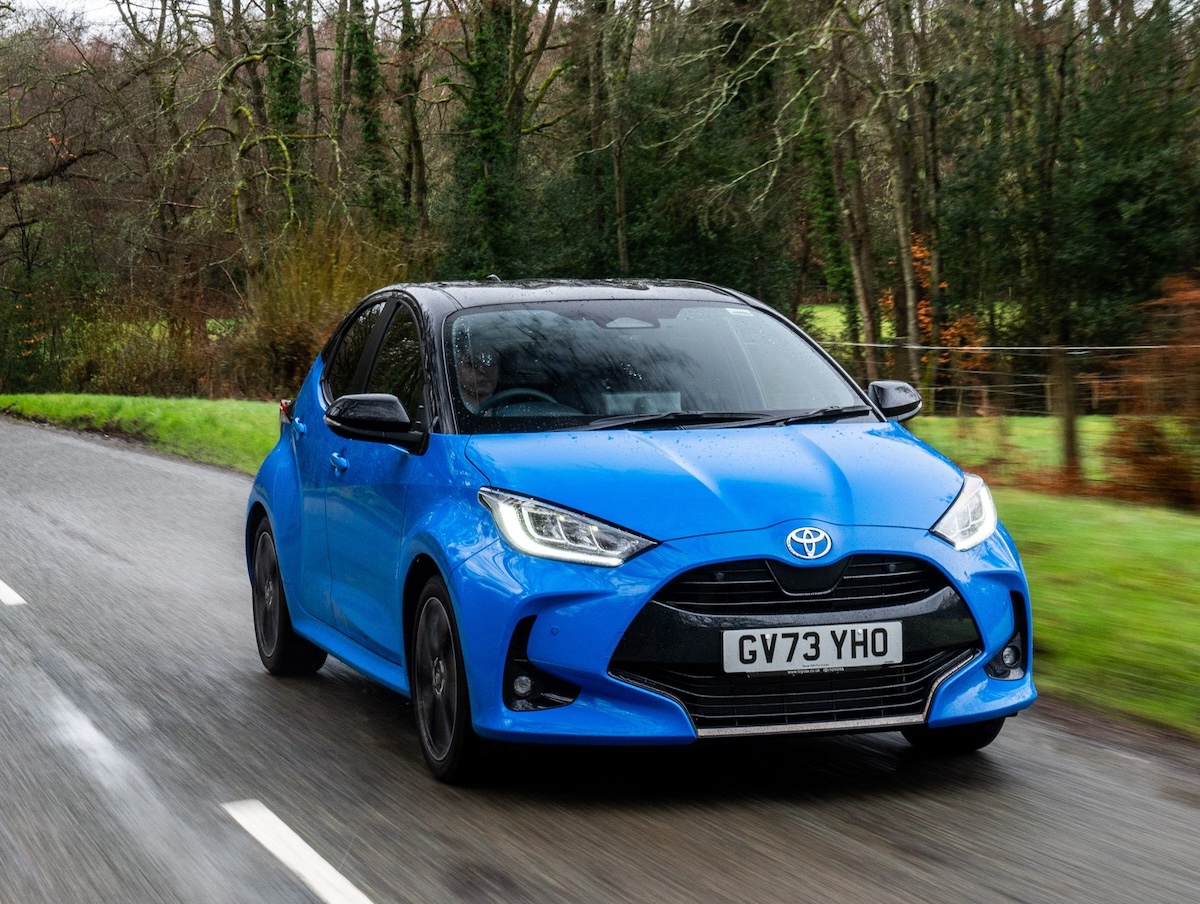
Beneath its eye-catching lines, the Yaris is a car of real talent. It is a shame the ride’s a touch on the firm side, but on the plus side, the Yaris feels nippy and nimble, even if it isn’t the last word in outright fun, and the savings you’ll make on its running costs should mean you’ll at least be laughing all the way to the bank.
It’s also easy to drive, well equipped and decent value. And of course, there’s that long warranty to fall back on if anything should go wrong. Other hybrid models like the Renault Clio and Honda Jazz are also worth a look, but on the whole the Yaris is a sound and sensible supermini with a welcome dose of style that means it should appeal to the heart as well as the head.
And the GR? Well, it's no exaggeration to say that it's one of the most exciting, engaging and entertaining hot hatches money can buy.

What is the Toyota Yaris?
Rarely do stylish and sensible go hand-in-hand, but in the Toyota Yaris, the twain could well meet. This latest model swaps the staid and sensible styling the Yaris has gained a reputation for until now for a sports-car-esque nose, a swooping side profile and a wide, chunky behind.
Yet beneath the striking five-door bodyshell – and much like its bigger brother, the Toyota Corolla – the Yaris is now hybrid-only. There are no pure petrol or diesel versions available any more (with one small exception in the GR Yaris hot hatch), and that makes the Yaris particularly economical. Throw in the sensational warranty, and you can see why it’s more than just a pretty face.
Hybrid supermini rivals come in the form of the MG3 Hybrid, Renault Clio and Honda Jazz, but if you're agnostic about hybrid power, then cars such as the Vauxhall Corsa, Volkswagen Polo, Hyundai i20, Nissan Micra, Peugeot 208, Seat Ibiza and Mazda 2 will also be competing for your cash.
The Yaris was given a midlife facelift in 2024 consisting of upgraded interior technology, and the option of more power from its 1.5-litre hybrid system in top-spec models.
How practical is it?
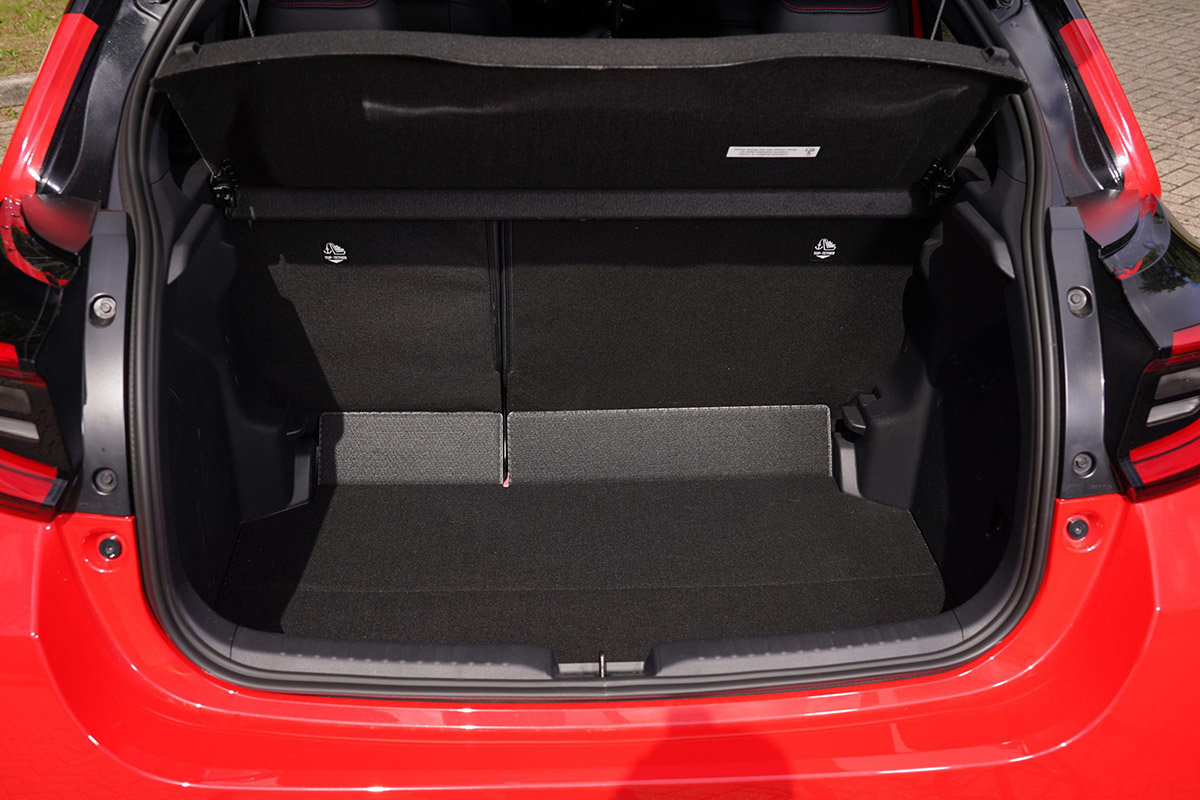
The Yaris scores well on practicality, with plenty of space in the front seats, and while the back seats feel a little tight, they’re no more so than you'll find in most other small hatchbacks. At 286 litres, boot space isn't quite as generous as it could be, though, so if you want to carry bulky items with any regularity, you might be better off looking elsewhere. The Renault Clio comes with a larger boot, for example, as does the Honda Jazz – and the Jazz’s clever flip-up rear seats make it more versatile, too.
Inside, there’s a smart dashboard with unusual pod-like gauges, and for the most part, it’s screwed together well, with only a few slightly cheap plastics here and there taking the shine off. Go for a Yaris from the 2024 facelift onwards and the dials take the form of a customisable digital setup. This is easy enough to use, although not as configurable as the best systems on the market.
Despite the funky styling, all the controls are where you’d expect them to be, which means the Yaris is pretty easy to find your way around. Less so is the infotainment system, which is mounted high up in the centre of the dashboard; the screen is large, crisp and clear, but some of the menus can be a little fiddly, and finding the radio station you want takes practice. The updated system fitted as part of the 2024 facelift is thankfully easier to use.

What's it like to drive?
Out on the road, the Yaris is good, but not perfect. It feels stable and secure most of the time, and the combination of the 1.5-litre petrol engine and electric motor is perky and responsive to the throttle, which makes it great for nipping into gaps around town. It’s even reasonably quiet; there’s not too much engine noise when you’re just pootling around, and even when you push the Yaris a bit harder, the raspy exhaust note you do get doesn’t become overly intrusive.
Note that two version of this system are offered. Pre-facelift models – and post-facelift models lower down in the range – come with a 114bhp version of the hybrid system that can accelerate from 0-62mph in 9.7 seconds. Top-spec post-facelift models have 129bhp and can get from 0-62mph in 9.2 seconds.
The biggest downside when it comes to driving the Yaris is that it rides a little firmly; while it takes larger lumps and undulations in its stride, the Yaris never settles down fully. That means you can feel all the little imperfections in the Tarmac jiggling the car around unless the road is mirror-smooth – which, of course, is rare in the UK.
Light steering does make it easy to drive, mind you, as does the fact that every Yaris comes with a CVT-style automatic gearbox, and if you need to change direction quickly in an emergency, there’s plenty of grip and the steering reacts quickly, so the Yaris feels agile. Having said that, there’s not much feel, so if you like to enjoy hustling your supermini along a country lane, you’ll find a Ford Fiesta or Mazda2 is more fun.
You could say the regular Yaris hybrid is the Dr Jekyll of the piece - sensible, dependable and prudent - while the GR Yaris would definitely be the Mr Hyde, with its unhinged performance and aggressive demeanour. That's partly due to the fact it's in possession of the world's most powerful three-cylinder engine, a turbocharged 1.6-litre petrol punting out 257bhp, but there's much more to the GR's repertoire than just brute force.
You see, this isn't merely a regular Yaris with a more powerful engine and a few bolt-on spoilers. No, this is a car engineered from the ground up as a rally car, a version of which is then offered for sale with the public in order to comply with competition rules, or what's known as a 'homologation special' to those in the know. As such, it's built on a completely different chassis, and has a bespoke three-door body. Tipping the scales at just 1,300kg, the GR can sprint for 0-62mph in just 5.5 seconds, and has dazzling handling thanks to its clever four-wheel drive system.

Technology, equipment & infotainment
The Toyota Yaris hybrid lineup begins with Icon trim, and even this version comes well equipped, with alloy wheels, climate control air-con, powered front windows and mirrors, automatic lights and wipers, a reversing camera, leather wrappings for the steering wheel and gearstick and a 7-inch touchscreen (9-inch for post-facelift models) that brings together Bluetooth, DAB radio, Apple CarPlay and Android Auto.
Design is the next of the trim levels, and this adds upgraded instruments, full LED exterior lighting, powered rear windows, and rear privacy glass. Dynamic trim adds dual-zone climate control, a posher stereo, and sports seats with part-leather-effect upholstery.
Range-topping Excel cars have blind spot monitoring and front- and rear parking sensors, and a bigger touchscreen infotainment system.
The GR Yaris comes in one standalone trim level, but it can be enhanced with an optional Circuit Pack that adds a stiffer suspension, stickier tyres and a limited-slip differential.

Toyota Yaris running costs
This is where the Yaris really starts to shine, thanks chiefly to the impressive fuel economy of its hybrid engine.
You can expect to see as much as 60-65 mpg in real-world motoring, and that isn’t just on the motorway; because of the clever way Toyota’s hybrid system harvests energy whenever you’re coasting or braking in traffic, it should prove just as economical around town – which, of course, is where the Yaris will be most at home.
And because the Yaris is a hybrid, it counts as an “alternative fuel vehicle” according to the Government, and that means a slightly discounted annual tax rate compared to a petrol or diesel car. And if you’re choosing one as a company car, you’ll find the low emissions bring down the Yaris’s tax costs.
Of course, none of that applies to the GR which - when it has the world's most powerful three-cylinder engine and four-wheel drive - it's no surprise will be much thirstier. Still, an official average of around 34mpg isn't too bad, all things considered.
Toyota’s servicing prices are reasonable, and as an additional bonus, the company lists them on its website so that it’s easy to see how much your next service will set you back. What’s more, Toyota offers service plans that help you spread the cost by paying monthly.
And whereas some rivals use a timing belt within the engine, which needs to be changed every few years at some cost, the Yaris uses a metal chain instead, which should last the lifetime of the car.

Toyota Yaris reliability
This generation of Yaris finished an impressive third out of 18 cars in the small car class of the 2023 What Car? Reliability Survey, beaten only by the previous generation of Yaris (which finished second) and the Suzuki Swift (first).
Toyota as a brand also has a solid reputation for reliability (in the same survey it finished second of the 32 brands included) – its hybrids, in particular, are favoured by taxi companies for that very reason.
Toyota also offers a stunning warranty package on all its cars, whereby if you get your car serviced according to schedule within the official Toyota dealer network, then your standard three-year warranty is automatically extended by a year, up to a maximum of 10 years or 100,000 miles. This warranty package also applies to the GR, and it's not invalidated by participation in track days.
- As we’ve already discussed, the regular Yaris is now only available as a hybrid. Its powertrain is based around a three-cylinder 1.5-litre petrol engine, which is then paired with an electric motor for a total output of 114bhp or 129bhp, depending on trim. It’s a traditional hybrid setup, which means you can’t plug it in and the relatively small battery gets charged up by the petrol engine; consequently, it’ll only go a couple of miles on electric power before the petrol engine needs to start up again. Toyota has been making hybrids in this way for decades now, and its expertise shows; compared even with other hybrid superminis, the Yaris is very economical, and up against petrol rivals, it’s in a different league.
- You can’t actually get satnav on pre-facelift versions of the Yaris, even as an option. Toyota said it believed most customers would use Apple CarPlay or Android Auto to link their phone up to the entertainment system instead. This changed as part of the 2024 facelift, when Toyota added a revised Smart Connect infotainment system with cloud-based navigation on higher-spec models.
- Standard safety features provided on all versions of the Yaris include automatic emergency braking, adaptive cruise control, lane tracing assist and automatic high beam headlights. The car has been awarded the full five stars in Euro NCAP crash tests.
- For most buyers, we’d recommend the Design model. It’s the second rung up the Yaris ladder, sitting above the Icon in the range, and while it doesn’t get the slightly sportier looks of the Dynamic model or the luxurious trimmings of the Excel, you do get alloy wheels, automatic headlights and wipers, climate control, a reversing camera and adaptive cruise control. What’s more, its smaller 16-inch wheels will help smooth out that slightly fidgety suspension.
- If you’re on a budget, of course, you can opt for the entry-level Icon model. This gets you a slightly smaller infotainment system, and you lose the smart LED headlights that come with the Design, but you’ll save around £1,000.
- If you want the poshest model possible: While not cheap to buy, the top-spec Excel (and post-facelift Premiere) does feel more upmarket than other versions of the Yaris thanks to its upgraded equipment levels and a more premium, padded finish to parts of the interior. While no match for an Audi A1 or MINI in terms of interior quality, it's still a perfectly pleasant place to spend time.
- If you’re an enthusiast looking for an exciting driving experience, though, there’s only one Yaris that’ll do, and that’s the GR model. It doesn’t come cheap, but it’s widely acknowledged as being one of the most exciting hot hatches on the market today, so if you’re looking for a small car that can deliver big thrills, this is it. Do bear in mind, though, that that bespoke three-door body seriously hampers practicality. The rear seats are very tight on space - especially where headroom is concerned - and the boot is laughably tiny.


