Vauxhall Astra Review (2015-2021)
Vauxhall Astra cars for sale
3.0
Expert review
Pros
Lots of equipment as standard
Fuel-sipping diesel engines
Low resale values make the Astra good value as a used car
Cons
Not as sharp to drive as a Ford Focus
A Skoda Scala has more boot space
Anonymous image
The CarGurus verdict
The Vauxhall Astra is by no means a bad car. It has lots of equipment, it’s practical, inoffensive to drive, and the option of the Sports Tourer is great for those who need to haul more luggage around. Get one in a good spec, and with a mid-range engine, and it should prove pleasant to live with.
Rivals, such as the Ford Focus, are better to drive and more refined. A Kia Ceed has a far better warranty, a VW Golf is better quality, and a Skoda Scala has more boot space. All told, the competition often just serves up a more compelling overall package than that offered by the Vauxhall.
That said, there’s still merit in considering a used Astra. Because of their depreciation and lack of badge appeal, used Astras often cost considerably less than their competitors. This affordability, coupled with good equipment levels and sensible running costs, can make them a tempting option.

What is the Vauxhall Astra?
Vauxhall introduced the Astra in 1979 but this, the seventh-generation model – known as the Astra K – arrived on the market in 2015. It featured all-new architecture, engines, technology, and styling. It was also 130kg lighter on average, which helped make it both more efficient and better to drive.
Admittedly, the Astra doesn’t have the same cachet as a Volkswagen Golf, while concerns about reliability, a warranty that’s shorter than that of some competitors, and hefty depreciation also count against it. The last of those three is good news for used buyers, though.
Overall, the Vauxhall isn’t as accomplished as alternatives such as the Skoda Octavia, the Honda Civic, the Ford Focus, or the Volkswagen Golf. On the plus side, it’s much cheaper, and for those who just want a straightforward used car, the price is often enough to swing the balance in the Astra’s favour.
It was replaced by the eighth-generation Astra in 2022.

How practical is it?
The interior is classy and there’s plenty of space, while the Astra can seat four adults with ease. It has a decent boot as well, while long trips shouldn’t prove too arduous, because refinement is one of its strong points.
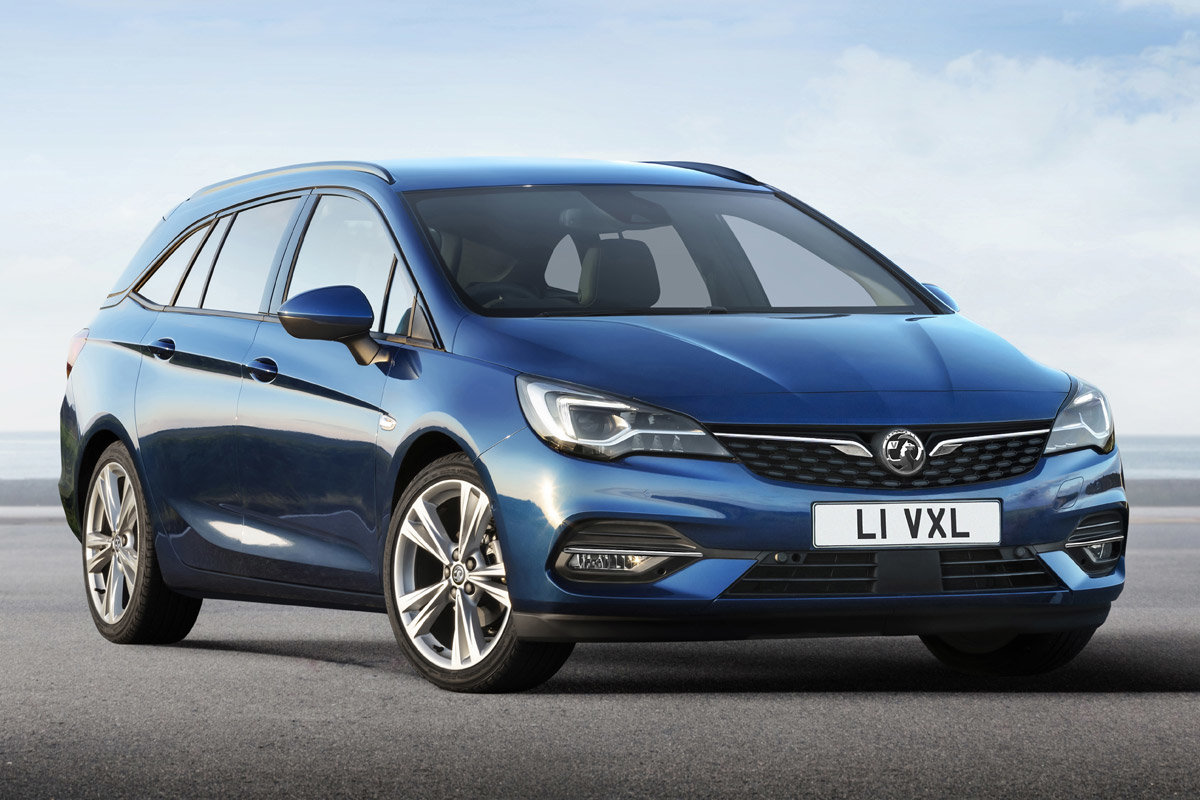
The Sports Tourer, a more practical estate version of the Astra, was introduced in 2016. It offers 540 litres of boot space with the rear seats up, or 1,630 litres when they’re folded down, whereas the hatchback offers 370 litres and 1,210 litres, respectively. The Sports Tourer also has a load bay that’s 1,705mm long, which helps it accommodate longer loads with comparative ease.
However, rivals such as the seventh-generation Volkswagen Golf Estate have slightly longer load bays and offer more space with the rear seats up. Like the regular hatchback, though, the Astra Sports Tourer is an affordable car that’s easy to live with.

What's it like to drive?
An array of engines was available at launch, including a four-cylinder, 1.4-litre turbocharged Ecotec petrol and a 1.6-litre CDTi ‘Whisper Diesel’ which majored on refinement.
Many may turn their nose up at the concept of owning a Vauxhall Astra, but it’s a decent car to drive. While it lacks the verve or engagement of a Ford Focus, it’s capable in corners – far better than preceding generation – and makes a good job of ride comfort.
If a smooth, quiet hatchback is more your thing than one that likes to be thrown around, then the Astra is very much up your street.

Technology, equipment & infotainment
Previous generations of Astra have always had lots of equipment, and this one is no different. Even the basic trim level, known as Design, includes air conditioning, cruise control, Bluetooth connectivity, electric windows, a 7.0-inch touchscreen infotainment system, alloy wheels, and LED daytime running lights.
The post-facelift (more on that below) line-up comprised SE, Business Edition Nav, SRi, SRi Nav, and Elite Nav Premium trim levels. You get lots of standard equipment, even the base SE model, which includes air conditioning, cruise control, a speed limiter, electric front- and rear windows, electric heated mirrors, and a 7.0-inch touchscreen infotainment system with Bluetooth connectivity, a DAB radio and support for Apple CarPlay and Android Auto.
It is worth stepping up to Business Edition Nav or SRi Nav grade, if you can, because these include higher-end features such as LED headlights, fully integrated European satnav and rain-sensing wipers.

Vauxhall Astra running costs
While the Astra is often cheaper to buy than rivals, it’s worth bearing in mind that it will typically depreciate faster. That said, if you can locate a used example that has already borne the brunt of its initial drop in value – usually three years or older – then it can represent an absolute bargain.
That aside, no Vauxhall Astra should otherwise cost a terrific amount to run. At launch, many versions fell into the £0 annual VED band, while even the least efficient model – the 1.6i Turbo – was claimed to average a combined 46.3mpg and emit 141g/km of CO2. The VED banding scheme and engine outputs and efficiencies have changed over the years, though, so check what the claimed economy and tax ratings are for the car you’re interested in.
The diesels are great for racking up hefty annual mileages, with the mid-spec 134bhp 1.6 CDTi claimed to average up to 74.3mpg. Most owners report between 50-60mpg from the 1.6-litre diesel variants, which is still good going considering the very decent performance on offer. The 104bhp 1.6 Turbo D, is reputed to average up to 65.7mpg on the more realistic WLTP test cycle.
Servicing shouldn’t prove expensive, either. From the outset, Astras had a conventional 20,000-mile, one-year service interval and that remains the case today, regardless of whether you have a petrol 1.2 Turbo or a diesel 1.5 Turbo D. The in-built service indicator and oil life indicator in the driver’s information display will let you know if attention is needed before that.
Vauxhall Astra reliability
New Astras came with a three-year, 60,000-mile warranty, which is comparable with that of most mainstream rivals. Ford, Skoda, and Volkswagen, for example, offer the same warranty on their new cars.
However, if you want straightforward, fuss-free motoring (and many Astra owners do) you may want to consider a Kia Ceed because that comes with a seven-year, 100,000-mile warranty and, if the car is less than 18 months old, has less than 18,000 miles on the clock, and you buy it from a franchised dealer, Kia will top up the warranty to the original level. Hyundai has a five-year warranty and Toyota will cover cars for up to a decade if you have them serviced at a franchised dealer once a year.
The Vauxhall warranty can be extended, though, and you’d probably want to do that because – unfortunately – the company doesn’t fare brilliantly on the customer satisfaction or reliability front. That’s not to say that an Astra is guaranteed to be unreliable, as there are plenty out there providing fault-free service, but the chance of encountering a problem is higher than it would be if you went for a Toyota, a Honda, a Kia, or a Hyundai.
On the plus side, there have only been a handful of recalls for the Astra. Similarly, outside of mileage- and age-related wear and tear, there aren’t many major issues to look out for. Just keep an eye out for one with a strong service history.
- A facelifted version of the Astra was announced in late 2019. It had improved aerodynamics, which reduced drag and boosted efficiency, and a suite of other updates to sharpen its handling and efficiency.
- The facelift also ushered in a series of new engines, including three-cylinder petrol engines in 1.2- and 1.4-litre displacements, as well as a four-cylinder, 1.5-litre diesel. New technologies are also offered, including upgraded infotainment systems, wireless phone charging and the option of a heated windscreen. There were some prior updates, too, including a new and cleaner turbocharged 1.6-litre petrol and 1.6-litre CDTi diesel engines in 2018.
- Safety conscious family car buyers will likely give the Astra the thumbs up. It scored the maximum five-star rating in 2015, when tested by experts Euro NCAP, and scored 86% for adult occupant protection and 84% for child occupant protection, which is on a par with rivals such as the Renault Megane.
- The best new all-rounder: Unless you need the space of the Sports Tourer, go for the cheaper hatchback. SE models come with lots of kit but, if you want integrated satnav and more creature comforts, step up to a Business Edition Nav or SRi Nav. The basic 109bhp petrol 1.2 Turbo offers up adequate performance and efficiency, as well as low insurance costs, but opt for the more flexible 128bhp or 143bhp model if you’re regularly tackling motorways or carrying passengers and luggage.
- The cheapest: The most affordable examples tend to be higher-mileage 1.6 CDTi diesel models. They’re economical, but diesel cars can also throw up some costly repairs, which can obliterate any savings. It’s best to stick to a petrol unless you can find a well-maintained diesel and maximum economy is crucial. However…
- The best economy: Early diesel Astras with sensible mileage and a good service history are definitely worth it if high mpg is one of your priorities. Even the most powerful BiTurbo 1.6 CDTi was claimed to average 67.3mpg, while the more conventional diesels were all reputed to offer over 70mpg. Even on the more realistic WLTP cycle, the new 1.5 Turbo D models are all claimed to average well over 50mpg.


