Vauxhall Corsa Review (2014-2019)
Vauxhall Corsa cars for sale
3.0
Expert review
Pros
Lots to choose from, so you can afford to be picky
Cheap to buy and inexpensive to run
Decent practicality
Cons
Doesn't excel in any one area
A Ford Fiesta is much more fun to drive
The VXR is expensive to insure

The CarGurus verdict
Used Vauxhall Corsas are incredibly abundant, and, with their low running costs and decent practicality, they make a smart choice if you’re in the market for a supermini.
It might not be the best car in any one area, but it’s a solid all-rounder and with plenty of versions to choose from, you can afford to be picky to ensure you bag a car that’s just what you’re looking for.

What is the Vauxhall Corsa?
Not for nothing is the Vauxhall Corsa one of the best-selling cars in Britain. It’s cheap to buy, cheaper to run, and a hit across demographics of buyers, from new drivers to pensioners and everyone in between.
The first Corsa was introduced in 1993 when it replaced the Nova, and this fifth-generation version was sold between 2014 and 2019, although it’s based in part on the previous Corsa sold from 2006 to 2014. It was replaced by the current Corsa in 2020.
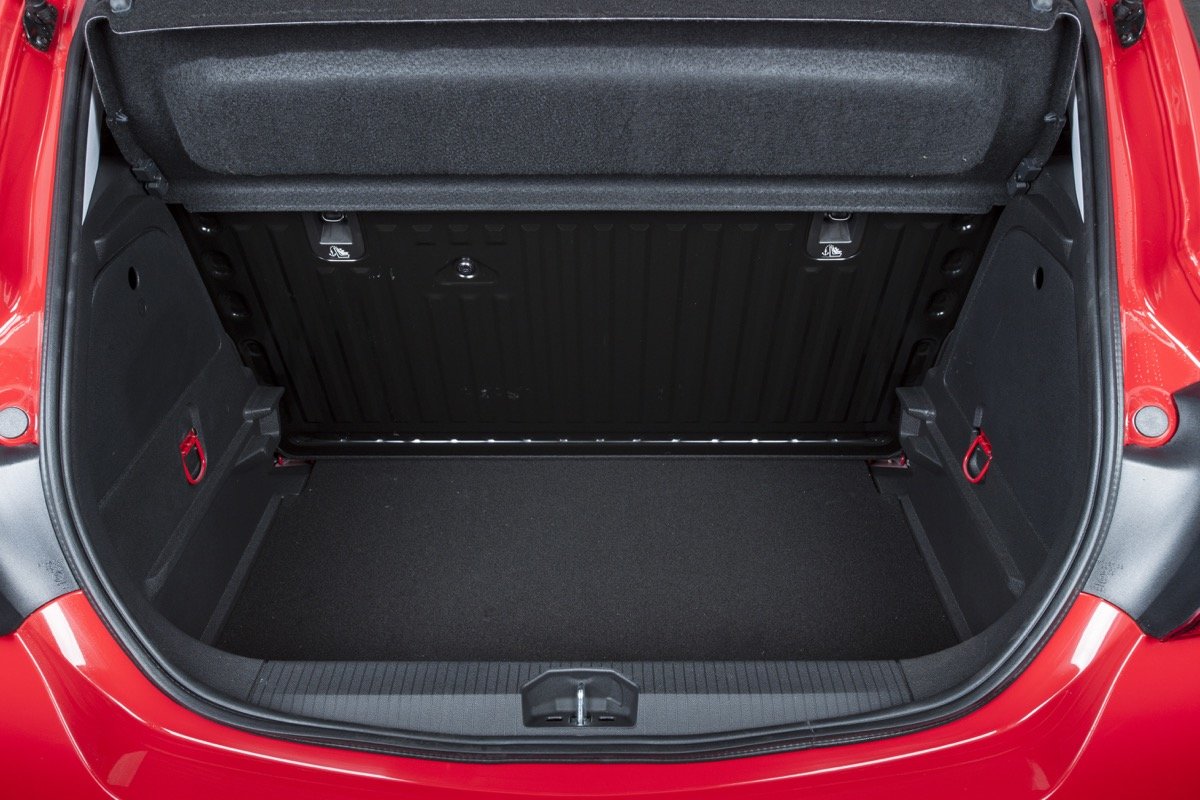
How practical is it?
The three-door model looks a bit cooler, but the five-door is easily the more practical option if you’re going to be using the back seats.
Two adults will easily fit in the back, although three will be a tight squeeze and if any are taller than six feet, they’ll struggle for headroom, especially in the three-door.
The 285-litre boot is about average for the class and will easily fit a weekly shop, while higher-spec SE and Elite models have a split folding rear seat for extra flexibility.

What's it like to drive?
The Corsa came with a range of engines and trims to suit wide tastes, from the around-town bimble-spec machine to the VXR – a proper hot hatch – and the massive number of sales means there is plenty of choice in the used market.
It’s not a car that particularly excels in any one area – it’s not as fun behind the wheel as a Ford Fiesta or as practical as a Honda Jazz – but it’s a solid all-rounder that’s easy to drive around town or over longer distances.

Technology, equipment & infotainment
The available trim levels were chopped and changed multiple times over the Corsa’s life, so it can be a bit confusing to work out what’s what.
Life and Sting trims were super basic, and soon dropped in favour of the Active model, so give them the swerve unless you’re on a serious budget.
Even the Active trim level was still bare bones in terms of equipment, so we’d recommend starting your search with a Design model, which features creature comforts such as air-conditioning and a reasonable touchscreen infotainment system, while the Energy and Sport trims also strike a good balance between cost and kit.
Cars from 2016 onwards feature Apple CarPlay and Android Auto for smartphone connectivity.
Vauxhall Corsa running costs
Cheap running costs are one of the Corsa’s major attractions. It’s not expensive to buy, insurance is very reasonable, and so is Vehicle Excise Duty. You’ll likely find that the turbocharged models are more expensive than the others, but they’re still appealing. There’s not much difference in price between three-door and five-door models.
The more powerful versions typically cost more to run. The diesel has an official fuel economy of 83.1mpg, but the Corsa VXR will only return 37.7mpg according to official figures. Realistically, knock about 15-20% off those lab-test figures.
Vauxhall’s service and repair costs are reasonable, and the manufacturer offers fixed-price servicing and a monthly payment service plan, so franchised dealers are well worth a look. That said, cars over five years old are often the preserve of independent garages, and the Corsa’s popularity and abundance of parts mean a decent outfit won’t have any trouble working on it – and they will likely be cheaper than a main dealer.
Vauxhall Corsa reliability
Corsas have long been popular with learners and new drivers, so lots have been in the wars over the years. It’s not necessarily the end of the world if the car you’re looking at has had accident damage at some point, just make sure it’s been repaired properly. Alloy wheels and bumpers are often scuffed.
Vauxhall as a company has a reasonable, if not spectacular record for reliability, and tends to sit mid-table in independent dependability studies but has also fared less well in some reports.
There have been a small number of recalls affecting this generation of Corsa, so check that the recommended work has been carried out if your car has been affected – the government’s recall checker is a good place to start. These include sticking seatbelts, handbrake issues, and bonnet latch problems.
There have also been reports of steering and suspension faults, as well as airbag deployment issues. A Vauxhall dealer will be able to tell you if a particular car is affected.
- All Corsas from 2014 onwards have heated windscreens, with filaments that gradually warm up the glass. They’re brilliant on cold mornings and will clear frost really quickly. No more sitting around with the fans on max, waiting to be able to see.
- The fifth-generation car is known by the codename Corsa E, which is not to be confused with the later, sixth generation Corsa-E – the first of Vauxhall’s long-running superminis to get an electric drivetrain.
- Earlier cars have a much larger choice of engines, with a wide mix of petrol and diesel. The line-up was overhauled in 2018 due to new regulations, leaving only a choice of 1.4-litre petrol engines with 74-, 89-, 99- or 148bhp.
- The best all-rounder: There’s no point spending big on a top-spec Corsa unless you want serious performance, because the point of the car is that it’s affordable. We’d go for the 99bhp 1.4-litre engine in Energy trim, which represents the best balance of price, running costs, and drivability. Having said that, do keep an eye out for a top-end Excite, SRi, or SE model, as they’re very well specced.
- For performance: The VXR is the hot hatch of the Corsa range, and a bundle of fun. It can’t quite match its arch-rival, the Ford Fiesta ST, but it’s still good for a laugh with a sporty body kit, stiff suspension, and a 202bhp turbocharged 1.6-litre engine under the bonnet. Just make sure the one you pick hasn’t been thrashed to within an inch of its life. The GSi model, introduced in 2018, took elements from the VXR but kept more focus on economy, that’s a close and frugal second.
- For maximum efficiency: The diesel had the best official fuel economy at 83.1mpg, although as that number is determined in a lab test, you’ll struggle to match it in real life. If you’re not a diesel fan, check out the three-cylinder 1.0-litre turbo petrol, which is also very frugal, with an official 56.4mpg.
- If you want an auto: There’s much less choice for automatic drivers, with only two variants available. Choose between the 1.4-litre 89bhp petrol or the 1.3-litre diesel with 95hp. The latter is technically an automated manual gearbox, called Easytronic, rather than a proper automatic, but it still shifts gears by itself, so we’ll count it. Be warned, though, it’s not great to use, and wasn’t on sale for long.

