Volkswagen Caddy Life Review (2021-present)
Volkswagen Caddy Life cars for sale
4.0
Expert review
Pros
Practical no-nonsense motoring
Feels very car-like to drive
Huge boot, even in seven-seat models
Cons
Entry-level model a bit spartan
No hybrid or electric options
Seating layout not as flexible as some equivalent SUVs
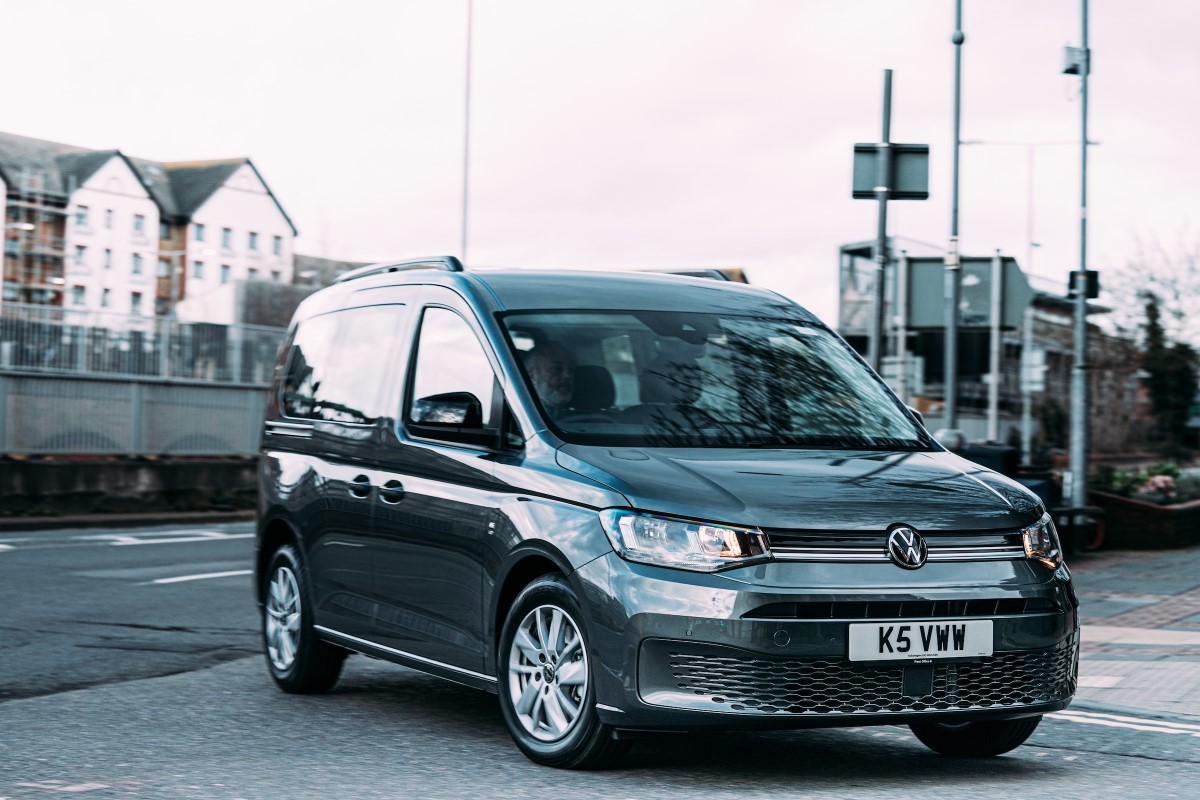
The CarGurus verdict
If you want the most space possible, without getting something massive (or an SUV), then the Volkswagen Caddy is well worth a look. There are other, similar five- and seven-seater rivals that are also worth checking out, but the Caddy has an edge of interior quality over most of them, and is better to drive, too. Spec it correctly and you can have pretty much all of the features you’d expect in a car that isn’t basically a van, although that will drive the price up when new. You’ll then have plenty of space for up to seven people and all their belongings.
A lack of flexibility in the seating could be annoying for some, but conversely, the ability to remove all the seats entirely to make a genuine Volkswagen van will be a bonus for others. Ultimately, the Caddy is a great choice if you must have the most practical mid-sized car around.

What is the VW Caddy Life?
The Caddy is something of a stalwart for Volkswagen, with a history that dates back to 1979. Since then there have been three more versions, with the current fourth-generation model dropping in 2020. Like its predecessors, the new Volkswagen Caddy treads the line between car and van, and is sold by Volkswagen’s van department. Although it shares its underpinnings with the Golf, it’s also available in Caddy Cargo form, which is a small commercial vehicle, or as the Caddy California mini campervan. However, it’s the passenger version that we’ll focus on here.
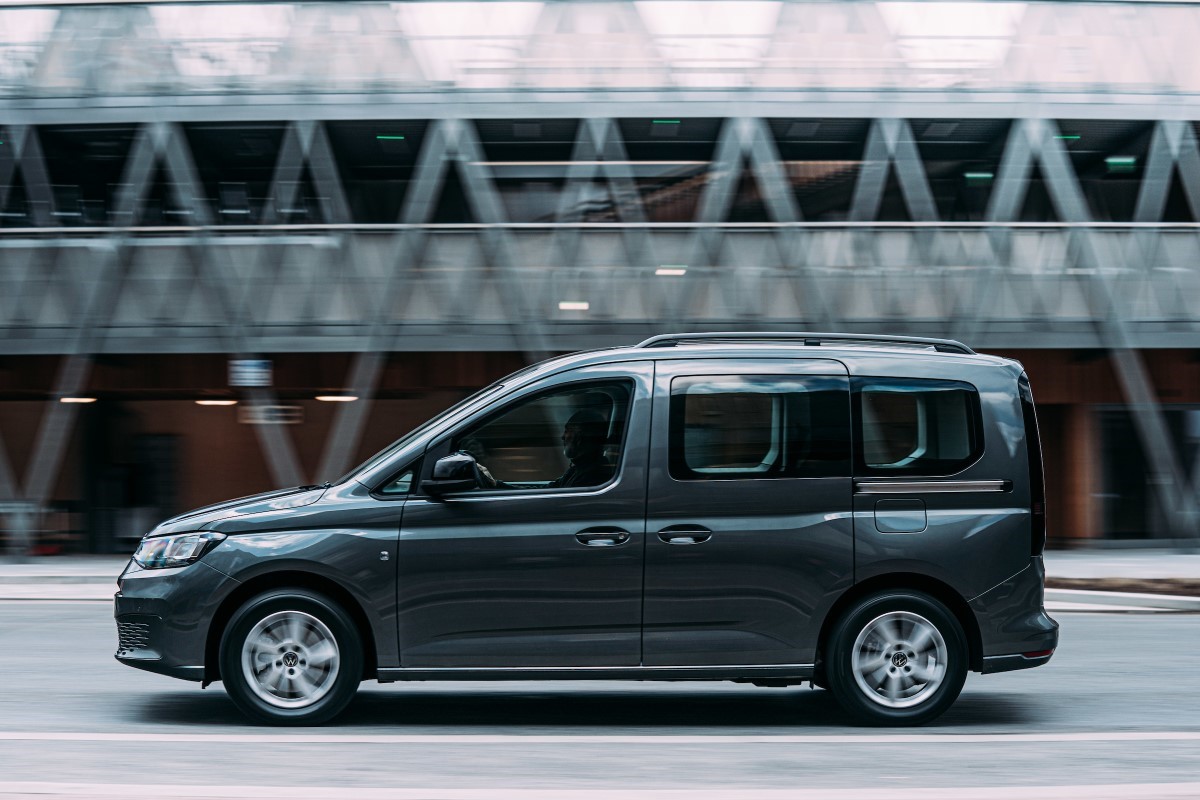
The Caddy comes in two lengths – regular and Maxi – which allows five- or seven seats to be fitted in either version. It’s aimed at those that really need as much interior space as possible, and for whom an SUV either doesn’t appeal, or costs too much. There’s been a passing attempt to make it look stylish around the grille and headlights, but there’s no hiding the fact that it’s a large box on wheels.
That utilitarian aspect is on show when you get inside the Caddy, with quite a few hard plastics around the cabin, unlike the softer, more premium materials you’d expect in Volkswagen’s less van-like vehicles. But despite that, the Caddy pinches a lot of bits and bobs from the Golf’s parts bin, which means it’s a more than acceptable place in which to spend time. And besides, hard plastics are easier to wipe down after grubby little fingers have been at them.
How practical is it?
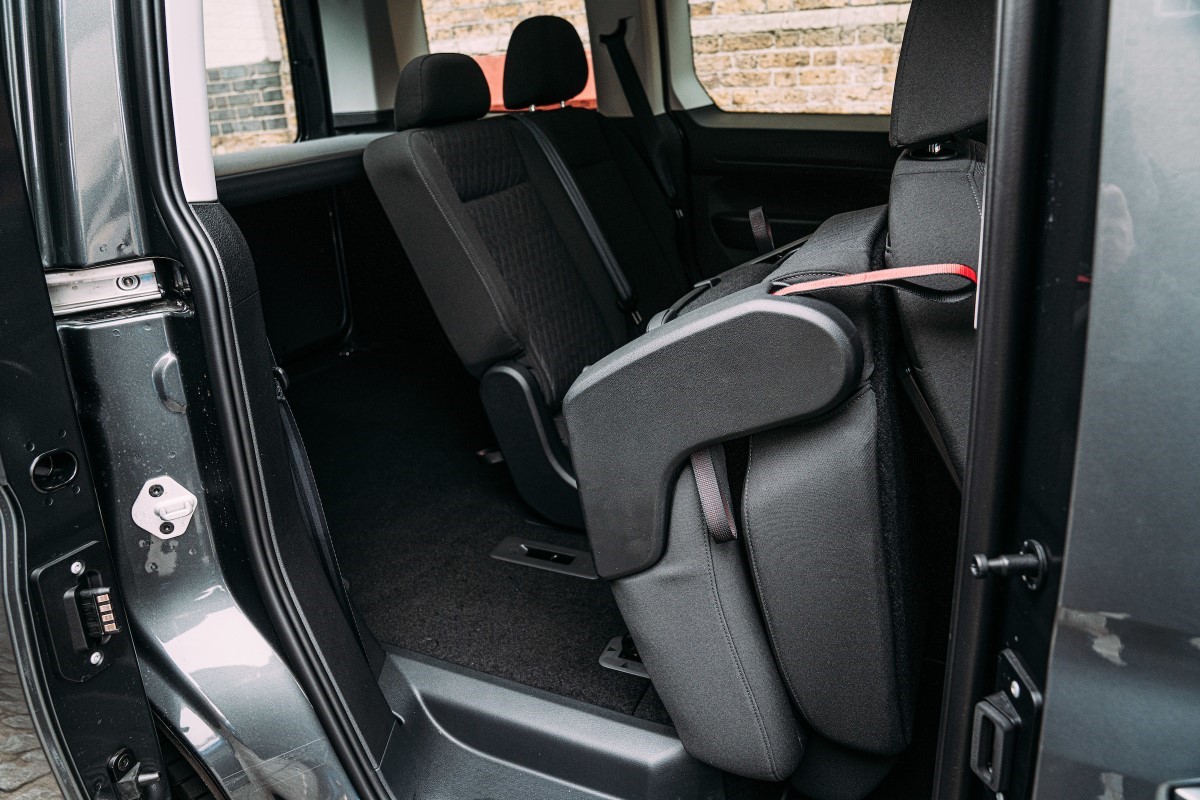
Practicality is the Caddy’s raison d’etre. Passengers in the front five seats – adults or children – will have no shortage of head- or legroom. Both lengths of Caddy can be specified with seven seats, and the third row isn’t too cramped, either.
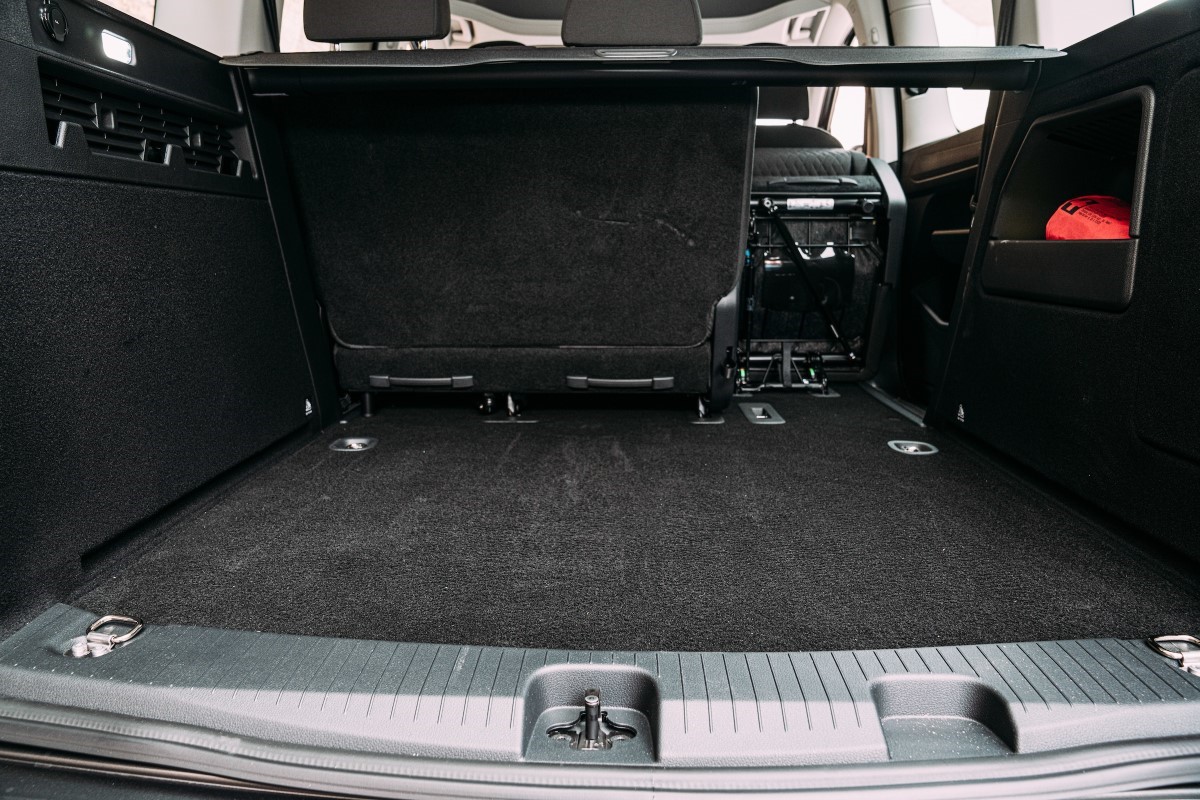
However, there’s far less flexibility in the seating than you’ll get in some SUVs; you can’t fold the third-row of seats into the floor, for example. That said, you can remove them and the second row chairs completely, which makes the Caddy a literal van again. It’s not the simplest of operations, but it’s do-able. You will need somewhere to store the seats, of course. The second row will fold down in a 60/40 split, but not into the floor.
Sliding side doors also make access to the back super-easy, and dramatically lessens the opportunity for doors to be banged into other cars in the supermarket car park.
The boot has a huge tailgate that makes it simple to load large items into what is a cavernous space, although the size of the boot lid means you’ll need to watch out for nearby objects when you open it. The capacity of the boot is 1,213 litres in the regular Caddy and 446 in the Caddy Maxi with the third row of seats in place. Try and find that kind of room in a seven-seat SUV.
There’s also lots of space inside for odds and ends, with cubby holes aplenty, drawers under the front seats on higher-spec models, and overhead storage above the front seats.
What's it like to drive?
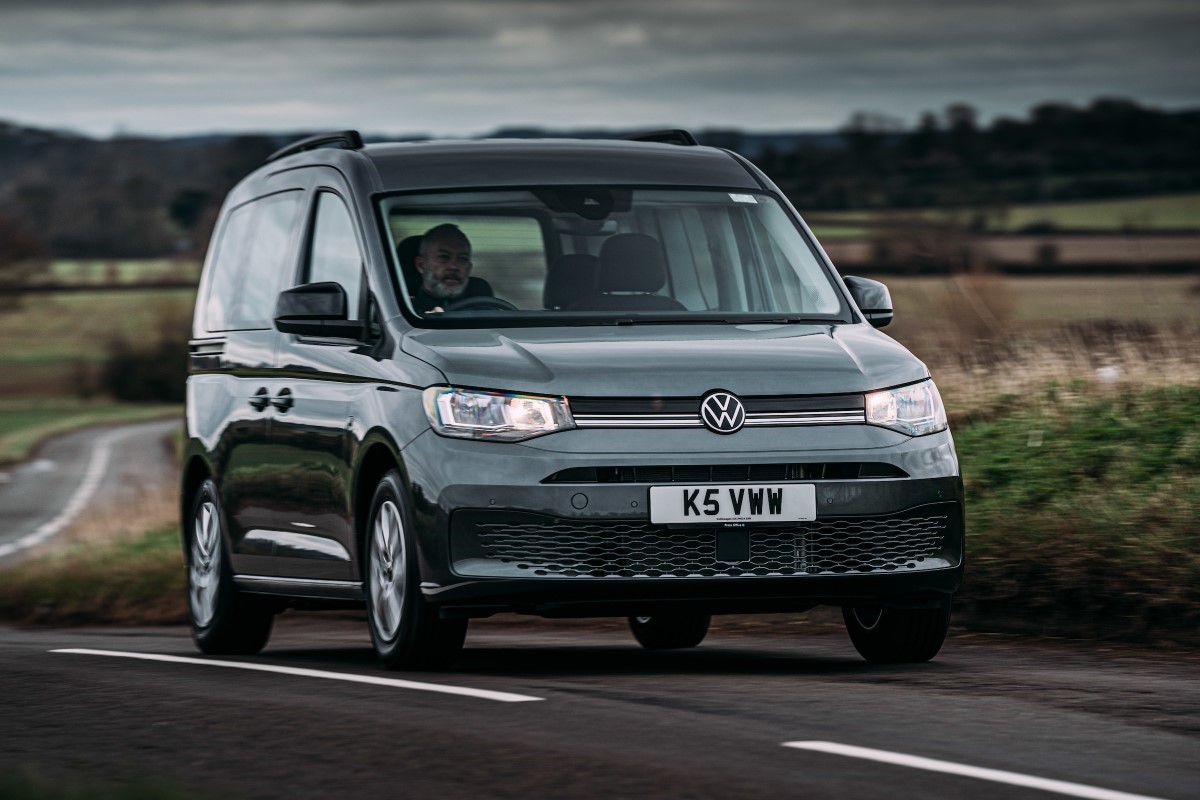
As the Caddy shares much of its engineering with the Golf, it’s remarkably good to drive, which isn’t at all a given in van-based cars. It stays nice and stable through the corners and there’s plenty of feel through the steering wheel. The ride is comfortable, too, whether in town or on the motorway, and gets smoother still when the car’s heavier with passengers or luggage. It’s obviously no hot hatch from behind the wheel, but it’s far more capable than many will expect it to be.
Power choices start with a 112bhp, 1.5-litre TSI petrol engine with a six-speed manual gearbox, which has been a familiar unit in plenty of Volkswagens over the years. It’s dependable and performs well, but if you’re regularly loading the car up then you’ll probably want a bit more puff. That’s when the diesel versions could be a better idea. The 2.0TDI with 100bhp and a manual gearbox has more low-down grunt than the petrol, but if budget allows, we’d go for the more powerful 2.0 TDI with its dual-clutch DSG automatic gearbox, which has 118bhp. That extra oomph makes for more effortless progress, especially when you don’t need to shift gears yourself.
Technology and equipment
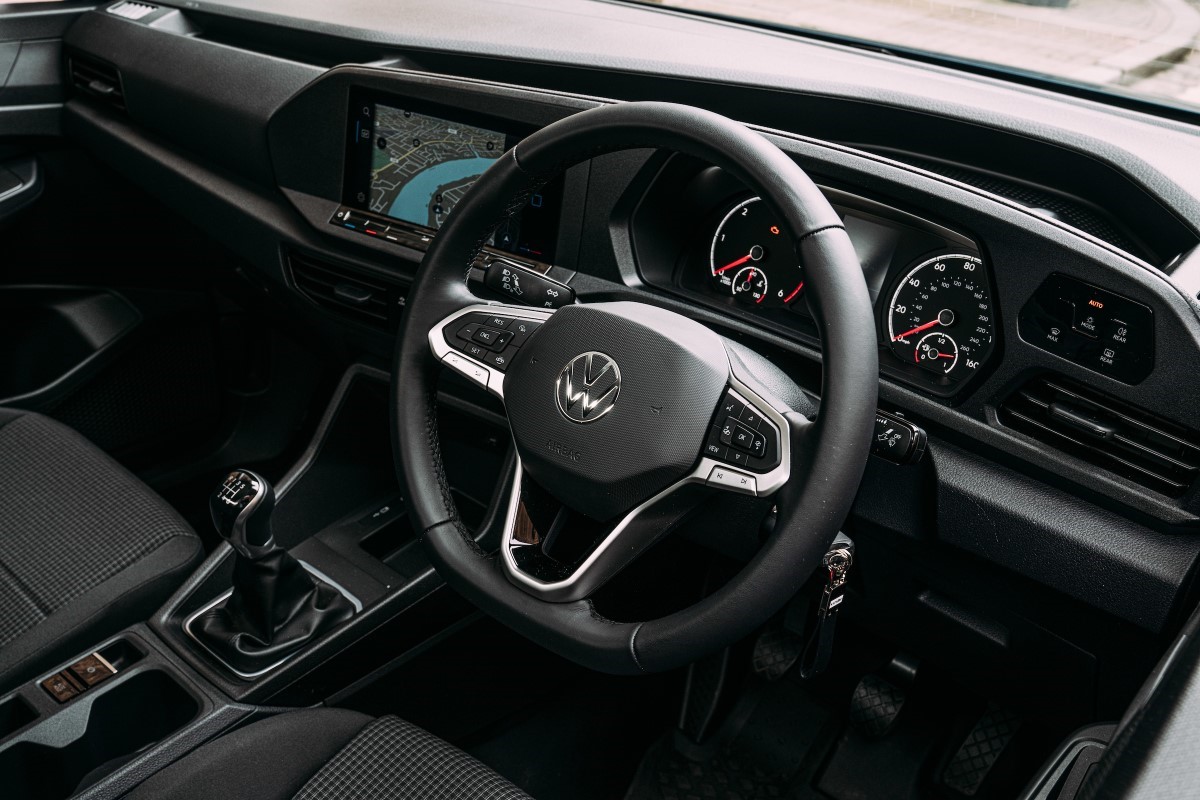
There are two trims in the Caddy – standard, and the Caddy Life – and while the entry-level models are somewhat bare in terms of features, Life models have most of the features you expect from a modern car.
When it comes to infotainment, the standard model has a relatively spartan setup, consisting of Bluetooth, DAB radio and… well, that’s about it. If you want something more akin with other cars, you’ll want the Life model, which gives you an 8.25-inch touchscreen infotainment system. This includes Apple CarPlay and Android Auto for hooking up your smartphone. You can also tick the option box for a 10.0-inch screen, which adds satnav, although the smaller unit should be fine for most people.
Another option is Volkswagen’s Digital Cockpit, which replaces the standard analogue dials with a configurable screen, showing various bits of driving information.
Cars with the touchscreen have the air-conditioning controls mounted below. These are touch-sensitive sliders, which look great but aren’t easy to use, especially on the move, when compared to buttons or dials.
VW Caddy Life running costs
There’s no hybrid or electric option for any version of the Caddy, so your choices of fuel type are pretty traditional: petrol or diesel. The diesel will likely cost a bit more but will get you better fuel economy – between 55 and 58mpg – while the single petrol option will return an MPG of up to 44. That’s not bad considering the size and shape of the Caddy, but keep in mind that fuel consumption will rise if you have more people and/or stuff inside.
If you do want something that’s friendlier on vehicle excise duty, you could look at the zero-emissions Vauxhall Combo Life and Nissan e-NV200.
You’ll need to service your VW Caddy every year or 9,000 miles if you do shorter journeys, switching between interim and main services. If you do longer distances and more miles, you can get on a flexible servicing schedule then the interval will be between one and two years or 9,300 and 18,600 miles.
You can get a service plan from Volkswagen to cover the next two services on your Caddy, with prices varying depending how old it is, but between £540 and £635 up front, or between £22 and £26 per month.
Insurance groups range from 11 to 16 of 50, so premiums shouldn’t be too costly. All Maxi models sit in group 16.
VW Caddy Life reliability
Previous incarnations of the Caddy have proved pretty solid, and the engines used are well proven across the Volkswagen range.
As a brand, Volkswagen's reliability is middling, and it came 18th out of 31 manufacturers in the 2024 What Car? Reliability Survey.
Each Caddy comes with a three-year warranty, with unlimited-mileage cover for the first two years, but a limit of 100,000 miles for the third year. That’s pretty standard against the competition.
- The Caddy scored five out of five stars in Euro NCAP's industry standard crash safety tests. Standard safety features across the range include automatic emergency braking, while options include a blind-spot warning feature and adaptive cruise control.
- The Caddy forms the basis for the 2022 Ford Tourneo Connect, thanks to a technical partnership between the two companies. Although the two cars will be broadly the same in terms of engineering, Ford offers a wider choice of trim levels and a sporty (looking) model, too. Both long- and short-wheelbase models are available, while the infotainment and engine choices will be the same as the Caddy.
- You can, if you want, order a new Caddy in Maxi length with five seats, or in standard length with seven. We wouldn’t necessarily recommend the latter, as it will basically wipe out the boot space, but a five-seat Maxi will have an absolutely enormous boot. For the regular family that likes to carry all manner of stuff, it could be a top choice.
- If you want the best fuel economy: Stick with the diesels. Depending on spec you’ll get up to 58mpg from the diesel engines, compared to around 44mpg for the petrol model. And for maximum frugality, avoid the Maxi model, which is heavier and less aerodynamic, and will have worse fuel economy accordingly.
- If you want all the toys: The Caddy has a pretty lengthy options list by modern standards, which means that while the standard equipment isn’t massively generous, you can load it up if you like. Start with a Life trim and get ticking, although this is an expensive way of getting yourself a tooled-up vehicle.
- If you want the most space: The Caddy Maxi has a longer wheelbase than the standard car, making it 470mm longer overall, with 340 litres more boot space. Whether you have the third row of rear seats or not, you’ll get a lot more into the larger model.
- If you want to live in your van: A campervan version of the Caddy is available. Called the Caddy California (after the larger Transporter-based California and the Crafter-based Grand California), it includes a mini kitchen, a foldout bed and a dining set.


