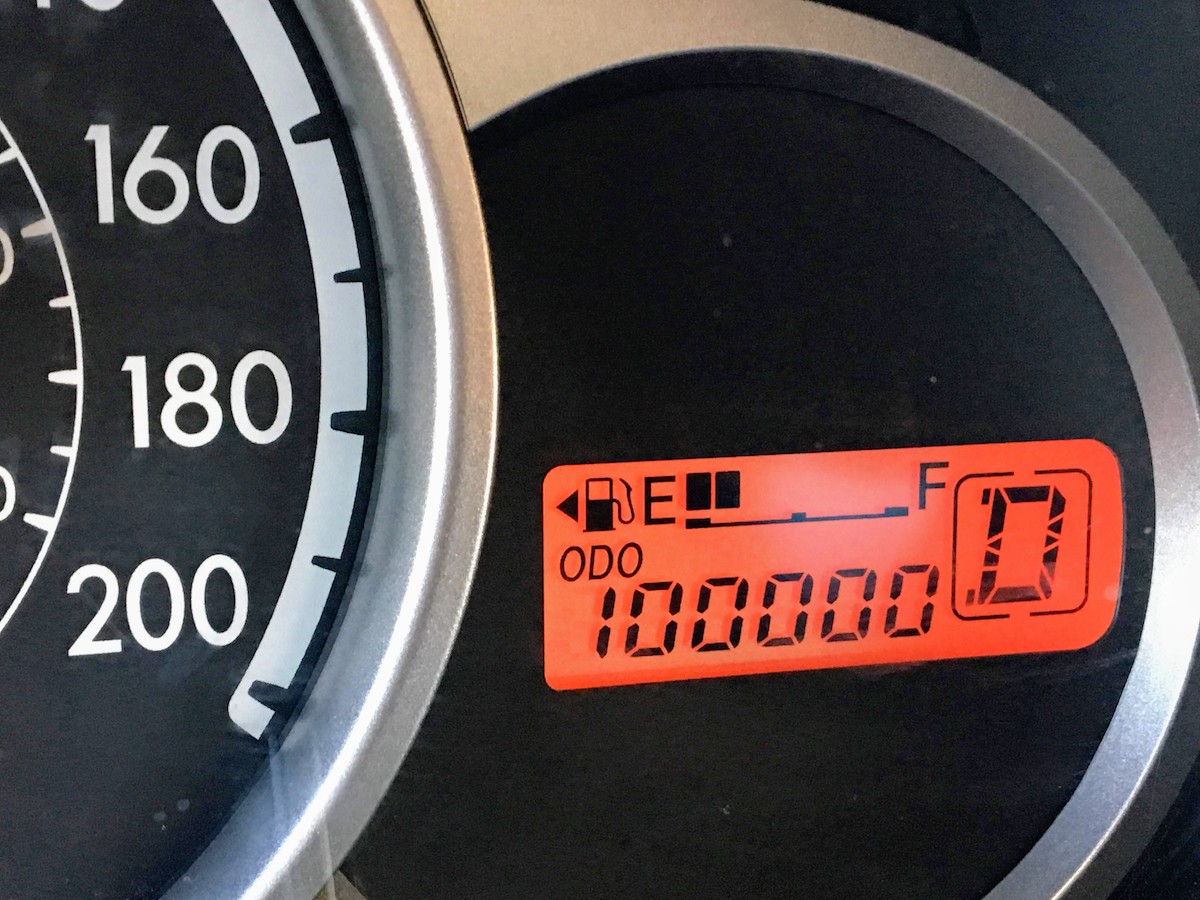
Some people would have you believe that once a car hits 100,000 miles it’s fit only for the scrapheap. Others, however, will tell you that this is where you’ll find real value in the used market. And they might have a point. At the time of writing, about 21% of the cars listed on CarGurus had more than 100,000 miles on the clock. Cars with a valid MOT and proven longevity that you can buy for a fraction of the cost of a low-mileage model.
How about an Audi Q2 for £9k, for example, or a Range Rover Velar for just £13k? These are just some of the mega-mile gems among the listings. Because if you’re happy with a few extra miles on the odometer you might be able to afford something you thought was beyond your reach. Welcome, then, to the world of the high-mileage hero.
High-mileage heroes: long-running cars that could bag you a bargain
- What constitutes high mileage?
- How much cheaper are high-mileage cars?
- Which cars last more than 160,000 miles?
- The top car models with 160,000+ mileage
- Which cars last more than 200,000 miles?
- The top car models with 200,000+ mileage
- The 300,000-mile+ heroes
- Should you buy a high-mileage car?
What constitutes high mileage?
The latest (2024) Department for Transport (DfT) figures suggest that the average annual mileage for cars in the UK was 7,100 miles: less than what it was a decade or so ago, thanks to shifting work and social patterns. But whatever its age, any car with more than 100,000 miles on the clock is considered ‘high-mileage’. It’s a milestone that always has – and probably always will – feel significant.
On the other hand, it’s generally accepted that cars are better-built than ever. In fact, a 2025 study by the RAC Foundation suggests that the average age for a car in the UK is currently the oldest it’s ever been, at nine years and 10 months old: up from seven years and five months in 2015.
How much cheaper are high-mileage cars?
Mileage makes a big difference to a used car’s value. Compare two cars of the same age, make and model and one with high mileage will cost you a lot less than one with low mileage.
Here’s an example, based on current CarGurus listings for eight to ten-year-old Volkswagen Golf models in mid-spec Match, Match Edition or SE trim:
| Mileage | Average price |
|---|---|
| 60-80,000 miles (average mileage) | £9,883 |
| 80,000-100,000 miles | £8,311 |
| 100,000-120,000 miles | £7,560 |
| 120,000-140,000 miles | £6,096 |
| 140,000+ miles | £5,495 |
Which cars last more than 160,000 miles?
If you really want to make the most of the savings that a high-mileage hero can offer, you need to go well above the 100,000-mile barrier. Venture above 160,000 miles, and you might be amazed at what you can afford, because as the mileage rises so the price gets lower.
But which cars are most capable of doing 160,000 miles or more? Let’s delve into the data. Here’s the top 10 in terms of numbers per brand, excluding vans and pickups:
| Brand | Cars with 160,000+ mileage | Total listings | Percentage of listings with 160,000+ mileage |
|---|---|---|---|
| Volkswagen | 102 | 15,660 | 0.65% |
| BMW | 93 | 14,332 | 0.65% |
| Toyota | 75 | 8,709 | 0.86% |
| Audi | 73 | 16,425 | 0.44% |
| Mercedes-Benz | 70 | 13,822 | 0.51% |
| Land Rover | 70 | 11,042 | 0.63% |
| Volvo | 66 | 4,974 | 1.33% |
| Ford | 60 | 19,261 | 0.31% |
| Honda | 33 | 3,211 | 1.03% |
| Skoda | 33 | 5,015 | 0.66% |
This is a moment in time and thus not a very scientific snapshot, of course. But it does give a rough guide to what kind of longevity you can expect from a car brand.
In terms of the outright number of cars, the top three are Volkswagen, BMW and Toyota. But when you look at which brands have the highest percentage of 160k+ cars compared with the overall listings, the top three reads Volvo, Honda and Toyota.
Either way, some major brands didn’t make the top 10 at all. Noticeable by their absence are Nissan, Peugeot, Renault and Vauxhall: all of which had at least 5,000 models (almost 10,000 in Nissan’s case) in the listings at the time of this research.
What else does the data tell us? Well, ‘premium’ brands make up half the top 10. Perhaps not surprising given that those brands – Audi, BMW, Land Rover, Mercedes-Benz and Volvo – sell cars in big numbers.
But as well as suggesting that these brands’ cars have the quality to match their images, it’s worth considering that they are premium products viewed as being less disposable than more mainstream options. They may be more likely to be well-maintained and kept on the road, not only because they cost more in the first place but also because they retain value better as they get older.