If you're looking for a used family hatchback that's seriously cheap to run, you'll almost certainly have the Toyota Prius on your shortlist. It's the car that made hybrid power mainstream, with a well-earned reputation for reliability and low fuel consumption.
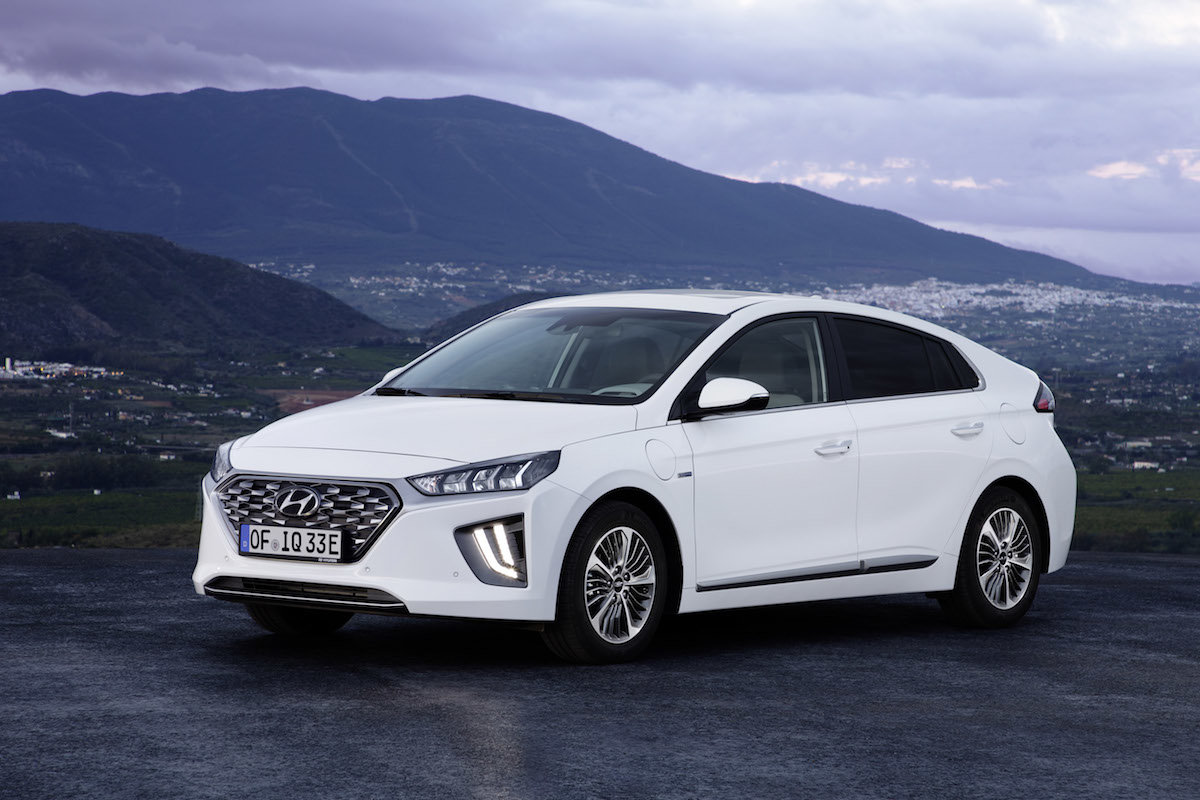
But it's not the only game in town. Hyundai launched a direct rival in the form of the IONIQ, a car that not only came as a hybrid but also as a plug-in hybrid and a fully electric vehicle. With a more conventional design and Hyundai's long warranty, it presents a strong challenge to the established champion. So, which of these eco-friendly heroes is the smarter used buy?
Toyota Prius vs Hyundai IONIQ
Practicality
Toyota Prius practicality score: 4/5
Hyundai IONIQ practicality score: 4/5
As five-door family hatchbacks, both the Prius and the IONIQ perform well for practicality. The Prius has a large, accessible boot, offering 502 litres of space, which is more than you'll find in a contemporary Volkswagen Golf. Passenger space is good, too, although taller rear-seat passengers might find their heads brushing the sloping roofline.
The IONIQ is a close match. Its boot is a little smaller in the hybrid model at 443 litres, but it's still a useful, square shape. The advantage for the IONIQ is that its more conventional roofline gives it slightly better rear headroom than the Prius. Both cars have plenty of cubby holes and storage spaces for family life, making this category a dead heat.
Driving Impressions
Toyota Prius driving score: 3/5
Hyundai IONIQ driving score: 3/5
Neither of these cars is designed to set your pulse racing; their focus is on comfort and efficiency. The Prius is easy to drive, with light steering and a soft suspension setup that provides a comfortable ride, especially around town. The hybrid system is smooth, but the CVT automatic gearbox can make the engine drone noisily under hard acceleration.
The IONIQ Hybrid takes a different approach, using a six-speed dual-clutch automatic gearbox. This feels more like a traditional automatic, with distinct gear changes that some drivers will prefer. It makes the car feel a little more responsive than the Prius, but the trade-off is that it's not always as seamless in stop-start traffic. Both cars handle safely and predictably, but they prioritise a relaxed driving experience over back-road fun.
Technology and Equipment
Toyota Prius technology and equipment score: 4/5
Hyundai IONIQ technology and equipment score: 4/5
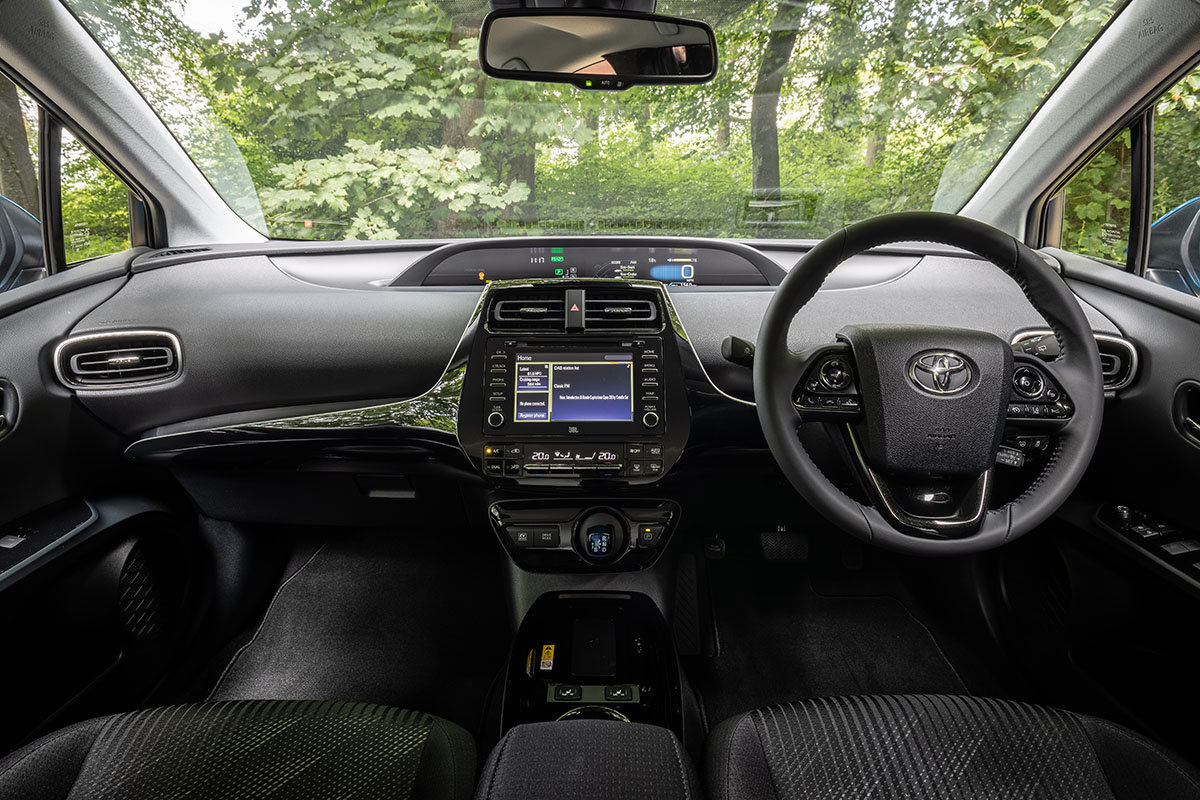
The Prius has a distinctive interior, with its digital instruments mounted in the centre of the dashboard. It's a futuristic look, but some may prefer a more traditional layout. All models are well equipped, with a central touchscreen, climate control, and Toyota's Safety Sense package, which includes adaptive cruise control and autonomous emergency braking.
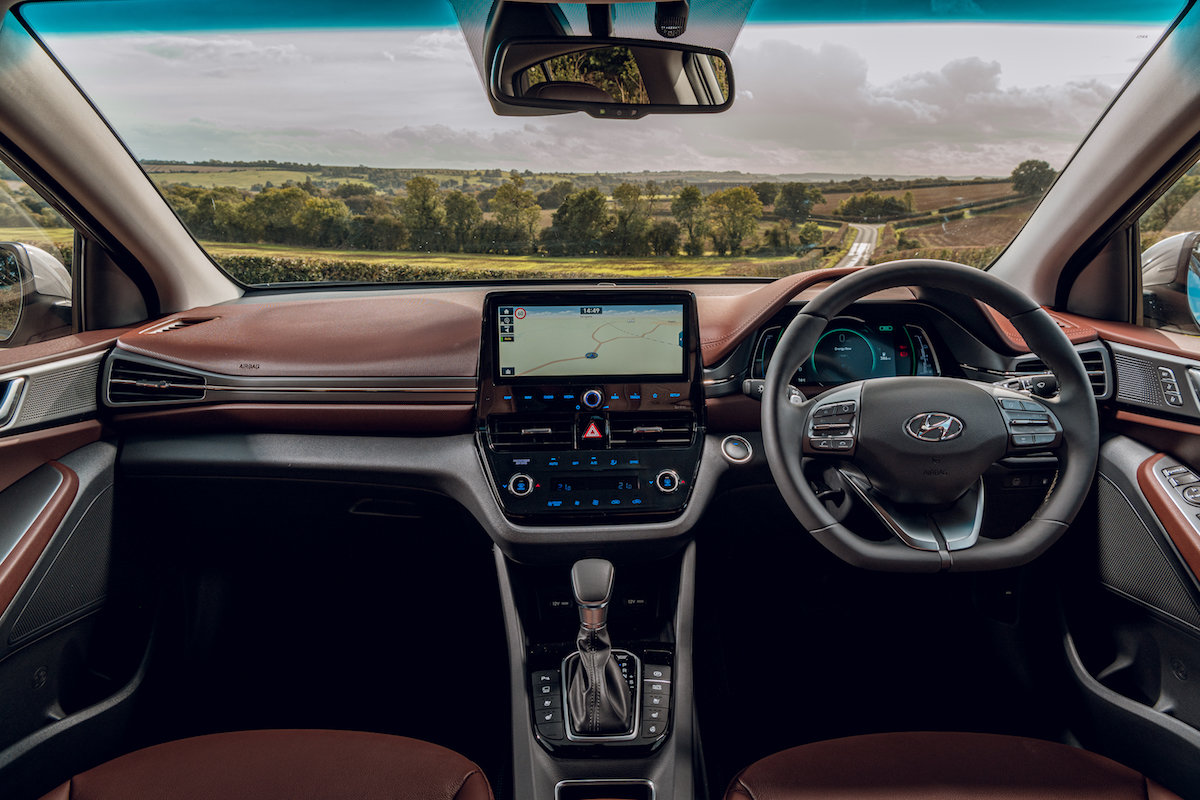
The IONIQ's cabin is much more conventional. The dashboard is logically laid out, and post-facelift models from 2019 onwards feature a smart 10.25-inch widescreen infotainment system. Crucially for many buyers, the IONIQ supports Apple CarPlay and Android Auto, a feature that this generation of Prius lacks. For its more user-friendly and connected infotainment, the IONIQ has a slight edge for tech-savvy buyers, though both cars come with plenty of standard kit.
Running Costs
Toyota Prius running costs score: 4/5
Hyundai IONIQ running costs score: 5/5
This is the key battleground for these two cars, and both are champions of frugality. The Prius, as a self-charging hybrid, is capable of more than 60mpg in real-world driving with a gentle right foot. Its proven mechanicals also mean reliability is a major strength, keeping unexpected repair bills to a minimum.
However, the IONIQ wins on points for running costs. This is thanks to its wider range of powertrains. As well as the efficient self-charging hybrid, there's a plug-in hybrid (PHEV) with an electric range of around 30 miles, and a full electric version that does away with petrol entirely. This choice allows buyers to pick the model that best suits their lifestyle to minimise costs. Furthermore, every IONIQ came with Hyundai's five-year, unlimited-mileage warranty, giving used buyers good peace of mind.
CarGurus Buyer Insights
|
Toyota Prius |
Hyundai IONIQ |
| CarGurus expert rating |
4 out of 5 |
4 out of 5 |
| CarGurus user rating |
4.5 out of 5 |
4.6 out of 5 |
| Percentage of good/great deals available on CarGurus* |
32.1% |
34.3% |
| Overall CarGurus rating |
4.2 out of 5 |
4.3 out of 5 |
The Verdict
Toyota Prius Overall CarGurus rating: 4.2/5
Hyundai IONIQ Overall CarGurus rating: 4.3/5
This is a close contest between two of the most sensible and efficient used cars you can buy. The Toyota Prius is an icon for a reason: it's comfortable, practical, and reliable. For many, its reputation alone will be enough to seal the deal.
However, based on our comprehensive CarGurus ratings, the Hyundai IONIQ emerges as the winner. It matches the Prius in most areas and pulls ahead thanks to its greater choice of powertrains, more user-friendly infotainment system, and that solid five-year warranty. A slightly higher user rating suggests owners are a little more satisfied, too. While the Prius is a good car, the IONIQ's broader skill set and more conventional appeal give it the victory by a narrow margin.
Toyota Prius Pros and Cons
| Pros |
Cons |
| Excellent fuel economy |
Divisive styling |
| Proven reliability |
Noisy CVT gearbox under load |
| Comfortable ride |
Infotainment feels dated |
Hyundai IONIQ Pros and Cons
| Pros |
Cons |
| Choice of three electrified powertrains |
Less brand recognition than Prius |
| Good warranty coverage |
Hybrid's dual-clutch gearbox can be hesitant |
| Conventional and user-friendly interior |
Not as refined as the Prius at times |
*The Overall CarGurus rating that informs these recommendations is based on CarGurus' proprietary market data from June 2026, CarGurus expert reviews, and CarGurus user reviews.
Read Our Full Reviews: