Mercedes-Benz E-Class Review (2009-2016) review | Executive comfort and excellent value
Mercedes-Benz E-Class cars for sale
4.0
Expert review
Pros
A great all-rounder that does most things well
The estate is fantastically practical
Most versions are comfortable and refined
Cons
The entry-level diesels are weak
A BMW 5 Series is more exciting to drive
Repairs can be very costly

The CarGurus verdict
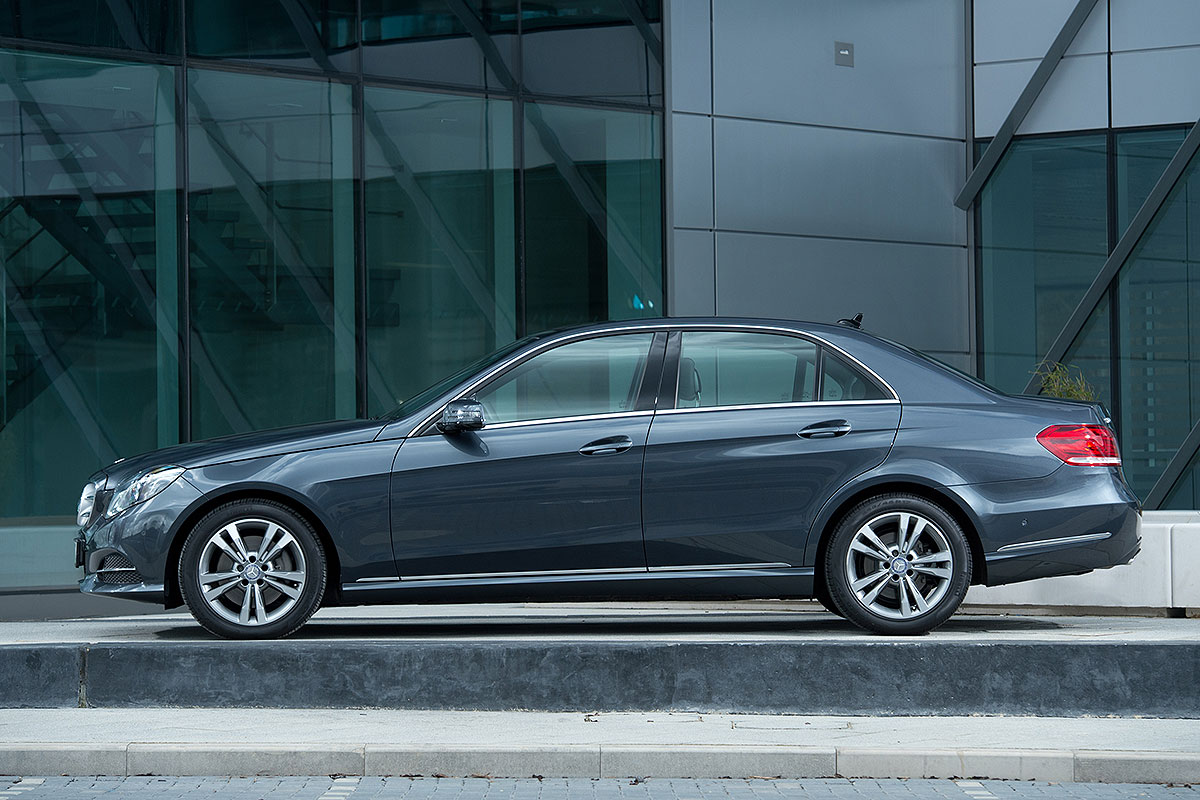
For those who value comfort and refinement above zippy handling and sharp styling, the fourth-generation W212 E-Class has much to recommend it over rivals from BMW, Audi and Jaguar. Although understated, it looks prestigious inside and out. It’s also incredibly spacious, with a reassuring sense of solidity.
The least powerful diesel engines are perhaps best avoided, and likewise the smaller petrol units, as they have to be revved hard to overcome their lack of punch. But most of the E-Class’ engine range is smooth, willing and economical. And if you like the E-Class but want a truly enthralling time behind the wheel, there are always the AMG versions. Just be prepared for hefty tax and fuel bills.
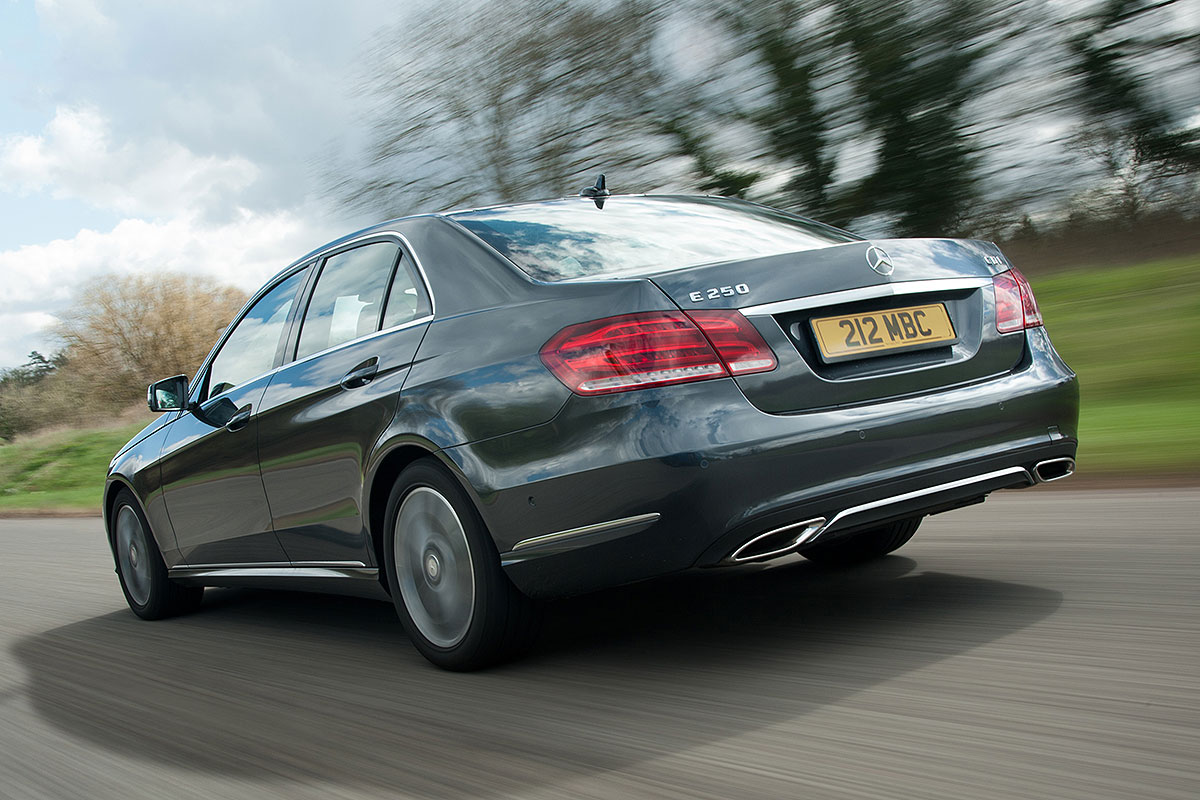
What is the Mercedes-Benz E-Class?
Supremely refined, spacious, comfortable, easy to drive, well equipped and built to standards that Mercedes-Benz was formerly famous for, the fourth-generation E-Class, known to Mercedes experts as the W212, is a fine way to travel.
Built between 2009 and 2016, the range is broad, comprising the E-Class saloon, E-Class estate, E-Class coupe and E-Class cabriolet. What’s more, over 90 percent of fourth-generation Mercedes E-Class models sold in the UK had diesel engines, the details of which varied over the years.
How practical is it?
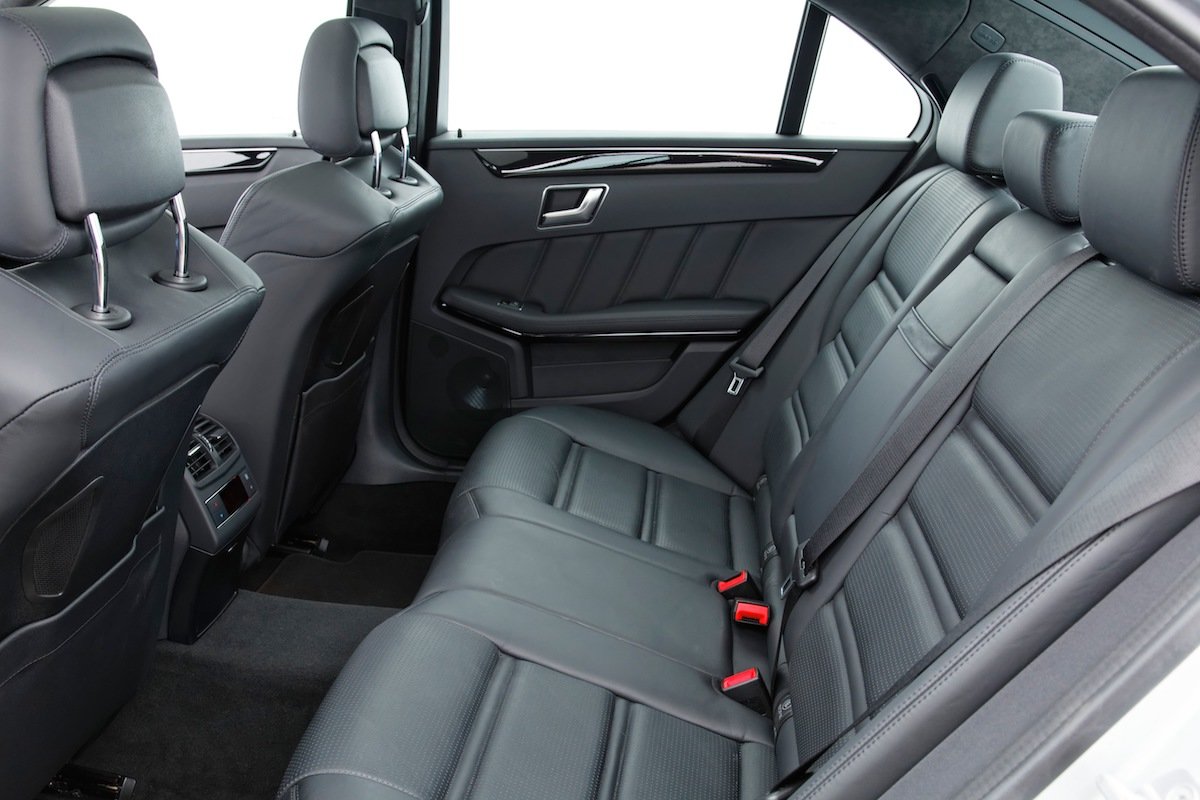
‘Very’ is the short answer, chiefly because the various versions of the W212 E-Class can cater for whatever use you might have in mind. If we take the word ‘practical’ at face value, thinking in terms of passenger and storage space, it doesn’t get much better than an E-Class.
Coupe and cabriolet models offer the least amount of storage, as you might imagine. Both pre- and post-2013 facelift models provide exactly the same amount of storage: 390 litres of boot space for the cabriolet (or 300 with the roof down) and 450 litres for the coupe.
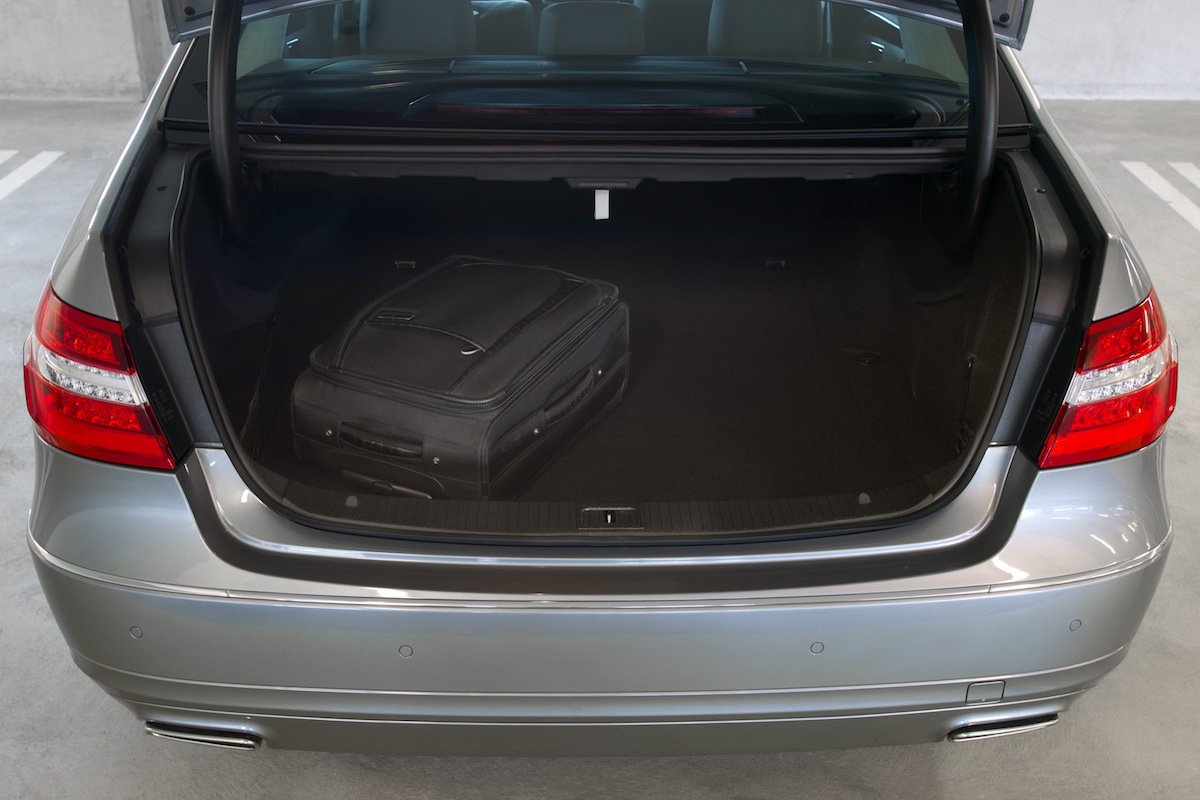
The regular E-Class saloon's boot, on the other hand, is huge, and at the time was the largest in its class. It measures 540 litres in both pre- and post-facelift guises (one specific and unusual exception is the E500, which holds 532 litres). The E-Class estate offers a boot compartment so cavernous you’d likely need a search and rescue party to help, were you to fall inside. There is 695 litres of capacity with the rear seats up, then 1,950 litres with them folded down (note: the post-facelift E350 BlueTec diesel had 600 and 1,855 litres with the seats up and down, and the E300 BlueTec Hybrid petrol offered 650 and 1,905 litres respectively).
Mercedes also offered two additional rear-facing seats in the boot at one point, capable of carrying people (primarily children) up to 140cm in height and 50kg in weight. So don’t be shocked if you spot an E-Class estate listed as a seven-seater.
Further forward, there’s ample space in the back seats for passengers, with headroom among the best in the class whether you go for the saloon or the estate. Coupe and cabriolet versions are a little less capacious, as you might imagine. Still, for cars of their type, they are impressively roomy.
Whichever version you are interested in, Mercedes offered a decent range of accessories. You could get roof boxes for the coupe, for example, and even a boot-mounted bicycle rack for the convertible. Across the whole range, there were also boot storage dividers, child seats, rubber floor mats, phone and tablet holders, cool boxes, rear-seat DVD players, coat hangers, seat covers and much more.
A final note on practicality: Mercedes did indeed sell an E-Class as part of its ‘Guard’ armoured car range, known as the E-Guard. Of course you’re highly unlikely to find one of these on the used market, but surely there’s nothing more practical than an E-Class that can resist machine gun fire?
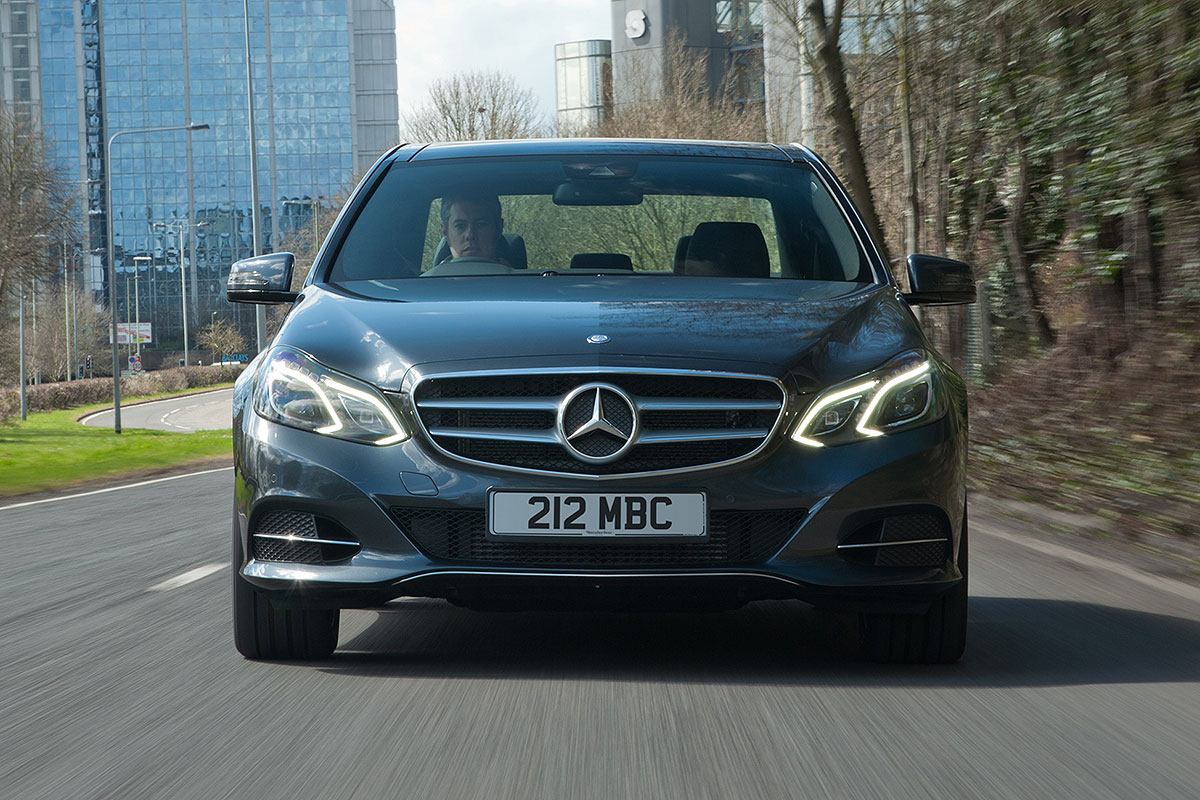
What's it like to drive?
To go through all of the various engines, gearboxes and power figures for a car like the fourth-generation E-Class would be a mammoth task. Suffice to say there were petrols, diesels and hybrids offered, along with automatic and manual transmissions. As mentioned earlier, more than 90 percent of cars sold in the UK had a diesel engine, so you’re more likely to come across one of these when buying used. Petrols are out there, though, and they are pretty decent engines.
Generally speaking, as is the case with Mercedes-Benz, an E250 CDI BlueEfficiency will be less powerful than, say, an E350 CDI BlueEfficiency. In other words, you generally get less performance from a car with a smaller number on the boot lid, or less fuel efficiency from a machine with a larger number. Furthermore, ‘CDI BlueEfficiency’ means diesel and ‘CGI BlueEfficiency’ means petrol, but not every E-Class was named as such, the perfect example being the E500, which had a V8 petrol engine. There were also BlueTec diesels and BlueTec hybrid diesels, which joined the range later in the car’s life.
Then there are the AMG versions. Cars up to 2011 had a 6.2-litre, naturally aspirated V8 (one of the best sounding engines Mercedes has ever produced), with 518bhp and 465lb ft of torque. After 2011, the E63 made use of a 5.5-litre twin-turbo V8 with 549bhp and 516lb ft of torque, then post-facelift you could have the same engine with 577bhp and 531lb ft in the E63 S.
Away from engines, every version of the W212 E-Class drove well in period, albeit not as sharply as the equivalent BMW 5 Series. Higher-mileage used examples will feel more tired, particularly in terms of ride quality, as the dampers and other suspension components don’t last forever, but a decent, well-maintained machine will still be brilliant on long journeys. The coupe, saloon and estate are all quiet to drive, while you can expect more wind and road noise from the cabriolet, even with the roof up.
For ultimate comfort, look for an E-Class fitted with AirMatic air suspension. This will be a more complicated system to fix, which will in turn mean a larger bill if something goes wrong. On the plus side, you can manually adjust the ride height and damping firmness depending on how you’d like to drive, meaning a supple feeling around town, then a tighter, more rigid platform as you dart along a winding road.
Technology, equipment & infotainment
A slightly convoluted range and a wide array of options means specifications will differ slightly depending not only on how flush the original owner was feeling, but which model-year of E-Class they choose.
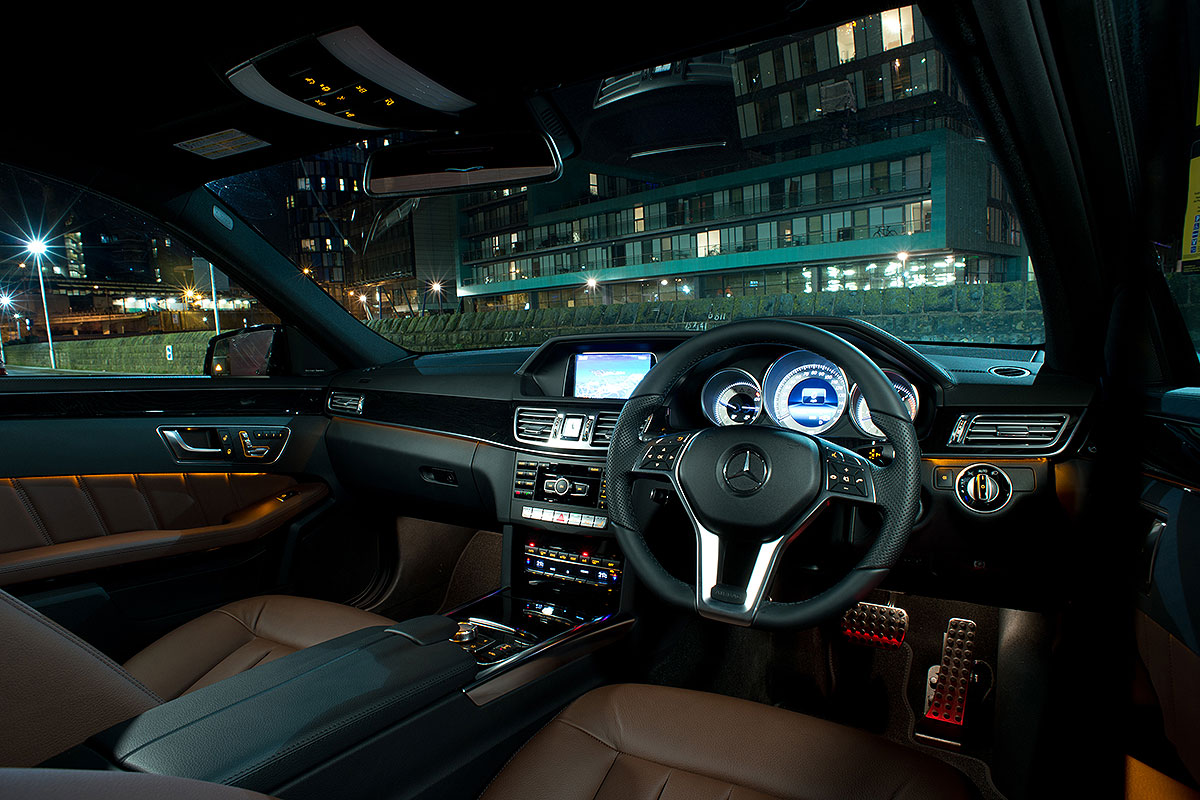
Generally speaking, the SE and Avantgarde models are tilted more towards luxury, while Sport and AMG Line versions have a more sporting bent. All E-Classes come as standard with either artificial or real leather upholstery, climate control air-con, heated front seats, front and rear parking sensors, automatic wipers and a good audio system with Bluetooth phone connectivity.
Earlier cars made use of a 5.8-inch central display, which was connected to a rotary dial on the centre console. A larger 7.0-inch display was also available, and later became standard-fit.
Options included reversing and 360-degree parking cameras, along with Parktronic with active park assist (which could manoeuvre the car into a space for you), ventilated seats, autonomous emergency braking, LED lighting and plenty more besides. Very few buyers, other than those running an E-Class as a taxi, would have failed to tick a few option boxes, so inspect the specification of any potential purchase carefully.
Mercedes-Benz E-Class running costs
This is a Mercedes-Benz made with better quality components than many built prior to its introduction in 2009, so an E-Class won’t be cheap to keep on the road. That said, the proliferation of independent Mercedes specialists means servicing and repairs won’t be as financially painful as at an authorised dealer.
Service intervals are every 12,500 miles or annually, whichever happens sooner, and they alternate between minor and major. At a Mercedes dealer, you can expect to pay somewhere between £260 and £280 for a minor service, and £390 to £420 for a major one.
In addition to regular servicing items, the air-conditioning system needs refreshing annually (about £80), the brake fluid replacing every couple of years (also about £80), while the fluid in the seven-speed automatic gearbox that most E-Classes are equipped with requires changing every three years (some later cars have nine-speed autos, while other earlier examples may be equipped with a six-speed manual).
In real-world conditions, any of the diesel models will cost less to run if you’re regularly doing long journeys. Not a single diesel variant in the fourth-generation E-Class line-up couldn’t top 40mpg, with most managing 50mpg and above. The petrol engines drink more fuel, so you may see 30mpg upwards more regularly, depending on the engine, but they will be happier in city environments than the diesels. The later E300 BlueTec Hybrid petrol in particular is an economy hero; Mercedes claimed 68.9mpg for the saloon. An obvious conclusion to draw is that any version of the E63 AMG will guzzle fuel, to the point where you’ll see 15mpg or less if you make the most of its performance.
Road tax varies enormously between models (even those with the same engines) so it’s worth checking out before you buy. It ranges between £20 annually for the E300 BlueTec Hybrid, to £570 for the AMG versions. Similarly, the range of insurance groups is broad as well, stretching from 29 to 44 (out of 50). Many models fall into the group 33-36 bracket.
Mercedes-Benz E-Class reliability
The Mk4 E-Class is, broadly speaking, a pretty reliable car, although it has been subject to a number of preventative recalls. These have included fixes for fuel, oil and power steering fluid leaks, the latter sometimes causing complete power steering failure on cars made between November 2010 and April 2011. Coupes made between April and June 2012 were brought back into dealerships to cure a potential issue with airbag deployment, while the possibility of under-bonnet insulation coming unstuck and dropping onto hot exhaust manifolds (with a potential fire risk), meant a recall for models produced between July 2012 and the end of 2014. All of these issues should already have been attended to, but remember to check the service history and other paperwork thoroughly.
Early cars with air suspension have now reached an age where air compressors can fail and the airbag spring/damper units can suffer small leaks, so make sure that the car you’re looking at sits level on all four corners and rides serenely. Age is also taking its toll on the fuel injectors of some diesel engines, so be wary of a car that doesn’t idle smoothly or hesitates slightly when you accelerate. Another problem that may affect the performance of the engine are small splits in the turbo boost pipes and turbo intake seals. If the engine feels as though it’s lacking oomph, this could be the issue.
We’ve seen some reports of water pump failures on cars with less than 100,000 miles, but then others with more than 300,000 miles that have had no problems of any kind. Ensure you know how recently the timing chain has been replaced on any used example you look at, as a handful of unlucky individuals have had diesel timing chains break, destroying those engines. Less than ideal when a replacement is about £7,400…
Furthermore, as with any modern car, especially in the executive class, make sure (as best you can) that all the electronic gizmos function as intended. Even fixing something simple can be very costly.
- The facelift of 2013 wrought very significant changes to the W212’s looks, especially at the front end where the twin headlamps were swapped for singles. Mercedes also simplified the trim levels and engine range. For the most modern look and feel, these are the cars to consider, although an older E-Class should drive just as well.
- The E63 AMG was always the top dog. However, the engine changed in the middle of the car’s life, so while the name stayed the same, you need to know what you’re buying. E63 models up to around 2011 will be fitted with a naturally-aspirated 6.2-litre V8, while after that you’ll find a more powerful, slightly more efficient but less raucous-sounding 5.5-litre, twin-turbocharged V8.
- All-wheel drive ‘4Matic’ versions of the fourth-generation E-Class are incredibly rare in the UK. So if you need extra grip during the colder months, be sure to get hold of some winter tyres. Alternatively, an Audi A6 from around the same period will be fitted with all-wheel drive as standard.
- If you want the best all-rounder: A facelifted, post-2013 E250 CDI estate in SE trim. In the real world, you’ll be getting around 55mpg and have a decent amount of performance. You’ll also have 17-inch wheels, meaning a nice ride, and all the luggage space of the estate.
- If you need ultimate economy: You’ll need to buy a saloon to be super fuel-efficient, but you could actually go either way in terms of fuel. The most efficient diesel is the later E220 BlueTec, which Mercedes claimed could achieve 64.2mpg. Do plenty of long journeys and you’ll likely top that, and with a 59-litre fuel tank you won’t need to fill up very often. Alternatively, you could select the E300 BlueTec Hybrid petrol, which Mercedes claimed could return 68.9mpg. This too had a 59-litre fuel tank, but you’ll get more out of it if driving around town on more local journeys.
- For crazy performance: The E63 S AMG. It’s outrageously fast and the 577bhp twin turbo V8 makes a wild and evocative roar. Zero to 62mph takes 4.1 seconds in the saloon and 4.2 seconds in the estate, on the way to a limited top speed of 155mph.
- For the very best ride quality: Any model fitted with optional air suspension. Thus equipped, few cars at any price ride better than a fourth-generation W212 E-Class.


